Seth Walsh

Iconoclast
Contributor
- Joined
- Jan 12, 2020
- Posts
- 10,936
- Reputation
- 22,333
SOCIAL CLASS OS
How to build optionality when you didn’t inherit it
A practical field manual by Seth Walsh

You do not need to start at the top. You need a system that keeps converting effort into better options.
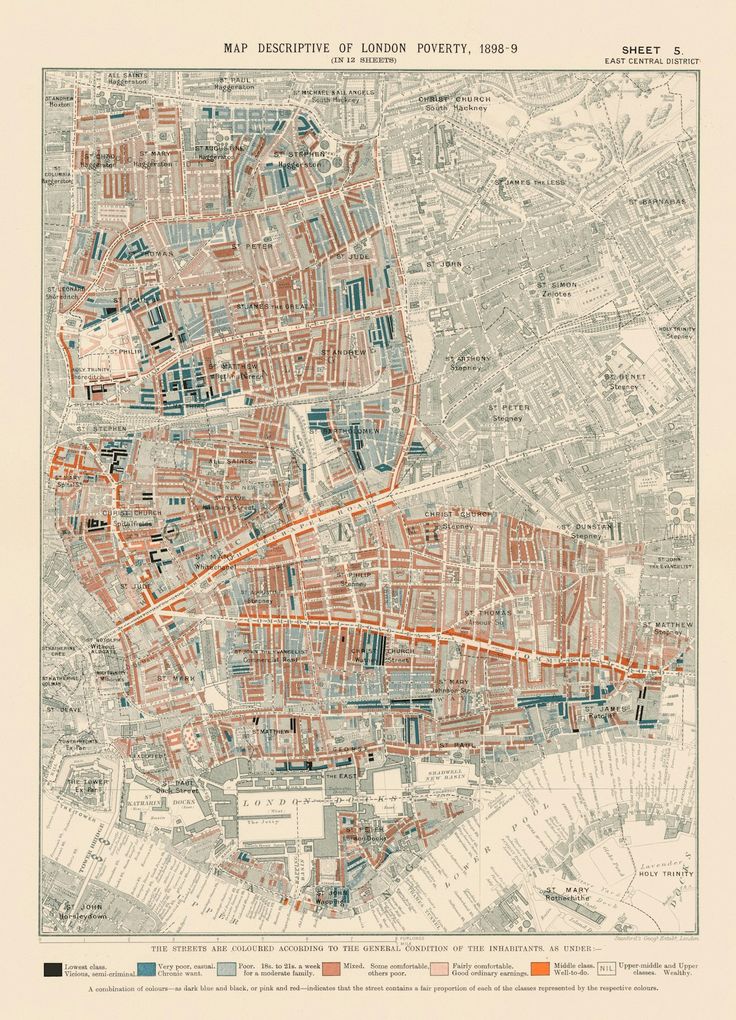
Pinterest image source
READ THIS FIRST
This is not a “dress rich” thread.
It is not a “manifest a six-figure salary” thread.
It is not a “you are doomed because of your parents” thread.
It is a systems thread.
The most useful question is not:
“What social class am I?”
It is:
“When something goes wrong, how many safe options do I have?”
Can you leave a bad job without immediate catastrophe?
Can you pay for a course, tool, treatment, or train ticket without panic?
Can you compare prices and opportunities intelligently?
Do you know people who can explain how the next room actually works?
Does your home allow you to recover?
Do you have visible proof that makes strangers more willing to trust you?
That is what I mean by optionality.
Inherited class is, among other things, inherited optionality: more money, more time, better information, safer mistakes, useful introductions, healthier environments, and a larger margin for error.
Upward mobility means building a larger option-set than the one you began with.
You are not trying to cosplay inheritance.
You are trying to become harder to trap.
THE CORE MODEL
OPTIONALITY ≈
RUNWAY × LEVERAGE × PROOF × TRUST × RECOVERY × ADMIN CONTROL
divided by fixed costs and unnecessary fragility
This is not a scientific equation. It is a diagnostic tool.
The reason it is multiplicative is simple:
If you have a good skill but no health, your skill cannot be used.
If you have money but no proof, your money may only fund consumption.
If you have contacts but are unreliable, access dries up.
If you have ambition but no time, ambition becomes fantasy.
If one part of your system is close to zero, the rest cannot fully cash out.
The objective is not to max out every category immediately.
The objective is to raise the weakest constraint first.
THE SEVEN CURRENCIES OF CLASS
1. RUNWAY — money that buys time
Money is not only status or consumption.
Money is stored time.
A buffer lets you reject a terrible job, repair a broken laptop, move out of danger, take unpaid preparation time, or wait for a better opportunity.
Build it by:
- calculating your true monthly essential burn
- removing high-interest debt and recurring leaks
- building a small emergency buffer before chasing investments
- automating saving immediately after income arrives
- keeping lifestyle upgrades slower than income growth
First move this week: write down the minimum amount required to survive for one month. That number is your first target.

2. LEVERAGE — a skill people will pay to access
“Work harder” is incomplete advice.
The better question is:
What can I learn to do reliably that is scarce, portable, and connected to a real budget?
A good mobility skill has four properties:
- there is measurable demand
- competence can be demonstrated
- the skill improves with deliberate practice
- the skill can move you into better-paying or better-connected environments
Do not choose a career only because it sounds prestigious.
Do not choose a course only because it is easy to enrol in.
Compare:
- employment outcomes
- completion probability
- total cost and debt
- geographic flexibility
- quality of the portfolio you will leave with
- whether the credential is actually required
- your realistic fallback if the plan fails
Education is a route, not a religion.
A trade, apprenticeship, technical qualification, degree, sales role, or small business can all be valid if they produce proof, income, and better future options.

3. PROOF — evidence that you can create value
Intentions have almost no exchange value.
Proof does.
Use this ladder:
- Intention: “I want to learn coding.”
- Practice: small exercises and notes.
- Artifact: a finished project someone can inspect.
- Constraint: the project solves a real problem.
- Outcome: measurable improvement, saving, revenue, or user result.
- Reference: another person is willing to vouch for you.
Your goal is to climb one rung every few weeks.
If you have no formal experience, manufacture legitimate proof:
- build a public portfolio
- analyse a real company or process
- volunteer for a defined project with a written outcome
- complete a recognised practical assessment
- document before-and-after results
- ask satisfied people for specific references
Do not spend two years collecting certificates while avoiding visible work.
A certificate can open a door.
Proof keeps the door open.
4. TRUST — the invisible discount on every transaction
High-trust people get:
- faster replies
- better introductions
- more responsibility
- second chances
- honest feedback
- access to information before it becomes public
Trust is not manufactured through confidence-posturing.
It is built through repeated low-drama reliability:
- arrive when you said you would
- make realistic promises
- send the follow-up
- finish the boring part
- communicate early when something changes
- leave every project clearer than you found it
The reliability premium is often mistaken for “natural class.”
A lot of it is simply having enough stability to be consistently dependable.
5. ACCESS — information that travels through rooms
Networking is usually explained badly.
You do not need to beg powerful people to save you.
You need repeated exposure to environments where useful information, standards, and opportunities circulate.
Better rooms include:
- professional associations
- libraries and public lectures
- evening classes
- sporting clubs
- volunteering projects
- industry meetups
- alumni communities
- community organisations
The rule is simple:
Do not enter a room asking, “What can these people give me?” Enter asking, “What can I understand, contribute, or make easier?”
A useful message:
“Hi, I’m building experience in [field]. I noticed you work on [specific thing]. Could I ask one practical question: what evidence would make someone at my level credible to you?”
That question is specific, respectful, and easy to answer.

6. TRANSLATION — moving between rooms without pretending
You do not need to fake an accent, buy logos, or pretend to have grown up in a different household.
That usually creates anxiety rather than fluency.
Cultural fluency is more practical:
- clear writing
- appropriate clothing condition and fit
- punctuality
- basic table manners
- knowing when to speak and when to listen
- asking precise questions
- understanding the expected level of formality
- being able to explain your background without apologising for it
The aim is not to look inherited.
The aim is to reduce unnecessary friction so your competence survives the first impression.
7. CAPACITY — the ability to use your opportunities
Time, sleep, physical health, quiet, emotional regulation, and administrative order are not luxuries.
They are production inputs.
If every week is consumed by emergencies, your theoretical opportunities are irrelevant.
Build capacity by:
- protecting a repeatable sleep window
- moving regularly
- keeping one quiet block free from social media
- batching errands
- maintaining a simple paperwork folder
- having one weekly admin hour
- keeping at least one recovery period that is not “productive”
Recovery is not laziness.
Recovery is what stops your gains from being erased.

THE CLASS RATCHET
Many people improve their income and then immediately convert the improvement into:
- a more expensive car
- a more expensive postcode
- status consumption
- unnecessary debt
- financial obligations to everyone around them
- a lifestyle that requires the new income forever
That is not mobility.
That is a temporary income increase.
A class ratchet is a gain that becomes difficult to lose:
- a cash buffer
- a useful qualification
- a portfolio of proof
- a healthier body
- a professional reputation
- a better location
- a calmer home
- a retirement or investment account
- a durable relationship with competent people
Every major gain should answer this question:
“How does this make my future self harder to destabilise?”
THE REFERENCE-SYSTEM ADVANTAGE
People from stable, well-connected environments often inherit a reference system.
They know:
- what a normal salary looks like
- which qualifications are respected
- how much a service should cost
- which questions to ask before signing
- how recruitment actually works
- when a landlord, employer, or salesperson is taking advantage
- which opportunities are real and which are marketing
If you did not inherit that system, build one deliberately.
Before a major decision:
- get three independent prices or opinions
- ask someone one or two steps ahead of you
- calculate total cost, not just monthly cost
- identify the exit route if the decision fails
- separate evidence from testimonials
- wait 24 hours before signing anything non-urgent
Create a simple digital folder containing:
- CV versions
- certificates
- references
- contracts
- medical and financial documents
- application templates
- a list of useful contacts
- notes on prices, courses, and opportunities
Administrative chaos is an invisible tax.
BUY BACK YOUR TIME
High social class often looks like taste.
Underneath, it is frequently control over time.
The practical goal is not to become permanently busy in a nicer outfit.
The goal is to reduce the number of hours lost to preventable friction.
Try this:
- one weekly finance/admin hour
- one protected learning block
- one relationship-maintenance block
- one recovery evening
- one household reset
- batch travel and errands
- remove recurring commitments that produce no money, health, skill, or genuine connection
A quiet room is not merely aesthetically pleasing.
It is a place where your nervous system can stop defending itself long enough to think.


TURN INCOME INTO ASSETS
The correct order is usually:
- stop catastrophic leakage
- build a small emergency buffer
- remove expensive debt
- increase earning power
- build three to six months of runway over time
- buy tools, training, or credentials that increase future options
- automate long-term saving and investing
- consider property only when the numbers genuinely improve your flexibility
Do not buy property simply to prove you have escaped.
Renting can be rational if it preserves:
- access to employment
- health
- mobility
- education
- cash flow
- the ability to leave a bad situation
Ownership is useful when it improves your total option set.
It is not automatically useful when it traps you in debt, isolation, or a weak labour market.
A 3–2–1 WEEKLY SYSTEM
Every week, complete:
3 proof hours
Build, practise, write, analyse, repair, design, sell, or document something that could eventually be shown to another person.
2 relationship touches
Send a useful update, ask a precise question, thank someone properly, attend a recurring group, or help someone with a defined task.
1 floor-building action
Save money, remove a leak, submit an application, organise paperwork, book an appointment, improve your sleep environment, or reduce a fixed cost.
This is deliberately boring.
Boring systems beat dramatic resets.
THE REALITY CHECK
The system is unequal.
That is not an argument for surrender.
The OECD estimates that, on average, it can take roughly four to five generations for the descendants of a low-income family to reach average income. That tells you that class is partly structural and intergenerational, not merely a matter of motivation.
But mobility is not imaginary.
The UK Social Mobility Commission reported that, in 2022 data, 70% of people from lower-working-class backgrounds experienced upward occupational mobility and 32% experienced long-range upward mobility into professional classes.
Education also has real but uneven value. England’s 2024 official statistics recorded employment rates of 87.6% for graduates and 68.0% for non-graduates, with high-skilled employment at 67.9% and 23.7% respectively. These are population averages, not guarantees, and they do not mean every degree is worthwhile.
The correct conclusion is:
The starting line matters. Strategy still matters. Both statements can be true.
OECD mobility report
UK Social Mobility Commission data
England graduate labour-market statistics
YOUR FIRST 90 DAYS
Days 1–7: Audit reality
Write down:
- monthly essential spending
- debts and interest rates
- current income
- current qualifications
- skills you can already demonstrate
- health and energy constraints
- people who might provide useful information
- the biggest source of instability in your life
Do not judge yourself during the audit.
You are collecting coordinates.
Days 8–30: Choose one lane
Choose one realistic direction.
Study ten job advertisements.
Write down the recurring requirements.
Pick one proof project that demonstrates those requirements.
Do not choose five careers at once.
Days 31–60: Manufacture evidence
Create one visible proof item every week.
Ask for feedback from people who understand the work.
Improve the same project instead of constantly starting over.
Days 61–90: Enter the room
Attend a recurring environment related to your lane.
Make five specific, respectful conversations.
Send follow-ups.
Apply for roles, programmes, apprenticeships, contracts, or collaborations.
The objective is not instant transformation.
It is changing the probability of your next opportunity.
At day 90: Convert the gain
Increase savings.
Update your CV.
Add the proof to your portfolio.
Ask for a reference.
Remove one recurring cost.
Protect the routine that produced the improvement.
OBJECTIONS
Then your first objective is not investing.
It is reducing fragility.
Use free libraries, public courses, apprenticeships, community services, open-source material, and employer-funded training.
The first £100 of runway can be more valuable than an exciting investment idea.
Do not risk survival money trying to look financially sophisticated.
It is reducing fragility.
Use free libraries, public courses, apprenticeships, community services, open-source material, and employer-funded training.
The first £100 of runway can be more valuable than an exciting investment idea.
Do not risk survival money trying to look financially sophisticated.
Most networks begin as repeated proximity, not inherited friendship.
Attend the same place consistently.
Be useful.
Ask specific questions.
Keep promises.
A network is not a list of famous names. It is a group of people who have repeatedly observed you being competent and decent.
Attend the same place consistently.
Be useful.
Ask specific questions.
Keep promises.
A network is not a list of famous names. It is a group of people who have repeatedly observed you being competent and decent.
Mobility should not be a morality test.
Design around your actual energy, sensory, executive-function, and medical constraints.
Use accommodations.
Choose environments with lower unnecessary friction.
Build proof in formats that show what you can do rather than forcing you to imitate someone else’s nervous system.
The Social Mobility Commission’s own data shows disability is associated with lower mobility outcomes. That is a reason to improve access and strategy, not a reason to blame yourself.
Design around your actual energy, sensory, executive-function, and medical constraints.
Use accommodations.
Choose environments with lower unnecessary friction.
Build proof in formats that show what you can do rather than forcing you to imitate someone else’s nervous system.
The Social Mobility Commission’s own data shows disability is associated with lower mobility outcomes. That is a reason to improve access and strategy, not a reason to blame yourself.
Housing is a strategic decision, not a morality performance.
Living at home can be useful if it increases savings, health, education, or skill.
Renting can be useful if it gives you access to work, safety, or better information.
The question is not “Does this look independent?”
The question is “Is this increasing or decreasing my future options?”
Living at home can be useful if it increases savings, health, education, or skill.
Renting can be useful if it gives you access to work, safety, or better information.
The question is not “Does this look independent?”
The question is “Is this increasing or decreasing my future options?”
Transactional networking is fake.
Reciprocity is not.
You do not need to flatter strangers or pretend to be fascinated by everyone.
You need to show up, listen, contribute, and follow through.
That is normal human cooperation.
Reciprocity is not.
You do not need to flatter strangers or pretend to be fascinated by everyone.
You need to show up, listen, contribute, and follow through.
That is normal human cooperation.
Often, yes.
But unfair systems still reward some strategies more than others.
Learn the rules while supporting better rules.
You can reject the moral legitimacy of inequality without pretending that incentives do not exist.
But unfair systems still reward some strategies more than others.
Learn the rules while supporting better rules.
You can reject the moral legitimacy of inequality without pretending that incentives do not exist.
AI makes shallow skills cheaper.
It increases the value of:
Use tools to produce better proof faster.
Do not outsource your judgement and call it leverage.
It increases the value of:
- problem selection
- domain judgement
- verification
- taste
- communication
- reliability
- ownership of outcomes
Use tools to produce better proof faster.
Do not outsource your judgement and call it leverage.
MONTHLY SCORECARD
MONTH: ____________________
Essential monthly burn: ____________________
Runway: ______ months
High-value proof pieces completed: ______
Applications or serious opportunities: ______
Useful relationship touches: ______
Protected learning hours: ______
Protected recovery hours: ______
Admin backlog: ____________________
One fixed cost removed: ____________________
One skill that became more valuable: ____________________
One new option created: ____________________
These are controls, not a moral ranking.
Do not use the scorecard to insult yourself.
Use it to identify the next bottleneck.

Upward mobility is not becoming a different species of person.
It is building enough stability, skill, proof, trust, health, and information that better choices become available.
Do not obsess over whether you were born in the right room.
Build enough real value that better rooms become increasingly normal to you.
Do not fake inheritance.
Build your own floor.
Do not chase status before stability.
Convert every improvement into something that survives a bad month.
The most powerful class signal is not a logo.
It is the ability to remain calm, useful, solvent, healthy, and trustworthy when circumstances become difficult.
Upward mobility is becoming harder to trap.
This is the operating system.
Now execute it.
Images are linked to their original Pinterest pins. Respect the original creator and licence when reposting.
— Seth