


Seth Walsh

Iconoclast
Contributor
- Joined
- Jan 12, 2020
- Posts
- 11,075
- Reputation
- 22,654

Social Class: The Reliability Premium
Why the "put-together" person is often just better insured
A different social-class pill: not accent, not clothes, not inheritance itself.
The claim
The most valuable thing a high-trust family gives a child is not cash.
It is the ability to have a bad Tuesday without looking like a bad person on Wednesday.
A car repair, a cancelled shift, a sick relative, a cracked phone screen, a missed train, an overdraft fee, a landlord email. For one person these are irritating admin. For another they erase the week, then the opportunity which depended on that week.
Social class is partly the distance between a plan and its collapse.
That is the reliability premium. It is the unseen advantage of being able to keep promises after life interrupts you.
This is not a claim that discipline is fake. It is a claim about a measurement error: institutions see who arrives calm, replies on time, keeps the appointment and has a clean CV. They then label the result character, without observing the shock absorbers that made the result repeatable.
A two-minute thought experiment
At 18:40 on Tuesday, two equally capable men get the same message:
"Can you make a 09:00 interview tomorrow?"
| Person A | Person B |
|---|---|
| Predictable hours, laptop backup, a small cash buffer, someone who can cover an emergency. | Variable rota, one device, near-zero slack, every missed hour is a real loss. |
| The interview is an inconvenience to organise. | The interview is a chain of negotiations with work, transport, cash and luck. |
| He arrives and is read as keen, composed and ambitious. | If anything breaks, he looks unreliable, disorganised or "not serious enough". |
Same intelligence. Same email. Same desire.
Different error tolerance.
The person with buffers gets to make mistakes privately. The person without them has every small interruption converted into public evidence against his character.
EXHIBIT A -- THE SHOCK TEST
In July 2024, 25% of adults in Great Britain said they could not afford an unexpected, necessary GBP 850 expense.
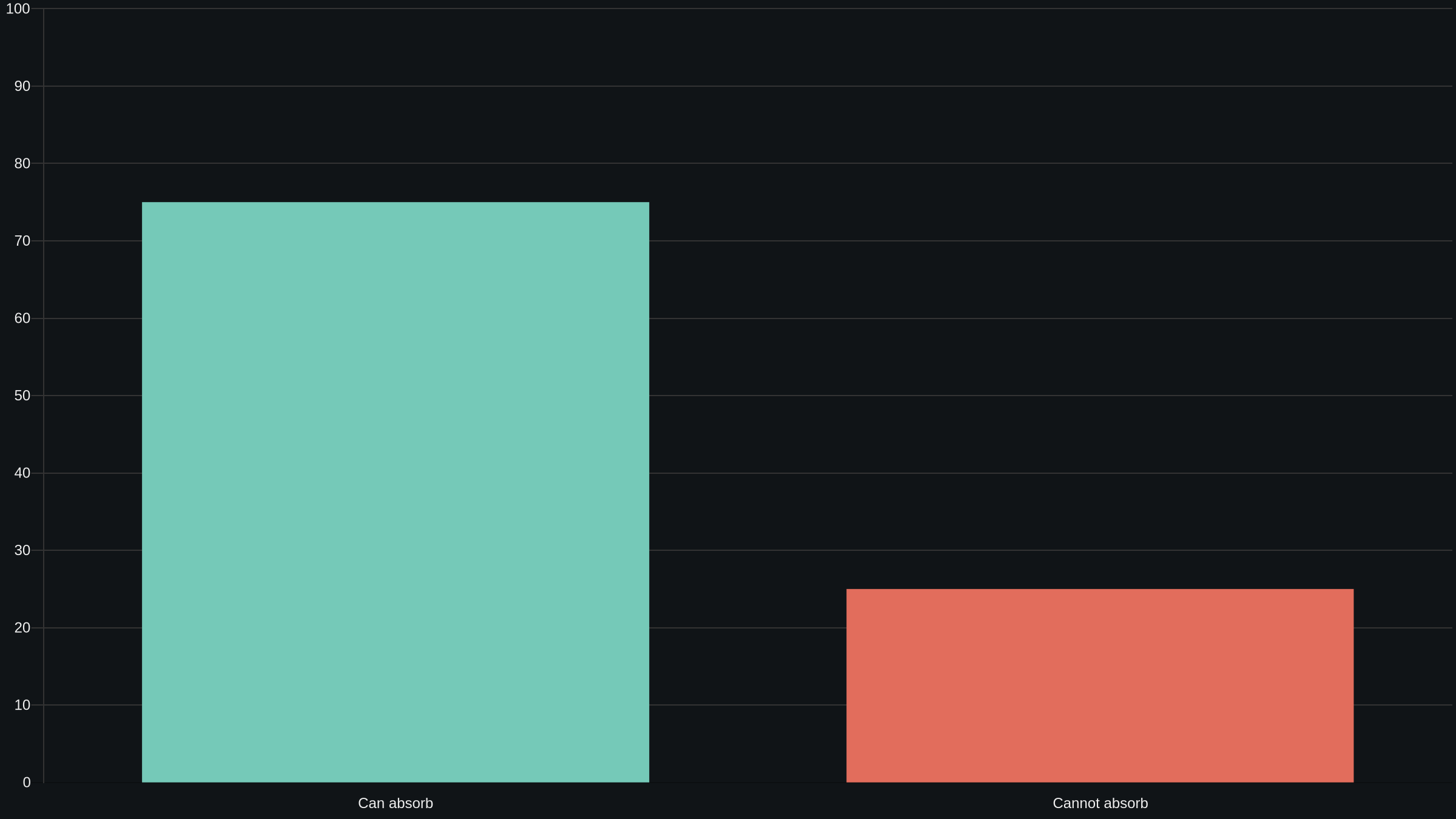
Source: ONS, Opinions and Lifestyle Survey. "Can absorb" is the complement of the reported 25% unable to afford the expense.
In July 2024, 25% of adults in Great Britain said they could not afford an unexpected, necessary GBP 850 expense.
Source: ONS, Opinions and Lifestyle Survey. "Can absorb" is the complement of the reported 25% unable to afford the expense.
An emergency is not just a financial event. It is a scheduling event. It changes who can travel, who can say yes, who can wait for a better offer, who can take a course, who can leave a bad job, and who has to explain themselves.
That is why the phrase "just be more organised" is often so smug. Organisation works best when the calendar has room to be organised.
What society misreads
| What gets observed | The lazy conclusion | The missing variable |
|---|---|---|
| Never cancels plans | "Reliable person" | Predictable shifts, transport options, childcare or family cover, cash for a replacement |
| Takes unpaid or low-paid prestige work | "Ambitious risk-taker" | Rent runway, food runway, a home to return to, someone absorbing downside |
| Looks relaxed around deadlines | "Natural confidence" | A history in which mistakes did not threaten housing, credit, work or family peace |
| Always has capacity to socialise | "Charismatic / easy-going" | Less emergency labour, fewer crisis calls, less need to protect every pound and hour |
Important: this is a causal model, not a purity contest. Plenty of wealthy people are flaky. Plenty of poor people are exceptionally dependable. The point is that dependability is expensive to display repeatedly when your life has no spare capacity.

The real class divide is often not taste. It is how many failures your week can survive.
EXHIBIT B -- PLANNING HORIZON
The ONS asked adults how long they could make ends meet if their main source of income vanished. In its 2018-19 Wealth and Assets Survey, 10% said less than a week; 26% said less than a month; only 56% said three months or more.
Great Britain, April 2018-September 2019. The middle bins are derived from the ONS totals: 26% below one month and 56% at three months or more.
Read that as a social fact, not a finance statistic.
Someone who can plan only a week ahead will rationally choose certainty over prestige, cash today over a hypothetical line on the CV, and a known bad job over a risky good opportunity. Then observers call him "short-termist".
He is not necessarily short-termist. He may simply be living inside the time horizon his buffers permit.
The hidden curriculum is variance management
The conventional class story is about money. The better story is about volatility.
- Liquidity buffer -- Can one surprise bill be handled without borrowing, missing work or panicking?
- Schedule buffer -- Can an unexpected appointment fit without losing a day's wages or angering a manager?
- Bureaucratic buffer -- Do you have documents, a quiet address, working devices, a credit history, a trusted adult who knows how forms work?
- Relational buffer -- Is there anyone who can lend a car, review an email, receive a parcel, take a call, or give you a place to sleep for a week?
High social class is not owning every luxury. It is owning enough buffers that the world encounters you as a stable signal.
The middle-class superpower is not "working hard". It is being able to work hard without every normal disruption becoming visible.
EXHIBIT C -- WHY "GET A BETTER JOB" IS NOT A FULL ANSWER
The Resolution Foundation reports that 17% of employers using low-paid flexible work give only one day's notice of shift changes. It also estimates that roughly twice as many workers are highly anxious about unexpected hour changes as are on zero-hours contracts.
Share of employers using low-paid flexible work, Resolution Foundation (2024).
If your work can rewrite your week at 17:00, you cannot reliably book evening courses, dates, gym sessions, interviews, networking events or appointments. Your "lack of consistency" is partly being manufactured by your labour market position.
This is why class reproduction is so effective: volatility attacks the very traits institutions reward. A messy calendar can become a messy CV; a messy CV then becomes an explanation for why the next employer should prefer somebody else.
The reliability ladder -- a non-boilerplate solution
You cannot roleplay a family safety net. You can build a smaller personal version of its operating system.
| Move | What it fixes | Do this, not vague motivation |
|---|---|---|
| 1. Map failure points | Invisible chaos | Write the three things that most often ruin a week: transport, phone/laptop, rota, housing, health, paperwork. Make one fallback for each. |
| 2. Build a "do not touch" shock fund | Every surprise becoming debt | Start with a small, specific target for a phone repair, transport emergency or one critical bill. Its job is control, not returns or status. |
| 3. Buy predictability before upside | A chaotic income eating all ambition | When comparing roles, price the notice period, commute reliability and hours volatility, not only the hourly wage. |
| 4. Manufacture a professional surface | Being read as unreliable | Confirm appointments, answer important messages within a fixed window, keep documents in one place, and communicate a problem before it becomes a no-show. |
| 5. Build a two-person contingency network | Single-point failure | Not "networking". Two real reciprocal relationships: the person you can call for logistics, and the person who can call you. Be useful first. |
The order matters. Do not try to look high-status while your week is one broken phone away from collapse. First reduce variance. Then your discipline becomes visible. Then opportunities compound.

The final pill
People do not only inherit money. They inherit a lower penalty for being temporarily wrong.
The person who can make a bad decision, lose a job, move city, try a low-paid path, break a laptop or have a bad month -- and remain socially legible afterwards -- is playing a different game from the person for whom one disruption is reputational evidence.
That is why some people seem to possess effortless discipline.
Often, what you are seeing is not effortless discipline. You are seeing low volatility disguised as personality.
Question for the thread:
What was the most expensive "small" disruption you have had -- a cancelled shift, transport, housing, a device, paperwork, health, family logistics? Not the cost in money: the opportunity it quietly erased.
Data / reading:
ONS -- Public opinions and social trends, July 2024
| ONS -- Wealth and Assets Survey, financial security
| Resolution Foundation -- Low Pay Britain 2024
| Photography: Unsplash
Last edited:


