bignattydaddy123
Iron
- Joined
- Apr 24, 2026
- Posts
- 33
- Reputation
- 25
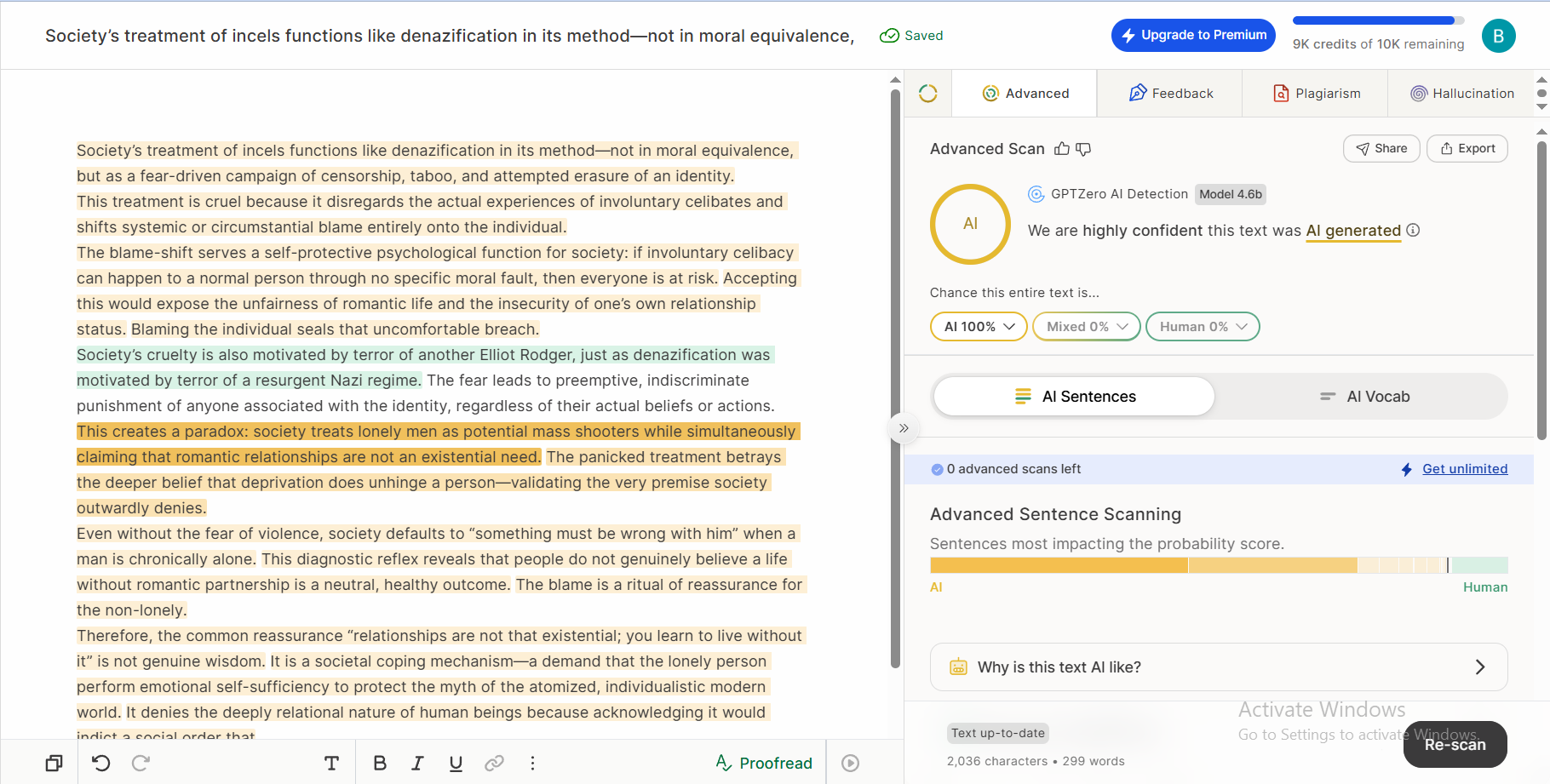
Society’s treatment of incels functions like denazification in its method—not in moral equivalence, but as a fear-driven campaign of censorship, taboo, and attempted erasure of an identity.
This treatment is cruel because it disregards the actual experiences of involuntary celibates and shifts systemic or circumstantial blame entirely onto the individual.
The blame-shift serves a self-protective psychological function for society: if involuntary celibacy can happen to a normal person through no specific moral fault, then everyone is at risk. Accepting this would expose the unfairness of romantic life and the insecurity of one’s own relationship status. Blaming the individual seals that uncomfortable breach.
Society’s cruelty is also motivated by terror of another Elliot Rodger, just as denazification was motivated by terror of a resurgent Nazi regime. The fear leads to preemptive, indiscriminate punishment of anyone associated with the identity, regardless of their actual beliefs or actions.
This creates a paradox: society treats lonely men as potential mass shooters while simultaneously claiming that romantic relationships are not an existential need. The panicked treatment betrays the deeper belief that deprivation does unhinge a person—validating the very premise society outwardly denies.
Even without the fear of violence, society defaults to “something must be wrong with him” when a man is chronically alone. This diagnostic reflex reveals that people do not genuinely believe a life without romantic partnership is a neutral, healthy outcome. The blame is a ritual of reassurance for the non-lonely.
Therefore, the common reassurance “relationships are not that existential; you learn to live without it” is not genuine wisdom. It is a societal coping mechanism—a demand that the lonely person perform emotional self-sufficiency to protect the myth of the atomized, individualistic modern world. It denies the deeply relational nature of human beings because acknowledging it would indict a social order that
This treatment is cruel because it disregards the actual experiences of involuntary celibates and shifts systemic or circumstantial blame entirely onto the individual.
The blame-shift serves a self-protective psychological function for society: if involuntary celibacy can happen to a normal person through no specific moral fault, then everyone is at risk. Accepting this would expose the unfairness of romantic life and the insecurity of one’s own relationship status. Blaming the individual seals that uncomfortable breach.
Society’s cruelty is also motivated by terror of another Elliot Rodger, just as denazification was motivated by terror of a resurgent Nazi regime. The fear leads to preemptive, indiscriminate punishment of anyone associated with the identity, regardless of their actual beliefs or actions.
This creates a paradox: society treats lonely men as potential mass shooters while simultaneously claiming that romantic relationships are not an existential need. The panicked treatment betrays the deeper belief that deprivation does unhinge a person—validating the very premise society outwardly denies.
Even without the fear of violence, society defaults to “something must be wrong with him” when a man is chronically alone. This diagnostic reflex reveals that people do not genuinely believe a life without romantic partnership is a neutral, healthy outcome. The blame is a ritual of reassurance for the non-lonely.
Therefore, the common reassurance “relationships are not that existential; you learn to live without it” is not genuine wisdom. It is a societal coping mechanism—a demand that the lonely person perform emotional self-sufficiency to protect the myth of the atomized, individualistic modern world. It denies the deeply relational nature of human beings because acknowledging it would indict a social order that