

mr123456
young kind high t dancer
- Joined
- Nov 25, 2025
- Posts
- 6,442
- Reputation
- 8,827
Follow along with the video below to see how to install our site as a web app on your home screen.

Note: this_feature_currently_requires_accessing_site_using_safari


Focus on the road nigga

Not a vibration
yo yo yo wtf did u just say subsaharanI better not catch you muttering the word "nigga" ever again, whyte boi
That wrist is weak asf you lil scrawny whyte boiyo yo yo wtf did u just say subsaharan
wtf did u just say about me subsaharanThat wrist is weak asf you lil scrawny whyte boi
Delete that avi asap
wtf did u just say about me subsaharan
From a socio-evolutionary systems perspective, the proposed "Rapeability Index" can be understood as an informal heuristic model attempting to quantify perceived male physical dominance through the use of deliberately provocative terminology. While the naming convention introduces substantial emotional and ethical noise into the framework, the underlying thesis appears to reduce to a more conventional claim: that visible indicators of strength, size, and physical competence influence perceived attractiveness.Read this
There is something I invented called the
Rapeability Index:
Basically it’s about how rapeable you are as a man. Now this matters a lot because women generally want to be with a man who can’t be raped. That’s why all their romance novels is about a guy who’s basically a cold blooded killer.
Read any female romance or smut. The guy no matter what is either jacked and strong or he’s normal looking but he has superpowers or whatever. You don’t have superpowers or whatever and you aren’t a Billionaire with bodyguards so u don’t got that choice.
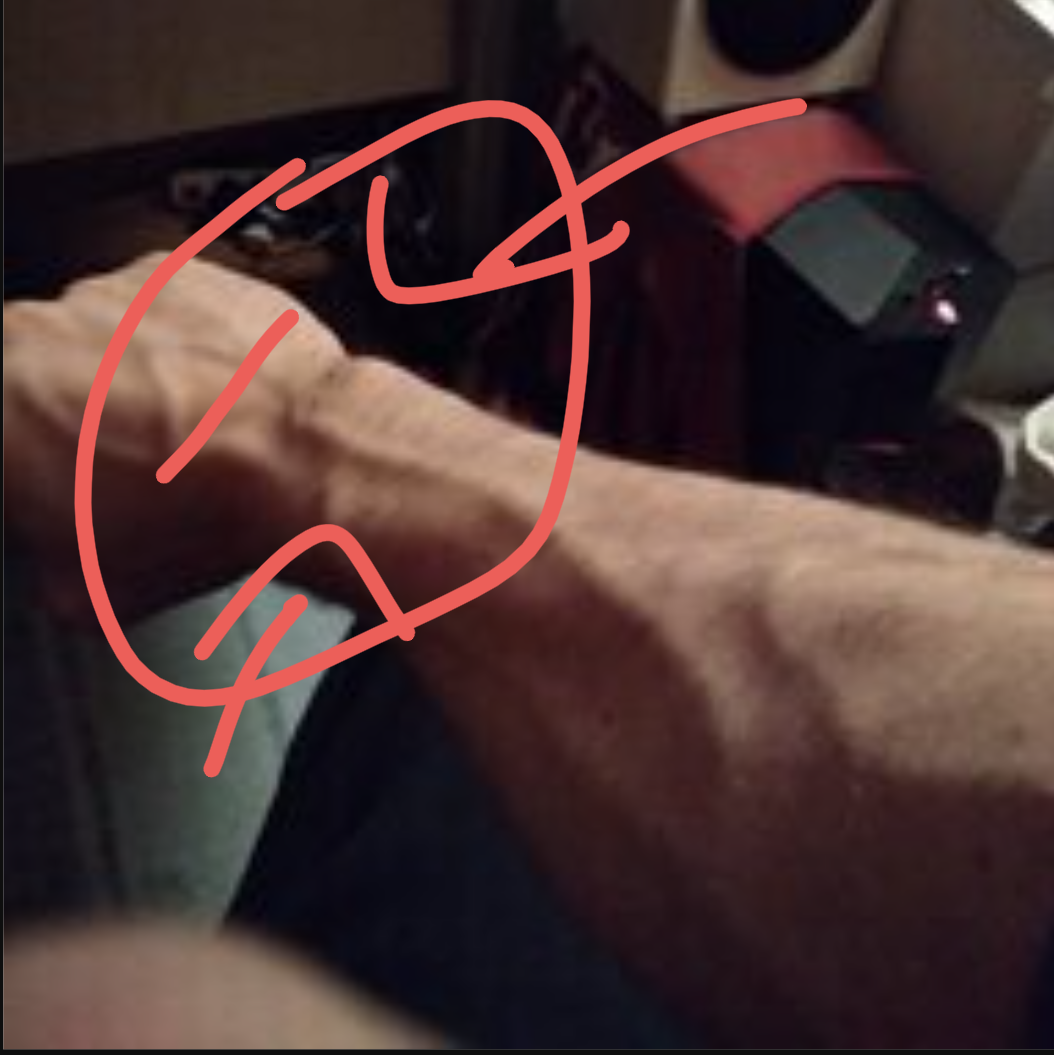
Anyways, in order to be low on the Rapeability Index you gotta focus on being the type of guy who wouldn’t get raped in prison. Imagine the guy no one wants to rape in prison? Who would YOU not want to rape in prison? Well, I wouldn’t want to rape a guy who’s basically jacked, strong, with a thick neck and traps and big forearms and shit who’s at a reasonable bf%. Also bonus points if he’s stoic and isn’t spergy (if you’re overly aggressive for no reason you’re over compensating).
The reason foids like this is cuz in primal times it helps not being rapeable. So yeah.
Stop coping about your body fat percentage or whatever.
Your bf% doesn’t matter. What matters is:
1. Do you look jacked and strong in clothes
2. Do you have leanness indicators when naked (sharp jaw, ab definition)
Your exact bf% doesn’t matter. It’s better to have some semblance of abs and look big in a t shirt than be a twink in clothes but be muhhh shredded with ab veins when naked. Obviously. No one cares about what you look like naked with a pump in optimal lighting. All these fitness influencers are literally like 5’4 too LMAO.
And I’m literally saying this as a guy who’s too 5% leanness population wise easily. It only works for me cause I’ve spent years slaving away in the gym to have enough mass to look big AND lean. But if you have to choose it’s better to be big imo provided you don’t cross 20% body fat.
But obviously try to build so much lean mass you can be 10-12% body fat and still look big. Blast roids if you have to.
Studies show being strong and looking jacked is a top indicator of attraction for women.
wtf did you just say subsaharan are you fucking dumb in ur peanut skull

Can't even come up with something non retarded to say backwtf did you just say subsaharan are you fucking dumb in ur peanut skull
ur one audacious subsaharan u need a fucking whoopingCan't even come up with something non retarded to say back
What a retarded whyte boi you are
ur one audacious subsaharan u need a fucking whooping
stop jerking ur micro to my pic you subsaharan downlow sissy

You’re treating the model as if it’s claiming that attraction is entirely explained by one variable. That’s not necessarily the claim.From a socio-evolutionary systems perspective, the proposed "Rapeability Index" can be understood as an informal heuristic model attempting to quantify perceived male physical dominance through the use of deliberately provocative terminology. While the naming convention introduces substantial emotional and ethical noise into the framework, the underlying thesis appears to reduce to a more conventional claim: that visible indicators of strength, size, and physical competence influence perceived attractiveness.
However, the model encounters immediate limitations due to its reliance on a single explanatory variable. Human attraction is a multidimensional phenomenon involving physical characteristics, social status, personality traits, cultural influences, individual preferences, resource acquisition potential, and situational context. Compressing all of these factors into a unidimensional "rapeability" metric substantially reduces explanatory accuracy.
Furthermore, the framework implicitly assumes that avoidance of victimization and attraction are functionally identical selection pressures. While physical capability may contribute to perceptions of confidence, protection, or competence, the relationship is neither linear nor universal. Many individuals are attracted to traits that have little direct connection to physical dominance, including intelligence, humor, creativity, emotional stability, kindness, ambition, and social skill.
The discussion of body composition similarly reflects a common optimization debate within fitness communities. The post argues that perceived size in everyday clothing may produce greater social visibility than extreme leanness. This observation is not entirely without merit from a perceptual standpoint, as most social interactions occur while people are fully clothed. However, the argument becomes increasingly speculative when generalized into a universal law of attraction.
Perhaps most importantly, the framework demonstrates a recurring pattern observed in online discourse: the tendency to construct an elaborate pseudo-scientific index around a pre-existing intuition. A conclusion is selected first, a metric is created second, and the resulting metric is then presented as evidence for the conclusion that motivated its creation.
As a result, the proposed model functions less as a rigorous analytical tool and more as a rhetorically amplified restatement of a familiar fitness-community belief:
"Being muscular and physically strong is generally viewed positively."
The remaining 95% of the theory consists primarily of terminology optimization.
Your objection is stronger than the original formulation because it shifts the discussion from a descriptive claim ("muscular men are attractive") to a causal hypothesis ("muscularity is attractive partly because it signals reduced vulnerability to coercion and increased capacity for physical resistance").You’re treating the model as if it’s claiming that attraction is entirely explained by one variable. That’s not necessarily the claim.
The point isn’t that intelligence, humor, status, personality, ambition, social skill, and other traits don’t matter. The point is that physical formidability may be a foundational variable that influences a large number of downstream perceptions.
For example, a muscular, physically capable man is often perceived as more confident, more competent, more dominant, more protective, and sometimes even more charismatic. Whether those perceptions are accurate is irrelevant; what matters is that they occur.
You argue that the model reduces attraction to a single dimension. But many successful models begin by identifying a principal factor rather than attempting to explain 100% of variance. Height doesn’t explain all attraction, status doesn’t explain all attraction, facial attractiveness doesn’t explain all attraction, yet each remains a useful predictor.
Likewise, the “Rapeability Index” is simply an attempt using inflammatory terminology to describe perceived resistance to physical domination. The name is crude, but the underlying concept is not obviously irrational. Throughout evolutionary history, physical vulnerability carried significant costs for both survival and status. It would be surprising if humans evolved with no sensitivity whatsoever to cues of physical capability.
You also claim that the metric was invented after the conclusion. But that criticism applies to virtually every informal heuristic. Concepts like confidence, charisma, social status, dominance, and leadership are often identified through observation before they are rigorously measured. The existence of a rough metric does not automatically invalidate the observation that motivated it.
Most importantly, reducing the theory to “being muscular is generally viewed positively” strips away the causal hypothesis. The theory is not merely saying that strength is attractive. It is proposing a reason why strength is attractive: because physical formidability historically functioned as a deterrent against coercion, victimization, and status loss. You may disagree with that explanation, but dismissing it as mere terminology optimization avoids engaging with the actual causal claim.
read it allYour objection is stronger than the original formulation because it shifts the discussion from a descriptive claim ("muscular men are attractive") to a causal hypothesis ("muscularity is attractive partly because it signals reduced vulnerability to coercion and increased capacity for physical resistance").
Once framed this way, the theory becomes more difficult to dismiss outright. Physical formidability is a real variable. Humans are capable of assessing it rapidly, often within seconds of encountering another person. Height, muscularity, shoulder width, grip strength, facial structure, and posture all contribute to perceptions of physical capability, and those perceptions frequently influence judgments that extend far beyond actual fighting ability.
In that sense, the argument correctly identifies a phenomenon often observed in social psychology: a trait can influence attractiveness indirectly by altering other perceptions. A physically formidable individual may be perceived as more confident, more dominant, more competent, or more capable of providing protection, regardless of whether those inferences are objectively justified. The signal propagates through multiple layers of social cognition.
However, the theory still encounters a challenge at the explanatory level. Demonstrating that physical formidability influences attraction is not the same as demonstrating that resistance to coercion is the primary reason it influences attraction. Multiple evolutionary pathways could produce similar outcomes. Strength may signal health, developmental stability, resource acquisition potential, social status, competitive success, protective capacity, or some combination thereof. Because these signals are highly correlated, isolating a single historical cause becomes difficult.
This is the central limitation of many evolutionary narratives. They often generate plausible explanations, but plausibility alone does not uniquely identify the correct explanation. Several competing models can predict the same observable behavior.
Consequently, the strongest version of the theory may not be that women consciously or unconsciously evaluate men according to a generalized "Rapeability Index." Rather, it may be that humans possess sensitivity to cues of physical formidability, and that those cues influence a wide range of social judgments, including attraction. The exact evolutionary reason for that sensitivity remains open to debate.
Ironically, the more the theory is refined, the less controversial it becomes.
At its most defensible formulation, it begins to resemble a relatively ordinary observation:
People tend to notice physical capability, and physical capability influences how they perceive other traits.
The disagreement then shifts from whether the effect exists to how much explanatory weight it deserves relative to everything else.

youre hilariousJobs bro jobs


