





mats.v
Silver
- Joined
- Feb 25, 2026
- Posts
- 611
- Reputation
- 370
STEROIDS AND THE HEART. UPDATED
RECONTINUED AND UPDATED VERSION OF MY ORIGINAL THREAD.
Steroid users GTFIH
listed below are all the major and minor(which lead to major), and most common cardiovascular issues associated with ANABOLIC ANDROGENIC STEROID USE.
WHY?
THIS IS WHYYYY you niggers should be careful and stay alive when pinning or orally investing anabolics. Through understanding we can better avoid fatalities and dysfunction. Many have died suddenly from steroid use from cardiac events which show no symptoms. Getting labs alone doesn’t guarentee you won’t suddenly collapse (and die) from dilative cardiomyopathy enduced heart failure or arrhythmia..
how does the heart work?
The main map of spots to remember is below:
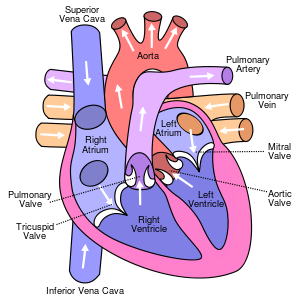
Blue deoxygenated blood enters the superior vena cava, to the right atrium, travels through the tricuspid valve.. through the right ventricle… and enters the pulmonary artery, to reach and receive oxygen from the respiratory(lungs) system. The red oxygenated blood then enters the pulmonary vain, enters the left atrium, and passes the mitral valve to enter the left ventricle. The left ventricle then flows blood to the aorta to be released into the blood vessels and travel through the body. Steroids affect this process.
If this process fails you run into highly fatal problems.
blood is the life of the body.
The heart is made of three tissues:
Endocadium(inner layer), myocardium, and pericardium(outer)…
Its functions consist of structural and electrical processes.
The filling of blood is referred to as diastole(DIE-Ass-Tow-Lee). Done in the right atrium and ventricle.
And the contraction/pumping of blood is systole(sis-tow-lee). Done after blood is oxygenated. from the left atrium and finally to release from the aorta.
Most steroid damage is done in the myocardium(mid, muscular) and eventually pericardium(outer) layers.
STRUCTURAL PROBLEMS
ISSUES IN THE MYOCARDIUM/Heart structure:
There are androgen receptors in the heart muscles as well… excess androgens will lead to upregulation of activity in these androgen receptors. The heart muscle thus will grow. A larger heart impairs function significantly. Here’s how that can happen/how it manifests:
VASCULAR, ISCHEMIC DISEASE, and Cardiac events caused by both structural and electrical damage
Electrical dysfunction
Arrhythmia. Electrical system dysfunction, life-threatening heartbeats, heartbeat irregularity. Leads to problems such as atrial fibrillation, ventricular fibrillation.. Ultimtaley resulting in increased risk of sudden cardiac death. Can be caused by cardiomyopathies and combining steroid use with stimulant use, electrolyte imbalances, poor diet, etc.
Some genetically inherited disorders can include:
Long QT syndrome
Brugada syndrome
Catecholaminergic polymorphic ventricular tachycardia (CPVT)
Short QT syndrome
Structural heart disorders discussed can induce myocardial infarcture and if left untreated in 30-60minutes will lead to heart failure, and ischemia(lack of blood flow) to vital organ tissues like the liver and brain. Rendering the victim dead.
Electrical issues often end up in myocardial infarction as well, ending in sudden cardiac arrest, also a lack of blood reach to vital tissues and thus death in the individual whom it affects.
These are serious issues that can result in the death of a steroid user. But keep calm in knowing there is a significant amount of knowledge around preventing and treating these issues.. my next thread will go over just that.
Please like respond and do your thing, thanks for the love
RECONTINUED AND UPDATED VERSION OF MY ORIGINAL THREAD.
Steroid users GTFIH
listed below are all the major and minor(which lead to major), and most common cardiovascular issues associated with ANABOLIC ANDROGENIC STEROID USE.
WHY?
THIS IS WHYYYY you niggers should be careful and stay alive when pinning or orally investing anabolics. Through understanding we can better avoid fatalities and dysfunction. Many have died suddenly from steroid use from cardiac events which show no symptoms. Getting labs alone doesn’t guarentee you won’t suddenly collapse (and die) from dilative cardiomyopathy enduced heart failure or arrhythmia..
how does the heart work?
The main map of spots to remember is below:
Blue deoxygenated blood enters the superior vena cava, to the right atrium, travels through the tricuspid valve.. through the right ventricle… and enters the pulmonary artery, to reach and receive oxygen from the respiratory(lungs) system. The red oxygenated blood then enters the pulmonary vain, enters the left atrium, and passes the mitral valve to enter the left ventricle. The left ventricle then flows blood to the aorta to be released into the blood vessels and travel through the body. Steroids affect this process.
If this process fails you run into highly fatal problems.
blood is the life of the body.
The heart is made of three tissues:
Endocadium(inner layer), myocardium, and pericardium(outer)…
Its functions consist of structural and electrical processes.
The filling of blood is referred to as diastole(DIE-Ass-Tow-Lee). Done in the right atrium and ventricle.
And the contraction/pumping of blood is systole(sis-tow-lee). Done after blood is oxygenated. from the left atrium and finally to release from the aorta.
Most steroid damage is done in the myocardium(mid, muscular) and eventually pericardium(outer) layers.
STRUCTURAL PROBLEMS
ISSUES IN THE MYOCARDIUM/Heart structure:
There are androgen receptors in the heart muscles as well… excess androgens will lead to upregulation of activity in these androgen receptors. The heart muscle thus will grow. A larger heart impairs function significantly. Here’s how that can happen/how it manifests:
- Cardiomyopathy. Weakening or largening of heart muscle(ventricle). Heart failure, arrhythmia(electrical dysfunction) as result.. sudden death likely. Those who carry genetic predisposition can develop dilative cardiomyopathy. This type of cardiomyopathy leads to the increased ability of diastole and reduced function of Systole..(meaning the heart can fill with blood well due to dilated left ventricle and atrium.. however pumping blood is significantly hindered due to reduced ability to pump blood
- Left ventricular hypertrophy. Androgen receptor stimulation in the left ventricle. The ventricle thickens in the heart cannot properly carry out systole function, nor diastole function. increases the risk of heart failure, arrhythmias (irregular heartbeats), ischemic heart disease, and sudden cardiac arrest.. myocardial fibrosis as well.
- Myocardial fibrosis Formation of scar tissue(apoptosis) within the heart muscle, often occurring alongside left ventricular hypertrophy in chronic anabolic steroid users. This can disrupt electrical conduction and mechanical function, increasing the risk of arrhythmias, heart failure, and sudden cardiac death.
- Arrhythmogenic right ventricular myopathy: rare genetic condition where where fat and scar tissue replace heart muscle in the right ventricle
- Significant valvular disease occurs when one or more of the heart's four valves—mitral, aortic, tricuspid, or pulmonary—do not open completely (stenosis) or fail to close tightly (regurgitation).
- Congenital heart disease one or more structural abnormalities in the heart that develop before birth. Affects 1% of births and is the most common birth defect..broken into atrial or ventricular septal defect, consisting of a hole upper or lower heart chambers
- Coronary artery anomalies a congenital defect in the structure, origin, or path of the blood vessels that supply the heart muscle. While many are harmless and found incidentally, specific types—like an artery coursing between the aorta and pulmonary artery—can restrict blood flow and cause sudden cardiac death. Typically found via echocardiogram, or cardiac MRI.
- Myocarditis: inflammation of the myocardium. Can trigger fibrosis/scarring.
- Restrictive cardiomyopathies the rarest of classified myopathies of the cardiovascular system. It occurs when the heart's ventricles become rigid and scarred, preventing them from properly relaxing to fill with blood. While the heart's pumping function is initially preserved, impaired filling causes blood to back up, leading to heart failure.
VASCULAR, ISCHEMIC DISEASE, and Cardiac events caused by both structural and electrical damage
- Arteriosclerosis: the "hardening" or thickening of the arterial walls.. leads to plaque formation: atherosclerosis:
- Atherosclerosis. A type of arteriosclerosis. Example: coronary artery disease. Excess plaque buildup via increased LDL and reduced HDL in the bloodstream… also known as atherogenic dislipedemia.. the hepatic lipase enzyme is upregulated due to high testosterone levels, producing higher levels of low density lipoprotein, and reducing the level of high density Lipo proteins. High ldl in the bloodstream leads to plaque buildup in artery walls. LDL is filtered by HDL.. which is already decreased. Atherosclerosis is caused by blockage of plaque. results can be fatal due to blockage in arterial flow of blood.. can also induced vasospasm of the vascular tissue, thus resulting in immediate blockage and potential myocardial infarction
- Myocardial infarction.. (heart attack).. due to atherosclerosis plaque rupture.. severe coronary artery spasm.. or sudden clot formation( from arteriosclerosis, or thick blood)… Clot formations are also known as thromboembolism(more on this later)
- Hypertension. Red blood cell hematocrit, increase..thicker volume leading to the increase of contraction forced to pump blood through already constricted vessels. Strain on the heart especially on the ventricle. The result is arteriosclerosis,atherosclerosis, left ventricular hypertrophy, & heart failure
- Endothelial dysfunction is damage to inner lining of vessels, also known as the endocardium. the result is hypertension, stiffness, vascular resistance, myocardial injury, and adverse remodeling.. can result in cardiomyopathy, heart failure from atherosclerosis, coronary disease,… thromboembolisms, and ischemia… myocardial infarction arrhythmias, and fibrosis of myocardium… arterial fibrosis also result of endothelial dysfunction
- Arterial fibrosis: thickening of artery walls leads to thromboembolisms and sudden cardiac death.. broader terminology; Vascular fibrosis due to increase scar tissue and thickening of blood vessels; thus vasoconstriction in an already stressed environment, such as polycythemia. Upregulation of testosterone induced androgen receptor activity in blood vessels enables oxidative stress and thus thickening of tissue.
- Thromboembolism: (blood clots) like deep vein thrombosis… thromboembolism can cause stroke. And spike aneurysm rupture.(nocturnalKent reference) or pulmonary embolisms… clots are usually caused by arterial fibrosis, polycythemia or atherosclerosis.
- Polycythemia: access erythropoietin production due to high testosterone levels erythropoietin directly stimulates red blood cell production in the bone marrow increase. High red blood cell count levels will lead to thicker blood leading.. to hypertension, increased thromboembolism risk , and thus fatal cardiac events..
Electrical dysfunction
Arrhythmia. Electrical system dysfunction, life-threatening heartbeats, heartbeat irregularity. Leads to problems such as atrial fibrillation, ventricular fibrillation.. Ultimtaley resulting in increased risk of sudden cardiac death. Can be caused by cardiomyopathies and combining steroid use with stimulant use, electrolyte imbalances, poor diet, etc.
Some genetically inherited disorders can include:
Long QT syndrome
Brugada syndrome
Catecholaminergic polymorphic ventricular tachycardia (CPVT)
Short QT syndrome
Structural heart disorders discussed can induce myocardial infarcture and if left untreated in 30-60minutes will lead to heart failure, and ischemia(lack of blood flow) to vital organ tissues like the liver and brain. Rendering the victim dead.
Electrical issues often end up in myocardial infarction as well, ending in sudden cardiac arrest, also a lack of blood reach to vital tissues and thus death in the individual whom it affects.
These are serious issues that can result in the death of a steroid user. But keep calm in knowing there is a significant amount of knowledge around preventing and treating these issues.. my next thread will go over just that.
Please like respond and do your thing, thanks for the love


