




Surgery Idea

thecel

thecel

morph king
Joined
May 16, 2020
Posts
26,132
Reputation
57,143
What if they made an implant that's forced under tension, compression, or bending stress in the position it's installed in, so that the implant exerts force on the bone to reshape it over time? That way you get the aesthetic benefit of the implant as well as bone remodeling. And the implant can be removed later if you want and you'll keep the bone changes the implant did.


Shitty example just to show the idea:

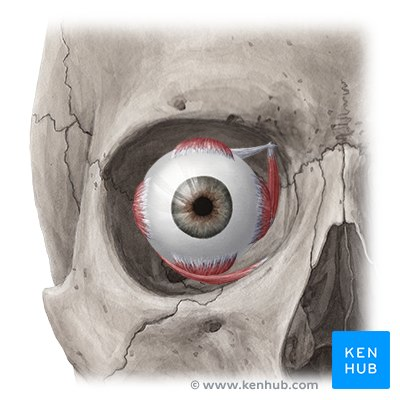
A patient has overly negatively tilted supraorbitals.

1784261432816


The surgeon adds an implant on his orbital rim, but the "resting" shape of the implant is different from the shape it is bent to when it's attached to the bone.


1784261585135
1784261487832


The implant exerts constant force to the bone, making it change shape over time.

1784261700356


After the desired remodeling is attained, the implant can be removed, and the patient looks better with their own bones.
1784261838297


What you you guys think?


A way this might not work that I can think of is if the implant will move through the bone—screws and plates, etc. dragging trenches through the bone—which is really bad. Or the implant will detach and slide over the bone, causing injury to surrounding skin.

Anyone knowledgeable about surgery and bones want to weigh in?
 
Last edited:

  • +1
Reactions: oxygenbreather, eㅤㅤ, true juan and 4 others
bro you should become a fucking surgeon, like your legit on sum high iq type shit
 
  • +1
Reactions: eㅤㅤ
inb4 greys claiming to start a DIY
 
  • JFL
Reactions: thecel
nigga lowkey your smart become a surgeon
 
high iq in theory, but who knows the actual complications and nuances that may hinder something like this to work?

it needs to be thought out by an actual surgeon and someone who is actually qualified to do so. but nice proposition

miring creativity
 
  • +1
Reactions: thecel
or.... just kill subhumans?? its not that complicated son
 
The basic concept is scientifically plausible in a very broad sense—bone does remodel in response to sustained mechanical loading (Wolff's law and the mechanostat theory). However, I do not think this idea would work well in the way the post imagines, especially for the orbital rim. There are several major problems.

What the idea gets right​

Bone is a living tissue.
  • Orthodontic braces move teeth by applying small continuous forces that remodel the surrounding alveolar bone.
  • Limb lengthening (Ilizarov technique) relies on controlled mechanical tension to generate new bone.
  • Cranial distraction osteogenesis gradually moves bone segments apart using implanted devices.
  • Orthopedic implants can sometimes cause bone remodeling from altered loading.
So the underlying biological principle is real.

The biggest issue: you're pushing on one intact bone​


The orbital rim is part of the frontal bone and zygoma, which are thick, rigid bones integrated into the skull.

A bent implant screwed onto the orbital rim would mostly do one of three things:
  1. remain elastically bent while the screws carry the load,
  2. gradually relax (depending on the implant material), or
  3. transfer force to the screws rather than significantly deform the skull.

Unlike teeth, there isn't a mobile structure surrounded by remodeling tissue that can slowly migrate.

The screws become the weak point​


The original poster actually identifies one of the major engineering problems.

If the implant is trying to "straighten out," it creates constant force at the fixation points.

Possible consequences include:
  • screw loosening
  • enlargement of screw holes
  • micro-motion
  • local bone resorption around the screws
  • plate or implant fatigue
  • implant migration

Orthopedic surgeons generally try to avoid continuous unintended loading like this because stable fixation is desirable.

Remodeling wouldn't necessarily occur where you want​


Bone responds to local strain.

That means you might get:
  • thickening under compression,
  • resorption elsewhere,
  • unpredictable changes depending on stress distribution.

The orbital rim has a complicated three-dimensional geometry. You can't assume it would simply rotate upward into a more aesthetic angle.

Remodeling is very slow​


Even if remodeling occurred, adult craniofacial cortical bone remodels much more slowly than alveolar bone.

Changing the shape of the supraorbital rim by several millimeters could take years, if it happened at all.

The orbital region is a poor location​


The orbit contains:
  • the globe (eye),
  • extraocular muscles,
  • the supraorbital nerve,
  • blood vessels,
  • thin orbital walls.

Any implant applying constant force has the potential to:
  • irritate soft tissue,
  • compress nerves,
  • alter orbital volume,
  • affect eyelid mechanics,
  • create asymmetry if remodeling differs between sides.

We already have something similar—and it requires cutting the bone​

Surgeons already reshape facial bones using:
  • osteotomies,
  • distraction osteogenesis,
  • cranial vault remodeling,
  • custom implants.
The common feature is that the bone is intentionally cut or mobilized first.

That's because an intact adult skull is extremely resistant to changing shape from external forces alone.

Could it be made to work?​

Not exactly as described.

A more plausible version would be an active remodeling device, something closer to distraction osteogenesis:
  • the bone is surgically cut,
  • a device gradually changes its position,
  • new bone fills in behind it,
  • the device is later removed.
This is already an established technique in craniofacial surgery.

Trying to reshape an intact orbital rim simply by attaching a pre-stressed implant would be much less predictable.

Overall assessment​

From a biomechanics perspective, I'd rate the idea as:
  • Underlying biological principle: ✔️ Sound.
  • Engineering concept: Partially plausible.
  • Likely to produce controlled cosmetic remodeling of an intact orbital rim: Probably not.
  • Main failure mode: Fixation loosening, stress concentration around screws, implant relaxation, and unpredictable local remodeling rather than smooth reshaping of the bone.
So the proposal isn't "obviously impossible," but it overlooks how resistant the adult craniofacial skeleton is to deformation and how difficult it is to direct bone remodeling without first creating a controlled osteotomy or using established distraction techniques. That's why craniofacial surgeons who want to permanently reposition facial bones generally cut and reposition them rather than trying to bend the intact skull over time with a stressed implant.
 
Last edited:
  • +1
  • So Sad
Reactions: Light•, oxygenbreather and proxxyy11
The basic concept is scientifically plausible in a very broad sense—bone does remodel in response to sustained mechanical loading (Wolff's law and the mechanostat theory). However, I do not think this idea would work well in the way the post imagines, especially for the orbital rim. There are several major problems.


What the idea gets right​


Bone is a living tissue.


  • Orthodontic braces move teeth by applying small continuous forces that remodel the surrounding alveolar bone.
  • Limb lengthening (Ilizarov technique) relies on controlled mechanical tension to generate new bone.
  • Cranial distraction osteogenesis gradually moves bone segments apart using implanted devices.
  • Orthopedic implants can sometimes cause bone remodeling from altered loading.

So the underlying biological principle is real.


The biggest issue: you're pushing on one intact bone​


The orbital rim is part of the frontal bone and zygoma, which are thick, rigid bones integrated into the skull.


A bent implant screwed onto the orbital rim would mostly do one of three things:


  1. remain elastically bent while the screws carry the load,
  2. gradually relax (depending on the implant material), or
  3. transfer force to the screws rather than significantly deform the skull.

Unlike teeth, there isn't a mobile structure surrounded by remodeling tissue that can slowly migrate.


The screws become the weak point​


The original poster actually identifies one of the major engineering problems.


If the implant is trying to "straighten out," it creates constant force at the fixation points.


Possible consequences include:


  • screw loosening
  • enlargement of screw holes
  • micro-motion
  • local bone resorption around the screws
  • plate or implant fatigue
  • implant migration

Orthopedic surgeons generally try to avoid continuous unintended loading like this because stable fixation is desirable.


Remodeling wouldn't necessarily occur where you want​


Bone responds to local strain.


That means you might get:


  • thickening under compression,
  • resorption elsewhere,
  • unpredictable changes depending on stress distribution.

The orbital rim has a complicated three-dimensional geometry. You can't assume it would simply rotate upward into a more aesthetic angle.


Remodeling is very slow​


Even if remodeling occurred, adult craniofacial cortical bone remodels much more slowly than alveolar bone.


Changing the shape of the supraorbital rim by several millimeters could take years, if it happened at all.


The orbital region is a poor location​


The orbit contains:


  • the globe (eye),
  • extraocular muscles,
  • the supraorbital nerve,
  • blood vessels,
  • thin orbital walls.

Any implant applying constant force has the potential to:


  • irritate soft tissue,
  • compress nerves,
  • alter orbital volume,
  • affect eyelid mechanics,
  • create asymmetry if remodeling differs between sides.

We already have something similar—and it requires cutting the bone​


Surgeons already reshape facial bones using:


  • osteotomies,
  • distraction osteogenesis,
  • cranial vault remodeling,
  • custom implants.

The common feature is that the bone is intentionally cut or mobilized first.


That's because an intact adult skull is extremely resistant to changing shape from external forces alone.


Could it be made to work?​


Not exactly as described.


A more plausible version would be an active remodeling device, something closer to distraction osteogenesis:


  • the bone is surgically cut,
  • a device gradually changes its position,
  • new bone fills in behind it,
  • the device is later removed.

This is already an established technique in craniofacial surgery.


Trying to reshape an intact orbital rim simply by attaching a pre-stressed implant would be much less predictable.


Overall assessment​


From a biomechanics perspective, I'd rate the idea as:


  • Underlying biological principle: ✔️ Sound.
  • Engineering concept: Partially plausible.
  • Likely to produce controlled cosmetic remodeling of an intact orbital rim: Probably not.
  • Main failure mode: Fixation loosening, stress concentration around screws, implant relaxation, and unpredictable local remodeling rather than smooth reshaping of the bone.

So the proposal isn't "obviously impossible," but it overlooks how resistant the adult craniofacial skeleton is to deformation and how difficult it is to direct bone remodeling without first creating a controlled osteotomy or using established distraction techniques. That's why craniofacial surgeons who want to permanently reposition facial bones generally cut and reposition them rather than trying to bend the intact skull over time with a stressed implant.
it was a cool idea regardless, you should try thinking of some more
 
  • +1
Reactions: thecel
better off with a lefort 3 tbh
 
  • +1
Reactions: thecel

Similar threads

I
Replies
3
Views
30
idontlikemyself6
I
Baeseth
Replies
8
Views
39
cpedy
cpedy
bimaxmaxxer
Replies
0
Views
17
bimaxmaxxer
bimaxmaxxer
Viriato_catholic
Replies
14
Views
70
duduboy
duduboy
pslturi
Replies
3
Views
28
pslturi
pslturi

Users who are viewing this thread

  • BlackOctopus
Back
Top
Sponsored
Stake.us
America's #1 Social Casino
Slots, Poker & More
Join Now →
