

ZenithZXV
ꪑꫀᦋꪖꪶꪮꪑꪖ᭢ỉꪖᨶ ᭢ꫀᨶꪹꪮꪑꪖ᭢ᨶꫀꪹ
- Joined
- Feb 19, 2026
- Posts
- 2,687
- Reputation
- 4,579
I must apologize for the lack of high quality threads made by me in these couple of days.
A lot of people like to stay on the eyes, the hair colour, or the nose, which is completely fine, but the cephalic index really tells the whole story.
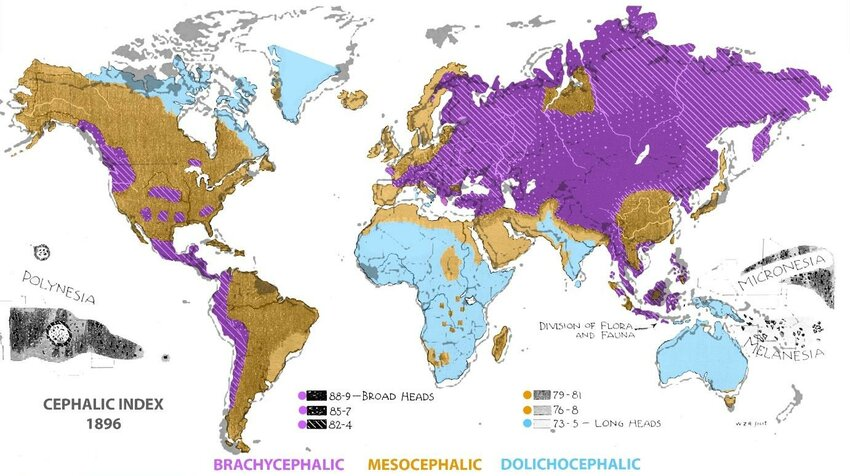
The cephalic index, or breadth-length index, is probably the most prominent and popular anthropometric index of the skull. It has been studied in almost all populations of the world and has long played an important role in human classification. It is calculated by dividing the greatest breadth of the head by the greatest length of the head. The values vary from numbers as low as 60 to roughly 100. It measures the size of your skull, and the lower you have it (from 60 to 100) the longer your skull will be, and the higher you have it, the more round your skull will be.
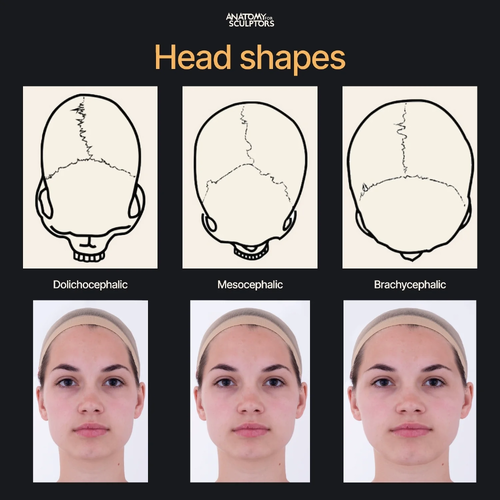
There are 5 types, Hyperdolichocephalic, Dolichocephalic, Mesocephalic, Brachycephalic, and Hyperbrachycephalic.
A lot of people like to stay on the eyes, the hair colour, or the nose, which is completely fine, but the cephalic index really tells the whole story.
The cephalic index, or breadth-length index, is probably the most prominent and popular anthropometric index of the skull. It has been studied in almost all populations of the world and has long played an important role in human classification. It is calculated by dividing the greatest breadth of the head by the greatest length of the head. The values vary from numbers as low as 60 to roughly 100. It measures the size of your skull, and the lower you have it (from 60 to 100) the longer your skull will be, and the higher you have it, the more round your skull will be.
There are 5 types, Hyperdolichocephalic, Dolichocephalic, Mesocephalic, Brachycephalic, and Hyperbrachycephalic.
- The Hyperdolichocephalic, as the name says, is a longer version of the Dolichocephalic, with the skull width reaching less than 71 percent of the skull breadth. The main populations who have this cephalic index are abos from Northern Australia, and niggers from africa, alongside some jeets from Southern India.
- The Dolichocephalic is a less pronounced version of the Hyperdolichocephalic, with the skull width reaching less than 76 percent of the skull breadth. The main populations who have this cephalic index are basically all africa, the middle east, India, and abos in Australia. Oddly enough, there are some White regions where the Dolichocephalic skull is present, such as Spain or Scandinavia, so having a dolichocephalic skull isn't a litmus test that can classify who's White and who isn't.
- The Mesocephalic is the most common version of cephalic index throughout the world, with the skull width reaching less than 81 and at least 76 percent of the skull breadth. As said before, it is the most common cephalic index, from Europe to Asia, but some regions like Australia or Central Asia have a large abscence of it.
- The Brachycephalic is the most common version of cephalic index on Central Europe, with the skull width reaching more than 81 percent of the skull breadth. Aside from that, it is also found on Central Asia, South East Asia, and South America.
- The Hyperbrachycephalic is the most round cephalic index, with the skull width reaching at least 85.5 percent of the skull breadth. It is largely found on regions with mountains all over the world and Central Asia, and, specifically in Europe, it includes the Alps and the Dinarics.