



pio
dangerously close to manlet
- Joined
- Oct 26, 2025
- Posts
- 1,318
- Reputation
- 1,642
The Eye Area Manual
A structured overview of every meaningful intervention for the eye area from free daily habits to surgical procedures, with scientific context and practical guidance.
1. Eye Area Anatomy & Aesthetics
2. Key Ratios & Proportions
3. Structural Factors
4. Sclera (Whitening)
5. Eyelashes
6. Eyebrows
7. Eye Color
8. Soft Interventions
9. Surgical Options
10. Priority Checklist
2. Key Ratios & Proportions
3. Structural Factors
4. Sclera (Whitening)
5. Eyelashes
6. Eyebrows
7. Eye Color
8. Soft Interventions
9. Surgical Options
10. Priority Checklist
Eye Area Anatomy & Aesthetics
The eye area is broadly considered the most impactful region of the male face. Every structure in this zone contributes to perceived attractiveness (its over if you have bad eyes)
The bony frame of the eye socket. Deep-set eyes result from orbital bones projecting further forward than the eyeball. This is a primary determinant of the "hunter eye" look and is considered a masculinizing, sexually dimorphic trait.
The visible opening of the eye. Measured horizontally (PFL = length) and vertically (PFW = width/height). The PFL: PFW ratio is a major driver of whether eyes appear "hunter" or "prey" wider vertically = more open, rounded, and feminized.
The angle between the inner (medial) canthus and the outer (lateral) canthus. Positive = outer corner is higher, associated with confidence, energy, and youth. Negative = drooping outer corner. Neutral falls in between.
The white of the eye. Bright white scleras signal youth and health. Discolored, bloodshot, or yellowish scleras are universally perceived as unattractive and unhealthy, even when all other eye features are identical.
The area directly below the eye, supported by the infraorbital rim (bone). Poor support here creates a hollow, sunken, or "tired" appearance. Strong malar (cheekbone) projection lifts this area and provides lateral support to the surrounding skin.
Upper eyelid exposure (UEE) — visible white above the iris when the eye is in a neutral position, is generally undesirable for males. Hooding (where the upper lid partially covers the iris) contributes to a lidded, relaxed, confident expression.
Sexual Dimorphism of The Eyes
Under the influence of androgens (testosterone and DHT), the male brow ridge, orbital rims, and surrounding bone structure grow more prominent. This naturally creates deeper-set eyes with a more compact vertical fissure, the "hunter eye" appearance. Estrogen-dominant development produces larger, rounder eyes with more upper eyelid visibility. Understanding this guides which features to enhance vs. reduce.
Ratios and proportions
These are the measurable relationships most commonly analyzed when assessing eye area quality.
These are the measurable relationships most commonly analyzed when assessing eye area quality.
The PFL: PFW ratio measures the horizontal length of the eye against its vertical height. This ratio is one of the most important determinants of whether eyes appear masculine or feminine.
3.5:1 or higher, Very long horizontally relative to height, almond-shaped. Ideal for males.
3:1, Good horizontal to vertical ratio, compact appearance. Good.
2.5:1 to 3:1, Average range, acceptable. Neutral.
Below 2.5:1, Round, wide-open eyes, prey-looking, feminized appearance. Suboptimal for males.
Average PFL (horizontal length) is approximately 28 to 31mm. The ratio matters more than raw PFL length. A short but compact eye can look more masculine than a long but tall one.
3.5:1 or higher, Very long horizontally relative to height, almond-shaped. Ideal for males.
3:1, Good horizontal to vertical ratio, compact appearance. Good.
2.5:1 to 3:1, Average range, acceptable. Neutral.
Below 2.5:1, Round, wide-open eyes, prey-looking, feminized appearance. Suboptimal for males.
Average PFL (horizontal length) is approximately 28 to 31mm. The ratio matters more than raw PFL length. A short but compact eye can look more masculine than a long but tall one.
Eye prominence is measured using a Hertel exophthalmometer, which measures the distance from the lateral orbital rim to the corneal apex.
Deep-set: under 14mm
Normal: 15 to 17mm
Moderately prominent: 18 to 20mm
Very prominent: over 20mm
Positive Vector: The eyeball sits behind the lower eyelid rim, which sits behind the malar eminence. Creates a supported, angular undereye. Ideal.
Neutral Vector: The globe, lower lid margin, and malar eminence all align in the same vertical plane.
Negative Vector: The eyeball protrudes beyond the lower lid rim and malar eminence. Creates scleral show and undereye hollowing. Undesirable.
Deep-set: under 14mm
Normal: 15 to 17mm
Moderately prominent: 18 to 20mm
Very prominent: over 20mm
Positive Vector: The eyeball sits behind the lower eyelid rim, which sits behind the malar eminence. Creates a supported, angular undereye. Ideal.
Neutral Vector: The globe, lower lid margin, and malar eminence all align in the same vertical plane.
Negative Vector: The eyeball protrudes beyond the lower lid rim and malar eminence. Creates scleral show and undereye hollowing. Undesirable.
IPD typically ranges 60 to 70mm. However, perceived IPD is heavily influenced by factors other than the actual bone measurement.
Eyebrow spacing: Wide brows extending past the outer eye corner make the eyes appear further apart. Brows close to the inner corners make them appear closer together.
Nasal bridge definition: A defined, projecting nasal bridge makes eyes appear closer together. A flat bridge makes them appear wider set.
Face width: Wider zygomatics and jaw can improve the ES ratio appearance without any change to actual IPD.
Eyebrow spacing: Wide brows extending past the outer eye corner make the eyes appear further apart. Brows close to the inner corners make them appear closer together.
Nasal bridge definition: A defined, projecting nasal bridge makes eyes appear closer together. A flat bridge makes them appear wider set.
Face width: Wider zygomatics and jaw can improve the ES ratio appearance without any change to actual IPD.
Note: IPD, ES ratio, and EME angle measurements have moderate impact at best on facial harmony by themselves. Eyebrow width and nasal bridge projection have an outsized effect on the perceived spacing of eyes, and can be modified non-surgically or with rhinoplasty.
Structural Factors
These are the deeper architectural elements of the eye area. Most cannot be changed without surgery, but understanding them helps identify where to focus.Deep-set eyes occur when the orbital rims project further forward than the cornea, creating a positive orbital vector. This is a sexually dimorphic masculine trait hypothesized to have evolved for protection during combat. Key visual effects:
Provides a natural shadow beneath the brow ridge, creating a brooding expression at rest.
Creates a more compact PFW ratio, making the eye appear narrower vertically.
Reduces or eliminates upper eyelid exposure.
Provides better support for the lower eyelid, reducing undereye hollowing.
Provides a natural shadow beneath the brow ridge, creating a brooding expression at rest.
Creates a more compact PFW ratio, making the eye appear narrower vertically.
Reduces or eliminates upper eyelid exposure.
Provides better support for the lower eyelid, reducing undereye hollowing.
Masculine PCT: The lower eyelid body remains relatively straight and neutral. The medial (inner) canthus turns sharply downward. Creates a rectangular eye shape with an angular lower lid.
Feminine PCT: The lateral (outer) canthus curves upward. The lower lid has a curved wave shape. The medial canthus is relatively neutral. Creates an almond or cat eye shape.
Both types of positive canthal tilt can look good on males. The masculine version creates a more angular, rectangular eye, while the feminine version creates a softer almond shape. Neither is strictly better, it comes down to overall facial harmony.
Feminine PCT: The lateral (outer) canthus curves upward. The lower lid has a curved wave shape. The medial canthus is relatively neutral. Creates an almond or cat eye shape.
Both types of positive canthal tilt can look good on males. The masculine version creates a more angular, rectangular eye, while the feminine version creates a softer almond shape. Neither is strictly better, it comes down to overall facial harmony.
Aegyo sal is the subtle roll just below the eye, created by the orbicularis oculi muscle when toned. It is distinct from eyebags, which form below it. Its effects include:
Perceived youthfulness, as it signals good fat storage and muscle tone.
A slightly reduced PFW ratio when present.
Prevention of dark circle and eyebag accumulation, as it acts as a lymphatic drainage pump.
It is prominent in many top male models including Jordan Barrett, Sean O'Pry, and David Gandy.
Perceived youthfulness, as it signals good fat storage and muscle tone.
A slightly reduced PFW ratio when present.
Prevention of dark circle and eyebag accumulation, as it acts as a lymphatic drainage pump.
It is prominent in many top male models including Jordan Barrett, Sean O'Pry, and David Gandy.
Strong lateral malar projection is the foundation of the entire eye area. Without it:
Skin droops and creates a tired appearance regardless of underlying eye structure.
Nasolabial folds become prominent at a young age.
Under-eye hollowing worsens over time.
The face appears chubby even at low bodyfat.
Skin droops and creates a tired appearance regardless of underlying eye structure.
Nasolabial folds become prominent at a young age.
Under-eye hollowing worsens over time.
The face appears chubby even at low bodyfat.
Malar Test: Pull the skin on your midface sideways, not upward. If your eye area improves significantly, you are lacking lateral malar projection rather than just skin laxity. Pulling upward mimics a facelift, which is a different issue entirely.
Sclera Whitening
Okay, now that we have established a base of knowledge regarding the Eye area, we are going to learn how we can improve ours. Bright white scleras are a universal signal of youth, health, and vitality. Studies confirm this is perceived cross-culturally. Discolored scleras undermine every other eye area feature.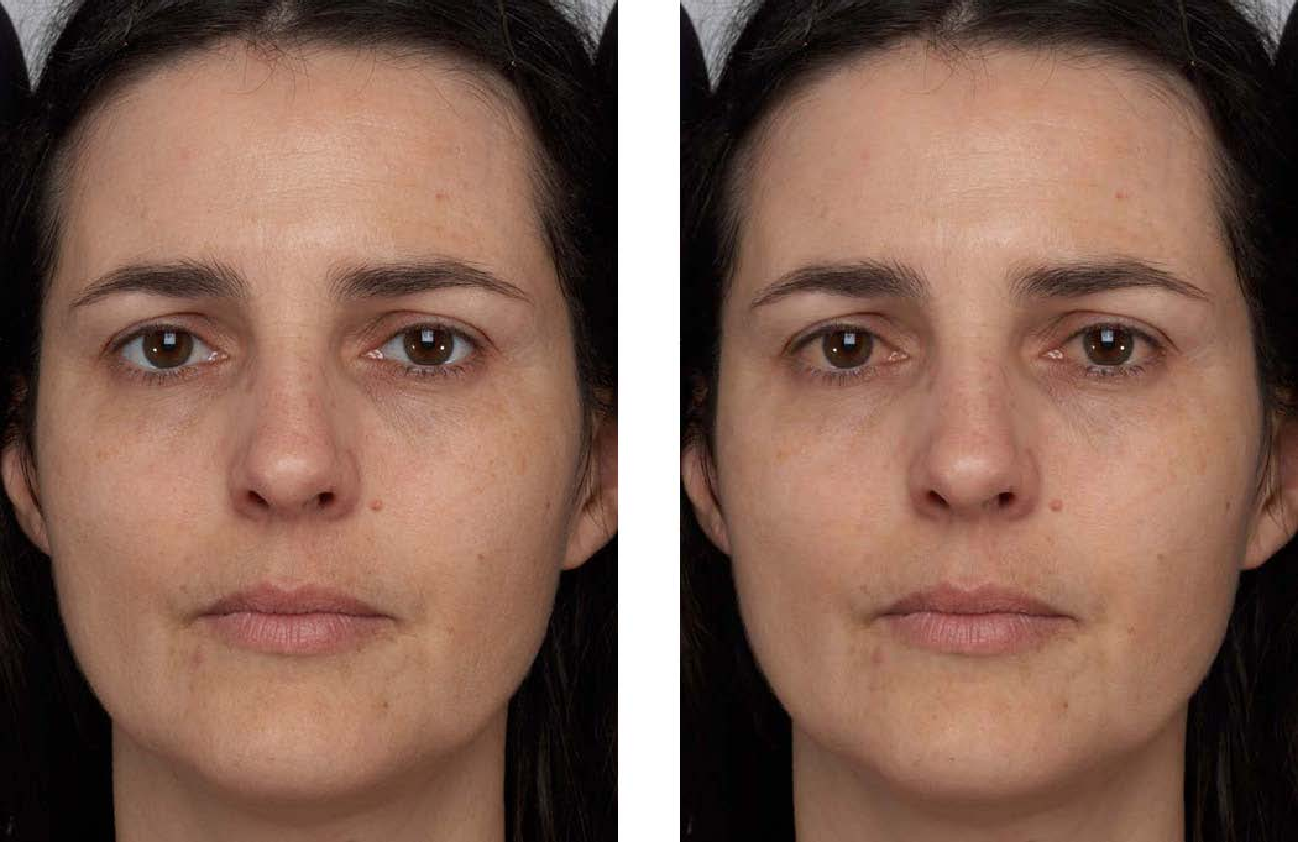
Redness and bloodshot eyes: Caused by lack of sleep (reduces oxygen to eyes, dilates blood vessels), smoking, vaping, cannabis, screen fatigue, alcohol, and dehydration.
Yellowing: Caused by jaundice (liver dysfunction, see a doctor immediately) and high bilirubin. This is a medical sign, not a cosmetic issue.
Brown or grey tint: Caused by melanin deposits. More common in darker skin types due to genetic pigmentation in the conjunctiva. Also caused by excess UV exposure.
Dullness: Caused by age, poor diet, chronic dehydration, processed food, and alcohol. The sclera loses its bright optical quality gradually over time.
Yellowing: Caused by jaundice (liver dysfunction, see a doctor immediately) and high bilirubin. This is a medical sign, not a cosmetic issue.
Brown or grey tint: Caused by melanin deposits. More common in darker skin types due to genetic pigmentation in the conjunctiva. Also caused by excess UV exposure.
Dullness: Caused by age, poor diet, chronic dehydration, processed food, and alcohol. The sclera loses its bright optical quality gradually over time.
Always start here before spending money on anything else.
Get 7 to 9 hours of sleep per night.
Stop smoking, vaping, and recreational drugs.
Reduce or eliminate alcohol.
Stay adequately hydrated.
Eat a diet rich in antioxidants and omega-3s, and minimize processed food.
These changes alone can dramatically improve scleral clarity within a few weeks.
Get 7 to 9 hours of sleep per night.
Stop smoking, vaping, and recreational drugs.
Reduce or eliminate alcohol.
Stay adequately hydrated.
Eat a diet rich in antioxidants and omega-3s, and minimize processed food.
These changes alone can dramatically improve scleral clarity within a few weeks.
Glutathione inhibits tyrosinase (the enzyme responsible for melanin production) and clears free radicals from the body. Vitamin C aids the lightening effect and supports collagen production.
Liposomal Glutathione: 700mg per day. Use liposomal form for significantly better absorption compared to standard oral capsules.
Vitamin C: 1000mg per day.
This stack addresses general dullness, oxidative damage, and melanin-related discoloration. It does not bleach the sclera, it restores its natural clarity over several weeks to months.
Liposomal Glutathione: 700mg per day. Use liposomal form for significantly better absorption compared to standard oral capsules.
Vitamin C: 1000mg per day.
This stack addresses general dullness, oxidative damage, and melanin-related discoloration. It does not bleach the sclera, it restores its natural clarity over several weeks to months.
Lumify (Brimonidine 0.025%): An alpha-2 adrenergic agonist that constricts blood vessels, rapidly reducing redness. Clinically shown to have significantly less rebound redness than other vasoconstrictors such as naphazoline. Not for daily chronic use. Reserve for important occasions like dates, photos, or interviews.
Collyre Bleu (Blue Eye Drops): French blue-tinted eye drops costing around $45 USD. The blue tint counteracts yellowing and dullness through color theory, making eyes appear brighter and whiter. The main side effect is temporary wateriness. Can be genuinely striking on any eye color.
Collyre Bleu (Blue Eye Drops): French blue-tinted eye drops costing around $45 USD. The blue tint counteracts yellowing and dullness through color theory, making eyes appear brighter and whiter. The main side effect is temporary wateriness. Can be genuinely striking on any eye color.
For hyperpigmentation-related darkening or discoloration, medical laser treatment targets and disperses pigment deposits beneath the skin. Results are consistent for melanin-based discoloration and multiple sessions are typically required. This is best used as a finishing step alongside lifestyle and supplement changes rather than a standalone solution.
Kojic acid soap does not whiten the sclera or lighten skin. It only evens out skin tone by reducing hyperpigmentation patches. Any claims that it can whiten or lighten skin beyond this are false. It is still a useful product for evening out skin discoloration around the eye area, but expectations should be set accordingly.
Having a white sclera is a key health indicator and is not that hard to obtain.
Eyelashes
Long, dark, dense, and curled eyelashes are highly impactful for male aesthetics. They reduce visible upper eyelid exposure (UEE), increase perceived periorbital frame length (PFL), add color contrast, and contribute to a "striking" appearance. The combination of dark eyebrows + long dark lashes + light eyes is considered optimal.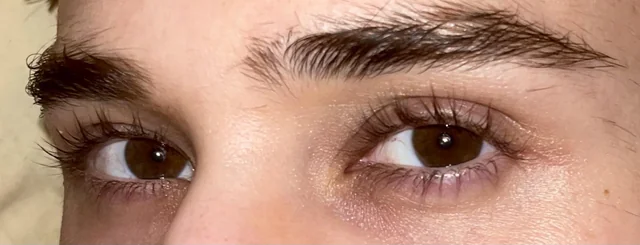
Long, dark, dense, and curled eyelashes are highly impactful for male aesthetics. Their effects include:
Reducing visible upper eyelid exposure (UEE) by framing the eye downward.
Increasing perceived palpebral fissure length (PFL) and making the eye appear wider and more defined.
Adding color contrast between the eye and surrounding skin.
Contributing to a striking appearance, particularly when combined with light eyes and tanned skin.
The combination of dark eyebrows, long dark lashes, and light eyes is widely considered the most visually striking eye area combination possible.
Reducing visible upper eyelid exposure (UEE) by framing the eye downward.
Increasing perceived palpebral fissure length (PFL) and making the eye appear wider and more defined.
Adding color contrast between the eye and surrounding skin.
Contributing to a striking appearance, particularly when combined with light eyes and tanned skin.
The combination of dark eyebrows, long dark lashes, and light eyes is widely considered the most visually striking eye area combination possible.
Understanding the growth cycle helps explain why certain products work and others do not.
Anagen (growth phase): The target phase. Extending this phase produces longer and denser lashes. Blood supply delivers nutrients to actively growing follicles. This is the phase all growth products aim to prolong.
Catagen: Growth stops and the follicle detaches from its blood supply. This is a brief transitional phase.
Telogen (resting phase): No growth occurs. The lash eventually sheds and the cycle restarts.
All effective eyelash growth methods work by either prolonging the anagen phase, shortening the telogen phase, or increasing blood and nutrient delivery to the follicles.
Anagen (growth phase): The target phase. Extending this phase produces longer and denser lashes. Blood supply delivers nutrients to actively growing follicles. This is the phase all growth products aim to prolong.
Catagen: Growth stops and the follicle detaches from its blood supply. This is a brief transitional phase.
Telogen (resting phase): No growth occurs. The lash eventually sheds and the cycle restarts.
All effective eyelash growth methods work by either prolonging the anagen phase, shortening the telogen phase, or increasing blood and nutrient delivery to the follicles.
Originally a hypertension medication, minoxidil causes systemic hypertrichosis, meaning increased hair growth throughout the body including the eyelashes. It works through several mechanisms:
Vasodilation: increases oxygen and nutrient delivery to follicles.
Activates the Wnt/beta-catenin signaling pathway, which is critical for follicle development.
Increases prostaglandin E2 (PGE2), prolonging the anagen phase.
Shortens the telogen (resting) phase.
Dosing: Start at 0.625mg per day and titrate slowly. 1.25 to 2.5mg per day is sufficient for eyelash goals. Exceeding 2.5mg is unnecessary and increases risk of side effects. Always use oral tablets, not topical liquid.
Side effects: Increased body hair (a benefit for most), possible mild increase in heart rate, headache, and light-headedness. Generally well tolerated at low doses. Monitor blood pressure and avoid if you have cardiac issues.
Results are typically visible within 3 to 4 months of consistent use.
Vasodilation: increases oxygen and nutrient delivery to follicles.
Activates the Wnt/beta-catenin signaling pathway, which is critical for follicle development.
Increases prostaglandin E2 (PGE2), prolonging the anagen phase.
Shortens the telogen (resting) phase.
Dosing: Start at 0.625mg per day and titrate slowly. 1.25 to 2.5mg per day is sufficient for eyelash goals. Exceeding 2.5mg is unnecessary and increases risk of side effects. Always use oral tablets, not topical liquid.
Side effects: Increased body hair (a benefit for most), possible mild increase in heart rate, headache, and light-headedness. Generally well tolerated at low doses. Monitor blood pressure and avoid if you have cardiac issues.
Results are typically visible within 3 to 4 months of consistent use.
A tripeptide that promotes eyelash growth through multiple mechanisms:
Promotes VEGF production, creating new blood vessels around follicles.
Prevents follicle conversion from anagen to catagen via the Wnt/beta pathway.
Proliferates dermal papilla cells and inhibits their death, thickening lashes and accelerating growth rate.
Dosing: 10mg per day via subcutaneous injection, split throughout the day.
Critical note: GHK-Cu must be reconstituted in phosphate buffered solution (PBS), not bacteriostatic water. Copper is unstable in bacteriostatic water, meaning most people using bac water are only getting the collagen benefits of GHK and none of the copper-dependent growth effects. This is why most reported results online are underwhelming, the majority of users are simply using the wrong diluent.
This is a good alternative for those who cannot use oral minoxidil due to cardiac concerns.
Promotes VEGF production, creating new blood vessels around follicles.
Prevents follicle conversion from anagen to catagen via the Wnt/beta pathway.
Proliferates dermal papilla cells and inhibits their death, thickening lashes and accelerating growth rate.
Dosing: 10mg per day via subcutaneous injection, split throughout the day.
Critical note: GHK-Cu must be reconstituted in phosphate buffered solution (PBS), not bacteriostatic water. Copper is unstable in bacteriostatic water, meaning most people using bac water are only getting the collagen benefits of GHK and none of the copper-dependent growth effects. This is why most reported results online are underwhelming, the majority of users are simply using the wrong diluent.
This is a good alternative for those who cannot use oral minoxidil due to cardiac concerns.
Contains ricinoleic acid which activates prostaglandin EP3 and EP4 receptors, stimulating PGE2 and promoting the follicle anagen phase. Weaker than minoxidil but safe and accessible.
Dosing: 1 to 2ml of food-grade castor oil daily. Has laxative effects so start low and build up gradually.
Important: Topical castor oil applied directly to the lashes has no scientific evidence behind it whatsoever. Only oral administration has a plausible biological mechanism. The widespread belief in topical castor oil for lash growth is purely anecdotal and unsupported by research.
Dosing: 1 to 2ml of food-grade castor oil daily. Has laxative effects so start low and build up gradually.
Important: Topical castor oil applied directly to the lashes has no scientific evidence behind it whatsoever. Only oral administration has a plausible biological mechanism. The widespread belief in topical castor oil for lash growth is purely anecdotal and unsupported by research.
Latisse effectively grows eyelashes but carries significant risks that are frequently underplayed in online discussions.
Prostaglandin-associated periorbitopathy (PAP): Bimatoprost inhibits adipogenesis (fat cell formation), causing orbital fat loss over time. This creates a hollow, sunken appearance around the eyes that can be permanent and is described in medical literature as disfiguring.
Iris hyperpigmentation: Permanent darkening of iris color, potentially causing heterochromia. Eye color change clinics report this as a common reason patients seek corrective treatment, with most cases stemming from cosmetic Latisse use.
Periorbital skin darkening: Hyperpigmentation around the eye area.
If used at all, use short term only and understand the full risk profile before starting. The orbital fat loss in particular is irreversible and directly undermines the structural eye area improvements described in this guide.
Prostaglandin-associated periorbitopathy (PAP): Bimatoprost inhibits adipogenesis (fat cell formation), causing orbital fat loss over time. This creates a hollow, sunken appearance around the eyes that can be permanent and is described in medical literature as disfiguring.
Iris hyperpigmentation: Permanent darkening of iris color, potentially causing heterochromia. Eye color change clinics report this as a common reason patients seek corrective treatment, with most cases stemming from cosmetic Latisse use.
Periorbital skin darkening: Hyperpigmentation around the eye area.
If used at all, use short term only and understand the full risk profile before starting. The orbital fat loss in particular is irreversible and directly undermines the structural eye area improvements described in this guide.
A lash lift curls the lashes from base to tip using a chemical setting solution. Results last approximately 2 months. It makes lashes appear significantly longer when viewed from the front without adding any product to the lashes themselves. Can be done professionally at a salon or with a home kit for a fraction of the cost. Always do before applying any other lash products.
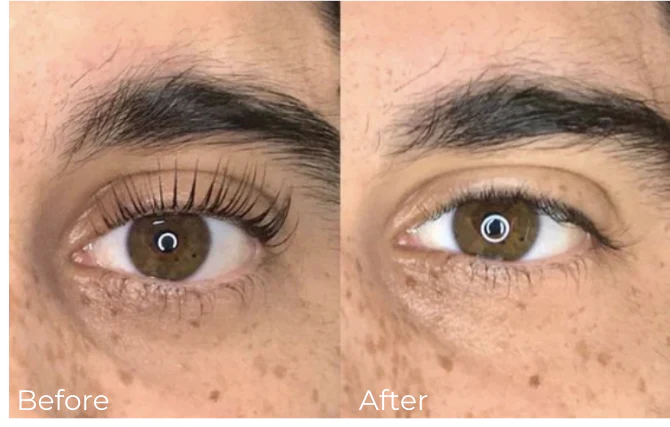
Darkening the lashes is critical for anyone with naturally blonde, light brown, or barely visible lashes. Tinting makes the entire lash line visible and dramatically changes the eye frame. Results last 1 to 2 months. Can be done at a salon or at home using a beard dye applied carefully with a mascara wand. Apply Vaseline around the eye area first to prevent staining the surrounding skin.
Clear or dark mascara adds volume and definition with minimal effort. A single thin coat is difficult to detect but visibly enhances the eye area. Waterproof formulas last longer throughout the day.
Black waterline pencil applied to the inner lower eyelid increases perceived lash density and adds eye definition without looking obviously made up.
Neither of these requires any skill to apply and both provide an immediate visible improvement.
Black waterline pencil applied to the inner lower eyelid increases perceived lash density and adds eye definition without looking obviously made up.
Neither of these requires any skill to apply and both provide an immediate visible improvement.
Eyebrows
Eyebrows have an outsized effect on facial recognition and overall attractiveness — research shows people have more difficulty recognizing faces without eyebrows than without eyes. Even subtle changes to their shape, position, or density have significant impact.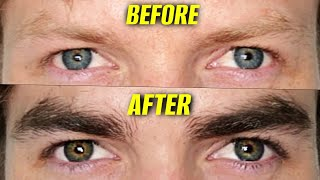
Eyebrows have an outsized effect on facial recognition and overall attractiveness. Research shows people have more difficulty recognizing faces without eyebrows than without eyes. Even subtle changes to their shape, position, or density produce significant changes in how the face reads as a whole.
They directly affect the perceived height of the eye area, the apparent spacing of the eyes, the overall masculinity or femininity of the face, and the emotional expression conveyed at rest.
They directly affect the perceived height of the eye area, the apparent spacing of the eyes, the overall masculinity or femininity of the face, and the emotional expression conveyed at rest.
Flat eyebrows with no arch or very minimal arch create a compact, hunter eye area by reducing the vertical height between the brow and the eye. Rounded or highly arched brows feminize the eye area and should be avoided for masculine aesthetics.
If your brows have a natural arch, the hairs creating the peak of the arch can be removed with a tweezer to flatten the overall shape. This is one of the simplest and most impactful grooming changes available.
If your brows have a natural arch, the hairs creating the peak of the arch can be removed with a tweezer to flatten the overall shape. This is one of the simplest and most impactful grooming changes available.
The outer end of the brow should not sit lower than the inner end. Neutral or a slight upward angle toward the outer end is ideal. Negatively tilted brows, where the outer end droops downward, create a dejected, sad, and prey-like resting expression regardless of other features.
If you have a negative canthal tilt in the eyes themselves, a slightly positive brow tilt can help balance the overall eye area and counteract the drooping appearance.
If you have a negative canthal tilt in the eyes themselves, a slightly positive brow tilt can help balance the overall eye area and counteract the drooping appearance.
Thick, dense eyebrows are associated with dominance, high testosterone, and masculinity. This echoes the same evolutionary logic behind the brow ridge, where a prominent brow was a protective and signaling feature. Low density brows read as less dominant and less attractive regardless of shape.
If your brows are sparse, do not over-pluck what you have. Focus on filling gaps and growing density rather than shaping aggressively.
If your brows are sparse, do not over-pluck what you have. Focus on filling gaps and growing density rather than shaping aggressively.
Dark brown or black is ideal. High contrast between the brow and the surrounding skin creates a more prominent, defined frame for the eye area. Blonde or light eyebrows significantly reduce this contrast and make the eye area appear weaker and less defined.
If you have naturally blonde or light brows, dyeing them to a shade slightly darker than your natural hair color is one of the easiest and most impactful changes you can make to your overall appearance.
If you have naturally blonde or light brows, dyeing them to a shade slightly darker than your natural hair color is one of the easiest and most impactful changes you can make to your overall appearance.
Outer length: The brow should extend at minimum to the outer corner of the eye. Extending slightly further toward the outer cheekbone enhances the appearance of wider-set eyes and increases the horizontal length of the overall eye frame. This is particularly useful for those with close-set eyes or a low ES ratio.
Inner length: The inner edge of the brow should align approximately with the nostril when a straight line is drawn upward. A gap that is too wide between the brows reads as feminine. A gap that is too small reads as unkempt and ungroomed.
Inner length: The inner edge of the brow should align approximately with the nostril when a straight line is drawn upward. A gap that is too wide between the brows reads as feminine. A gap that is too small reads as unkempt and ungroomed.
Low-set eyebrows, sitting close to the eyes, are preferred over high-set brows. A low set reduces the vertical height of the eye area, creating a more compact and hunter-like appearance. High-set brows increase the distance between the eye and brow, which reads as more open, rounded, and feminine.
There is limited ability to change brow set without surgery, but keeping brows well-groomed and avoiding plucking below the brow line helps maintain the lowest natural position possible.
There is limited ability to change brow set without surgery, but keeping brows well-groomed and avoiding plucking below the brow line helps maintain the lowest natural position possible.
Step 1: Remove stray hairs between the brows and below the lower brow line using a tweezer. Use tweezers rather than a blade for outer brow shaping to avoid accidentally removing too much.
Step 2: If your brows are naturally arched, remove the hairs at the peak where the brow begins to curve downward to flatten the overall shape.
Step 3: Check for symmetry using a phone camera or a reversed mirror. Asymmetry is significantly easier to spot in a mirrored image than a standard reflection.
Step 4: Brush upward and outward with a spoolie daily. Apply a small amount of brow wax or clear gel to set. This gives a neater and more defined look without appearing artificial or made up.
Step 5: Carefully trim any hairs that extend excessively above the brow line using small scissors. Do not trim the lower edge with scissors.
Step 6: If your tilt is negative, do not pluck from the outer upper portion. Allow hair to grow in that area to gradually shift the tilt toward neutral or positive over time.
Step 2: If your brows are naturally arched, remove the hairs at the peak where the brow begins to curve downward to flatten the overall shape.
Step 3: Check for symmetry using a phone camera or a reversed mirror. Asymmetry is significantly easier to spot in a mirrored image than a standard reflection.
Step 4: Brush upward and outward with a spoolie daily. Apply a small amount of brow wax or clear gel to set. This gives a neater and more defined look without appearing artificial or made up.
Step 5: Carefully trim any hairs that extend excessively above the brow line using small scissors. Do not trim the lower edge with scissors.
Step 6: If your tilt is negative, do not pluck from the outer upper portion. Allow hair to grow in that area to gradually shift the tilt toward neutral or positive over time.
Topical minoxidil: Apply directly to the brows in the same way as scalp hair loss treatment. Promotes growth effectively but use conservatively as overgrowth into unwanted areas is possible.
Topical castor oil: Mild anecdotal support. A common and safe option with no real downside. Apply with a spoolie before sleep.
Microblading: Semi-permanent tattooing technique that fills sparse brow areas and defines shape. Results last 1 to 2 years depending on skin type and aftercare. A good middle-ground option before committing to anything permanent.
Eyebrow transplant: A permanent surgical solution for very sparse or absent brow growth. Individual hair follicles are transplanted from the scalp to the brow area. Results are natural looking but require ongoing trimming as transplanted scalp hairs continue to grow at scalp rate.
Topical castor oil: Mild anecdotal support. A common and safe option with no real downside. Apply with a spoolie before sleep.
Microblading: Semi-permanent tattooing technique that fills sparse brow areas and defines shape. Results last 1 to 2 years depending on skin type and aftercare. A good middle-ground option before committing to anything permanent.
Eyebrow transplant: A permanent surgical solution for very sparse or absent brow growth. Individual hair follicles are transplanted from the scalp to the brow area. Results are natural looking but require ongoing trimming as transplanted scalp hairs continue to grow at scalp rate.
Effect on perceived IPD: Wide eyebrows that extend well beyond the outer eye corner significantly improve the appearance of close-set eyes. This has been demonstrated in morphing studies where narrowing the brows of men like Zac Efron and Ian Somerhalder made their eye spacing look dramatically worse, despite no actual change to their IPD whatsoever. If you have close-set eyes or a low ES ratio, prioritizing outer brow growth and width is one of the most accessible and effective changes you can make without any surgical intervention.
Eye Color
Eye color alone has no statistically significant effect on rated attractiveness in controlled studies (when other variables like scleral whiteness and pupil diameter are held equal). However, a "blue-eyes stereotype" exists, participants mention blue eyes as positive more often even when rating them no higher.
Brown-eyed faces are rated more trustworthy, but this is caused by the facial morphology correlated with brown eyes (broader chins, more prominent eyebrows, larger noses) — not eye color itself. Swapping eye colors while keeping facial features identical eliminated the trustworthiness difference.
Brown-eyed males are rated more dominant for the same reason as facial features, not eye color. Changing eye color without the associated facial features does not change perceived dominance.
Lighter eyes do have practical aesthetic advantages: greater contrast with the iris ring, more visible limbal rings, and greater color interaction with lighting. A combination of tanned skin + dark lashes + light eyes is widely considered maximally striking.
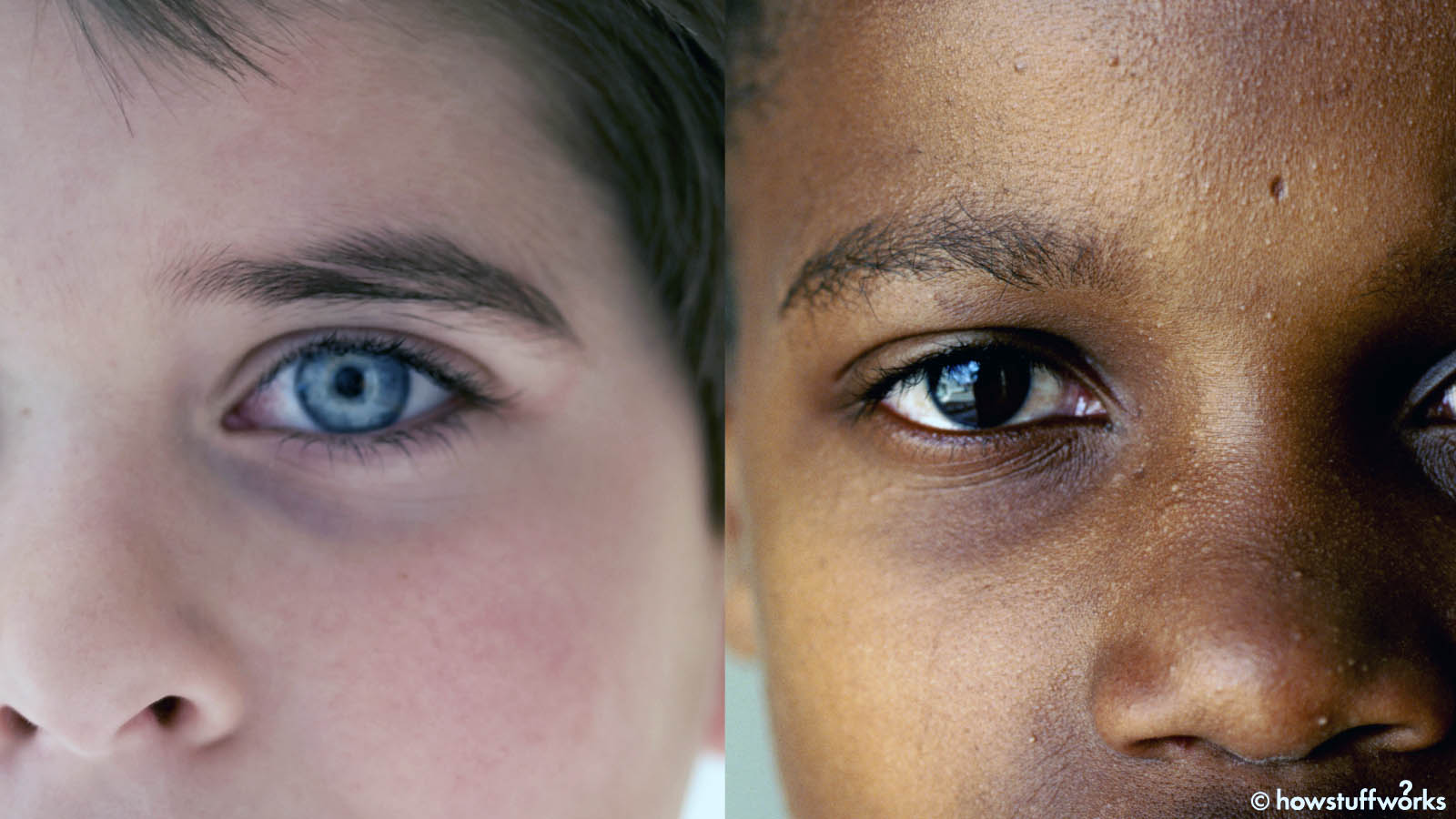
The most accessible option. Temporary, non-invasive, and fully reversible. Allows any color to be tested without commitment.
Key limitations to be aware of: non-prescription colored contacts do not dilate with the pupil, which can look unnatural in low light and interfere with night vision. Blue or green contacts placed over dark brown eyes tend to look clearly artificial due to the underlying pigment showing through. Brown contacts placed over light eyes tend to look significantly more natural. Approximately 50% of people find contact lenses uncomfortable to wear for extended periods.
Key limitations to be aware of: non-prescription colored contacts do not dilate with the pupil, which can look unnatural in low light and interfere with night vision. Blue or green contacts placed over dark brown eyes tend to look clearly artificial due to the underlying pigment showing through. Brown contacts placed over light eyes tend to look significantly more natural. Approximately 50% of people find contact lenses uncomfortable to wear for extended periods.
Developed by Dr. Gregg Homer. Uses a frequency-doubled Nd:YAG laser at 532nm to selectively heat and disrupt melanosomes in the anterior iris stroma. Macrophages naturally remove the pigment through the vasculature over 3 to 8 weeks, revealing the underlying blue or grey stromal fibers which appear blue or green due to Tyndall light scattering. This is the same principle behind why the sky appears blue.
Key facts:
Currently still in clinical trials and not commercially available.
The result is permanent and fully natural looking, as it is the actual iris and not a lens.
The resulting shade cannot be precisely chosen. A patented prediction method gives an estimate of the likely outcome.
Can only lighten (brown to blue, green, grey, or hazel). Cannot darken or shift hue in any other direction.
The procedure cannot be reversed.
11 or more years of animal data and 7 or more years of human data have demonstrated an acceptable safety profile.
Warning: Black market alternatives operating in Turkey, Spain, Argentina, and Mexico use off-label lasers without the STRŌMA system's eye-tracking, rangefinding, or automatic safety shutoffs. These have caused documented serious adverse outcomes including permanent vision loss. Avoid entirely.
Key facts:
Currently still in clinical trials and not commercially available.
The result is permanent and fully natural looking, as it is the actual iris and not a lens.
The resulting shade cannot be precisely chosen. A patented prediction method gives an estimate of the likely outcome.
Can only lighten (brown to blue, green, grey, or hazel). Cannot darken or shift hue in any other direction.
The procedure cannot be reversed.
11 or more years of animal data and 7 or more years of human data have demonstrated an acceptable safety profile.
Warning: Black market alternatives operating in Turkey, Spain, Argentina, and Mexico use off-label lasers without the STRŌMA system's eye-tracking, rangefinding, or automatic safety shutoffs. These have caused documented serious adverse outcomes including permanent vision loss. Avoid entirely.
Colored silicone discs sutured directly onto the iris surface. The American Academy of Ophthalmology strongly advises against this procedure. Documented risks include elevated intraocular pressure, glaucoma, progressive iris tissue decomposition, endothelial cell loss, and frequent need for emergency explantation within the first year to prevent permanent vision loss. The aesthetic result is also widely considered unnatural. There is no scenario where this is a reasonable option.
Injecting or tattooing pigments directly into the cornea to simulate a colored iris. Not a viable cosmetic procedure by any reputable standard. Carries serious risk of corneal damage, chronic infection, and irreversible vision impairment. Avoid entirely.
Users of bimatoprost (Latisse) as an eyelash treatment have reported irreversible iris darkening even from topical application on the eyelid, not just direct eye drops. This occurs via increased tyrosinase activity and melanin synthesis in iris melanocytes triggered by prostaglandin absorption through the eyelid skin.
Eye color change clinics report cosmetic Latisse use as a frequent reason patients seek corrective treatment after noticing their iris darkening or developing heterochromia. This is an additional reason to approach long-term Latisse use with significant caution.
Eye color change clinics report cosmetic Latisse use as a frequent reason patients seek corrective treatment after noticing their iris darkening or developing heterochromia. This is an additional reason to approach long-term Latisse use with significant caution.
The dark ring between the iris and the sclera. Research confirms thicker limbal rings are associated with youth, health, and attractiveness, and they particularly influence short-term mate selection judgments. They thin and fade naturally with age and poor health, making their prominence a reliable biological health signal.
Limbal rings are most visible on lighter irises. For those with dark eyes, the ring can be difficult to see at normal social distances. Options for enhancement include maintaining good cardiovascular health (the ring's richness depends on blood supply to the eye), and contact lenses specifically designed to enhance or simulate a prominent limbal ring.
Limbal rings are most visible on lighter irises. For those with dark eyes, the ring can be difficult to see at normal social distances. Options for enhancement include maintaining good cardiovascular health (the ring's richness depends on blood supply to the eye), and contact lenses specifically designed to enhance or simulate a prominent limbal ring.
Non-Surgical Soft Interventions
Orbicularis Oculi Muscle Training (Squinching)
The orbicularis oculi is the ring muscle surrounding the eye that controls the lower eyelid. It is the direct determinant of PFW ratio. Research demonstrates that Botox-induced paralysis of this muscle increases PFH (palpebral fissure height) by up to 30%, confirming that muscle tone is a major driver of eye shape — independent of bone structure.Isolate the lower eyelid by tensing it upward without squinting the upper lid or moving the brows. You should see a slight roll appear just below the eye. This is the orbicularis oculi engaging. The brows should remain completely still throughout.
Protocol: Hold the tension for 30 minutes, twice per day, until the muscle is sufficiently built up. At that point reduce to maintenance sessions a few times per week. Results typically visible within 3 to 4 weeks of consistent practice.
Goal: Build enough resting muscle tone that the lower lid sits higher at rest, equivalent to a non-surgical lower eyelid retraction. Consistent practice also develops aegyo sal over time.
Protocol: Hold the tension for 30 minutes, twice per day, until the muscle is sufficiently built up. At that point reduce to maintenance sessions a few times per week. Results typically visible within 3 to 4 weeks of consistent practice.
Goal: Build enough resting muscle tone that the lower lid sits higher at rest, equivalent to a non-surgical lower eyelid retraction. Consistent practice also develops aegyo sal over time.
Facial puffiness worsens the eye area by adding unwanted volume below and around the eyes. Key interventions:
Potassium to sodium ratio: Aim for approximately 4:1 potassium to sodium. High sodium causes water retention throughout the face. Potassium counteracts this by facilitating renal sodium excretion and reducing extracellular fluid accumulation.
Natural diuretics: Coffee and tea (caffeine), dandelion tea, green tea, and adequate water intake all help reduce retained fluid.
Sleep: 7 to 9 hours per night. Sleep deprivation causes significant periorbital fluid accumulation that worsens the eye area regardless of other interventions.
Reduce alcohol: Alcohol causes substantial periorbital swelling that can persist well into the following day.
Ice or cold water splash: Immediate vasoconstriction that temporarily tightens the under-eye area. Useful before photos or important occasions.
Potassium to sodium ratio: Aim for approximately 4:1 potassium to sodium. High sodium causes water retention throughout the face. Potassium counteracts this by facilitating renal sodium excretion and reducing extracellular fluid accumulation.
Natural diuretics: Coffee and tea (caffeine), dandelion tea, green tea, and adequate water intake all help reduce retained fluid.
Sleep: 7 to 9 hours per night. Sleep deprivation causes significant periorbital fluid accumulation that worsens the eye area regardless of other interventions.
Reduce alcohol: Alcohol causes substantial periorbital swelling that can persist well into the following day.
Ice or cold water splash: Immediate vasoconstriction that temporarily tightens the under-eye area. Useful before photos or important occasions.
Caffeine serum: Apply under the eyes each morning. Topical caffeine constricts blood vessels, temporarily reducing dark circles and puffiness. The Ordinary Caffeine Solution 5% with EGCG is a well regarded and affordable option.
Retinol eye cream: Use at night only. Increases cell turnover, thickens the thin under-eye skin, and reduces the transparency that causes dark circles to show through. Pair with a volumizing peptide serum like Volufiline for a combined effect.
Sunscreen SPF 50 or higher: Apply daily without exception. The skin around the eye is thinner than anywhere else on the face and is highly susceptible to UV-induced hyperpigmentation and photo-aging. Skipping sunscreen accelerates darkening and wrinkling in this area faster than any other region of the face.
Gua sha or lymphatic massage: Gentle facial massage following lymphatic drainage pathways can reduce puffiness and improve fluid circulation around the eyes. Not a substitute for structural changes but useful for immediate reduction in under-eye congestion, particularly in the morning.
Retinol eye cream: Use at night only. Increases cell turnover, thickens the thin under-eye skin, and reduces the transparency that causes dark circles to show through. Pair with a volumizing peptide serum like Volufiline for a combined effect.
Sunscreen SPF 50 or higher: Apply daily without exception. The skin around the eye is thinner than anywhere else on the face and is highly susceptible to UV-induced hyperpigmentation and photo-aging. Skipping sunscreen accelerates darkening and wrinkling in this area faster than any other region of the face.
Gua sha or lymphatic massage: Gentle facial massage following lymphatic drainage pathways can reduce puffiness and improve fluid circulation around the eyes. Not a substitute for structural changes but useful for immediate reduction in under-eye congestion, particularly in the morning.
Before Vs After training your eyes 10 hours a day



Surgical Options
Medical disclaimer: This section is for informational purposes only. All surgical procedures carry risks, including infection, nerve damage, asymmetry, and potential vision impairment. Consult only board-certified surgeons specializing in facial/oculoplastic surgery. Many of these procedures are rarely performed and require highly specialized expertise. Cost, recovery time, and revision risk should all be factored into any decision.
Surgical interventions are ordered roughly by scope, from least to most invasive.
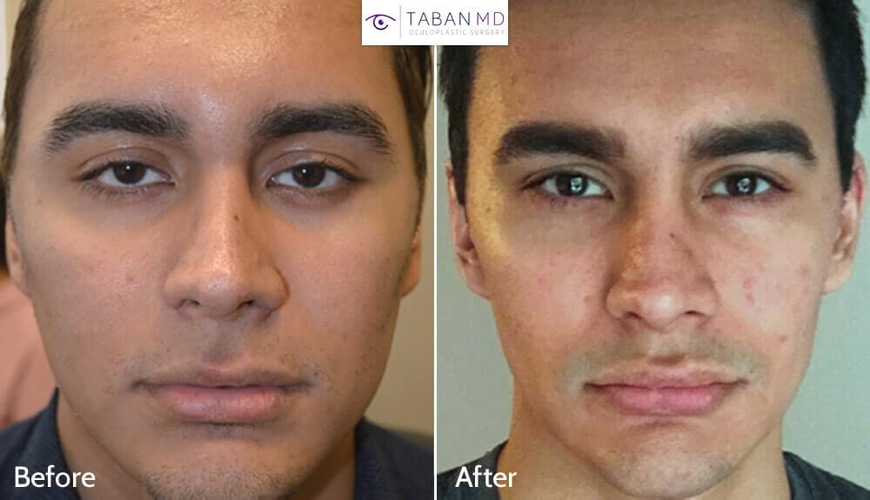
Surgical interventions are ordered roughly by scope, from least to most invasive.
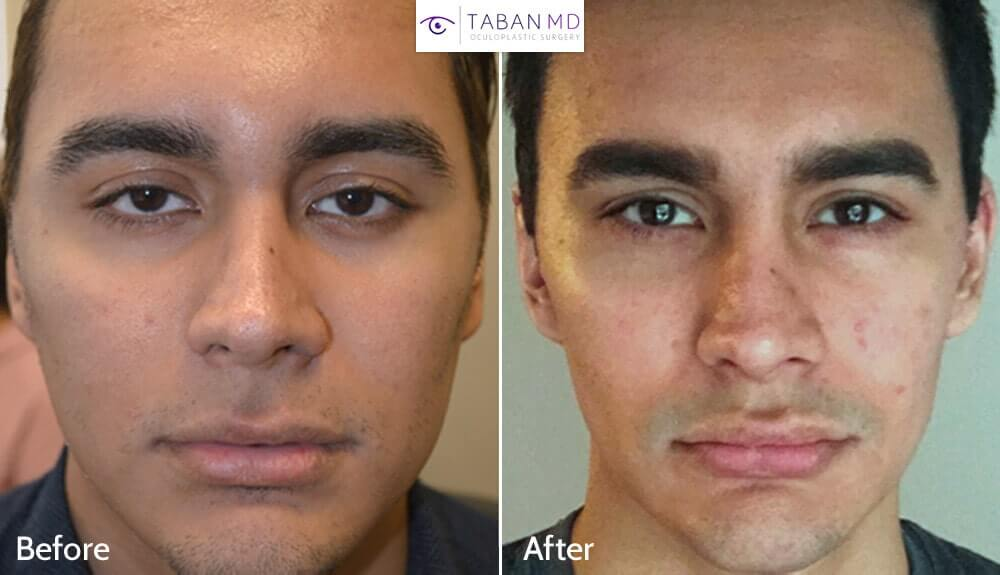
Hyaluronic acid fillers or autologous fat injected into the supraorbital area to create or enhance the upper eyelid hood. Research and clinical experience shows fillers in this area last approximately 2 years on average, significantly longer than most other facial areas. Fat grafting yields less predictable results here due to risk of lumpiness and variable fat survival rates.
At roughly $200 per year when annualized, this is one of the most cost-effective surgical interventions available for upper eyelid exposure correction. A good starting point before committing to anything permanent.
At roughly $200 per year when annualized, this is one of the most cost-effective surgical interventions available for upper eyelid exposure correction. A good starting point before committing to anything permanent.
A custom silicone implant placed beneath the brow ridge to increase projection of the supraorbital rim. Permanently deepens the eye set and reduces upper eyelid exposure. Provides the most reliable long-term structural solution for UEE. Inserted via incision in the brow or upper eyelid crease.
Cost ranges from $10,000 to $30,000 or more depending on surgeon and whether the implant is custom designed.
Cost ranges from $10,000 to $30,000 or more depending on surgeon and whether the implant is custom designed.
Hyaluronic acid injected to support the under-eye region, reduce hollowing, and shift the orbital vector from negative toward positive. Often paired with lower blepharoplasty for a more complete correction. Requires a skilled and experienced injector as the infraorbital region is highly vascular, meaning the risk of vascular occlusion and potential vision complications exists if performed carelessly.
Silicone implants placed directly on the infraorbital rim bone. The most direct structural correction for under-eye hollowing and a negative orbital vector. Off-the-shelf designs such as the Flowers implant exist and are not necessarily inferior to custom designs for most patients. Custom implants are primarily reserved for significant facial asymmetry rather than routine augmentation. Typically paired with lower blepharoplasty for the best overall result.
Cost typically ranges from $6,000 to $15,000.
Cost typically ranges from $6,000 to $15,000.
Removes or repositions excess skin and fat of the lower eyelid to tighten the under-eye appearance. Usually performed alongside infraorbital implants rather than as a standalone procedure. The combination addresses both the bone support deficiency and the soft tissue redundancy at the same time, producing a more complete and natural result than either procedure done in isolation.
Surgical modification of the outer canthus. Canthopexy tightens the existing position while canthoplasty repositions it. Can address negative canthal tilt by raising the outer corner of the eye.
Important caveat: canthoplasty alone frequently produces an unnatural result unless the underlying eye prominence is addressed first. A straight tightened lower lid on a protruding eye looks uncanny because the lid geometry does not conform naturally to the globe. The most natural results come from correcting eye prominence with implants or orbital decompression first, then addressing the lid position afterward if still needed.
Important caveat: canthoplasty alone frequently produces an unnatural result unless the underlying eye prominence is addressed first. A straight tightened lower lid on a protruding eye looks uncanny because the lid geometry does not conform naturally to the globe. The most natural results come from correcting eye prominence with implants or orbital decompression first, then addressing the lid position afterward if still needed.
The single most important foundation of the eye area. Without adequate lateral malar support, all other eye area procedures are built on a weak base and results will be limited.
Key principle for males: emphasize lateral projection, meaning sideways prominence, rather than anterior or forward-facing fullness. Anterior projection creates the apple cheek look common in female patients and does nothing to lift the surrounding skin of the eye area. Lateral projection lifts skin sideways, which is what reduces the tired and droopy appearance.
Malar implant: placed directly on the malar bone, projects laterally. Preferred for most males.
Submalar implant: placed below the malar prominence, primarily anterior projection. Generally less suitable for male aesthetics.
Off-the-shelf malar implants from experienced surgeons typically yield good results. Custom implants are primarily needed for significant facial asymmetry rather than routine augmentation.
Key principle for males: emphasize lateral projection, meaning sideways prominence, rather than anterior or forward-facing fullness. Anterior projection creates the apple cheek look common in female patients and does nothing to lift the surrounding skin of the eye area. Lateral projection lifts skin sideways, which is what reduces the tired and droopy appearance.
Malar implant: placed directly on the malar bone, projects laterally. Preferred for most males.
Submalar implant: placed below the malar prominence, primarily anterior projection. Generally less suitable for male aesthetics.
Off-the-shelf malar implants from experienced surgeons typically yield good results. Custom implants are primarily needed for significant facial asymmetry rather than routine augmentation.
Removes or thins portions of the orbital walls to expand the orbit and allow the eyeball to settle further back. The lateral wall is the safest first target, followed by the medial wall, then the orbital floor. Primarily performed for Graves disease and thyroid eye disease but used cosmetically for very prominent eyes. Reduces the Hertel measurement and can significantly improve eye shape and canthal tilt appearance.
A major facial osteotomy that advances the entire midface including the infraorbital and lateral orbital rims. Results in an improved orbital vector, enhanced under-eye support, and a potential increase in IPD of up to approximately 6mm. This is a high-risk and medically complex procedure primarily performed for syndromic craniofacial deformities. It is extremely difficult to access for purely cosmetic indications and most surgeons will not perform it without a functional medical indication.
For those with severe midface hypoplasia, a modified LeFort III may be considered, but midface implants are the practical and accessible alternative for the vast majority of patients.
For those with severe midface hypoplasia, a modified LeFort III may be considered, but midface implants are the practical and accessible alternative for the vast majority of patients.
Why Eye Surgeries Sometimes Look Unnatural
Understanding this helps avoid poor outcomes and set realistic expectations before consulting any surgeon. Lower eyelid surgeries that tighten the lid create a straight lid edge. However the lower lid must conform to the sphere of the eye. On a protruding eye, a tightened straight lid does not follow the globe's curvature and produces an obvious and uncanny appearance. The solution is to address eye prominence first through orbital decompression or supraorbital and infraorbital implants, and then correct the lower lid position afterward only if still needed. The upper and lower lid positions are interdependent. Changing one without considering the other frequently produces asymmetric or unnatural results. Bimax and LeFort 1 jaw surgeries can also improve the orbital vector slightly by providing better maxillary support to the lower eyelid. This is an indirect benefit rather than the primary goal of those procedures, but worth knowing when planning a comprehensive approach.
Surgery is by far the easiest and fastest way to ascend any eye area whether it comes to fat grafting your eyebags or getting orbital implants, it beats any other cope method out there.
Priority Checklist and Conclusion
Ordered from lowest barrier and highest impact to most invasive and specific. Complete each tier before considering the next.Get 7 to 9 hours of sleep consistently. Eliminate recreational drugs and smoking. Reduce alcohol. These changes alone produce noticeable improvements to scleral clarity and periorbital puffiness within weeks.
Start the squinching protocol: 30 minutes twice daily. Results in 3 to 4 weeks. Permanently improves lower lid tone and PFW ratio over time.
Groom eyebrows: flatten the shape, maintain full density, eliminate any negative tilt. Brush daily with a spoolie. Remove stray hairs only and avoid over-plucking.
Optimize diet: reduce sodium, increase potassium, minimize processed food. Reduces facial bloating and eye puffiness consistently over time.
Start the squinching protocol: 30 minutes twice daily. Results in 3 to 4 weeks. Permanently improves lower lid tone and PFW ratio over time.
Groom eyebrows: flatten the shape, maintain full density, eliminate any negative tilt. Brush daily with a spoolie. Remove stray hairs only and avoid over-plucking.
Optimize diet: reduce sodium, increase potassium, minimize processed food. Reduces facial bloating and eye puffiness consistently over time.
Start oral minoxidil at 0.625mg per day and titrate slowly to 1.25 to 2.5mg for eyelash and eyebrow growth. Allow 3 to 4 months for visible results.
Get a lash lift and tint. Immediately improves visible lash length and color contrast. Lasts approximately 2 months. Inexpensive at a salon or can be done at home with a kit.
Begin glutathione 700mg and vitamin C 1000mg daily. Visible improvement to scleral whiteness develops over several weeks to months of consistent use.
Apply caffeine serum under the eyes each morning. Use retinol eye cream at night. Apply SPF 50 or higher every day without exception.
Get a lash lift and tint. Immediately improves visible lash length and color contrast. Lasts approximately 2 months. Inexpensive at a salon or can be done at home with a kit.
Begin glutathione 700mg and vitamin C 1000mg daily. Visible improvement to scleral whiteness develops over several weeks to months of consistent use.
Apply caffeine serum under the eyes each morning. Use retinol eye cream at night. Apply SPF 50 or higher every day without exception.
Lumify eye drops for occasions where scleral clarity matters, such as dates, photos, or interviews.
Collyre Bleu drops if the eyes appear dull or yellowed despite lifestyle improvements.
Colored contacts to trial a different iris color before committing to any permanent procedure.
Eyebrow microblading if brow growth is very sparse and topical treatments have not produced sufficient results.
Under-eye filler or tear trough filler for hollowing. A relatively accessible procedure with a good safety profile when performed by an experienced injector.
Collyre Bleu drops if the eyes appear dull or yellowed despite lifestyle improvements.
Colored contacts to trial a different iris color before committing to any permanent procedure.
Eyebrow microblading if brow growth is very sparse and topical treatments have not produced sufficient results.
Under-eye filler or tear trough filler for hollowing. A relatively accessible procedure with a good safety profile when performed by an experienced injector.
Only consider surgery after exhausting tiers 1 through 3 and after identifying a specific and correctable structural deficiency.
Poor malar support: lateral malar implants. This is the foundation of the eye area and should be addressed before any other surgical procedure.
Upper eyelid exposure: supraorbital filler at approximately $400 lasting 2 years, or a permanent supraorbital implant for a long-term solution.
Under-eye hollowing or negative orbital vector: infraorbital rim implants paired with lower blepharoplasty.
Negative canthal tilt: canthoplasty, ideally performed after addressing eye prominence rather than as a standalone procedure.
Prominent or protruding eyes: orbital decompression.
Poor malar support: lateral malar implants. This is the foundation of the eye area and should be addressed before any other surgical procedure.
Upper eyelid exposure: supraorbital filler at approximately $400 lasting 2 years, or a permanent supraorbital implant for a long-term solution.
Under-eye hollowing or negative orbital vector: infraorbital rim implants paired with lower blepharoplasty.
Negative canthal tilt: canthoplasty, ideally performed after addressing eye prominence rather than as a standalone procedure.
Prominent or protruding eyes: orbital decompression.
Final principle:
The eye area rarely has a single fix. It is a system that the cheekbones support the lower lid, the orbital rims frame the globe, the eyelids provide the shape, and the lashes/brows provide the frame. Addressing one structural component while ignoring others often produces limited or mismatched results. Consult an oculoplastic or facial plastic surgeon for a holistic structural assessment before pursuing any surgical procedure.
Thanks for reading my guide, hopefully you learned a thing or two and use this information to improve your eye area.

@ltnsincebirth @Marss @Zagro wut do you think
The eye area rarely has a single fix. It is a system that the cheekbones support the lower lid, the orbital rims frame the globe, the eyelids provide the shape, and the lashes/brows provide the frame. Addressing one structural component while ignoring others often produces limited or mismatched results. Consult an oculoplastic or facial plastic surgeon for a holistic structural assessment before pursuing any surgical procedure.
Thanks for reading my guide, hopefully you learned a thing or two and use this information to improve your eye area.
@ltnsincebirth @Marss @Zagro wut do you think
This guide is compiled from research literature, clinical studies, and community-aggregated knowledge. Always consult qualified medical professionals before undertaking any medical procedure. Individual results vary significantly based on baseline anatomy, surgeon skill, and other individual factors.





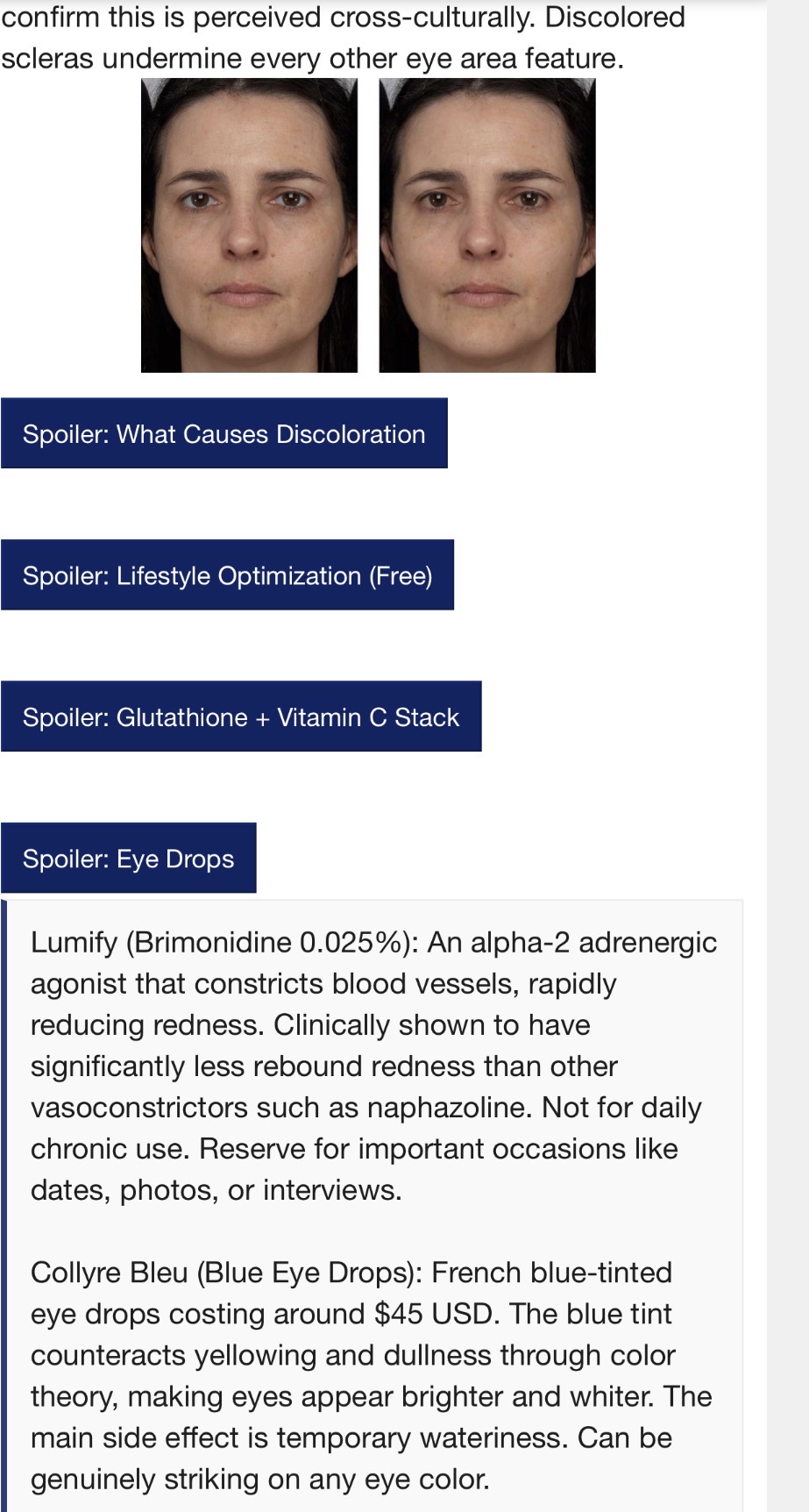

 I’ve ordered mine will update if they work aswell as linked but I’ve heard they do


