The IHL and IHRL overlap and its tie to the recent conflicts (geopolitics bluds gtfih)

L1mbal

L1mbal

pure, dure, sûre
Joined
Nov 24, 2025
Posts
3,160
Reputation
7,358
For much of the twentieth century, International Humanitarian Law (IHL) and International Human Rights Law (IHRL) developed as parallel but distinct bodies of law. IHL which is rooted in the Geneva Conventions of 1949 and their Additional Protocols was conceived as the law of armed conflict: a framework designed to limit the suffering caused by war by regulating the conduct of hostilities and protecting those who are hors de combat. IHRL, emerged from the post-World War II human rights movement, grounded in the Universal Declaration of Human Rights (1948) and codified in binding instruments such as the International Covenant on Civil and Political Rights (ICCPR, 1966). Its domain was understood to be the relationship between the state and the individual in times of peace.

The reported assassination of senior Iranian officials, including a civilian head of state ,the destruction of civilian infrastructure across the region, and the invocation of regime change as a military objective each raise issues that neither IHL nor IHRL can resolve in isolation. Taken together, they show why the overlap between these two bodies of law has become one of the most contested questions in contemporary international legal scholarship.


What do you guys think would be the solution ?

@Jason Voorhees @Ghost Philosophy @Atman
 
  • +1
Reactions: Adee, Jensonsahighlander, Seven and 6 others
bump
 
  • +1
Reactions: cryptt
you can't punish the admins of your server regardless of however many laws exist
 
  • +1
Reactions: cryptt and L1mbal
@cryptt
 
  • +1
Reactions: cryptt
@unstable
 
  • +1
Reactions: cryptt and unstable
ihl is supposed to limit the suffering but its weak during world wars alot of the rules would be ignored
 
  • +1
Reactions: BigJimsWornOutTires, L1mbal and unstable
iran's biggest mistake was not pretending to be a democracy.

all non democracies are direct targets of usa
and democracy is indirect target since usa just assasinates heads of state.
 
  • +1
Reactions: Atman, L1mbal and cryptt
bbbbb
 
  • +1
Reactions: JordanFagget271
@JordanFagget271
 
  • +1
Reactions: JordanFagget271
@BigJimsWornOutTires
 
  • +1
Reactions: BigJimsWornOutTires
For much of the twentieth century, International Humanitarian Law (IHL) and International Human Rights Law (IHRL) developed as parallel but distinct bodies of law. IHL which is rooted in the Geneva Conventions of 1949 and their Additional Protocols was conceived as the law of armed conflict: a framework designed to limit the suffering caused by war by regulating the conduct of hostilities and protecting those who are hors de combat. IHRL, emerged from the post-World War II human rights movement, grounded in the Universal Declaration of Human Rights (1948) and codified in binding instruments such as the International Covenant on Civil and Political Rights (ICCPR, 1966). Its domain was understood to be the relationship between the state and the individual in times of peace.

The reported assassination of senior Iranian officials, including a civilian head of state ,the destruction of civilian infrastructure across the region, and the invocation of regime change as a military objective each raise issues that neither IHL nor IHRL can resolve in isolation. Taken together, they show why the overlap between these two bodies of law has become one of the most contested questions in contemporary international legal scholarship.


What do you guys think would be the solution ?

@Jason Voorhees @Ghost Philosophy @Atman
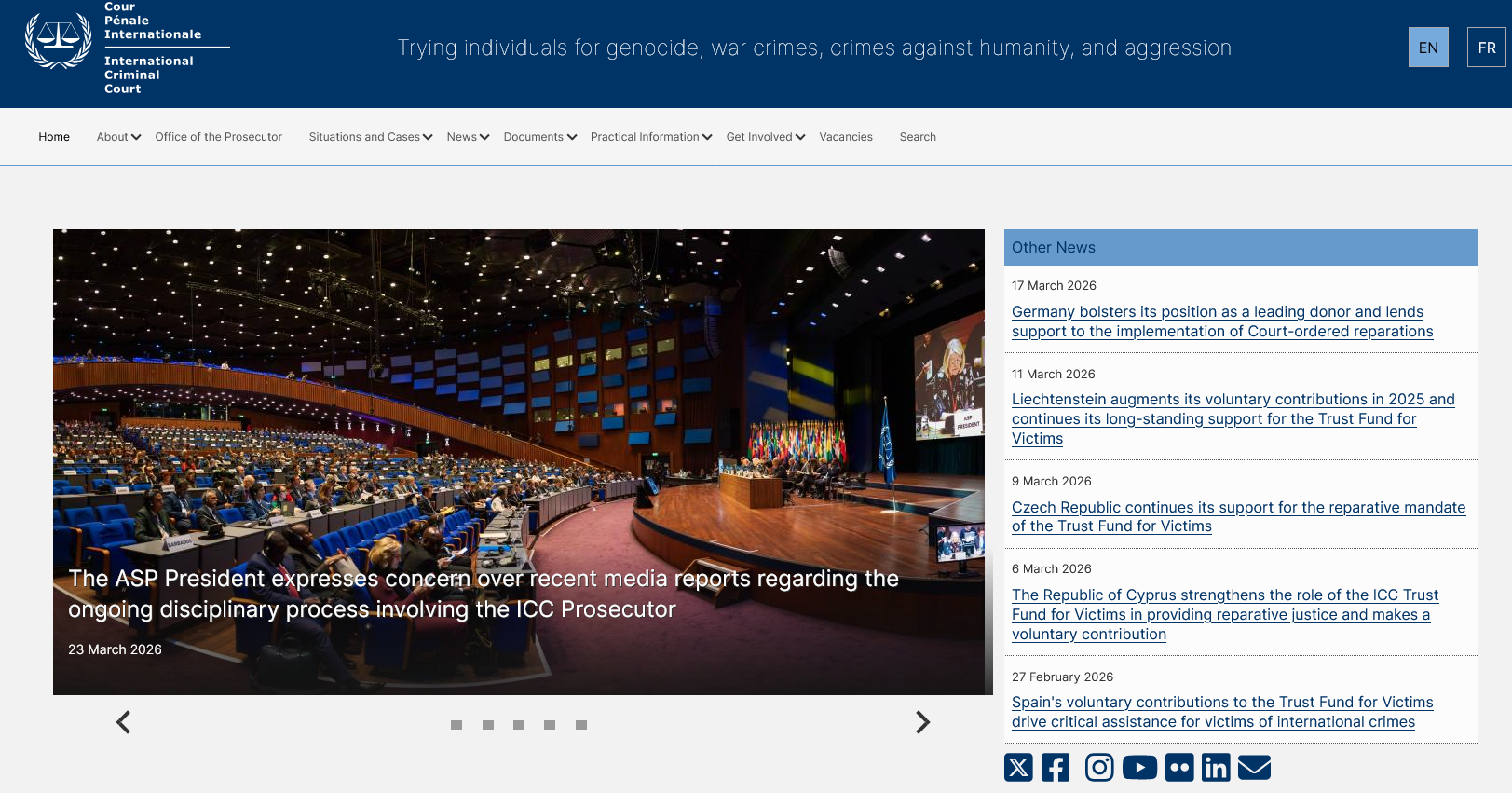
This is what the ICC thinks about Iran:

1774358611077
https://www.icc-cpi.int/

They don't care! But they will save face in front of the press.

We will face a "real" oil crisis one day. And the ones in power can be swiftly conquered during those times. They heavily rely on that resource.
 
  • +1
Reactions: cryptt and L1mbal
This is what the ICC thinks about Iran:

View attachment 4809897 https://www.icc-cpi.int/

They don't care! But they will save face in front of the press.

We will face a "real" oil crisis one day. And the ones in power can be swiftly conquered during those times. They heavily rely on that resource.
Internnational law in itself is a long historical structure where international law advantages powerful states, ofcourse the rich will benefit.
Third World Approaches to International Law (TWAIL) scholarship establishes that imperialism and colonialism are constitutive and central to the formation and operation of modern international law rather than peripheral aberrations, as demonstrated through the "dynamic of difference" whereby international law doctrines including sovereignty, the standard of civilization articulated in Article 1 paragraph 4 of the Hague Regulations of 1907, and the civilizing mission framework developed by Francisco de Vitoria and Hugo Grotius created legal structures that simultaneously dispossessed non-European peoples while vesting European aliens with expansive natural rights to travel, trade and self-preservation that evolved into contemporary foreign investment protections; this structural inequality persists through neo-liberal legal regimes including the World Trade Organization's Agreement on Trade-Related Aspects of Intellectual Property Rights and bilateral investment treaties operating under the International Centre for Settlement of Investment Disputes framework, which facilitate ongoing wealth transfers from the global South to the global North while limiting Third World claims for reparations through doctrines of intertemporal law, state succession principles regarding acquired rights, and the restrictive application of the Chorzow Factory case precedent that established reparations standards primarily for corporate rather than human rights violations.
 
  • JFL
  • +1
Reactions: BigJimsWornOutTires and Jensonsahighlander
bump
 
  • +1
  • Love it
Reactions: BigJimsWornOutTires and L1mbal
For much of the twentieth century, International Humanitarian Law (IHL) and International Human Rights Law (IHRL) developed as parallel but distinct bodies of law. IHL which is rooted in the Geneva Conventions of 1949 and their Additional Protocols was conceived as the law of armed conflict: a framework designed to limit the suffering caused by war by regulating the conduct of hostilities and protecting those who are hors de combat. IHRL, emerged from the post-World War II human rights movement, grounded in the Universal Declaration of Human Rights (1948) and codified in binding instruments such as the International Covenant on Civil and Political Rights (ICCPR, 1966). Its domain was understood to be the relationship between the state and the individual in times of peace.

The reported assassination of senior Iranian officials, including a civilian head of state ,the destruction of civilian infrastructure across the region, and the invocation of regime change as a military objective each raise issues that neither IHL nor IHRL can resolve in isolation. Taken together, they show why the overlap between these two bodies of law has become one of the most contested questions in contemporary international legal scholarship.


What do you guys think would be the solution ?

@Jason Voorhees @Ghost Philosophy @Atman
dnr , this is wall of text
 
  • JFL
Reactions: BigJimsWornOutTires
Internnational law in itself is a long historical structure where international law advantages powerful states, ofcourse the rich will benefit.
Third World Approaches to International Law (TWAIL) scholarship establishes that imperialism and colonialism are constitutive and central to the formation and operation of modern international law rather than peripheral aberrations, as demonstrated through the "dynamic of difference" whereby international law doctrines including sovereignty, the standard of civilization articulated in Article 1 paragraph 4 of the Hague Regulations of 1907, and the civilizing mission framework developed by Francisco de Vitoria and Hugo Grotius created legal structures that simultaneously dispossessed non-European peoples while vesting European aliens with expansive natural rights to travel, trade and self-preservation that evolved into contemporary foreign investment protections; this structural inequality persists through neo-liberal legal regimes including the World Trade Organization's Agreement on Trade-Related Aspects of Intellectual Property Rights and bilateral investment treaties operating under the International Centre for Settlement of Investment Disputes framework, which facilitate ongoing wealth transfers from the global South to the global North while limiting Third World claims for reparations through doctrines of intertemporal law, state succession principles regarding acquired rights, and the restrictive application of the Chorzow Factory case precedent that established reparations standards primarily for corporate rather than human rights violations.
Donald Trump Reaction GIF
They don't give a fuck about all of that. They used to. But seeing how Trump represents them, his reaction in this clip says it all. Switzerland and Sweden are on borrowed time.
 
  • +1
  • JFL
Reactions: cryptt and L1mbal

Similar threads

Edgarpill
Replies
52
Views
7K
yordancel
yordancel
heightmaxxing
Replies
56
Views
8K
lurking truecel
lurking truecel

Users who are viewing this thread

Back
Top