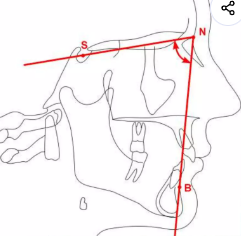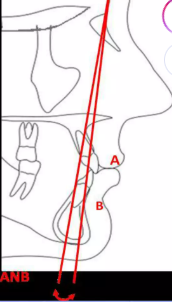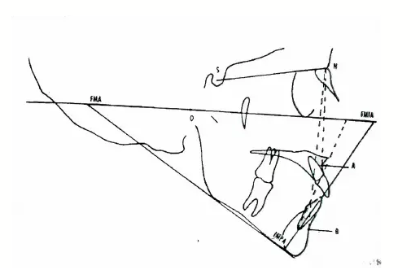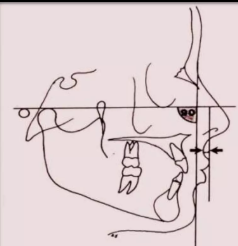
THE NOSE ENCYCLOPIDEA: THE BIGGEST GIUDE ON THE WHOLE FORUM

Nodal

Nodal

‎its in your blood
Joined
Jan 24, 2026
Posts
1,827
Reputation
4,834
This thread is one of the greatest threads made on the Org, I mean it.

It has every single anatomical feature and every single landmark I could find. It includes every single nosemaxxing method, identifying silly copes, and the price of each procedure in different countries. I included citations for every claim I make so you can fact-check yourself.

There is a TL;DR for lazy guys, highlighted text for skimmers, and extreme detail for people who love to read things like this. I even included code for a program that can measure your nose.

I made the formatting quite simple because the Org character limit would not let me post more than 300k characters and I wrote 660k. JFL, but thanks to @DildoFaggins , he helped me lock the thread so I can post the remaining parts in replies. There is so much I could tell you about this thread that I could make another thread about it. It took me 3 weeks of working to get this shit done. So please bump or rep this.

This is possibly my last thread. I might leave the forum, but I am 50/50 right now, so I do not know. Don't take my word for it.


━━

THE MALE NOSE

ANATOMY, IDEALS & FIXES


Understand your anatomy, the ideals, and how to max it

━━


NOSE IS LIKE SUPER IMPORTANT

── ME ──


━━


QUICK SUMMARY


Coverage: ANATOMY IDEALS FIXES

Sections: 11 anatomy sections + metrics + ethnic norms + surgical/non-surgical fixes

things i will be covering: 45+ measurements, 30+ anatomical things , 40+ methods for fixing every flaw

probably even more i lost count


TABLE OF CONTENTS


Introduction
Anatomy of the Nose and Landmarks
Nasal Metrics, Ethnic Variability, Norms & Ideals
How to Max and Fix Your Nose (Surgical)
Non-Surgical Options & Decision Trees
Choosing a Surgeon & Closing Thoughts
Measure Your Own Nose (DIY Coding)
Research Gaps & Limitations (24 Known Gaps)


━━

CHAPTER 1

INTRODUCTION

━━


You may be desperate, taking pictures from 100 angles to convince your nose is "FINE", trying borderline BS and anything that you come across on your FYP on TikTok.


You are ready to give up, leave all the BS behind, and LDAR. Is there no hope left?


Fuck no. The nose is one of the most studied facial features and researched on. You would be stupid if you gave up on it.


But the nose is one of the most complex and confusing things with a lot of BS information around and myths. So worry not; I will be helping you guys out to know your nose, the ideal, and how to max it.


i have highlited the main points for skimmers
i have made a tldr at the end for lazycels or
you could just look at the flaw fixing part only
For people who want to know as much as possible, let's dive in.


So here we are going to cover:

Anatomy and landmarks
Ideals and norms
How to max and fix your nose


━━

CHAPTER 2
━━
THIS IS GOING TO BE SUPER LONG
SO I PUT IT IN SPOILERS
DONT TRY TO OPEN EVERYTHING
IF YOU WANT TO READ THE WHOLE THING HERE IS THE TXT FILE

the txt file
 

Attachments

  • 6409722_1780838081860.png
    6409722_1780838081860.png
    86.3 KB · Views: 0
  • nose_guide_clean.txt
    285.2 KB · Views: 0
  • 6374595_1780305740316.png
    6374595_1780305740316.png
    196.2 KB · Views: 0
  • 6374731_1780308815212.png
    6374731_1780308815212.png
    7.7 KB · Views: 0
  • 6398753_1780679425460.png
    6398753_1780679425460.png
    56.5 KB · Views: 0
  • 6403861_1780749397266.png
    6403861_1780749397266.png
    45.7 KB · Views: 0
  • 6403899_1780749960116.png
    6403899_1780749960116.png
    44.8 KB · Views: 0
  • 6403919_1780750248011.png
    6403919_1780750248011.png
    43.2 KB · Views: 0
  • 6404003_1780751247022.png
    6404003_1780751247022.png
    42.2 KB · Views: 0
  • 6404003_1780751247022 (1).png
    6404003_1780751247022 (1).png
    42.2 KB · Views: 0
  • 6404085_1780752009192.png
    6404085_1780752009192.png
    36.1 KB · Views: 0
  • 6409612_1780836077638.png
    6409612_1780836077638.png
    50 KB · Views: 0
  • +1
Reactions: callard, tomacōck, shedontluv-U and 2 others


ANATOMY OF THE NOSE AND LANDMARKS

━━


ANATOMY, LANDMARKS & AESTHETICS


━━


SECTION 1: FACIAL PROPORTIONS


1.1 Facial Thirds [1](Horizontal)
We all know about facial thirds; they are the tip of the iceberg. Felt right starting with them.


Your nose is one of the most important factors here. A longer nose means a longer middle third; so does it apply with a short middle third.


They are measured from hairline to glabella (your browridge), glabella to subnasale (lowest point of the nose), and finally subnasale to the menton (lowest point in the chin).


Facial dimorphism One of the aspects of beauty is the proportions among the three thirds


This is one of the most basic yet one of the most important proportions.


1.2 Facial Fifths [1](Vertical)


These are less well-known but could be extremely misleading for ethnics especially because of the 3rd fifth rule which says your nose should fit in this space. But it has been debunked repeatedly this is something you have to looks out for

Eurocentric studies but Does it mean all these proportions mean nothing? Fuck no. Just because you are ethnic doesn't give you pass cards; I see a lot of people do this.

Your nose has to still be relatively close to these proportions while still being close to the average face of your ethnicity.

Key rule: alar base width ≈ intercanthal distance [1] ≈ one-fifth of facial width. Notice I put approximately.


The Ideal Face and Profile: Here’s What Mathematics Says About Beauty


1.3 Frankfort Horizontal Plane [2] (FHP)


Frankfort Horizontal Plane


This is one of the best tools you greys should be learning about because someone tilts their head in before and after, and your tiny tiny brain is like: "Look, look, RESULTS!"


This is a gold standard for even clinical measurements to make sure angles had nothing to do with the perceived results. [121]


Definition: A horizontal line from the top of the external auditory canal (porion) to the lowest point on the infraorbital rim (orbitale).


Basically a line drawn from your ears to nose like this one.


1.4 Chin Position Assessment


Chin augmentation surgery, before and after.

you can clearly see the effect of the chin on the nose


Now it is getting known, but chin position is absolutely important. A genio could simply fix your nose looking too big. Even the browridge has such effects.
but i way smaller and lesser effect


Rule of thumb: Always evaluate chin projection before planning nasal surgery. A genioplasty or chin implant may be needed alongside RHINOPLASTY for facial balance.


━━


SECTION 2: EXTERNAL AESTHETIC LANDMARKS (DETAILED)


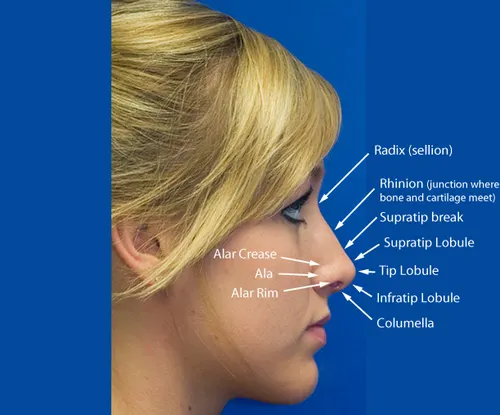
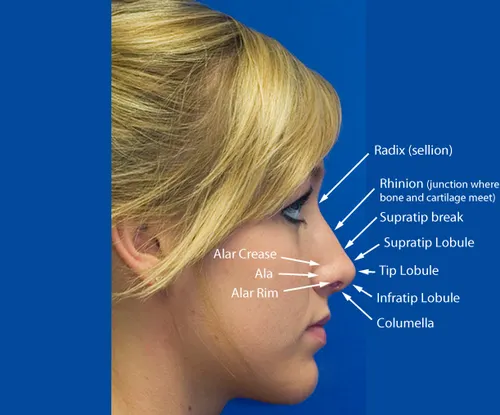
before we start like a lot these are found in this picture you can use this as a general summaryView attachment 5151128


2.1 Radix (Root of the Nose)
Labeled diagram of human nasal anatomy.


The most underrated feature. It is basically the point of the nose in front of the eyes. This can affect what your browridge looks like.
Your nose looks like it could even make you look like a pig if it is so deep and you have an upturned nose.


It is one of the most important nose landmarks that you will repeatedly hear again and again.


Note: Radix is the general position area, not a specific point.


2.2 Nasion


It is basically the same as radix and you might get them confused, but the main difference is the nasion IS a specific structure, not a general landmark like radix.


It is used for so many ratios and metrics. One example you may know is that it is used for measuring the projection of the chin.


It is also one of the most important anatomical landmarks you NEED to know.


2.3 Rhinion


The anterior tip at the end of the suture of the nasal bones.


It is basically the point in which your bone ends in the nose.


Try pushing on your radix slightly; you will feel bone. Then slowly go down. At some point, you realize there is no bone. The point before that happens is the rhinion.


2.4 Nasal Dorsum (Bridge)


Diagram of nasal anatomy for nose job planning


This is the nose bridge which most of you know; heck, your grandma knows it. It is the bone structure inside your nose.


It creates the dorsal hump, that straight Greek nose, or the ski slope nose every foid wishes they had.


2.5 Supratip
Profile view labelled topographic anatomy


This is the point above the nose tip. It is THE LOWEST POINT of the nose bridge. But you may say: "How about rhinion? It is the last point of the bone, right?" Yes, but the difference is the rhinion is the bony-cartilaginous junction of the nasal bridge, while the supratip is the cartilaginous area immediately superior to the nasal tip. [187]


Breakdown ruining rhino is the most prevailing thing about this and probably the only time you hear about this in real life.


2.6 Pronasale


Most anteriorly projecting point of the nose. just the sharp pointy part of the nose
It is soft tissue. Just touch your nose right now; the most outward point is all soft tissue.
One of, if not the most important feature of the nose; so many proportions and ratios are affected by it.
Affects projection, rotation, width, definition, and shape of the nose.


2.7 Nasal Tip (Tip-Defining Points)


The two brightest light-reflection points on the tip (frontal view). Basically what makes your nose bulbous. Think of Michael Jackson after his hairmaxxes; what defining thing you remember about his face? His nose, right? That point which makes it memorable. That unusually small space between the nostrils is what this is.
When big, the tip appears bulbous or boxy.
When small, the tip appears pinched.
Note: this isn't all the points; it is just the two points in the frontal views. Sometimes referred to as pronasale.


2.8 Infratip Lobule


View attachment 5151128


Location: Between the tip-defining points (above) and the columella (below). Basically what transitions from the top of the middle of the nose to the bottom.

Adds fullness and roundness to the underside of the tip.
Excessive fullness makes the tip look heavy, bulbous, or amorphous.


2.9 Columella


you can see it in the picture above like the one i just mentioned
The narrow central strip separating the two nostrils. The very bottom point that separates your nostrils.
Medial crura of LLC + caudal septum.

it is site of the transcolumellar incision in open rhinoplasty.


2.10 Columellar-Lobular Junction ("Double Break")


The transition point where columella meets the tip lobule.

The "double break": these are 2 points that are kinda like a transition : first at the junction, second at the tip.

it Indicates a well-defined, sculpted tip rather than a formless blob of a nose.


2.11 Alar Lobule (Ala)


bone/nosebridge is the main part that holds up the upper nose and the middle is held by the upper lateral cartilages (ULC), the lower portion depends on the lower lateral cartilages(LLC).
NO cartilage, only fibroadipose tissue. dont get confused here tho when i say LLC is the support, like the group support you but you arent made of the ground it the same idea so dont get confused about it.

Defines the lateral contour of the nostrils and nasal base.
Because it lacks cartilage, it's prone to collapse during deep breathing (alar collapse).
it be caused because of yet another sloppy shit nose job.[400]
Alar flare and alar base width are separate but related measurements.

2.12 Alar Rim


View attachment 5151128(sorry for repeating this pic again and again its just the best pic)
is the curved thingy on the nostrils that masks the beginning of the airway. it contains non of its own cartilage, made from fibroadipose tissue and skin. This lack of strong support makes the rim extremely endanger for alar collapse.

To prevent or correct this issue during surgery alar rim graft is realy important. it is slipping thin, precisely shaped slivers of cartilage into a pocket created along the rim margin. These act as internal support for the soft tissue, making sure the nostril opening holds its shape, resists airway pressure from deep inhilation, and settles into a stable, symmetric position during the healing process.


position of the alar rim is seen side by side with the columella through the alar-columellar relationship. When viewed from the side, a well balanced profile shows a mid exposure of the inner columella beneath the alar rim, ideally measuring between two to four millimeters. Mismatches in this alignment usually manifest as an elevated alar rim which exposes too much of the nostrils, or a retracted rim which pulls downward and hides the natural internal contours.


2.13 Alar-Columellar Relationship


This checks the relationship of alar rim level to columellar position seen from the side. In simple terms, it shows how far down your columella extends past the edge of the nostril when viewed sideways.


The classification by Gunter and team( the person who set this up) splits into six forms depending on if the issue lies with an elevated alar rim, a drooping columella, or sometimes each at once. [58]


Beneath the edge of the nostril, a slight extension works best. This bit called the columella should drop just a touch, roughly two to four millimeters. Enough space exists when it shows sligthly below the nose's outer curve. Too high looks tight and kinda werid. Too low you can just imagine this it will feel out of porportions. this is the ideal point.


this is important because after surgery this is a well know thing that could happen it start to droop if you had a shit nose job
If your surgeon skips checking this connection before surgery, that should be a lil sus.


2.14 Alar Base


down around the lowest part of the nose; that spot where your nose curves into the cheek. Think about the place just beside the flare of your nostril. The ala connects there. It's where soft tissue meets facial contour. Closer to the mouth corner than the tip. A subtle junction. Skin folds slightly when you move. That dip matters. Attachment sits shallow and firm. pretty close to bone below.

all the alar rim alar this alar that are contained in here. it basicly this part of your nose
View attachment 5151264


remember when i talked about alar base width? It should be around the gap between your eyes' inner edges. That spacing has a name: intercanthal distance. We covered it earlier when going over facial fifths.


If your base is is very wide, to fix it narrowing the base is needed. That cut at the edge reshapes the opening. A tiny slice of skin disappears there near the bottom. The fix pulls things inward gently.it is trimed just enough so it fits better. Called a Weir excision [444], this step adjusts width. Less space shows once the piece comes out. Narrowing happens right where it meets the cheek.


it aint that complicated but be wary it a definitive possibly .Steer clear of showing up with demands to resemble Voldemort[insert laughing emoji it aint loading for sum reason]. Instead, always consider the doctors recommendation and dont push overboard with your requests


2.15 Soft Tissue Triangle


this is the space where the alar rim meets the outer part of the LLC. its close to the nose tip.


one of the main importance of this is simply put, there are only two thin layers of skin; no cartilage below at all. As a result, even slight changes show clearly. A small notch stands out sharply, Scars is obvious right away, Shape shifts, There's zero cover under.


Most operations live or die by one small tool. Every skilled surgeon treats it like fragile glass. Get it wrong and fixing it will be dreadful of a job. Some mistakes? oh i never wish on my enemies They just cannot be undone.


best of luck if your doc says 'ooopppps' during this time:lul:[now the emoji button works] .


2.16 Nares (Nostrils)


you all know this even the crack head besides the road knows this.:AimPepega:


Most niggas see different shapes first thing. Teardrop tops the list for what people call perfect. Round ones show up often too. Slits appear now and again. Each nostril's longest line runs close to a half-diagonal against the center strip.


Most people notice unevenness right away when it comes to looks but the catch is they notice it on their own nose unless yours is being pointed out by people you should just dnr it. Truth is, every face shows slight differences between the two sides. One nostril often sits higher than the other. Small things like this show up more than you might think. Nobody gets a perfectly balanced face by default. [145]


2.17 Nasal Sill
A close-up of a person's upturned head showing labeled parts of the nose: columella, sill region, and alar base insertion.


as you can see in the pictureit is the base that holds the nose


Surgeons find it key since sill cuts appear in alar base reductions, adjusting how wide the nose looks. When narrowing the space between nostrils, this area becomes part of the process. Working here allows subtle shifts in position. The move helps reshape without obvious changes elsewhere. This structure matters simply because it moves with intent.


Only rarely does someone consider the bridge of their nose until a doctor brings it up. That works just as well.


2.18 Alar Crease (Alar Facial Junction)


r/PlasticSurgery - alar crease prominent one and a half months after rhinoplasty


first things first this isnt for ppl wondering i got a high T SUPER COOL NOSE not shi like this, but as you can see its simple it just the crease formed by the nostrils . It forms right where facial curves shift sligthly. This crease runs just beside the flare of the nostril. A soft ridge often marks the edge. You notice it when light catches the contour. Slight shadows gather along its path.


during surgery this is useful they use it to cover up cuts since i would looks like the normal shit


When a surgeon has to cut close to the alar base, that spot works best. Nature placed a natural fold there, so scars settle into it like dust in a crease.


So that covers the outer markers. Every notable spot along the nose, starting at the radix and moving down to the alar crease, is now clear. Nothing left out.

The Keystone Area & Bony Nasal Vault Thickness Transition: The transition from the thick upper nasal bone near the radix to a thin, breakable shell at the caudal edge is the exact site of structural profile humps. When a surgeon performs an osteotomy (breaking the bones to narrow a wide bridge or remove a dorsal hump), the thickness profile dictates whether the bone will fracture cleanly or shatter unevenly, directly causing post-op irregularities or asymmetry on the bridge.
The Perichondrium-Periosteum Reflection Zone: This is the facial layer where the deep tissue linings fuse tightly to the bone of the maxilla at the pyriform aperture. If a surgeon tears or destabilizes this reflection zone during a procedural dissection, the structural support anchoring the base of the nose to the face can degrade, leading to post-op widening of the alar base, asymmetry, or loss of definition at the alar-facial junction.


WHY THE FUCK AM I DOING THIS MUCH JUST TO GET DNRD :PepoThink:
who ever reading i respect you bud:02Pat:


━━


SECTION 3: NASAL AESTHETIC SUBUNITS
Back in 1985, a couple of doctors, Burget and Menick, realized sum about the nose. it aint one solid shape, it turned out. Instead, nine separate zones emerge when you watch how light moves across it. Shadows define borders. Shape shifts mark boundaries. Each section follows natural dips and curves seen under illumination.[shaka boom]


it is geeky as fuck yet True enough so more suffering for me for something everyone will dnr


3.1 The Nine Subunits


so let start coverin this shit


Down the center of your nose runs the dorsum, connecting the radix to the supratip as one continuous path. that straight line or your the gandy like nose or the vito like nose yeah thats what i am talking about . Seen head-on or in profile, it stands out. The first thing noticed is it's this central ridge. Your eyes dircetly lands there before moving elsewhere. Shape, height, alignment; all play roles without drawing attention to themselves. It defines balance more than any other part. overrated as fuck tho ppl glze the fuck out of it it aint that important


Running down either side of the nose, you'll find the side of the nose/dorsum framed within by the dorsum. Out beyond lies the cheek or basicly infra orbital area below is found the alar crease. Sloping gently (felt gay asf) moving away from the bridge, these parts shape the visual breadth of your nose when seen head-on. Width perception alters and is affected by all have you ever seen a guy whith a very wide nose bridge compared to his nose even his nose is small it gonna seem
MASSIVE🥷(you understand?:feelshah:), and vise versa


Down at the bottom, the tip (also called the lobule) sits as a single defined piece. Above it lies the supratip region, while beneath stretches the infratip area. Flanking both edges are the alae, shaping its sides. This part is pretty damn important. Faces harmony and proportions could get fucked up very much by this thing


Flaring gently at either side, the things called alae shift with breath or laughter. Shaped by movement, they respond when air rushes in or lips stretch back like i said in breath or laughter. One on the left, another on the right they mirror without matching exactly which i also said if you read the whole thread


small amount of skin links the base of the nose to its tip, visible if a person lifts their chin which nobody cares about pretty sure both you and me dont give a flying fuck about this). This part, the columella, stretches upward from the bony ridge beneath the nose, connecting directly to the area just below the outermost curve. It sits snugly in the middle, framed by each opening of the nose. When the head tips back, this narrow band becomes clear to notice.


Lastly, there are the soft tissue triangles: two small areas sitting between the alar rim and the lateral crus close to the nose tip. Spot them before? You saw them already. Fragile things, really. Only skin layered twice, nothing beneath but air.
if all this confuses you it means the things on top of the the gaps of your nose that are tucked in

NzAuanBn


That makes nine parts altogether: just one, then two, another one, again two, once more one, finally two. These pieces stick around, always showing up whenever anyone talks about how a nose looks or breaks down its shape.


3.2 The 50% Rule


This is one of the most important aspects when it comes to nose surgery . you may not think much about it, it is basic if you arent are a surgeon it wont help you tho.:forcedsmile: but it wont harm you trying to learn it

when half or more of a sub units is damaged you completely replace it you dont bs around you dont try to patch or sum stupid. If too much is wrong inside one section, put in a fresh unit. Patchwork fails here, Only full replacement works. all of should be changed


Here is why. Replacing an entire section lets healing happen across a single stretch. Scars settle exactly where parts join; they will looks natural which is what everybody should want.


Yet fixing only part of one section leaves a mark right across an area that should look smooth and boom you have got your self a shitty nose job


3.3 Nasal Thirds (Aesthetic)


no i didnt get that wrong buddy its nasal not facial thirds like your face these all indeed get division since you dont hear about dont go and bs around about this this is a key point for harmony and proportions , then you may say if its so important why haven't heard about it and to that i say shut the actual fuck up nigga
but since i am soooper dooooper nice i wont say that its because in such incel spaces ppl are retarded they are only follow those rigid measurements even if sum one has a clear flaw they dnr even if its obvious so next time do better


Starting at the radix, the upper part stretches toward the rhinion, entirely made of nasal bones. This section has skin that's neither too thin nor tightly pulled, just somewhat loose. Because of that looseness, small flaws tend to disappear under its surface. A slight ridge left behind by the doctor? Likely invisible thanks to how the tissue covers it up.


Right between the eyes, past the bony bridge, begins a stretch called the middle third. From rhinion down toward the supratip lies soft structure; upper lateral cartilages meet septum. Trouble hides in this spot. The covering layer of skin is thinner than anywhere else on the nose. Flaws appear without warning: edges of implants peek through, uneven shapes catch light, small lumps stand out sharp. Mistakes made during surgery show fully here. Nothing stays hidden where the tissue is this delicate.


Down below, the lower part stretches from above the tip right to the bottom edge. This place holds the tip itself, the outer wings, the strip between nostrils; basically all the structures low on the nose. The skin in this zone tends to be the heaviest, packed with oil glands that make it dense and greasy(Important) Because of this thickness, sharpening the tip during procedures becomes tough, especially when someone has heavier dermal layers, Even if the underlying cartilage gets shaped precisely, the surface layer stays stubborn, muffling definition.


Most niggas say their nose hasn't changed even after getting rhino; well its unlucky niggas with thick nose skin , it also hinders healing, Some wait more. Healing just moves slow for dense skins.


━━


SECTION 4: STRUCTURAL ELEMENTS THAT INFLUENCE APPEARANCE
we have talked about the subunit the external features their function and surgical failure and much more
now it time for a whole new chapter its the structure


no amount of clear skin no amount of good eye color no amount of anything lets you by pass the bone structure and its the same here . Even with every other feature aligned, it is gonna be standing out and be the most visible part


4.1 Lower Lateral Cartilages Shape the Nose Tip


Lateral Nasal Cartilage  - Discover the role and structure of lateral nasal cartilages in maintaining nasal airway and their clinical implications.


this is very important it basically lower parts of your nose and there could be a lot of flaws there may be your columella is too droopy maybe your 2 tip are very wide leading to a bulbous looks 90% of the a big nose is caused here tho thick brige could lead to it too
fuck i am taking too much time ama speed run this rn


So twin cartilages curved like a half-circle, Each splits into three parts, Inside the columella holds the medial crus. The middle section, called the dome, shapes what gives the nose its tip detail, the lateral crus builds the outer nostril wall.


these are like posts holding up a small tent at the front of your nose, They set how far forward that part extends, its tilt, whether it angles upward or dips down, Shape, how wide the end appears.


During nose surgery, those cartilages are stitched into new shapes. Some parts get carefully shortened for better definition, the others receive added pieces to boost strength or volume, their place moves slightly to adjust how the tip(the nose tip not dick) moves and sits.


Weakness or injury to these cartilages brings on tip ptosis, meaning the nose tip sag and droops, Alar collapse, narrowing the nostrils. Definition lost. The result? Features start looking older; or worse, like flawed surgery.


4.2 Upper Lateral Cartilages and the Middle Vault


Cartilage of nasal septum (Cartilago septi nasi); Image: Yousun Koh
Upper, Middle and Lower Nasal Thirds


One sits next to the other near the middle, each shaped like a triangle. Flexible things makes up both, holding up the section that dips gently inward. Their position splits the core into even parts, bendable by nature, they influence the outline of this spot.


above, the form bends midway, forming soft arcs meant to trace from brow to tip of nose, should everything align, the arc stays smooth Otherwise, it breaks apart. Twisted lines pull at odd angles. Tightness(ong i am not doing this on purpose) appears. The outline seems off. Unevenness draws attention, even when silent.


Inside your nose, the area where the top sideways cartilage joins the wall down the middle is called the inner nasal valve. [23] The best angle at that junction sits somewhere between ten and fifteen degrees. That particular zone ends up being the narrowest passage within. Resistance to airflow builds strongest at this point simply because it pinches tighter than elsewhere.


Imagine a routine operation taking a turn - the inverted-V issue shows up. Remove the nasal bump but forget to brace the side cartilage pieces, see how it unfolds. Those parts buckle inward, coming closer over time. Underneath the skin, their edges begin to appear. From the front, the shape cuts down sharply like a pointed V along the ridge. A clean line appears its distinct, not meant to stand out.


Spreader grafts keep the upper lateral cartilages separated from the septum. Tiny slivers of cartilage do this job - like little props inside the nose. During surgery, they go right into place to stop inward buckling. So what happens? The inner nasal valve stays stronger, works better. With the strips set just so, air flows more freely. Right off, support gets better even though healing drags on.


4.3 Nasal Bones Form the Bony Bridge


these tiny bone pieces form a smooth pair, shaped like ovals pressed side by side. Broadest at the meeting spot above the nose, they hold steady width just there. each one narrows bit by bit while reaching sideways, after sometime thinner they get, going toward the ends. At the midline, plump and full, they thin out without breaks as they go.


Up top, width usually traces back to the bony section of the nose. That framework shapes how broad it appears left to right, also front to back. Tweaking this zone tends to involve reshaping those particular bones. After all, the profile view gets its outline mostly from there. Got width issues by the eyes? Probably tied to this area. Shifts right here change how the entire nose opening looks. The way the bone sits shapes a lot of the front view of your face. This part decides how far you can go when trying to make things narrower. From here, changes ripple into how the face looks head-on and from the side. Light finds this area first when someone stands naturally.


Cuts come first, these are called osteotomies. think bout a blueprint for breaking bone at set points, the structure splits open. From there, fragments come near each other, moving into new positions. The change pulls everything closer together. When pieces is off track, adjusting them restores harmony. The form grows thinner slowly.


you dont like it? deal with it. Still, surgeons agree it’s one of the most reliable moves in rhinoplasty.


4.4 Nasal Septum


Normal nasal septum and a deviated septum, with views of both looking at head tilted back showing nostrils and at front of face.


this bit sits right above the gap between ur nostrils. three things make it. up front theres the quadrangular cartilage. behind it close to the top edge is a thin slice of the ethmoid bone. lower back the vomer bone (yes a bone has a stupid name like that). these 3 hold up the middle of ur nose simple as


think of this piece as the main pole holding up the entire nose. it shapes the spot right under the front of the septum then keeps going down into the thin wall that splits ur nostrils. strength runs top to bottom no breaks. every important zone meets here.


bent cartilage inside fucks the whole nose up. u get a crooked tip or a peak leaning to one side, one half bulges while the other caves in. when the look goes the breathing goes with it most of the time. from certain angles uneven shit pops out fast. outside usually snitches on whats hidden inside.


surgeons keep coming back to the septum cuz when they need cartilage to fix the dorsum or rebuild support they pull it straight from here. its right there, its bendy but firm, and since its YOUR own tissue ur body wont reject it. taking it does 2 things at once fixes the look AND fixes the breathing


this is why septoplasty and RHINOPLASTY get done together most of the time


4.5 Nasal Ligaments


Lateral nasal ligament - Dog - Nasal cavity - General Anatomy - vet-Anatomy
Dorsal nasal ligament - Dog - Nasal cavity - General Anatomy - vet-Anatomy


most niggas forget these entirely


the Pitanguy ligament is this thin strip running halfway down the nose between the septum edge and the outer skin up top. it makes the small fold above the tip (i will not jester after now:forcedsmile: ik its random but i need to finish this asap). if a surgeon cuts it during surgery the tip widens out simple as that. once its disconnected the core just drifts with no support


inside theres this thin piece of tissue connecting the 2 cartilage tips at the front. it holds those points in place which decides how wide the bottom of ur nose looks. cut it carelessly and the whole framework starts coming apart slowly.


near the top of ur nose theres another slim strip running across where one upper cartilage meets the other. u move ur face all day but the structure stays solid because of this tie. the centerline holds its form bcuz of it


u snap one cable on a suspension bridge and the whole tension across the span shifts. ligaments work the same way invisible web doing all the heavy lifting while u dont notice. one slips and now everything moves wrong. misalignment shows up from places u wouldnt even predict


━━


SECTION 5: SKIN AND SOFT TISSUE ENVELOPE


nobody talks bout this when discussing noses. everyone obsesses over the hard parts. but the outside is what u actually see. skin health matters and like i already said thick skin is gonna ruin you


u could have perfect cartilage right under the surface and heavy greasy skin will RUIN it. flip side, small flaws hide under thick skin like nothing happened. with thin skin its different. every tiny bump every uneven spot pushes thru clear as day


5.1 SSTE Layers


under the top layer 4 more stretch down. across the bridge texture changes step by step. one spot acts d/f than the next depending on where it sits


fat collects in uneven pockets. depends on the spot and the person. why does every nose look different? blame the padding sitting over the frame. bone and cartilage could match almost exactly between 2 ppl and the noses still look nothing alike. the volume hidden underneath decides what u see.


below that is a layer of fiber and muscle. picture a net tucked under the surface with tiny muscles connected to it. these fibers move every time ur nostrils flare


then the 4th layer - a soft pad of connective fibers. fat pockets sit below this. slip ur finger gently and the layers come apart easy. under all that ull hit something harder - cartilage, then bone


right on top of the cartilage sits the perichondrium - thin, soft, basicly a ghost. covering the bone? think of them as 2 outer shells similar job, different material. they hold tight, dont slip, feed whats underneath them. small stuff but matters more than it looks


5.2 How SSTE Shapes Results


one thing decides if ur nose job works. SKIN. it swings the result more than anything else (Important)


thick skin smooths out lumps automaticly - sounds like a win at first. but heres the catch: refining the tip becomes hell. surgeons cant do small adjustments, they have to use AGGRESSIVE cartilage grafts so the changes actually show under all that skin. swelling stays for fucking ever. 12 months goes by and ur still healing. some niggas dont see final shape til 24 months. 2 whole years just to know what ur nose actually looks like


thin skin shows every tiny detail right away. a skilled surgeon can carve clean sharp lines and they look beautiful. BUT - one slip and its visible from across the room. asymmetries, tiny bumps, mismatches - all of it on full display. cant hide shit with thin skin. they cover flaws using thin cartilage layers or soft tissue grafts. every move has to be exact. zero room for error


medium skin = the lottery winner. thick enough to hide small flaws, thin enough to show definition. standard techniques actually work here. things heal normal, the result looks right, no drama


same surgery same surgeon same technique - 2 different ppl get 2 different results. why? skin. not the blade, not the plan - the skin. healing depends on whats under the surface more than what the surgeon does on top. no tool predicts how ur skin will react


5.3 Skin Zones


ur nose skin isnt the same thickness everywhere - it changes by location. where u might think its consistent its actually not


over the upper bridge its slightly thick:)sneaky:- the emoji aint random for slow niggas also doin this not to make the text borin do deal with it fuckface)
. that part hides small imperfections without drawing attention. it just sits there doing its job


midway down where the nose meets the forehead area, the skin thins out. on that spot every irregularity becomes obvious - bumps, weird light, lopsided contours. nothing escapes notice over there. tiny details burst forward even when they shouldnt


at the very tip and along both alar edges oil glands pack tight. its thicker here so working through it is harder. this spot stays swollen LONG after the rest healed. circular tip stays puffy past 12 months easy


a real surgeon will tell u what u want doesnt match how ur skin behaves, its biology, them instagram pics ignore physical reality - ur skin doesnt. their caution isnt fear, its what shows up under proper lighting (deal with it)


━━
 
  • +1
Reactions: callard, tomacōck, idontmogYET and 5 others
SECTION 6: LIGHT REFLEXES AND SHADOW LINES


once this clicks u stop seeing noses as shapes and start seeing them as stories. ur own face in the mirror starts looking different even tho nothing moved


most niggas miss this entirely. a nose isnt just bone and cartilage. its about how light moves across the curves and that matters WAY more than the actual dimensions. what does ur eye even catch? shadows. highlights. ur brain feels somethings off. tiny shift and suddenly the edges look sharp. balance matters less than contrast. the actual shape hides behind those light shifts. vision picks up smooth gradients way before sharp edges. a nose shows up not just from whats there but from whats missing


funny how the SAME nose looks completely different under bad lighting. mirror at home? harsh ceiling light? one pic good, the next bad.


a thin line of brightness usually runs down ur nose - starts near the eyes, slides to the tip. when its sharp and narrow it makes the contour look clean and even. if it wavers or spreads wide the silhouette looks off, heavy, tilted. shape underneath might be solid but ur eyes get tricked by where light moves


where the front view meets the bridge u get tiny highlights right above the nostrils. close together = defined tip, looks symmetrical. too far apart = the shape loses its edge, feels uneven. one higher than the other = ur eye gets pulled sideways


down at the base of ur nose light fades on each side. that dim line marks the border between nostril and face. sharp = clean edge, no blur. soft = the nose melts into surrounding skin which is bad if you a dumb ahh if like didnt understand:feelshah:
the supra tip shadow creates the supratip break which is what gives the tip its definition


below the tip just above the rim sits the columellar shadow which shapes the infratip lobule. that subtle dip raises the tip and gives it a floating look, without it the tip just dies into the columella with no separation


this is why CONSISTENT lighting is non-negotiable. without it ur comparisons are useless. one photo in morning light vs one under harsh noon light - shadows move, colors change, fake differences appear out of nowhere. light changes appearance more than ppl think. tilt the lighting and your a fucking dumb ass, keep your damn lighting conistent


━━


SECTION 7: TIP SHAPE TYPES


now that shapes and light are out the way time to figure out if ur tip looks good or needs fixing. this area shows obvious patterns. u gotta know which one urs


bulbous tip is the one everyone notices first. straight on, the width at the bottom stands out. the anchor points underneath are spread wide. lower cartilage size plays a big role. heavy skin makes it look even wider(poor thickskincels:lul:). u probly know this one everyone describes exactly this shape


boxy tip = flat front instead of curved. like pressure turned a curve into a level edge, follows from broad rectangular LLC domes


bifid tip - a split runs straight down the front making it look like 2 separate pieces. the LLC domes dont meet, theres a visible gap between them. thats what creates the look


pinched tip - too narrow, looks clamped. usually after surgery where they removed too much LLC. sometimes its just weak framework from birth tho. its very visible and usually traces back to bad surgical decisions


amorphous tip - no defined outline, heavy tissue muddles it. weak framework below cant push thru. the tip just blurs into the rest of the nose with no border


under-projected tip - flat front bcuz the tip doesnt extend forward enough. lower cartilage too weak to hold it out. instead of sticking out the tip bends down. weak push = small final result


over-projected tip - sticks out too far, makes the nose look thin and pulled. usually bcuz the lower cartilage is too stiff and pushes everything forward. sometimes the inner septum grew too long and shoves the whole thing out


ptotic tip - droops when u smile. usually not age its the depressor septi nasi, that thin muscle below the nostrils acts up ur tip drops


real talk - figuring out ur tip shape matters before anything else. bulbous gets treated NOTHING like ptotic. mix them up and ur surgeon ruins ur nose


look head-on first, then from the side. be honest. most ppl land between types - wide base with flat tip or slight droop with soft edges. nobody is just one


━━


SECTION 8: COMMON AESTHETIC DEFORMITIES


deformities come in many forms some u were born with, others u got from surgery (botched ones). the nose can move slowly over years, or change FAST after one bad procedure. crooked ridges, twisted tips, breathing fucked once support breaks. one side might pull sideways for no clear reason. early on swelling masks the real damage. months later scar tissue knots up weird, old surgical changes shift weight to spots they shouldnt be. some niggas notice breathing trouble years after. cartilage shows under thin skin, tiny dents widen over time. not every skin heals the same. STARE at before-and-afters. clues hide in plain sight. shadows that dont make sense up close = problems. when somthing unsettles u about a photo, trust that instinct. some "fixes" make it WORSE


dorsal hump - the bump on the bridge everyone sees from the side. its a soft curve forward between the eyes. genetic for most ppl but trauma can cause it too. profile views expose it instantly. this is the #1 thing ppl get rhinoplasty for


saddle nose - opposite of a hump. instead of a rise theres a DENT running down the bridge. trauma can cause it, over-aggressive surgery weakens support til the bridge caves, infection eats tissue, or cocaine slowly destroys it from inside (yes really, common cause)


pollybeak - small bump RIGHT above the tip post-op while the tip itself droops. looks like a parrots beak hence the name. usually scar tissue builds up in the supratip area. sometimes its bcuz the framework underneath is too weak to hold the tip up. result: tip droops, area above puffs out


open roof deformity - happens when a hump gets removed but the surgeon doesnt close the gap. its like snapping the center pole of a tent and leaving the fabric hanging. the nasal bones stay separated across the top of the bridge. ridge looks split. wide flat gap where it shouldnt be


inverted-V - that downward V between the eyes. covered this earlier already. shows up after surgery when the upper lateral cartilages pinch inward. their edges peek thru the skin at the front. u see it and immediately go "yeah that ones a nose job"


crooked nose - tilts left or right, not aligned with the centerline of the face. inner septum drifts, bone structure differs side to side. soft tissue grows lopsided. real talk getting it FULLY straight takes obsessive surgical work. perfection almost never happens. tissue has memory not literally ofc nigga but it wants to go back to the bend it lived in for 20+ years


irregularities along the tip - small bumps showing up post-op. happens where thin skin sits over hard cartilage edges, after surgical changes underneath, those points poke thru more, solid parts pressing against weak skin = visible bumps near the edges


alar retraction - the nostril rim tugs upward and shows more nostril than it should. usually post-op damage when too much lower lateral cartilage got removed. nose collapses, rim goes up. classic botched job sign


hanging columella - the columella dips below the nostril rim by more than 4mm. shows extra tissue between the nostrils when viewed from the side. stiff central cartilage tugging downward, or overgrowth at the base of the septum.


retracted columella - opposite. columella sits TOO HIGH, hidden, less than 2mm shows from profile. happens when the lower septum is too short or the medial crura are weak


heres the truth - none of this is meant to scare u. point is when ur sitting across from a surgeon and they say "mild tip ptosis" "dorsal hump" "slight alar retraction" u know what they mean immediately. then u look in the mirror and see it on ur own face plain as day


the more the you know the more the outcomes get better every single time
Think About It GIF by Identity


━━


SECTION 9: PHOTOGRAPHIC DOCUMENTATION STANDARDS


ppl skip this section thinking its boring. WRONG. seeing ur own nose correctly decides everything else. progress is hard to track. comparisons help if ur photos are bad? not at all, only consistent photos let u actually see change


get a pic, ur nose looks HUGE, move slightly, take another, different angle, now it looks fine, your didnt fix your nose
you lil silly dumb ah


surgeons examine the nose from 6 angles:
- frontal (head on)
- right profile
- left profile
- 3/4 right
- 3/4 left
- basal (looking up from below)


frontal view - unevenness shows here more than anywhere. lens points straight ahead, balance, tilt, any bend all visible from this angle. from brow to tip every small flaw is on display. if somethings off this is the view this view is most useful and important


right profile - the bridge curve, tip projection, where the brow meets the nose, tip rotation, gap between nose and upper lip, chin position - all visible at once. is there a hump? does the tip droop? this view tells u everything


left profile - mirror of the right but never EXACTLY the same. faces arent symmetrical. shadow on one side = highlight on the other. something missed on one side might show on the other


3/4 views - between fully frontal and fully profile. matches how ppl actually see u in real life. shapes flow when viewed at this angle. tiny shifts across the nose pop here.


basal view (worm's eye) - looking up from below. shows nostril shape, columella position, tip width, distance between outer nostrils, harmony inside the lobule. most ppl never look at this view. but it exposes shit no other angle can but when will anyone see it so only use full for knowing
if there was change


every photo needs the head locked in the FRANKFORT HORIZONTAL PLANE - same reference from section 1.3. the line from the ear canal to the lower eye rim stays level. nothing else


heres why. tilt the head slightly down = nose looks stretched and projects further, tilt up slightly = nose shrinks, if the head wobbles across photos ur comparisons mean NOTHING, setup controls what u see, identical tilts every time or the whole exercise is pointless


lighting = soft, even, from the front. overhead bulbs that are too bright drag shadows across the face and sharpen edges that arent really that sharp. side lighting splits the cheeks.


lens matters a lot. 105mm macro = standard. phones use wide-angle lenses which DISTORT close up subjects. ur face features warp slightly. center features like the nose get pushed forward and look bigger than they actually are. ever notice ur nose looks huge in selfies but normal in a mirror? thats why. phones are big liet
those bitches:ReallyMad::ReallyMad:


DONT smile. dont frown. dont squint. dont do that little eye narrowing thing u do unconciously, when ur depressor septi nasi fires from smiling ur tip slides downward (told u earlier this exact muscle). relax fully and the shape lines up properly


keep lighting identical every single time. stay level no leaning. use the BACK lens of ur phone not the front. shoot all 6 views one after another, miss none. this isnt about looking pretty its about precision dont forget that DUMB ASS
(any dumbass, insults or anything mentioned here is out of love gng thx for reading:love:)


lighting changes destroys comparisons. angle drift dooms comparisons. zoom variance damns comparisons. fix these or ur photos are useless.


━━


SECTION 10: SURGICAL REFERENCE TABLE


surgical anatomy that actually matters - compressed reference. dnr if ur lazy

StructureSurgical RelevanceKey Procedures
nasal bones decide how wide/tall the bridge looks. when adjustments are needed surgeons cut the bone - inside, outside, or across - to resize or align. structure changes whithout removing material
upper lateral cartilages (ULC) hold the middle of the nose steady and keep the airway open. spreader grafts go between them to widen the space. sutures spread them out. small flaps from nearby tissue work too
the tip is shaped by the lower lateral cartilages (LLC). dome stitches give support. trimming the upper edge refines it. strut grafts add strength underneath. tip grafts change projection
deep inside the nose sits the septum. holds everything together AND gives material for repairs. when its crooked surgeons straighten it (septoplasty). tissue from here often rebuilds other areas
caudal septum reshaping adjusts the front part - this area supports the tip. changing its angle changes how the tip sits. small carves = guided new shape
internal nasal valve causes about half of total nasal airway resistance. surgeons fix this whith spreader grafts, butterfly grafts, or rebuilding the valve directly [313]
external nasal valve - airflow moves thru this section near the nostril. needs stability. small internal strip-shaped grafts get added near weak areas to keep breathing passages open during pressure changes
8 Nasal Turbinates - Airflow regulation - Turbinate reduction (submucosal resection, outfracture, RF ablation)
9 Ostiomeatal Complex - Sinus drainage - FESS (functional endoscopic sinus surgery)
10 Paranasal Sinuses - Air-filled cavities; drainage - Balloon sinuplasty, endoscopic sinus surgery
11 Kiesselbach's Plexus - Anterior nosebleed source - Cauterization, silver nitrate, packing
depressor septi nasi - when u smile this muscle tugs the nose down. surgeons sometimes cut/release it during rhinoplasty
13 Nasalis Muscle - Compresses/dilates nostrils - Botox for transverse nasal wrinkles
14 arteries feed the nose well from 2 sources at once. surgical paths slip between layers where blood doesnt sit. flap design = thinking ahead bout connection. avascular planes guide cuts more than force
beyond the eye socket runs a nerve highway. surgery needs these quiet so numbing steps in. one path under the orbit, one near the bony notch, another along the bridge. each spot stops feeling exactly where needed
16 Olfactory Nerve (CN I) - Sense of smell - avoid injury during septoplasty/roof work
healing matters inside the nose. when tissue recovers right the tiny cilia do their job. keep linings intact or u get complications later. open wounds stick to spots they shouldnt. smooth surfaces prevent adhesions
the major tip support structures - 3 of them hold tip shape thru surgery. if u dont protect them or rebuild them carefully the tip collapses
minor tip supports - 8 little helpers holding things steady. expect some to disappear during surgery. rebuild as needed
keystone area - where bone meets cartilage. when reducing a dorsal hump care HERE is critical. this spot must stay intact or the whole structure becomes unstable
scroll area - tip support stays strong here. overlap between ULC and LLC keeps things stable below. continuity by design
nostril sill - base of the nose opening meets the upper lip. gives structure under the nostril edge. tissue removal here shapes the nostril rim
23 Nasion - Cephalometric reference - measurement reference point for all angles
Rhinion - where bone meets cartilage. surgeons adjust their method at this boundary. subtle but clear in practice
25 Alar Crease - Incision camouflage site - alar base incisions hidden in the natural crease
26 Nasal Cycle - Physiological alternation - patient education; not a surgical target
nasal valve area - air narrows hardest here. controls how easily each breath moves. surgeons reshape this when fixing breathing
[/CENTER]
i didnot use much citations as most of these are anamoty feautres and things like that
i wouldn't even get sources for that tbh i think:PepoThink:


Animation Jumping GIF


  • +1
Reactions: callard, tomacōck, shedontluv-U and 4 others
▸ SECTION 11: NASAL METRICS, ETHNIC VARIABILITY, NORMS & IDEALS


▸ THE COMPLETE BREAKDOWN


heres the part u been waiting for. not bcuz it matters more ik you dnr me nigga:ReallyMad: but ppl will read this hopefully:confused:. this section answers the quiet question: does my nose fit? how parts sit together head on. or from the side. lines either flow or fight. ull see where symmetry matters. also where imbalance doesnt ruin anything.


most of the "ideal" measurements u see thrown around online came from studies done on Caucasian faces mostly European and North American white populations in the mid to late 20th century. these got treated as universal standards for DECADES, guess what theyre NOT universal.[3444]


does that mean they dont matter? no they still matter as reference points. but blindly applying Caucasian norms to an African or East Asian or South Asian or Middle Eastern face is not just inaccurate, its genuinely stupid and any surgeon who does this should not be operating on ethnics (deal with it cry baby yt)


here we go.

Animation Jumping GIF

PART 1: ANGULAR MEASUREMENTS


these are the angles formed between different landmarks on and around the nose every single one of these changes how your nose is perceived and each one has a classical ideal AND ethnic variation, the classical are usually established by the ppl who MADE the angle so it usually Eurocentric
(when writing this i was tired nigs so only srys)

NOTE: it dont matter if the ideal of your ethnic if your face doesnt looks like it
and no you dont look like a European Ramesh ur just a pajeet dont do useless cope here

note south Asian are usually grouped with "Caucasians" so maybe your look like a European ramesh

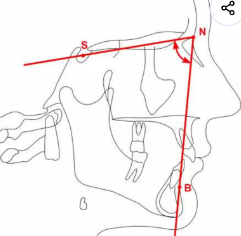
2.1 Nasofrontal Angle


LnBuZw


what it is: the angle formed at the nasion between the glabella (forehead) and the nasal dorsum basically the angle of the dip where your nose begins between your eyes


how to measure: draw a line along the glabella (forehead slope) and another along the nasal dorsum they meet at the nasion the angle between them is your nasofrontal angle


Classical Ideal: 115-130°
this is repeatedly cited but sources 357 shows on Iranians the ideal for males seems to be 137.64 ± 4.20 degrees
but it also say Iranians prefer wider angles which could explain this angle also ppl of ages 25-44 prefer more acute angles
so this ideal could still be valid
i see this number again and again in plastic surgery sites like this
so this ideal works for Iranians and middle wester prolly since their average is extremely similar to Iranians


why it matters: this angle determines how deep or shallow your radix looks a deeper radix means a more acute angle which creates more shadow between the eyes and makes the nose look more projected a shallower radix means a more obtuse angle and the nose looks like it flows smoothly from the forehead without much of a dip


too deep (below 115°): the nose looks like it starts in a hole the transition from forehead to nose is harsh and it can make the bridge look overly prominent even if it isnt actually that projected


too shallow (above 135°): the nose blends into the forehead with barely any transition this can make the nose look flat or undefined like there is no clear starting point


ethnic Variations:


Caucasian: 115-130° this is where the classical ideal comes from Powell and Humphrey. they are repeatedly cited

African descent: African males actually have a smaller (more acute) nasofrontal angle (mean 129.7°) compared to Caucasian males (mean 137.9°), ofc this talks about west and central Africans mainly [302][304][316]

East Asian: One study found that the nasofrontal angle in Chinese individuals exceeded that of North American Caucasians, Asian females had a mean NFA of 139.3°, I couldn't find anything about males [302][304][316]

South Asian: varies wildly but commonly 120 135° [302][304][316]

Middle Eastern: from the iranian study tho it doesnt represent all of middle east it seems like they have just a lil more wider angle nose than the Caucasian nose so you can assume they have similar ideals

Hispanic/Latino: huge variation due to mixed ancestry I dont think providing an ideal would be useful here

the takeaway: if youre ethnic and your nasofrontal angle is 135° that doesnt automatically mean somethings wrong it might be perfectly normal for your face but if its 150° yeah thats probably too flat for anyone [302][304][316]


2.2 Nasofacial Angle


Nasofacial angle in facial analysis


what it is: the angle between the nasal dorsum and the facial plane (a line from glabella to pogonion which is the most forward point of the chin)


Classical Ideal: 30-40


why it matters: this tells you how much your nose projects relative to your overall facial profile a larger angle means the nose sticks out more relative to the face a smaller angle means it sits flatter


think about it this way two people can have the exact same nose but if one has a more projected chin their nasofacial angle will be smaller making the nose look less prominent this is exactly why chin position matters so much for nasal aesthetics and why some people need a genioplasty alongside their RHINOPLASTY


ethnic Variations:


Caucasian: 30-40° is another Powell and Humphreys work
African descent: 39.2° mean for males due to a combination of lower dorsal height and different chin projection [302][304]
East Asian: commonly 30 38° but with more variation in chin position [302][304]
Middle Eastern: frequently 35 42° because of prominent dorsal projection [302][304]
the takeaway: always evaluate this angle in context with chin projection a "small" nasofacial angle might just mean your chin is strong not that your nose is flat


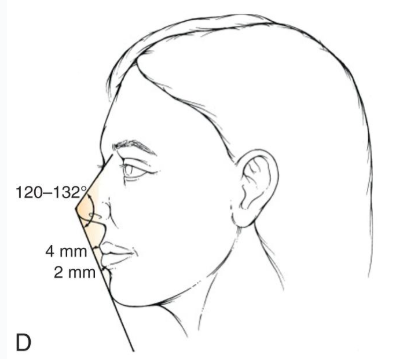
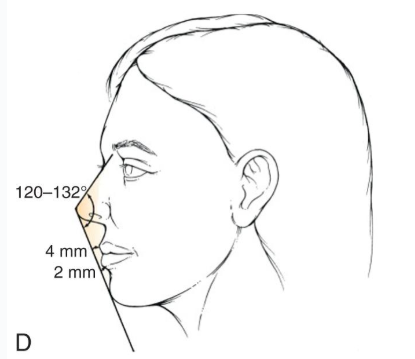
2.3 Nasomental Angle


View attachment 5175276


what it is: the angle formed between a line along the nasal dorsum and a line from the tip to the mental point (chin) basically a big angle that captures the nose-chin relationship in profile


Classical Ideal: 120-132° get again another Powell and Humphreys they created around 12 angles if i remember correctly


why it matters: this is one of the best single measurements for evaluating overall facial harmony in profile because it captures the interplay between nasal dorsum projection tip projection and chin position all at once


if this angle is too large the midface looks scooped out or the chin is too prominent relative to the nose if its too small either the nose dominates the profile or the chin is deficient


ethnic Variations:


Caucasian: 129.4° mean so you can expect it to be higher more like 125-135 rather than120-132°
African descent: the mean is 124.1 since it lower than yt ideal is a good estimation115-130° the lower dorsal height tends to reduce this angle [302][304]
East Asian: mean of 132.4 so 120-135°
South Asian: i expect i118-132° [302][304]
Middle Eastern: 120 135° prominent dorsa can push this higher [302][304]
the takeaway: this is a great screening angle if its wildly off something major needs addressing but it wont tell you WHAT specifically is off you need the other angles for that


2.4 Nasolabial Angle


MC5wbmc


what it is: THE angle everyone talks about the angle formed between the columella and the upper lip at the subnasale basically how much your nose tip rotates upward or downward relative to your lip


how to measure: one line along the columella and another along the upper lip they meet at the junction of the nose and lip


Classical Ideal:


Males: 90-95°


too acute (below 90°): the tip points downward giving a droopy hooked or witch-like appearance the nose looks longer than it is and it ages the face significantly this is what happens when people say someone has an "old looking" nose


too obtuse (above 110° in females, above 100° in males): the tip is over-rotated pointing too far upward giving the "pig nose" appearance excessive nostril show from the front and the nose looks unnaturally short


ethnic Variations:


Caucasian: males have a mean of 100.1° and ideal is thougth to be 90-95° [302][303][312]
African descent: have a mean of 87.5° ideal is often 85 105° there is massive variation here some African noses naturally have a more acute angle while others are more obtuse [302][303][312]
East Asian: a mean of 94.7° typically 90 100° [302][303][312]
South Asian: 85 105° with significant group d/f (Dravidian vs Indo-Aryan features differ substantially) [302][303][312]
Middle Eastern: again in the Iranian study [302][303][312]
Hispanic/Latino: 90 105°
this is the angle most commonly modified in RHINOPLASTY and its also the one most commonly botched either over-rotated (pig nose) or under-corrected (still droopy)


critical note for men: over-rotating a male nose is one of the fastest ways to feminize a face if youre a guy and your surgeon is talking about getting your nasolabial angle above 100° push back hard unless you specifically want that look


2.5 Tip Rotation


what it is: closely related to the nasolabial angle but measured differently tip rotation specifically measures the angle of the line from the alar crease point to the tip-defining point relative to the FRANKFORT HORIZONTAL Plane


Classical Ideal: the tip should be rotated so that the nasolabial angle falls in the ranges above


rotation is described as cephalic (upward toward the head) or caudal (downward toward the feet)


under-rotated tips look droopy and elongate the nose over-rotated tips look piggish and shorten the nose


ethnic Considerations: ethnic noses that naturally have less tip support (thinner cartilage, weaker LLC) may show more tip ptosis with aging meaning a nose that looked fine at 20 can develop significant under-rotation by 40


this is also where the depressor septi nasi muscle comes in if this muscle is overactive it pulls the tip DOWN every time you smile creating dynamic tip ptosis your nose literally droops when you smile and snaps back when you stop


2.6 Nasofrontal Angle vs Nasolabial Angle The Profile Balance


heres something nobody talks about these two angles need to BALANCE each other


if you have a deep nasofrontal angle (acute lets say 115°) with a very obtuse nasolabial angle (say 110°) the nose looks like a ski slope aggressive dip at the top and a flip at the bottom


if both are moderate (nasofrontal 125° nasolabial 95 100°) the nose has a smooth balanced profile


the point is you cant evaluate any single angle in isolation they all interact and the overall profile harmony is what matters not hitting some magic number on one measurement


PART 2: PROJECTION & PROPORTION RATIOS


now we get into the stuff that determines how far your nose sticks out how long it looks and how those dimensions relate to each other


2.7 Nasal Projection (Tip Projection)


what it is: how far the tip of the nose extends outward from the face measured as the horizontal distance from the alar crease to the tip-defining point (pronasale)
basically the part of the lower nose if you exclude the nostrils, the part that cause projection the nose TIP


there are multiple methods to know ideal projection and they all give slightly different answers


Method 1 Goode Method (most commonly used): Ratio of nasal projection to nasal length should be 0. [39]55-60 meaning your tip projects about 55 60% of the total nosel length, ideal was found out to be 0.56 ± 0.01

Goode Method assessment for nasal tip projection ratio.

Method 2 SIMONS METHOD : tip projection should equal upper lip length (subnasale to vermilion border) ratio of 1:1 [chad] [cit]
Simons method for evaluating nasal tip projection


Method 3 Crumley Method: Uses a 3-4-5 right triangle where nasal projection is 3, tip to nasion is 4, and nasion to alar crease is 5

Crumley and Lanser method for evaluating nasal tip projection


Method 4 Byrd Method: Projection = 0. [66]67 × ideal nasal length
[couldnt find pic for these]

why it matters: under-projection makes the nose look flat and undefined the tip doesnt stand out from the face and the nose looks smashed or poorly defined over-projection makes the nose look pointy and disproportionate like its reaching out to shake your hand


ethnic Variations:


Caucasian: Goode ratio [2] 0.55 0.60 (this is the reference standard)
African descent: often 0.45 0.55 naturally less projected which is NORMAL for this ethnic context do not try to project an African nose to Caucasian standards
East Asian: similar to African descent 0.45 0.55 lower projection is the norm
South Asian: 0.50 0.58 varies significantly
Middle Eastern: often 0.55 0.65 sometimes over-projected relative to Caucasian norms
the takeaway: projection needs to match YOUR face and YOUR ethnic a nose thats "under-projected" by Caucasian standards might be perfectly projected for an East Asian face
Caucasian have really projected noses your African nose cant compare so know that is dont have to be like theirs nose


2.8 Nasal Length


what it is: the distance from the nasion (radix) to the tip-defining point measured along the dorsum


Classical Proportions:


Nasal length should equal approximately 1/3 of total facial height (remember facial thirds part)
Average in Caucasians: approximately 50-55mm in males [302][316]
why it matters: a nose thats too long elongates the midface making the face look droopy aged and weak a nose thats too short makes the midface look compressed and the face looks flat or childish


ethnic Variations:


African descent: nasal length is often shorter relative to face
East Asian: similar shorter relative nasal length
Middle Eastern: similar to caucasians
South Asian: highly variable, it kinda hard to know


but heres the thing nasal length is perceived not just measured a nose with good tip rotation can LOOK shorter than it actually is because the upward rotation creates an illusion of reduced length conversely a ptotic tip makes the nose LOOK longer even if the actual measurement is below average or the ideal


this is why surgeons often increase tip rotation to "shorten" a nose rather than actually removing length


2.9 Nasal Height (Dorsal Height)


what it is: the vertical distance from the alar crease to the highest point of the nasal dorsum on profile view this is basically how tall the bridge is


Classical Ideal: rule of 10-20-30, where ideal height is 10mm at the nasion (measured from the anterior corneal plane), 20mm at the rhinion, and 30mm at the tip [yo]


ethnic Variations and alot of d/f here


Caucasian: moderate to high dorsal height well-defined bridge
African descent: lower dorsal height less bridge projection this is one of the most consistent ethnic differences
East Asian: low dorsal height often the most defining feature of East Asian nasal anatomy the "flat bridge"
South Asian: moderate usually between Caucasian and East Asian
Middle Eastern: often high dorsal height frequently with a dorsal hump


the dorsal height combined with dorsal width determines the overall bridge appearance and its one of the primary things modified in RHINOPLASTY whether through augmentation (building up a low bridge) or reduction (taking down a high bridge or hump)


PART 3: WIDTH MEASUREMENTS & RATIOS


width is where ethnic variation is the MOST dramatic and where the most damage has been done by applying universal standards to non-Caucasian faces
so pay attention ethnic


2.10 Alar Base Width


what it is: the distance between the two most lateral points of the alae basically how wide the base of your nose is measured from the outside of one nostril wing to the outside of the other


Classical Ideal: the alar base width equals one-fifth of the face width or 70% of the nasal height. The bony base width should be 70–80% of the alar base width.[cit]


this is probably the most commonly cited nasal proportion and also the most commonly misapplied to ethnic faces
(the intercanthal distance one/facial fifth)


ethnic Variations:


Caucasian: approximately equals intercanthal distance ~32-38mm in males [302][305]
African descent: significantly wider often 38-48mm(48 might be extreme but it was found out 38 is the mean) frequently exceeds intercanthal distance by 5 10mm and THIS IS NORMAL a landmark study by Ofodile and Bokhari (1995) specifically showed that applying the intercanthal distance rule to African noses would require excessive narrowing that looks completely unnatural [302][305]
East Asian: moderately wider than Caucasian often 33-40mm also frequently exceeds intercanthal distance [302][305]
South Asian: varies by subgroup but commonly 32-40mm [302][305]
Middle Eastern: usually close to Caucasian norms 30-36mm [302][305]
the takeaway: the intercanthal distance rule is a GUIDELINE not a law for ethnic patients the goal should be alar base width that harmonizes with the rest of their face not one that matches some formula derived from European faces


2.11 Nasal Width (Bony Vault Width)


what it is: the width of the nose at the level of the nasal bones measured across the bony vault this is different from alar base width this is higher up on the nose


Classical Ideal: approximately 75% of alar base width[cit]


why it matters: if the bony vault is too wide relative to the alar base the nose looks pyramidal wide at the top and narrowing at the bottom if its too narrow relative to the alar base the nose looks hourglass-shaped pinched in the middle


ethnic Variations:


Caucasian: moderate bony width clear dorsal lines
African descent: bony vault may be proportionally wider with less defined dorsal aesthetic lines
East Asian: often wider bony vault with lower height giving a flat wide bridge appearance
Middle Eastern: moderate to narrow bony vault but sometimes appears wider due to thick skin


2.12 Tip Width (Interdomal Distance)


what it is: the distance between the two tip-defining points on frontal view this determines how wide or narrow the tip appears


Classical Ideal: 8-10mm with post operation width of 8.1 average[cit] average of males around 12mm pre operation which means that this is more wider than average b/c they needed rhino to fix it which indicatetes it is over the average


why it matters: too wide and the tip looks bulbous too narrow and it looks pinched which i mentioned in the anatomy section


ethnic Variations:


Caucasian: well-defined tip with moderate width
African descent: wider tip-defining point distance often with thicker overlying skin making the tip appear even wider than the cartilage suggests
East Asian: variable but often wider with less cartilage definition
South Asian: commonly wider tip especially in Dravidian populations
Middle Eastern: moderate usually well-defined due to thinner tip skin
the relationship between tip width and alar width matters more than either measurement alone a tip thats 75% of the alar width looks proportionate but a tip thats 95% of the alar width looks boxy and undefined because theres no visual narrowing from base to tip


2.13 Nasal Bridge Width Index


what it is: ratio of bony vault width to alar base width expressed as a percentage


Classical Ideal: approximately 75-80%


i mentioned this ratio for the ideals i dont want to remove this subtopic and change every single topic number gonna let it stay


2.14 Nostril Width and Nostril Axis


nostril width: the maximum width of each naris (nostril opening) on basal view


nostril axis: the angle of the long axis of each nostril relative to the columella ideally approximately 45° on basal view


the nostrils should be roughly symmetric (though perfect symmetry is rare), Ideal nostril shape is a teardrop, with the long axis angled 30 to 45 degrees toward the midline[cit]


ethnic Variations:


Caucasian: narrow to moderate nostrils teardrop to oval shape
African descent: wider more horizontally oriented nostrils often more circular or oval rather than teardrop this is related to the wider alar base and different LLC anatomy
East Asian: moderate width variable shape
South Asian: moderate to wide
nostril asymmetry is nearly universal and is one of the most commonly noticed aesthetic concerns but also one of the hardest to perfectly correct surgically


PART 4: PROFILE METRICS & DORSAL ANALYSIS


2.15 Dorsal Profile Classification


the nasal dorsum (bridge) on profile can be classified into several types


Straight: the dorsum forms a straight line from radix to tip this is the "Greek nose" or "classical" profile considered the ideal in Western aesthetic standards


Convex: the dorsum has a hump or outward curve this is the dorsal hump we discussed extremely common in Middle Eastern Mediterranean and some South Asian populations often genetic


Concave: the dorsum has an inward curve or scoop the "ski slope" nose currently very trendy especially among young women seeking RHINOPLASTY but can look overdone if too aggressive


Sinusoidal: a combination of convex and concave curves along the dorsum creating an S-shape or wave pattern


Step-off: an abrupt transition usually at the rhinion where the profile suddenly changes angle often post-traumatic


ethnic Patterns:


Caucasian: straight to mildly convex is most common the straight profile is the traditional Western ideal
African descent: straight to mildly concave lower dorsum
East Asian: straight to concave low dorsum
South Asian: convex dorsum common especially with dorsal humps particularly in Indo-Aryan populations
Middle Eastern: convex dorsum with dorsal hump is extremely common often the primary reason for seeking rhinoplasty in this population


important note: the "ski slope" or concave profile that is currently popular on social media and in certain surgical circles is NOT a universal ideal it can look extremely unnatural on faces that are built for a stronger dorsum forcing a concave profile onto a Middle Eastern or South Asian face can create a bizarre disconnect between the nose and the rest of the facial features [79]


2.16 Nasion Position & Radix Depth


the position of the nasion (deepest point of the radix) relative to the face matters enormously


Ideal Nasion Position: should sit at the level of the supratarsal crease (upper eyelid crease) when viewed from the side this is approximately at the level of the upper lash line to upper lid also should have space of 10-13 and 4-6 mm distance from the gllabela[cit]


Radix Depth: measured as the distance from the radix to a line drawn along the corneal plane


too deep: creates an aggressive shadowed appearance the nose looks like it starts from a cave between the eyes too shallow: no clear transition from forehead to nose the face looks flat in the midline


ethnic Variations:


Caucasian: moderate depth usually well-defined
African descent: shallow radix is very common the bridge starts more gradually without a dramatic dip
East Asian: shallow radix is one of the defining features of East Asian nasal anatomy and one of the most commonly augmented areas in East Asian rhinoplasty
South Asian: variable moderate to shallow
Middle Eastern: often deeper radix which when combined with a prominent dorsum creates the characteristic Middle Eastern profile


2.17 Supratip Break


what it is: a subtle change in contour just above the tip where the dorsal line transitions into the tip lobule ideally theres a slight depression here creating a gentle "break" in the profile line before the tip projects outward


why it matters: this break is one of the key indicators of a refined well-defined tip without it the nose looks like a continuous slope from bridge to tip with no definition


Classical Ideal: 1-2mm of supratip break below the dorsal line or basicly none [309][315]


a subtle break is ideal or even no break at all a completely smooth dorsal-tip line can look strong and masculine

ethnic Considerations: achieving a visible supratip break is much harder in patients with thick skin because the skin envelope fills in the subtle depression thick-skinned patients often end up with a smooth dorsum-to-tip transition regardless of what the cartilage underneath looks like


PART 5: BASAL VIEW METRICS


the basal view is the most underappreciated view in nasal analysis most people never look at their nose from below but surgeons consider it one of the most revealing perspectives


this isnt done so that your nose looks good from below but rather another perspective of measuring the nose

2.18 Nasal Base Shape


Figure 13. Nasal base, proximal view.


on basal view the overall shape of the nasal base should form an equilateral or isosceles triangle[cit] [cit]


the ideal proportions of this triangle:


Tip lobule: should comprise approximately 1/3 of the base length (from the tip to where the nostrils end posteriorly)
Columella/Nostrils: should comprise approximately 2/3
Drawing of Nostrils

ethnic Variations:


Caucasian: typically triangular base with moderate width
African descent: wider base often more trapezoidal than triangular the broader alar base creates a shape thats wider at the bottom
East Asian: variable often wider than Caucasian
Middle Eastern: usually triangular proportionate base

(omfg finding images is do fucking annoying i find i wanted pictures and when i want those unwanted pictures it fucking disapears)
2.19 Columella-to-Lobule Ratio


on basal view the ratio of columellar length to lobular length should be approximately 2:1 [cit]
but some sources like this say for perfect harmony 2:1.7 is ideal


meaning the columella (the part between the nostrils) should be about twice as long as the lobule (the tip portion)


when the lobule is too long relative to the columella the tip looks heavy and droopy from below when the columella is too long the nostrils look elongated and stretched


2.20 Nostril-to-Tip Ratio


the tip lobule width relative to the total base width should be approximately 75% [fuck you]


this means the tip is a relatively narrow defined point compared to the wider nostril base


main point is the tip lobule width relative to the total base width should be approximately 75%


2.21 Columellar Show


Images


what it is: how much of the columella is visible on lateral (profile) view below the alar rim


Classical Ideal: 2-4mm of columellar show [309][315] cit


too much (>4mm): hanging columella the strip between the nostrils droops too low creating a visible problem on profile and sometimes on frontal view [309][315]


too little (<2mm): retracted columella the rim of the nostril is lower than the columella making the nostrils appear heavy and hooded from the side [309][315]


this is the alar-columellar relationship we discussed in section 2.13 and its one of the most common post- RHINOPLASTY complaints


ethnic Variations:


Caucasian: 2 4mm is standard
African descent: often less columellar show due to thicker alar tissue
East Asian: variable often less show
Middle Eastern: sometimes excessive show especially with a prominent caudal septum


PART 6: COMPREHENSIVE ETHNIC RHINOPLASTY NORMS


alright this is the big one this is where I put it all together for each major ethnic group because i know most of you scrolled straight to this section looking for your specific ethnicity


im going to break down each ethnic group with their typical nasal characteristics the modified ideals (not Caucasian ideals forced onto ethnic faces but actual evidence-based norms) and the most commonly sought surgical changes


fair warning there is ENORMOUS variation within every ethnic group what im describing are statistical tendencies not absolutes your individual nose may not match your ethnic pattern at all and thats fine but doest mean your EUROPEAN RAMESH:AngryFroge:


2.22 Caucasian Nasal Norms


this is the "reference" group because most of the original research was done on Caucasian faces but even within Caucasian populations there is variation Northern European noses differ from Southern European which differ from Eastern European


Typical Features:


moderate to high dorsal height
well-defined tip with moderate projection
alar base width approximately equal to intercanthal distance
nasolabial angle 90-95° males [303][312]
nasofrontal angle 115-130°/125-135 could be i see it mentioned sometimes
straight to mildly convex dorsal profile
moderate skin thickness
Most Common Concerns:


dorsal hump (especially Mediterranean Southern European)
wide or bulbous tip
crooked nose (post-traumatic or congenital deviation)
droopy tip
Standard ideals apply most closely to this group but even here individual variation is massive


2.23 African Descent Nasal Norms


this is one of the most diverse groups on the planet and grouping all "African" noses together is an oversimplification but there are general tendencies across Sub-Saharan African and African American populations


Typical Features:


low flat dorsum (reduced dorsal height)
broad alar base (often 38mm)
wide nostrils with more horizontal orientation
decreased tip projection and definition
thick fibrofatty skin especially over the tip
short columella
more acute nasofrontal angle
less columellar show
wider nasal bones
weaker LLC (less cartilage strength)
rounded to amorphous tip morphology


alar base width: should be proportional to the wider intercanthal distance common in this population which itself is wider than Caucasian norms the old rule of "alar width = intercanthal distance" still somewhat applies but both measurements are naturally wider
nasolabial angle: 85-105° could be way more acute because their lip protrude
dorsal projection: lower is natural augmentation should be conservative
tip projection: Goode ratio 0.45-0.55 is normal dont over-project
Most Commonly Sought Changes:


alar base reduction (narrowing the nostril)
tip definition and refinement
dorsal augmentation (building up the bridge)
tip projection increase
nostril narrowing
Critical Surgical Considerations:


higher risk of hypertrophic scarring and keloid formation this is huge and directly affects where incisions can be placed
thick skin limits tip refinement significantly
cartilage is often thinner and weaker requiring augmentation grafts (rib cartilage is commonly used)
the goal should be refinement while preserving ethnic identity NOT creating a Caucasian nose on an African face


2.24 East Asian Nasal Norms


includes Chinese Japanese Korean SouthEast Asian and related populations again with enormous internal diversity


Typical Features:


low flat dorsum (this is often the most prominent feature)
wide alar base
decreased tip projection and definition
thick skin especially over the tip and dorsum
short nasal bones
weak LLC
obtuse nasofrontal angle
under-projected tip
shallow radix
wider nasal base relative to facial width
Evidence-Based Norms:


dorsal height: lower than Caucasian is normal but extremely flat bridges may still warrant augmentation if the patient desires
alar base width: wider than Caucasian norms is expected
tip projection: Goode ratio 0.45-0.55 is typical
nasolabial angle: 90 100°
Most Commonly Sought Changes:


dorsal augmentation (THE most common request this is huge in Korean and Chinese rhinoplasty markets) using silicone implants Gore-Tex or cartilage grafts
tip projection and refinement
tip definition
alar base reduction
radix augmentation
Critical Surgical Considerations:


augmentation rhinoplasty is far more common than reduction this is the opposite of Caucasian rhinoplasty
thick skin is even more limiting for tip definition than in African patients in some cases
silicone implant rhinoplasty is extremely popular in Asia but comes with long-term risks including extrusion infection and capsular contracture many revision rhinoplasties in Asian patients involve removing old silicone implants
cartilage availability is limited because nasal septum cartilage is smaller in East Asian patients rib cartilage is commonly needed
cultural aesthetic preferences may differ from Western ideals Korean beauty standards for example favor a specific look that isnt simply "more Caucasian"


2.25 South Asian Nasal Norms


includes Indian Pakistani Bangladeshi Sri Lankan Nepali populations with massive diversity from North to South [78] [223]


this might be the most variable ethnic group for nasal features because of the enormous genetic diversity within South Asia a Kashmiri nose can look completely different from a Tamil nose


Typical Features (with ranges):


dorsal height: moderate to high in Northern populations (Indo-Aryan features) lower in Southern populations (Dravidian features)
dorsal profile: frequently convex especially in Northern populations dorsal humps are very common
alar base width: moderate to wide 32 42mm
tip projection: moderate to decreased
skin thickness: moderate to thick especially at the tip
nasolabial angle: 85 100°
tip: often bulbous or amorphous especially in South Indian populations
Evidence-Based Norms:


there is genuinely limited research establishing specific South Asian norms compared to other groups which is a problem in the field
norms should be stratified by subregion at minimum (North vs South vs East vs West)
alar base width: intercanthal distance rule is approximate at best
nasolabial angle: 90 100° is a reasonable target for most South Asians
Most Commonly Sought Changes:


dorsal hump reduction (especially North Indian)
tip refinement and definition (especially South Indian)
alar base reduction
overall size reduction
bridge augmentation (in some Southern populations with very flat bridges)
Critical Considerations:


the diversity within this group means there is NO single "South Asian nose" a surgeon needs to evaluate each patient individually not apply a template
thick tip skin is common and limits tip refinement
dorsal humps in this population can be significant and patients often want dramatic reduction
scarring tendency is variable but generally intermediate between Caucasian and African descent


2.26 Middle Eastern Nasal Norms


includes Arab Persian Turkish and related populations


Typical Features:


prominent dorsum often with a significant dorsal hump (this is THE characteristic feature)
strong tip projection
droopy or ptotic tip (very common especially in Persian noses)
in Iranian studies it shows they prefer more obtuse angle
deep nasofrontal angle
moderate alar base width
thin to moderate skin (thinner than many other ethnic groups which is actually an advantage for surgical definition)
strong cartilage framework
long nose
often deviated (septal deformity is common)
Evidence-Based Norms:


nasolabial angle: 100-110° males but i cant use this to characterize all middle eastern ppl since this was from that one Iranian study
dorsal profile: straight is ideal but not concave maintaining a clean straight or very subtle convexity preserves the Middle Eastern aesthetic without looking "done"
tip projection: good native projection usually doesnt need augmentation often needs slight reduction
Most Commonly Sought Changes:


dorsal hump removal (far and away the number one request)
tip deprojection and refinement
tip rotation (correcting the droopy tip)
straightening a deviated nose
narrowing the bony vault
Critical Considerations:


thinner skin is both a blessing and a curse more definition is possible but irregularities show more easily
strong cartilage means the nose has "memory" and tends to resist reshaping requiring stronger fixation techniques
over-reduction of the dorsum creating a scooped-out concave profile is one of the most common mistakes in Middle Eastern rhinoplasty it looks completely unnatural on a face built for a stronger bridge
the Middle Eastern "ethnic rhinoplasty" movement is pushing for preservation of ethnic character rather than creating cookie-cutter Westernized results and honestly this is a very positive development
ptotic tip correction requires addressing both cartilage support and the depressor septi muscle


2.27 Hispanic/Latino Nasal Norms


this is possibly the most challenging group to generalize because Hispanic/Latino populations have such diverse ancestry (Indigenous American European African) and the nasal features reflect this mixture


Typical Features (varying by ancestry):


mestizo noses tend to have moderate dorsal height moderate alar width and moderate tip definition somewhere between Caucasian and Indigenous features
Indigenous-predominant features: wider alar base lower dorsum thicker skin bulbous tip
European-predominant features: more closely resemble Caucasian norms
African-influenced features: wider base lower dorsum thick skin
Evidence-Based Norms:


given the diversity norms need to be individualized more than in any other group
alar base width: often wider than Caucasian norms but not as wide as African descent
nasolabial angle: 90 105°
tip projection: moderate Goode ratio 0.50 0.58
Most Commonly Sought Changes:


tip refinement and definition
dorsal hump reduction (in European-influenced noses)
dorsal augmentation (in Indigenous-influenced noses)
alar base reduction
overall refinement while maintaining ethnic identity
Critical Considerations:


skin thickness varies enormously from thin European-type skin to very thick Indigenous-type skin
cartilage strength is similarly variable
the surgeon needs to assess each patient as an individual because ancestral background within Hispanic populations varies so much that two "Hispanic" patients can have completely different nasal anatomy


PART 7: THE METRICS THAT ACTUALLY MATTER MOST


ok so after throwing dozens of measurements and angles at you let me boil it down to the ones that ACTUALLY matter the most for self-assessment and for going into a surgical consultation


2.28 The Big Five Nasal Metrics


if you only check five things about your nose make it these


Nasolabial Angle is your tip rotated properly?
this single angle has the biggest visual impact on profile appearance check it from a true side photo in the Frankfort Horizontal Plane 90-95° for men classical ideal

Tip Projection (Goode Ratio) does your nose project the right amount from your face? the Goode ratio should be 0.55 0.60 for men classical ideal

Alar Base Width vs Intercanthal Distance is your nose proportionally wide? this is the quick check for frontal view harmony if your alar base is dramatically wider than your intercanthal distance you may benefit from alar base reduction but ONLY if its disproportionate for your ethnicity

Dorsal Profile is it straight convex or concave? a dorsal hump or saddle deformity is usually the single most obvious thing about a nose on profile
Facial Thirds does your nose distort your facial proportions? if your middle third is dramatically longer or shorter than the other thirds your nasal length is off and its affecting your entire facial balance and harmony

this are basic ratios there are way more


2.29 The Reality Check


now before you go measuring your face with calipers and spiraling into despair you need a reality check


perfect noses do not exist even the most beautiful noses in the world deviate from mathematical ideals in some way the goal is never mathematical perfection the goal is HARMONY


a nose that measures slightly outside ideal ranges but fits YOUR face will look better than a nose that hits every ideal number but doesnt match you
not saying this in a cope way but for example having a ski-slope nose on a super masculine face isnt gonna do you good


also asymmetry is universal and normal every single human face is asymmetric every nose is slightly uneven if you go looking for asymmetry with enough scrutiny you will always find it that doesnt mean it needs fixing


and finally photographs lie a lot your phone camera distorts your face the lighting changes everything the angle changes everything one photo of your nose taken with a wide-angle lens from below in harsh overhead lighting can make a perfectly normal nose look absolutely terrible


so before you decide your nose is broken take proper standardized photos in all six views with consistent lighting neutral expression and a lens that doesnt distort

you'll be surprised how different your nose looks when your actually measuring it properly versus copius amount of close range pictures at 2 am


PART 8: SUMMARY TABLES FOR QUICK REFERENCE


for the people who want to quickly reference all the numbers here are the compressed tables


ANGULAR MEASUREMENTS SUMMARY
AngleClassical IdealEthnic Range
Nasofrontal115-130°115-140°
Nasofacial30-40°25-42°
Nasomental120-132°115-135°
Nasolabial90-110°85-110°


PROJECTION & PROPORTION SUMMARY


MetricClassical Ideal / Standard
Goode Ratio (Projection/Length)0.55-0.60 (Caucasian) | 0.45-0.55 (African, East Asian)
Nasal Length1/3 of facial height
Dorsal Height2/3 of nasal length
Columellar Show2-4mm
WIDTH MEASUREMENTS SUMMARY


MetricClassical Ideal / Standard
Alar Base Width≈ Intercanthal distance (one-fifth of facial width)
Bony Vault Width~75% of alar base width
Tip Width~75% of alar base width
Nostril Axis~45° to columella on basal view


ETHNIC QUICK REFERENCE
FeatureCaucasianAfricanEast AsianSouth AsianMiddle Eastern
Dorsal HeightModerate-HighLowLowVariableHigh
Alar Base Width30-34mm38-48mm33-40mm32-42mm30-36mm
Tip Projection0.55-0.600.45-0.550.45-0.550.50-0.580.55-0.65
Skin ThicknessModerateThickThickModerate-ThickThin-Moderate
Nasolabial Angle90-110°85-105°90-100°85-100°80-95°
Dorsal ProfileStraightStraight/LowStraight/LowConvexConvex/Humped
Most Common RequestHump removalAugmentationAugmentationHump/RefineHump removal


thats everything you need to know about nasal metrics norms ideals and ethnic variability in one place


if you read this entire section congratulations you now know more about nasal proportions than 95% of people who walk into a RHINOPLASTY consultation and that knowledge will serve you well whether your evaluating your own nose deciding on surgery or just understanding why faces look the way they do

 
Last edited:
  • +1
Reactions: callard, insignia_, tomacōck and 4 others
PART 9 CEPHALOMETRIC & ORTHODONTIC METRICS


alright so up until now weve been looking at the nose from the outside measuring angles between skin landmarks and soft tissue points but theres a world of measurements that look at whats happening UNDERNEATH at the skeletal level


why does this matter for your nose? because your nose doesnt exist in a vacuum it sits on top of your maxilla (upper jaw) and between your orbits and if the underlying skeleton is off your nose will look off even if the nose itself is technically "normal"

basicly the maxilla this all how maxilla changes you face


this is why orthodontists and maxillofacial surgeons get involved in nasal aesthetics because sometimes the best thing you can do for your nose is fix your jaw

not gonna mention major d/f FOR ETHNICS NOT GONNA EXPLAIN ALL OF THEM


ALL YOU NEED TO KNOW IS
AFRICANS>CAUCASIANS(INCLUDING SOUTHASIANS & ARABS)>EAST ASIANS [cit] [cit]
in terms of maxillary protrusion this is the truth
its simply the truth could this lead to worse facial strcutre as an asian because of a recced maxilla idk

so having higher/lower than ideal by a small amount

2.30 SNA Angle

Angle SNA (82 ± 2)


what it is: the angle formed between three points S (Sella the center of the pituitary fossa in your skull) N (Nasion the bridge point) and A (Point A the deepest concavity on the maxilla between the anterior nasal spine and the upper teeth)


Classical Ideal: 82° ± 2°[CIT]


what it tells you: how far forward or backward your upper jaw (maxilla) sits relative to your skull base


SNA too high (>84°): your maxilla is protruding forward this pushes the base of your nose forward and can make the nose appear more projected than it actually is it also affects the nasolabial angle making it more acute [310][317]


SNA too low (<80°): your maxilla is recessed sitting too far back this pulls the nasal base backward making the nose look flatter and the midface look deficient it can also make the nasolabial angle more obtuse [310][317]


the takeaway: if your SNA is way off no amount of RHINOPLASTY will make your nose look right because the maxilla its sitting on is in the wrong position you WILL need upper jaw surgery to move the maxilla first [310][317]


2.31 SNB Angle


View attachment 5180381


what it is: same concept but for the lower jaw angle between S (Sella) N (Nasion) and B (Point B the deepest concavity on the mandible between the chin and lower teeth) [310][317]


Classical Ideal: 80° ± 2° [310][317]


what it tells you: how far forward or backward your lower jaw sits relative to the skull base [310][317]


why it matters for the nose: a recessed mandible (low SNB) makes the nose look MORE prominent because the chin isnt providing a visual counterbalance conversely a prognathic mandible (high SNB) can make the nose look smaller relative to the face [310][317]


this is that chin-nose relationship we keep coming back to and SNB gives you the skeletal measurement behind it [310][317]


2.32 ANB Angle


View attachment 5180419


what it is: the difference between SNA and SNB which gives you the skeletal relationship between the upper and lower jaw [310][317]


Classical Ideal: 2° ± 2° [310][317]


ANB > 4°: Class II skeletal pattern upper jaw is ahead of lower jaw this is the "weak chin" look and it makes the nose look disproportionately large [310][317]


ANB < 0°: Class III skeletal pattern lower jaw is ahead of upper jaw this is the prognathic look and it can make the nose look relatively small or the midface deficient [310][317]


ANB ≈ 2°: Class I the jaws are in proper relationship and the nose has a balanced skeletal foundation to sit on [310][317]


the takeaway: if your ANB is significantly off you might think you have a "nose problem" when you actually have a "jaw relationship problem" ive seen people get RHINOPLASTY to reduce a nose that looked too big only to still look off because the real issue was a recessed chin (high ANB) that was never addressed


2.33 McNamara Analysis (Nasal Component)


Blog Main Image
McNamara analysis


what it is: McNamara developed a method that specifically measures the position of the maxilla and mandible relative to the Nasion perpendicular (a vertical line dropped from Nasion perpendicular to the FRANKFORT HORIZONTAL Plane)
as you can see from the picture it a lot measurements not just some line from a to b


the nasal component: Point A should be 0-1mm ahead of the Nasion perpendicular in adults


why this matters: this gives you a direct measurement of how far forward the nasal base sits if Point A is way behind the Nasion perpendicular the base of your nose is recessed and the nose may look flat or under-projected not because of the nasal cartilage but because the maxilla is sitting too far back


McNamara also includes a measurement of lower anterior facial height (ANS to Menton) which directly relates to facial thirds if this dimension is excessive your middle and lower face are elongated and the nose appears longer than it should


2.34 Tweed Analysis


View attachment 5180439


what it is: Tweeds analysis focuses on the relationship between the FRANKFORT HORIZONTAL Plane the mandibular plane and the long axis of the lower incisors forming the Tweed Triangle


the three angles:


FMA (Frankfort Mandibular Angle): ideal 25°
FMIA (Frankfort Mandibular Incisor Angle): ideal 65°
IMPA (Incisor Mandibular Plane Angle): ideal 90°
why it matters for the nose: the FMA directly affects lower facial height and therefore the perceived length of the nose a high FMA means a steep mandibular plane which means a long lower face which means the middle third (where the nose lives) looks relatively shorter conversely a low FMA means a short lower face and the middle third looks relatively longer


also the position of the upper incisors (which Tweed analysis helps evaluate) directly affects the upper lip and therefore the nasolabial angle proclined upper incisors push the lip forward closing the nasolabial angle retroclined incisors allow the lip to fall back opening the angle


so if someone gets braces and their nasolabial angle changes thats Tweed analysis in action the tooth position changed the lip position changed and the nasal angle changed without anyone touching the nose


PART 10: SOFT TISSUE ANALYSIS LINES


these are the "gold standard" profile lines used by surgeons orthodontists and maxillofacial specialists to evaluate how the nose lips and chin relate to each other in profile these lines are drawn on lateral cephalometric radiographs or standardized profile photographs


simply rather than hard bone and internal structures and framework we use the outlying soft tissue
also i wont be citing most of them since they well known and i couldnt fins much data about averages and means or d/f ethnicties so
not much to cite


2.35 Ricketts E-Line (Esthetic Line)


rickets e line
ricketts e plane


what it is: a line drawn from the tip of the nose (pronasale) to the most anterior point of the chin (soft tissue pogonion)


Classical Ideal:


Lower lip should sit approximately 2mm behind this line (±2mm) [311]
Upper lip should sit approximately 4mm behind this line [311]
why it matters: if your lips fall ON the line or in FRONT of it your lower face is protrusive relative to your nose and chin if your lips fall way behind it your lower face is retrusive


for the nose specifically: the E-line uses the nasal tip as an anchor point so tip projection directly changes where this line falls if your tip is under-projected the E-line shifts backward and suddenly your lips look more protrusive even if theyre normal its all relative


ethnic Variation: this is a BIG one African and African American patients typically have more lip projection relative to the nose and chin so applying Ricketts standards directly would incorrectly classify normal African profiles as "protrusive" studies have shown that in African American populations both lips sitting ON or slightly in front of the E-line is normal and harmonious


same goes for South Asian and Hispanic populations fuller lip projection relative to the E-line is common and normal


2.36 Steiner S-Line


Blog Main Image


what it is: a line drawn from the soft tissue pogonion (chin) to the midpoint of the columella (not the tip but the middle of the nostril divider)


Classical Ideal: both the upper and lower lip should touch or barely contact this line


why it matters: this is a slightly different reference than Ricketts because it uses the columella midpoint instead of the nasal tip so its less affected by extreme tip projection or under-projection


the S-line tends to be a bit more forgiving and applicable across ethnicities than the E-line but it still has Caucasian bias baked into the original norms


2.37 Holdaway Analysis


View attachment 5180523

what it is: Holdaway described the H-line drawn from the upper lip to the soft tissue pogonion (chin) and measured the H-angle between this line and a line from Nasion-B point (NB line)


Classical Ideal: H-angle of 7 15° [310][317]


what it evaluates: lip prominence relative to the skeletal chin position [310][317]


a large H-angle means the lips are protrusive relative to the chin which could mean the lips are actually full the chin is actually recessed or both this matters for the nose because if a surgeon reduces the nose without addressing an H-angle problem the reduced nose will make the lip protrusion look even MORE exaggerated [310][317]


Holdaway also described the concept of soft tissue chin thickness (the distance from the skeletal pogonion to the soft tissue pogonion) which should be about 10 12mm this matters because a thick soft tissue chin pad can compensate for a mildly recessed skeletal chin making the profile look better than the bones suggest [310][317]


2.38 Arnett Soft Tissue Cephalometric Analysis (STCA)


what it is: Arnett took things to another level by creating a comprehensive analysis that evaluates soft tissue positions directly rather than inferring them from skeletal measurements


key nasal measurements in Arnett's analysis:


Upper lip angle: the angle of the upper lip relative to a true vertical line ideal 14-16° for males [311] [cit]
Nasolabial angle: 85-105° (Arnett uses a wider range than classical teaching) [311]
Interlabial gap: 1-5mm at rest [311]
Throat length: measured from the neck-throat point to the menton [311]
why it matters: Arnett's analysis is specifically designed for surgical planning especially orthognathic surgery combined with RHINOPLASTY it evaluates the nose in context with every other soft tissue landmark from the forehead to the neck [311]


the biggest contribution is the emphasis on TRUE VERTICAL (a vertical line through subnasale) rather than the FRANKFORT HORIZONTAL as the reference plane Arnett argued that using Frankfort can introduce errors because the plane itself varies between individuals [311]


2.39 Legan-Burstone Analysis[311]


Height analysis (Legan-Burstone, 1980).


what it is: another soft tissue analysis that specifically focuses on the relationship between the nose lip chin and throat in profile [311]


key measurements:


Mentolabial sulcus depth: the depth of the groove between the lower lip and chin ideal 4mm [311]
Upper lip protrusion: 3 5mm ahead of the subnasale-pogonion line [311]
Lower lip protrusion: 2 3mm ahead of the subnasale-pogonion line [311]
Soft tissue convexity angle: measured at subnasale between glabella and pogonion ideal 12° ± 4° [311]
why it matters: the soft tissue convexity angle is particularly useful because it captures overall facial profile convexity with the nose base as the fulcrum if this angle is too high the midface is protruding (or the chin/forehead are recessed) if its too low the midface is flat


Legan-Burstone is the analysis that most directly quantifies how the nose affects overall facial convexity


2.40 Gonzalez-Ulloa Zero Meridian


Zero Meridian Line of Gonzales Ulloa


what it is: a true vertical line drawn through the Nasion perpendicular to the FRANKFORT HORIZONTAL Plane this creates a reference line that divides the profile into anterior (in front of the line) and posterior (behind the line)


Classical Ideal: the soft tissue pogonion (chin) should sit ON or very close to this zero meridian line


why it matters: this is a quick screening tool for overall profile balance if the chin falls significantly behind the zero meridian the lower face is deficient and the nose will look disproportionately prominent if the chin falls in front of it the lower face is prognathic and the nose may look relatively small


for nasal planning: if the chin falls way behind the zero meridian a surgeon needs to consider genioplasty (chin advancement) before or alongside RHINOPLASTY because reducing the nose without bringing the chin forward just creates a different kind of imbalance


ethnic note: just like all these other lines the zero meridian was calibrated on Caucasian faces many ethnic groups naturally have the chin slightly behind this line and thats normal for their morphology


PART 11: ADVANCED ANGULAR METRICS


these are the angles that most guides skip because theyre "too specialized" but if youre trying to understand your nose completely you need all of them


2.41 Mentocervical Angle
note this is powells humphreys definition

there is another perspective of Lehmann’

Formed by a line from the nasal tip to the pogonion (chin prominence) crossing the line tangential to the submental point. The normal range is 110° to 120°. This angle increases with greater nasal projection.


View attachment 5180605


what it is: the angle formed between the glabella-pogonion line and the pogonion-cervical point line (the cervical point is where the submental area meets the neck)


Classical Ideal: 80-95°


what it tells you: the relationship between your chin and your neck/throat a more acute angle means a well-defined jawline and neck a more obtuse angle means the chin-to-neck transition is blunt which can be from fat accumulation a recessed chin or both


why it matters for the nose: a poorly defined mentocervical angle makes the chin look weaker than it is and a weak chin makes the nose look bigger than it is conversely a sharp mentocervical angle strengthens the chin visually and makes the nose look more proportionate


this is why liposuction of the submental area or a chin implant can indirectly "improve" a nose without touching it the chin gets sharper the profile balance shifts and the nose looks less dominant


2.42 Columellar-Lobular Angle (The Double Break Angle)

starting from here i couldn't get any pictures sorry
most of them were in pptx and there a lot of them and it vague as of which is which
this also for citations i could only find pptx as sources and i aint citing a random hard to understand pptx


what it is: the angle formed at the junction where the columella transitions into the tip lobule this is the "double break" we discussed


Classical Ideal: 30-45°


what it tells you: how defined the transition is between the columella and the tip on profile a well-defined angle creates two subtle inflection points (the "double break") that indicate a sculpted refined tip


too acute (<30°): the columella meets the tip at a sharp angle creating a harsh unnatural transition


too obtuse (>45°): the columella flows into the tip without any definition the transition is smooth but formless


too undefined: if you cant identify any angle at all the tip is amorphous with no columellar-lobular distinction this is common in bulbous tips with thick skin


this angle is one of the things that separates a truly refined nasal tip from a "good enough" one and its one of the hardest things to achieve surgically especially in thick-skinned patients


2.43 Nasal Tip Angle (Interdomal Angle)


what it is: the angle between the medial and lateral crura of the lower lateral cartilages at the dome (tip-defining point) measured bilaterally


Classical Ideal: approximately 60 80° per dome


what it tells you: the angularity or roundness of the tip at the cartilage level


narrow angle (<60°): a more pinched angular tip the domes are sharply folded


wide angle (>80°): a broader rounder tip the domes are gently curved rather than sharply angled this creates a wider distance between tip-defining points and contributes to a bulbous appearance


the domal angle is primarily a surgical measurement because you cant really measure it from the outside but understanding it helps you understand WHY your tip looks the way it does a surgeon evaluating your nose will assess this angle (sometimes with palpation sometimes with imaging) to determine how to reshape the tip


dome-binding sutures are the primary technique for narrowing this angle bringing the tip-defining points closer together and creating more definition


2.44 Septal Angle (Anterior Septal Angle)


what it is: the angle of the most anterior and inferior point of the nasal septum this is the point where the septum meets the tip support mechanism


why it matters: the anterior septal angle is one of the major tip support mechanisms it acts as a fulcrum point that supports the tip from behind if this angle is obtuse the tip tends to project more if its acute or if the septal cartilage is weak at this point the tip loses support and droops


surgically modifying the anterior septal angle is one of the ways to change tip projection and rotation trimming the caudal septum here can deproject and derotate the tip while building it up with grafts can increase projection


this isnt something you can evaluate from the outside but its one of the most critical internal measurements a surgeon assesses during RHINOPLASTY


2.45 Nasal Base Angle


what it is: the angle between the columella and the upper lip as seen on basal view (looking up from below) not the same as the nasolabial angle which is seen from the side


Classical Ideal: approximately 90° meaning the columella and upper lip form a right angle when viewed from below


what it tells you: whether the nasal base is tilted forward or backward relative to the upper lip an acute angle means the base tilts backward (the nose looks pushed in from below) an obtuse angle means the base tilts forward


this affects the apparent shape of the nostrils and the overall symmetry of the nasal base on the basal view its a subtle measurement but it contributes to why some noses look "off" from below even when they look fine from the front and side


PART 12: MATHEMATICAL METHODS FOR TIP ANALYSIS


we covered Goode and Simons earlier but there are several other mathematical methods for evaluating tip projection and overall nasal proportions that you should know about


2.46 Baum Method


what it is: tip projection (measured as the horizontal distance from the alar crease to the tip) should equal the length of the upper lip (from subnasale to the vermilion border of the upper lip)


in simple terms: your nose should stick out from your face roughly the same distance as your upper lip is tall


how it compares to Simons: very similar concept actually Simons also compared tip projection to upper lip length but Baum specifically standardized the measurement technique and emphasized using the alar crease as the posterior reference point rather than the facial plane


why both exist: different surgeons developed slightly different measurement techniques independently both arrived at a similar conclusion that tip projection and upper lip length should be roughly equal which actually adds credibility to the relationship


practically: if your tip projection is significantly less than your upper lip length the nose looks flat and under-projected if its significantly more the nose looks pointy and over-projected


2.47 Rohrich 10-7-5 Method


what it is: this is a systematic clinical assessment method developed by Rod Rohrich (one of the most published RHINOPLASTY surgeons alive) that breaks nasal analysis into a structured 10-7-5 framework


the 10: ten key aesthetic landmarks to evaluate on every patient the 7: seven critical measurements to take the 5: five views to photograph (frontal, lateral, oblique, basal, and birds eye)


the 7 measurements specifically:


Nasal length
Tip projection
Tip rotation (nasolabial angle)
Alar base width
Dorsal width
Tip width
Columellar show
why it matters: before Rohrich codified this many surgeons would evaluate whatever caught their eye first leading to inconsistent analysis and missed problems the 10-7-5 method ensures nothing gets overlooked


its essentially a checklist and a damn good one if you evaluate your own nose using these 7 measurements in all 5 views youll have a more thorough assessment than many surgeons do in a 15-minute consultation


the method also emphasizes sequence evaluate the FACE first (chin position, facial thirds, facial fifths) before zooming into the nose because as weve discussed the face frames the nose not the other way around


2.48 Tip Projection Index


what it is: a ratio that normalizes tip projection to nasal length expressed as:


tip projection Index = Tip Projection ÷ Nasal Length


Classical Ideal: 0.55-0.60 (this is essentially the GOODE RATIO )


but the tip projection Index is sometimes expressed differently by different authors:


Goode: projection/length = 0.55-0.60
Byrd: projection = 0.67 × nasal length (so the ratio is 0.67)
Crumley: uses a 3-4-5 triangle (so the ratio is 3/5 = 0.60)
the difference between these methods: they use slightly different reference points for measuring "projection" and "length" which is why the numbers differ its not that one is right and the others are wrong theyre measuring slightly different things


practically: if your tip projection Index by any method falls between 0.50 and 0.65 youre in a normal range below 0.50 is under-projected above 0.65 is over-projected regardless of which method you use

ofc there is ethnic variability


PART 13: NASAL INDEX & MORPHOLOGICAL CLASSIFICATION


2.49 Nasal Index (NI)


what it is: the single most important anthropometric classification of the nose used in physical anthropology and ethnic studies


the formula: Nasal Index = (Nasal Width ÷ Nasal Height) × 100


where nasal width is the maximum width of the nose (alar base width) and nasal height is the distance from nasion to subnasale


this gives you a number that classifies the overall shape of the nose from narrow and tall to wide and short


Classification:


Hyperleptorrhine: NI < 55 extremely narrow and tall nose rarest category
Leptorrhine: NI 55 69.9 narrow nose typical of Northern European and some East African populations
Mesorrhine: NI 70 84.9 medium nose typical of East Asian South Asian and Hispanic populations [211] [271] [272]
Platyrrhine: NI 85 99.9 wide nose typical of Sub-Saharan African Southeast Asian and some Pacific Islander populations
Hyperplatyrrhine: NI ≥ 100 extremely wide nose meaning the width actually exceeds the height found in some Australian Aboriginal and certain African populations
why it matters: the nasal index is probably the single best number for capturing ethnic nasal morphology in one measurement it directly reflects the evolutionary adaptation of the nose to climate narrow leptorrhine noses evolved in cold dry climates to warm and humidify air before it reaches the lungs wide platyrrhine noses evolved in hot humid climates where air warming wasnt necessary


the nasal index also has direct surgical implications a platyrrhine nose requires fundamentally different surgical planning than a leptorrhine nose trying to convert one to the other is not just culturally questionable its often technically impossible without extreme measures that carry high complication rates


ethnic Distribution:


Northern European: predominantly leptorrhine (NI 55 70)
Mediterranean/Middle Eastern: leptorrhine to mesorrhine (NI 65 80)
East Asian: mesorrhine (NI 70 85)
South Asian: mesorrhine to platyrrhine (NI 70 90)
Sub-Saharan African: platyrrhine to hyperplatyrrhine (NI 85 105)
Southeast Asian: mesorrhine to platyrrhine (NI 75 95)
Indigenous American: mesorrhine (NI 70 85)
Pacific Islander: platyrrhine (NI 80 100)
the takeaway: know your nasal index it tells you more about your nasal morphology in one number than any other single measurement and it immediately contextualizes every other measurement you take if youre platyrrhine your "ideal" alar base width tip projection and dorsal height are all different from someone whos leptorrhine


2.50 Phi Ratio / Golden Ratio in Nasal Proportions


what it is: the golden ratio (φ = 1.618) is a mathematical proportion that appears throughout nature and has been applied to facial aesthetics for centuries the idea is that the most beautiful faces exhibit proportions that approximate phi


application to the nose:


Nasal length ÷ Nasal width should approximate 1.618
Distance from tip to alar crease ÷ distance from alar crease to nasion should approximate 1.618
The width of the nose at the bridge ÷ the width at the tip ÷ the width at the base should show phi relationships
now heres my honest take on the golden ratio applied to noses its partially true and massively overhyped


the truth: faces that are widely considered attractive do tend to have proportions that cluster near phi relationships this has been demonstrated in multiple studies its not completely made up


the overhype: phi is not a magic formula that defines beauty its a statistical tendency not a law many beautiful faces deviate significantly from phi and many average faces hit phi ratios perfectly beauty is multifactorial and reducing it to one number is reductive


the danger: some surgeons market "golden ratio RHINOPLASTY " as if they can calculate your perfect nose using phi and sculpt it accordingly this is marketing BS the golden ratio can be a useful cross-check but it should never be the primary planning tool for rhinoplasty


practically: if you want to check it measure your nasal length and divide by your nasal width if you get something between 1.5 and 1.7 youre in the neighborhood of phi if its wildly off (like 1.2 or 2.0) your nose is disproportionately wide or narrow relative to its length


but please dont obsess over this one the human eye does not measure phi it perceives harmony and harmony is about the gestalt not any single ratio


PART 14: FRONTAL AESTHETIC ANALYSIS


2.51 Brow-Tip Aesthetic Lines (BTAL)


what it is: THIS is one of the most important frontal view assessments and most guides completely ignore it which is insane because its one of the first things a trained eye evaluates


the brow-tip aesthetic lines are two gently curving lines that start at the medial brow (the inner part of each eyebrow) sweep down along the lateral dorsal wall of the nose and converge at the tip-defining points


when viewed from the front on a well-proportioned nose these two lines create a smooth continuous hourglass shape widest at the brow narrowing at the middle vault (the waist of the hourglass) and then gently widening again at the tip before converging at the tip-defining points


what it tells you: EVERYTHING about frontal nasal symmetry and contour


smooth symmetric BTAL: the nose is straight the dorsum tapers appropriately the middle vault is intact and the tip is well-defined this is what an aesthetically ideal nose looks like from the front regardless of size or ethnicity [221]


broken or interrupted BTAL: something is off it could be:


dorsal deviation (the lines dont mirror each other)
middle vault collapse (the hourglass pinches too aggressively creating an inverted-V appearance)
wide bony vault (the lines dont narrow from brow to mid-vault)
bulbous tip (the lines diverge too much at the tip instead of converging)
asymmetric tip (the lines converge at different points)
why this is so important: the BTAL is what your eye actually traces when you look at someones nose from the front even if youve never heard the term your brain is evaluating these lines subconsciously every time you look at a face


a nose with perfect angles and ratios but broken BTAL will look wrong and a nose with slightly imperfect numbers but smooth beautiful BTAL will look great this is the gap between mathematical analysis and actual aesthetic perception


how to evaluate: take a frontal photo in the FRANKFORT HORIZONTAL Plane with even lighting trace two lines from your inner brow points along the sides of your nose to your tip are they smooth symmetric and hourglass-shaped? or are they irregular interrupted or asymmetric?


Gender Differences:


Males: the BTAL should be relatively straight with less dramatic hourglass narrowing a wider dorsum is masculine
Females: more defined hourglass with a narrower middle vault and more obvious convergence at the tip
ethnic Application: the BTAL concept applies universally across ethnicities what changes is the WIDTH of the hourglass but the smooth symmetric quality should be present regardless a wider nose in an African patient should still have smooth symmetric BTAL they should just be wider curves


surgical principle: many RHINOPLASTY procedures are fundamentally about restoring or creating smooth BTAL osteotomies narrow the upper portion spreader grafts maintain the middle portion and tip work refines the lower portion all in service of creating that uninterrupted hourglass


2.52 Dorsal Aesthetic Lines (DAL)


closely related to the BTAL but specifically referring to the parallel lines running along the dorsum on frontal view


these should be two nearly parallel slightly converging lines running from the radix to the supratip


if these lines are:


parallel and straight: the dorsum is straight and symmetric
converging too aggressively: the middle vault may be collapsed
diverging: the dorsum is too wide or there may be a flat open-roof deformity
wavy or asymmetric: the nose is deviated
the DAL is essentially the middle portion of the BTAL isolated and examined more closely


2.53 Nasal Width-to-Length Ratio (Frontal)


on frontal view the visible width of the nose at the alar base compared to the visible length of the nose from radix to tip


this isnt the same as the nasal index because the nasal index uses anthropometric landmarks and is measured on the actual face while this ratio is based on what you SEE from the front which is affected by projection rotation and facial width


but its useful as a quick frontal view proportionality check if the nose looks as wide as it is long from the front its going to look short and wide if its dramatically longer than its wide it will look narrow and dominant


PART 15: SUMMARY TABLES


CEPHALOMETRIC ANGLES SUMMARY
AngleIdeal ValueWhat It Measures
SNA82° ± 2°Maxilla position relative to skull base
SNB80° ± 2°Mandible position relative to skull base
ANB2° ± 2°Jaw relationship (maxilla vs. mandible)
FMA (Tweed)25°Mandibular plane angle


SOFT TISSUE ANALYSIS LINES SUMMARY
Line/AnalysisReference PointsIdeal Lip/Chin Position
Ricketts E-LineTip (pronasale) to chin (pogonion)Lower lip 2mm behind, upper lip 4mm behind
Steiner S-LineColumella midpoint to chin (pogonion)Both lips touch or barely contact the line
Holdaway H-LineUpper lip to chin (pogonion)H-angle 7° to 15°
Arnett STCATrue vertical through subnasaleComprehensive multi-point analysis
Legan-BurstoneSubnasale to pogonion lineUpper lip 3–5mm ahead, lower lip 2–3mm ahead
Gonzalez-Ulloa Zero MeridianVertical through Nasion perpendicular to FHPChin on or near the line


ADVANCED ANGLES SUMMARY


[TABLE width="100%"]
[TR]
[td]Angle[/td][td]Ideal Value[/td][td]What It Measures[/td]
[/TR]
[TR]
[td]Mentocervical[/td][td]80° to 95°[/td][td]Chin-to-neck definition[/td]
[/TR]
[TR]
[td]Columellar-Lobular[/td][td]30° to 45°[/td][td]Double break definition at columella-tip junction[/td]
[/TR]
[TR]
[td]Interdomal (Tip Angle)[/td][td]60° to 80°[/td][td]Dome angularity / tip shape[/td]
[/TR]
[TR]
[td]Nasal Base Angle[/td][td]~90°[/td][td]Columella-lip angle on basal view[/td]
[/TR]
[/TABLE]


MATHEMATICAL METHODS SUMMARY
AngleIdeal ValueWhat It Measures
Mentocervical80° to 95°Chin-to-neck definition
Columellar-Lobular30° to 45°Double break definition at columella-tip junction
Interdomal (Tip Angle)60° to 80°Dome angularity / tip shape
Nasal Base Angle~90°Columella-lip angle on basal view


NASAL INDEX CLASSIFICATION
MethodFormula / ConceptIdeal Value
GoodeTip projection / Nasal length0.55–0.60
SimonsTip projection = Upper lip length1:1 ratio
BaumTip projection = Upper lip length (alar crease ref)1:1 ratio
ByrdTip projection = 0.67 x Nasal length0.67
Crumley3-4-5 triangle (projection : tip/nasion : nasion/alar)3:4:5
Rohrich 10-7-510 landmarks, 7 measurements, 5 viewsSystematic checklist
Tip Proj. IndexTip projection / Nasal length0.50–0.65 (method-dependent)


thats every single metric angle ratio line method index and classification system that exists in nasal analysis from the basic stuff your tiktok surgeon mentions to the cephalometric analyses that maxillofacial surgeons use for surgical planning


if someone tells you about a nasal measurement thats not in this guide they either made it up or its so obscure and nobody know about it


you now have the complete picture you could become a plastic surgeon with your knowledge but there is a huge part that is still left and thats

fix every flaw


━━


BONUS SECTION

MEASURE YOUR OWN NOSE (DIY CODING)
━━
You've read the ideals, you've seen the norms, Now where the fuck are you?


You could eyeball it, hold a protractor to your phone screen like a psycho, or use one of those scammy "AI face analyzer" apps that tell everyone they're a 6.5 and need a nose job.(we all fell for this when we were 13)


Or you could do it With code


This section gives you a working Python script that uses Google's MediaPipe Face Mesh - a free, open-source AI model that detects 478 facial landmarks in real time - to calculate your actual nasal angles and ratios from your own photos. [284]


No fucking usless BS. No subscriptions, None of that "upload your face to our servers" privacy nightmare. Everything runs locally


━━


STEP 1: GET YOUR PHOTOS RIGHT


Before you run any code, your photos need to not suck. Bad photos = bad measurements = you panicking over nothing.


side Profile shot : Stand sideways, phone at ear height, ~1.5m away. Neutral expression. Lips relaxed and closed. Head level don't tilt up or down. Natural lighting, no harsh shadows on the nose. This gives you NFA, NLA, Goode ratio, dorsal contour.
Frontal shot: Dead-on straight ahead. Phone at nose height, ~1.5m away. Both ears equally visible (or equally hidden). This gives you nasal width, alar base width, nasal index, deviation.
Basal shot (worm's-eye): Tilt your head back ~30° OR have someone photograph from below, aiming up at your nostrils. This gives you nostril shape, columella-to-lobule ratio, base symmetry.


⚠ warrrrnniinngggg: DO NOT use selfie cam (it's wide-angle and distorts your nose - makes it look bigger). Use the rear camera with a timer or have someone take it. Focal length distortion is real and it WILL make your nose measurements wrong. [96]


━━


STEP 2: INSTALL THE TOOLS


You need Python 3.8+ installed on your computer. If you don't have it, go to python.org and download it. Takes 5 minutes.


Then open your terminal (Command Prompt on Windows, Terminal on Mac/Linux) and run:
pip install mediapipe opencv-python numpy​


That's it. Three packages. MediaPipe does the face detection, OpenCV handles image loading, NumPy does the math.


━━


STEP 3: THE CODE - PROFILE VIEW ANALYSIS

I couldn't do this sorry


━━


STEP 4: THE CODE - FRONTAL VIEW ANALYSIS


This one calculates nasal width, nasal index, and checks deviation. Save as nose_frontal.py.


i
#!/usr/bin/env python3


import cv2
import mediapipe as mp
import numpy as np
import sys

# MediaPipe Face Mesh indices (478-point model, refine_landmarks=True)
LEFT_EYE_INNER = 133
RIGHT_EYE_INNER = 362
LEFT_EYE_OUTER = 33
RIGHT_EYE_OUTER = 263
NOSE_LEFT = 48 # alar left (+ small outward nudge in our shard)
NOSE_RIGHT = 278 # alar right
NOSE_BOTTOM = 2 # subnasale / nose bottom
NOSE_TIP = 4 # pronasale proxy (frontal only)
GLABELLA = 8
LEFT_CHEEK = 234
RIGHT_CHEEK = 454
LEFT_BRIDGE = 174
RIGHT_BRIDGE = 399
NOSE_LEFT_OFFSET = (0.0025, 0.0) # normalized
NOSE_RIGHT_OFFSET = (-0.0025, 0.0)


def lm_xy(landmarks, idx, w, h, ox=0.0, oy=0.0):
p = landmarks[idx]
return np.array([(p.x + ox) * w, (p.y + oy) * h], dtype=float)


def dist(a, b):
return float(np.linalg.norm(a - b))


def angle_at(a, b, c):
"""Interior angle at vertex b (degrees). Same as angleAt() in our TS engine."""
ba, bc = a - b, c - b
na, nc = np.linalg.norm(ba), np.linalg.norm(bc)
if na < 1e-8 or nc < 1e-8:
return None
cos = np.clip(np.dot(ba, bc) / (na * nc), -1.0, 1.0)
return float(np.degrees(np.arccos(cos)))


def roll_correct(points, left_idx_key, right_idx_key):
"""Rotate all points so inter-eye line is horizontal."""
left = points[left_idx_key]
right = points[right_idx_key]
dx, dy = right[0] - left[0], right[1] - left[1]
if np.hypot(dx, dy) < 1e-6:
return points, 0.0
angle = -np.arctan2(dy, dx)
cx = (left[0] + right[0]) / 2
cy = (left[1] + right[1]) / 2
cos, sin = np.cos(angle), np.sin(angle)
out = {}
for k, p in points.items():
x, y = p[0] - cx, p[1] - cy
out[k] = np.array([x * cos - y * sin + cx, x * sin + y * cos + cy])
return out, angle


def analyze_frontal(image_path):
img = cv2.imread(image_path)
if img is None:
print(f"ERROR: Could not load {image_path}")
return

h, w = img.shape[:2]
mp_face_mesh = mp.solutions.face_mesh

with mp_face_mesh.FaceMesh(
static_image_mode=True,
max_num_faces=1,
refine_landmarks=True,
min_detection_confidence=0.5,
) as face_mesh:
rgb = cv2.cvtColor(img, cv2.COLOR_BGR2RGB)
results = face_mesh.process(rgb)
if not results.multi_face_landmarks:
print("ERROR: No face detected.")
return

lms = results.multi_face_landmarks[0].landmark

raw = {
"L_in": lm_xy(lms, LEFT_EYE_INNER, w, h),
"R_in": lm_xy(lms, RIGHT_EYE_INNER, w, h),
"L_out": lm_xy(lms, LEFT_EYE_OUTER, w, h),
"R_out": lm_xy(lms, RIGHT_EYE_OUTER, w, h),
"L_alar": lm_xy(lms, NOSE_LEFT, w, h, *NOSE_LEFT_OFFSET),
"R_alar": lm_xy(lms, NOSE_RIGHT, w, h, *NOSE_RIGHT_OFFSET),
"subnasale": lm_xy(lms, NOSE_BOTTOM, w, h),
"tip": lm_xy(lms, NOSE_TIP, w, h),
"glabella": lm_xy(lms, GLABELLA, w, h),
"L_cheek": lm_xy(lms, LEFT_CHEEK, w, h),
"R_cheek": lm_xy(lms, RIGHT_CHEEK, w, h),
"L_bridge": lm_xy(lms, LEFT_BRIDGE, w, h),
"R_bridge": lm_xy(lms, RIGHT_BRIDGE, w, h),
}

pts, _ = roll_correct(raw, "L_in", "R_in")

alar_w = dist(pts["L_alar"], pts["R_alar"])
intercanthal = dist(pts["L_in"], pts["R_in"])
outercanthal = dist(pts["L_out"], pts["R_out"])
face_w = dist(pts["L_cheek"], pts["R_cheek"])
bridge_w = dist(pts["L_bridge"], pts["R_bridge"])
midline_x = (pts["L_in"][0] + pts["R_in"][0]) / 2

# Our engine: Intercanthal Nasal Width Ratio = intercanthal / nose width
intercanthal_nasal = intercanthal / alar_w if alar_w > 0 else None
bridge_to_nose = bridge_w / alar_w if alar_w > 0 else None
nose_face_fifth = alar_w / face_w if face_w > 0 else None
tip_dev = pts["tip"][0] - midline_x
bridge_dev = ((pts["L_bridge"][0] + pts["R_bridge"][0]) / 2) - midline_x

# Scale-relative deviation threshold (~0.5% of intercanthal)
dev_thresh = intercanthal * 0.005 if intercanthal > 0 else 8.0

print("=" * 58)
print(" FRONTAL NOSE ANALYSIS (auto MediaPipe — approximate)")
print("=" * 58)
print(f" Alar width: {alar_w:.1f} px")
print(f" Intercanthal distance: {intercanthal:.1f} px")
print(f" Outer canthal distance: {outercanthal:.1f} px")
print(f" Bizygomatic (cheek) width: {face_w:.1f} px")
print(f" Bridge width: {bridge_w:.1f} px")
print()
if intercanthal_nasal is not None:
print(f" Intercanthal / nasal width: {intercanthal_nasal:.3f} (neoclassical ~1.0)")
if bridge_to_nose is not None:
print(f" Bridge / alar width: {bridge_to_nose:.3f}")
if nose_face_fifth is not None:
print(f" Alar / face width: {nose_face_fifth:.3f} (rule of fifths ~0.20)")
print(f" Tip midline deviation: {tip_dev:+.1f} px")
print(f" Bridge midline deviation: {bridge_dev:+.1f} px")
if abs(tip_dev) > dev_thresh or abs(bridge_dev) > dev_thresh:
print(" -> Possible nasal deviation (heuristic)")
else:
print(" -> Appears centered (heuristic)")
print("=" * 58)
print(" Note: nasal index & true nasal height need a PROFILE photo.")
print(" px→mm: scale = your_intercanthal_mm / intercanthal_px")

ann = img.copy()
for p in pts.values():
cv2.circle(ann, tuple(p.astype(int)), 3, (0, 180, 255), -1)
cv2.line(ann, tuple(pts["L_alar"].astype(int)), tuple(pts["R_alar"].astype(int)), (255, 180, 0), 2)
cv2.line(ann, tuple(pts["L_in"].astype(int)), tuple(pts["R_in"].astype(int)), (0, 255, 180), 2)
out_path = image_path.rsplit(".", 1)[0] + "_front_analyzed.jpg"
cv2.imwrite(out_path, ann)
print(f" Annotated image: {out_path}")


if __name__ == "__main__":
if len(sys.argv) < 2:
print("Usage: python nose_frontal.py front_photo.jpg")
else:
analyze_frontal(sys.argv[1])​


How to run it:

python nose_frontal.py my_front_face.jpg​
(this code was given to me by a irl friend idfk if it works)


━━


STEP 5: CONVERTING PIXELS TO REAL MILLIMETERS


The scripts output pixel values, not millimeters.
To convert:


Measure your intercanthal distance (inner corner of left eye to inner corner of right eye) with a ruler or calipers. Average male is ~30-34mm.
The script gives you intercanthal distance in pixels.
Your scale factor = real_mm / pixel_value
Multiply ALL pixel measurements by this scale factor to get real mm.


Example: If your intercanthal is 33mm and the script says 120px, your scale = 33/120 = 0.275 mm/px. If your alar width is 140px, that's 140 × 0.275 = 38.5mm.


━━


LIMITATIONS - BE HONEST WITH YOURSELF


This is a 2D photo analysis tool. It's good for ballpark measurements and tracking changes over time, but it has real limitations:


NOT clinical-grade, A surgeon uses 3D scanning, CT, and calibrated cephalometric tools. This is an approximation ONLY
Landmark accuracy, MediaPipe's landmarks are close but not perfectly aligned to the clinical definitions of nasion, subnasale, etc. The tip landmark (#1) is reliable; the nasion landmark (#168) can be off by a few pixels depending on lighting.
2D collapse. A profile photo collapses 3D structure to 2D. Your actual NFA might differ by 3-5° from the photo measurement.
Head tilt kills everything. Even 5° of head tilt changes your NLA by up to lets say 5°. Keep your head LEVEL.
Focal length distortion. Phone cameras at arm's length distort facial proportions. Shoot from 1.5m+ with a rear camera.
this also depends on the phone too


That said if you take consistent, properly-positioned photos and use the same script, the RELATIVE measurements and TRENDS are valid. You can track pre/post changes, compare sides, and get a realistic sense of where your proportions sit relative to the norms in Chapter 3.


Don't use this to diagnose yourself with UGLY NOSE,
besides you should be able to know if your nose looks good by looking at it
this is so that you know what wrong


━━

 
Last edited:
  • +1
Reactions: callard, insignia_, tomacōck and 4 others
SECTION 3: FIX EVERY NOSE FLAW


u know anatomy and ideals rn so here is what u actually scrolled for. fixing the damn thing.


every flaw has a fix. sum need a scalpel, sum need filler, AND sum just need u to stop mouth breathing( if extrmely young). ama go through every single nose flaw and what to do bout it.

orange=non-surgical
green= surgical
3.1 Dorsal Hump


Dorsal Hump Nose


that bump sitting on ur bridge like a speed bump, not necessarily but it breaks the even ness of the nose from the middle


stop falling for those nose shaper clips on TikTok. ur nasal bones dont care bout a plastic clamp.


▸ SURGICAL FIX:
• Dorsal reduction (component hump reduction)
• Dorsal preservation rhinoplasty (let-down / push-down)
• Dorsal augmentation above and below hump (camouflage)

▸ NON-SURGICAL FIX:
• HA filler above and below hump (liquid rhinoplasty)
• PLLA thread contouring
• 3D-printed custom nasal prosthetic
• APTOS Sole rhinoplasty threads

3.2 Flat or Low Bridge


Upturned Button Nose, Disney Princess Nose, Button Noses, Button Nose From The Side, Low Nose Bridge Aesthetic, Round Button Nose, Flat Nose Bridge, Ski Slope Nose, Button Noses Side Profile


common in East Asian and African noses, the brige barely projects from the face, making the nose look wide and undefined from the front.


▸ SURGICAL FIX:
• Dorsal augmentation with septal cartilage graft
• Dorsal augmentation with ear (conchal) cartilage graft
• Dorsal augmentation with rib cartilage graft
• Diced cartilage in fascia (DCF)
• Silicone dorsal implant
• Gore-Tex dorsal implant
• Medpor implant

▸ NON-SURGICAL FIX:
• HA filler dorsal augmentation (liquid rhinoplasty)
• HIKO thread bridge augmentation (PLLA cog threads)
• PDO thread bridge augmentation
• CaHA filler (Radiesse)
• APTOS Sole rhinoplasty threads
• 3D-printed custom nasal prosthetic

3.3 Wide Nasal Bridge (Bony Vault Width)


Close-up of a human face and eyes.
Makeup For Wide Nose, Big Nose Asian Girl, Snub Nose Girl, No Nose Bridge, Flat Nose Bridge, Flat Nose Makeup, Round Nose, Broad Nose, Wide Nose Aesthetic


ur brige looks broad from the front, the nasal bones splay out too far, this is d/f from a wide tip or wide alar base this is the upper third being too wide.
I AM NOT TALKING ABOUT YOUR NOSTILS I AM TALKING ABOUT THE BONY PART OF YOUR NOSE

recovery from osteotomies means bruising under the eyes for 1 to 2 weeks, u will look like u got into a fight, plan accordingly.


▸ SURGICAL FIX:
• Lateral osteotomy
• Medial osteotomy
• Intermediate osteotomy
• Percutaneous osteotomy

▸ NON-SURGICAL FIX:
• countering makeup

3.4 Bulbous Tip

Bulbous Nose Rhinoplasty Before And After Pictures Noses With A Bump, Nose Job Before And After Bulbous, Bulbose Nose, Bulbous Tip Rhinoplasty, Wide Bridge Nose Rhinoplasty, Bulbous Nose Before And After, Bulbous Nose Rhinoplasty, Hook Nose Rhinoplasty, Nose Tip Rhinoplasty


the tip looks round, wide, and undefined, like a ball sitting at the end of ur nose, this one is pretty common you prolly suffer from it too


the cause is usually thick skin over wide lower lateral cartilages with poor tip definition. those tip-defining points we talked bout earlier, they are too far apart, making your nose looks boxy, bulbous


if the skin is thick, which it often is with bulbous tips, the cartilage underneath wont show, sum surgeons use a thin layer of crushed cartilage or fascia over the tip to smooth transitions, defatting the tip skin is possible but risky too aggressive and u get visible cartilage edges or worse, skin necrosis.


▸ SURGICAL FIX:
• Cephalic trim of lower lateral cartilages
• Dome-binding sutures
• Interdomal sutures
• Transdomal sutures
• Lateral crural steal
• Lateral crural overlay
• Tip grafting (shield graft, cap graft, onlay graft)
• Defatting / SSTE thinning flap

▸ NON-SURGICAL FIX:
• PDO cog threads for tip definition
• RF microneedling (Morpheus8) for tip skin thinning
• Tretinoin (topical retinoid) for skin thinning
• Tip taping
• HIFU for tip skin tightening
• Steroid injection (triamcinolone) for thick skin

3.5 Droopy Tip (Ptotic Tip)


MDB4MjUyLmpwZw


ur tip points downward, especially when u smile. makes the nose look LONG, the face look aged, and the upper lip disappear, the witch nose effect.


cause is usually weak or elongated lower lateral cartilages, heavy tip skin, or overactive depressor septi nasi muscle pulling the tip down when u smile.


ideal nasolabial angle for females sits around for males 90 to 95. dont over-rotate other wise your gonna looks feminine which is necessarily bad but it usualy wont match your face

▸ SURGICAL FIX:
• Tongue-in-groove technique
• Caudal septal extension graft
• Lateral crural steal
• Columellar strut graft
• Tip rotation sutures
• Depressor septi nasi muscle release

▸ NON-SURGICAL FIX:
• HIKO thread tip lift
• PDO cog thread tip lift
• Botox to depressor septi nasi (2-4 units)
• HA filler at tip for projection/rotation
• APTOS Sole rhinoplasty threads

3.6 Over-Rotated Tip (pig nose)

Short or over-rotated nose (pig nose)


the opposite problem. tip points too far upward, u see too much nostril from the front, ppl can see straight into ur nose.


this happens from genetics or from a previous RHINOPLASTY that went too aggressive on rotation, one of the HARDEST revision rhinoplasty problems to fix.


▸ SURGICAL FIX:
• Caudal septal extension graft (de-rotation)
• Extended spreader grafts
• Alar batten grafts
• Tip grafts for lengthening
• Cartilage onlay at infratip to de-rotate

▸ NON-SURGICAL FIX:
• HA filler at columellar base and infratip
• PDO thread de-rotation and contouring
• APTOS Sole rhinoplasty threads

3.7 Poor Tip Projection (Under-Projected Tip)


Patient 47 before and after under-projected tip rhinoplasty


ur tip doesnt stick out far enough from ur face, the nose looks flat and undefined in profile, weak projection makes the whole midface look recessed.


measured by the Goode method: tip projection should be 0.55 to 0.60 of nasal length. if u are below that, u are under-projected, unless ethnic.


filler at the tip can add mild projection non-surgically, but the tip is a high-pressure area with thin skin, so precision matters.


▸ SURGICAL FIX:
• Columellar strut graft
• Shield graft
• Cap graft
• Lateral crural steal
• Tip suture techniques (projection sutures)
• Septal extension graft

▸ NON-SURGICAL FIX:
• HIKO thread tip projection
• HA filler tip augmentation
• PDO cog thread tip projection
• APTOS Sole rhinoplasty threads

3.8 Over-Projected Tip
Patient 3 revision rhinoplasty over-projected long nose repair


the nose sticks out too far Pinocchio type shit. the tip dominates the profile and throws off facial harmony.


▸ SURGICAL FIX:
• Full transfixion incision
• Medial crural shortening
• Lateral crural overlay
• Dome division and setback
• Cartilage trimming

▸ NON-SURGICAL FIX:
• Contouring/makeup (camouflage only)
• None effective (this is a surgical problem)

3.9 Wide Alar Base (Wide Nostrils)
5149194 1000194758


ur nostrils flare out alot, like by bypassing your inter canthal width or being as wide as your lips perhaps. this is one of the most broootal flaws specialy for africans


this is one of the most straightforward nasal surgeries but also one of the easiest to botch visually, over-resection makes the nostrils look pinched, asymmetric cuts are visible from a mile away, scars at the alar crease are usually well hidden but can widen if closed under tension.


▸ SURGICAL FIX:
• Alarplasty / alar base reduction
• Weir excision (alar wedge excision)
• Sill excision (nostril sill narrowing)
• Combined Weir and sill excision
• Alar cinch suture (internal)

▸ NON-SURGICAL FIX:
• PDO thread alar cinching (cat whisker technique)
• PLLA thread alar cinching
• Botox to dilator naris (1-2 units per side)
• APTOS Sole rhinoplasty threads

3.10 Alar Flare


alar reduction korea before after


d/f from a wide base, alar flare means the nostrils bow outward, curving away from the nose, the base width might be normal but the nostrils arc so much like you do on purpose to make the nose wider iyk what i mean.


▸ SURGICAL FIX:
• Alarplasty / alar base reduction
• Weir excision
• Alar flap repositioning

▸ NON-SURGICAL FIX:
• PDO thread alar cinching
• Botox to dilator naris muscle (1-2 units per side)

3.11 Alar Rim Retraction


Alar rim retraction,Arabic nose,Asymmetric nose,Asymmetric tip,Bifid columella,Bifid tip,Boxy tip,Concave lateral cruras,Congenital nose,Crooked nose,Crooked tip,Dorsum hump,Dorsum ridges,Droopy tip,Dynamic alar flaring,Hanging columella,Indian nose,Large alar cartilages,Large nose,Large nostrils,Large sills,Long nose,Long septum,Long upper lateral cartilages,Mixed race blood,Narrow dorsum,Narrow nose,Overprojected tip,Parenthesis tip deformity,Pinched middle vault,Plunging tip deformity,Pointy


ur nostrils are visible from the front cuz the alar rim sits too high, exposing the inner lining, gives a harsh, almost skeletal look.


this is a nightmare to fix and one of the most common complications of poorly done RHINOPLASTY.


▸ SURGICAL FIX:
• Alar rim graft (auricular cartilage)
• Alar contour graft
• Composite graft (skin + cartilage from ear)
• Alar batten graft
• VY advancement flap

▸ NON-SURGICAL FIX:
• HA filler to alar rim
• PDO thread alar rim support

3.12 Hanging Columella


Revision rhinoplasty to correct excess columellar show and hanging columella before and after photo


viewed from the side, the columella drops too far below the alar rim, more than 4 millimeters of show and it starts looking off, like a little weird ear lope thingy dangling from ur nose.


cause is excess caudal septum or overly LONG medial crura of the lower lateral cartilages.


be wary over-trimming the columella leads to a retracted columella, which is arguably worse and harder to fix.


▸ SURGICAL FIX:
• Caudal septal trim
• Membranous septum excision
• Medial crural footplate trimming
• Tongue-in-groove repositioning

▸ NON-SURGICAL FIX:
• None effective (surgical correction required)

3.13 Retracted Columella


r/PlasticSurgery - Ways to fix a retracted columella to shorten perceived philtrum length?


the opposite, the columella hides behind the alar rim, from the side, the nostril opening looks like a simple slit with no visible columellar show.


fix involves columellar strut grafts or plumping grafts to push the columella downward and outward, septal extension grafts can also help reposition everything.


this is a tough revision problem when caused by previous surgery, scar tissue complicates things, rib cartilage often becomes necessary for the structural support needed.


▸ SURGICAL FIX:
• Caudal septal extension graft
• Columellar strut graft
• Plumping graft
• Composite graft

▸ NON-SURGICAL FIX:
• HA filler to columella
• PDO thread columellar support

3.14 Deviated Nose


Using Nose Cones to relieve residual nasal obstruction


ur nose is crooked, the dorsum shifts to one side, the tip points off-center, or both. could be from a break, genetics, or a deviated septum pulling things sideways.


here is the brutal truth bout crooked noses, they are the hardest to fix in all of RHINOPLASTY, cartilage has memory(not literally ofc) it wants to return to its bent position, even with perfect surgery, sligthly asymmetry often remains, expectations should be lowered.


multiple operations may be needed, any surgeon who guarantees perfect straightening in one go thats a lil sus.


▸ SURGICAL FIX:
• Septoplasty
• Septorhinoplasty
• Osteotomies (for bony deviation)
• Spreader grafts (for mid-vault deviation)
• Camouflage grafts
• Scoring and morselization of cartilage
• Extracorporeal septoplasty (severe cases)

▸ NON-SURGICAL FIX:
• HA filler camouflage (liquid rhinoplasty)
• PDO thread straightening
• APTOS Sole rhinoplasty threads

3.15 Saddle Nose Deformity
saddle nose symptoms,boxer nose,saddle-like nose,saddle nose treatment,nasal bridge collapse,saddle nose diagnosis,saddle nose causes,nasal trauma,saddle nose deformity,


a concavity or collapse of the nasal dorsum, the brige dips inward, creating a scooped-out profile. could be caused by trauma, prior aggressive surgery, COCAINE use(surprise cocaine is a looksmin), autoimmune conditions, or septal perforation.


severity ranges from mild supratip depression to complete collapse with breathing blackage.


this is major reconstructive surgery, find a surgeon with specific experience in saddle nose repair.


▸ SURGICAL FIX:
• Dorsal augmentation with rib cartilage graft
• Dorsal augmentation with septal cartilage graft
• Dorsal augmentation with ear cartilage graft
• Diced cartilage in fascia (DCF)
• Silicone or Gore-Tex implant
• Septal reconstruction
• Costal cartilage framework reconstruction

▸ NON-SURGICAL FIX:
• HA filler dorsal augmentation (mild cases)
• 3D-printed custom nasal prosthetic

3.16 Pollybeak Deformity
Pollybeak Deformity,Parrot Beak Deformity,Polly beak deformity,Polly-beak nose deformity,Revision rhinoplasty


A fullness or convexity in the supratip area that makes the nose look like a parrot's beak in profile, The tip seems to blend as you can see in the before pic.


Two types. Cartilaginous pollybeak means excess cartilage or scar tissue in the supratip. Soft tissue pollybeak means dead space between the skin and the cartilage filled with scar tissue.


Most common after RHINOPLASTY when the supratip area was not addressed properly.


▸ SURGICAL FIX:
• Supratip debulking / cartilage trimming
• Tip rotation and projection adjustment
• Revision rhinoplasty

▸ NON-SURGICAL FIX:
• Steroid injection (triamcinolone) to supratip
• 5-Fluorouracil injection to supratip
• Taping (supratip skin compression)

3.17 Inverted-V Deformity
Inverted V nasal deformity


Visible lines on either side of the dorsum where the upper lateral cartilages have separated from the nasal bones. Creates a V-shaped shadow on the middle third of the nose.


▸ SURGICAL FIX:
• Spreader grafts
• Spreader flaps
• Upper lateral cartilage repositioning
• Revision rhinoplasty

▸ NON-SURGICAL FIX:
• HA filler camouflage to mid-vault
• PDO thread mid-vault support

3.18 Pinched Tip

Revision rhinoplasty patient 15 pinched tip repair before and after photos


The tip looks unnaturally narrow, It looks like someone squeezed your nose. Almost always a complication of over-aggressive RHINOPLASTY .


Fix requires cartilage grafting to rebuild the tip framework. Alar strut grafts, lateral crural strut grafts, or alar rim grafts restore width and support. Rib cartilage may be necessary if no septal cartilage remains.


DONT allow aggressive reduction.


▸ SURGICAL FIX:
• Alar batten grafts
• Lateral crural strut grafts
• Alar rim grafts
• Spreader grafts (lower lateral)
• Cartilage scoring to release concavity
• Revision rhinoplasty

▸ NON-SURGICAL FIX:
• HA filler to lateral tip
• PDO thread tip widening

3.19 Asymmetric Nostrils
Close-up underside view of a woman’s nose showing the nostrils, used to illustrate nostril symmetry after rhinoplasty.


One nostril larger or shaped differently than the other, Could be from a deviated septum, asymmetric lower lateral cartilages, or uneven alar base positioning.


Perfect symmetry does not exist in any human face know that if some one has never ever noticed it isnt there.


Minor asymmetry? Leave it be


▸ SURGICAL FIX:
• Alar base modification (asymmetric alarplasty)
• Cartilage grafting (alar rim, batten)
• Septoplasty (if septal deviation is cause)
• Medial crural adjustment
• Revision rhinoplasty

▸ NON-SURGICAL FIX:
• HA filler to smaller side for camouflage
• PDO thread asymmetry correction

3.20 Thick Nasal Skin


Nasal tip narrowing - Nose Tip Thinning - Shrink of bulbous nose tip - How to make smaller nose tip in thick skin patients? - Reduce to nose tip - How is thick nasal skin? - Thin skin with laser - How to understand a thick skin nose? - How about a thick skinned nose? - Bulbous nose - Thick skinned nose healing process - What does thick skinned nose mean? - Nasal tip narrowing in patients with thick nasal skin - Nose tip aesthetics in patients with thick skin

it kills results. Thick, oily, sebaceous skin over the nose hides whatever underneath, and its Common in certain ethnicities and skin types.


There is no way to surgically thin skin without catastrophic risks. Aggressive defatting leads to necrosis, scarring, and visible irregularities.


Options that help:


▸ SURGICAL FIX:
• SSTE thinning flap / subcutaneous defatting
• Tip grafting with strong structural support underneath

▸ NON-SURGICAL FIX:
• Tretinoin (topical retinoid) nightly
• Steroid injection (triamcinolone) to tip
• HIFU for skin tightening
• Fractional CO2 laser
• Chemical peel (TCA)

3.21 Thin Nasal Skin

[cant find any picture sry:forcedsmile:]

The opposite, Skin so thin that every cartilage edge, graft, and irregularity shows through and its Common in Caucasian noses, especially after revision surgery where scar tissue has thinned the skin further.


With thin skin, precision is BIG thing. There is zero margin for error.


▸ SURGICAL FIX:
• Perichondrial graft overlay
• Temporalis fascia overlay
• Acellular dermal matrix (AlloDerm) overlay
• Crushed cartilage camouflage layer

▸ NON-SURGICAL FIX:
• HA filler for camouflage of irregularities
• PRP with microneedling for skin thickening
• Polynucleotide injections (Rejuran)

3.22 Deep Radix

View attachment 5186131
this is a great example
The root of your nose sits too far back, creating a deep depression between your eyes. Makes the nose look long and sometimes gives the appearance of a larger hump even if the dorsum is straight.


This is one of the most high-yield changes you can make. A small adjustment at the radix can transform the entire profile.


▸ SURGICAL FIX:
• Radix graft (cartilage onlay at nasion)

▸ NON-SURGICAL FIX:
• HA filler to radix
• CaHA filler (Radiesse) to radix

3.23 High Radix

MzEuanBn


The nose root starts too high, close to the brow, Makes the nose look excessively long, this can make you look stern or aggressive.
you can see in the picture that it sits pretty high and looks so weird and uncanny


No real non-surgical fix. You cannot dissolve bone with filler, Surgery or cope.


▸ SURGICAL FIX:
• Radix rasping / reduction
• Radix osteotomy

▸ NON-SURGICAL FIX:
• HA filler above and below to camouflage
• Contouring/makeup

3.24 Wide Middle Vault

#Melanin Big African Nose, Broad Nose, Wide Nose Bridge, Pretty People With Wide Noses, Tumblr Nose, Chocolate Skin Tone, Butter Gloss Dark Skin, Black Glass Skin, Melanin Definition

this isnt the best picture but found it funny so i put it either way + i didn't like it ong
The middle third of the nose, between the bony vault above and the tip below, appears too broad.


Sometimes osteotomies alone fix this if the width is from the bony vault extending into the middle vault.


▸ SURGICAL FIX:
• Upper lateral cartilage trimming
• Spreader graft placement (paradoxically narrows appearance)
• Mid-vault osteotomies

▸ NON-SURGICAL FIX:
• Contouring/makeup (camouflage only)
• PDO thread mid-vault contouring

3.25 Short Nose

close up view of a child's nostrils - nose stock pictures, royalty-free photos & images

ik its a child but couldn't find better example
The nose is too small for the face, Often from over-resection in previous RHINOPLASTY or just genetics. The tip is over-rotated, the dorsum is scooped, and too much nostril shows.


This is one of the most difficult reconstruction challenges.


Fix requires lengthening with septal extension grafts, caudal extension grafts, or rib cartilage constructs that push the tip downward and forward. Every millimeter of lengthening fights against skin tension and scar contracture.


Multiple surgeries may be needed. Tissue expansion is sometimes used in extreme cases.


▸ SURGICAL FIX:
• Caudal septal extension graft
• Tip de-rotation and counter-rotation
• Rib cartilage extension graft
• Composite grafting for length

▸ NON-SURGICAL FIX:
• HA filler to columella and tip for lengthening effect
• PDO/PLLA thread lengthening

3.26 Long Nose

woman with long nose - longest nose stock pictures, royalty-free photos & images
Greek nose before and after


The nose dominates the face vertically, Elongates the middle third and makes the chin look weak by comparison.
the picture used isnt the best the woman one is the best but the man you can see he aggressively did rhinoplasty which led to this weak and feminine look


Fix involves shortening through cephalic trim of the lower lateral cartilages, septum trimming, and tip rotation, Tongue-in-groove technique sets the tip at a higher position on the septum.


Always check chin projection before shortening the nose. Sometimes the nose looks long because the chin is recessed. A genioplasty might solve what you think is a nose problem.


fuck you nigger yeah you fuck ass nigger now continue reading bitch:ReallyMad:

▸ SURGICAL FIX:
• Cephalic trim of lower lateral cartilages
• Tip rotation sutures
• Tongue-in-groove technique
• Caudal septum shortening
• Component dorsal reduction

▸ NON-SURGICAL FIX:
• Botox to depressor septi nasi (creates illusion of shortening)
• Botox to LLSAN
• HIKO thread tip rotation

3.27 Nasal Crease (Transverse Nasal Line)


Transverse Nasal Line - Dark Line Across Nose Treatment

That horizontal line sitting across your lower bridge or supratip area. The "allergic salute" line. If you spent your childhood rubbing your nose upward because of allergies, congratulations, you got a permanent crease into your nose .


The cause is chronic upward rubbing of the nose from allergic rhinitis.


Fix the allergy first, antihistamines and nasal corticosteroid sprays stop the rubbing behavior that caused it.


No single session fixes this. You are looking at multiple treatments over months. But it is treatable if you commit to it.


▸ SURGICAL FIX:
• None

▸ NON-SURGICAL FIX:
• HA filler to crease
• Fractional CO2 laser
• Fractional erbium laser
• RF microneedling
• Tretinoin (topical retinoid)
• PRP microneedling

3.28 Dynamic Alar Flare

Alar Base Excision in Dallas, TX - Case C - Right Oblique


Your nostrils flare out when you breathe deeply, talk, laugh, or get animated. At rest your nose looks fine. The second you open your mouth or take a deep breath, your alar wings spread like yo moms legs last night.


If your nostrils are also wide at rest, that is a separate issue. Dynamic flare is specifically about movement-triggered widening.


▸ SURGICAL FIX:
• Alarplasty (if severe)
• Dilator naris muscle resection

▸ NON-SURGICAL FIX:
• Botox to dilator naris muscle (1-2 units per side)
• PDO thread alar cinching

3.29 Tip Bossae
View attachment 5186241


Visible knuckling of cartilage at the tip. You can see little bumps or points poking through the skin, especially in certain lighting. Makes the tip look irregular and lumpy instead of smooth.


For significant bossae, revision surgery with cartilage grafting is usually needed to smooth the framework and add structural support back.


This is why you want a surgeon who respects structural preservation. The surgeon who aggressively carved your tip to make it "refined" created this problem. Prevention beats treatment every single time.


▸ SURGICAL FIX:
• Bossae shaving/trimming
• Cartilage graft overlay (cap graft, shield graft)
• Perichondrial graft camouflage
• Revision rhinoplasty

▸ NON-SURGICAL FIX:
• HA filler camouflage around bossae
• Steroid injection to reduce fibrosis around bossae

3.30 Rhinophyma

Rhinophyma Reduction Before & After


Your nose looks like a swollen, bumpy, red potato holly fucking shit i cant even talk while that things is my face if you have that thats broooooooootal any wyas let me continue.

The skin is thickened, nodular, and covered in enlarged pores and sebaceous tissue. This is rhinophyma, the end-stage of rosacea affecting the nose, and it almost exclusively hits older males.


This is not a cartilage or bone problem. This is a skin problem where the sebaceous glands go into overdrive and the tissue hypertrophies out of control.


For early-stage rhinophyma, topical metronidazole, ivermectin, and azelaic acid combined with oral doxycycline can slow progression by controlling the underlying rosacea component. But once it is established, you need ablative treatment. Creams alone will not reverse tissue that has already hypertrophied.


Do not confuse a slightly large or oily nose with rhinophyma. Rhinophyma is obvious. If you have to wonder whether you have it, you do not.


▸ SURGICAL FIX:
• Full-thickness excision and reconstruction
• Tangential excision (shave excision)
• Electrosurgery / electrocautery debulking

▸ NON-SURGICAL FIX:
• CO2 laser ablation
• Erbium laser ablation
• Fractional CO2 laser (mild cases)
• Oral isotretinoin (adjunctive)
• Topical/oral rosacea medications (brimonidine, oxymetazoline, doxycycline)

3.31 Narrow Nasal Bones (Pinched Upper Vault)

Narrow Nasal Bones Rhinoplasty Before/After


Excessively narrow bony vault on frontal view. May show an inverted-V shadow where the upper lateral cartilages have separated from the nasal bones. Can be genetic or the result of an overly aggressive osteotomy during previous RHINOPLASTY .


▸ SURGICAL FIX:
• Spreader grafts
• Spreader flaps
• Lateral osteotomy with outfracture

▸ NON-SURGICAL FIX:
• HA filler to dorsal sidewalls for camouflage

3.32 Dorsal Irregularity (Step-Off / Waviness)


cG5n

Minor bumps, steps, or uneven contour along the dorsum that do not rise to the level of a full dorsal hump. These are visible in profile and often catch light unevenly, drawing attention to the nose.


▸ SURGICAL FIX:
• Rasping / filing of irregularities
• Onlay cartilage graft camouflage
• Perichondrial or fascial onlay
• Revision rhinoplasty

▸ NON-SURGICAL FIX:
• HA filler to smooth irregularities
• PDO thread dorsal smoothing

3.33 Shallow Radix (Weak Nasofrontal Angle)

deep nasofrontal angle


The nasofrontal angle exceeds 138 degrees. The nose appears to start too low on the face, blending into the forehead without a defined break. Common in East Asian noses. can be seen on picture A


▸ SURGICAL FIX:
• Radix graft (cartilage onlay)

▸ NON-SURGICAL FIX:
• HA filler to radix / nasion
• CaHA filler (Radiesse) to radix

3.34 Tension Nose (Tight Skin )


Skin is stretched tight over the nasal dorsum, making cartilage edges visible through the skin. The nose looks sharp and skeletal rather than smooth. Often accompanies thin skin or a strong cartilaginous framework.


▸ SURGICAL FIX:
• Cartilage framework reduction
• Caudal septum trimming
• Tip deprojection and rotation adjustment

▸ NON-SURGICAL FIX:
• HA filler to smooth visible cartilage edges
• PRP microneedling for skin quality

3.35 Dorsal Concavity (Scooped / Ski-Slope Profile)

Upturned Button Nose, Button Nose From The Side, Flat Nose Bridge, Button Noses Side Profile, Ski Slope Nose, Button Nose Side View, Small Button Nose Side Profile, Small Button Nose, Cute Upturned Button Nose


Excessive concavity below the bony vault. In males, a scooped profile creates a feminine appearance. The ideal male nasal profile according to Springer 2008 is straight, not concave. This can be genetic or result from over-resection during RHINOPLASTY .


▸ SURGICAL FIX:
• Dorsal onlay cartilage graft
• Diced cartilage in fascia (DCF)
• Rib cartilage dorsal augmentation

▸ NON-SURGICAL FIX:
• HA filler to concave dorsum
• HIKO thread bridge augmentation
• PDO thread dorsal augmentation
• 3D-printed custom nasal prosthetic/ nasal prosthetic
• APTOS Sole rhinoplasty threads

3.36 Boxy Tip


Square-looking tip on frontal view with a wide, flat interdomal space. Distinct from a bulbous tip boxy tips are angular rather than circular. The tip-defining points are too far apart and the area between them is flat instead of rounded.


▸ SURGICAL FIX:
• Dome-binding sutures
• Interdomal sutures
• Cephalic trim
• Lateral crural repositioning
• Tip grafting for definition

▸ NON-SURGICAL FIX:
• PDO cog threads for tip narrowing
• RF microneedling (Morpheus8) if thick skin contributing
• Tretinoin for skin thinning
• Tip taping

3.37 Bifid Tip (Visible Cleft Between Domes)

Bulbous / Boxy Tip Rhinoplasty


Two tip-defining points are too far apart, creating a visible midline cleft or depression in the center of the tip. The tip looks like it has two separate bumps instead of one unified point.


▸ SURGICAL FIX:
• Interdomal sutures to close cleft
• Dome-binding sutures
• Soft tissue graft to fill cleft
• Cap graft or shield graft

▸ NON-SURGICAL FIX:
• HA filler to fill visible cleft
• PDO thread tip contouring

3.38 Narrow Alar Base (Too-Narrow Nostrils)
Patient 8 narrow nose repair


alar base is narrower than the inner canthi. Creates an overly refined, "operated" look that is particularly unflattering on male faces. Can be genetic or the result of an overly aggressive alar base reduction.


▸ SURGICAL FIX:
• Alar flap widening
• Composite graft to alar rim
• VY advancement

▸ NON-SURGICAL FIX:
• HA filler to alar base for widening
• Internal nasal dilators (functional)

3.39 Hanging Alar (Alar Rim Too Low)

Rhinoplasty to enhance appearance of nose, one week post-op, by Dr. Miller. Surgery narrows and straighten bridge for more aesthetically-pleasing facial contour.


The alar rim hangs below the ideal position, creating a heavy, hooded nostril appearance. Classified as Gunter Type IV. The nostril looks like it is being pulled down by excess tissue.


▸ SURGICAL FIX:
• Alar rim excision / trimming
• Cephalic trim of lower lateral cartilage
• Alar rim repositioning

▸ NON-SURGICAL FIX:
• None effective

3.40 Broken Dorsal Aesthetic Lines (Irregular DAL)

[couldnt find anything just remember it from the ideals and norms section and think of its opposite]

The hourglass shadow lines on frontal view the dorsal aesthetic lines are interrupted, asymmetric, or irregular. This creates a perception of deformity even if the nose is technically straight. The eye reads disrupted lines as "something is wrong" even when you cannot pinpoint what.


▸ SURGICAL FIX:
• Osteotomies for bony realignment
• Spreader grafts for mid-vault support
• Onlay grafts for contour smoothing
• Rasping of irregular edges

▸ NON-SURGICAL FIX:
• HA filler to straighten dorsal lines
• PDO thread dorsal alignment

3.41 Overall Nasal Asymmetry


General asymmetry on frontal view involving a combination of bony, cartilaginous, and soft tissue asymmetry. The nose looks crooked or unbalanced without fitting neatly into one specific flaw category.


▸ SURGICAL FIX:
• Septoplasty (septal component)
• Osteotomies (bony component)
• Cartilage grafting (tip/mid-vault component)
• Spreader grafts (mid-vault alignment)
• Camouflage grafts

▸ NON-SURGICAL FIX:
• HA filler asymmetry camouflage
• PDO thread asymmetry correction

3.42 Columellar Show Excess
Excess Columellar Show Rhinoplasty


more than 4mm of columella visible on lateral view. the columella hangs below the alar rim, creating excessive nostril show from the side.


▸ SURGICAL FIX:
• Alar rim grafts to lower alar rim
• Composite graft to alar rim
• Caudal septal repositioning
• VY advancement

▸ NON-SURGICAL FIX:
• HA filler to alar rim margin

3.43 Wide Interdomal Distance (Frontal Tip Width)


Ball tip photos 1


the tip-defining points are too far apart, making the tip look wide and flat on frontal view, male ideal interdomal distance is 8 to 10mm. when this distance is excessive, the tip lacks definition and looks amorphous.


▸ SURGICAL FIX:
• Interdomal sutures
• Dome-binding sutures
• Transdomal sutures

▸ NON-SURGICAL FIX:
• PDO cog threads for tip narrowing
• Tip taping

3.44 Visible Nostril on Frontal View (Nostril Show)


[couldnt find a pic]


nostrils are visible on dircet frontal view due to over-rotation of the tip or alar retraction, this is rated negatively for male attractiveness, any nostril visibility on frontal view in males is a significant aesthetic penalty.


▸ SURGICAL FIX:
• Alar rim graft
• Alar contour graft
• Composite graft (ear)
• Tip de-rotation

▸ NON-SURGICAL FIX:
• HA filler to alar rim

3.45 Abnormal Nostril Shape

Fig. 3


nostrils that are round, slit-like, or triangular instead of the ideal teardrop or oval shape. shape abnormalities draw attention to the nose on basal view.


▸ SURGICAL FIX:
• Lower lateral cartilage reshaping
• Alar rim grafts
• Alar base modification
• Columellar strut adjustment

▸ NON-SURGICAL FIX:
• HA filler for minor shape correction

3.46 Abnormal Basal Triangle Proportions

Close-up of a person looking up, showing the nasal base highlighted with a red triangle. Text reads Nasal Base at the bottom.

the lobule-to-nostril ratio on basal view is off, the ideal is approximately 1:2. when proportions are wrong, the base of the nose looks unbalanced even if individual components are acceptable.


▸ SURGICAL FIX:
• Alarplasty
• Tip plasty (columellar/tip/alar adjustment)
• Medial crural footplate modification
▸ NON-SURGICAL FIX:
• HA filler to adjust visible proportions

3.47 Columella-Lobule Ratio Imbalance


the ideal columella-to-lobule ratio on basal view is 2:1. when this ratio is off, it affects tip rotation perception and overall basal aesthetics.


▸ SURGICAL FIX:
• Columellar strut graft
• Tongue-in-groove technique
• Tip rotation/deprojection adjustment
• Caudal septal modification

▸ NON-SURGICAL FIX:
• HA filler to columella or lobule for ratio adjustment

3.48 Deviated Nostril Axis


nostril axes point in d/f dircetions on basal view. one nostril may point laterally while the other points more forward. this creates asymmetry that is most visible from below.


▸ SURGICAL FIX:
• Septoplasty
• Medial crural realignment
• Lower lateral cartilage repositioning
• Caudal septal correction

▸ NON-SURGICAL FIX:
• HA filler camouflage

3.49 Enlarged Pores on Nose

Enlarged nose pores close up

males have higher sebaceous gland density at the nasal tip and supratip than anywhere else on the face. coarse, visible pores reduce perceived attractiveness. studies by Fink 2012 and Tsankova 2016 confirm that skin texture significantly impacts facial attractiveness ratings.


▸ SURGICAL FIX:
• None

▸ NON-SURGICAL FIX:
• RF microneedling (Morpheus8)
• Fractional CO2 laser
• Fractional erbium laser
• Chemical peel (TCA 15-25%)
• Tretinoin (topical retinoid)
• Niacinamide (topical)
• Salicylic acid (topical)

3.50 Nasal Redness and Rosacea
The nose can be bright red in people with rosacea.


persistent erythema of the nasal skin. can range from mild pinkness to deep redness with visible blood vessels. can progress to rhinophyma if untreated.


▸ SURGICAL FIX:
• usually doesnt exist for dermal and skin issues

▸ NON-SURGICAL FIX:
• Pulsed dye laser (PDL)
• IPL (Intense Pulsed Light)
• KTP laser
• BBL (BroadBand Light)
• Topical brimonidine (Mirvaso)
• Topical oxymetazoline (Rhofade)
• Oral doxycycline (low-dose anti-inflammatory)
• Topical azelaic acid
• Topical ivermectin

3.51 Spider Veins and Telangiectasia on Nose

Spider veins on nose and cheeks of a face

visible small blood vessels on the nasal skin. individual vessels may be red, blue, or purple. these become more common with age, sun damage, and rosacea.


▸ SURGICAL FIX:
• None typically indicated

▸ NON-SURGICAL FIX:
• Pulsed dye laser (PDL)
• KTP laser
• IPL
• Nd:YAG laser
• Electrocautery

3.52 Nasal Skin Discoloration and Hyperpigmentation

(a) Pigmented transverse nasal band, (b) Transverse nasal view (close-up view), (c) Aging wrinkles (courtesy Dr. Saloni Katoch), (d) Melasma involving the dorsum of nose (courtesy Dr. Surabhi Sinha)

uneven skin tone, dark patches, or post-inflammatory hyperpigmentation on the nose. can result from acne, sun damage, or previous procedures.


▸ SURGICAL FIX:
• None

▸ NON-SURGICAL FIX:
• Hydroquinone (topical)
• Tretinoin (topical retinoid)
• Vitamin C serum (topical)
• Azelaic acid (topical)
• Chemical peel (TCA, glycolic acid)
• Fractional laser (erbium or CO2)
• Tranexamic acid (topical or oral)

3.53 Blackheads and Sebaceous Filaments on Nose
Close-up of woman's nose with blackheads or black dots before and after peeling and cleansing the face isolated on a white background. Acne problem, comedones. Difference after the cosmetic procedure Stock Photo


extremely common in males. visible dark plugs in pores, concentrated on the tip and sidewalls. sebaceous filaments are often mistaken for blackheads they are a normal part of skin function but become visually prominent with high sebum output.


▸ SURGICAL FIX:
• None typically indicated

▸ NON-SURGICAL FIX:
• Salicylic acid (BHA) cleanser/exfoliant
• Tretinoin (topical retinoid)
• Adapalene (topical retinoid)
• Niacinamide (topical)
• Oil cleansing method
• Professional extraction
• Chemical peel (salicylic, glycolic)

3.54 Nasal Skin Texture Irregularity

What Does Skin Cancer on Your Nose Look Like?

rough, bumpy, or uneven texture on the nose. can result from acne scarring, sun damage, or naturally thick sebaceous skin.


▸ SURGICAL FIX:
• None typically indicated

▸ NON-SURGICAL FIX:
• RF microneedling (Morpheus8)
• Fractional CO2 laser
• Fractional erbium laser
• PRP microneedling
• Tretinoin (topical retinoid)
• Chemical peel (TCA)

3.55 Age-Related Tip Ptosis (Drooping with Age)


the nose tip drops 5 to 10 degrees from age 20 to 70. the nasolabial angle decreases as the tip loses support. cartilage weakens and ligaments stretch, allowing gravity to pull the tip down.


▸ SURGICAL FIX:
• Tip rhinoplasty (rotation and support)
• Tongue-in-groove technique
• Caudal septal extension graft
• Columellar strut graft

▸ NON-SURGICAL FIX:
• HIKO thread tip lift
• PDO cog thread tip lift
• Botox to depressor septi nasi (2-4 units)
• HIFU for tip skin tightening
• PRP microneedling

3.56 Age-Related Nasal Lengthening


the nose lengthens 3 to 5mm from age 20 to 70. this is partly due to cartilage growth and partly due to tip ptosis creating the appearance of greater length.


▸ SURGICAL FIX:
• Tip rotation rhinoplasty
• Cephalic trim
• Caudal septum shortening

▸ NON-SURGICAL FIX:
• HIKO thread tip rotation
• Botox to depressor septi nasi
• PDO cog thread tip lift

3.57 Age-Related Alar Widening


the alar base widens 1 to 2mm with aging as ligaments relax and soft tissue spreads.


▸ SURGICAL FIX:
• Alarplasty / alar base reduction

▸ NON-SURGICAL FIX:
• PDO thread alar cinching
• Alar taping
• Botox to dilator naris muscle

3.58 Age-Related Skin Thinning and Dorsal Irregularities


as skin thins with age, underlying bony and cartilaginous irregularities become visible that were previously hidden by thicker youthful skin. bumps, asymmetries, and cartilage edges that were invisible at 25 become obvious at 55.


▸ SURGICAL FIX:
• Fascial or perichondrial overlay graft
• Acellular dermal matrix (AlloDerm) overlay
• Crushed cartilage camouflage graft

▸ NON-SURGICAL FIX:
• PRP microneedling
• HA filler camouflage of irregularities
• Polynucleotide injections (Rejuran / PDRN)
• Tretinoin (topical retinoid)
• RF microneedling

3.59 Open Roof Deformity


A gap between the nasal bones after an incomplete osteotomy closure during previous RHINOPLASTY . Visible as a flat area or step on the dorsum. This is exclusively a post-surgical problem.


▸ SURGICAL FIX:
• Lateral osteotomies to close open roof
• Spreader grafts
• Revision rhinoplasty

▸ NON-SURGICAL FIX:
• HA filler camouflage

3.60 Post-Surgical Rocker Deformity


The nasal bone moves as a single unit after osteotomy it rocks when pressed. The bone was cut but not properly stabilized, so it sits loosely in its new position.


▸ SURGICAL FIX:
• Revision osteotomies
• Intermediate osteotomy
• Onlay graft camouflage

▸ NON-SURGICAL FIX:
• HA filler camouflage

3.61 Post-Surgical Asymmetry


▸ SURGICAL FIX:
• Revision rhinoplasty
• Osteotomies (bony asymmetry)
• Cartilage grafting (tip/mid-vault asymmetry)
• Spreader grafts

▸ NON-SURGICAL FIX:
• HA filler camouflage
• PDO thread correction

3.62 Post-Rhinoplasty Scar (Columellar or Alar Base)


▸ SURGICAL FIX:
• Scar revision surgery
• Z-plasty
• W-plasty

▸ NON-SURGICAL FIX:
• Steroid injection (triamcinolone)
• 5-Fluorouracil injection
• Fractional CO2 laser
• Pulsed dye laser
• Silicone gel sheeting
• Tretinoin (topical)

3.63 Keloid Scar on Nose


Raised, expanding scar tissue that grows beyond the original wound boundaries. Keloids are significantly harder to treat than hypertrophic scars and have a high recurrence rate. More common in Fitzpatrick skin types IV to VI.


▸ SURGICAL FIX:
• Keloid excision with post-surgical adjuvant radiation
• Scar revision surgery

▸ NON-SURGICAL FIX:
• Steroid injection (triamcinolone 10-40mg/mL)
• 5-Fluorouracil injection
• Intralesional bleomycin
• Cryotherapy (liquid nitrogen)
• Pulsed dye laser
• Fractional CO2 laser
• Silicone gel sheeting
• Superficial radiation therapy (post-excision adjuvant)

3.64 Hypertrophic Scar on Nose


Raised scar that stays within the original wound boundaries, unlike a keloid. Hypertrophic scars respond significantly better to conservative treatment than keloids. If you have a hypertrophic scar on your nose from surgery or trauma, the prognosis with non-surgical treatment is genuinely good.


▸ SURGICAL FIX:
• Scar revision surgery (if conservative fails)

▸ NON-SURGICAL FIX:
• Steroid injection (triamcinolone)
• 5-Fluorouracil injection
• Silicone gel sheeting
• Pulsed dye laser
• Fractional CO2 laser
• Pressure therapy

SECTION 4: ADVANCED NON-SURGICAL METHODS


This section covers the techniques that go beyond basic filler and Botox. I have mentioned them repeatedly now comes the explanation


4.1 Korean Thread Lift Techniques


The Koreans are years ahead on thread-based nose work. This is not your average PDO thread insertion. These are specific protocols combine different thread types, insertion angles, and layering strategies.


HIKO Thread Lift


HIKO is the Korean gold standard for non-surgical nose reshaping with threads. The technique uses barbed PDO, PLLA, or PCL threads inserted through the tip and directed along the bridge to lift, project, and define.


PDO threads last six to twelve months. PLLA threads last eighteen to twenty-four months. PCL threads sit somewhere in between at twelve to eighteen months. The material you choose depends on how long you want results and how much collagen stimulation you want. PLLA provides the strongest collagen induction.


HIKO can raise a low bridge, sharpen a bulbous tip, lift a droopy tip, and even add subtle projection. It is the single most versatile non-surgical nose procedure that exists. Korean clinics in Gangnam perform thousands of these annually and the technique has been refined.


Recovery involves mild swelling for three to five days, bruising is possible but usually minimal, the immediate result is visible but the final result comes at two to three months when collagen has formed around the threads.


Cost in the US runs eight hundred to twenty-five hundred dollars per session. In Seoul, three hundred to eight hundred.


Mijuko 360° Cog Threads


A specialized Korean thread with cogs arranged in a three-sixty degree pattern around the thread shaft. This gives omnidirectional grip, meaning the thread can hold tissue from every angle rather than just one direction.


Duration is eight to fourteen months. The advantage over standard barbed threads is stronger tissue engagement and more predictable results in mobile areas like the nasal tip where tissue wants to move in multiple directions.


Cat Whisker Alar Cinching


This one is specific and clever. Developed by Dr. TJ Tsay, this technique uses barbed PDO threads passed under the nasal base with short segments buried under the upper lip in a criss-cross pattern. The thread ends spread out like cat whiskers under the skin, pulling the alar edges medially.


The result is narrower nostrils without any incision, any scar, or any tissue removal. Lasts six to twelve months. Can be repeated. Works best for mild to moderate alar width excess.


If your nostrils are genuinely too wide and you are not ready for alar base reduction surgery, this is one of the best non-surgical options that exists. It is not a gimmick. There is published literature supporting the technique.


4.2 Energy-Based Devices


These use various forms of energy to remodel tissue, tighten skin, reduce fat, and stimulate collagen. Some of them have strong evidence. Some of them have almost none. Here is the honest breakdown.


RF Microneedling (Morpheus8)


This is the workhorse of non-surgical tip refinement. Radiofrequency energy delivered through insulated microneedles penetrates to controlled depths in the skin, creating thermal zones that trigger collagen remodeling and skin tightening.


For bulbous tips with thick oily skin, this is one of the most effective non-surgical options available. A published study in PRS Global Open demonstrated nasal skin tightening and pore improvement with non-insulated microneedle RF. Three to four sessions spaced four weeks apart is the standard protocol.


Results take two to four weeks to start showing and peak at three to six months. Duration is one to three years depending on the individual. Maintenance sessions every six to twelve months keep the results going.


Contraindications include active infection, isotretinoin use within six months, pacemakers, metal nasal implants, pregnancy, and caution with darker skin tones due to post-inflammatory hyperpigmentation risk.


Endolift Laser


A micro-optical fiber laser inserted subdermally that targets fat and stimulates collagen. One study described it as "practicable, effective, safe for non-surgical nose remodeling." The concept is solid: a tiny laser fiber goes under the skin and reduces the fatty layer while tightening from below.


Here is the honest part. The evidence base is thin. A systematic review found only eight patients in the published literature specifically for nasal use. [24] The technology works in theory and the available cases look promising, but calling it proven would be a stretch. Evidence rating sits at two and a half stars out of five.


If you can find a provider experienced with nasal Endolift specifically, it is worth considering as part of a multi-modal protocol for thick-skinned tip refinement. But do not make it your primary strategy based on current evidence.


Plasma Pen (Fibroblast)


Creates micro-injuries on the skin surface using plasma energy, causing controlled skin contraction and tightening. Used widely on eyelids and perioral skin.


For noses specifically? There are zero clinical studies. Only practitioner case series exist. Evidence rating is two stars out of five. The mechanism is real but the nasal application is extrapolated from other facial areas, not directly studied.


Approach with appropriate skepticism. It might work for mild skin laxity on the nose but you are essentially being a guinea pig at this point.


Red Light Therapy (LED Photobiomodulation)


Red and near-infrared LED light stimulates mitochondrial function, reduces inflammation, and promotes collagen synthesis. The general evidence for skin rejuvenation is strong. Multiple studies support its use for wound healing, inflammation reduction, and collagen stimulation.


For nasal use specifically? There are no nasal-specific randomized controlled trials. The evidence is extrapolated from general facial and skin studies. Evidence rating is three stars: strong general evidence but no direct nasal proof.


Where this actually shines is post-procedure recovery. After thread lifts, RF Microneedling, or laser treatments, red light therapy can accelerate healing and reduce inflammation. It is a solid adjunctive tool rather than a standalone nose reshaper.


The at-home LED masks and panels are affordable and low-risk. They will not reshape your nose but they can improve skin quality and support healing from other procedures.


EMS Nose Devices


Electrical muscle stimulation devices marketed as nose shapers. You clip them on, they send little electrical pulses, and supposedly your nose gets narrower or more defined.


Let me be absolutely clear. There is ZERO evidence these do anything. None. Not a single study. Not even a bad one. The evidence rating is one star out of five, and that one star is generous.


Your nasal shape is determined by bone, cartilage, and skin thickness. Electrical stimulation of the tiny nasal muscles does not reshape any of those structures. The muscles of the nose are thin superficial muscles used for flaring and compressing the nostrils. Stimulating them does nothing to change the underlying framework.


Save your money.


4.3 Biostimulatory Injectables


These are NOT the same as the hyaluronic acid fillers covered in the basic non-surgical section. These are collagen stimulators. They work by triggering your body to produce its own collagen rather than filling space with gel. The distinction matters because the mechanism, the risks, and the longevity are all different.


Sculptra (PLLA Injectable)


Same material as PLLA threads but in an injectable suspension. Stimulates collagen production over four to eight weeks and lasts eighteen to twenty-four months.


A published study demonstrated that PLLA fillers are safe and effective for nasal alar retraction correction with no embolism risk. That is a specific finding worth noting because alar retraction is one of the hardest flaws to address non-surgically.


The key advantage of Sculptra over HA fillers is lower vascular occlusion risk. It does not compress vessels the way volume-based fillers do. The key disadvantage is that it CANNOT be dissolved with hyaluronidase if something goes wrong. If Sculptra gets into a blood vessel, you cannot reverse it the way you can with Juvederm or Restylane.


Cost runs four hundred to eight hundred dollars per session in the US.


Ellansé (PCL Injectable)


Polycaprolactone-based collagen stimulator that comes in different durations. M lasts twelve months, S lasts eighteen, E lasts twenty-four, and L lasts thirty-six months. Published studies with twelve-month follow-up show high patient satisfaction for nasal augmentation.


Korean clinics, particularly Haru Clinic Seoul, have extensive experience with nasal Ellansé injections. Lower vascular occlusion risk than HA fillers due to different rheological properties. But again, NOT dissolvable with hyaluronidase. That is a real safety concern.


Cost is five hundred to twelve hundred dollars per session in the US.


Radiesse (CaHA Injectable)


Calcium hydroxylapatite filler that stimulates collagen. Heavier than HA fillers, making it well-suited for bridge augmentation in males who want a stronger dorsum. Lasts twelve to eighteen months.


Published evidence supports its efficacy and safety for nasal augmentation. Like the others, it cannot be dissolved with hyaluronidase.


Cost runs three hundred to seven hundred dollars per session.


Critical Safety Note for All Biostimulatory Fillers


The nose is the HIGHEST-RISK area for filler vascular occlusion on the entire face. The dorsal nasal artery, lateral nasal artery, and columellar artery all run through tight spaces with critical connections to the ophthalmic artery.


If a filler occludes a vessel, the consequences range from skin necrosis to alar necrosis to BLINDNESS via retrograde embolization into the ophthalmic artery. This is not fear-mongering. This is documented in medical literature.


For HA fillers, the emergency protocol is immediate high-dose hyaluronidase injection. Five hundred plus IU hourly until capillary refill returns. Warm compresses. Nitroglycerin paste. Aspirin. Hyperbaric oxygen if available.


For biostimulatory fillers, hyaluronidase may help reduce compartment pressure by dissolving native HA in the tissue, but it CANNOT dissolve the filler itself. The risk is inherently higher.


This is why ultrasound-guided injection techniques exist. Real-time ultrasound visualization of nasal vasculature during injection dramatically reduces the risk of hitting a vessel. A four-thousand-four-hundred-case series demonstrated the safety and precision of this approach. If your injector is putting anything into your nose without at least knowing the vascular anatomy cold, walk out. If they offer ultrasound guidance, even better.


HA fillers remain the safest option for nasal injection because they can be dissolved. Biostimulatory fillers offer advantages in longevity and collagen stimulation but carry the trade-off of irreversibility. Know what you are getting into.


4.4 Dermatological and Scar Management


This is the part most nose guides skip entirely because it is not glamorous. But if your nasal skin is the problem, no amount of cartilage work or thread lifting will fix what is sitting on the surface.


Skin Resurfacing for Enlarged Pores and Texture


Fractional CO2 laser vaporizes the outer skin layer and promotes new collagen formation. Proven for pore reduction and skin resurfacing. Recovery is one to two weeks of redness and peeling. Results last two to five years.


Fractional Erbium laser is less aggressive than CO2 with faster recovery of about one week. Better option for darker skin tones where CO2 carries higher risk of post-inflammatory hyperpigmentation.


Chemical peels with TCA at fifteen to twenty-five percent exfoliate the surface, unclog pores, and reduce pore appearance. [106] Multiple sessions needed, spaced four to eight weeks apart. Medium-depth peels are what you want for actual results. The superficial peels at a spa are a waste of money for genuine nasal skin issues.


Scar Correction Protocols


Keloid scars on the nose are raised, expanding scar tissue that grows beyond the original wound boundaries. Hypertrophic scars look similar but stay within the wound boundaries. The treatments overlap but keloids are significantly harder to manage.


First-line treatment for both is intralesional corticosteroid injection. Triamcinolone at ten to forty milligrams per milliliter injected directly into the scar. Flattens and softens the tissue over multiple sessions.


5-Fluorouracil injection is an anti-fibrotic agent that targets the excessive collagen production driving the scar. Published evidence confirms its effectiveness for hypertrophic scars and fibrosis. Often combined with steroid injection for a one-two punch.


For steroid-resistant keloids, intralesional bleomycin is an option. Cryotherapy with liquid nitrogen applied directly to the keloid softens and flattens it over weeks to months. Silicone gel sheeting worn over the scar is supported by Cochrane review evidence for keloid management.


Pulsed dye laser reduces the redness and vascularity of keloids. Fractional CO2 laser improves texture and reduces bulk. For the worst cases that keep coming back after excision, superficial radiation therapy as a post-surgical adjuvant can prevent recurrence.


Hypertrophic scars respond even better to conservative treatment than keloids. If you have a hypertrophic scar on your nose from surgery or trauma, the prognosis with non-surgical treatment is genuinely good.


4.5 Botulinum Toxin for Nasal Muscles


The original guide excluded Botox from scope, but research reveals it is a critical non-surgical nasal method that deserves inclusion for completeness.


Depressor Septi Nasi Relaxation (Tip Lift / Tinkerbell Nose): 2 to 4 units of BoNT-A injected at the base of the columella. This relaxes the muscle that pulls the tip downward during animation. The tip elevates 1 to 2mm and the effect lasts 3 to 4 months. A systematic anatomical review (PMC10714083) confirms efficacy. A separate systematic review (PMC11455741) covers BoNT for nasal esthetics broadly. A double-blind study by Cigna 2013 showed tip elevation and philtrum lengthening. This applies to Flaw 3.5 (Droopy Tip) and Flaw 3.55 (Age-Related Ptosis).


Alar Nasalis Relaxation (Nostril Flare Reduction): 1 to 2 units per side injected into the dilator naris muscle. This reduces nostril flaring during expression and animation. Ahn et al documented 1 unit per ala nasi for flare correction. Applies to Flaw 3.28 (Dynamic Alar Flare) and the dynamic component of Flaw 3.9 (Wide alar base).


Transverse Nasalis (Bunny Lines): 1 to 2 units total on the nasal dorsum. Smooths the horizontal wrinkles that appear when scrunching the nose. Not a structural flaw fix but a cosmetic improvement.


LLSAN Relaxation (Gummy Smile Contributing to Tip Droop): 1 to 2 units in the levator labii superioris alaeque nasi. If this muscle is overactive, it can depress the tip on smiling. Applies to Flaw 3.5 and Flaw 3.26 (Long Nose perception).


Evidence rating: Strong systematic reviews plus double-blind studies. Cost: $100 to $300 per treatment in the USA, $50 to $150 in Korea. Duration: 3 to 4 months per treatment. This needs to be repeated indefinitely.


4.6 Ultrasound-Guided Injection Techniques


An academic paper from OUP 2025 documented a novel ultrasound-assisted nonsurgical RHINOPLASTY technique with injection guidelines based on 4400 procedures. Real-time ultrasound visualization of nasal vasculature during injection dramatically reduces vascular occlusion risk. It allows precise placement of filler, threads, steroid, 5-FU, or PRP relative to arteries. Shekarriz 2024 provided an ultrasound assessment review of nose vasculature. Teixeira 2025 published a 3-year retrospective of the ultrasound-guided technique.


This applies to all injection-based methods. If you are getting any substance injected into your nose, ask whether your provider uses ultrasound guidance. It is not yet standard of care but it should be.


4.7 3D-Printed Custom Nasal Prosthetics


A 2025 PMC publication (PMC12190116) reviewed 3D printing in nasal reconstruction. [142] [141] Formlabs and Tan Tock Seng Hospital created a 3D-printed prosthetic nose for a cancer survivor that was practically identical to the original. This technology is now available for cosmetic external prosthetics.


The process: CT scan or 3D facial scan of the nose, digital design of the ideal shape, 3D print a mold, pour medical-grade silicone into the mold, and the result is a custom-fit prosthetic that is vastly superior to off-the-shelf silicone inserts. It can correct any external contour deficiency.


Limitations: requires a CT scan or 3D facial scan, depends on adhesive for daily application, still visible at very close range, and costs $1000 to $5000 for the custom prosthetic.


Applicable to Flaws 3.1 (dorsal hump), 3.2 (Low Bridge), 3.14 (deviated Nose), 3.15 (saddle nose), 3.35 (Dorsal Concavity), and all post-surgical deformities.


4.8 APTOS Sole Rhinoplasty Threads


APTOS (Anti-Ptosis) threads were created by the original thread lift inventors, the Sulamanidze family. Their Sole RHINOPLASTY product uses PLLA-PCA (polycaprolactone-L-lactide) threads specifically designed for nasal application. The delivery system uses a 20G by 120mm needle with a specialized barb configuration.


PMC10069852 cites APTOS methods directly (Sulamanidze 2008). The threads combine PLLA (18 to 24 month duration) and PCL (12 to 18 month duration) polymers for a hybrid duration exceeding 18 months.


Evidence rating: Strong inventor pedigree with PMC citations and clinical series. Cost: $400 to $1000 depending on region. Applicable to Flaws 3.1, 3.2, 3.14, 3.7, 3.26, 3.4, 3.5, 3.9.


4.9 EMS Nose Devices (Evidence Review)


Patented silicone nose shapers with built-in electrical muscle stimulation technology are marketed on Amazon and eBay. They claim to stimulate nasal muscles for a lifting effect, combining mechanical compression with low-level electrical current.


The evidence: There are zero clinical studies. Microcurrent can stimulate facial muscles (PMC10929553 Slendertone Face study for jawline), but there is no evidence for nasal muscles specifically. NuFace and microcurrent devices show some facial toning evidence but none specific to the nose. Dr. Youn and Dr. Westreich (NewFaceNY) state plainly that these devices do not work. Cost: $15 to $80. Evidence rating: None. Do not buy these.


4.10 Nasal Breathing Strips (Cosmetic Note)


Spring-loaded adhesive strips like Breathe Right lift the alar margins outward. They reduce nasal resistance by 20 to 30 percent (PMC5187471 systematic review). However, they create a wider nasal appearance, which is the opposite of what most people want cosmetically.


Important cosmetic warning: some users report that long-term nightly use of internal nasal dilators like Mute or Intake Breathing may very slightly widen the nostrils over time. If you are using internal dilators for sleep or exercise, be aware of this potential cosmetic trade-off.

but this is completely theory

4.11 Combination Thread Plus Filler Plus Botox Protocols


A 2025 PMC publication (PMC11816005) documented nasal reshaping using barbed threads combined with hyaluronic acid filler and botulinum toxin A. This triple-modality approach provides structural lift from threads, contour refinement from filler, and dynamic correction from Botox. The synergy is real threads provide the scaffold, filler smooths irregularities that threads cannot address, and Botox corrects dynamic deformities like plunging tip and flaring. Ziade et al 2025 included ethnic RHINOPLASTY considerations. This represents the current state of the art for non-surgical rhinoplasty.


4.12 Thread Complications Updated Meta-Analysis Data


Nose-specific findings: The most common complication is visible or extruded threads at the tip. The second most common is dorsum irregularity. In the cases studied, all threads were unabsorbed and intact they had not dissolved as expected. Thread extrusion rate is higher at the nasal tip because it is a low-vascularity area. Infection is rare with PDO alone (0.5 to 2 percent) but higher if a prior implant exists. documented ascending infection risk with inadequate aseptic preparation. documented late complications from RHINOPLASTY with non-absorbable tension threads non-absorbable threads have worse late complication profiles than PDO. A 2026 case report from POCUS Journal documented ultrasound-guided thread removal.


Updated risk summary: Thread nose lift complication rate is 5 to 10 percent, mostly minor. Serious complications occur in less than 1 percent of cases. The tip area is the highest risk zone due to low blood supply. If you are considering threads, the tip carries more risk than the bridge.
 
  • +1
Reactions: insignia_, tomacōck, shedontluv-U and 3 others
❖ 4.13 Endolift Laser Expanded Evidence Assessment
Metric​
Finding​
Source / Context​
Systematic Review (2025)
Nasal remodeling represented only 1% of all Endolift cases (8 out of 783 patients).​
Springer Nature / Lasers in Medical Science (2025)
Primary Study
Lotfi et al. (2022) remains the only nose-specific study in current literature.​
Journal of Cosmetic Dermatology
Study Size
Small cohort (n=8); no large-scale trials.​
Lotfi 2022​
Evidence Level
Low. No Randomized Controlled Trials (RCTs) exist for nasal Endolift.​
Consensus​
Safety Profile
Reported as safe with no severe side effects in limited studies, but data is thin.​
Lotfi 2022​
Verdict
Plausible but unproven. May work for skin tightening, but structural remodeling evidence is insufficient.​


❖ 4.14 Evidence Rating Summary
Procedure / Treatment​
Evidence Rating​
Key Supporting Literature / Notes​
Thread Nose Lift (HIKO/PDO)
⭐⭐⭐⭐ (4/5)​
Strong clinical series; multiple PMC studies (PMC10069852, PMC10818120).​
RF Microneedling (Nasal)
⭐⭐⭐⭐ (4/5)​
Direct nasal studies available (PMC5367872); proven for skin thickening/pores.​
CO₂ Laser (Rhinophyma)
⭐⭐⭐⭐⭐ (5/5)​
Gold standard; extensive literature (Cleveland Clinic, multiple RCTs).​
Steroid Injections (Pollybeak)
⭐⭐⭐⭐⭐ (5/5)​
Standard of care; robust evidence (PMC8356887, PMC12994017).​
IPL / PDL Laser (Redness)
⭐⭐⭐⭐⭐ (5/5)​
Standard dermatologic practice; high efficacy for telangiectasia.​
Biostimulatory Fillers
⭐⭐⭐⭐ (4/5)​
Multiple PMC studies support safety/efficacy for dorsal augmentation.​
Botox (Nasal Muscles)
⭐⭐⭐⭐ (4/5)​
Systematic reviews and double-blind studies confirm tip lift effect.​
Retinoids (Thick Skin)
⭐⭐⭐⭐ (4/5)​
Dermatology consensus; strong mechanistic evidence (PMC11088733).​
APTOS Threads
⭐⭐⭐⭐ (4/5)​
Strong inventor pedigree; cited in PMC literature.​
Endolift Laser (Nose)
⭐⭐⭐ (3/5)​
Lotfi 2022 only; 2025 review notes lack of RCTs and small sample sizes.​
Red Light Therapy
⭐⭐⭐ (3/5)​
Strong general skin evidence; no nasal-specific RCTs.​
3D-Printed Prosthetics
⭐⭐⭐ (3/5)​
Case series exist; primarily reconstructive literature.​
Contouring Makeup
⭐⭐⭐ (3/5)​
Proven optical illusion; effective for photography/video.​
Plasma Pen (Nose)
⭐⭐ (2/5)​
Anecdotal only; no nasal-specific safety studies; high burn risk.​
Golki Massage
⭐⭐ (2/5)​
Anecdotal Korean practice; no peer-reviewed evidence.​
Nose Clips
⭐ (1/5)​
Debunked. Multiple MD confirmations that they cannot reshape cartilage.​
Mewing
⭐ (1/5)​
Zero evidence for nasal reshaping in adults.​
Face Yoga
⭐ (1/5)​
No clinical evidence (Healthline/dermatology consensus).​
EMS Nose Devices
⭐ (1/5)​
No clinical evidence; marketing claims only.​


▸ SECTION 5: CORRECTIVE STRATEGY PROTOCOLS


knowing individual fixes is one thing. knowing how to combine them in the right order and the right timing is what separates someone who gets results from someone who wastes money doing random procedures with no plan.


here are structured multi-phase protocols for the most common nose optimization goals. these are not made up. they are composites from published protocols and leading clinic practices.

I have mentioned taping but note its theoretical and temporary
❖ 5.1 Korean Full Nose Optimization (Gangnam Standard)
target: low brige combined with bulbous tip and wide alar base. the classic triple complaint.


phase A at Week 0: HIKO thread brige augmentation using 6 to 10 PLLA cog threads. PDO cog threads at the tip, 4 to 6 for definition. PDO alar cinching using the cat whisker technique for nostril narrowing.


phase B at Week 8: RF Microneedling with Morpheus8 on the tip, first session. begin nightly tip taping.


phase C at Week 8: RF Microneedling second session. begin topical tretinoin at 0.025 percent on the tip and brige nightly.


phase D at Week 12: RF Microneedling third session. increase tretinoin to 0.05 percent if tolerated.


phase E at Week 24: assess thread dissolution status. consider thread touch-up if needed.


maintenance: tretinoin ongoing indefinitely. RF annually. thread refresh every 12 to 18 months.


this protocol attacks all 3 problems simultaneously with appropriate spacing between treatments to avoid overloading the tissue. the threads do the structural work. the RF does the skin refinement. the tretinoin maintains skin quality LONG term.


❖ 5.2 Aging Nose Restoration


target: tip ptosis from aging, nasal lengthening, and skin thinning. the nose that is slowly drooping, getting LONGer, and showing every irregularity as skin thins.


phase A at Week 0: HIKO thread tip lift using PLLA barbed threads, 4 to 6 threads. PCl is better for longevity and balance

phase B at Week 4: PRP combined with microneedling on the full nose.


phase C at Week 8: HIFU on nasal skin if available for tightening.


phase D at Week 12: PRP plus microneedling second session.


phase E at Week 16: RF Microneedling.


maintenance: topical retinoid plus growth factor serum with EGF or bFGF. thread refresh every 18 to 24 months. PRP every 6 months.


the aging nose is a collagen loss problem at its core. everything in this protocol is aimed at collagen restoration and structural support. the threads provide immediate lift while the PRP, RF, and retinoids rebuild the biological foundation.


❖ 5.3 Post-Rhinoplasty Refinement (Non-Surgical Touch-Up)


target: pollybeak, columellar scar, and residual asymmetry after surgery. IMPORTANT: wait a minimum of 3 months post-surgery before starting any of this, wait 12 months only for revision surgery or permanent thread placement


phase A at Month 3-6 weeks/12+: triamcinolone at 10mg/mL injected into the supratip every 6 weeks for 3 sessions. add 5-FU at 50mg/mL if there is a fibrotic component.


phase B at Month 15: fractional CO2 laser on the columellar scar.


phase C at Month 16: silicone scar sheets on incision lines, ongoing.


phase D at Month 18: asymmetric PDO threads if structural asymmetry remains.


phase E at Month 20: fractional CO2 scar touch-up if needed.


maintenance: nightly taping of supratip. tretinoin on the scar.


the 12 month waiting period is non-negotiable. swelling and scar maturation take a full year after RHINOPLASTY. treating too early means u are chasing problems that might resolve on their own.


❖ 5.4 Thick-Skinned Tip Optimization (Male-Specific)


target: bulbous tip with thick oily skin. the most common male complaint and the hardest to fix non-surgically.


phase A at Week 0: start tretinoin 0.025 percent nightly on the tip and nose. add niacinamide 10 percent in the morning. use salicylic acid 2 percent cleanser.


phase B at Week 4: RF Microneedling with Morpheus8 on the tip, first session.


phase C at Week 8: RF Microneedling second session. increase tretinoin to 0.05 percent.


phase D at Week 12: chemical peel with TCA 20 percent on the tip.


phase E at Week 16: RF Microneedling third session.


phase F at Week 20: PDO cog threads for tip definition. NOTE: threads work better AFTER skin optimization cuz thinner skin shows the definition from threads more clearly.


phase G at Week 24: Endolift laser on the tip if available for fat reduction.


maintenance: tretinoin indefinitely. RF every 6 months. threads every 12 to 18 months.


the ordering here matters. u optimize the skin FIRST, then add structural definition with threads. putting threads into thick untreated skin is like sculpting under a blanket. thin the blanket first, then sculpt.


❖ 5.5 Rosacea and Redness Nose Protocol


target: redness plus telangiectasia plus early rhinophyma (Flaws 3.50, 3.51, 3.30).


phase A (Week 0): begin topical metronidazole 0.75 percent twice daily plus azelaic acid 15 percent in the morning plus oral doxycycline 40mg modified-release daily. phase B (Week 4): IPL session 1, broad-spectrum with nasal focus. phase C (Week 8): pulsed dye laser for remaining visible vessels. phase D (Week 12): IPL session 2. phase E (Week 16): reassess if rhinophyma is progressing, move to CO2 laser. ongoing: metronidazole or ivermectin maintenance. brimonidine as needed for events. sun protection is mandatory SPF 50 plus every day, no exceptions. UV exposure is the single biggest driver of rosacea flares.


❖ 5.6 Dorsal Hump Camouflage Plus Refinement


target: dorsal hump plus thick skin plus enlarged pores (Flaws 3.1, 3.20, 3.49).


Phase A = Hyaluronic Acid Filler injection. phase B (Week 2): begin topical tretinoin 0.025 percent on the dorsum. phase C (Week 6): chemical peel (TCA 15 percent) on the nasal dorsum. phase D (Week 10): RF Microneedling on dorsum, session 1. phase E (Week 14): RF Microneedling session 2. phase F (Week 18): chemical peel second round. ongoing: tretinoin nightly, nightly taping over dorsum, contouring for events.


❖ 5.7 Maximal At-Home Protocol (No Clinic Visits)


target: general optimization for men who cannot or wont see a provider.


morning routine: salicylic acid 2 percent cleanser, niacinamide 10 percent serum, vitamin C serum (L-ascorbic acid 15 to 20 percent), SPF 50 sunscreen. evening routine: gentle cleanser, tretinoin 0.025 percent (increase to 0.05 percent after 8 weeks if tolerated), moisturizer over the tretinoin. weekly: clay mask (kaolin or bentonite) once per week. nightly: nose taping for tip compression. monthly: at-home microneedling with 0.25 to 0.5mm derma roller (sanitized) followed by hyaluronic acid serum. ongoing: contouring makeup for events and photos.


this protocol costs approximately $200 per year. it wont reshape bone or cartilage, but it will genuinely improve skin texture, pore appearance, tip definition through taping, and photographic appearance through contouring. for many men, this is the realistic starting point.


▸ SECTION 6: DIAGNOSTIC DECISION TREES


if u have read everything above and u are still not sure what to do, these decision trees will walk u through it. find ur complaint, follow the branches, and u land on ur treatment plan.


❖ 6.1 Master Diagnostic Flowchart


Step 1: take 5 standardized photos. frontal straight on. right profile at 90 degrees. left profile at 90 degrees. three-quarter oblique right. basal view with the camera tilted up under ur nose.


Step 2: compare to ideal male parameters. nasofrontal angle should be 115 to 130 degrees. nasolabial angle should be 90 to 100 degrees. GOODE RATIO for projection should be 0.55 to 0.60. alar width should equal intercanthal distance. dorsal aesthetic lines should be smooth and symmetric. tip-defining points should be 2, visible, and symmetric. columellar show should be 2 to 4mm on lateral view.


Step 3: classify ur flaw category.


profile problem (brige/dorsum): Flaws 3.1 through 3.15
tip problem: Flaws 3.4 through 3.8 and 3.18 and 3.29
width/base problem: Flaws 3.3, 3.13, 3.24, 3.28
skin/surface problem: Flaws 3.20, 3.21, 3.27, 3.30
post-surgical problem: Flaws 3.16 through 3.19, 3.29
scar problem: see Section 4.4
aging problem: see Protocol 5.2


❖ 6.2 Decision Tree: "My Bridge is Wrong"


is there a bump on ur profile?


YES, mild bump under 2mm: Use Hyaluronic Acid Fillerplus contouring
YES, moderate bump 2 to 4mm: Use Hyaluronic Acid Filler plus contouring
YES, severe bump over 4mm: contouring only; this needs surgery
NO, brige is too flat: HIKO thread augmentation with PLLA for longevity. budget option: silicone insert plus contouring. best value: Korean HIKO
NO, brige is crooked and mild under 4mm: asymmetric PDO threads plus contouring
NO, brige is crooked and severe: contouring only; this needs surgery
NO, brige is scooped or saddle: mild = HIKO threads. moderate = HIKO plus silicone insert. severe = prosthetic only; needs surgery


❖ 6.3 Decision Tree: "My Tip is Wrong"


what is wrong with ur tip?


too round, wide, or bulbous with thick skin: START with tretinoin plus RF using Protocol 5.4, then add PDO/HIKO threads for definition
too round, wide, or bulbous with structural cause (wide domes): PDO cog threads plus taping
drooping or pointing down, mild: HIKO
Drooping, age-related: HIKO plus HIFU plus PRP using Protocol 5.2
Drooping, severe: Thread lift plus surgical consultation recommended
Over-rotated or pig nose, mild: PDO thread de-rotation plus contouring
Over-rotated, severe: Very limited non-surgical options; needs surgery
Not projected enough: HIKO thread tip projection as primary choice
Too projected: Contouring only; this is a surgical problem


❖ 6.4 Decision Tree: "My Nose is Too Wide"


Where is the width?

Upper third (bony vault): Contouring only. You cannot narrow bone non-surgically
Middle third (mid-vault): Contouring plus taping
Lower third (alar base), mild 1 to 2mm too wide: PDO alar cinching with cat whisker technique
Lower third, moderate 3 to 5mm: PLLA alar cinching plus taping
Lower third, severe over 5mm: Thread cinching for partial improvement; recommend alar base reduction surgery
Tip too wide: PDO thread dome compression plus contouring


❖ 6.5 Decision Tree: "My Skin is the Problem"


What skin issue?

Large pores: Tretinoin plus RF Microneedling plus BHA daily using Protocol 5.4 Phase A through E
Thick or oily skin: Tretinoin plus RF plus chemical peels. Consider oral isotretinoin for severe cases
Redness or rosacea: Topicals (metronidazole, azelaic acid, doxycycline) plus IPL or PDL laser
Visible blood vessels: KTP or PDL laser, one to three sessions
Blackheads: BHA plus tretinoin plus clay masks plus professional extraction
Rhinophyma: CO2 laser ablation as definitive treatment; topicals for maintenance
Scars, flat or atrophic: Fractional CO2 plus microneedling with PRP
Scars, hypertrophic: Steroid plus 5-FU plus silicone sheets
Scars, keloid: Steroid plus 5-FU plus cryotherapy plus silicone. Consider pulsed dye laser


❖ 6.6 Decision Tree: "I Had a Rhinoplasty and It is Not Right"


What post-surgical issue?

Supratip fullness (pollybeak): Triamcinolone injection every six weeks times three plus nightly taping. If fibrotic, add 5-FU injection
Inverted-V shadow: PDO thread camouflage plus contouring; likely needs revision
Pinched tip: PDO threads for lateral support plus contouring
Visible cartilage knuckling (bossae): Steroid injection plus PDO camouflage plus taping
Asymmetry: Asymmetric thread placement plus steroid or 5-FU if scar component
Scar issues: Follow the scar pathway in Decision Tree 6.5


❖ 6.5 Decision Tree: My Skin Is the Problem


What skin issue do you have? Large pores: Use tretinoin plus RF Microneedling plus BHA daily following Protocol 5.4 Phase A through E. Thick or oily skin: Tretinoin plus RF plus chemical peels. Consider oral isotretinoin for severe cases. Redness or rosacea: Protocol 5.5 topicals plus IPL or PDL. Visible blood vessels: KTP or PDL laser, 1 to 3 sessions. Blackheads: BHA plus tretinoin plus clay masks plus professional extraction. Rhinophyma: CO2 laser ablation is the definitive treatment. Topicals for maintenance. Scars: Flat or atrophic scars go to fractional CO2 plus microneedling with PRP. Hypertrophic scars go to steroid plus 5-FU plus silicone sheets. Keloid scars go to steroid plus 5-FU plus cryotherapy plus silicone, and consider PDL.


❖ 6.6 Decision Tree: I Had a Rhinoplasty and It Is Not Right


What post-surgical issue are you dealing with? Supratip fullness (pollybeak): Triamcinolone injection every 6 weeks for 3 sessions plus nightly taping. If fibrotic, add 5-FU injection. Inverted-V shadow: PDO thread camouflage plus contouring. This likely needs revision surgery. pinched tip: PDO threads for lateral support plus contouring. Visible cartilage knuckling (bossae): Steroid injection plus PDO camouflage plus taping. Asymmetry: Asymmetric thread placement. Add steroid or 5-FU if scar component is present. Scar issues: Follow the scar pathway in Decision Tree 6.5.


❖ 6.7 Severity Scoring System


For each identified flaw, rate severity 1 through 5.


Level 1 Minimal: Only you notice it. Not visible in photos. Treatment: at-home only (topicals, taping, makeup).


Level 2 Mild: Visible in some angles and lighting conditions. Others rarely notice. Treatment: at-home plus basic clinical procedures (microneedling, peels).


Level 3 Moderate: Visible in most conditions. Affects attractiveness ratings. Treatment: clinical treatment recommended (threads, energy devices).


Level 4 Significant: Obvious to observers. Major attractiveness impact. Treatment: aggressive clinical protocol using multi-modal approach. Consider whether surgical consultation may be more effective.


Level 5 Severe: Dominant facial feature. Major psychological impact. Treatment: non-surgical options are limited. Surgical consultation recommended. Use non-surgical methods for partial improvement while deciding.


To prioritize: Rate each flaw 1 to 5 for severity AND 1 to 5 for how much it bothers you. Multiply severity times bother to get a priority score from 1 to 25. Treat highest priority scores first. Address a maximum of 2 to 3 flaws simultaneously to avoid complications.


❖ 6.8 Treatment Budget And How To Improve


Given your annual budget, here is the optimal allocation:


$200 per year: tretinoin prescription ($120) plus BHA cleanser ($30) plus tape ($15) plus sunscreen ($35). This is Protocol 5.7.


$500 per year: Everything above plus 2 chemical peels ($400) plus niacinamide ($30) plus clay masks ($20).


$1000 per year: Everything above plus 1 microneedling session ($300) or 1 IPL session if redness is your primary concern.


$2000 per year: tretinoin plus BHA routine ($200) plus RF Microneedling times 2 ($1200) plus 1 chemical peel ($300) plus PRP ($300).


$3000 per year: Everything above plus PDO thread lift ($800 to $1200).


$5000 per year: tretinoin routine ($200) plus PLLA thread lift ($2000) plus RF Microneedling times 3 ($1800) plus PRP times 2 ($600) plus chemical peels times 2 ($400).


$5000 Korea trip option: Round-trip flight ($800) plus hotel 5 nights ($500) plus HIKO PLLA threads ($600) plus RF times 2 ($400) plus PRP ($200) plus chemical peel ($100) plus PDO alar cinching ($400) plus topicals purchased in Seoul ($100) equals $3100 total, saving $1900 for extra procedures or tourism. Korea offers dramatically better value for thread and energy device procedures.


▸ SECTION 4B: NON-SURGICAL OPTIONS QUICK REFERENCE


For those not ready for the knife or those who want to test changes before committing.


❖ 4.1 Dermal Fillers (Non-Surgical Rhinoplasty)


Best for: smoothing humps, raising a flat bridge, lifting a mildly droopy tip, filling radix depression.


Not for: reducing size, narrowing width, fixing structural collapse, or replacing real surgery.


Material: Hyaluronic acid fillers like Restylane or Juvederm. Avoid permanent fillers in the nose. If something goes wrong, you want to dissolve it with hyaluronidase.


Risks: Vascular occlusion leading to skin necrosis or blindness. The nose has critical vascular connections to the ophthalmic artery. This is not a joke. Only go to experienced injectors who understand nasal vascular anatomy and have hyaluronidase on hand.


Duration: Twelve to eighteen months typically.


❖ 4.2 Botox


Limited use. Depressor septi nasi injection for dynamic tip drooping during smiling. A few units relax the muscle. Three to four month duration.


Can also slim the appearance of a wide nose by relaxing the nasalis muscle, though evidence for this is thin.


❖ 4.3 PDO Threads


Threads inserted along the dorsum or at the tip to create subtle lifting and definition. Results are mild and temporary. Six to twelve months.


Not widely adopted for noses. Evidence is limited. Complications include thread migration, visible threads under thin skin, and infection.


Approach with caution and low expectations.


❖ 4.4 Skincare and Maintenance


tretinoin thins the skin over time, reduces oil production, and improves skin quality. Useful for thick-skinned noses where definition is hidden under sebaceous tissue.


SPF protects against sun damage that thickens and coarsens nasal skin.


Neither of these fixes structural problems. But they optimize the canvas your nose sits on.


Non-surgical does not mean risk-free. Nasal thread insertion carries risks of vascular compression and necrosis. Only perform after confidence in you nasal vascular anatomy

▸ SECTION 9: CHOOSING A SURGEON
This deserves its own section because choosing wrong here ruins your face.


❖ 5.1 Board Certification


In the US, look for board certification in either otolaryngology (ENT) with facial plastic surgery fellowship, or plastic surgery with RHINOPLASTY focus. Both pathways produce excellent rhinoplasty surgeons.


Avoid general plastic surgeons who do RHINOPLASTY as a side gig between breast augmentations and tummy tucks. You want someone whose practice revolves around noses.


❖ 5.2 Before and After Photos


The single most important factor. Look at their results on noses similar to yours. Same ethnicity, same flaw, same skin thickness.


If their portfolio is full of thin-skinned Caucasian noses and you have thick-skinned ethnic features, their experience may not transfer to your case.


Ask for frontal, lateral, and basal views. Any surgeon who only shows you lateral befores and afters is hiding something.


❖ 5.3 Revision Rate


A good RHINOPLASTY surgeon has a revision rate under ten percent. Ask about it. If they get defensive, leave.


Primary RHINOPLASTY is hard, Revision rhinoplasty is a different entirely. If your case is a revision, find someone who specifically takes revision cases regularly.


❖ 5.4 Consultation Red Flags


They rush through your consultation in under fifteen minutes, They promise perfection, They do not mention risks, They push you toward surgery when you are unsure, They do not evaluate your chin, skin thickness, or breathing and They show you a single morph and guarantee that exact result.


Run from all of these.


❖ 5.5 Cost vs. Value


RHINOPLASTY ranges from five thousand to twenty-five thousand dollars depending on location, surgeon, and complexity.


Do not bargain hunt for nose surgery. This is your face. A revision RHINOPLASTY costs more than a primary, takes longer to recover from, and has worse outcomes. Getting it right the first time is the cheapest option in the long run.


Turkey and other medical tourism destinations offer lower prices. Some surgeons there are excellent. Research obsessively, Language barriers, limited follow-up, and legal recourse issues add risk.


▸ CLOSING THOUGHTS


Your nose sits in the center of your face. Every single person you interact with looks at it. A bad nose drags everything down. A good nose elevates everything around it.

But here is what nobody tells you. The best nose job is the one nobody notices


Do not chase Instagram morphs. Do not bring in celebrity photos as your only reference.


The information is here, The science is here,The surgeons exist, The only thing standing between you and a better nose is action.


Now stop doom-scrolling and start planning.


━━━━━━━━━━━━━━━━━━━━━━━━━━━━━━━━━━━━━━━━━━━━


▸ RESEARCH GAPS & LIMITATIONS


━━━━━━━━━━━━━━━━━━━━━━━━━━━━━━━━━━━━━━━━━━━━


this guide is evidence-based, but "evidence-based" doesn't mean "evidence-complete." The honest truth is that male nasal aesthetics is FULL of holes. A lot of the "ideals" you see thrown around online (and even in textbooks) are based on surprisingly almost no data.


━━━━━━━━━━━━━━━━━━━━━━━━━━━━━━━━━━━━━━━━━━━━


▸ CRITICAL DATA GAPS

1. Longitudinal aging data is almost nonexistent.

Only ONE study (Holton 2013, Iowa) provides true longitudinal male nasal growth data. Every other "aging" claim - the nose lengthens 3-5mm, the tip drops 5-10° - comes from cross-sectional studies comparing young guys to old guys, not actually following the same people over decades. That's a fundamentally weaker design. We don't actually know YOUR nose's aging trajectory.


2. South Asian male norms barely exist.

If you're South Asian, you're basically flying blind on normative data. Compared to the mountains of data on Caucasian, East Asian, and even Middle Eastern noses, South Asian male nasal anthropometry is significantly under-studied. The few studies that exist often lump "South Asian" as one group when the subcontinent has enormous ethnic diversity.


3. Latino/Mestizo data is almost nonexistent.

The entire Latino male nose dataset is basically ONE Brazilian study with 56 males (Eliaçık 2014). That's it. For a population that makes up hundreds of millions of people across two continents. Mexican, Colombian, Central American, Mestizo, Indigenous-descended - they all get lumped together or ignored entirely.


4. Sebaceous gland density has never been quantified by sex.

Everyone says male nasal skin has higher sebaceous density, more oil, bigger pores - and that's true in general dermatology. But nobody has actually published male-specific glands/cm² data for nasal skin specifically. The "males have thicker skin" claim is supported by CT data (PMC6344664), but the sebaceous component is assumed, not measured.


5. Tip-defining point distance (6-8mm) has no population study behind it.

The claim that male TDPs should be 6-8mm apart is standard surgical teaching. But there is no published population study that actually measured this distance in a large sample of males. It's expert consensus, not data.


6. Columellar-lobular angle has almost no measured population values.

The 30-45° range is textbook, but very few studies have actually measured this angle in real male populations. It's extremely difficult to measure reliably on 2D photos (landmark placement on the lobule is subjective), and it's almost never studied in male-specific attractiveness contexts.


7. Caudal septal length (~30mm) has no male-specific validation.

The commonly cited ~30mm caudal septal length has no published male-specific population validation. It's a surgical reference number without demographic backing.


8. Nasal resistance by sex is poorly characterized.

Limited normative male-specific rhinomanometry data exists. We know PNIF averages ~158 L/min for healthy males (Ottaviano 2012), but detailed resistance mapping by sex, ethnicity, and age is sparse.


▸ METRIC-SPECIFIC GAPS


9. No large multi-ethnic Goode ratio preference study for males.

The Goode ratio (0.55-0.60) is one of the most stable measurements, but it's never been tested in a large multi-ethnic male attractiveness study. No data exists for Goode ratio preferences in African or East Asian male attractiveness contexts specifically.


10. NLA component isolation never studied.

The nasolabial angle conflates two independent structures - the columella orientation (tip rotation) and the upper lip position. No study has ever isolated which component drives male NLA preference. A retracted maxilla falsely lowers NLA without any nasal pathology, but we have no data on how raters parse these components.


11. Dorsal hump "acceptable size" is unquantified.

No study has quantified how much dorsal hump is "acceptable" vs. "unattractive" in males. Is 1mm fine but 3mm ugly? Does hump position (upper vs. middle vs. lower third of the dorsum) matter for perception? Nobody has tested this.


12. Alar width has never been independently manipulated in attractiveness studies.

Alar width is always described relative to intercanthal distance or facial width, but no controlled study has ever manipulated alar width independently in male faces and rated attractiveness. We describe the "ideal" relationship without testing it.


13. Supratip break is completely unstudied as an attractiveness variable in males.

Everyone agrees males should NOT have a female-style supratip break. But "unstudied" means literally zero controlled studies have tested this claim. It's universal expert consensus with no experimental backing.


14. No male nostril shape preference study exists.

Nostril shape classification exists (teardrop, oval, round, horizontal), but no study has tested which nostril shape males or raters prefer in male faces. No metric links nostril shape to perceived attractiveness.


15. No male-specific alar-columellar relationship preference study.

The Gunter classification describes the alar-columellar relationship in detail, but no study has tested whether males tolerate more or less columellar show than females, or quantified severity scales for males specifically.


16. Nasal index has no proven link to attractiveness within any population.

The leptorrhine/mesorrhine/platyrrhine classification is a morphometric descriptor, not an attractiveness predictor. No study has shown that leptorrhine noses are "more attractive" than platyrrhine noses WITHIN any single ethnic population. The classification system itself is colonial-era anthropology.


▸ FUNDAMENTAL METHODOLOGICAL GAPS


17. male-specific nasal attractiveness data is genuinely scarce.


the majority of nasal attractiveness research uses female faces or mixed-sex samples. male noses as an independent attractiveness variable are profoundly understudied. most "ideals" are extrapolated from female data or from general facial attractiveness studies that dont isolate the nose.


18. the 2D measurement paradigm dominates but is inherently limited.


most nasal metrics were designed for 2D lateral cephalograms or photos. 3D scanning studies are emerging (Masoudi 2023, PMC12490647) but remain rare. a 2D photo collapses 3D structure and is sensitive to head tilt, camera angle, and focal length.


19. every metric is studied in isolation, but attractiveness is gestalt.


each angle and ratio is tested independently, but nobody looks at a nose and thinks "hmm, that NLA is 97°." attractiveness is a holistic perception. the one eye-tracking study available (PMID 41086361) dircetly challenges the isolated-metric paradigm by showing gaze patterns dont fixate on any single measurable feature.


20. rater populations are biased.


most attractiveness studies use Western, young, female raters. male-rater preferences for male noses - which is the most relevant dataset for the self-improvement context - are almost NEVER studied. we dont know if men judge male noses d/f than women do.


21. no validated composite "nasal attractiveness score" exists for males.


there is no published, validated index that combines multiple nasal metrics with proper statistical weights to predict male nasal attractiveness. every metric is a one-dimensional slice of a multi-dimensional perception. SCHNOS, ROE, FACE-Q measure satisfaction, not objective attractiveness.


22. static metrics ignore dynamic reality.


all nasal metrics are static measurements, but noses are seen in motion - talking, smiling, laughing, breathing. NLA can change 5-10° with smiling alone. no dynamic nasal attractiveness data exists. zero.


23. no gold-standard measurement protocol exists.


each study uses d/f landmarks, d/f reference planes, d/f definitions for the "same" angle. NFA can differ by 10-15° depending on whether u use soft tissue nasion vs. bony nasion, 2D photo vs. CT, etc. inter-rater reliability for landmark placement is rarely reported.


24. no large multi-ethnic male nasal dataset with both measurements AND attractiveness ratings.


the holy grail - a dataset with >1000 males across 5+ ethnic groups, standardized 3D measurements, AND attractiveness ratings from diverse rater panels, does not exist. everything we have is fragmented: measurements without ratings, ratings without diverse populations, small samples, single ethnicities.


▸ WHAT THIS MEANS FOR YOU


does this mean the whole guide is worthless? no. the ideals, norms, and fix protocols in this guide are the best available evidence. but "best available" ≠ "perfect."


what it DOES mean:


dont treat any single number as gospel. a 93° NLA and a 97° NLA are both "normal" - the d/f is within measurement error for most methods.
ethnic norms are estimates, not laws. if ur ethnicity has limited data (South Asian, Latino, mixed), use the ranges as rough guidelines and weight ur surgeons clinical experience more heavily.
self-measurement (Section above) gives u trends, not diagnoses. track ur proportions over time, compare sides, understand ur general type - but dont agonize over 2° differences.
the org community often treats soft data as hard fact. now u know which claims have strong evidence (Goode ratio, dorsal profile preferences) and which are basicly low proof (lip to nose ratio , supratip break perception, nostril shape ideals).

━━━━━━━━━━━━━━━━━━━━━━━━━━━━━━━━━━━━━━━━━━━━


alright u know every procedure that exists for the nose now lets talk bout what it actually costs cuz knowing the fix means nothing if u cant afford it and the price of the SAME procedure varies insanely depending on where in the world u get it done


all prices below are in USD and represent 2024 2026 averages these are surgeon fee plus facility plus anesthesia ranges not including flights or hotels for medical tourism destinations


▸ SURGICAL PROCEDURES


❖ 4.1 PRIMARY RHINOPLASTY (Open or Closed)
Country Price Range (USD) Cheapest / Quality
Iran $1,200 - $2,500 CHEAPEST globally; extremely high volume, world-class ethnic nose specialists
Turkey $2,000 - $5,500 best value-for-money; JCI-accredited hospitals, all-inclusive packages, highest global volume
India $1,500 - $3,000 very cheap; 2nd globally in rhino volume, internationally trained surgeons
Thailand $2,000 - $3,500 cheap; implant-based aesthetics dominate, strong medical tourism infrastructure
Mexico $3,500 - $5,500 budget-friendly for US patients; proximity advantage, solid plastic surgery tradition
Poland $3,000 - $5,000 mid-range; EU-standard clinics, natural contour focus
South Korea $3,000 - $7,000 mid-range; HIGHEST precision and specialization (especially Asian anatomy), Gangnam clinics premium
Germany $6,500 - $9,000 premium; strict EU regulation, excellent outcomes
United Kingdom $7,000 - $12,000 premium; Harley Street elite surgeons
USA $7,500 - $20,000+ HIGHEST QUALITY ceiling; elite specialists in NYC/LA/Scottsdale charge $15k-$30k+


❖ 4.2 REVISION RHINOPLASTY


Country Price Range (USD) Notes
Iran $2,500 - $4,000 cheapest revision work globally
Turkey $4,600 - $8,000 strong revision expertise, all-inclusive packages
India $2,500 - $5,000 growing revision volume
Thailand $2,600 - $12,200 wide range depending on complexity
South Korea $6,000 - $12,000 top-tier revision and reconstruction specialists
Germany $10,000 - $18,000 premium EU care
United Kingdom $18,500 - $35,000+ most expensive region for revision
USA $15,000 - $50,000+ elite revision specialists (Rohrich, Toriumi) command $35k-$50k+


❖ 4.3 SEPTOPLASTY (Functional)


Country Price Range (USD) Notes
Turkey $1,000 - $2,500 cheapest functional septoplasty
Iran $1,200 - $2,500 often bundled with rhinoplasty at discount
Mexico $2,000 - $3,000 budget option for US patients
Germany $3,800 - $6,000 EU standard
France $3,500 - $5,500 mid-premium
USA $3,000 - $10,000 often covered by insurance if medically necessary


❖ 4.4 SEPTORHINOPLASTY (Functional + Cosmetic Combined)


[284][294]


Country Price Range (USD) Notes
Iran $2,500 - $4,000 cheapest combined procedure
Turkey $3,000 - $6,500 most popular medical tourism option
South Korea $4,500 - $9,000 high precision
USA $10,000 - $25,000 partial insurance coverage possible for functional component


❖ 4.5 ALARPLASTY / ALAR BASE REDUCTION


[296][297]


Country Price Range (USD) Notes
South Korea $320 - $1,500 CHEAPEST (endoscopic technique from $320); highest volume
Thailand $1,300 - $2,000 84% savings vs US
Turkey $1,800 - $4,500 standalone or combined with rhino
USA $3,000 - $10,000 standalone alarplasty at premium clinics


❖ 4.6 TIP PLASTY / TIP REFINEMENT (Standalone)


Country Price Range (USD) Notes
Thailand $1,280 - $2,500 cheapest standalone tip work
Turkey $1,500 - $3,500 often bundled into full rhino packages
South Korea $2,000 - $5,000 best precision for Asian tip anatomy
UK $5,000 - $12,500 premium
USA $5,000 - $12,000 specialist tip surgeons charge top dollar


❖ 4.7 OSTEOTOMY (Bone Narrowing - Usually Part of Full Rhino)


Country Price Range (USD) Notes
Turkey $2,500 - $5,000 Piezo ultrasonic osteotomy widely available
Thailand $5,500 - $8,000 standalone osteotomy pricing
South Korea $4,000 - $7,000 high precision
USA $8,000 - $20,000 usually included in full rhinoplasty fee

❖ 4.8 DORSAL AUGMENTATION (Rib Graft / Diced Cartilage in Fascia / Implant)
Country Price Range (USD) Notes
Iran $2,000 - $4,000 rib graft rhinoplasty included at low cost
Turkey $3,500 - $7,500 DCF and rib graft widely performed
South Korea $5,000 - $10,000 HIGHEST quality augmentation rhinoplasty globally; silicone + rib combo is Korean specialty
USA $15,000 - $30,000 rib graft cases at elite US clinics


❖ 4.9 TURBINATE REDUCTION (Usually Bundled with Septoplasty)


Country Price Range (USD) Notes
Turkey $800 - $1,500 cheapest standalone; often included free with septoplasty
India $500 - $1,200 ultra-budget
USA $2,000 - $5,000 often covered by insurance


▸ NON-SURGICAL PROCEDURES


❖ 4.10 LIQUID RHINOPLASTY (Dermal Filler)
Country Price Range (USD) Notes
Thailand $250 - $800 cheapest filler nose job globally
South Korea $200 - $600 ultra-cheap at Gangnam volume clinics
Turkey $300 - $800 often bundled in aesthetic packages
Mexico $400 - $1,000 budget for US patients
UK $500 - $1,500 premium clinic pricing
USA $600 - $2,500 $600-$1,500 typical; elite injectors up to $5,500


WARNING: lasts 6-18 months only, then u pay again. filler migration risk is REAL especially in the nose. blindness risk exists if injected into the wrong vessel. do NOT cheap out on the injector for this one


❖ 4.11 PDO / HIKO THREAD NOSE LIFT


Country Price Range (USD) Notes
South Korea $290 - $1,200 CHEAPEST and birthplace of HIKO technique; highest volume
Thailand $400 - $1,500 good value
Turkey $500 - $1,400 growing thread market
UK $800 - $2,500 premium pricing
USA $1,500 - $3,000 per session; typically needs repeat treatments


lasts 12-18 months. u WILL need repeat sessions. factor that into ur total cost calculation


❖ 4.12 BOTOX (Depressor Septi Nasi / Nasal Flare / Bunny Lines)


Country Price Range (USD) Notes
South Korea $50 - $150 cheapest Botox globally; 2-5 units needed for nose
Thailand $60 - $200 budget
Turkey $80 - $200 budget
UK $150 - $400 per area
USA $150 - $500 $10-$16/unit; nose needs 2-5 units + injection fee


lasts 3-4 months. cheapest non-surgical option but requires constant maintenance. great as a trial before committing to surgery


❖ 4.13 RF MICRONEEDLING (Morpheus8 / Fractional CO2 for Nasal Skin)


Country Price Range (USD) Notes
South Korea $150 - $400/session cheapest; multiple sessions needed
Thailand $200 - $500/session budget
Turkey $250 - $600/session growing aesthetic market
USA $600 - $1,500/session 3-4 sessions typical for nasal skin improvement


best for thick skin issues and post-rhino skin tightening. not a standalone fix for structural problems


❖ 4.14 STEROID INJECTION (Post-Rhino Pollybeak / Thick Skin / Scar)


Country Price Range (USD) Notes
Most Countries $100 - $500/injection triamcinolone (Kenalog); usually done by ur operating surgeon as part of follow-up
USA $250 - $500/injection often included in post-op care by the original surgeon


multiple injections over months may be needed. very effective for supratip fullness and thick-skin pollybeak


▸ MASTER SUMMARY TABLE
Procedure
Cheapest Country
Cheapest Price
Best Quality Country
Top-Tier Price
Duration
Primary Rhinoplasty
Iran​
$1,200​
USA (NYC/LA)​
$30,000+​
Permanent​
Revision Rhinoplasty
Iran​
$2,500​
USA (elite specialist)​
$50,000+​
Permanent​
Septoplasty
Turkey​
$1,000​
USA/Germany​
$10,000​
Permanent​
Septorhinoplasty
Iran​
$2,500​
USA​
$25,000​
Permanent​
Alarplasty
South Korea​
$320​
USA​
$10,000​
Permanent​
Tip Plasty
Thailand​
$1,280​
USA/UK​
$12,500​
Permanent​
Osteotomy
Turkey​
$2,500​
USA​
$20,000​
Permanent​
Dorsal Augmentation (Rib)
Iran​
$2,000​
South Korea/USA​
$30,000​
Permanent​
Turbinate Reduction
India​
$500​
USA​
$5,000​
Permanent​
Liquid Rhinoplasty (Filler)
South Korea​
$200​
USA​
$5,500​
6-18 months​
PDO/HIKO Thread Lift
South Korea​
$290​
USA​
$3,000​
12-18 months​
Botox (Nose)
South Korea​
$50​
USA​
$500​
3-4 months​
RF Microneedling (Nose)
South Korea​
$150/session​
USA​
$1,500/session​
Needs 3-4 sessions​
Steroid Injection
Any​
$100​
USA​
$500​
Multiple injections​


the golden rule of medical tourism: NEVER pick ur surgeon based on price alone. the cheapest surgeon in Turkey or Iran might be incredible or might be a volume mill that rushes through 8 noses a day. the most expensive surgeon in Beverly Hills might be a celebrity-chasing hack or might be the best nose surgeon alive. DO UR RESEARCH on the individual surgeon not the country. look at their before/afters (specifically MALE noses similar to ur ethnicity) their revision rate their complication rate and their patient reviews on independent platforms not their own website [301]


cheapest doesnt mean worst and most expensive doesnt mean best. Iran has surgeons who do 1,000+ rhinoplasties per year and have results that rival anyone in the US or UK. South Korea has tip refinement surgeons whose precision is unmatched globally. Turkey has volume that breeds expertise. but each of these countries also has garbage surgeons who should not be touching a face


the BEST value destinations in 2025 2026:


Turkey for primary rhinoplasty and hump removal - unmatched price-to-quality ratio [284][301]
South Korea for Asian nose augmentation, tip work, and revision - precision capital of the world [288]
Iran for ethnic rhinoplasty and Middle Eastern noses - cheapest globally with world-class specialists [287][293][294]
USA (Scottsdale/NYC/LA) for complex revision and rib graft reconstruction - when u need the absolute best and money is not the issue [300]


hidden costs to factor in for medical tourism:


round-trip flights: $300-$1,500 depending on origin
hotel/recovery stay: 7-14 nights minimum, $50-$200/night
post-op follow-ups: u NEED local follow-up care arranged before u leave
cast removal and potential revision travel: factor in a second trip
travel insurance with medical coverage: $50-$200


even with all hidden costs factored in Turkey and Iran are typically 50-70% cheaper than the US/UK for equivalent quality work
[1] Farkas LG, Katic MJ, Forrest CR et al. - https://pubmed.ncbi.nlm.nih.gov/16077306/

[2] Uzun A, Ozdemir F (Turkish males study) - https://www.sciencedirect.com/science/article/abs/pii/S0385814605000763

[3] Sinno HH et al. - https://pubmed.ncbi.nlm.nih.gov/25068320/

[4] Fitzgerald R, Vu SK (Defining ideal NLA) - https://pubmed.ncbi.nlm.nih.gov/22090249/

[5] Masoudi E et al. (Iranian 3D study) - https://pmc.ncbi.nlm.nih.gov/articles/PMC10411228/

[6] Eliaçık NM et al. (Brazilian morphometric study) - https://www.bjorl.org/en-morphometric-analysis-nasal-shapes-angles-articulo-S1808869414000809

[7] StatPearls Rhinoplasty (Hohman et al.) - https://www.ncbi.nlm.nih.gov/books/NBK558970/

[8] Hilinski (clinical rhinoplasty tutorial) - https://www.drhilinski.com/rhinoplasty-tutorial/nasal-analysis-in-rhinoplasty/

[9] Cangello Plastic Surgery (nasal analysis) - https://www.cangelloplasticsurgery.com/face/rhinoplasty/nasal-analysis/

[10] Saudi Population Nasal Anthropometric Study - https://pubmed.ncbi.nlm.nih.gov/38408327

[11] PMC6344664 - Does skin thickness affect satisfaction post rhinoplasty (Middle Eastern) - https://pmc.ncbi.nlm.nih.gov/articles/PMC6344664/

[12] PMC10645800 - Nasal Mucociliary Clearance Indian Adults Normative Data - https://pmc.ncbi.nlm.nih.gov/articles/PMC10645800/

[13] Spanish population saccharin test (Arch Bronconeumol 2008) - https://pubmed.ncbi.nlm.nih.gov/19006634/

[14] He et al. 3D anthropometric analysis Chinese nose - https://pubmed.ncbi.nlm.nih.gov/20056506/

[15] PMC12490647 - 3D Facial Analysis Nasal Geometry Across Ethnicity, Sex - https://pmc.ncbi.nlm.nih.gov/articles/PMC12490647/

[16] Park et al.Korean profile measurements rhinoplasty - https://pubmed.ncbi.nlm.nih.gov/19158515/

[17] Eliacik et al.Brazilian morphometric analysis nasal shapes/angles - https://www.bjorl.org/en-morphometric-analysis-nasal-shapes-articulo-S1808869414000809

[18] PMC11315967 - Nasal Anthropometry Akan/Ewe Ghana - https://pmc.ncbi.nlm.nih.gov/articles/PMC11315967/

[19] Nigerian facial/nasal indices (Semantic Scholar PDF) - https://pdfs.semanticscholar.org/d1f1/adb11a38ed7f0ed4cb9cacef93ef57f3b790.pdf

[20] Ottaviano et al.PNIF normal values adults - https://www.rhinologyjournal.com/Rhinology_issues/12-071 Ottaviano.pdf

[21] Vietnamese PNIF normative values (Hue JMP 2025) - https://huejmp.vn/index.php/journal/article/download/883/652/1947

[22] PMC9702492 - PNIF and septal deviation severity - https://pmc.ncbi.nlm.nih.gov/articles/PMC9702492/

[23] PMC6208712 - Internal nasal valve grading system - https://pmc.ncbi.nlm.nih.gov/articles/PMC6208712/

[24] PMC8820299 - Nasal changes in different age groups (review) - https://pmc.ncbi.nlm.nih.gov/articles/PMC8820299/

[25] Holton et al.Iowa - Big male nose (longitudinal) - https://now.uiowa.edu/news/2013/11/big-male-nose

[26] Naini et al.2016 - Nasofrontal angle idealized/normative - https://pubmed.ncbi.nlm.nih.gov/27494590/

[27] Naini et al. 2016 - Nasofacial angle idealized - https://www.sciencedirect.com/science/article/abs/pii/S1010518216000159

[28] Iranian 3D Imaging Study (PMC10411228) - https://pmc.ncbi.nlm.nih.gov/articles/PMC10411228/

[29] Japanese Ideal Nasal Angle Preferences (2025) - https://academic.oup.com/asjopenforum/article/doi/10.1093/asjof/ojaf052/8172111

[30] Rohrich & Janis 2003 - CME Male Rhinoplasty - https://pubmed.ncbi.nlm.nih.gov/12973227/

[31] Rohrich 2020 - Male Rhinoplasty Update - https://pubmed.ncbi.nlm.nih.gov/32221209/

[32] Uzun & Özdemir 2014 - Brazilian morphometric analysis - https://www.bjorl.org/en-morphometric-analysis-nasal-shapes-angles-articulo-S1808869414000809

[33] Turkish Male Nasal Anthropometry (Ozdemir 2006) - https://www.sciencedirect.com/science/article/abs/pii/S0385814605000763

[34] Analysis of Imperative Facial Angles (PMC9758669) - https://pmc.ncbi.nlm.nih.gov/articles/PMC9758669/

[35] Syrian Nasal Anthropometry (PMC11033293) - https://pmc.ncbi.nlm.nih.gov/articles/PMC11033293/

[36] Central India Nasal Anthropometry (PMID 41129204) - https://pubmed.ncbi.nlm.nih.gov/41129204/

[37] Nasal Height & Facial-Nasal Horizontal Anthropometrics (3D CT, 2026) - https://pubmed.ncbi.nlm.nih.gov/41792485/

[38] Metzinger et al.2011 - NTP and facial attractiveness - https://pubmed.ncbi.nlm.nih.gov/21647903/

[39] Goode Ratio post-orthognathic (PMC9192841) - https://pmc.ncbi.nlm.nih.gov/articles/PMC9192841/

[40] Melnick et al.2025 - Eye-tracking nose noticeability - https://pubmed.ncbi.nlm.nih.gov/41086361/

[41] Shim et al. 2025 - Preservation vs Structural RCT Meta-analysis - https://pubmed.ncbi.nlm.nih.gov/40227917/

[42] Foppiani et al.2024 - Dorsal Preservation vs Component PROMs - https://journals.lww.com/prsgo/full...ervation_versus_component_dorsal_hump.76.aspx

[43] DeSisto et al. 2023 - State of Evidence Preservation Rhinoplasty - https://pubmed.ncbi.nlm.nih.gov/37130993/

[44] BDD Prevalence in Rhinoplasty Meta-analysis (PMC10435832) - https://pmc.ncbi.nlm.nih.gov/articles/PMC10435832/

[45] Rhinoplasty Outcomes in BDD Patients (PMID 38452148) - https://pubmed.ncbi.nlm.nih.gov/38452148/

[46] Saudi Nasal Skin Thickness CT (PMC6908396) - https://pmc.ncbi.nlm.nih.gov/articles/PMC6908396/

[47] Cho et al. 2011 - Nasal skin thickness CT & tip outcomes - https://pubmed.ncbi.nlm.nih.gov/21493228/

[48] Dey et al.2019 - Nasal SSTE by Race/Ethnicity - https://pubmed.ncbi.nlm.nih.gov/31486840/

[49] Lehmann et al.2025 - Gender-Affirming Rhinoplasty Scoping Review - https://pubmed.ncbi.nlm.nih.gov/40542650/

[50] Impact of Gender-Affirming Rhinoplasty on Facial Appearance (PMID 39604686) - https://pubmed.ncbi.nlm.nih.gov/39604686/

[51] Esomonu et al. - Male nasal index (African) - https://pmc.ncbi.nlm.nih.gov/articles/PMC12002584/

[52] Kenyan-African Normative Anthropometry (PMC6384287) - https://pmc.ncbi.nlm.nih.gov/articles/PMC6384287/

[53] Moreddu et al.2013 - Piriform aperture sexual dimorphism - https://pubmed.ncbi.nlm.nih.gov/23625070/

[54] Segura-Bermudez et al.2026 - AI-Generated Ideal Noses - https://www.sciencedirect.com/science/article/pii/S2352587826000975

[55] ISAPS Global Survey 2023 - https://www.isaps.org/media/rxnfqibn/isaps-global-survey_2023.pdf

[56] ISAPS Global Survey 2024 - https://www.isaps.org/discover/abou...l-survey-2024-full-report-and-press-releases/

[57] Farkas 1994 - Anthropometry of the Head and Face (2nd ed) - https://archive.org/details/anthropometryofh0000unse

[58] Gunter/Rohrich/Adams - Dallas Rhinoplasty (4th ed, 2024) - https://shop.thieme.in/upload/1/Table of Content/Dallas Rhinoplasty 4th edition-TOC.pdf

[59] StatPearls - Rhinoplasty (NBK558970) - https://www.ncbi.nlm.nih.gov/books/NBK558970/

[60] StatPearls - Rhinoplasty Tip-Shaping Surgery (NBK567750) - https://www.ncbi.nlm.nih.gov/books/NBK567750/

[61] StatPearls - Anatomy, Head and Neck, Nose (NBK532870) - https://www.ncbi.nlm.nih.gov/books/NBK532870/

[62] Rohrich - Evidence-based Nasal Analysis 10-7-5 Method (PMC7159929) - https://pmc.ncbi.nlm.nih.gov/articles/PMC7159929/

[63] Toriumi 2002 - Structural Approach to Primary Rhinoplasty - https://academic.oup.com/asj/article/22/1/72/216988

[64] Toriumi & Neves & Göksel 2024 - Dorsal Preservation Rhinoplasty - https://pubmed.ncbi.nlm.nih.gov/39341675/

[65] Guyuron 1988 - Precision Rhinoplasty (Cephalometric Analysis) - https://pubmed.ncbi.nlm.nih.gov/3347657/

[66] Byrd & Hobar 1993 - Rhinoplasty: A Practical Guide - https://pubmed.ncbi.nlm.nih.gov/8446718/

[67] Saudi Lateral Cephalometric Nasal Morphology (PMC6338237) - https://pmc.ncbi.nlm.nih.gov/articles/PMC6338237/

[68] Santos et al.2019 - Mediterranean Rhinoplasty Anthropometrics - https://onlinelibrary.wiley.com/doi/abs/10.1111/coa.13341

[69] Temporal Satisfaction Patterns After Aesthetic Surgery (2025) - https://www.sciencedirect.com/science/article/pii/S174868152500508X

[70] Rhinoplasty Archive - The Ideal Nose - https://www.rhinoplastyarchive.com/articles/rhinoplasty-fundamentals/the-ideal-nose

[71] 14-Year ISAPS Trends Analysis (PMID 39103642) - https://pubmed.ncbi.nlm.nih.gov/39103642/

[72] Farkas & Phillips 1998 - Nose Widths in Canadian Caucasians - https://journals.sagepub.com/doi/10.1177/229255039800600302

[73] van Zijl et al. 2020 - Averageness in Aesthetic Rhinoplasty - https://www.semanticscholar.org/pap...rett/b3a3082ae0b9159ced6dd69504a5227719d79b58

[74] Springer et al. 2008 - Gender and Nasal Shape - https://www.semanticscholar.org/pap...rkey/11df54b6202c67687d5fefe63282fe4d8a7f978f

[75] Naini FB, Cobourne MT - Nasofacial angle - https://pubmed.ncbi.nlm.nih.gov/26880014/

[76] Jankowska A et al. - Nasal Profile Systematic Review - https://pubmed.ncbi.nlm.nih.gov/33816627/

[77] Jankowska A et al. - Nasal Morphology Craniofacial Correlation - https://pubmed.ncbi.nlm.nih.gov/33809695/

[78] Indian rhinoplasty angles study (PMC10646099) - https://pmc.ncbi.nlm.nih.gov/articles/PMC10646099/

[79] Social Perception Nasal Dorsal Contour Male Rhinoplasty - Nellis/Ishii - https://pubmed.ncbi.nlm.nih.gov/31219525/

[80] Evaluation Personality Perception Men Before/After Facial Cosmetic Surgery - https://pubmed.ncbi.nlm.nih.gov/31294743/

[81] Korean Nasal Anthropometry CT (PMC3785598) - https://pmc.ncbi.nlm.nih.gov/articles/PMC3785598/

[82] Curitiba Caucasian Nose Anthropometry - https://www.sciencedirect.com/science/article/pii/S1808869417301039

[83] Cephalometric nasal esthetics Part I - Normative data (Crumley/Lanser) - https://pubmed.ncbi.nlm.nih.gov/9046631/

[84] Nasal Proportions Class I vs II Skeletal Cephalometric (PMC5433103) - https://pmc.ncbi.nlm.nih.gov/articles/PMC5433103/

[85] 3D Facial Norms Database (FaceBase/Weinberg) - https://www.facebase.org/resources/human/facial_norms/notes/

[86] 3DFN vs Farkas norms comparison (PMC6571015) - https://pmc.ncbi.nlm.nih.gov/articles/PMC6571015/

[87] Nigerian 3D Facial Anthropometry (PMC8783922) - https://pmc.ncbi.nlm.nih.gov/articles/PMC8783922/

[88] Senegalese 3D facial anthropometry - https://www.sciencedirect.com/science/article/pii/S2212426823000738

[89] Moroccan nasal dimensions profile - https://www.scirp.org/journal/paperinformation?paperid=136652

[90] Piriform aperture morphometry Indian dry skulls (PMC4740577) - https://pmc.ncbi.nlm.nih.gov/articles/PMC4740577/

[91] Egyptian piriform aperture CT sex determination - https://www.sciencedirect.com/science/article/pii/S2090536X16300703

[92] Gender-Affirming Rhinoplasty SCHNOS outcomes - https://www.oaepublish.com/articles/2347-9264.2025.78

[93] Nellis JC, Ishii M et al. - Rhinoplasty Perceived Attractiveness - https://pubmed.ncbi.nlm.nih.gov/29049490/

[94] Nasal Valve Anatomy & Physiology review (PMID 39426874) - https://pubmed.ncbi.nlm.nih.gov/39426874/

[95] Nasal cavity dimensions male vs female - https://www.droracle.ai/articles/340767/what-is-the-average-length-of-the-nasal-cavity

[96] Let-down Preservation Rhinoplasty Outcomes (PMID 36282789) - https://pubmed.ncbi.nlm.nih.gov/36282789/

[97] Dorsal Preservation vs Component Hump Reduction PROMs (PMC11343546) - https://pmc.ncbi.nlm.nih.gov/articles/PMC11343546/

[98] Guyuron B - Dynamics of Rhinoplasty (PMID 1946779) - https://pubmed.ncbi.nlm.nih.gov/1946779/

[99] Guyuron B - Septonasal Deviation Classification (PMID 10636180) - https://pubmed.ncbi.nlm.nih.gov/10636180/

[100] ISAPS Global Survey 2024 - https://www.isaps.org/media/lcvdjt1f/isaps-global-survey_2024.pdf

[101] Rhinoplasty Archive - Analysis Methods (Powell & Humphreys, Goode, Crumley, Byrd) - https://www.rhinoplastyarchive.com/articles/rhinoplasty-fundamentals/rhinoplasty-analysis

[102] StatPearls - Septoplasty - https://www.ncbi.nlm.nih.gov/books/NBK567718/

[103] Dallas Rhinoplasty 4th ed. - Male Rhinoplasty Chapter - https://archive.org/stream/DallasRhinoplastyNasalSurgeryByTheMasters3rd2014/

[104] Rhinology Online - What is the perfect nose? (literature review) - https://www.rhinologyonline.org/Rhinology_online_issues/manuscript_65.pdf

[105] Malay/Chinese nasal anthropometry Sarawak students - https://rjptonline.org/HTML_Papers/Research Journal of Pharmacy and Technology__PID__2024-17-3-47.html

[106] Folia Morphologica - Anthropometric analysis external nose young adults (Polish) - https://journals.viamedica.pl/folia_morphologica/article/download/103714/81185

[107] Piriform aperture geometric morphometric sex differences (Bosnia) - https://journals.viamedica.pl/folia_morphologica/article/view/83344

[108] Turkish piriform aperture morphometry + golden ratio CT - https://www.scielo.cl/pdf/ijmorphol/v38n2/0717-9502-ijmorphol-38-02-444.pdf

[109] Nigerian PA morphometry + forensic applications - https://journals.lww.com/mtmj/fullt...ic_assessment_of_the_piriform_aperture.5.aspx

[110] 3D nasal valve INV area novel methodology - https://www.sciencedirect.com/science/article/abs/pii/S0010482520302456

[111] Iranian nasal parameters university students - https://applications.emro.who.int/imemrf/Anat_Sci_J/Anat_Sci_J_2015_12_4_167_170.pdf

[112] Holdaway cephalometric nose prominence Saudi + Nigerian studies - https://pubmed.ncbi.nlm.nih.gov/28174370/

[113] Dallas Rhinoplasty: Nasal Surgery by the Masters (4th ed.) - https://archive.org/details/dallasrhinoplast0000unse

[114] Rhinoplasty: An Anatomical and Clinical Atlas - https://books.google.com/books?id=wd1PDwAAQBAJ

[115] Rhinoplasty: An Atlas of Surgical Techniques - https://books.google.com/books?id=1xweHXXDRGwC

[116] Guyuron Rhinoplasty (2nd ed.) - https://books.google.com/books?id=RbCCEQAAQBAJ

[117] Rhinoplasty: The Art and the Science - https://archive.org/details/rhinoplastyartsc0001tard

[118] Aesthetic Rhinoplasty - https://archive.org/details/aestheticrhinopl0000shee_a1k1

[119] Secondary Rhinoplasty and Nasal Reconstruction - https://archive.org/details/secondaryrhinopl0000unse

[120] Master Techniques in Rhinoplasty - https://archive.org/details/mastertechniques0000unse_h9o7

[121] Clinical Anatomy of the Nose, Nasal Cavity, and Paranasal Sinuses - https://archive.org/details/clinicalanatomyo0000lang_o9w4

[122] Surgical Anatomy of the Head and Neck - https://archive.org/details/surgicalanatomyo0000unse_y1s0

[123] Surgical Anatomy of the Face - https://archive.org/details/surgicalanatomyo0000larr

[124] Mastering Rhinoplasty: A Comprehensive Atlas of Surgical Techniques with Integrated Video Clips - https://www.academia.edu/38788740/

[125] Anthropometry of the Head and Face in Medicine (2nd ed.) - https://archive.org/details/anthropometryofh0000unse

[126] Anthropometric Facial Proportions in Medicine - https://books.google.com/books?id=u5ppAAAAMAAJ

[127] Aesthetic Plastic Surgery - https://books.google.com/books?id=loHWrbSOQHEC

[128] Textbook of Nasal Tip Rhinoplasty: Open Surgical Techniques - https://play.google.com/store/books/details?id=2aL0DwAAQBAJ

[129] Craniofacial Embryology - https://archive.org/details/craniofacialembr0000sper_z7g5

[130] Rhinoplasty Archive (Free Online Textbook, 2nd ed.) - https://www.rhinoplastyarchive.com/ - Fully free, no login required

[131] NASA Anthropometric Source Book (Vol 1 & 2) - https://archive.org/details/nasa_techdoc_19790003563

[132] StatPearls - Rhinoplasty - https://www.ncbi.nlm.nih.gov/books/NBK558970/

[133] StatPearls - Septoplasty - https://www.ncbi.nlm.nih.gov/books/NBK567718/

[134] StatPearls - Rhinoplasty Tip-Shaping Surgery - https://www.ncbi.nlm.nih.gov/books/NBK567750/

[135] StatPearls - Anatomy, Head and Neck, Nose - https://www.ncbi.nlm.nih.gov/books/NBK532870/

[136] StatPearls - Anatomy, Head and Neck, Nasal Cavity - https://www.ncbi.nlm.nih.gov/books/NBK544232/

[137] StatPearls - Anatomy, Head and Neck, Nose Paranasal Sinuses - https://www.ncbi.nlm.nih.gov/books/NBK499826/

[138] AccessSurgery - Chapter 75: Rhinoplasty - https://accesssurgery.mhmedical.com/content.aspx?sectionid=39944122 - Requires institutional access

[139] AccessMedicine - Ch. 78: Rhinoplasty (Current Dx & Tx Otolaryngology) - https://accessmedicine.mhmedical.com/content.aspx?bookid=2744&sectionid=229681797 - Requires institutional access

[140] Rhinoplasty (Kursverktyg/Lipus open PDF compilation) - https://kursverktyg.lipus.se/app/uploads/2020/01/rhinoseptoplasty1-3.pdf

[141] NIH 3D Print Exchange - Nasal Septum Model - https://3d.nih.gov/entries/20598/1

[142] NIH 3D Print Exchange - Full Portal - https://3d.nih.gov/

[143] MorphoSource - https://www.morphosource.org/

[144] Visible Human Project - Male Dataset - https://www.nlm.nih.gov/research/visible/visible_human.html

[145] BodyParts3D / Anatomography - https://lifesciencedb.jp/bp3d/ (original) | Models on Sketchfab via Anatomary

[146] OpenNeuro - https://openneuro.org/search

[147] IXI Dataset - https://brain-development.org/ixi-dataset/

[148] FaceScape - https://nju-3dv.github.io/projects/FaceScape/

[149] BU-3DFE (Binghamton University 3D Facial Expression) - https://www.cs.binghamton.edu/~lijun/Research/3DFE/3DFE_Analysis.html

[150] FRGC v2 (Face Recognition Grand Challenge) - https://www.nist.gov/programs-projects/face-recognition-grand-challenge-frgc

[151] BP4D-Spontaneous - https://www.cs.binghamton.edu/~lijun/Research/3DFE/3DFE_Analysis.html

[152] FFHQ (Flickr-Faces-HQ) - https://github.com/NVlabs/ffhq-dataset

[153] CelebA-HQ - https://mmlab.ie.cuhk.edu.hk/projects/CelebA.html

[154] Bolton-Brush Growth Study / AAOF Legacy Collection - https://www.aaoflegacycollection.org/aaof_CASEBolton.html

[155] Kaggle - CAESAR 3D Anthropometry - https://www.kaggle.com/datasets/thedevastator/3-d-anthropometry-measurements-of-human-body-sur

[156] Zenodo - Facial and Nasal Indices Study (Gujarati) - https://zenodo.org/records/17169861

[157] Zenodo - C-GWAS Human Facial Shape Source Data - https://zenodo.org/records/13730680

[158] Dryad - Statistical Shape Model of Human Nasal Cavity - https://datadryad.org/dataset/doi:10.5061/dryad.75fq000

[159] Figshare - Analysis of Anthropometrics (Craniofacial) - https://figshare.com/articles/dataset/_Analysis_of_anthropometrics_/441117/1

[160] Figshare - Automated Craniofacial Morphology Analysis (MRI) - https://figshare.com/articles/datas...logy_Using_Magnetic___Resonance_Images/136317

[161] Figshare - Ecuadorian Ethnic Facial Images with Biometric Measurements - https://figshare.com/articles/dataset/Dataset_of_Ethnic_facial_images_of_Ecuadorian_people/8266730

[162] OSF.io - GFT/BP4D+ Databases - https://osf.io/7wcyz (GFT) | https://bit.ly/2yg39Cn (BP4D+/MMSE)

[163] GQ - Inside the World of Men's Nose Jobs - https://www.gq.com/story/inside-the-world-of-mens-nose-jobs

[164] GQ - How Podcasts (and Plastic Surgery) Are Shaping Male Beauty Standards - https://www.gq.com/story/how-podcasts-and-plastic-surgery-are-shaping-male-beauty-standards

[165] GQ - The Guy's Guide to Cosmetic Procedures - https://www.gq.com/story/the-guys-guide-to-cosmetic-procedures

[166] British GQ - Cosmetic Surgery for Men: Everything You Need to Know - https://www.gq-magazine.co.uk/grooming/article/the-guys-guide-to-cosmetic-procedures

[167] Esquire UK - The Age of the 'Executie': How Male Plastic Surgery Made Its Way to the Boardroom - https://www.esquire.com/uk/style/gr...lastic-surgery-made-its-way-to-the-boardroom/

[168] Esquire ME - Biggest Male Plastic Surgery Trends for 2023 - https://www.esquireme.com/brief/biggest-male-plastic-surgery-trends-for-2023

[169] Allure - The Rise of the Over-40 Nose Job - https://www.allure.com/story/over-40-nose-job-trend-new-rhinoplasty-patient

[170] Vogue - What Exactly Is the Liquid Rhinoplasty?- https://www.vogue.com/article/what-is-the-liquid-rhinoplasty

[171] Harper's Bazaar / YouTube - What A Nose Job Is Really Like | The Plastics -

[172] New York Times - The New Nose: Is the Bump Back? - https://www.nytimes.com/2020/08/12/style/rhinoplasty-the-new-nose-is-the-bump-back.html

[173] The Guardian - A Nosedive in Nose Jobs: Why Fewer People Are Opting for Rhinoplasty - https://www.theguardian.com/fashion...s-why-fewer-people-are-opting-for-rhinoplasty

[174] The Guardian - The Nobody-Nose Job: How the Pandemic Led to a Rise in Plastic Surgery - https://www.theguardian.com/lifeandstyle/2021/jan/06/plastic-surgery-pandemic-rise

[175] The Guardian - 'Looksmaxxing' Young Men Are Carving Up Their Faces - https://www.theguardian.com/commentisfree/2026/jan/27/looksmaxxing-beauty-ugly

[176] BBC News - The Middle Eastern Men Having Nose Jobs -

[177] Washington Post - In Pursuit of the Perfect Nose - https://www.washingtonpost.com/arch...ct-nose/ced3a01a-e462-491f-ae9c-ea0246103562/

[178] New York Post - Plastic Surgeon Reveals the Most Popular Procedures for Men - https://nypost.com/2025/02/06/health/plastic-surgeon-reveals-the-most-popular-procedures-for-men/

[179] AAFPRS (industry) - AAFPRS 2024 Annual Trends Survey - https://www.aafprs.org/Media/Press_Releases/2024_Annual_Trends_Survey.aspx

[180] AAFPRS - AAFPRS: Men Are Turning to Facial Plastic Surgery - https://www.aafprs.org/Media/Press_Releases/Men_Are_Turning_to_Facial_Plastic_Surgery.aspx

[181] The Dermatology Digest - New AAFPRS Stats: Facial Cosmetic Surgery Surged in 2025 - https://thedermdigest.com/new-aafprs-stats-facial-cosmetic-surgery-surged-in-2025/

[182] American Society of Plastic Surgeons - ASPS 2024 Plastic Surgery Statistics - Cosmetic Surgery in Males (PDF) - https://www.plasticsurgery.org/documents/news/statistics/2024/cosmetic-procedures-men-2024.pdf

[183] Dr. MacDonald blog - Rhinoplasty Statistics 2025: 47 Eye-Opening Facts About Nose Jobs - https://www.drmmacdonald.com/blog/rhinoplasty-statistics-2025-47-eye-opening-facts-about-nose-jobs

[184] PMC / PRS Global Open - Changing Aesthetic Surgery Interest in Men: An 18-Year Analysis - https://pmc.ncbi.nlm.nih.gov/articles/PMC10187949/

[185] RealSelf - RealSelf - Male Rhinoplasty Reviews - https://www.realself.com

[186] Dr. MacDonald blog - Nose Job Trends 2025: What's Popular in Rhinoplasty This Year - https://www.drmmacdonald.com/blog/nose-job-trends-2025-whats-popular-in-rhinoplasty-this-year

[187] MedPalTrip - Male Rhinoplasty Revolution: Top Trends and Masculine Nose Designs for 2025 - https://medpaltrip.com/male-rhinoplasty-revolution-top-trends-and-masculine-nose-designs-for-2025/

[188] Dr. Philip Miller MD - Redefining Masculinity: The Rise of Male Rhinoplasty - https://www.drphilipmiller.com/2025/07/03/redefining-masculinity-the-rise-of-male-rhinoplasty/

[189] Dr. MacDonald blog - Male Rhinoplasty: What Men Are Looking for Today - https://www.drmmacdonald.com/blog/male-rhinoplasty-what-men-are-looking-for-today

[190] PubMed - Contemporary Male Rhinoplasty Surgery - https://pubmed.ncbi.nlm.nih.gov/38936997/

[191] PubMed - Male Rhinoplasty (Papel 2003) - https://pubmed.ncbi.nlm.nih.gov/12973227/

[192] Rhinology Online - What is the Perfect Nose? Lessons Learnt from the Literature - https://www.rhinologyonline.org/Rhinology_online_issues/manuscript_65.pdf

[193] Eberbach Plastic Surgery - Rhinoplasty for Men: Trends and Considerations - https://eberbach.com/rhinoplasty/rhinoplasty-for-men-trends-and-considerations/

[194] Dr. Ackerman blog - Recent Study: Rhinoplasty Satisfaction For Men Lower than Women - https://www.doctorackerman.com/blog/recent-study-rhinoplasty/

[195] digitized-rhinoplasty.com - Digitized Rhinoplasty Face Analyzer Tool - https://digitized-rhinoplasty.com/app/analyzer.html

[196] Reddit - r/PlasticSurgery - https://www.reddit.com/r/PlasticSurgery/

[197] Reddit - r/Rhinoplasty - https://www.reddit.com/r/Rhinoplasty/

[198] Reddit - r/Revision_Rhinoplasty - https://www.reddit.com/r/Revision_Rhinoplasty/

[199] Reddit - r/Noses - https://www.reddit.com/r/Noses/

[200] Reddit - r/truerateme & r/trueratediscussions - https://www.reddit.com/r/truerateme/

[201] Reddit - r/ftm (FTM transgender) - https://www.reddit.com/r/ftm/

[202] Reddit - r/NonSurgicalRhinoplasty - https://www.reddit.com/r/NonSurgicalRhinoplasty/

[203] Arctic Shift (Pushshift successor) - https://arctic-shift.photon-reddit.com/

[204] Looksmax.org - https://looksmax.org/

[205] Looksmaxxing Forum (forum.looksmaxxing.com) - https://forum.looksmaxxing.com/

[206] YouTube - Surgeon channels - https://www.youtube.com/

[207] Twitter/X - https://x.com/

[208] Instagram - https://www.instagram.com/

[209] TikTok - https://www.tiktok.com/tag/malerhinoplasty

[210] Quora - https://www.quora.com/

[211] Medium / Substack - https://medium.com/ | https://substack.com/

[212] Facebook Groups - https://www.facebook.com/groups/

[213] Discord (Disboard) - https://disboard.org/servers/tag/looksmaxxing

[214] Hacker News (hn.algolia.com) - https://hn.algolia.com/

[215] Stack Exchange (Biology, Anatomy) - https://biology.stackexchange.com/questions/tagged/nose

[216] PurseForum - https://forum.purseblog.com/

[217] Rhinoplasty-pedia Forums - https://www.rhinoplasty-pedia.com/forums/

[218] Dr. Rohrich - Male Rhinoplasty Gallery - https://drrohrich.com/photographs/rhinoplasty/male-rhinoplasty/

[219] Google Groups / Usenet Archive - https://groups.google.com/

[220] Medica Depot - https://www.medicadepot.com/blog/top-10-male-plastic-surgery-trends-in-2026.html

[221] Esthetica OC - https://estheticaorangecounty.com/b...mplete-guide-to-nose-surgery-for-men-in-2025/

[222] GQ Middle East - https://www.gqmiddleeast.com/article/the-new-rules-of-mens-cosmetic-treatments

[223] GQ India - https://www.gqindia.com/look-good/c...etting-done-or-atleast-thinking-about-getting

[224] Allure - https://www.allure.com/story/more-men-getting-plastic-surgery-trend

[225] Allure - https://www.allure.com/story/rhinoplasty-everything-you-need-to-know

[226] Esquire PH - https://www.esquiremag.ph/style/gro...down-on-cosmetic-surgery-a00202-20171020-lfrm

[227] Dr Matthew White Blog - https://www.drmatthewwhite.com/blog...hat-s-new-in-2025-for-nose-surgery-technique/

[228] Kowon Plastic Surgery - https://www.kowonplasticsurgery.com/articles/top-nose-shapes-men-are-choosing-in-2025

[229] Rhinoplasty Archive - https://www.rhinoplastyarchive.com/

[230] Internet Archive - https://archive.org/details/rhinoplastyaesth0000unse

[231] PMC/NIH - https://pmc.ncbi.nlm.nih.gov/articles/PMC12654233/

[232] RealSelf - https://www.realself.com/review/male-ethnic-rhinoplasty-amazing-experience-amp-loving-results

[233] RealSelf - https://www.realself.com/review/revision-rhinoplasty-male-nose

[234] RealSelf - https://www.realself.com/review/great-primary-male-rhinoplasty

[235] RealSelf - https://www.realself.com/review/male-rhinoplasty-expectations

[236] RealSelf - https://www.realself.com/reviews/rhinoplasty

[237] Reddit r/PlasticSurgery -

[238] Reddit r/PlasticSurgery -

[239] Reddit r/PlasticSurgery -

[240] Reddit r/PlasticSurgery -

[241] Reddit r/PlasticSurgery -

[242] Reddit r/PlasticSurgery -

[243] Reddit r/PlasticSurgery -

[244] Reddit r/PlasticSurgery -

[245] Reddit r/PlasticSurgery -

[246] Reddit r/PlasticSurgery -

[247] Reddit r/PlasticSurgery -

[248] Reddit r/PlasticSurgery -

[249] Reddit r/PlasticSurgery -

[250] Reddit rhinoplastyquestions -

[251] Reddit r/ftm -

[252] Reddit r/FTMMen -

[253] Reddit r/Howtolooksmax -

[254] Reddit r/Vindicta -

[255] X/Twitter #mensrhinoplasty - https://x.com/hashtag/mensrhinoplasty?src=hashtag_click

[256] X/Twitter @RobertGuidaMD - https://x.com/RobertGuidaMD

[257] X/Twitter @rhinoplastyking - https://x.com/rhinoplastyking

[258] Instagram #malerhinoplasty - https://www.instagram.com/p/DVOwGOYFe6M/

[259] Instagram @aaronkosinsmd - https://www.instagram.com/p/DTiWkFRlLKX/

[260] Instagram @drkanodia90210 - https://www.instagram.com/drkanodia90210/

[261] Instagram @agatabrysmd - https://www.instagram.com/reel/DQ7mrGRj_x8/

[262] YouTube Dr Philip Miller - https://www.youtube.com/watch?v=jUh3lSHeb6g

[263] YouTube Dr Philip Miller - https://www.youtube.com/watch?v=ubrMQyqMULk

[264] YouTube Dr Anil Shah - https://www.youtube.com/watch?v=ZOBGAHIjSag

[265] TikTok @dr.richard.reish - https://www.tiktok.com/@dr.richard.reish/video/7583098137993153822

[266] TikTok @drnima - https://www.tiktok.com/@drnima/video/7622905826667203853

[267] TikTok @aaronkosins_md - https://www.tiktok.com/@aaronkosins_md/video/7478708097498778911

[268] Quora - https://www.quora.com/How-is-the-process-of-getting-rhinoplasty-like-for-a-male

[269] Quora - https://www.quora.com/Is-it-weird-for-a-guy-to-have-a-nose-job

[270] Quora - https://www.quora.com/Cosmetic-Surg...considering-a-nose-job-What-do-I-need-to-know

[271] Medium - https://medium.com/@iris04091111/my-rhinoplasty-journey-558dcfe24169

[272] Medium - https://medium.com/@louise.corrans/should-you-get-a-nose-job-2267f2dd6012

[273] Looksmax.org - https://looksmax.org/threads/good-male-rhino-results.1332425/

[274] Looksmax.org - https://looksmax.org/threads/underw...n-is-confident-pics-before-and-after.1901592/

[275] Looksmax.org - https://looksmax.org/threads/rhinoplasty-results-1-year-post-op.1650512/

[276] Looksmax.org - https://looksmax.org/threads/rhinoplasty-advice.903620/

[277] Looksmax.org - https://looksmax.org/threads/before-after-pics-rhino-saved-my-life.1909398/

[278] Looksmax.org - https://looksmax.org/threads/my-first-hardmax-results-genioplasty-rhinoplasty.1893756/

[279] Looksmax.org - https://looksmax.org/threads/thick-skin-rhino-results-update.1591787/

[280] Disboard - https://disboard.org/servers/tag/plastic-surgery?nsfw=0&fl=Unspecified

[281] Reddit r/RhinoplastyGroup - https://www.reddit.com/r/RhinoplastyGroup/

[282] HackerNoon - https://hackernoon.com/physiognomy-...he-rehabilitation-of-a-discredited-discipline

[283] Holdaway cephalometric nose prominence Saudi + Nigerian studies - https://www.drkimfacialplastics.com/male-rhinoplasty/

[284] amedical.az - https://amedical.az/en/blogs/destinations/best-and-cheapest-countries-for-rhinoplasty-surgery

[285] hop.health - https://hop.health/en/cheapest-country-for-rhinoplasty

[286] clinicsoncall.com - https://clinicsoncall.com/en/blog/plastic-surgery-abroad-price-ranking-by-country-2023/

[287] wmedtour.com - https://wmedtour.com/rhinoplasty-iran/

[288] www.seoulrhinoplastyclinic.com - https://www.seoulrhinoplastyclinic.com/blog/korea-vs-us-vs-turkey-rhinoplasty-costs

[289] turkeyluxuryclinics.com - https://turkeyluxuryclinics.com/en/blog/revision-rhinoplasty-cost

[290] cosmedconnect.com - https://cosmedconnect.com/most-affordable-countries-for-plastic-surgery/

[291] www.plasticsurgery.org - https://www.plasticsurgery.org/docu...024/cosmetic-procedures-average-cost-2024.pdf

[292] us-uk.bookimed.com - https://us-uk.bookimed.com/article/cheapest-places-to-get-a-nose-job-rhinoplasty/

[293] medpaltrip.com - https://medpaltrip.com/rhinoplasty-...-why-its-the-1-destination-in-the-world-2025/

[294] raadinahealth.com - https://raadinahealth.com/en/treatments/nose-job

[295] myseoulclinic.com - https://myseoulclinic.com/?p=1650

[296] us-uk.bookimed.com - https://us-uk.bookimed.com/clinics/country=thailand/procedure=alarplasty/

[297] keangnamkorea.com - https://keangnamkorea.com/en/alar-base-reduction-cost/

[298] emreilhan.com - https://emreilhan.com/septoplasty-cost-2025-prices-insurance-factors/

[299] www.turquiesante.com - https://www.turquiesante.com/en/septoplasty-539

[300] www.scottsdalefacialplastics.com - https://www.scottsdalefacialplastics.com/blog/rhinoplasty-in-2025-what-is-the-real-cost/

[301] muhammetdilber.com - https://muhammetdilber.com/en/which-country-is-no-1-in-rhinoplasty-surgery/

[302] Sforza C et al. Inter-Ethnic/Racial Facial Variations: Systematic Review and Meta-Analysis - https://pmc.ncbi.nlm.nih.gov/articles/PMC4527668/

[303] Sinno HH et al. The ideal nasolabial angle in rhinoplasty: a preference analysis - https://pubmed.ncbi.nlm.nih.gov/25068320/

[304] Jayaratne YSN et al. Nasal Morphology of the Chinese: 3D Reference Values - https://journals.sagepub.com/doi/10.1177/0194599814523550

[305] Farkas LG et al. Objective assessment of standard nostril types - https://pubmed.ncbi.nlm.nih.gov/6651168/

[306] Wang D et al. Aging of the Nose: Quantitative Analysis - https://europepmc.org/article/med/35994354

[307] Kim Y et al. Differences in Nasal Shapes and Changes Over Aging - https://www.e-ceo.org/upload/pdf/ceo-2023-01137.pdf

[308] Hu M. External Approach for Treatment of the Aging Nasal Tip - https://www.ijhns.com/doi/10.5005/jp-journals-10001-1282

[309] Gunter JP, Rohrich RJ. Classification and correction of alar-columellar discrepancies - https://pubmed.ncbi.nlm.nih.gov/8596800/

[310] Holdaway RA. Soft tissue cephalometric analysis (H-angle norms) - https://www.bceph.com/holdaway-analysis

[311] Ricketts RM. E-line lip position assessment; Steiner CC. S-line analysis - https://pjmhsonline.com/2022/jan/786.pdf

[312] Cangello MT. Nasal Analysis in Rhinoplasty (NLA ideals) - https://www.cangelloplasticsurgery.com/face/rhinoplasty/nasal-analysis/

[313] Pendolino AL et al. Internal nasal valve: validated grading system - https://pmc.ncbi.nlm.nih.gov/articles/PMC6208712/

[314] Springer. The Ageing Nose: Challenges and Solutions - https://link.springer.com/article/10.1007/s40136-022-00408-3

[315] Rohrich RJ, Liu JH. Outcome-based correction of columella deformities - https://pmc.ncbi.nlm.nih.gov/articles/PMC7413787/

[316] ResearchGate. A comparison of aesthetic proportions: Oriental vs Caucasian nose - https://www.researchgate.net/publication/8188032

[317] Holdaway analysis correlation with facial attractiveness - https://e-century.us/files/ajtr/17/8/ajtr0165975.pdf


HOLY FUCK THAT WAS QUITE A LOT OF WORK FOR FUCK SAKE REP THIS SO MUCH EFFORT INTO THIS

 
Last edited:
  • +1
Reactions: callard, insignia_, tomacōck and 5 others
Inb4 Dnr, ten minutes in and no sight, mirin the effort probably botb
 
  • +1
  • JFL
Reactions: callard, AverageCurryEnjoyer and Topkra
  • +1
Reactions: idontmogYET and Nodal
You gotta make the txt file viewable
 
  • +1
Reactions: Nodal
  • +1
  • Love it
Reactions: shedontluv-U, Histy and Nodal
holy shit?

fucking insane

mirin hard brah
 
  • +1
Reactions: ICL, Nothing and Nodal
@Menas @Genio @Histy @chang cypionate
 
  • +1
Reactions: chang cypionate, Histy and pslturi
  • +1
Reactions: Nodal
bump
@kdev @insignia_ @Fleisch
 
  • +1
Reactions: insignia_
@shedontluv-U @Starborn @Atra @Nothing

check ts out
 
  • +1
Reactions: shedontluv-U and Nothing
This is too long, you definitely used AI heavily. Personally I don't like these kinds of posts and I don't think they are useful. There isn't any nuance, it's just a bunch of recycled information that will obviously never be fact checked by anyone because of how long it is.

I see this a lot recently, people making these super long posts using AI and adding some colorful titles and shit to make it look good, hoping it will get posted in botb. I know you guys aren't just copy pasting chat gpt obviously, you put effort into these things, but effort ≠ quality.
 
  • WTF
Reactions: Nodal
Insane good thread, but pdo threads wont do shit for most of these problems. I've did a dozen of pdo threads, of all kinds, and they certainly do not quite work like that. Mirin though good ass thread
 
  • +1
Reactions: ICL and Nodal
This is too long, you definitely used AI heavily. Personally I don't like these kinds of posts and I don't think they are useful. There isn't any nuance, it's just a bunch of recycled information that will obviously never be fact checked by anyone because of how long it is.

I see this a lot recently, people making these super long posts using AI and adding some colorful titles and shit to make it look good, hoping it will get posted in botb. I know you guys aren't just copy pasting chat gpt obviously, you put effort into these things, but effort ≠ quality.
nigga read this shit
it aint recycled info
it everything online about the nose
everything hence the name encyclopedia

your just making assuptions
 
  • +1
Reactions: ICL
PART 9 CEPHALOMETRIC & ORTHODONTIC METRICS


alright so up until now weve been looking at the nose from the outside measuring angles between skin landmarks and soft tissue points but theres a world of measurements that look at whats happening UNDERNEATH at the skeletal level


why does this matter for your nose? because your nose doesnt exist in a vacuum it sits on top of your maxilla (upper jaw) and between your orbits and if the underlying skeleton is off your nose will look off even if the nose itself is technically "normal"

basicly the maxilla this all how maxilla changes you face


this is why orthodontists and maxillofacial surgeons get involved in nasal aesthetics because sometimes the best thing you can do for your nose is fix your jaw

not gonna mention major d/f FOR ETHNICS NOT GONNA EXPLAIN ALL OF THEM


ALL YOU NEED TO KNOW IS
AFRICANS>CAUCASIANS(INCLUDING SOUTHASIANS & ARABS)>EAST ASIANS [cit] [cit]
in terms of maxillary protrusion this is the truth
its simply the truth could this lead to worse facial strcutre as an asian because of a recced maxilla idk

so having higher/lower than ideal by a small amount

2.30 SNA Angle

Angle SNA (82 ± 2)


what it is: the angle formed between three points S (Sella the center of the pituitary fossa in your skull) N (Nasion the bridge point) and A (Point A the deepest concavity on the maxilla between the anterior nasal spine and the upper teeth)


Classical Ideal: 82° ± 2°[CIT]


what it tells you: how far forward or backward your upper jaw (maxilla) sits relative to your skull base


SNA too high (>84°): your maxilla is protruding forward this pushes the base of your nose forward and can make the nose appear more projected than it actually is it also affects the nasolabial angle making it more acute [310][317]


SNA too low (<80°): your maxilla is recessed sitting too far back this pulls the nasal base backward making the nose look flatter and the midface look deficient it can also make the nasolabial angle more obtuse [310][317]


the takeaway: if your SNA is way off no amount of RHINOPLASTY will make your nose look right because the maxilla its sitting on is in the wrong position you WILL need upper jaw surgery to move the maxilla first [310][317]


2.31 SNB Angle


View attachment 5180381


what it is: same concept but for the lower jaw angle between S (Sella) N (Nasion) and B (Point B the deepest concavity on the mandible between the chin and lower teeth) [310][317]


Classical Ideal: 80° ± 2° [310][317]


what it tells you: how far forward or backward your lower jaw sits relative to the skull base [310][317]


why it matters for the nose: a recessed mandible (low SNB) makes the nose look MORE prominent because the chin isnt providing a visual counterbalance conversely a prognathic mandible (high SNB) can make the nose look smaller relative to the face [310][317]


this is that chin-nose relationship we keep coming back to and SNB gives you the skeletal measurement behind it [310][317]


2.32 ANB Angle


View attachment 5180419


what it is: the difference between SNA and SNB which gives you the skeletal relationship between the upper and lower jaw [310][317]


Classical Ideal: 2° ± 2° [310][317]


ANB > 4°: Class II skeletal pattern upper jaw is ahead of lower jaw this is the "weak chin" look and it makes the nose look disproportionately large [310][317]


ANB < 0°: Class III skeletal pattern lower jaw is ahead of upper jaw this is the prognathic look and it can make the nose look relatively small or the midface deficient [310][317]


ANB ≈ 2°: Class I the jaws are in proper relationship and the nose has a balanced skeletal foundation to sit on [310][317]


the takeaway: if your ANB is significantly off you might think you have a "nose problem" when you actually have a "jaw relationship problem" ive seen people get RHINOPLASTY to reduce a nose that looked too big only to still look off because the real issue was a recessed chin (high ANB) that was never addressed


2.33 McNamara Analysis (Nasal Component)


Blog Main Image
McNamara analysis


what it is: McNamara developed a method that specifically measures the position of the maxilla and mandible relative to the Nasion perpendicular (a vertical line dropped from Nasion perpendicular to the FRANKFORT HORIZONTAL Plane)
as you can see from the picture it a lot measurements not just some line from a to b


the nasal component: Point A should be 0-1mm ahead of the Nasion perpendicular in adults


why this matters: this gives you a direct measurement of how far forward the nasal base sits if Point A is way behind the Nasion perpendicular the base of your nose is recessed and the nose may look flat or under-projected not because of the nasal cartilage but because the maxilla is sitting too far back


McNamara also includes a measurement of lower anterior facial height (ANS to Menton) which directly relates to facial thirds if this dimension is excessive your middle and lower face are elongated and the nose appears longer than it should


2.34 Tweed Analysis


View attachment 5180439


what it is: Tweeds analysis focuses on the relationship between the FRANKFORT HORIZONTAL Plane the mandibular plane and the long axis of the lower incisors forming the Tweed Triangle


the three angles:


FMA (Frankfort Mandibular Angle): ideal 25°
FMIA (Frankfort Mandibular Incisor Angle): ideal 65°
IMPA (Incisor Mandibular Plane Angle): ideal 90°
why it matters for the nose: the FMA directly affects lower facial height and therefore the perceived length of the nose a high FMA means a steep mandibular plane which means a long lower face which means the middle third (where the nose lives) looks relatively shorter conversely a low FMA means a short lower face and the middle third looks relatively longer


also the position of the upper incisors (which Tweed analysis helps evaluate) directly affects the upper lip and therefore the nasolabial angle proclined upper incisors push the lip forward closing the nasolabial angle retroclined incisors allow the lip to fall back opening the angle


so if someone gets braces and their nasolabial angle changes thats Tweed analysis in action the tooth position changed the lip position changed and the nasal angle changed without anyone touching the nose


PART 10: SOFT TISSUE ANALYSIS LINES


these are the "gold standard" profile lines used by surgeons orthodontists and maxillofacial specialists to evaluate how the nose lips and chin relate to each other in profile these lines are drawn on lateral cephalometric radiographs or standardized profile photographs


simply rather than hard bone and internal structures and framework we use the outlying soft tissue
also i wont be citing most of them since they well known and i couldnt fins much data about averages and means or d/f ethnicties so
not much to cite


2.35 Ricketts E-Line (Esthetic Line)


rickets e line
ricketts e plane


what it is: a line drawn from the tip of the nose (pronasale) to the most anterior point of the chin (soft tissue pogonion)


Classical Ideal:


Lower lip should sit approximately 2mm behind this line (±2mm) [311]
Upper lip should sit approximately 4mm behind this line [311]
why it matters: if your lips fall ON the line or in FRONT of it your lower face is protrusive relative to your nose and chin if your lips fall way behind it your lower face is retrusive


for the nose specifically: the E-line uses the nasal tip as an anchor point so tip projection directly changes where this line falls if your tip is under-projected the E-line shifts backward and suddenly your lips look more protrusive even if theyre normal its all relative


ethnic Variation: this is a BIG one African and African American patients typically have more lip projection relative to the nose and chin so applying Ricketts standards directly would incorrectly classify normal African profiles as "protrusive" studies have shown that in African American populations both lips sitting ON or slightly in front of the E-line is normal and harmonious


same goes for South Asian and Hispanic populations fuller lip projection relative to the E-line is common and normal


2.36 Steiner S-Line


Blog Main Image


what it is: a line drawn from the soft tissue pogonion (chin) to the midpoint of the columella (not the tip but the middle of the nostril divider)


Classical Ideal: both the upper and lower lip should touch or barely contact this line


why it matters: this is a slightly different reference than Ricketts because it uses the columella midpoint instead of the nasal tip so its less affected by extreme tip projection or under-projection


the S-line tends to be a bit more forgiving and applicable across ethnicities than the E-line but it still has Caucasian bias baked into the original norms


2.37 Holdaway Analysis


View attachment 5180523

what it is: Holdaway described the H-line drawn from the upper lip to the soft tissue pogonion (chin) and measured the H-angle between this line and a line from Nasion-B point (NB line)


Classical Ideal: H-angle of 7 15° [310][317]


what it evaluates: lip prominence relative to the skeletal chin position [310][317]


a large H-angle means the lips are protrusive relative to the chin which could mean the lips are actually full the chin is actually recessed or both this matters for the nose because if a surgeon reduces the nose without addressing an H-angle problem the reduced nose will make the lip protrusion look even MORE exaggerated [310][317]


Holdaway also described the concept of soft tissue chin thickness (the distance from the skeletal pogonion to the soft tissue pogonion) which should be about 10 12mm this matters because a thick soft tissue chin pad can compensate for a mildly recessed skeletal chin making the profile look better than the bones suggest [310][317]


2.38 Arnett Soft Tissue Cephalometric Analysis (STCA)


what it is: Arnett took things to another level by creating a comprehensive analysis that evaluates soft tissue positions directly rather than inferring them from skeletal measurements


key nasal measurements in Arnett's analysis:


Upper lip angle: the angle of the upper lip relative to a true vertical line ideal 14-16° for males [311] [cit]
Nasolabial angle: 85-105° (Arnett uses a wider range than classical teaching) [311]
Interlabial gap: 1-5mm at rest [311]
Throat length: measured from the neck-throat point to the menton [311]
why it matters: Arnett's analysis is specifically designed for surgical planning especially orthognathic surgery combined with RHINOPLASTY it evaluates the nose in context with every other soft tissue landmark from the forehead to the neck [311]


the biggest contribution is the emphasis on TRUE VERTICAL (a vertical line through subnasale) rather than the FRANKFORT HORIZONTAL as the reference plane Arnett argued that using Frankfort can introduce errors because the plane itself varies between individuals [311]


2.39 Legan-Burstone Analysis[311]


Height analysis (Legan-Burstone, 1980).


what it is: another soft tissue analysis that specifically focuses on the relationship between the nose lip chin and throat in profile [311]


key measurements:


Mentolabial sulcus depth: the depth of the groove between the lower lip and chin ideal 4mm [311]
Upper lip protrusion: 3 5mm ahead of the subnasale-pogonion line [311]
Lower lip protrusion: 2 3mm ahead of the subnasale-pogonion line [311]
Soft tissue convexity angle: measured at subnasale between glabella and pogonion ideal 12° ± 4° [311]
why it matters: the soft tissue convexity angle is particularly useful because it captures overall facial profile convexity with the nose base as the fulcrum if this angle is too high the midface is protruding (or the chin/forehead are recessed) if its too low the midface is flat


Legan-Burstone is the analysis that most directly quantifies how the nose affects overall facial convexity


2.40 Gonzalez-Ulloa Zero Meridian


Zero Meridian Line of Gonzales Ulloa


what it is: a true vertical line drawn through the Nasion perpendicular to the FRANKFORT HORIZONTAL Plane this creates a reference line that divides the profile into anterior (in front of the line) and posterior (behind the line)


Classical Ideal: the soft tissue pogonion (chin) should sit ON or very close to this zero meridian line


why it matters: this is a quick screening tool for overall profile balance if the chin falls significantly behind the zero meridian the lower face is deficient and the nose will look disproportionately prominent if the chin falls in front of it the lower face is prognathic and the nose may look relatively small


for nasal planning: if the chin falls way behind the zero meridian a surgeon needs to consider genioplasty (chin advancement) before or alongside RHINOPLASTY because reducing the nose without bringing the chin forward just creates a different kind of imbalance


ethnic note: just like all these other lines the zero meridian was calibrated on Caucasian faces many ethnic groups naturally have the chin slightly behind this line and thats normal for their morphology


PART 11: ADVANCED ANGULAR METRICS


these are the angles that most guides skip because theyre "too specialized" but if youre trying to understand your nose completely you need all of them


2.41 Mentocervical Angle
note this is powells humphreys definition

there is another perspective of Lehmann’

Formed by a line from the nasal tip to the pogonion (chin prominence) crossing the line tangential to the submental point. The normal range is 110° to 120°. This angle increases with greater nasal projection.


View attachment 5180605


what it is: the angle formed between the glabella-pogonion line and the pogonion-cervical point line (the cervical point is where the submental area meets the neck)


Classical Ideal: 80-95°


what it tells you: the relationship between your chin and your neck/throat a more acute angle means a well-defined jawline and neck a more obtuse angle means the chin-to-neck transition is blunt which can be from fat accumulation a recessed chin or both


why it matters for the nose: a poorly defined mentocervical angle makes the chin look weaker than it is and a weak chin makes the nose look bigger than it is conversely a sharp mentocervical angle strengthens the chin visually and makes the nose look more proportionate


this is why liposuction of the submental area or a chin implant can indirectly "improve" a nose without touching it the chin gets sharper the profile balance shifts and the nose looks less dominant


2.42 Columellar-Lobular Angle (The Double Break Angle)

starting from here i couldn't get any pictures sorry
most of them were in pptx and there a lot of them and it vague as of which is which
this also for citations i could only find pptx as sources and i aint citing a random hard to understand pptx


what it is: the angle formed at the junction where the columella transitions into the tip lobule this is the "double break" we discussed


Classical Ideal: 30-45°


what it tells you: how defined the transition is between the columella and the tip on profile a well-defined angle creates two subtle inflection points (the "double break") that indicate a sculpted refined tip


too acute (<30°): the columella meets the tip at a sharp angle creating a harsh unnatural transition


too obtuse (>45°): the columella flows into the tip without any definition the transition is smooth but formless


too undefined: if you cant identify any angle at all the tip is amorphous with no columellar-lobular distinction this is common in bulbous tips with thick skin


this angle is one of the things that separates a truly refined nasal tip from a "good enough" one and its one of the hardest things to achieve surgically especially in thick-skinned patients


2.43 Nasal Tip Angle (Interdomal Angle)


what it is: the angle between the medial and lateral crura of the lower lateral cartilages at the dome (tip-defining point) measured bilaterally


Classical Ideal: approximately 60 80° per dome


what it tells you: the angularity or roundness of the tip at the cartilage level


narrow angle (<60°): a more pinched angular tip the domes are sharply folded


wide angle (>80°): a broader rounder tip the domes are gently curved rather than sharply angled this creates a wider distance between tip-defining points and contributes to a bulbous appearance


the domal angle is primarily a surgical measurement because you cant really measure it from the outside but understanding it helps you understand WHY your tip looks the way it does a surgeon evaluating your nose will assess this angle (sometimes with palpation sometimes with imaging) to determine how to reshape the tip


dome-binding sutures are the primary technique for narrowing this angle bringing the tip-defining points closer together and creating more definition


2.44 Septal Angle (Anterior Septal Angle)


what it is: the angle of the most anterior and inferior point of the nasal septum this is the point where the septum meets the tip support mechanism


why it matters: the anterior septal angle is one of the major tip support mechanisms it acts as a fulcrum point that supports the tip from behind if this angle is obtuse the tip tends to project more if its acute or if the septal cartilage is weak at this point the tip loses support and droops


surgically modifying the anterior septal angle is one of the ways to change tip projection and rotation trimming the caudal septum here can deproject and derotate the tip while building it up with grafts can increase projection


this isnt something you can evaluate from the outside but its one of the most critical internal measurements a surgeon assesses during RHINOPLASTY


2.45 Nasal Base Angle


what it is: the angle between the columella and the upper lip as seen on basal view (looking up from below) not the same as the nasolabial angle which is seen from the side


Classical Ideal: approximately 90° meaning the columella and upper lip form a right angle when viewed from below


what it tells you: whether the nasal base is tilted forward or backward relative to the upper lip an acute angle means the base tilts backward (the nose looks pushed in from below) an obtuse angle means the base tilts forward


this affects the apparent shape of the nostrils and the overall symmetry of the nasal base on the basal view its a subtle measurement but it contributes to why some noses look "off" from below even when they look fine from the front and side


PART 12: MATHEMATICAL METHODS FOR TIP ANALYSIS


we covered Goode and Simons earlier but there are several other mathematical methods for evaluating tip projection and overall nasal proportions that you should know about


2.46 Baum Method


what it is: tip projection (measured as the horizontal distance from the alar crease to the tip) should equal the length of the upper lip (from subnasale to the vermilion border of the upper lip)


in simple terms: your nose should stick out from your face roughly the same distance as your upper lip is tall


how it compares to Simons: very similar concept actually Simons also compared tip projection to upper lip length but Baum specifically standardized the measurement technique and emphasized using the alar crease as the posterior reference point rather than the facial plane


why both exist: different surgeons developed slightly different measurement techniques independently both arrived at a similar conclusion that tip projection and upper lip length should be roughly equal which actually adds credibility to the relationship


practically: if your tip projection is significantly less than your upper lip length the nose looks flat and under-projected if its significantly more the nose looks pointy and over-projected


2.47 Rohrich 10-7-5 Method


what it is: this is a systematic clinical assessment method developed by Rod Rohrich (one of the most published RHINOPLASTY surgeons alive) that breaks nasal analysis into a structured 10-7-5 framework


the 10: ten key aesthetic landmarks to evaluate on every patient the 7: seven critical measurements to take the 5: five views to photograph (frontal, lateral, oblique, basal, and birds eye)


the 7 measurements specifically:


Nasal length
Tip projection
Tip rotation (nasolabial angle)
Alar base width
Dorsal width
Tip width
Columellar show
why it matters: before Rohrich codified this many surgeons would evaluate whatever caught their eye first leading to inconsistent analysis and missed problems the 10-7-5 method ensures nothing gets overlooked


its essentially a checklist and a damn good one if you evaluate your own nose using these 7 measurements in all 5 views youll have a more thorough assessment than many surgeons do in a 15-minute consultation


the method also emphasizes sequence evaluate the FACE first (chin position, facial thirds, facial fifths) before zooming into the nose because as weve discussed the face frames the nose not the other way around


2.48 Tip Projection Index


what it is: a ratio that normalizes tip projection to nasal length expressed as:


tip projection Index = Tip Projection ÷ Nasal Length


Classical Ideal: 0.55-0.60 (this is essentially the GOODE RATIO )


but the tip projection Index is sometimes expressed differently by different authors:


Goode: projection/length = 0.55-0.60
Byrd: projection = 0.67 × nasal length (so the ratio is 0.67)
Crumley: uses a 3-4-5 triangle (so the ratio is 3/5 = 0.60)
the difference between these methods: they use slightly different reference points for measuring "projection" and "length" which is why the numbers differ its not that one is right and the others are wrong theyre measuring slightly different things


practically: if your tip projection Index by any method falls between 0.50 and 0.65 youre in a normal range below 0.50 is under-projected above 0.65 is over-projected regardless of which method you use

ofc there is ethnic variability


PART 13: NASAL INDEX & MORPHOLOGICAL CLASSIFICATION


2.49 Nasal Index (NI)


what it is: the single most important anthropometric classification of the nose used in physical anthropology and ethnic studies


the formula: Nasal Index = (Nasal Width ÷ Nasal Height) × 100


where nasal width is the maximum width of the nose (alar base width) and nasal height is the distance from nasion to subnasale


this gives you a number that classifies the overall shape of the nose from narrow and tall to wide and short


Classification:


Hyperleptorrhine: NI < 55 extremely narrow and tall nose rarest category
Leptorrhine: NI 55 69.9 narrow nose typical of Northern European and some East African populations
Mesorrhine: NI 70 84.9 medium nose typical of East Asian South Asian and Hispanic populations [211] [271] [272]
Platyrrhine: NI 85 99.9 wide nose typical of Sub-Saharan African Southeast Asian and some Pacific Islander populations
Hyperplatyrrhine: NI ≥ 100 extremely wide nose meaning the width actually exceeds the height found in some Australian Aboriginal and certain African populations
why it matters: the nasal index is probably the single best number for capturing ethnic nasal morphology in one measurement it directly reflects the evolutionary adaptation of the nose to climate narrow leptorrhine noses evolved in cold dry climates to warm and humidify air before it reaches the lungs wide platyrrhine noses evolved in hot humid climates where air warming wasnt necessary


the nasal index also has direct surgical implications a platyrrhine nose requires fundamentally different surgical planning than a leptorrhine nose trying to convert one to the other is not just culturally questionable its often technically impossible without extreme measures that carry high complication rates


ethnic Distribution:


Northern European: predominantly leptorrhine (NI 55 70)
Mediterranean/Middle Eastern: leptorrhine to mesorrhine (NI 65 80)
East Asian: mesorrhine (NI 70 85)
South Asian: mesorrhine to platyrrhine (NI 70 90)
Sub-Saharan African: platyrrhine to hyperplatyrrhine (NI 85 105)
Southeast Asian: mesorrhine to platyrrhine (NI 75 95)
Indigenous American: mesorrhine (NI 70 85)
Pacific Islander: platyrrhine (NI 80 100)
the takeaway: know your nasal index it tells you more about your nasal morphology in one number than any other single measurement and it immediately contextualizes every other measurement you take if youre platyrrhine your "ideal" alar base width tip projection and dorsal height are all different from someone whos leptorrhine


2.50 Phi Ratio / Golden Ratio in Nasal Proportions


what it is: the golden ratio (φ = 1.618) is a mathematical proportion that appears throughout nature and has been applied to facial aesthetics for centuries the idea is that the most beautiful faces exhibit proportions that approximate phi


application to the nose:


Nasal length ÷ Nasal width should approximate 1.618
Distance from tip to alar crease ÷ distance from alar crease to nasion should approximate 1.618
The width of the nose at the bridge ÷ the width at the tip ÷ the width at the base should show phi relationships
now heres my honest take on the golden ratio applied to noses its partially true and massively overhyped


the truth: faces that are widely considered attractive do tend to have proportions that cluster near phi relationships this has been demonstrated in multiple studies its not completely made up


the overhype: phi is not a magic formula that defines beauty its a statistical tendency not a law many beautiful faces deviate significantly from phi and many average faces hit phi ratios perfectly beauty is multifactorial and reducing it to one number is reductive


the danger: some surgeons market "golden ratio RHINOPLASTY " as if they can calculate your perfect nose using phi and sculpt it accordingly this is marketing BS the golden ratio can be a useful cross-check but it should never be the primary planning tool for rhinoplasty


practically: if you want to check it measure your nasal length and divide by your nasal width if you get something between 1.5 and 1.7 youre in the neighborhood of phi if its wildly off (like 1.2 or 2.0) your nose is disproportionately wide or narrow relative to its length


but please dont obsess over this one the human eye does not measure phi it perceives harmony and harmony is about the gestalt not any single ratio


PART 14: FRONTAL AESTHETIC ANALYSIS


2.51 Brow-Tip Aesthetic Lines (BTAL)


what it is: THIS is one of the most important frontal view assessments and most guides completely ignore it which is insane because its one of the first things a trained eye evaluates


the brow-tip aesthetic lines are two gently curving lines that start at the medial brow (the inner part of each eyebrow) sweep down along the lateral dorsal wall of the nose and converge at the tip-defining points


when viewed from the front on a well-proportioned nose these two lines create a smooth continuous hourglass shape widest at the brow narrowing at the middle vault (the waist of the hourglass) and then gently widening again at the tip before converging at the tip-defining points


what it tells you: EVERYTHING about frontal nasal symmetry and contour


smooth symmetric BTAL: the nose is straight the dorsum tapers appropriately the middle vault is intact and the tip is well-defined this is what an aesthetically ideal nose looks like from the front regardless of size or ethnicity [221]


broken or interrupted BTAL: something is off it could be:


dorsal deviation (the lines dont mirror each other)
middle vault collapse (the hourglass pinches too aggressively creating an inverted-V appearance)
wide bony vault (the lines dont narrow from brow to mid-vault)
bulbous tip (the lines diverge too much at the tip instead of converging)
asymmetric tip (the lines converge at different points)
why this is so important: the BTAL is what your eye actually traces when you look at someones nose from the front even if youve never heard the term your brain is evaluating these lines subconsciously every time you look at a face


a nose with perfect angles and ratios but broken BTAL will look wrong and a nose with slightly imperfect numbers but smooth beautiful BTAL will look great this is the gap between mathematical analysis and actual aesthetic perception


how to evaluate: take a frontal photo in the FRANKFORT HORIZONTAL Plane with even lighting trace two lines from your inner brow points along the sides of your nose to your tip are they smooth symmetric and hourglass-shaped? or are they irregular interrupted or asymmetric?


Gender Differences:


Males: the BTAL should be relatively straight with less dramatic hourglass narrowing a wider dorsum is masculine
Females: more defined hourglass with a narrower middle vault and more obvious convergence at the tip
ethnic Application: the BTAL concept applies universally across ethnicities what changes is the WIDTH of the hourglass but the smooth symmetric quality should be present regardless a wider nose in an African patient should still have smooth symmetric BTAL they should just be wider curves


surgical principle: many RHINOPLASTY procedures are fundamentally about restoring or creating smooth BTAL osteotomies narrow the upper portion spreader grafts maintain the middle portion and tip work refines the lower portion all in service of creating that uninterrupted hourglass


2.52 Dorsal Aesthetic Lines (DAL)


closely related to the BTAL but specifically referring to the parallel lines running along the dorsum on frontal view


these should be two nearly parallel slightly converging lines running from the radix to the supratip


if these lines are:


parallel and straight: the dorsum is straight and symmetric
converging too aggressively: the middle vault may be collapsed
diverging: the dorsum is too wide or there may be a flat open-roof deformity
wavy or asymmetric: the nose is deviated
the DAL is essentially the middle portion of the BTAL isolated and examined more closely


2.53 Nasal Width-to-Length Ratio (Frontal)


on frontal view the visible width of the nose at the alar base compared to the visible length of the nose from radix to tip


this isnt the same as the nasal index because the nasal index uses anthropometric landmarks and is measured on the actual face while this ratio is based on what you SEE from the front which is affected by projection rotation and facial width


but its useful as a quick frontal view proportionality check if the nose looks as wide as it is long from the front its going to look short and wide if its dramatically longer than its wide it will look narrow and dominant


PART 15: SUMMARY TABLES


CEPHALOMETRIC ANGLES SUMMARY
AngleIdeal ValueWhat It Measures
SNA82° ± 2°Maxilla position relative to skull base
SNB80° ± 2°Mandible position relative to skull base
ANB2° ± 2°Jaw relationship (maxilla vs. mandible)
FMA (Tweed)25°Mandibular plane angle


SOFT TISSUE ANALYSIS LINES SUMMARY
Line/AnalysisReference PointsIdeal Lip/Chin Position
Ricketts E-LineTip (pronasale) to chin (pogonion)Lower lip 2mm behind, upper lip 4mm behind
Steiner S-LineColumella midpoint to chin (pogonion)Both lips touch or barely contact the line
Holdaway H-LineUpper lip to chin (pogonion)H-angle 7° to 15°
Arnett STCATrue vertical through subnasaleComprehensive multi-point analysis
Legan-BurstoneSubnasale to pogonion lineUpper lip 3–5mm ahead, lower lip 2–3mm ahead
Gonzalez-Ulloa Zero MeridianVertical through Nasion perpendicular to FHPChin on or near the line


ADVANCED ANGLES SUMMARY


[TABLE width="100%"]
[TR]
[td]Angle[/td][td]Ideal Value[/td][td]What It Measures[/td]
[/TR]
[TR]
[td]Mentocervical[/td][td]80° to 95°[/td][td]Chin-to-neck definition[/td]
[/TR]
[TR]
[td]Columellar-Lobular[/td][td]30° to 45°[/td][td]Double break definition at columella-tip junction[/td]
[/TR]
[TR]
[td]Interdomal (Tip Angle)[/td][td]60° to 80°[/td][td]Dome angularity / tip shape[/td]
[/TR]
[TR]
[td]Nasal Base Angle[/td][td]~90°[/td][td]Columella-lip angle on basal view[/td]
[/TR]
[/TABLE]


MATHEMATICAL METHODS SUMMARY
AngleIdeal ValueWhat It Measures
Mentocervical80° to 95°Chin-to-neck definition
Columellar-Lobular30° to 45°Double break definition at columella-tip junction
Interdomal (Tip Angle)60° to 80°Dome angularity / tip shape
Nasal Base Angle~90°Columella-lip angle on basal view


NASAL INDEX CLASSIFICATION
MethodFormula / ConceptIdeal Value
GoodeTip projection / Nasal length0.55–0.60
SimonsTip projection = Upper lip length1:1 ratio
BaumTip projection = Upper lip length (alar crease ref)1:1 ratio
ByrdTip projection = 0.67 x Nasal length0.67
Crumley3-4-5 triangle (projection : tip/nasion : nasion/alar)3:4:5
Rohrich 10-7-510 landmarks, 7 measurements, 5 viewsSystematic checklist
Tip Proj. IndexTip projection / Nasal length0.50–0.65 (method-dependent)


thats every single metric angle ratio line method index and classification system that exists in nasal analysis from the basic stuff your tiktok surgeon mentions to the cephalometric analyses that maxillofacial surgeons use for surgical planning


if someone tells you about a nasal measurement thats not in this guide they either made it up or its so obscure and nobody know about it


you now have the complete picture you could become a plastic surgeon with your knowledge but there is a huge part that is still left and thats

fix every flaw


━━


BONUS SECTION

MEASURE YOUR OWN NOSE (DIY CODING)
━━
You've read the ideals, you've seen the norms, Now where the fuck are you?


You could eyeball it, hold a protractor to your phone screen like a psycho, or use one of those scammy "AI face analyzer" apps that tell everyone they're a 6.5 and need a nose job.(we all fell for this when we were 13)


Or you could do it With code


This section gives you a working Python script that uses Google's MediaPipe Face Mesh - a free, open-source AI model that detects 478 facial landmarks in real time - to calculate your actual nasal angles and ratios from your own photos. [284]


No fucking usless BS. No subscriptions, None of that "upload your face to our servers" privacy nightmare. Everything runs locally


━━


STEP 1: GET YOUR PHOTOS RIGHT


Before you run any code, your photos need to not suck. Bad photos = bad measurements = you panicking over nothing.


side Profile shot : Stand sideways, phone at ear height, ~1.5m away. Neutral expression. Lips relaxed and closed. Head level don't tilt up or down. Natural lighting, no harsh shadows on the nose. This gives you NFA, NLA, Goode ratio, dorsal contour.
Frontal shot: Dead-on straight ahead. Phone at nose height, ~1.5m away. Both ears equally visible (or equally hidden). This gives you nasal width, alar base width, nasal index, deviation.
Basal shot (worm's-eye): Tilt your head back ~30° OR have someone photograph from below, aiming up at your nostrils. This gives you nostril shape, columella-to-lobule ratio, base symmetry.


⚠ warrrrnniinngggg: DO NOT use selfie cam (it's wide-angle and distorts your nose - makes it look bigger). Use the rear camera with a timer or have someone take it. Focal length distortion is real and it WILL make your nose measurements wrong. [96]


━━


STEP 2: INSTALL THE TOOLS


You need Python 3.8+ installed on your computer. If you don't have it, go to python.org and download it. Takes 5 minutes.


Then open your terminal (Command Prompt on Windows, Terminal on Mac/Linux) and run:


That's it. Three packages. MediaPipe does the face detection, OpenCV handles image loading, NumPy does the math.


━━


STEP 3: THE CODE - PROFILE VIEW ANALYSIS

I couldn't do this sorry


━━


STEP 4: THE CODE - FRONTAL VIEW ANALYSIS


This one calculates nasal width, nasal index, and checks deviation. Save as nose_frontal.py.


How to run it:


(this code was given to me by a irl friend idfk if it works)


━━


STEP 5: CONVERTING PIXELS TO REAL MILLIMETERS


The scripts output pixel values, not millimeters.
To convert:


Measure your intercanthal distance (inner corner of left eye to inner corner of right eye) with a ruler or calipers. Average male is ~30-34mm.
The script gives you intercanthal distance in pixels.
Your scale factor = real_mm / pixel_value
Multiply ALL pixel measurements by this scale factor to get real mm.


Example: If your intercanthal is 33mm and the script says 120px, your scale = 33/120 = 0.275 mm/px. If your alar width is 140px, that's 140 × 0.275 = 38.5mm.


━━


LIMITATIONS - BE HONEST WITH YOURSELF


This is a 2D photo analysis tool. It's good for ballpark measurements and tracking changes over time, but it has real limitations:


NOT clinical-grade, A surgeon uses 3D scanning, CT, and calibrated cephalometric tools. This is an approximation ONLY
Landmark accuracy, MediaPipe's landmarks are close but not perfectly aligned to the clinical definitions of nasion, subnasale, etc. The tip landmark (#1) is reliable; the nasion landmark (#168) can be off by a few pixels depending on lighting.
2D collapse. A profile photo collapses 3D structure to 2D. Your actual NFA might differ by 3-5° from the photo measurement.
Head tilt kills everything. Even 5° of head tilt changes your NLA by up to lets say 5°. Keep your head LEVEL.
Focal length distortion. Phone cameras at arm's length distort facial proportions. Shoot from 1.5m+ with a rear camera.
this also depends on the phone too


That said if you take consistent, properly-positioned photos and use the same script, the RELATIVE measurements and TRENDS are valid. You can track pre/post changes, compare sides, and get a realistic sense of where your proportions sit relative to the norms in Chapter 3.


Don't use this to diagnose yourself with UGLY NOSE,
besides you should be able to know if your nose looks good by looking at it
this is so that you know what wrong


━━

Mirin addded spoiler

Whatever treat this thread how you want sean opry to treat you and rep me for +1 psl manifest

manifesting :feelsokman:
 
  • +1
Reactions: Nodal
Insane good thread, but pdo threads wont do shit for most of these problems. I've did a dozen of pdo threads, of all kinds, and they certainly do not quite work like that. Mirin though good ass thread
yeah were did i mention they would do something for your nose
 
  • +1
Reactions: ICL
This is too long, you definitely used AI heavily. Personally I don't like these kinds of posts and I don't think they are useful. There isn't any nuance, it's just a bunch of recycled information that will obviously never be fact checked by anyone because of how long it is.

I see this a lot recently, people making these super long posts using AI and adding some colorful titles and shit to make it look good, hoping it will get posted in botb. I know you guys aren't just copy pasting chat gpt obviously, you put effort into these things, but effort ≠ quality.
This is a really speculative assumption to make, don't you think?
 
  • +1
Reactions: Nodal
This is too long, you definitely used AI heavily. Personally I don't like these kinds of posts and I don't think they are useful. There isn't any nuance, it's just a bunch of recycled information that will obviously never be fact checked by anyone because of how long it is.

I see this a lot recently, people making these super long posts using AI and adding some colorful titles and shit to make it look good, hoping it will get posted in botb. I know you guys aren't just copy pasting chat gpt obviously, you put effort into these things, but effort ≠ quality.
besides i already have 2 botb idrc about this making it to botb
 
@Jesus_ist_König @yyk117
 
  • +1
Reactions: Jesus_ist_König
nigga read this shit
it aint recycled info
it everything online about the nose
everything hence the name encyclopedia
If it's eveything online about the nose it is by definition recycled. And you also used a lot of AI, which also recycles stuff.
You aren't adding any nuance.
your just making assuptions
Yes I am, just like anybody else who commented under this. Nobody read your guide, because it's too long. Nobody will ever be able to fact check what's in here.
 
besides i already have 2 botb idrc about this making it to botb
You obviously made this with the sole purpose of making it to botb. It's pretty obvious. That's not necessarily a bad thing though, it can push people to put more effort into things, but like I said effort alone isn't enough.
 
  • +1
Reactions: Nodal
If it's eveything online about the nose it is by definition recycled. And you also used a lot of AI, which also recycles stuff.
You aren't adding any nuance.
where have every seen all info about something in one place? besides you can choose to read what ever part you want
 
This is a really speculative assumption to make, don't you think?
Why didn't you type that under the comments of people saying it's a good thread ? Those are also assumptions aren't they ? Nobody read this obviously, you didn't either
 
  • +1
Reactions: ICL and Nodal
You obviously made this with the sole purpose of making it to botb. It's pretty obvious. That's not necessarily a bad thing though, it can push people to put more effort into things, but like I said effort alone isn't enough.
i mean i could delete this and repost in d/f threads but then i would be called a repframer no matter what i do hate is inevaidble
your point it decent this is a repost my past guide didnt have spoilers so it was super hard to read


you migth be rigth so migth actualy delete and repost in d/f parts
 
  • +1
Reactions: ICL
Why didn't you type that under the comments of people saying it's a good thread ? Those are also assumptions aren't they ? Nobody read this obviously, you didn't either
I did, and in the previous thread I discussed about the radix and nasal CCW and general nose anatomy.

Not only that, that's "you too" fallacy as well. What I do does not change the fact that you assumed as well and that you're mistook.

Stop assuming and stop replying
 
  • +1
Reactions: Nodal
Why didn't you type that under the comments of people saying it's a good thread ? Those are also assumptions aren't they ? Nobody read this obviously, you didn't either
you know what your 100% right

but dont degrade me to a botb wanna be i realy want to help ppl this thread is useless to me
all i want is helping ppl and this doesnt seem to do it
 
  • +1
Reactions: tomacōck
where have every seen all info about something in one place? besides you can choose to read what ever part you want
The problem is that no one will ever fact check what you typed in here.

The danger is that with posts like this people just say it's good because they see how long and well formatted it is, but then what's inside is shallow and useless. I'm not saying this is necessarily the case for you, but this is undeniably true. I haven't read anything but most people won't, and those who come after will not try to fact check, if this posts gets a lot of reps and replies, they will just assume it's good.
 
  • +1
Reactions: Nodal
I did, and in the previous thread I discussed about the radix and nasal CCW and general nose anatomy.
No you didn't, I refuse to believe you read this entire thing. Obviously I have no way of proving that, but you don't either. Those who read will decide which they think is more likely
Not only that, that's "you too" fallacy as well. What I do does not change the fact that you assumed as well and that you're mistook.
Not sure what you mean, I'm not trying to excuse myself, I admitted I am just making assumptions since I didn't read it.

It's just ironic how you say that to me but then like posts of people who obviously haven't read the whole thread saying it's nice. Aren't those people making assumptions too ?

Also that's the whole point of my critique. People will just assume it's a good post because it's long and well formatted, even though they haven't read it. Nobody is gonna fact check this thread, realistically.
Stop assuming and stop replying
 
  • +1
Reactions: kingofearth and Nodal
No you didn't, I refuse to believe you read this entire thing. Obviously I have no way of proving, but you don't either. Those who read will decide which they think is more likely
You can't say "no you didn't" as a statement, then go on to say that you have no way of proving it.
The burden of proof is on you for that.
Not sure what you mean, I'm not trying to excuse myself, I admitted I am just making assumptions since I didn't read it.
Then why talk about me specifically? You made the assumption, you're mistook, keep that w/ yourself.
It's just ironic how you say that to me but then like posts of people who obviously haven't read the whole thread saying it's nice. Aren't those people making assumptions too ?

Also that's the whole point of my critique. People will just assume it's a good post because it's long and well formatted, even though they haven't read it. Nobody is gonna fact check this thread, realistically.
I've already done that, before the thread got nuked, I pointed out and discussed with @kingofearth (he can vouch) on the fact that I supported his belief (that the thread will flop) because nobody is discussing about it and just articulating "high iq" "mirin effort" knowing they haven't read it.
 
  • +1
Reactions: Nodal
oh my God...
 
  • JFL
Reactions: Nodal
You can't say "no you didn't" as a statement, then go on to say that you have no way of proving it.
The burden of proof is on you for that.

Then why talk about me specifically? You made the assumption, you're mistook, keep that w/ yourself.

I've already done that, before the thread got nuked, I pointed out and discussed with @kingofearth (he can vouch) on the fact that I supported his belief (that the thread will flop) because nobody is discussing about it and just articulating "high iq" "mirin effort" knowing they haven't read it.
Nigga was onto my ass the other day and expects a vouch!

You can't say "no you didn't" as a statement, then go on to say that you have no way of proving it.
The burden of proof is on you for that.
Smoked Peco with a giga logic mog right here I can't lie, ICL

(that the thread will flop) because nobody is discussing about it and just articulating "high iq" "mirin effort" knowing they haven't read it.
The thread will flop, it's too long. It's a good thread, but it's too much. People on here simply do not posses the ability to sit down and digest all of the contents, even if reading it was spanned out across a week.

Vouch.

@Peco
 
  • +1
Reactions: ICL and Nodal
No you didn't, I refuse to believe you read this entire thing. Obviously I have no way of proving that, but you don't either. Those who read will decide which they think is more likely

Not sure what you mean, I'm not trying to excuse myself, I admitted I am just making assumptions since I didn't read it.

It's just ironic how you say that to me but then like posts of people who obviously haven't read the whole thread saying it's nice. Aren't those people making assumptions too ?

Also that's the whole point of my critique. People will just assume it's a good post because it's long and well formatted, even though they haven't read it. Nobody is gonna fact check this thread, realistically.
your just hating atp bro i am wrong but your arguments against @ICL is stupid your just making a general assumption
and forcefully applying it to him he did read some part of it

besides i highligthed the main point so it not impossible
 
Nigga was onto my ass the other day and expects a vouch!
:cautious:
The thread will flop, it's too long. It's a good thread, but it's too much. People on here simply do not posses the ability to sit down and digest all of the contents, even if reading it was spanned out across a week.
You're regurgitating something you said from the nuked thread though yea like previously I agree
 

Similar threads

Alerthane
Replies
10
Views
109
idontmogYET
idontmogYET
proximaspilled
Replies
12
Views
113
him.
him.
daudthe1_
Replies
4
Views
44
doppiokun
doppiokun
MumbaiFoidSlayer
Replies
3
Views
40
MumbaiFoidSlayer
MumbaiFoidSlayer
P
Replies
29
Views
272
stigmaboy
stigmaboy

Users who are viewing this thread

  • Peco
  • R4ptor
  • orthotropic1
  • yushmaxx
  • Paul.jnxy
  • callard
  • True Christian ☦️
  • aaronbp
  • vevcred
  • g_redd
  • iwannasleeponurlap
  • Killer Queen
  • Nothing
  • anthrocellogy
  • probablydeadby21
  • eucwa
  • AverageCurryEnjoyer
  • joja
  • Genio
Back
Top