Seth Walsh

Iconoclast
Contributor
- Joined
- Jan 12, 2020
- Posts
- 11,075
- Reputation
- 22,654
The Postcode Operating System Pill: your neighbourhood installs your class before you speak

Most people talk about social class as if it lives inside the individual.
All real.
But there is a layer underneath all of that.
Postcode.
Not postcode as in “nice houses cost more.”
Postcode as in:
Your neighbourhood decides what your nervous system treats as normal before you ever form an opinion.
It decides:
This is why “just move later bro” is a cope.
By the time you consciously try to classmaxx, the original environment has already written a lot of your default code.
1. The brutal part: neighbourhood effects are causal, not aesthetic
People hear “good area” and think:
That is surface-level.
The deeper thing is that neighbourhoods literally change adult outcomes.
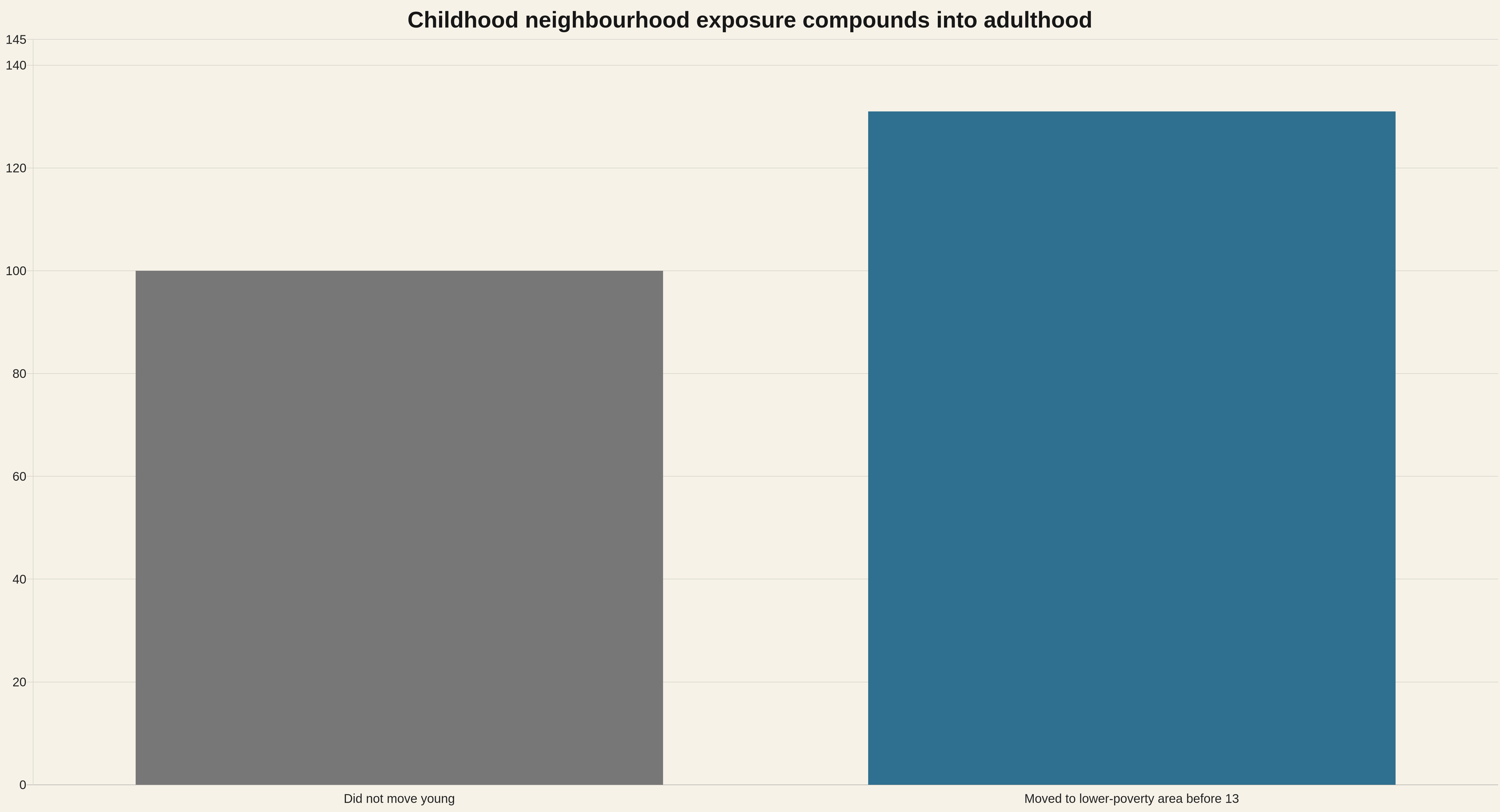
The Moving to Opportunity research found that children who moved to lower-poverty neighbourhoods before age 13 had substantially better adult outcomes, including about 31% higher earnings in their mid-20s versus the control group.
Notice the age detail.
Moving helped most when the child was young.
Why?
Because class is exposure over time.
It is not one motivational speech.
It is not one networking event.
It is not one “I changed my mindset” montage.
It is thousands of tiny inputs repeated before the child knows they are inputs.
2. A postcode is a hidden curriculum
School is not the only school.
Your street is a school.
The shop queue is a school.
The bus stop is a school.
Your friend's kitchen is a school.
The dads at football are a school.
The mothers on WhatsApp are a school.
The teenagers hanging around outside are a school.
Every local adult is teaching a model of adulthood.
Every local child is teaching a model of peer survival.
Every local institution teaches how much the world will cooperate.
This is why two boys with the same IQ can diverge brutally.
One boy grows up where adults say:
Another boy grows up where adults say:
Same country.
Different operating system.

3. The Opportunity Atlas blackpill
The Opportunity Atlas maps adult outcomes by the census tract where children grew up.
That is the blackpill.
Not country.
Not even city.
Tract.
Small local geography.
The map basically says:
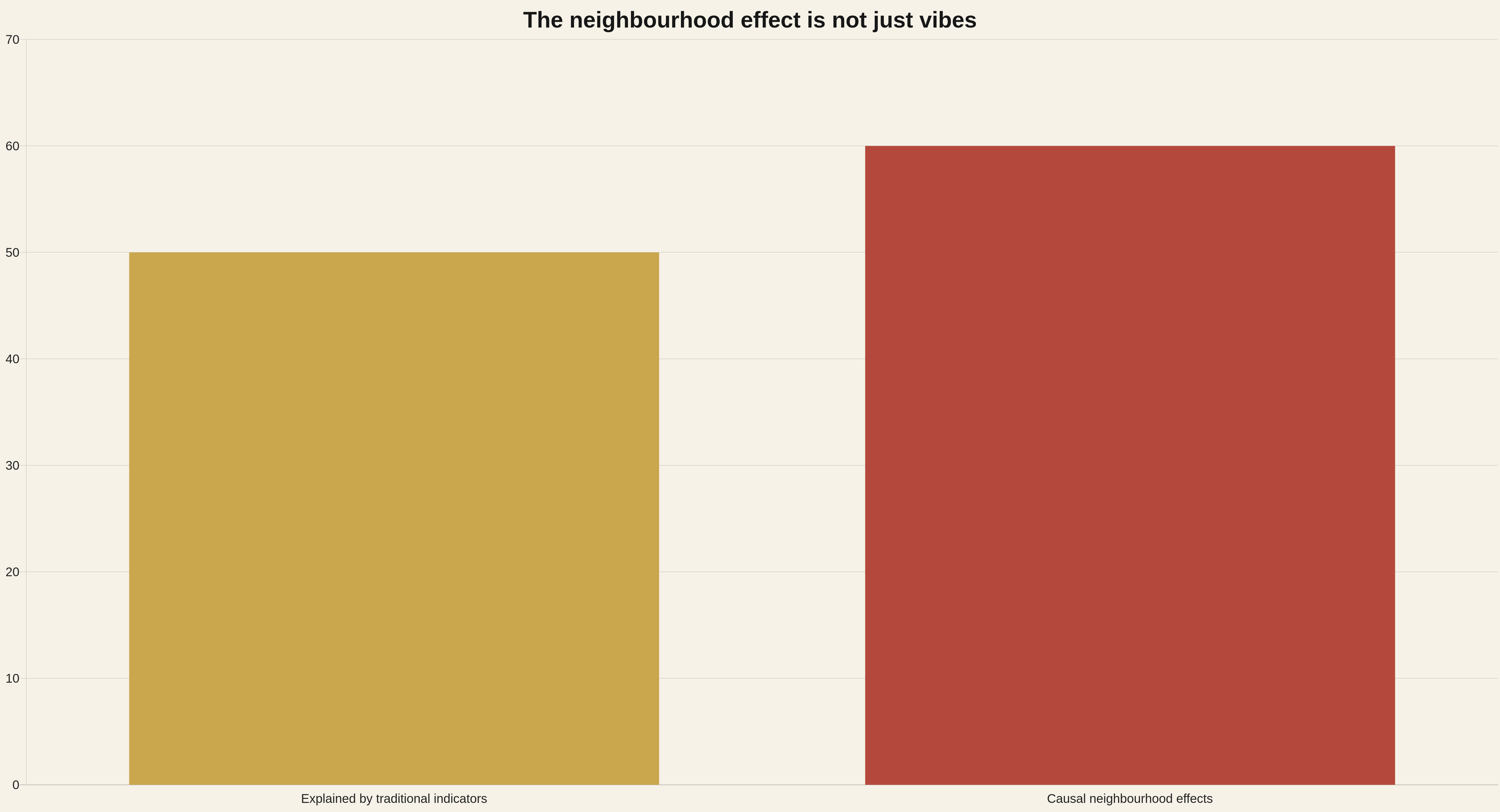
Opportunity Atlas work finds huge variation in outcomes across nearby places and argues that a large share of the tract-level variation reflects causal neighbourhood exposure, not just family selection.
Translation:
This is why high social class parents become insane about catchments, school districts, cul-de-sacs, local peer groups, and “nice areas.”
They are not just buying granite kitchens.
They are buying a default peer reality.
4. The most underrated class variable is who your normal friends are
People think networking begins at 24 with LinkedIn.
Wrong.
Networking begins when a child learns who feels socially reachable.
The most important “network” is not the CEO you message once.
It is the background social graph that makes certain people feel normal.
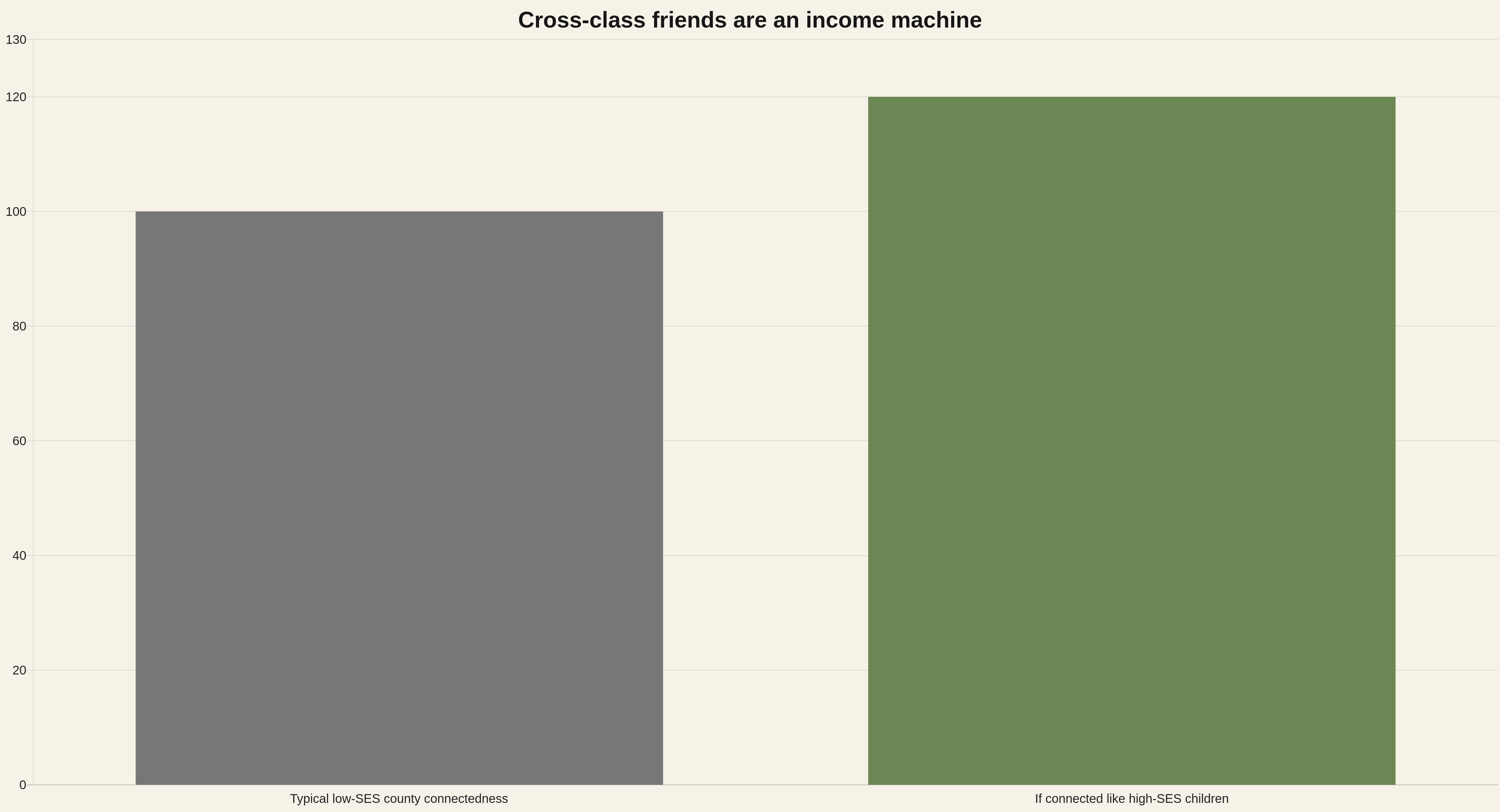
Opportunity Insights' economic connectedness research found that if children with low socioeconomic status had the same rate of high-SES friends as high-SES children, their incomes in adulthood would rise by about 20% on average.
That is insane.
Not “follow hustle accounts.”
Not “read rich dad poor dad.”
Friends.
The class of the people around you rewires:
High class children are not just “more confident.”
They are rehearsing around people who make high-status behaviour feel less alien.
5. This is why poor areas punish deviation
Low class neighbourhoods often create a brutal anti-compounding environment.
Not because everyone there is bad.
Because scarcity makes deviation socially expensive.
If you try to speak differently, you get checked.
If you study too much, you get checked.
If you dress differently, you get checked.
If you avoid local drama, you get checked.
If you have future-oriented habits, you look like you are rejecting the tribe.
This is the part high class people do not understand.
They think aspiration is individually chosen.
No.
Aspiration has a local social price.
In a good area, ambition buys belonging.
In a bad area, ambition can cost belonging.
That is a completely different game.

6. The UK version: social capital is literally worth money
This is not just American tract autism.
UK social-capital work finds the same basic pattern: places where low-income people have more links to higher-income people produce better adult earnings.
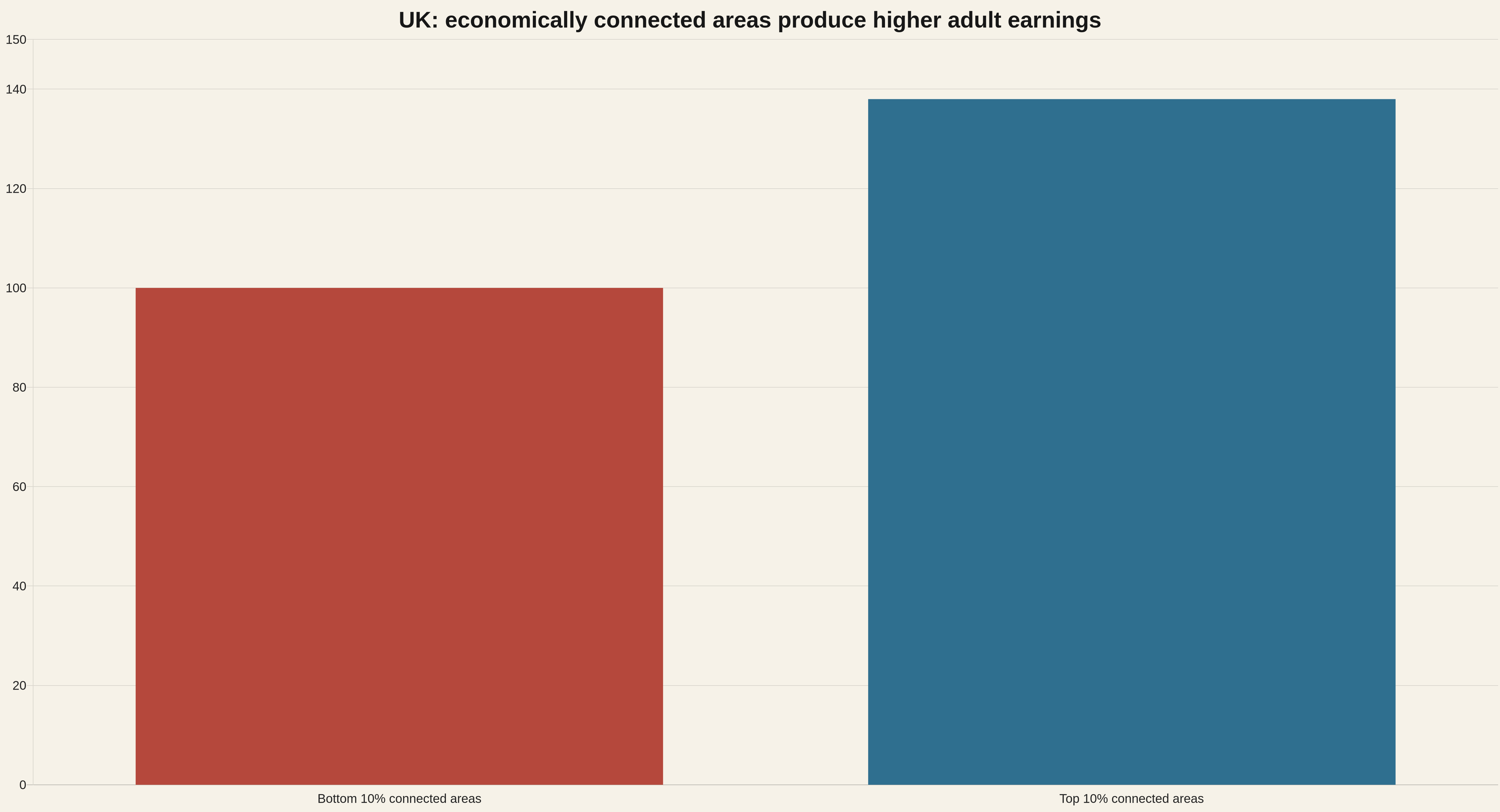
The Behavioural Insights Team's UK analysis found that low-income children from the top 10% most economically connected areas earned about 38% more in adulthood than those from the bottom 10% least connected areas, roughly GBP 5,100 per year more.
Again:
Not just motivation.
Not just IQ.
Not just “work ethic.”
Local exposure to different people.
Your postcode does not just determine house prices.
It determines which human examples your brain treats as plausible.
7. Why this gets engagement: everyone has felt the invisible wall
Most people can understand money.
Fewer people understand place-memory.
You can leave an area physically and still carry its defaults:
This is why class mobility feels like translation.
You are not just earning more.
You are rewriting the environment that trained your instincts.
8. The practical pill
If you are trying to climb class, stop thinking only in terms of income.
Think in terms of exposure design.
You need to change:
This is why even small moves can matter:
You are not “networking.”
You are reinstalling the OS.
The pill
Social class is not just carried in your bank account.
It is carried in the map your brain was trained on.
A rich postcode does not merely have more money.
It has:
A low class postcode does not merely have less money.
It often has a different operating system:
That is why social class is so hard to fake.
You are not just copying aesthetics.
You are trying to overwrite years of environmental programming.
Sources
Chetty, Hendren and Katz: The Effects of Exposure to Better Neighborhoods on Children
Opportunity Atlas: mapping childhood neighbourhoods and adult outcomes
Opportunity Atlas paper: tract-level variation and causal exposure estimates
Nature: Social capital I, measurement and associations with economic mobility
Opportunity Insights nontechnical summary: economic connectedness and upward mobility
Behavioural Insights Team: The Connectivity Trap, UK social networks and economic mobility
Images: Aerial Suburban Neighborhood by Rawpixel, CC BY-SA 2.0; Seattle playground image, public domain; Gravesend Bay landfill playground by Arthur Tress/NARA, public domain; charts rendered from source data via QuickChart.
Most people talk about social class as if it lives inside the individual.
Accent.
Clothes.
Looks.
Confidence.
Degree.
Money.
Parents.
Network.
Clothes.
Looks.
Confidence.
Degree.
Money.
Parents.
Network.
All real.
But there is a layer underneath all of that.
Postcode.
Not postcode as in “nice houses cost more.”
Postcode as in:
the operating system your childhood boots into every morning.
Your neighbourhood decides what your nervous system treats as normal before you ever form an opinion.
It decides:
• what ambition sounds like
• what adults talk about
• what danger looks like
• what school effort is worth
• what money behaviour is copied
• what dating pool feels normal
• what jobs people even know exist
• what “acting different” costs socially
• whether the future feels near or fictional
• what adults talk about
• what danger looks like
• what school effort is worth
• what money behaviour is copied
• what dating pool feels normal
• what jobs people even know exist
• what “acting different” costs socially
• whether the future feels near or fictional
This is why “just move later bro” is a cope.
By the time you consciously try to classmaxx, the original environment has already written a lot of your default code.
1. The brutal part: neighbourhood effects are causal, not aesthetic
People hear “good area” and think:
safe streets, nicer schools, bigger houses.
That is surface-level.
The deeper thing is that neighbourhoods literally change adult outcomes.
The Moving to Opportunity research found that children who moved to lower-poverty neighbourhoods before age 13 had substantially better adult outcomes, including about 31% higher earnings in their mid-20s versus the control group.
Notice the age detail.
Moving helped most when the child was young.
Why?
Because class is exposure over time.
It is not one motivational speech.
It is not one networking event.
It is not one “I changed my mindset” montage.
It is thousands of tiny inputs repeated before the child knows they are inputs.
2. A postcode is a hidden curriculum
School is not the only school.
Your street is a school.
The shop queue is a school.
The bus stop is a school.
Your friend's kitchen is a school.
The dads at football are a school.
The mothers on WhatsApp are a school.
The teenagers hanging around outside are a school.
Every local adult is teaching a model of adulthood.
Every local child is teaching a model of peer survival.
Every local institution teaches how much the world will cooperate.
This is why two boys with the same IQ can diverge brutally.
One boy grows up where adults say:
Which university?
Which internship?
Which sport?
Which language?
Which summer programme?
Which school has better results?
Which family can introduce you?
Which internship?
Which sport?
Which language?
Which summer programme?
Which school has better results?
Which family can introduce you?
Another boy grows up where adults say:
Who do you think you are?
Don't get ahead of yourself.
That place is for posh people.
You think you're better than us?
Just get a job.
Don't be weird.
Don't get ahead of yourself.
That place is for posh people.
You think you're better than us?
Just get a job.
Don't be weird.
Same country.
Different operating system.
3. The Opportunity Atlas blackpill
The Opportunity Atlas maps adult outcomes by the census tract where children grew up.
That is the blackpill.
Not country.
Not even city.
Tract.
Small local geography.
The map basically says:
show me the street ecosystem a child grew up inside, and I can predict a shocking amount about their adult income, incarceration risk, college attendance, marriage patterns, and mobility.
Opportunity Atlas work finds huge variation in outcomes across nearby places and argues that a large share of the tract-level variation reflects causal neighbourhood exposure, not just family selection.
Translation:
you are not merely choosing an area because of class.
The area is manufacturing class.
The area is manufacturing class.
This is why high social class parents become insane about catchments, school districts, cul-de-sacs, local peer groups, and “nice areas.”
They are not just buying granite kitchens.
They are buying a default peer reality.
4. The most underrated class variable is who your normal friends are
People think networking begins at 24 with LinkedIn.
Wrong.
Networking begins when a child learns who feels socially reachable.
The most important “network” is not the CEO you message once.
It is the background social graph that makes certain people feel normal.
Opportunity Insights' economic connectedness research found that if children with low socioeconomic status had the same rate of high-SES friends as high-SES children, their incomes in adulthood would rise by about 20% on average.
That is insane.
Not “follow hustle accounts.”
Not “read rich dad poor dad.”
Friends.
The class of the people around you rewires:
• what you attempt
• what embarrasses you
• what you think is cringe
• what information reaches you
• what behaviour gets rewarded
• what institutions feel open
• what mistakes get corrected early
• what embarrasses you
• what you think is cringe
• what information reaches you
• what behaviour gets rewarded
• what institutions feel open
• what mistakes get corrected early
High class children are not just “more confident.”
They are rehearsing around people who make high-status behaviour feel less alien.
5. This is why poor areas punish deviation
Low class neighbourhoods often create a brutal anti-compounding environment.
Not because everyone there is bad.
Because scarcity makes deviation socially expensive.
If you try to speak differently, you get checked.
If you study too much, you get checked.
If you dress differently, you get checked.
If you avoid local drama, you get checked.
If you have future-oriented habits, you look like you are rejecting the tribe.
This is the part high class people do not understand.
They think aspiration is individually chosen.
No.
Aspiration has a local social price.
In a good area, ambition buys belonging.
In a bad area, ambition can cost belonging.
That is a completely different game.
6. The UK version: social capital is literally worth money
This is not just American tract autism.
UK social-capital work finds the same basic pattern: places where low-income people have more links to higher-income people produce better adult earnings.
The Behavioural Insights Team's UK analysis found that low-income children from the top 10% most economically connected areas earned about 38% more in adulthood than those from the bottom 10% least connected areas, roughly GBP 5,100 per year more.
Again:
Not just motivation.
Not just IQ.
Not just “work ethic.”
Local exposure to different people.
Your postcode does not just determine house prices.
It determines which human examples your brain treats as plausible.
7. Why this gets engagement: everyone has felt the invisible wall
Most people can understand money.
Fewer people understand place-memory.
You can leave an area physically and still carry its defaults:
• suspicion of posh rooms
• discomfort around polished people
• not knowing what to ask for
• assuming institutions will say no
• finding ambition socially embarrassing
• low trust in long-term plans
• fear of standing out
• feeling like an intruder in high-status spaces
• discomfort around polished people
• not knowing what to ask for
• assuming institutions will say no
• finding ambition socially embarrassing
• low trust in long-term plans
• fear of standing out
• feeling like an intruder in high-status spaces
This is why class mobility feels like translation.
You are not just earning more.
You are rewriting the environment that trained your instincts.
8. The practical pill
If you are trying to climb class, stop thinking only in terms of income.
Think in terms of exposure design.
You need to change:
• where you spend dead time
• what local norms you absorb
• who sees your effort
• what rooms feel normal
• what accents you hear
• what problems people discuss
• what institutions you learn to navigate
• what peer group punishes or rewards
• what local norms you absorb
• who sees your effort
• what rooms feel normal
• what accents you hear
• what problems people discuss
• what institutions you learn to navigate
• what peer group punishes or rewards
This is why even small moves can matter:
better gym
better cafe
better library
better sports club
better professional meetup
better neighbourhood walk
better school catchment
better roommates
better church / society / club
better local friendship graph
better cafe
better library
better sports club
better professional meetup
better neighbourhood walk
better school catchment
better roommates
better church / society / club
better local friendship graph
You are not “networking.”
You are reinstalling the OS.
The pill
Social class is not just carried in your bank account.
It is carried in the map your brain was trained on.
A rich postcode does not merely have more money.
It has:
cleaner defaults
safer ambition
better examples
higher-trust adults
future-oriented peers
institutions that respond
friendships that bridge upward
less punishment for becoming unusual
safer ambition
better examples
higher-trust adults
future-oriented peers
institutions that respond
friendships that bridge upward
less punishment for becoming unusual
A low class postcode does not merely have less money.
It often has a different operating system:
shorter horizon
lower institutional trust
higher social cost of deviation
fewer high-status examples
more local chaos
more anti-ambition policing
less cross-class contact
lower institutional trust
higher social cost of deviation
fewer high-status examples
more local chaos
more anti-ambition policing
less cross-class contact
That is why social class is so hard to fake.
You are not just copying aesthetics.
You are trying to overwrite years of environmental programming.
Sources
Chetty, Hendren and Katz: The Effects of Exposure to Better Neighborhoods on Children
Opportunity Atlas: mapping childhood neighbourhoods and adult outcomes
Opportunity Atlas paper: tract-level variation and causal exposure estimates
Nature: Social capital I, measurement and associations with economic mobility
Opportunity Insights nontechnical summary: economic connectedness and upward mobility
Behavioural Insights Team: The Connectivity Trap, UK social networks and economic mobility
Images: Aerial Suburban Neighborhood by Rawpixel, CC BY-SA 2.0; Seattle playground image, public domain; Gravesend Bay landfill playground by Arthur Tress/NARA, public domain; charts rendered from source data via QuickChart.