The Reason the Balding Genes Still Exist

D

Deleted member 5349

Banned
Joined
Feb 18, 2020
Posts
4,056
Reputation
8,661
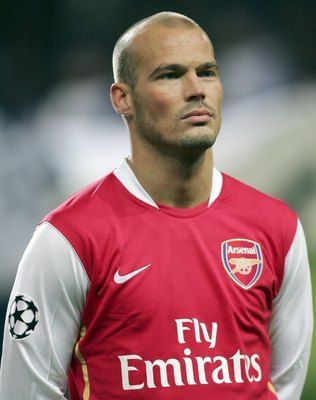
The reason men still Norwood is quite confusing. You would think that the looks decline that comes with norwooding would mean that women would select men that didn’t Norwood and these genes would be wiped out right? Well, there are very high PSL men that are bald, Meeks and Ljunberg for example. The reason these men look like such slayers without hair is because they look very high-t and warrior like. The fact of the matter is, thousands of years ago before mouthbreathing and estrogen water, every single man had a well developed Maxilla with proper testosterone levels and subsequent full masculinization of the face. Because of this, every man had a high-t/dom warrior skull and their physical attraction didn’t make a single difference in the eyes of women if they had hair or not. Nowadays tho, with maxillary recession and estrogen water, properly developed warrior skulls are extremely rare and men are looking more and more feminine. Too look good feminine, you need to have hair, but the norwooding genes still exist, so feminine and soy looking men Norwood and look completely terrible and their SMV tanks. If you are norwooding, don’t blame your lack of success on your hair, but rather, your face, as you would look good bald if your face developed to its genetic potential.
 
  • +1
Reactions: Erik-Hexum, Lmao, FutureMogger and 18 others
Woah bro are you a professor
 
  • JFL
  • +1
Reactions: FutureMogger, Introvertednarc, Deleted member 1332 and 4 others
Most couples, especially in the past, had children pretty young so women wouldn't have a clue if men had balding genes or not.
 
  • +1
Reactions: Erik-Hexum, FutureMogger, Zeta ascended and 12 others
Most couples, especially in the past, had children pretty young so women wouldn't have a clue if men had balding genes or not.
That’s true as well
 
  • +1
Reactions: Chadeep and eyearea
no its because most men dont norwood until their mid to late 20s, and for most of humanity's existence people had children in their teens
 
  • +1
Reactions: Erik-Hexum, Chadeep, Good_Little_Goy and 3 others
The reason men still Norwood is quite confusing. You would think that the looks decline that comes with norwooding would mean that women would select men that didn’t Norwood and these genes would be wiped out right? Well, there are very high PSL men that are bald, Meeks and Ljunberg for example. The reason these men look like such slayers without hair is because they look very high-t and warrior like. The fact of the matter is, thousands of years ago before mouthbreathing and estrogen water, every single man had a well developed Maxilla with proper testosterone levels and subsequent full masculinization of the face. Because of this, every man had a high-t/dom warrior skull and their physical attraction didn’t make a single difference in the eyes of women if they had hair or not. Nowadays tho, with maxillary recession and estrogen water, properly developed warrior skulls are extremely rare and men are looking more and more feminine. Too look good feminine, you need to have hair, but the norwooding genes still exist, so feminine and soy looking men Norwood and look completely terrible and their SMV tanks. If you are norwooding, don’t blame your lack of success on your hair, but rather, your face, as you would look good bald if your face developed to its genetic potential.
May Allah burn all synagogues
 
  • JFL
  • Love it
  • +1
Reactions: Lmao, FutureMogger, Perma Virgin 666 and 6 others
First this if offtopic

Second everything is wrong...
All started with feminism before feminism the woman would prefer a men with an high income over everything else (looks).
Now that these hoes earn their own money and are „independent“ they don’t need a provider because the whole system is screwed and prefers woman in every possible way. Now they select men on only Looks. Soon Norwoodgenes will be gone. Regardless if you are high t dominant slayer
 
  • +1
Reactions: FutureMogger, Chadeep and MentalistKebab
First this if offtopic

Second everything is wrong...
All started with feminism before feminism the woman would prefer a men with an high income over everything else (looks).
Now that these hoes earn their own money and are „independent“ they don’t need a provider because the whole system is screwed and prefers woman in every possible way. Now they select men on only Looks. Soon Norwoodgenes will be gone. Regardless if you are high t dominant slayer
Yeah, but if norwooding was that much of a looksmin, the first guys to Norwood thousands of years ago wouldn’t have had the chance to reproduce and the genes would’ve died then and there
 
makes sense
 
  • +1
Reactions: Deleted member 5349
Legit post tbh, I've never actually made that that connection myself. But I also think it's because the majority of women had babies with men before they knew if they were ultimately balding or not.
 
  • +1
Reactions: Deleted member 5349
Yeah, but if norwooding was that much of a looksmin, the first guys to Norwood thousands of years ago wouldn’t have had the chance to reproduce and the genes would’ve died then and there
That’s not my point. It didn’t matter until 100years ago if bald or not (looks didn’t matter as much) only the fact if you can provide food, money, security
Now they have everything and looks became the most important factor
 
Legit post tbh, I've never actually made that that connection myself. But I also think it's because the majority of women had babies with men before they knew if they were ultimately balding or not.
It’s a combination of both imo
That’s not my point. It didn’t matter until 100years ago if bald or not (looks didn’t matter as much) only the fact if you can provide food, money, security
Now they have everything and looks became the most important factor
Exactly. The genes still existed tho. Defective genes are usually wiped out as soon as they arise in nature. If balding hurt a mans SMV so much 20 thousand years ago, then the genes would’ve been wiped out
 
no its because most men dont norwood until their mid to late 20s, and for most of humanity's existence people had children in their teens
Literally what I said
 
Mental gymnastics ITT

Norwooding is mainly a degenerative and western disease resulting from dis/underdevelopement and unhealthy environment

The incidence of Norwooding increases with the incidence of Cancer
For both you can thank humanity
 
  • +1
Reactions: PURE ARYAN GENETICS
200+ IQ
 
  • +1
Reactions: Deleted member 5349
Yeah, but if norwooding was that much of a looksmin, the first guys to Norwood thousands of years ago wouldn’t have had the chance to reproduce and the genes would’ve died then and there
Why do u think it only has to do with the male side???
 
  • +1
Reactions: Deleted member 6341 and Good_Little_Goy
pretty sure the vast majority of norwooding is environmental
 
Mental gymnastics ITT

Norwooding is mainly a degenerative and western disease resulting from dis/underdevelopement and unhealthy environment

The incidence of Norwooding increases with the incidence of Cancer
For both you can thank humanity
I had perfect environment for growth but still started balding at 16. High quality NZ meat, vegetables, best milk and some of the most pure water supply in the world
 
old world: either dying a quick death or chasing girls through a grassy meadow and getting them pregnant when you're both adolescent
new world: you still hoping to find your true love and mother of your children as a balding and greying stressed 35 year old
 
  • +1
Reactions: Baldingman1998 and Schizoidcel
you're constantly spouting dogshit nonsense lately, are you ok?

badling is mainly caused by craniofacial development, most likely females never had the chance to even select against the balding gene since its not possible to spot when most people have perfect development.

A million references in this article

There was a thread about this a long time ago


Dandruff.png

Figure 6 – Topical presentation of normal scalp and dandruff scalp. (From [25])When tissues are damaged, an inflammatory response is activated. The function of inflammation is to clear out necrotic cells and damaged tissues. The classical signs of inflammation are heat, pain and redness, situation recognized as scalp sensitivity (burning, stinging, dry scalp, vague discomfort in the scalp, and sometimes, trichodynia) that is associated with hair loss [26,27,28]. And guess what? Many studies have shown DHT plays an important role in inflammations, regulating its activity [29,30,31,32]. Could be this the explanation of why increased DHT levels are found in bald scalps?

When the inflammation is long-term and chronic, it causes fibrosis and calcification. Indeed, miniaturization of hair follicles has been associated with deposits of densely packed collagen bundles in the follicular dermal sheath, called perifollicular fibrosis [33,34,35]. This further decreases the blood flow into the scalp, promoting ulterior cells death.
So, I came to a conclusion: hair loss was not a problem of the hair itself but was a problem of the surrounding tissues. Take two seeds of a genetically identical corn, place one seed in a temperate climate and one in an arid climate: the one in the arid climate only grows to half the height of the one in the temperate climate due to lack of water and nutrients in its environment. This is exactly what happens with our hair and there are studies confirming it: miniaturized hair follicles of pattern alopecia can quickly regenerate once removed from the human scalp and can grow as well as or better than terminal follicles from the same individual [36]. And not only miniaturized hair can regrowth, but also terminal hairs can shrink in difficult recipient sites, impacting their growth and survival rates [37].
At this point, for me everything was clear. Only one thing was missing: where does this muscular tension come from? I will found out that craniofacial development has a huge impact on body posture and muscular balance. And actually all my symptoms were originating from a cranial distortion. Bingo! Now everything had an explanation!
Apparently, poor craniofacial development is a problem of civilized modern societies and not surprisingly also hair loss has widespread in the modern era. Figure 7 shows Native Sioux people that lived in the 19th Century. Their craniofacial development is something that would be considered extraordinary in our era, however at their time it was the normality. Also notice their perfect hair despite their old age. In Figure 8 we have instead a Sioux lived in our era, between the 20th and 21st Century: notice the difference in craniofacial development and the presence of hair loss.


Sioux

Figure 7 – On the left, Red Cloud (1822-1909), leader of a Native American tribe (Sioux). In this picture he was 78 years old. Notice his excellent craniofacial development and how not surprisingly he has all his hair. On the right, another example of a good craniofacial development from the Sioux tribe lived in the same years. (From [63] and [64])

RusselMeansSioux.png

Figure 8– Russell Charles Means (1939-2012) was a Native American Oglala Sioux born in modern era. We can notice his poorer craniofacial development compared to his ancestors and his hair loss. (From [65])If we look to photographs taken over 100 years ago of Somalis in Figure 9, we can notice the excellent craniofacial development of the two individuals on the left and their perfect hair. However, the individual on the right has a poor craniofacial development and, not surprisingly, hair loss. In Figure 10, Barkhad Abdi, a Somali-American actor living in our era. Do you notice any difference with his ancestors?


somaliHair.png

Figure 9 – On the left, Warsame Yonis, 24 years old. In the middle, Igge Karbaashe, 20 years old and on the right Ali Gaboose, 20 years old. Notice the difference in Ali’s maxilla development and his hair loss. (From [66])

SomaliModern

Figure 10 – Barkhad Abdi is a Somali-American actor. Notice his much poorer craniofacial development compared with his ancestors and his hair loss. (From [67])Already in 1939 Weston A. Price wrote about his travel around the world where he discovered that jaw problems were not present in tribes of isolated areas far from civilization [38]. In a simplistic view, maxilla is primarily remodeled by forces coming from the tongueand teeth (through masseter muscles) and the causes of a poor craniofacial development have to be found in modern lifestyle, in particular in:

  • Increasing of bottle-feeding over breast-feeding that influences the swallowing pattern and all oral muscles [39,40,41,42].
  • Use of pacifiers/dummies that mainly affect tongue posture [43,44,45,46].
  • Trend towards industrial soft high-calorie food that hits chewing effort and muscles action [47,48,49].
  • Reduced nasal airways, increasing of allergies and nasal congestion that leads to mouth breathing affecting both tongue posture and muscles action [50,51,52,53,54].
  • Trend towards an earlier or too early weaning, influencing swallowing pattern [55,56].
When one or more of these factors are present, the maxilla drops down and back, reducing the eye support, flattening the cheekbones, narrowing the nasal airway, lengthening the mid facial third, and lowering the palate, which narrows and create malocclusion [57].
After discovering what a poor craniofacial development means for the hair, I started to look to every single person I was meeting, investigating their hair loss and the correlation with their jaws development: I never found a single bald person with a good craniofacial development! I also started to ask questions to people, curious to know the truth.
The first person I spoke with was my Portuguese housemate of that period. He had a very poor craniofacial development and he was bald. So I asked him: “Do you know if you used pacifiers or if you were bottle-fed when you were a child?”. His reply: “When I was a child, in Portugal it was almost a shame to breast-feed a child, so many mothers were opting to bottle-feed for this reason. My mother was one of those.”. No other comments are needed. Thus, I also started to ask the same questions to other people close to me: some have been breast-fed because their mother had not breast milk, some used pacifiers, some have been through a too early weaning and so on. There were no doubts that the correlation was clear.
I would like to show here some examples of famous people, so that everybody can understand what I am talking about. Figure 11 shows Prince William, Duke of Cambridge. On the left picture, you can clearly see his very narrow palate (i.e. a consequence of a poor craniofacial development). Also, if you pay attention, you will notice a cross-bite on one side and the dental midline that is shifted, sign of a cranial distortion. On the right picture, you can instead better appreciate his vertical growth of the maxilla, with missing cheekbones, missing support for the eyes, little lips, aquiline nose with little nostrils. I would not be surprised if he is a mouth-breather.
 
  • +1
Reactions: PURE ARYAN GENETICS and Deleted member 7173
Baldness didn't even exist back then
 
  • JFL
Reactions: randomvanish
They're turning the frogs gay
 
More evidence for the hormone theory I vouch for
 
Mental gymnastics ITT

Norwooding is mainly a degenerative and western disease resulting from dis/underdevelopement and unhealthy environment

The incidence of Norwooding increases with the incidence of Cancer
For both you can thank humanity
so you're saying it's not genetic?
 
you're constantly spouting dogshit nonsense lately, are you ok?

badling is mainly caused by craniofacial development, most likely females never had the chance to even select against the balding gene since its not possible to spot when most people have perfect development.

A million references in this article

There was a thread about this a long time ago


Dandruff.png

Figure 6 – Topical presentation of normal scalp and dandruff scalp. (From [25])When tissues are damaged, an inflammatory response is activated. The function of inflammation is to clear out necrotic cells and damaged tissues. The classical signs of inflammation are heat, pain and redness, situation recognized as scalp sensitivity (burning, stinging, dry scalp, vague discomfort in the scalp, and sometimes, trichodynia) that is associated with hair loss [26,27,28]. And guess what? Many studies have shown DHT plays an important role in inflammations, regulating its activity [29,30,31,32]. Could be this the explanation of why increased DHT levels are found in bald scalps?

When the inflammation is long-term and chronic, it causes fibrosis and calcification. Indeed, miniaturization of hair follicles has been associated with deposits of densely packed collagen bundles in the follicular dermal sheath, called perifollicular fibrosis [33,34,35]. This further decreases the blood flow into the scalp, promoting ulterior cells death.
So, I came to a conclusion: hair loss was not a problem of the hair itself but was a problem of the surrounding tissues. Take two seeds of a genetically identical corn, place one seed in a temperate climate and one in an arid climate: the one in the arid climate only grows to half the height of the one in the temperate climate due to lack of water and nutrients in its environment. This is exactly what happens with our hair and there are studies confirming it: miniaturized hair follicles of pattern alopecia can quickly regenerate once removed from the human scalp and can grow as well as or better than terminal follicles from the same individual [36]. And not only miniaturized hair can regrowth, but also terminal hairs can shrink in difficult recipient sites, impacting their growth and survival rates [37].
At this point, for me everything was clear. Only one thing was missing: where does this muscular tension come from? I will found out that craniofacial development has a huge impact on body posture and muscular balance. And actually all my symptoms were originating from a cranial distortion. Bingo! Now everything had an explanation!
Apparently, poor craniofacial development is a problem of civilized modern societies and not surprisingly also hair loss has widespread in the modern era. Figure 7 shows Native Sioux people that lived in the 19th Century. Their craniofacial development is something that would be considered extraordinary in our era, however at their time it was the normality. Also notice their perfect hair despite their old age. In Figure 8 we have instead a Sioux lived in our era, between the 20th and 21st Century: notice the difference in craniofacial development and the presence of hair loss.


Sioux

Figure 7 – On the left, Red Cloud (1822-1909), leader of a Native American tribe (Sioux). In this picture he was 78 years old. Notice his excellent craniofacial development and how not surprisingly he has all his hair. On the right, another example of a good craniofacial development from the Sioux tribe lived in the same years. (From [63] and [64])

RusselMeansSioux.png

Figure 8– Russell Charles Means (1939-2012) was a Native American Oglala Sioux born in modern era. We can notice his poorer craniofacial development compared to his ancestors and his hair loss. (From [65])If we look to photographs taken over 100 years ago of Somalis in Figure 9, we can notice the excellent craniofacial development of the two individuals on the left and their perfect hair. However, the individual on the right has a poor craniofacial development and, not surprisingly, hair loss. In Figure 10, Barkhad Abdi, a Somali-American actor living in our era. Do you notice any difference with his ancestors?


somaliHair.png

Figure 9 – On the left, Warsame Yonis, 24 years old. In the middle, Igge Karbaashe, 20 years old and on the right Ali Gaboose, 20 years old. Notice the difference in Ali’s maxilla development and his hair loss. (From [66])

SomaliModern

Figure 10 – Barkhad Abdi is a Somali-American actor. Notice his much poorer craniofacial development compared with his ancestors and his hair loss. (From [67])Already in 1939 Weston A. Price wrote about his travel around the world where he discovered that jaw problems were not present in tribes of isolated areas far from civilization [38]. In a simplistic view, maxilla is primarily remodeled by forces coming from the tongueand teeth (through masseter muscles) and the causes of a poor craniofacial development have to be found in modern lifestyle, in particular in:

  • Increasing of bottle-feeding over breast-feeding that influences the swallowing pattern and all oral muscles [39,40,41,42].
  • Use of pacifiers/dummies that mainly affect tongue posture [43,44,45,46].
  • Trend towards industrial soft high-calorie food that hits chewing effort and muscles action [47,48,49].
  • Reduced nasal airways, increasing of allergies and nasal congestion that leads to mouth breathing affecting both tongue posture and muscles action [50,51,52,53,54].
  • Trend towards an earlier or too early weaning, influencing swallowing pattern [55,56].
When one or more of these factors are present, the maxilla drops down and back, reducing the eye support, flattening the cheekbones, narrowing the nasal airway, lengthening the mid facial third, and lowering the palate, which narrows and create malocclusion [57].
After discovering what a poor craniofacial development means for the hair, I started to look to every single person I was meeting, investigating their hair loss and the correlation with their jaws development: I never found a single bald person with a good craniofacial development! I also started to ask questions to people, curious to know the truth.
The first person I spoke with was my Portuguese housemate of that period. He had a very poor craniofacial development and he was bald. So I asked him: “Do you know if you used pacifiers or if you were bottle-fed when you were a child?”. His reply: “When I was a child, in Portugal it was almost a shame to breast-feed a child, so many mothers were opting to bottle-feed for this reason. My mother was one of those.”. No other comments are needed. Thus, I also started to ask the same questions to other people close to me: some have been breast-fed because their mother had not breast milk, some used pacifiers, some have been through a too early weaning and so on. There were no doubts that the correlation was clear.
I would like to show here some examples of famous people, so that everybody can understand what I am talking about. Figure 11 shows Prince William, Duke of Cambridge. On the left picture, you can clearly see his very narrow palate (i.e. a consequence of a poor craniofacial development). Also, if you pay attention, you will notice a cross-bite on one side and the dental midline that is shifted, sign of a cranial distortion. On the right picture, you can instead better appreciate his vertical growth of the maxilla, with missing cheekbones, missing support for the eyes, little lips, aquiline nose with little nostrils. I would not be surprised if he is a mouth-breather.
Yeah, I don’t think these guys are mouth breathers
 

Attachments

  • 1206B9B1-9CDF-49F3-A2A0-5BB6733E6B8B.jpeg
    1206B9B1-9CDF-49F3-A2A0-5BB6733E6B8B.jpeg
    21.3 KB · Views: 25
  • ADBB2DDD-2B2A-4013-B839-D54BD7C85D15.jpeg
    ADBB2DDD-2B2A-4013-B839-D54BD7C85D15.jpeg
    17.9 KB · Views: 24
  • +1
  • JFL
Reactions: Deleted member 4231 and middayshowers
IMHO, back in the days old guy = good genes (living long enough to go bald was already impressive). Hence balding genes were desirable for man as they gave appearance that you are older than you actually are.
 
you're constantly spouting dogshit nonsense lately, are you ok?

badling is mainly caused by craniofacial development, most likely females never had the chance to even select against the balding gene since its not possible to spot when most people have perfect development.

A million references in this article

There was a thread about this a long time ago


Dandruff.png

Figure 6 – Topical presentation of normal scalp and dandruff scalp. (From [25])When tissues are damaged, an inflammatory response is activated. The function of inflammation is to clear out necrotic cells and damaged tissues. The classical signs of inflammation are heat, pain and redness, situation recognized as scalp sensitivity (burning, stinging, dry scalp, vague discomfort in the scalp, and sometimes, trichodynia) that is associated with hair loss [26,27,28]. And guess what? Many studies have shown DHT plays an important role in inflammations, regulating its activity [29,30,31,32]. Could be this the explanation of why increased DHT levels are found in bald scalps?

When the inflammation is long-term and chronic, it causes fibrosis and calcification. Indeed, miniaturization of hair follicles has been associated with deposits of densely packed collagen bundles in the follicular dermal sheath, called perifollicular fibrosis [33,34,35]. This further decreases the blood flow into the scalp, promoting ulterior cells death.
So, I came to a conclusion: hair loss was not a problem of the hair itself but was a problem of the surrounding tissues. Take two seeds of a genetically identical corn, place one seed in a temperate climate and one in an arid climate: the one in the arid climate only grows to half the height of the one in the temperate climate due to lack of water and nutrients in its environment. This is exactly what happens with our hair and there are studies confirming it: miniaturized hair follicles of pattern alopecia can quickly regenerate once removed from the human scalp and can grow as well as or better than terminal follicles from the same individual [36]. And not only miniaturized hair can regrowth, but also terminal hairs can shrink in difficult recipient sites, impacting their growth and survival rates [37].
At this point, for me everything was clear. Only one thing was missing: where does this muscular tension come from? I will found out that craniofacial development has a huge impact on body posture and muscular balance. And actually all my symptoms were originating from a cranial distortion. Bingo! Now everything had an explanation!
Apparently, poor craniofacial development is a problem of civilized modern societies and not surprisingly also hair loss has widespread in the modern era. Figure 7 shows Native Sioux people that lived in the 19th Century. Their craniofacial development is something that would be considered extraordinary in our era, however at their time it was the normality. Also notice their perfect hair despite their old age. In Figure 8 we have instead a Sioux lived in our era, between the 20th and 21st Century: notice the difference in craniofacial development and the presence of hair loss.


Sioux

Figure 7 – On the left, Red Cloud (1822-1909), leader of a Native American tribe (Sioux). In this picture he was 78 years old. Notice his excellent craniofacial development and how not surprisingly he has all his hair. On the right, another example of a good craniofacial development from the Sioux tribe lived in the same years. (From [63] and [64])

RusselMeansSioux.png

Figure 8– Russell Charles Means (1939-2012) was a Native American Oglala Sioux born in modern era. We can notice his poorer craniofacial development compared to his ancestors and his hair loss. (From [65])If we look to photographs taken over 100 years ago of Somalis in Figure 9, we can notice the excellent craniofacial development of the two individuals on the left and their perfect hair. However, the individual on the right has a poor craniofacial development and, not surprisingly, hair loss. In Figure 10, Barkhad Abdi, a Somali-American actor living in our era. Do you notice any difference with his ancestors?


somaliHair.png

Figure 9 – On the left, Warsame Yonis, 24 years old. In the middle, Igge Karbaashe, 20 years old and on the right Ali Gaboose, 20 years old. Notice the difference in Ali’s maxilla development and his hair loss. (From [66])

SomaliModern

Figure 10 – Barkhad Abdi is a Somali-American actor. Notice his much poorer craniofacial development compared with his ancestors and his hair loss. (From [67])Already in 1939 Weston A. Price wrote about his travel around the world where he discovered that jaw problems were not present in tribes of isolated areas far from civilization [38]. In a simplistic view, maxilla is primarily remodeled by forces coming from the tongueand teeth (through masseter muscles) and the causes of a poor craniofacial development have to be found in modern lifestyle, in particular in:

  • Increasing of bottle-feeding over breast-feeding that influences the swallowing pattern and all oral muscles [39,40,41,42].
  • Use of pacifiers/dummies that mainly affect tongue posture [43,44,45,46].
  • Trend towards industrial soft high-calorie food that hits chewing effort and muscles action [47,48,49].
  • Reduced nasal airways, increasing of allergies and nasal congestion that leads to mouth breathing affecting both tongue posture and muscles action [50,51,52,53,54].
  • Trend towards an earlier or too early weaning, influencing swallowing pattern [55,56].
When one or more of these factors are present, the maxilla drops down and back, reducing the eye support, flattening the cheekbones, narrowing the nasal airway, lengthening the mid facial third, and lowering the palate, which narrows and create malocclusion [57].
After discovering what a poor craniofacial development means for the hair, I started to look to every single person I was meeting, investigating their hair loss and the correlation with their jaws development: I never found a single bald person with a good craniofacial development! I also started to ask questions to people, curious to know the truth.
The first person I spoke with was my Portuguese housemate of that period. He had a very poor craniofacial development and he was bald. So I asked him: “Do you know if you used pacifiers or if you were bottle-fed when you were a child?”. His reply: “When I was a child, in Portugal it was almost a shame to breast-feed a child, so many mothers were opting to bottle-feed for this reason. My mother was one of those.”. No other comments are needed. Thus, I also started to ask the same questions to other people close to me: some have been breast-fed because their mother had not breast milk, some used pacifiers, some have been through a too early weaning and so on. There were no doubts that the correlation was clear.
I would like to show here some examples of famous people, so that everybody can understand what I am talking about. Figure 11 shows Prince William, Duke of Cambridge. On the left picture, you can clearly see his very narrow palate (i.e. a consequence of a poor craniofacial development). Also, if you pay attention, you will notice a cross-bite on one side and the dental midline that is shifted, sign of a cranial distortion. On the right picture, you can instead better appreciate his vertical growth of the maxilla, with missing cheekbones, missing support for the eyes, little lips, aquiline nose with little nostrils. I would not be surprised if he is a mouth-breather.
Yes but then why is it possible to determine if you will bald based upon your family history?
 
Yes but then why is it possible to determine if you will bald based upon your family history?
that is just genetic variance, some people will always have thicker or curlier hair than others no matter their development

this also ignores the fact that the person might have a family history of bad craniofacial development
 
Most subhuman traits still exist, why?
Because subhumans are egoistic enough to reproduce and than bluepill their children into reproducing with other subhumans
 
that is just genetic variance, some people will always have thicker or curlier hair than others no matter their development

this also ignores the fact that the person might have a family history of bad craniofacial development
I have the worst downward growth in this entire forum. This is complete SuiFuel if I will Norwood due to this
 
i mean throughout recent times foids rights were weaker so they couldn't chadflock. Also the ugliest foids are still able to breed
 
Yeah, but if norwooding was that much of a looksmin, the first guys to Norwood thousands of years ago wouldn’t have had the chance to reproduce and the genes would’ve died then and there
my guess is that balding would reduce mens PSL. Therefore forcing them to take care of the family instead of chasing tail. Coupled with the fact that you would have kids in your teens or something, incentive for men to take care of the family.
 

Similar threads

TajManzoor
Replies
4
Views
38
TajManzoor
TajManzoor
lefort3cel
Replies
2
Views
48
6'4cel
6'4cel
llucky
Replies
5
Views
97
thedudguy
thedudguy
Zebzzzz
Replies
4
Views
74
Richard Cheese
Richard Cheese
Thulsa_Doom
Replies
8
Views
140
stigmaboy
stigmaboy

Users who are viewing this thread

Back
Top