saiem
young sensitive absurdist
- Joined
- Apr 17, 2025
- Posts
- 174
- Reputation
- 158
This is a guide on how to maximize hypertrophy, disclaimer: a great part of the information I have written is extracted from articles. My work here is to gather all the information there is to know about the mechanisms that cause hypertrophy and sort it out in a straightforward order. If you aren’t interested in the motives of my conclusion skip to the end where I tell you how your training program should look like.
What causes hypertrophy
Overtime many mechanisms for hypertrophy have been proposed but one clearly reigns supreme and has stayed through the years. Tension.
Generally, without tension (assuming no major hormonal changes) our body simply doesn't see a reason for us to grow big muscles. They are energetically taxing and not necessary for our survival.
Tension convinces our brain that they are.
It occurs in two forms:
1/active and 2/passive
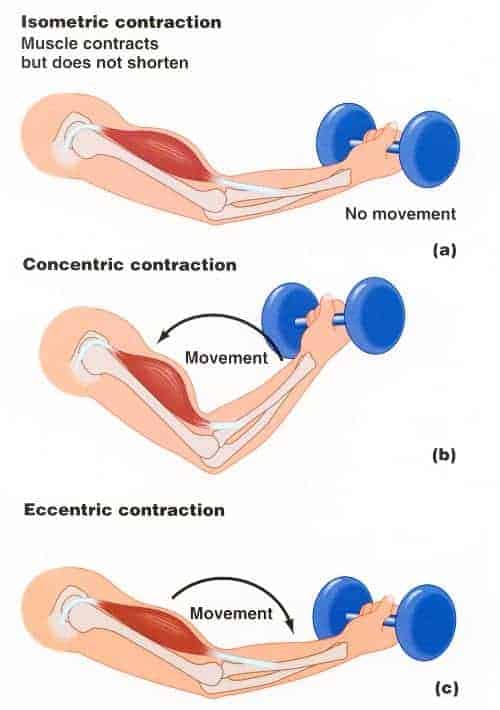
Active mechanical tension happens when muscles contract to produce force, leading to the addition of myofibrils and increasing muscle fiber size. Passive mechanical tension occurs when muscles are stretched, leading to the addition of sarcomeres in series, which increases muscle fiber length.The force-velocity relationship is a crucial factor in understanding how mechanical tension stimulates hypertrophy. This relationship describes how muscle force production varies with contraction velocity. When muscles contract at slower speeds, more myosin motors can attach to actin filaments, producing greater force. As contraction speed increases, the rate at which myosin motors detach from actin also increases, reducing the total force LY produced. This is why slower, controlled movements-especially when nearing muscular failure-are the most effective for maximizing mechanical tension.Essentially, slower contractions allow for more effective force production, and this is key to inducing hypertrophy.
Without mechanical tension, there is no muscle growth. Despite common beliefs, metabolic stress and muscle damage alone do not stimulate hypertrophy,mechanical tension is the essential factor. These mechanisms only contribute to growth when significant mechanical tension is present, tension can lead to hypertrophy even in the absence of muscle damage or metabolic stress. Additionally, the slowing of contraction velocity, which enhances mechanical tension, must occur involuntarily; it is not the result of conscious control, but rather a natural adaptation to the forces being generated. As such, the most effective hypertrophy training focuses on optimizing mechanical tension, which remains the most reliable and powerful stimulus for muscle growth.
https://pubmed.ncbi.nlm.nih.gov/18022371/
https://pubmed.ncbi.nlm.nih.gov/32830552/
Simplified and dumbed down the mechanism that causes muscle growth is the speed reduction of your reps in your set.
What is Mur
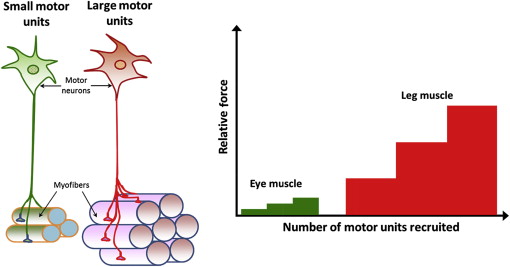
The motor unit represents the ultimate pathway through which the central nervous system translates electrical commands into physical force and coordinates somatic movement.Motor units are not uniform; they are classified into distinct physiological and biochemical phenotypes. The modern taxonomic scheme proposed by Burke and colleagues categorizes motor units based on contraction speed, force production, and fatigue resistance. These physiological groupings correspond to histochemical fiber types (Type I, Type IIa, and Type IIb/IIx) and their corresponding molecular markers.The orderly recruitment of motor units during muscle contraction is described by Henneman's Size Principle, which states that motor units are recruited sequentially from smallest to largest. Under increasing synaptic drive from the central nervous system, smaller motor neurons with low activation thresholds (S-type) are recruited first, followed by intermediate (FR-type), and finally the largest, highest-threshold motor neurons (FF-type). This hierarchy ensures a smooth gradation of muscle force, allowing for highly precise adjustments during low-force tasks (such as writing or maintaining posture) and recruiting powerful fast-twitch fibers only when rapid, forceful movements are required.
This orderly recruitment is driven by the passive electrical properties of the motor neurons.
During prolonged, submaximal isometric contractions maintained at a constant torque (e.g., 20\% MVC), the motor neuron pool undergoes a complex, coordinated adaptation to prevent muscle fatigue. When a muscle is activated to maintain a constant force, the motor units display a "triphasic" firing pattern :
1Short-Term Firing Rate Decrease: Within the first 10\% to 20\% of the endurance time (or the first 2 to 3 minutes), the firing rates of the active motor units progressively decrease. This decline is a compensatory response to the short-lived potentiation of the muscle fiber twitches, which temporarily increases their force output.
2Firing Rate Recovery and Increase: As the contraction continues and the muscle fibers begin to fatigue, their twitch force declines. To compensate for this loss of force, the central nervous system increases the excitatory drive to the motor pool, causing the firing rates of the active units to recover and increase.
3Recruitment of New Motor Units: Alongside the increase in firing rates, the elevated excitatory drive recruits additional, higher-threshold motor units that were previously silent. This progressive recruitment of fresh, larger motor units allows the muscle to maintain the target torque output.
Understanding how the central nervous system recruits motor units has major implications for strength training and muscle hypertrophy. During a voluntary exercise, such as a leg extension targeting the quadriceps, the recruitment pattern is determined by the intensity of the resistance and the proximity to momentary muscle failure.
When lifting a low resistance (e.g., a load that can be completed for 20 repetitions), the central nervous system initially recruits only low-threshold, slow-twitch (Type I) motor units. These units produce low force but are highly fatigue-resistant. As these low-threshold units gradually fatigue during the set, the central nervous system must recruit progressively higher-threshold motor units (Type IIa and finally Type IIb/IIx) to maintain the required force output. High-threshold units are recruited only in the final repetitions of the set as the muscle approaches momentary muscle failure. Therefore, low-resistance training can stimulate both slow- and fast-twitch fibers, but only if the set is performed with a high intensity of effort and taken close to failure.
In contrast, when lifting a heavy resistance (e.g., a load that permits only 6 repetitions), the central nervous system recognizes the immediate high force demand. To generate this force, both low- and high-threshold motor units are recruited immediately from the very first repetition. This allows the trainee to stimulate the high-threshold, fast-twitch fibers—which have the greatest potential for muscle hypertrophy—without needing to accumulate high training volumes.
https://journals.physiology.org/doi/full/10.1152/japplphysiol.00863.2024
https://www.researchgate.net/profil...or-unit-pools-J-Neurophysiol-70-2470-2488.pdf
https://pubmed.ncbi.nlm.nih.gov/15736297/
https://pmc.ncbi.nlm.nih.gov/articles/PMC3680820/
https://pmc.ncbi.nlm.nih.gov/articles/PMC4295621/
https://pmc.ncbi.nlm.nih.gov/articles/PMC3174816/
In conclusion having a higher motor unit recruitment is important. To maximize it, focus on how many motor neurons are activated. Since a motor neuron controls multiple muscle fibers, greater recruitment means more fibers are active, which can lead to increased hypertrophy. Also, maintaining higher stability can enhance recruitment since it allows you to focus more on the muscles you’re training. For example, using a seatbelt during unilateral exercises like a pec fly can improve stability by reducing the strain on other muscles, enabling better focus on the targeted muscle.
So what are some ways to increase MUR
1) STABILITY
Having higher stability can lead to higher motor unit recruitment due to a higher focus on the muscle you are training to train since other muscles have to stabilise less
a great way to increase stabilty is by using a seatbelt on exercises like a unilateral pec fly where your obliques will have to stabilise a lot
2)BLUETOOTH D HANDLE
A bluetooth d handle or clenching your jaw/fist can increase motor unit recruitment due to the law of irridation which states "a muscle working hard recruits neighboring muscles, and if they are already part of the action, it amplifies their strength."
So if nearby muscles get activated it will make the working/main muscle stronger
there is actual data on this working
3)MOTIVATION
Internal motivation
an internal motivation can be something like focussing on mind muscle connection which can increase motor unit recruitment due to increased enjoyment
external motivation external motivation can be something like music or having friends motivating you by screaming or making certain gestures
4)TRAINING HARD
Training hard make sure motor unit recruitment is high without training hard there is no point in doing any of the previous things.
How to know if an exercise is good and targets the right muscle
To define this there are two main ideologies on how the central nervous system decide which muscles to use to perform a said task.
1)Neuro-mechanical matching
Neuromechanical Matching is defined as:
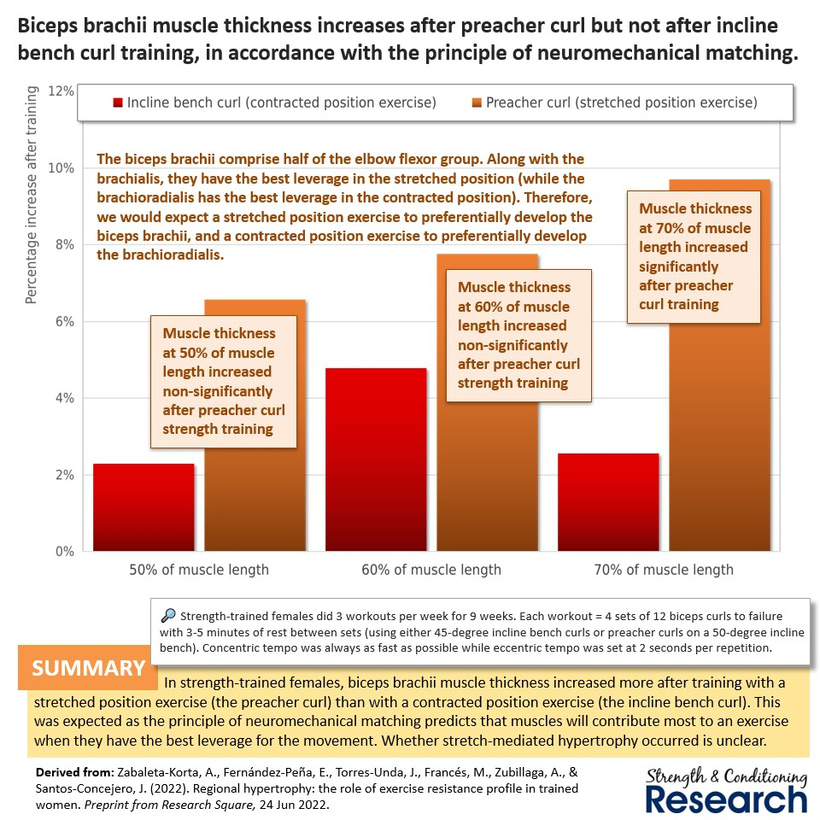
the principle
that the nervous system activates muscles (or specific regions within a muscle) proportionally to their mechanical advantage for a given joint action
Mechanical advantage can be measured using a muscle's internal moment arm lengths.
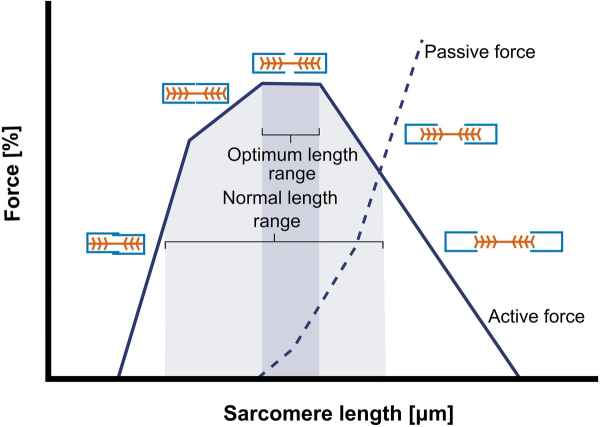
2)Length Tension Relationship is defined as:
A sarcomere's length affects the force it can generate via tension
The key differences:
Neuromechanical matching suggests a point in a ROM where a muscle is the most actice
The Length Tension Relationship suggests a point in a ROM
where the sarcomeres of a muscle can generate the most tension.
Now, this is heavily debated topic, what I’ll do is just provide evidence for both theories and add my two cents on it; but it is important to know this is a heavily nuanced topic and new data may come out approving or disproving what is said.
Evidence for NMM:
For this I will be linking a few videos on the topic.
https://vm.tiktok.com/ZNRW5t3cq/
Evidence against and or for LTR
https://vm.tiktok.com/ZNRWaNucJ/
My personal take is very similar to the one given in the last video linked. This is an extremely nuanced topic and both things should be taken into consideration, basing your training on one singular theory is likely not the smartest choice so it is important to integrate both ideas to maximise your training.
So, finally, to know weather an exercise is good it is important to consider both leverage and LTR, training said muscle on the plateau of the LTR and still considering if the the muscle has best relative leverage might be the smartest choice.
(all sources for this topic are reported in the videos linked)
How to train
Finally after a bit of yap we can get to how to actually train. I should make a little deep dive on higher volume vs lower volume, fatigue, POE and effective reps model, but I’ll likely make a new post on that based on how appreciated this one is and also because I have been working on it for basically 2 days and can’t be bothered to add extra info.
It is important, to maximise high threshold MUR and mechanical tension that we train with a reasonably high weigh, 90% of your 1RM. By doing this you will reach failure likely in 6-8 reps, this rep range is ideal, since you can reach high levels of tension and MUR without being too fatigued, which is the ultimate enemy of hypertrophy.
The goal while training optimally is to view yourself and your body as a science experiment, in one you’d likely want you guinea pigs to be constant and have variables change as little as possible; in the same way you should do that with your training. Create a routine and make it so that as little as possible changes, weather it is time, music,motivation and form; make sure all of these stay roughly the same so that progress can be tracked accurately. Regarding progress itself it is important to raise the reps as soon as they get higher than 6-8, in some exercises, though, this may not be possible , since the minimum weight change is too big. Increase the weight as soon as you can do at least 5 standardised reps.
Your training philosophy might changed based on how long you have been training. If you’re a beginner, which you likely are if you are reading this guide, it is important you always train to failure. You must do this since a beginner’s perception of effort is awful and if we were to implement RIR( reps in reserve) to his training the risk would be a decrease in MUR due to low effort.
The split you use is important, data doesn’t show a difference between 2 and 3x a week frequency, but it does show a difference in 1 and 3x, so taking into consideration the theoretical aspect which tells us that the stimulus from active tension last 36-48 hours and atrophy starts once the stimulus stops, we should probably train every 48 hours.
The best split because of this would likely be a FBEOD or an U/LED. My personal opinion is that U/LED would be slightly better because in longer sessions it is more difficult to keep up motivation, this would lead to an increase in POE and a decrease in MUR.
So we have now asserted that the best split is likely U/LED, talking about sets, despite what most old gymcels tell you 4-8 sets a week per muscle group is the sweet spot to keep a good stimulus/fatigue ratio.
We know hypertrophy is fiber specific, which means that two different movements despite targeting the same muscle will activate different fibers, it is important because of this that training days and exercises are kept the exact same, so no upper A and B days, just a singular upper day.
Now since I know most of you reading this can’t program I’ll create a little example of a training program that you can tweak to your liking, muscles which are most important for you to be targeted must be at the start of the training session.
Upper: Lat pulldown 1x;back row1x;kelso shrug 1x;chest press1x;incline press1x;delt press 1x;lat raise 2x; ab crunch 2x;preacher curl2x;tricep extension 2x. Lower: Hack squat with legs raised 2x; SLDx1;Leg extension 1x; leg curl 2x; calf raise 1x;adductors 1x;abductors1x; hip thrust 1x.
This is the end of the guide, some support would be appreciated (a grey’s gotta eat lol).
What causes hypertrophy
Overtime many mechanisms for hypertrophy have been proposed but one clearly reigns supreme and has stayed through the years. Tension.
Generally, without tension (assuming no major hormonal changes) our body simply doesn't see a reason for us to grow big muscles. They are energetically taxing and not necessary for our survival.
Tension convinces our brain that they are.
It occurs in two forms:
1/active and 2/passive
Active mechanical tension happens when muscles contract to produce force, leading to the addition of myofibrils and increasing muscle fiber size. Passive mechanical tension occurs when muscles are stretched, leading to the addition of sarcomeres in series, which increases muscle fiber length.The force-velocity relationship is a crucial factor in understanding how mechanical tension stimulates hypertrophy. This relationship describes how muscle force production varies with contraction velocity. When muscles contract at slower speeds, more myosin motors can attach to actin filaments, producing greater force. As contraction speed increases, the rate at which myosin motors detach from actin also increases, reducing the total force LY produced. This is why slower, controlled movements-especially when nearing muscular failure-are the most effective for maximizing mechanical tension.Essentially, slower contractions allow for more effective force production, and this is key to inducing hypertrophy.
Without mechanical tension, there is no muscle growth. Despite common beliefs, metabolic stress and muscle damage alone do not stimulate hypertrophy,mechanical tension is the essential factor. These mechanisms only contribute to growth when significant mechanical tension is present, tension can lead to hypertrophy even in the absence of muscle damage or metabolic stress. Additionally, the slowing of contraction velocity, which enhances mechanical tension, must occur involuntarily; it is not the result of conscious control, but rather a natural adaptation to the forces being generated. As such, the most effective hypertrophy training focuses on optimizing mechanical tension, which remains the most reliable and powerful stimulus for muscle growth.
https://pubmed.ncbi.nlm.nih.gov/18022371/
https://pubmed.ncbi.nlm.nih.gov/32830552/
Simplified and dumbed down the mechanism that causes muscle growth is the speed reduction of your reps in your set.
What is Mur
The motor unit represents the ultimate pathway through which the central nervous system translates electrical commands into physical force and coordinates somatic movement.Motor units are not uniform; they are classified into distinct physiological and biochemical phenotypes. The modern taxonomic scheme proposed by Burke and colleagues categorizes motor units based on contraction speed, force production, and fatigue resistance. These physiological groupings correspond to histochemical fiber types (Type I, Type IIa, and Type IIb/IIx) and their corresponding molecular markers.The orderly recruitment of motor units during muscle contraction is described by Henneman's Size Principle, which states that motor units are recruited sequentially from smallest to largest. Under increasing synaptic drive from the central nervous system, smaller motor neurons with low activation thresholds (S-type) are recruited first, followed by intermediate (FR-type), and finally the largest, highest-threshold motor neurons (FF-type). This hierarchy ensures a smooth gradation of muscle force, allowing for highly precise adjustments during low-force tasks (such as writing or maintaining posture) and recruiting powerful fast-twitch fibers only when rapid, forceful movements are required.
This orderly recruitment is driven by the passive electrical properties of the motor neurons.
During prolonged, submaximal isometric contractions maintained at a constant torque (e.g., 20\% MVC), the motor neuron pool undergoes a complex, coordinated adaptation to prevent muscle fatigue. When a muscle is activated to maintain a constant force, the motor units display a "triphasic" firing pattern :
1Short-Term Firing Rate Decrease: Within the first 10\% to 20\% of the endurance time (or the first 2 to 3 minutes), the firing rates of the active motor units progressively decrease. This decline is a compensatory response to the short-lived potentiation of the muscle fiber twitches, which temporarily increases their force output.
2Firing Rate Recovery and Increase: As the contraction continues and the muscle fibers begin to fatigue, their twitch force declines. To compensate for this loss of force, the central nervous system increases the excitatory drive to the motor pool, causing the firing rates of the active units to recover and increase.
3Recruitment of New Motor Units: Alongside the increase in firing rates, the elevated excitatory drive recruits additional, higher-threshold motor units that were previously silent. This progressive recruitment of fresh, larger motor units allows the muscle to maintain the target torque output.
Understanding how the central nervous system recruits motor units has major implications for strength training and muscle hypertrophy. During a voluntary exercise, such as a leg extension targeting the quadriceps, the recruitment pattern is determined by the intensity of the resistance and the proximity to momentary muscle failure.
When lifting a low resistance (e.g., a load that can be completed for 20 repetitions), the central nervous system initially recruits only low-threshold, slow-twitch (Type I) motor units. These units produce low force but are highly fatigue-resistant. As these low-threshold units gradually fatigue during the set, the central nervous system must recruit progressively higher-threshold motor units (Type IIa and finally Type IIb/IIx) to maintain the required force output. High-threshold units are recruited only in the final repetitions of the set as the muscle approaches momentary muscle failure. Therefore, low-resistance training can stimulate both slow- and fast-twitch fibers, but only if the set is performed with a high intensity of effort and taken close to failure.
In contrast, when lifting a heavy resistance (e.g., a load that permits only 6 repetitions), the central nervous system recognizes the immediate high force demand. To generate this force, both low- and high-threshold motor units are recruited immediately from the very first repetition. This allows the trainee to stimulate the high-threshold, fast-twitch fibers—which have the greatest potential for muscle hypertrophy—without needing to accumulate high training volumes.
https://journals.physiology.org/doi/full/10.1152/japplphysiol.00863.2024
https://www.researchgate.net/profil...or-unit-pools-J-Neurophysiol-70-2470-2488.pdf
https://pubmed.ncbi.nlm.nih.gov/15736297/
https://pmc.ncbi.nlm.nih.gov/articles/PMC3680820/
https://pmc.ncbi.nlm.nih.gov/articles/PMC4295621/
https://pmc.ncbi.nlm.nih.gov/articles/PMC3174816/
In conclusion having a higher motor unit recruitment is important. To maximize it, focus on how many motor neurons are activated. Since a motor neuron controls multiple muscle fibers, greater recruitment means more fibers are active, which can lead to increased hypertrophy. Also, maintaining higher stability can enhance recruitment since it allows you to focus more on the muscles you’re training. For example, using a seatbelt during unilateral exercises like a pec fly can improve stability by reducing the strain on other muscles, enabling better focus on the targeted muscle.
So what are some ways to increase MUR
1) STABILITY
Having higher stability can lead to higher motor unit recruitment due to a higher focus on the muscle you are training to train since other muscles have to stabilise less
a great way to increase stabilty is by using a seatbelt on exercises like a unilateral pec fly where your obliques will have to stabilise a lot
2)BLUETOOTH D HANDLE
A bluetooth d handle or clenching your jaw/fist can increase motor unit recruitment due to the law of irridation which states "a muscle working hard recruits neighboring muscles, and if they are already part of the action, it amplifies their strength."
So if nearby muscles get activated it will make the working/main muscle stronger
there is actual data on this working
3)MOTIVATION
Internal motivation
an internal motivation can be something like focussing on mind muscle connection which can increase motor unit recruitment due to increased enjoyment
external motivation external motivation can be something like music or having friends motivating you by screaming or making certain gestures
4)TRAINING HARD
Training hard make sure motor unit recruitment is high without training hard there is no point in doing any of the previous things.
How to know if an exercise is good and targets the right muscle
To define this there are two main ideologies on how the central nervous system decide which muscles to use to perform a said task.
1)Neuro-mechanical matching
Neuromechanical Matching is defined as:
the principle
that the nervous system activates muscles (or specific regions within a muscle) proportionally to their mechanical advantage for a given joint action
Mechanical advantage can be measured using a muscle's internal moment arm lengths.
2)Length Tension Relationship is defined as:
A sarcomere's length affects the force it can generate via tension
The key differences:
Neuromechanical matching suggests a point in a ROM where a muscle is the most actice
The Length Tension Relationship suggests a point in a ROM
where the sarcomeres of a muscle can generate the most tension.
Now, this is heavily debated topic, what I’ll do is just provide evidence for both theories and add my two cents on it; but it is important to know this is a heavily nuanced topic and new data may come out approving or disproving what is said.
Evidence for NMM:
For this I will be linking a few videos on the topic.
https://vm.tiktok.com/ZNRW5t3cq/
Evidence against and or for LTR
https://vm.tiktok.com/ZNRWaNucJ/
My personal take is very similar to the one given in the last video linked. This is an extremely nuanced topic and both things should be taken into consideration, basing your training on one singular theory is likely not the smartest choice so it is important to integrate both ideas to maximise your training.
So, finally, to know weather an exercise is good it is important to consider both leverage and LTR, training said muscle on the plateau of the LTR and still considering if the the muscle has best relative leverage might be the smartest choice.
(all sources for this topic are reported in the videos linked)
How to train
Finally after a bit of yap we can get to how to actually train. I should make a little deep dive on higher volume vs lower volume, fatigue, POE and effective reps model, but I’ll likely make a new post on that based on how appreciated this one is and also because I have been working on it for basically 2 days and can’t be bothered to add extra info.
It is important, to maximise high threshold MUR and mechanical tension that we train with a reasonably high weigh, 90% of your 1RM. By doing this you will reach failure likely in 6-8 reps, this rep range is ideal, since you can reach high levels of tension and MUR without being too fatigued, which is the ultimate enemy of hypertrophy.
The goal while training optimally is to view yourself and your body as a science experiment, in one you’d likely want you guinea pigs to be constant and have variables change as little as possible; in the same way you should do that with your training. Create a routine and make it so that as little as possible changes, weather it is time, music,motivation and form; make sure all of these stay roughly the same so that progress can be tracked accurately. Regarding progress itself it is important to raise the reps as soon as they get higher than 6-8, in some exercises, though, this may not be possible , since the minimum weight change is too big. Increase the weight as soon as you can do at least 5 standardised reps.
Your training philosophy might changed based on how long you have been training. If you’re a beginner, which you likely are if you are reading this guide, it is important you always train to failure. You must do this since a beginner’s perception of effort is awful and if we were to implement RIR( reps in reserve) to his training the risk would be a decrease in MUR due to low effort.
The split you use is important, data doesn’t show a difference between 2 and 3x a week frequency, but it does show a difference in 1 and 3x, so taking into consideration the theoretical aspect which tells us that the stimulus from active tension last 36-48 hours and atrophy starts once the stimulus stops, we should probably train every 48 hours.
The best split because of this would likely be a FBEOD or an U/LED. My personal opinion is that U/LED would be slightly better because in longer sessions it is more difficult to keep up motivation, this would lead to an increase in POE and a decrease in MUR.
So we have now asserted that the best split is likely U/LED, talking about sets, despite what most old gymcels tell you 4-8 sets a week per muscle group is the sweet spot to keep a good stimulus/fatigue ratio.
We know hypertrophy is fiber specific, which means that two different movements despite targeting the same muscle will activate different fibers, it is important because of this that training days and exercises are kept the exact same, so no upper A and B days, just a singular upper day.
Now since I know most of you reading this can’t program I’ll create a little example of a training program that you can tweak to your liking, muscles which are most important for you to be targeted must be at the start of the training session.
Upper: Lat pulldown 1x;back row1x;kelso shrug 1x;chest press1x;incline press1x;delt press 1x;lat raise 2x; ab crunch 2x;preacher curl2x;tricep extension 2x. Lower: Hack squat with legs raised 2x; SLDx1;Leg extension 1x; leg curl 2x; calf raise 1x;adductors 1x;abductors1x; hip thrust 1x.
This is the end of the guide, some support would be appreciated (a grey’s gotta eat lol).