




Lefor3Laser
Kisses from Romania
- Joined
- Jan 17, 2025
- Posts
- 2,844
- Reputation
- 3,521
Pure theory thread, take it with a grain of salt
Not medical advice, not saying this is standard practice, and not saying this is something people should just go out and do. This is just a theoretical thought on anatomy, reconstruction, and whether this area could develop more in the future.
The basic idea is pretty simple.
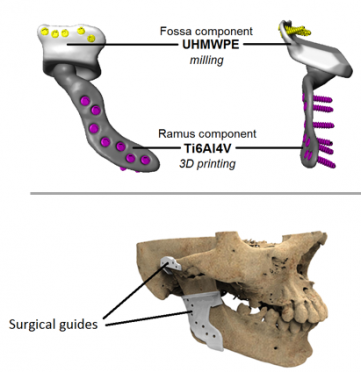
In total TMJ replacement, the condyle and part of the ramus are replaced with a custom prosthetic component. The purpose of that surgery is obviously functional reconstruction severe TMJ disease, ankylosis, degeneration, failed prior surgery, things like that not aesthetics.
But from an anatomical point of view, it does raise an interesting question.
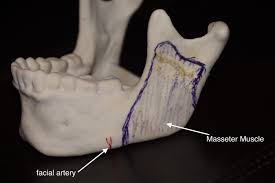
The masseter sits along the lateral surface of the ramus and angle. So if someone were to have bilateral condyle ramus replacement, and the ramus portion of the prosthesis were designed with more lateral fullness, then in theory the soft tissue over that area, including the masseteric region, could sit more laterally as well.
So the point I am making is not “just flare the gonions and call it a day.”
I am talking more specifically about the upper/lateral ramus region and whether widening that area could influence the appearance of the upper masseteric zone and overall lower third width.
To me, that is not a ridiculous question anatomically.
At the same time, there are clear problems with the idea.
First, TMJ prostheses are designed around function first. Joint mechanics, fixation, occlusion, loading, range of motion, and long term stability matter far more than trying to create extra width. So even if something is possible geometrically, that does not automatically make it a good design choice.
Second, the masseter is not a solid block that just gets “pushed out.” It is a living muscle. It heals, adapts, scars, changes tension, and sits within a soft tissue envelope that is different in every patient. So the visual result would probably be less clean and less predictable than people imagine.
Third, once you start adding lateral bulk, you are not only changing appearance. You are potentially changing soft tissue drape, the way the muscle lies on the ramus, hardware relationships, fixation considerations, and load transfer through the construct. A design that seems appealing on a cosmetic level could create trade offs biomechanically.
Fourth, even if you did manage to increase width there, facial harmony still matters. Ramus width does not exist in isolation. Bizygomatic width, gonial width, parotid fullness, soft tissue thickness, and the rest of the lower third all influence whether the result looks better, neutral, or just off.
So my overall view is this:
In theory, yes if both sides were replaced, a custom condyle ramus prosthesis with more lateral ramus fullness could potentially create more apparent width in the upper masseteric/lateral lower face region.
But I do not think it would be as simple as “make it wider = instant better result.” The effect would probably be indirect, somewhat limited, and heavily dependent on soft tissue, muscle adaptation, and the functional constraints of the joint replacement itself.
What makes it interesting is the future side of it.
As patient specific reconstruction keeps improving better imaging, better CAD/CAM planning, better biomaterials, better prediction of soft tissue response I think this whole area could become more refined.
Not in the sense that TMJ replacement becomes some looksmax procedure, but in the sense that surgeons may eventually understand much better how reconstructive design influences facial contour, not just joint function.
So this is basically my point:
I am not saying TMJ replacement should be used cosmetically.
I am saying that if you are already replacing the condyle ramus unit bilaterally with a custom device, it is reasonable to ask whether lateral ramus design could influence masseteric width and lower third contour, and whether this may become more predictable in the future.
That is all. Just a theory, but not a totally brain dead one either.
Tags: @yussimania @lurking truecel
Would love to see your opinion.
Reference images to my previous points:
Not medical advice, not saying this is standard practice, and not saying this is something people should just go out and do. This is just a theoretical thought on anatomy, reconstruction, and whether this area could develop more in the future.
The basic idea is pretty simple.
In total TMJ replacement, the condyle and part of the ramus are replaced with a custom prosthetic component. The purpose of that surgery is obviously functional reconstruction severe TMJ disease, ankylosis, degeneration, failed prior surgery, things like that not aesthetics.
But from an anatomical point of view, it does raise an interesting question.
The masseter sits along the lateral surface of the ramus and angle. So if someone were to have bilateral condyle ramus replacement, and the ramus portion of the prosthesis were designed with more lateral fullness, then in theory the soft tissue over that area, including the masseteric region, could sit more laterally as well.
So the point I am making is not “just flare the gonions and call it a day.”
I am talking more specifically about the upper/lateral ramus region and whether widening that area could influence the appearance of the upper masseteric zone and overall lower third width.
To me, that is not a ridiculous question anatomically.
At the same time, there are clear problems with the idea.
First, TMJ prostheses are designed around function first. Joint mechanics, fixation, occlusion, loading, range of motion, and long term stability matter far more than trying to create extra width. So even if something is possible geometrically, that does not automatically make it a good design choice.
Second, the masseter is not a solid block that just gets “pushed out.” It is a living muscle. It heals, adapts, scars, changes tension, and sits within a soft tissue envelope that is different in every patient. So the visual result would probably be less clean and less predictable than people imagine.
Third, once you start adding lateral bulk, you are not only changing appearance. You are potentially changing soft tissue drape, the way the muscle lies on the ramus, hardware relationships, fixation considerations, and load transfer through the construct. A design that seems appealing on a cosmetic level could create trade offs biomechanically.
Fourth, even if you did manage to increase width there, facial harmony still matters. Ramus width does not exist in isolation. Bizygomatic width, gonial width, parotid fullness, soft tissue thickness, and the rest of the lower third all influence whether the result looks better, neutral, or just off.
So my overall view is this:
In theory, yes if both sides were replaced, a custom condyle ramus prosthesis with more lateral ramus fullness could potentially create more apparent width in the upper masseteric/lateral lower face region.
But I do not think it would be as simple as “make it wider = instant better result.” The effect would probably be indirect, somewhat limited, and heavily dependent on soft tissue, muscle adaptation, and the functional constraints of the joint replacement itself.
What makes it interesting is the future side of it.
As patient specific reconstruction keeps improving better imaging, better CAD/CAM planning, better biomaterials, better prediction of soft tissue response I think this whole area could become more refined.
Not in the sense that TMJ replacement becomes some looksmax procedure, but in the sense that surgeons may eventually understand much better how reconstructive design influences facial contour, not just joint function.
So this is basically my point:
I am not saying TMJ replacement should be used cosmetically.
I am saying that if you are already replacing the condyle ramus unit bilaterally with a custom device, it is reasonable to ask whether lateral ramus design could influence masseteric width and lower third contour, and whether this may become more predictable in the future.
That is all. Just a theory, but not a totally brain dead one either.
Tags: @yussimania @lurking truecel
Would love to see your opinion.
Reference images to my previous points:
Last edited:


