



GREENFL
Iron
- Joined
- Oct 23, 2025
- Posts
- 1
- Reputation
- 0
Artificial Maxilla Support Structure
Maxilskeleton™
Abstract
The objective of this report is to propose an artificial maxillary support structure (Maxilskeleton™) designed to restore and maintain nasal base projection and airway integrity in individuals exhibiting or predisposed to maxillary recession. By providing structural reinforcement beneath the maxilla’s anterior contour, this system aims to enhance both aesthetic facial support and functional breathing capacity.
Background
The maxilla forms the foundational support for mid-facial anatomy, including the nasal base, zygomatic region, and upper dentition. Progressive or congenital maxillary recession reduces this structural support, leading to compromised nasal airflow, altered nasolabial angles, and aesthetic flattening of mid-facial projection. These structural deficiencies are associated with conditions such as obstructive sleep apnea and midface retrusion.
Theory
Maxillary recession results in a deficit of alveolar and subnasal bone density. This void produces downward pull on the nasal base and soft tissues, contributing to reduced nasal tip projection and narrowed airway alignment. The theory proposes that internal reinforcement—either mechanical or surgical—can restore lost support by occupying this recessive volume and redistributing upward and anterior forces toward the nasal base.
Empirical Observations
See images:
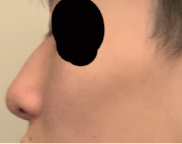
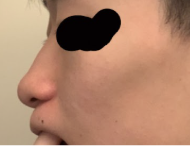
Manual palpation and external pressure application to the maxillary subnasal region demonstrates immediate aesthetic and structural improvement in nasal projection, suggesting that internal volumetric support in this region can achieve similar results in a controlled manner.
(Using pieces of cut up eraser achieved the same effect)
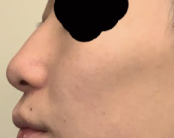
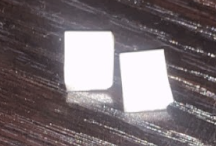
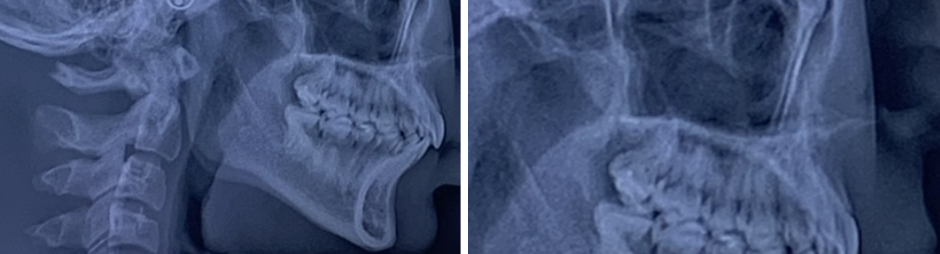
The pre mentioned “void” is visible on x-ray imaging
Design Concepts
Non surgical appliance
A removable or semi-fixed oral appliance anchored to posterior molars. The structure extends anteriorly along the alveolar ridge above the gumline and curves upward beneath the subnasal soft tissue. Its purpose is to provide internal mechanical support, maintaining anterior projection and preventing collapse of nasal and midfacial soft tissues. The framework may be composed of biocompatible polymer or stainless steel, with silicone or resin pads to interface with gingival tissue.
Proposal for Surgery
A custom 3D-printed titanium lattice designed from cone-beam computed tomography (CBCT) scans to anatomically match the patient’s maxillary contour. The implant occupies the subperiosteal space between the gingival soft tissue and bone surface, secured by micro-screws along the alveolar ridge. The curved lattice replicates natural bone topography, providing structural continuity and lifting the nasal base. This design integrates with tissue over time while maintaining the mechanical advantage of subnasal reinforcement.
Applications
References:
Cistulli, P. A., et al. (2020). "Craniofacial abnormalities in obstructive sleep apnea: implications for treatment." Sleep Medicine Reviews, 52, 101313.
Kiliaridis, S. (2019). "The importance of the maxilla in facial growth and airway function." Orthodontics & Craniofacial Research, 22(S1), 12–20.
van Steenberghe, D., et al. (2003). "Custom-made titanium implants for reconstruction of large osseous defects in the mandible and maxilla." Clinical Oral Implants Research, 14(6), 757–763.
Misch, C. E. (2015). "Contemporary Implant Dentistry" (4th Ed.). Elsevier.
Tessier, P. (1994). "Autogenous bone grafts and facial skeletal reconstruction." Plastic and Reconstructive Surgery, 93(1), 28–38.
Zygomatic Implants Review: Chrcanovic, B. R., & Albrektsson, T. (2018). "Zygomatic implants for the rehabilitation of atrophic maxilla: a systematic review." Oral and Maxillofacial Surgery, 22, 119–136.
Maxilskeleton™
Abstract
The objective of this report is to propose an artificial maxillary support structure (Maxilskeleton™) designed to restore and maintain nasal base projection and airway integrity in individuals exhibiting or predisposed to maxillary recession. By providing structural reinforcement beneath the maxilla’s anterior contour, this system aims to enhance both aesthetic facial support and functional breathing capacity.
Background
The maxilla forms the foundational support for mid-facial anatomy, including the nasal base, zygomatic region, and upper dentition. Progressive or congenital maxillary recession reduces this structural support, leading to compromised nasal airflow, altered nasolabial angles, and aesthetic flattening of mid-facial projection. These structural deficiencies are associated with conditions such as obstructive sleep apnea and midface retrusion.
Theory
Maxillary recession results in a deficit of alveolar and subnasal bone density. This void produces downward pull on the nasal base and soft tissues, contributing to reduced nasal tip projection and narrowed airway alignment. The theory proposes that internal reinforcement—either mechanical or surgical—can restore lost support by occupying this recessive volume and redistributing upward and anterior forces toward the nasal base.
Empirical Observations
See images:
Manual palpation and external pressure application to the maxillary subnasal region demonstrates immediate aesthetic and structural improvement in nasal projection, suggesting that internal volumetric support in this region can achieve similar results in a controlled manner.
(Using pieces of cut up eraser achieved the same effect)
The pre mentioned “void” is visible on x-ray imaging
Design Concepts
Non surgical appliance
A removable or semi-fixed oral appliance anchored to posterior molars. The structure extends anteriorly along the alveolar ridge above the gumline and curves upward beneath the subnasal soft tissue. Its purpose is to provide internal mechanical support, maintaining anterior projection and preventing collapse of nasal and midfacial soft tissues. The framework may be composed of biocompatible polymer or stainless steel, with silicone or resin pads to interface with gingival tissue.
Proposal for Surgery
A custom 3D-printed titanium lattice designed from cone-beam computed tomography (CBCT) scans to anatomically match the patient’s maxillary contour. The implant occupies the subperiosteal space between the gingival soft tissue and bone surface, secured by micro-screws along the alveolar ridge. The curved lattice replicates natural bone topography, providing structural continuity and lifting the nasal base. This design integrates with tissue over time while maintaining the mechanical advantage of subnasal reinforcement.
Applications
| Category | Target Outcome | Key Advantage |
| Sleep apnea / airway deficiency | Expands airway by anteriorly supporting nasal floor | Non-invasive relative to orthognathic surgery |
| Facial aesthetic augmentation | Improves nasal tip angle and under-eye contour | Internal alternative to fillers or grafts |
| Post-traumatic or resorptive bone loss | Reconstructive support beneath gumline | Custom-fit titanium lattice ensures structural restoration |
References:
Cistulli, P. A., et al. (2020). "Craniofacial abnormalities in obstructive sleep apnea: implications for treatment." Sleep Medicine Reviews, 52, 101313.
Kiliaridis, S. (2019). "The importance of the maxilla in facial growth and airway function." Orthodontics & Craniofacial Research, 22(S1), 12–20.
van Steenberghe, D., et al. (2003). "Custom-made titanium implants for reconstruction of large osseous defects in the mandible and maxilla." Clinical Oral Implants Research, 14(6), 757–763.
Misch, C. E. (2015). "Contemporary Implant Dentistry" (4th Ed.). Elsevier.
Tessier, P. (1994). "Autogenous bone grafts and facial skeletal reconstruction." Plastic and Reconstructive Surgery, 93(1), 28–38.
Zygomatic Implants Review: Chrcanovic, B. R., & Albrektsson, T. (2018). "Zygomatic implants for the rehabilitation of atrophic maxilla: a systematic review." Oral and Maxillofacial Surgery, 22, 119–136.


