TOPICAL CYCLOSPORINE - THE SUPERIOR TO LATISSE AND MINOXIDIL

moongazer

moongazer

Platinum
Joined
Dec 15, 2025
Posts
1,180
Reputation
2,558
It's common across both com and org to be using topical solutions of compounds like Minoxidil (oral as well) and Bimatoprost (Latisse) as a lash growth agent. In this thread I'm going to cover a compound that I haven’t been seeing talked about enough in the community that is a superior option to both: Topical Cyclosporine

TLDR: Topical Cyclosporine mogs both Minoxidil and Latisse to death because it works through a cascade of pathways ( that they don't ) and extends the hair growth phase. You can use a 5% formulation of cyclosporine on your hair or lashes 1-2x a day. Make sure to cycle it, such as growth and maintenance phases.

BTW : thanks to @mohito for formatting the whole thread.


How does it actually induce lash/hair growth?

1- Firstly, cyclosporine forms a complex within cyclophilin A; an intracellular protein which then binds to and inhibits calcineurin resulting in the prevention of the dephosphorylation of target proteins, which include ion channels, receptors, and transcription factors. Calcineurin then won’t be able to dephosphorylate NFATc1 which means it can’t enter the nucleus and mediate stem cells into a dormant state. What this means is that the stem cells are released from dormancy generating new hair matrixes. Relevant to the prior point, NFATc1 is activated in murine epithelial HF stem cells (HFSCs) where it maintains HF quiescence. NFATc2 also inhibits the proliferation of murine hair matrix keratinocytes through cyclin G2 and p21waf/cip1.


2- Cyclosporine acts as a disinhibitor of WNT, through down regulating SFRP1 expression in the dermal papilla. As we know, one of the primary factors in hair and eyelash synthesis is the Wnt beta catenin pathway. However, SFRP1; a naturally secreted protein which binds to wnt ligands and inhibits hair follicle development.

3- We first need to understand that in hair loss and thinning disorders, AGA for example; hair follicles miniaturize due to Dermal Papilla fibroblasts slowly migrating away from the hair bulb and escaping into the surrounding dermal sheath. In result it reduces the structural volume and efficiency of the hair follicle in terms of output.In studies we can see that cyclosporine actively prevents this migration. By locking the fibroblasts firmly within the core of the hair bulb, cyclosporine maintains the structural integrity and physical volume of the follicle preventing the decrease in hair and lash density.

4- When a growth phase ends,the follicle undergoes programmed cell death (apoptosis) during the catagen phase. Cyclosporine was found to decrease caspase-3 mRNA expression, one of the primary enzymes involved in cell apoptosis. This results in an immunization effect in cells against signals mediating shedding.

5- One of the regulators of cell death is apoptosis-inducing factor. During catagen regression, AIF escapes from the mitochondria and enters the nucleus, essentially dismantling cellular DNA. As cyclosporine downregulates Cyclophilin A within the mitochondria it also prevents AIF from escaping.

6- Cyclosporine downregulates TGF beta. TGF beta is a cytokine that signals follicles to shrink and stop growing. Cyclosporine downstream has an opposing effect on the cytokine by again inhibiting Cyclophilin A in follicular keratinocytes. Alongside this Cyclosporine upregulates anti cell death factors like Bcl-2 while decreasing apoptotic proteins like p53 and Bax.

7- Cyclosporine through the inhibition of calcineurin/NFAT1 signalling halts the expression of p21 and p27 which are proteins secreted to stop matrix cells from multiplying after a growth cycle ends. In short, this extends the growth phase.

And lastly, cyclosporine increases VEGF expression locally to open up blood vessels. The mechanism is similar to one induced by Minoxidil, matching and possibly exceeding the localized nutrient and oxygen delivery.


Simple logical comparisan; why cyclosporine is superior than minoxidil and Latisse

Firstly, the hair follicle cycle is governed by hair follicle stem cells (HFSCs) residing in the bulge niche. In normal or thinning states stem cells are held in a state of dormancy also known as quiescence by the transcription factor NFATC1. To my knowledge neither Latisse or Minoxidil interacts with this stem cell dormancy mechanism. Minoxidil stimulates secondary cell types by opening adenosine triphosphate-sensitive potassium kATP channels and pumping blood to existing active matrices. Latisse stimulates prostaglandin receptors on active follicles to lengthen their current cycle, but it does not induce the wake up of resting cells to initiate another cycle.

Secondly, one of the most important pathways in lash/hair growth is the wnt beta catenin pathway. As we've covered before cyclosporine downregulates an inhibitor of wnt: SFRP1. While both minoxidil and latisse can promote growth factors downstream, they don’t modulate the limitations of SFRP1 . If the local tissue has high levels of SFRP1 which are prominent in thinning hair and lashes, the Wnt pathway remains suppressed regardless of how much blood flow Minoxidil delivers.

Thirdly, In both androgenetic alopecia and severe lash hypotrichosis, follicles undergo "miniaturization" in which they physically shrink over time. This shrinking occurs because mesenchymal cells, known as Dermal Papilla (DP) fibroblasts, slowly leave the hair bulb matrix and migrate up into the surrounding dermal sheath, resulting in shrinkage. Like prior topics, both latisse and minoxidil leave this issue untouched unlike cyclosporine.

In conclusion, cyclosporine works through a variety of pathways. I could mention even more pathways that latisse and minoxidil don’t modulate but, it's the same story over and over again.

BTW Again thanks to @mohito for formatting.


Works cited

Cyclosporine A increases hair follicle growth by suppressing apoptosis‐inducing factor nuclear translocation: a new mechanism - Lan - 2015 - Fundamental & Clinical Pharmacology - Wiley Online Library

Cyclosporine A increases hair follicle growth by suppressing AIF nuclear translocation: A new mechanism | Request PDF

Re-Evaluating Cyclosporine A as a Hair Growth–Promoting Agent in Human Scalp Hair Follicles

Treatment options for alopecia areata

Identifying novel strategies for treating human hair loss disorders: Cyclosporine A suppresses the Wnt inhibitor, SFRP1, in the dermal papilla of human scalp hair follicles

Cyclosporine-induced childhood generalized hypertrichosis - PMC

Cyclosporin A-induced hair growth in mice is associated with inhibition of calcineurin-dependent activation of NFAT in follicular keratinocytes | American Journal of Physiology-Cell Physiology | American Physiological Society

Cyclosporine A-induced Hair Repigmentation in a Patient with Dermatitis: A Case Report - PMC
 
  • +1
Reactions: Glorious King, Kojo, anthrocellogy and 13 others
@Sadist @illusion @polonaecel @coolman985
 
  • +1
Reactions: Glorious King, illusion, coolman985 and 3 others
Great thread. Nice job, bro
 
  • +1
  • Woah
Reactions: Glorious King, illusion, stigmaboy and 6 others
It's common across both com and org to be using topical solutions of compounds like Minoxidil (oral as well) and Bimatoprost (Latisse) as a lash growth agent. In this thread I'm going to cover a compound that I haven’t been seeing talked about enough in the community that is a superior option to both: Topical Cyclosporine

TLDR: Topical Cyclosporine mogs both Minoxidil and Latisse to death because it works through a cascade of pathways ( that they don't ) and extends the hair growth phase. You can use a 5% formulation of cyclosporine on your hair or lashes 1-2x a day. Make sure to cycle it, such as growth and maintenance phases.

BTW : thanks to @mohito for formatting the whole thread.


How does it actually induce lash/hair growth?

1- Firstly, cyclosporine forms a complex within cyclophilin A; an intracellular protein which then binds to and inhibits calcineurin resulting in the prevention of the dephosphorylation of target proteins, which include ion channels, receptors, and transcription factors. Calcineurin then won’t be able to dephosphorylate NFATc1 which means it can’t enter the nucleus and mediate stem cells into a dormant state. What this means is that the stem cells are released from dormancy generating new hair matrixes. Relevant to the prior point, NFATc1 is activated in murine epithelial HF stem cells (HFSCs) where it maintains HF quiescence. NFATc2 also inhibits the proliferation of murine hair matrix keratinocytes through cyclin G2 and p21waf/cip1.


2- Cyclosporine acts as a disinhibitor of WNT, through down regulating SFRP1 expression in the dermal papilla. As we know, one of the primary factors in hair and eyelash synthesis is the Wnt beta catenin pathway. However, SFRP1; a naturally secreted protein which binds to wnt ligands and inhibits hair follicle development.

3- We first need to understand that in hair loss and thinning disorders, AGA for example; hair follicles miniaturize due to Dermal Papilla fibroblasts slowly migrating away from the hair bulb and escaping into the surrounding dermal sheath. In result it reduces the structural volume and efficiency of the hair follicle in terms of output.In studies we can see that cyclosporine actively prevents this migration. By locking the fibroblasts firmly within the core of the hair bulb, cyclosporine maintains the structural integrity and physical volume of the follicle preventing the decrease in hair and lash density.

4- When a growth phase ends,the follicle undergoes programmed cell death (apoptosis) during the catagen phase. Cyclosporine was found to decrease caspase-3 mRNA expression, one of the primary enzymes involved in cell apoptosis. This results in an immunization effect in cells against signals mediating shedding.

5- One of the regulators of cell death is apoptosis-inducing factor. During catagen regression, AIF escapes from the mitochondria and enters the nucleus, essentially dismantling cellular DNA. As cyclosporine downregulates Cyclophilin A within the mitochondria it also prevents AIF from escaping.

6- Cyclosporine downregulates TGF beta. TGF beta is a cytokine that signals follicles to shrink and stop growing. Cyclosporine downstream has an opposing effect on the cytokine by again inhibiting Cyclophilin A in follicular keratinocytes. Alongside this Cyclosporine upregulates anti cell death factors like Bcl-2 while decreasing apoptotic proteins like p53 and Bax.

7- Cyclosporine through the inhibition of calcineurin/NFAT1 signalling halts the expression of p21 and p27 which are proteins secreted to stop matrix cells from multiplying after a growth cycle ends. In short, this extends the growth phase.

And lastly, cyclosporine increases VEGF expression locally to open up blood vessels. The mechanism is similar to one induced by Minoxidil, matching and possibly exceeding the localized nutrient and oxygen delivery.


Simple logical comparisan; why cyclosporine is superior than minoxidil and Latisse

Firstly, the hair follicle cycle is governed by hair follicle stem cells (HFSCs) residing in the bulge niche. In normal or thinning states stem cells are held in a state of dormancy also known as quiescence by the transcription factor NFATC1. To my knowledge neither Latisse or Minoxidil interacts with this stem cell dormancy mechanism. Minoxidil stimulates secondary cell types by opening adenosine triphosphate-sensitive potassium kATP channels and pumping blood to existing active matrices. Latisse stimulates prostaglandin receptors on active follicles to lengthen their current cycle, but it does not induce the wake up of resting cells to initiate another cycle.

Secondly, one of the most important pathways in lash/hair growth is the wnt beta catenin pathway. As we've covered before cyclosporine downregulates an inhibitor of wnt: SFRP1. While both minoxidil and latisse can promote growth factors downstream, they don’t modulate the limitations of SFRP1 . If the local tissue has high levels of SFRP1 which are prominent in thinning hair and lashes, the Wnt pathway remains suppressed regardless of how much blood flow Minoxidil delivers.

Thirdly, In both androgenetic alopecia and severe lash hypotrichosis, follicles undergo "miniaturization" in which they physically shrink over time. This shrinking occurs because mesenchymal cells, known as Dermal Papilla (DP) fibroblasts, slowly leave the hair bulb matrix and migrate up into the surrounding dermal sheath, resulting in shrinkage. Like prior topics, both latisse and minoxidil leave this issue untouched unlike cyclosporine.

In conclusion, cyclosporine works through a variety of pathways. I could mention even more pathways that latisse and minoxidil don’t modulate but, it's the same story over and over again.

BTW Again thanks to @mohito for formatting.


Works cited

Cyclosporine A increases hair follicle growth by suppressing apoptosis‐inducing factor nuclear translocation: a new mechanism - Lan - 2015 - Fundamental & Clinical Pharmacology - Wiley Online Library

Cyclosporine A increases hair follicle growth by suppressing AIF nuclear translocation: A new mechanism | Request PDF

Re-Evaluating Cyclosporine A as a Hair Growth–Promoting Agent in Human Scalp Hair Follicles

Treatment options for alopecia areata

Identifying novel strategies for treating human hair loss disorders: Cyclosporine A suppresses the Wnt inhibitor, SFRP1, in the dermal papilla of human scalp hair follicles

Cyclosporine-induced childhood generalized hypertrichosis - PMC

Cyclosporin A-induced hair growth in mice is associated with inhibition of calcineurin-dependent activation of NFAT in follicular keratinocytes | American Journal of Physiology-Cell Physiology | American Physiological Society

Cyclosporine A-induced Hair Repigmentation in a Patient with Dermatitis: A Case Report - PMC
Okok this looks cool.
I will read
 
  • +1
Reactions: LLcel and dogshitinfras
It's common across both com and org to be using topical solutions of compounds like Minoxidil (oral as well) and Bimatoprost (Latisse) as a lash growth agent. In this thread I'm going to cover a compound that I haven’t been seeing talked about enough in the community that is a superior option to both: Topical Cyclosporine

TLDR: Topical Cyclosporine mogs both Minoxidil and Latisse to death because it works through a cascade of pathways ( that they don't ) and extends the hair growth phase. You can use a 5% formulation of cyclosporine on your hair or lashes 1-2x a day. Make sure to cycle it, such as growth and maintenance phases.

BTW : thanks to @mohito for formatting the whole thread.


How does it actually induce lash/hair growth?

1- Firstly, cyclosporine forms a complex within cyclophilin A; an intracellular protein which then binds to and inhibits calcineurin resulting in the prevention of the dephosphorylation of target proteins, which include ion channels, receptors, and transcription factors. Calcineurin then won’t be able to dephosphorylate NFATc1 which means it can’t enter the nucleus and mediate stem cells into a dormant state. What this means is that the stem cells are released from dormancy generating new hair matrixes. Relevant to the prior point, NFATc1 is activated in murine epithelial HF stem cells (HFSCs) where it maintains HF quiescence. NFATc2 also inhibits the proliferation of murine hair matrix keratinocytes through cyclin G2 and p21waf/cip1.


2- Cyclosporine acts as a disinhibitor of WNT, through down regulating SFRP1 expression in the dermal papilla. As we know, one of the primary factors in hair and eyelash synthesis is the Wnt beta catenin pathway. However, SFRP1; a naturally secreted protein which binds to wnt ligands and inhibits hair follicle development.

3- We first need to understand that in hair loss and thinning disorders, AGA for example; hair follicles miniaturize due to Dermal Papilla fibroblasts slowly migrating away from the hair bulb and escaping into the surrounding dermal sheath. In result it reduces the structural volume and efficiency of the hair follicle in terms of output.In studies we can see that cyclosporine actively prevents this migration. By locking the fibroblasts firmly within the core of the hair bulb, cyclosporine maintains the structural integrity and physical volume of the follicle preventing the decrease in hair and lash density.

4- When a growth phase ends,the follicle undergoes programmed cell death (apoptosis) during the catagen phase. Cyclosporine was found to decrease caspase-3 mRNA expression, one of the primary enzymes involved in cell apoptosis. This results in an immunization effect in cells against signals mediating shedding.

5- One of the regulators of cell death is apoptosis-inducing factor. During catagen regression, AIF escapes from the mitochondria and enters the nucleus, essentially dismantling cellular DNA. As cyclosporine downregulates Cyclophilin A within the mitochondria it also prevents AIF from escaping.

6- Cyclosporine downregulates TGF beta. TGF beta is a cytokine that signals follicles to shrink and stop growing. Cyclosporine downstream has an opposing effect on the cytokine by again inhibiting Cyclophilin A in follicular keratinocytes. Alongside this Cyclosporine upregulates anti cell death factors like Bcl-2 while decreasing apoptotic proteins like p53 and Bax.

7- Cyclosporine through the inhibition of calcineurin/NFAT1 signalling halts the expression of p21 and p27 which are proteins secreted to stop matrix cells from multiplying after a growth cycle ends. In short, this extends the growth phase.

And lastly, cyclosporine increases VEGF expression locally to open up blood vessels. The mechanism is similar to one induced by Minoxidil, matching and possibly exceeding the localized nutrient and oxygen delivery.


Simple logical comparisan; why cyclosporine is superior than minoxidil and Latisse

Firstly, the hair follicle cycle is governed by hair follicle stem cells (HFSCs) residing in the bulge niche. In normal or thinning states stem cells are held in a state of dormancy also known as quiescence by the transcription factor NFATC1. To my knowledge neither Latisse or Minoxidil interacts with this stem cell dormancy mechanism. Minoxidil stimulates secondary cell types by opening adenosine triphosphate-sensitive potassium kATP channels and pumping blood to existing active matrices. Latisse stimulates prostaglandin receptors on active follicles to lengthen their current cycle, but it does not induce the wake up of resting cells to initiate another cycle.

Secondly, one of the most important pathways in lash/hair growth is the wnt beta catenin pathway. As we've covered before cyclosporine downregulates an inhibitor of wnt: SFRP1. While both minoxidil and latisse can promote growth factors downstream, they don’t modulate the limitations of SFRP1 . If the local tissue has high levels of SFRP1 which are prominent in thinning hair and lashes, the Wnt pathway remains suppressed regardless of how much blood flow Minoxidil delivers.

Thirdly, In both androgenetic alopecia and severe lash hypotrichosis, follicles undergo "miniaturization" in which they physically shrink over time. This shrinking occurs because mesenchymal cells, known as Dermal Papilla (DP) fibroblasts, slowly leave the hair bulb matrix and migrate up into the surrounding dermal sheath, resulting in shrinkage. Like prior topics, both latisse and minoxidil leave this issue untouched unlike cyclosporine.

In conclusion, cyclosporine works through a variety of pathways. I could mention even more pathways that latisse and minoxidil don’t modulate but, it's the same story over and over again.

BTW Again thanks to @mohito for formatting.


Works cited

Cyclosporine A increases hair follicle growth by suppressing apoptosis‐inducing factor nuclear translocation: a new mechanism - Lan - 2015 - Fundamental & Clinical Pharmacology - Wiley Online Library

Cyclosporine A increases hair follicle growth by suppressing AIF nuclear translocation: A new mechanism | Request PDF

Re-Evaluating Cyclosporine A as a Hair Growth–Promoting Agent in Human Scalp Hair Follicles

Treatment options for alopecia areata

Identifying novel strategies for treating human hair loss disorders: Cyclosporine A suppresses the Wnt inhibitor, SFRP1, in the dermal papilla of human scalp hair follicles

Cyclosporine-induced childhood generalized hypertrichosis - PMC

Cyclosporin A-induced hair growth in mice is associated with inhibition of calcineurin-dependent activation of NFAT in follicular keratinocytes | American Journal of Physiology-Cell Physiology | American Physiological Society

Cyclosporine A-induced Hair Repigmentation in a Patient with Dermatitis: A Case Report - PMC
u mean we should applay the cream on our lashes?:FeelsPepoSpin:
 
  • +1
Reactions: ltngreyy and LLcel
Yoo check this out

@ICL @Starborn @buccalfatremoval
 
  • +1
Reactions: ICL and buccalfatremoval
Yoo check this out

@ICL @Starborn @buccalfatremoval
1779826745801
 
  • +1
  • JFL
  • Woah
Reactions: LLcel, ICL, mohito and 1 other person
  • +1
  • So Sad
Reactions: wiws, stigmaboy and mohito
It's common across both com and org to be using topical solutions of compounds like Minoxidil (oral as well) and Bimatoprost (Latisse) as a lash growth agent. In this thread I'm going to cover a compound that I haven’t been seeing talked about enough in the community that is a superior option to both: Topical Cyclosporine

TLDR: Topical Cyclosporine mogs both Minoxidil and Latisse to death because it works through a cascade of pathways ( that they don't ) and extends the hair growth phase. You can use a 5% formulation of cyclosporine on your hair or lashes 1-2x a day. Make sure to cycle it, such as growth and maintenance phases.

BTW : thanks to @mohito for formatting the whole thread.


How does it actually induce lash/hair growth?

1- Firstly, cyclosporine forms a complex within cyclophilin A; an intracellular protein which then binds to and inhibits calcineurin resulting in the prevention of the dephosphorylation of target proteins, which include ion channels, receptors, and transcription factors. Calcineurin then won’t be able to dephosphorylate NFATc1 which means it can’t enter the nucleus and mediate stem cells into a dormant state. What this means is that the stem cells are released from dormancy generating new hair matrixes. Relevant to the prior point, NFATc1 is activated in murine epithelial HF stem cells (HFSCs) where it maintains HF quiescence. NFATc2 also inhibits the proliferation of murine hair matrix keratinocytes through cyclin G2 and p21waf/cip1.


2- Cyclosporine acts as a disinhibitor of WNT, through down regulating SFRP1 expression in the dermal papilla. As we know, one of the primary factors in hair and eyelash synthesis is the Wnt beta catenin pathway. However, SFRP1; a naturally secreted protein which binds to wnt ligands and inhibits hair follicle development.

3- We first need to understand that in hair loss and thinning disorders, AGA for example; hair follicles miniaturize due to Dermal Papilla fibroblasts slowly migrating away from the hair bulb and escaping into the surrounding dermal sheath. In result it reduces the structural volume and efficiency of the hair follicle in terms of output.In studies we can see that cyclosporine actively prevents this migration. By locking the fibroblasts firmly within the core of the hair bulb, cyclosporine maintains the structural integrity and physical volume of the follicle preventing the decrease in hair and lash density.

4- When a growth phase ends,the follicle undergoes programmed cell death (apoptosis) during the catagen phase. Cyclosporine was found to decrease caspase-3 mRNA expression, one of the primary enzymes involved in cell apoptosis. This results in an immunization effect in cells against signals mediating shedding.

5- One of the regulators of cell death is apoptosis-inducing factor. During catagen regression, AIF escapes from the mitochondria and enters the nucleus, essentially dismantling cellular DNA. As cyclosporine downregulates Cyclophilin A within the mitochondria it also prevents AIF from escaping.

6- Cyclosporine downregulates TGF beta. TGF beta is a cytokine that signals follicles to shrink and stop growing. Cyclosporine downstream has an opposing effect on the cytokine by again inhibiting Cyclophilin A in follicular keratinocytes. Alongside this Cyclosporine upregulates anti cell death factors like Bcl-2 while decreasing apoptotic proteins like p53 and Bax.

7- Cyclosporine through the inhibition of calcineurin/NFAT1 signalling halts the expression of p21 and p27 which are proteins secreted to stop matrix cells from multiplying after a growth cycle ends. In short, this extends the growth phase.

And lastly, cyclosporine increases VEGF expression locally to open up blood vessels. The mechanism is similar to one induced by Minoxidil, matching and possibly exceeding the localized nutrient and oxygen delivery.


Simple logical comparisan; why cyclosporine is superior than minoxidil and Latisse

Firstly, the hair follicle cycle is governed by hair follicle stem cells (HFSCs) residing in the bulge niche. In normal or thinning states stem cells are held in a state of dormancy also known as quiescence by the transcription factor NFATC1. To my knowledge neither Latisse or Minoxidil interacts with this stem cell dormancy mechanism. Minoxidil stimulates secondary cell types by opening adenosine triphosphate-sensitive potassium kATP channels and pumping blood to existing active matrices. Latisse stimulates prostaglandin receptors on active follicles to lengthen their current cycle, but it does not induce the wake up of resting cells to initiate another cycle.

Secondly, one of the most important pathways in lash/hair growth is the wnt beta catenin pathway. As we've covered before cyclosporine downregulates an inhibitor of wnt: SFRP1. While both minoxidil and latisse can promote growth factors downstream, they don’t modulate the limitations of SFRP1 . If the local tissue has high levels of SFRP1 which are prominent in thinning hair and lashes, the Wnt pathway remains suppressed regardless of how much blood flow Minoxidil delivers.

Thirdly, In both androgenetic alopecia and severe lash hypotrichosis, follicles undergo "miniaturization" in which they physically shrink over time. This shrinking occurs because mesenchymal cells, known as Dermal Papilla (DP) fibroblasts, slowly leave the hair bulb matrix and migrate up into the surrounding dermal sheath, resulting in shrinkage. Like prior topics, both latisse and minoxidil leave this issue untouched unlike cyclosporine.

In conclusion, cyclosporine works through a variety of pathways. I could mention even more pathways that latisse and minoxidil don’t modulate but, it's the same story over and over again.

BTW Again thanks to @mohito for formatting.


Works cited

Cyclosporine A increases hair follicle growth by suppressing apoptosis‐inducing factor nuclear translocation: a new mechanism - Lan - 2015 - Fundamental & Clinical Pharmacology - Wiley Online Library

Cyclosporine A increases hair follicle growth by suppressing AIF nuclear translocation: A new mechanism | Request PDF

Re-Evaluating Cyclosporine A as a Hair Growth–Promoting Agent in Human Scalp Hair Follicles

Treatment options for alopecia areata

Identifying novel strategies for treating human hair loss disorders: Cyclosporine A suppresses the Wnt inhibitor, SFRP1, in the dermal papilla of human scalp hair follicles

Cyclosporine-induced childhood generalized hypertrichosis - PMC

Cyclosporin A-induced hair growth in mice is associated with inhibition of calcineurin-dependent activation of NFAT in follicular keratinocytes | American Journal of Physiology-Cell Physiology | American Physiological Society

Cyclosporine A-induced Hair Repigmentation in a Patient with Dermatitis: A Case Report - PMC
Mirin effort. Read every molecule. BOTB worthy probs
 
  • +1
Reactions: LLcel, moongazer and Don_and-idk
how use it tho, would oral solution work topically?
 
  • +1
Reactions: Don_and-idk
Bookmarked
 
  • +1
Reactions: dogshitinfras
Mirin effort. Read every molecule. BOTB worthy probs
its a microthread, so probably not. I don't care that much about botb though.
 
  • +1
Reactions: LLcel and Paul.jnxy
  • +1
  • Woah
Reactions: stigmaboy and LLcel
It's common across both com and org to be using topical solutions of compounds like Minoxidil (oral as well) and Bimatoprost (Latisse) as a lash growth agent. In this thread I'm going to cover a compound that I haven’t been seeing talked about enough in the community that is a superior option to both: Topical Cyclosporine

TLDR: Topical Cyclosporine mogs both Minoxidil and Latisse to death because it works through a cascade of pathways ( that they don't ) and extends the hair growth phase. You can use a 5% formulation of cyclosporine on your hair or lashes 1-2x a day. Make sure to cycle it, such as growth and maintenance phases.

BTW : thanks to @mohito for formatting the whole thread.


How does it actually induce lash/hair growth?

1- Firstly, cyclosporine forms a complex within cyclophilin A; an intracellular protein which then binds to and inhibits calcineurin resulting in the prevention of the dephosphorylation of target proteins, which include ion channels, receptors, and transcription factors. Calcineurin then won’t be able to dephosphorylate NFATc1 which means it can’t enter the nucleus and mediate stem cells into a dormant state. What this means is that the stem cells are released from dormancy generating new hair matrixes. Relevant to the prior point, NFATc1 is activated in murine epithelial HF stem cells (HFSCs) where it maintains HF quiescence. NFATc2 also inhibits the proliferation of murine hair matrix keratinocytes through cyclin G2 and p21waf/cip1.


2- Cyclosporine acts as a disinhibitor of WNT, through down regulating SFRP1 expression in the dermal papilla. As we know, one of the primary factors in hair and eyelash synthesis is the Wnt beta catenin pathway. However, SFRP1; a naturally secreted protein which binds to wnt ligands and inhibits hair follicle development.

3- We first need to understand that in hair loss and thinning disorders, AGA for example; hair follicles miniaturize due to Dermal Papilla fibroblasts slowly migrating away from the hair bulb and escaping into the surrounding dermal sheath. In result it reduces the structural volume and efficiency of the hair follicle in terms of output.In studies we can see that cyclosporine actively prevents this migration. By locking the fibroblasts firmly within the core of the hair bulb, cyclosporine maintains the structural integrity and physical volume of the follicle preventing the decrease in hair and lash density.

4- When a growth phase ends,the follicle undergoes programmed cell death (apoptosis) during the catagen phase. Cyclosporine was found to decrease caspase-3 mRNA expression, one of the primary enzymes involved in cell apoptosis. This results in an immunization effect in cells against signals mediating shedding.

5- One of the regulators of cell death is apoptosis-inducing factor. During catagen regression, AIF escapes from the mitochondria and enters the nucleus, essentially dismantling cellular DNA. As cyclosporine downregulates Cyclophilin A within the mitochondria it also prevents AIF from escaping.

6- Cyclosporine downregulates TGF beta. TGF beta is a cytokine that signals follicles to shrink and stop growing. Cyclosporine downstream has an opposing effect on the cytokine by again inhibiting Cyclophilin A in follicular keratinocytes. Alongside this Cyclosporine upregulates anti cell death factors like Bcl-2 while decreasing apoptotic proteins like p53 and Bax.

7- Cyclosporine through the inhibition of calcineurin/NFAT1 signalling halts the expression of p21 and p27 which are proteins secreted to stop matrix cells from multiplying after a growth cycle ends. In short, this extends the growth phase.

And lastly, cyclosporine increases VEGF expression locally to open up blood vessels. The mechanism is similar to one induced by Minoxidil, matching and possibly exceeding the localized nutrient and oxygen delivery.


Simple logical comparisan; why cyclosporine is superior than minoxidil and Latisse

Firstly, the hair follicle cycle is governed by hair follicle stem cells (HFSCs) residing in the bulge niche. In normal or thinning states stem cells are held in a state of dormancy also known as quiescence by the transcription factor NFATC1. To my knowledge neither Latisse or Minoxidil interacts with this stem cell dormancy mechanism. Minoxidil stimulates secondary cell types by opening adenosine triphosphate-sensitive potassium kATP channels and pumping blood to existing active matrices. Latisse stimulates prostaglandin receptors on active follicles to lengthen their current cycle, but it does not induce the wake up of resting cells to initiate another cycle.

Secondly, one of the most important pathways in lash/hair growth is the wnt beta catenin pathway. As we've covered before cyclosporine downregulates an inhibitor of wnt: SFRP1. While both minoxidil and latisse can promote growth factors downstream, they don’t modulate the limitations of SFRP1 . If the local tissue has high levels of SFRP1 which are prominent in thinning hair and lashes, the Wnt pathway remains suppressed regardless of how much blood flow Minoxidil delivers.

Thirdly, In both androgenetic alopecia and severe lash hypotrichosis, follicles undergo "miniaturization" in which they physically shrink over time. This shrinking occurs because mesenchymal cells, known as Dermal Papilla (DP) fibroblasts, slowly leave the hair bulb matrix and migrate up into the surrounding dermal sheath, resulting in shrinkage. Like prior topics, both latisse and minoxidil leave this issue untouched unlike cyclosporine.

In conclusion, cyclosporine works through a variety of pathways. I could mention even more pathways that latisse and minoxidil don’t modulate but, it's the same story over and over again.

BTW Again thanks to @mohito for formatting.


Works cited

Cyclosporine A increases hair follicle growth by suppressing apoptosis‐inducing factor nuclear translocation: a new mechanism - Lan - 2015 - Fundamental & Clinical Pharmacology - Wiley Online Library

Cyclosporine A increases hair follicle growth by suppressing AIF nuclear translocation: A new mechanism | Request PDF

Re-Evaluating Cyclosporine A as a Hair Growth–Promoting Agent in Human Scalp Hair Follicles

Treatment options for alopecia areata

Identifying novel strategies for treating human hair loss disorders: Cyclosporine A suppresses the Wnt inhibitor, SFRP1, in the dermal papilla of human scalp hair follicles

Cyclosporine-induced childhood generalized hypertrichosis - PMC

Cyclosporin A-induced hair growth in mice is associated with inhibition of calcineurin-dependent activation of NFAT in follicular keratinocytes | American Journal of Physiology-Cell Physiology | American Physiological Society

Cyclosporine A-induced Hair Repigmentation in a Patient with Dermatitis: A Case Report - PMC
reading
 
It's common across both com and org to be using topical solutions of compounds like Minoxidil (oral as well) and Bimatoprost (Latisse) as a lash growth agent. In this thread I'm going to cover a compound that I haven’t been seeing talked about enough in the community that is a superior option to both: Topical Cyclosporine

TLDR: Topical Cyclosporine mogs both Minoxidil and Latisse to death because it works through a cascade of pathways ( that they don't ) and extends the hair growth phase. You can use a 5% formulation of cyclosporine on your hair or lashes 1-2x a day. Make sure to cycle it, such as growth and maintenance phases.

BTW : thanks to @mohito for formatting the whole thread.


How does it actually induce lash/hair growth?

1- Firstly, cyclosporine forms a complex within cyclophilin A; an intracellular protein which then binds to and inhibits calcineurin resulting in the prevention of the dephosphorylation of target proteins, which include ion channels, receptors, and transcription factors. Calcineurin then won’t be able to dephosphorylate NFATc1 which means it can’t enter the nucleus and mediate stem cells into a dormant state. What this means is that the stem cells are released from dormancy generating new hair matrixes. Relevant to the prior point, NFATc1 is activated in murine epithelial HF stem cells (HFSCs) where it maintains HF quiescence. NFATc2 also inhibits the proliferation of murine hair matrix keratinocytes through cyclin G2 and p21waf/cip1.


2- Cyclosporine acts as a disinhibitor of WNT, through down regulating SFRP1 expression in the dermal papilla. As we know, one of the primary factors in hair and eyelash synthesis is the Wnt beta catenin pathway. However, SFRP1; a naturally secreted protein which binds to wnt ligands and inhibits hair follicle development.

3- We first need to understand that in hair loss and thinning disorders, AGA for example; hair follicles miniaturize due to Dermal Papilla fibroblasts slowly migrating away from the hair bulb and escaping into the surrounding dermal sheath. In result it reduces the structural volume and efficiency of the hair follicle in terms of output.In studies we can see that cyclosporine actively prevents this migration. By locking the fibroblasts firmly within the core of the hair bulb, cyclosporine maintains the structural integrity and physical volume of the follicle preventing the decrease in hair and lash density.

4- When a growth phase ends,the follicle undergoes programmed cell death (apoptosis) during the catagen phase. Cyclosporine was found to decrease caspase-3 mRNA expression, one of the primary enzymes involved in cell apoptosis. This results in an immunization effect in cells against signals mediating shedding.

5- One of the regulators of cell death is apoptosis-inducing factor. During catagen regression, AIF escapes from the mitochondria and enters the nucleus, essentially dismantling cellular DNA. As cyclosporine downregulates Cyclophilin A within the mitochondria it also prevents AIF from escaping.

6- Cyclosporine downregulates TGF beta. TGF beta is a cytokine that signals follicles to shrink and stop growing. Cyclosporine downstream has an opposing effect on the cytokine by again inhibiting Cyclophilin A in follicular keratinocytes. Alongside this Cyclosporine upregulates anti cell death factors like Bcl-2 while decreasing apoptotic proteins like p53 and Bax.

7- Cyclosporine through the inhibition of calcineurin/NFAT1 signalling halts the expression of p21 and p27 which are proteins secreted to stop matrix cells from multiplying after a growth cycle ends. In short, this extends the growth phase.

And lastly, cyclosporine increases VEGF expression locally to open up blood vessels. The mechanism is similar to one induced by Minoxidil, matching and possibly exceeding the localized nutrient and oxygen delivery.


Simple logical comparisan; why cyclosporine is superior than minoxidil and Latisse

Firstly, the hair follicle cycle is governed by hair follicle stem cells (HFSCs) residing in the bulge niche. In normal or thinning states stem cells are held in a state of dormancy also known as quiescence by the transcription factor NFATC1. To my knowledge neither Latisse or Minoxidil interacts with this stem cell dormancy mechanism. Minoxidil stimulates secondary cell types by opening adenosine triphosphate-sensitive potassium kATP channels and pumping blood to existing active matrices. Latisse stimulates prostaglandin receptors on active follicles to lengthen their current cycle, but it does not induce the wake up of resting cells to initiate another cycle.

Secondly, one of the most important pathways in lash/hair growth is the wnt beta catenin pathway. As we've covered before cyclosporine downregulates an inhibitor of wnt: SFRP1. While both minoxidil and latisse can promote growth factors downstream, they don’t modulate the limitations of SFRP1 . If the local tissue has high levels of SFRP1 which are prominent in thinning hair and lashes, the Wnt pathway remains suppressed regardless of how much blood flow Minoxidil delivers.

Thirdly, In both androgenetic alopecia and severe lash hypotrichosis, follicles undergo "miniaturization" in which they physically shrink over time. This shrinking occurs because mesenchymal cells, known as Dermal Papilla (DP) fibroblasts, slowly leave the hair bulb matrix and migrate up into the surrounding dermal sheath, resulting in shrinkage. Like prior topics, both latisse and minoxidil leave this issue untouched unlike cyclosporine.

In conclusion, cyclosporine works through a variety of pathways. I could mention even more pathways that latisse and minoxidil don’t modulate but, it's the same story over and over again.

BTW Again thanks to @mohito for formatting.


Works cited

Cyclosporine A increases hair follicle growth by suppressing apoptosis‐inducing factor nuclear translocation: a new mechanism - Lan - 2015 - Fundamental & Clinical Pharmacology - Wiley Online Library

Cyclosporine A increases hair follicle growth by suppressing AIF nuclear translocation: A new mechanism | Request PDF

Re-Evaluating Cyclosporine A as a Hair Growth–Promoting Agent in Human Scalp Hair Follicles

Treatment options for alopecia areata

Identifying novel strategies for treating human hair loss disorders: Cyclosporine A suppresses the Wnt inhibitor, SFRP1, in the dermal papilla of human scalp hair follicles

Cyclosporine-induced childhood generalized hypertrichosis - PMC

Cyclosporin A-induced hair growth in mice is associated with inhibition of calcineurin-dependent activation of NFAT in follicular keratinocytes | American Journal of Physiology-Cell Physiology | American Physiological Society

Cyclosporine A-induced Hair Repigmentation in a Patient with Dermatitis: A Case Report - PMC

Bump so when a grey comes back and reps this I'll be notified and come back as well
 
  • JFL
  • Hmm...
Reactions: mohito, stigmaboy, Don_and-idk and 1 other person
TLDR: Topical Cyclosporine mogs both Minoxidil and Latisse to death because it works through a cascade of pathways ( that they don't ) and extends the hair growth phase. You can use a 5% formulation of cyclosporine on your hair or lashes 1-2x a day. Make sure to cycle it, such as growth and maintenance phases.
how big you reckon the amount you should use everyday? Finger-nail size? Sunflower seed size?
 
  • +1
Reactions: mohito and moongazer
mirin effort
 
  • +1
Reactions: ICL
how big you reckon the amount you should use everyday? Finger-nail size? Sunflower seed size?
ill need to revise/update the thread, I didn't cover enough in that aspect and I may have been wrong on the %.
 
  • +1
Reactions: coolman985 and ICL
ill need to revise/update the thread, I didn't cover enough in that aspect and I may have been wrong on the %.
Tag me if you make a follow up thread/reply/update
 
  • +1
Reactions: moongazer
Tag me if you make a follow up thread/reply/update
will do, ill probably just edit the thread in the tldr.
 
  • +1
Reactions: coolman985 and ICL
It's common across both com and org to be using topical solutions of compounds like Minoxidil (oral as well) and Bimatoprost (Latisse) as a lash growth agent. In this thread I'm going to cover a compound that I haven’t been seeing talked about enough in the community that is a superior option to both: Topical Cyclosporine

TLDR: Topical Cyclosporine mogs both Minoxidil and Latisse to death because it works through a cascade of pathways ( that they don't ) and extends the hair growth phase. You can use a 5% formulation of cyclosporine on your hair or lashes 1-2x a day. Make sure to cycle it, such as growth and maintenance phases.

BTW : thanks to @mohito for formatting the whole thread.


How does it actually induce lash/hair growth?

1- Firstly, cyclosporine forms a complex within cyclophilin A; an intracellular protein which then binds to and inhibits calcineurin resulting in the prevention of the dephosphorylation of target proteins, which include ion channels, receptors, and transcription factors. Calcineurin then won’t be able to dephosphorylate NFATc1 which means it can’t enter the nucleus and mediate stem cells into a dormant state. What this means is that the stem cells are released from dormancy generating new hair matrixes. Relevant to the prior point, NFATc1 is activated in murine epithelial HF stem cells (HFSCs) where it maintains HF quiescence. NFATc2 also inhibits the proliferation of murine hair matrix keratinocytes through cyclin G2 and p21waf/cip1.


2- Cyclosporine acts as a disinhibitor of WNT, through down regulating SFRP1 expression in the dermal papilla. As we know, one of the primary factors in hair and eyelash synthesis is the Wnt beta catenin pathway. However, SFRP1; a naturally secreted protein which binds to wnt ligands and inhibits hair follicle development.

3- We first need to understand that in hair loss and thinning disorders, AGA for example; hair follicles miniaturize due to Dermal Papilla fibroblasts slowly migrating away from the hair bulb and escaping into the surrounding dermal sheath. In result it reduces the structural volume and efficiency of the hair follicle in terms of output.In studies we can see that cyclosporine actively prevents this migration. By locking the fibroblasts firmly within the core of the hair bulb, cyclosporine maintains the structural integrity and physical volume of the follicle preventing the decrease in hair and lash density.

4- When a growth phase ends,the follicle undergoes programmed cell death (apoptosis) during the catagen phase. Cyclosporine was found to decrease caspase-3 mRNA expression, one of the primary enzymes involved in cell apoptosis. This results in an immunization effect in cells against signals mediating shedding.

5- One of the regulators of cell death is apoptosis-inducing factor. During catagen regression, AIF escapes from the mitochondria and enters the nucleus, essentially dismantling cellular DNA. As cyclosporine downregulates Cyclophilin A within the mitochondria it also prevents AIF from escaping.

6- Cyclosporine downregulates TGF beta. TGF beta is a cytokine that signals follicles to shrink and stop growing. Cyclosporine downstream has an opposing effect on the cytokine by again inhibiting Cyclophilin A in follicular keratinocytes. Alongside this Cyclosporine upregulates anti cell death factors like Bcl-2 while decreasing apoptotic proteins like p53 and Bax.

7- Cyclosporine through the inhibition of calcineurin/NFAT1 signalling halts the expression of p21 and p27 which are proteins secreted to stop matrix cells from multiplying after a growth cycle ends. In short, this extends the growth phase.

And lastly, cyclosporine increases VEGF expression locally to open up blood vessels. The mechanism is similar to one induced by Minoxidil, matching and possibly exceeding the localized nutrient and oxygen delivery.


Simple logical comparisan; why cyclosporine is superior than minoxidil and Latisse

Firstly, the hair follicle cycle is governed by hair follicle stem cells (HFSCs) residing in the bulge niche. In normal or thinning states stem cells are held in a state of dormancy also known as quiescence by the transcription factor NFATC1. To my knowledge neither Latisse or Minoxidil interacts with this stem cell dormancy mechanism. Minoxidil stimulates secondary cell types by opening adenosine triphosphate-sensitive potassium kATP channels and pumping blood to existing active matrices. Latisse stimulates prostaglandin receptors on active follicles to lengthen their current cycle, but it does not induce the wake up of resting cells to initiate another cycle.

Secondly, one of the most important pathways in lash/hair growth is the wnt beta catenin pathway. As we've covered before cyclosporine downregulates an inhibitor of wnt: SFRP1. While both minoxidil and latisse can promote growth factors downstream, they don’t modulate the limitations of SFRP1 . If the local tissue has high levels of SFRP1 which are prominent in thinning hair and lashes, the Wnt pathway remains suppressed regardless of how much blood flow Minoxidil delivers.

Thirdly, In both androgenetic alopecia and severe lash hypotrichosis, follicles undergo "miniaturization" in which they physically shrink over time. This shrinking occurs because mesenchymal cells, known as Dermal Papilla (DP) fibroblasts, slowly leave the hair bulb matrix and migrate up into the surrounding dermal sheath, resulting in shrinkage. Like prior topics, both latisse and minoxidil leave this issue untouched unlike cyclosporine.

In conclusion, cyclosporine works through a variety of pathways. I could mention even more pathways that latisse and minoxidil don’t modulate but, it's the same story over and over again.

BTW Again thanks to @mohito for formatting.


Works cited

Cyclosporine A increases hair follicle growth by suppressing apoptosis‐inducing factor nuclear translocation: a new mechanism - Lan - 2015 - Fundamental & Clinical Pharmacology - Wiley Online Library

Cyclosporine A increases hair follicle growth by suppressing AIF nuclear translocation: A new mechanism | Request PDF

Re-Evaluating Cyclosporine A as a Hair Growth–Promoting Agent in Human Scalp Hair Follicles

Treatment options for alopecia areata

Identifying novel strategies for treating human hair loss disorders: Cyclosporine A suppresses the Wnt inhibitor, SFRP1, in the dermal papilla of human scalp hair follicles

Cyclosporine-induced childhood generalized hypertrichosis - PMC

Cyclosporin A-induced hair growth in mice is associated with inhibition of calcineurin-dependent activation of NFAT in follicular keratinocytes | American Journal of Physiology-Cell Physiology | American Physiological Society

Cyclosporine A-induced Hair Repigmentation in a Patient with Dermatitis: A Case Report - PMC

It's common across both com and org to be using topical solutions of compounds like Minoxidil (oral as well) and Bimatoprost (Latisse) as a lash growth agent. In this thread I'm going to cover a compound that I haven’t been seeing talked about enough in the community that is a superior option to both: Topical Cyclosporine

TLDR: Topical Cyclosporine mogs both Minoxidil and Latisse to death because it works through a cascade of pathways ( that they don't ) and extends the hair growth phase. You can use a 5% formulation of cyclosporine on your hair or lashes 1-2x a day. Make sure to cycle it, such as growth and maintenance phases.

BTW : thanks to @mohito for formatting the whole thread.


How does it actually induce lash/hair growth?

1- Firstly, cyclosporine forms a complex within cyclophilin A; an intracellular protein which then binds to and inhibits calcineurin resulting in the prevention of the dephosphorylation of target proteins, which include ion channels, receptors, and transcription factors. Calcineurin then won’t be able to dephosphorylate NFATc1 which means it can’t enter the nucleus and mediate stem cells into a dormant state. What this means is that the stem cells are released from dormancy generating new hair matrixes. Relevant to the prior point, NFATc1 is activated in murine epithelial HF stem cells (HFSCs) where it maintains HF quiescence. NFATc2 also inhibits the proliferation of murine hair matrix keratinocytes through cyclin G2 and p21waf/cip1.


2- Cyclosporine acts as a disinhibitor of WNT, through down regulating SFRP1 expression in the dermal papilla. As we know, one of the primary factors in hair and eyelash synthesis is the Wnt beta catenin pathway. However, SFRP1; a naturally secreted protein which binds to wnt ligands and inhibits hair follicle development.

3- We first need to understand that in hair loss and thinning disorders, AGA for example; hair follicles miniaturize due to Dermal Papilla fibroblasts slowly migrating away from the hair bulb and escaping into the surrounding dermal sheath. In result it reduces the structural volume and efficiency of the hair follicle in terms of output.In studies we can see that cyclosporine actively prevents this migration. By locking the fibroblasts firmly within the core of the hair bulb, cyclosporine maintains the structural integrity and physical volume of the follicle preventing the decrease in hair and lash density.

4- When a growth phase ends,the follicle undergoes programmed cell death (apoptosis) during the catagen phase. Cyclosporine was found to decrease caspase-3 mRNA expression, one of the primary enzymes involved in cell apoptosis. This results in an immunization effect in cells against signals mediating shedding.

5- One of the regulators of cell death is apoptosis-inducing factor. During catagen regression, AIF escapes from the mitochondria and enters the nucleus, essentially dismantling cellular DNA. As cyclosporine downregulates Cyclophilin A within the mitochondria it also prevents AIF from escaping.

6- Cyclosporine downregulates TGF beta. TGF beta is a cytokine that signals follicles to shrink and stop growing. Cyclosporine downstream has an opposing effect on the cytokine by again inhibiting Cyclophilin A in follicular keratinocytes. Alongside this Cyclosporine upregulates anti cell death factors like Bcl-2 while decreasing apoptotic proteins like p53 and Bax.

7- Cyclosporine through the inhibition of calcineurin/NFAT1 signalling halts the expression of p21 and p27 which are proteins secreted to stop matrix cells from multiplying after a growth cycle ends. In short, this extends the growth phase.

And lastly, cyclosporine increases VEGF expression locally to open up blood vessels. The mechanism is similar to one induced by Minoxidil, matching and possibly exceeding the localized nutrient and oxygen delivery.


Simple logical comparisan; why cyclosporine is superior than minoxidil and Latisse

Firstly, the hair follicle cycle is governed by hair follicle stem cells (HFSCs) residing in the bulge niche. In normal or thinning states stem cells are held in a state of dormancy also known as quiescence by the transcription factor NFATC1. To my knowledge neither Latisse or Minoxidil interacts with this stem cell dormancy mechanism. Minoxidil stimulates secondary cell types by opening adenosine triphosphate-sensitive potassium kATP channels and pumping blood to existing active matrices. Latisse stimulates prostaglandin receptors on active follicles to lengthen their current cycle, but it does not induce the wake up of resting cells to initiate another cycle.

Secondly, one of the most important pathways in lash/hair growth is the wnt beta catenin pathway. As we've covered before cyclosporine downregulates an inhibitor of wnt: SFRP1. While both minoxidil and latisse can promote growth factors downstream, they don’t modulate the limitations of SFRP1 . If the local tissue has high levels of SFRP1 which are prominent in thinning hair and lashes, the Wnt pathway remains suppressed regardless of how much blood flow Minoxidil delivers.

Thirdly, In both androgenetic alopecia and severe lash hypotrichosis, follicles undergo "miniaturization" in which they physically shrink over time. This shrinking occurs because mesenchymal cells, known as Dermal Papilla (DP) fibroblasts, slowly leave the hair bulb matrix and migrate up into the surrounding dermal sheath, resulting in shrinkage. Like prior topics, both latisse and minoxidil leave this issue untouched unlike cyclosporine.

In conclusion, cyclosporine works through a variety of pathways. I could mention even more pathways that latisse and minoxidil don’t modulate but, it's the same story over and over again.

BTW Again thanks to @mohito for formatting.


Works cited

Cyclosporine A increases hair follicle growth by suppressing apoptosis‐inducing factor nuclear translocation: a new mechanism - Lan - 2015 - Fundamental & Clinical Pharmacology - Wiley Online Library

Cyclosporine A increases hair follicle growth by suppressing AIF nuclear translocation: A new mechanism | Request PDF

Re-Evaluating Cyclosporine A as a Hair Growth–Promoting Agent in Human Scalp Hair Follicles

Treatment options for alopecia areata

Identifying novel strategies for treating human hair loss disorders: Cyclosporine A suppresses the Wnt inhibitor, SFRP1, in the dermal papilla of human scalp hair follicles

Cyclosporine-induced childhood generalized hypertrichosis - PMC

Cyclosporin A-induced hair growth in mice is associated with inhibition of calcineurin-dependent activation of NFAT in follicular keratinocytes | American Journal of Physiology-Cell Physiology | American Physiological Society

Cyclosporine A-induced Hair Repigmentation in a Patient with Dermatitis: A Case Report - PMC
Sorry, I didn't go over which type of formulation is likely ideal for each their own; scalp and lashes. For lashes I would 0.05% in an ophthalmic lipid emulsion ( most eye drops ) and the prior 5% but in propylene glycol vehicle for scalp. Im quite confident on its superiority, however if anyone wants to correct me on the % as for the lashes ive cross referenced a few CRS dm me. @ICL
 
  • +1
Reactions: coolman985 and ICL
Sorry, I didn't go over which type of formulation is likely ideal for each their own; scalp and lashes. For lashes I would 0.05% in an ophthalmic lipid emulsion ( most eye drops ) and the prior 5% but in propylene glycol vehicle for scalp. Im quite confident on its superiority, however if anyone wants to correct me on the % as for the lashes ive cross referenced a few CRS dm me. @ICL
Bookmarked both the thread and this reply

Once I get enough $$$ I'll surely consider this
 
Mirin, I've never heard of this
 
I looked up some pictures and it can be pretty miraculous, it made this baby grow hair all over and even gave him a moustache.
1779966339032

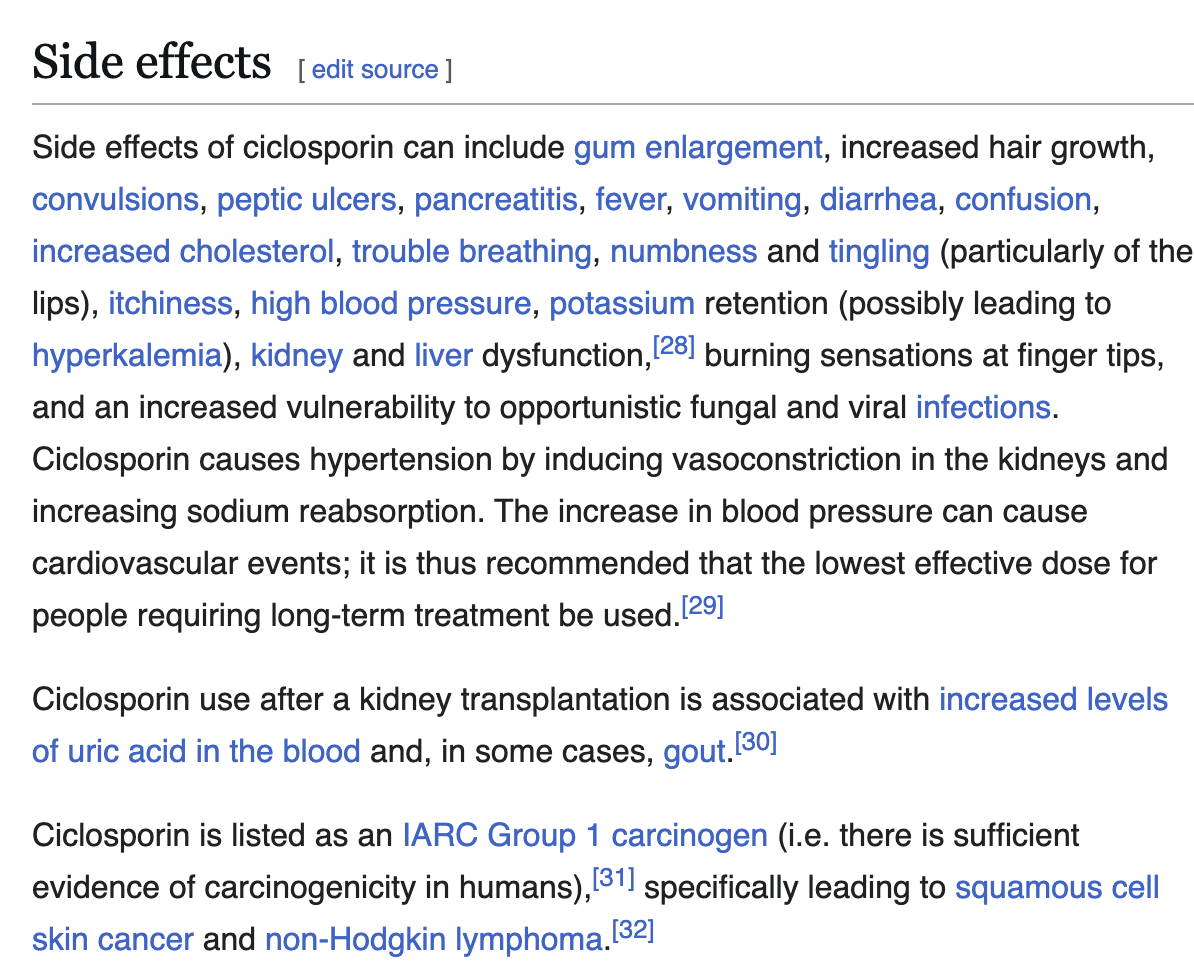
But it looks like its some pretty heavy shit, besides causing a sleuth of horrific side effects, to top it off it's also a goddamn carcinogen. It's only prescribed under dire circumstances where it's either cyclosporin or death. You really gotta be at your wits end to consider something like this for a few extra strands of hair. And to get it you'd either have to hope indiamart won't give you some bullshit, or go to the doc and try to fraud organ failure lol
1779966272023
 
  • +1
Reactions: servnlife
I looked up some pictures and it can be pretty miraculous, it made this baby grow hair all over and even gave him a moustache.
View attachment 5129354
But it looks like its some pretty heavy shit, besides causing a sleuth of horrific side effects, to top it off it's also a goddamn carcinogen. It's only prescribed under dire circumstances where it's either cyclosporin or death. You really gotta be at your wits end to consider something like this for a few extra strands of hair. And to get it you'd either have to hope indiamart won't give you some bullshit, or go to the doc and try to fraud organ failure lol
View attachment 5129350
Thats systemic:feelsbadman:
 
Thats systemic:feelsbadman:
I figured but all drugs go slightly systemic when topical. But maybe it's not enough for those effects? It didn't see it mentioned but if that's the case then it's quite reassuring. Honestly I'm still not sure if I'd have the balls to do it since I already do tret and minox with 0.5mm dermarolling.
 
Last edited:
  • +1
Reactions: servnlife and moongazer
I figured but all drugs go slightly systemic when topical. But maybe it's not enough for those effects? It didn't see it mentioned but if that's the case then it's quite reassuring. Honestly I'm still not sure if I'd have the balls to do it since I already do tret and minox with 0.5mm dermarolling.
It didnt seem to when they uses for scalp.
 
  • +1
Reactions: o_Owtf
Please give me a source on where to buy it or how to formulate it. My home is whole chemlab anyways
 
Interesting.
 
Last edited:
Sorry, I didn't go over which type of formulation is likely ideal for each their own; scalp and lashes. For lashes I would 0.05% in an ophthalmic lipid emulsion ( most eye drops ) and the prior 5% but in propylene glycol vehicle for scalp. Im quite confident on its superiority, however if anyone wants to correct me on the % as for the lashes ive cross referenced a few CRS dm me. @ICL
But isnt 0.05% just too weak to efficiently block SFRP1 and wake up the stem cells around th lashes? Is there any medical or compounded way we can safely bump the concentration around the eyes to speed things up, or is 0.05% truly the absolute limit for eye safety?
 
no the
But isnt 0.05% just too weak to efficiently block SFRP1 and wake up the stem cells around th lashes? Is there any medical or compounded way we can safely bump the concentration around the eyes to speed things up, or is 0.05% truly the absolute limit for eye safety?
case reports had overgrowth for eyedrops.
 
It's common across both com and org to be using topical solutions of compounds like Minoxidil (oral as well) and Bimatoprost (Latisse) as a lash growth agent. In this thread I'm going to cover a compound that I haven’t been seeing talked about enough in the community that is a superior option to both: Topical Cyclosporine

TLDR: Topical Cyclosporine mogs both Minoxidil and Latisse to death because it works through a cascade of pathways ( that they don't ) and extends the hair growth phase. You can use a 5% formulation of cyclosporine on your hair or lashes 1-2x a day. Make sure to cycle it, such as growth and maintenance phases.

BTW : thanks to @mohito for formatting the whole thread.


How does it actually induce lash/hair growth?

1- Firstly, cyclosporine forms a complex within cyclophilin A; an intracellular protein which then binds to and inhibits calcineurin resulting in the prevention of the dephosphorylation of target proteins, which include ion channels, receptors, and transcription factors. Calcineurin then won’t be able to dephosphorylate NFATc1 which means it can’t enter the nucleus and mediate stem cells into a dormant state. What this means is that the stem cells are released from dormancy generating new hair matrixes. Relevant to the prior point, NFATc1 is activated in murine epithelial HF stem cells (HFSCs) where it maintains HF quiescence. NFATc2 also inhibits the proliferation of murine hair matrix keratinocytes through cyclin G2 and p21waf/cip1.


2- Cyclosporine acts as a disinhibitor of WNT, through down regulating SFRP1 expression in the dermal papilla. As we know, one of the primary factors in hair and eyelash synthesis is the Wnt beta catenin pathway. However, SFRP1; a naturally secreted protein which binds to wnt ligands and inhibits hair follicle development.

3- We first need to understand that in hair loss and thinning disorders, AGA for example; hair follicles miniaturize due to Dermal Papilla fibroblasts slowly migrating away from the hair bulb and escaping into the surrounding dermal sheath. In result it reduces the structural volume and efficiency of the hair follicle in terms of output.In studies we can see that cyclosporine actively prevents this migration. By locking the fibroblasts firmly within the core of the hair bulb, cyclosporine maintains the structural integrity and physical volume of the follicle preventing the decrease in hair and lash density.

4- When a growth phase ends,the follicle undergoes programmed cell death (apoptosis) during the catagen phase. Cyclosporine was found to decrease caspase-3 mRNA expression, one of the primary enzymes involved in cell apoptosis. This results in an immunization effect in cells against signals mediating shedding.

5- One of the regulators of cell death is apoptosis-inducing factor. During catagen regression, AIF escapes from the mitochondria and enters the nucleus, essentially dismantling cellular DNA. As cyclosporine downregulates Cyclophilin A within the mitochondria it also prevents AIF from escaping.

6- Cyclosporine downregulates TGF beta. TGF beta is a cytokine that signals follicles to shrink and stop growing. Cyclosporine downstream has an opposing effect on the cytokine by again inhibiting Cyclophilin A in follicular keratinocytes. Alongside this Cyclosporine upregulates anti cell death factors like Bcl-2 while decreasing apoptotic proteins like p53 and Bax.

7- Cyclosporine through the inhibition of calcineurin/NFAT1 signalling halts the expression of p21 and p27 which are proteins secreted to stop matrix cells from multiplying after a growth cycle ends. In short, this extends the growth phase.

And lastly, cyclosporine increases VEGF expression locally to open up blood vessels. The mechanism is similar to one induced by Minoxidil, matching and possibly exceeding the localized nutrient and oxygen delivery.


Simple logical comparisan; why cyclosporine is superior than minoxidil and Latisse

Firstly, the hair follicle cycle is governed by hair follicle stem cells (HFSCs) residing in the bulge niche. In normal or thinning states stem cells are held in a state of dormancy also known as quiescence by the transcription factor NFATC1. To my knowledge neither Latisse or Minoxidil interacts with this stem cell dormancy mechanism. Minoxidil stimulates secondary cell types by opening adenosine triphosphate-sensitive potassium kATP channels and pumping blood to existing active matrices. Latisse stimulates prostaglandin receptors on active follicles to lengthen their current cycle, but it does not induce the wake up of resting cells to initiate another cycle.

Secondly, one of the most important pathways in lash/hair growth is the wnt beta catenin pathway. As we've covered before cyclosporine downregulates an inhibitor of wnt: SFRP1. While both minoxidil and latisse can promote growth factors downstream, they don’t modulate the limitations of SFRP1 . If the local tissue has high levels of SFRP1 which are prominent in thinning hair and lashes, the Wnt pathway remains suppressed regardless of how much blood flow Minoxidil delivers.

Thirdly, In both androgenetic alopecia and severe lash hypotrichosis, follicles undergo "miniaturization" in which they physically shrink over time. This shrinking occurs because mesenchymal cells, known as Dermal Papilla (DP) fibroblasts, slowly leave the hair bulb matrix and migrate up into the surrounding dermal sheath, resulting in shrinkage. Like prior topics, both latisse and minoxidil leave this issue untouched unlike cyclosporine.

In conclusion, cyclosporine works through a variety of pathways. I could mention even more pathways that latisse and minoxidil don’t modulate but, it's the same story over and over again.

BTW Again thanks to @mohito for formatting.


Works cited

Cyclosporine A increases hair follicle growth by suppressing apoptosis‐inducing factor nuclear translocation: a new mechanism - Lan - 2015 - Fundamental & Clinical Pharmacology - Wiley Online Library

Cyclosporine A increases hair follicle growth by suppressing AIF nuclear translocation: A new mechanism | Request PDF

Re-Evaluating Cyclosporine A as a Hair Growth–Promoting Agent in Human Scalp Hair Follicles

Treatment options for alopecia areata

Identifying novel strategies for treating human hair loss disorders: Cyclosporine A suppresses the Wnt inhibitor, SFRP1, in the dermal papilla of human scalp hair follicles

Cyclosporine-induced childhood generalized hypertrichosis - PMC

Cyclosporin A-induced hair growth in mice is associated with inhibition of calcineurin-dependent activation of NFAT in follicular keratinocytes | American Journal of Physiology-Cell Physiology | American Physiological Society

Cyclosporine A-induced Hair Repigmentation in a Patient with Dermatitis: A Case Report - PMC
Haven't read it yet, but I saw someone in the discord talking about this. I'll look into it today
 
it was probably me
Haven't read it yet, but I saw someone in the discord talking about this. I'll look into it today
depending on which server it was in
 
  • +1
Reactions: Kojo

Similar threads

jcwkrz
Replies
14
Views
142
maxx92765
maxx92765
bluebandz
Replies
2
Views
21
introvertedextrover
introvertedextrover
Dbst Dev
Replies
1
Views
77
Ryanbuttlord
R
selfhatingcurrycel
Replies
2
Views
30
tgun564636
T
B
Replies
9
Views
140
Monsieur Charismeur
Monsieur Charismeur

Users who are viewing this thread

Back
Top