


Jesus_ist_König
Fire
- Joined
- Jan 2, 2026
- Posts
- 18,597
- Reputation
- 27,136
All of this is written by my petite little fingers, so no AI!
Its pretty easy!

Here you can exactly see that Glucose can be turned into Acetyl-CoA. Acetyl-CoA the same as glucose can eventually be converted into ATP which is crucial! So lets get back on track
β-Hydroxybutyrate (ketone) → Acetoacetate (ketone) → Acetyl-CoA
after that
Acetyl-CoA+Oxaloacetate→Citrate→Citric Acid Cycle→ATP
since all of this happens in the brain and not the liver, there is Oxaloacetate available to convert it into citrate!
This is how the body can permanently live of no carbohydrates!
This post was more about ketogenesis and not gluconeogenesis. Gluconeogenesis is a high effort process to convert non carbs into glucose. The problem here is that this process requires a shit ton of protein. Where do we get that? Your fucking muscles. So at the end of the day Gluconeogenesis cant function without ketogenesis, since if not you will lose a shit ton of muscles and we don't want that.
Its pretty easy!
- Adipos tissue releases stored triglycerides (fat)
- Triglycerides get hydrolyzed (broken down via water) into:
- Free Fatty Acids (FFAs)
- Glycerol (Alcohol)
- FFAs go to the liver where beta-oxidation breaks them down into Acetyl-CoA
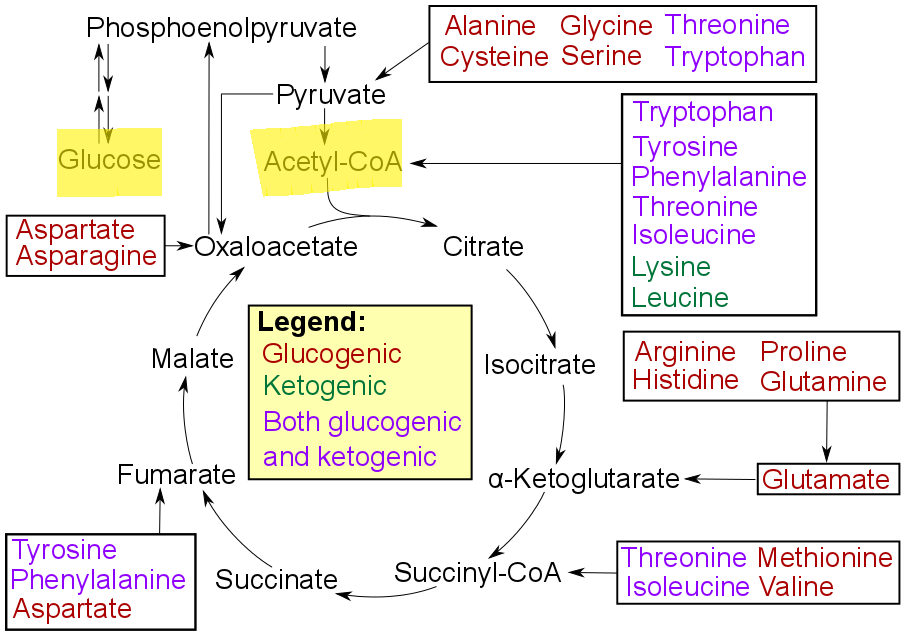
Here you can exactly see that Glucose can be turned into Acetyl-CoA. Acetyl-CoA the same as glucose can eventually be converted into ATP which is crucial! So lets get back on track
- Now normally Acetyl-CoA gets metabolized by Oxaloacetate to enter the citrate cycle by being converted into citrate

- Yet in our case since Oxaloacetate is one of the most crucial elements of gluconeogenesis, we don't have any of it left in the liver so that Acetyl-CoA gets converted into citrate!
- This results in an overload of Acetyl-CoA so now via ketogenesis that excess of Acetyl-CoA gets converted into Ketones:
- Acetoacetate (ketone)
- Beta-Hydroxybutyrate (ketone)
- Those are 2 important Ketones. Acetyl-CoA has to get converted into Ketones to be used, since Acetyl-CoA is too big etc. to leave the liver so after being converted into ketones, it can leave the liver
- And now the ketone can get converted into ATP!
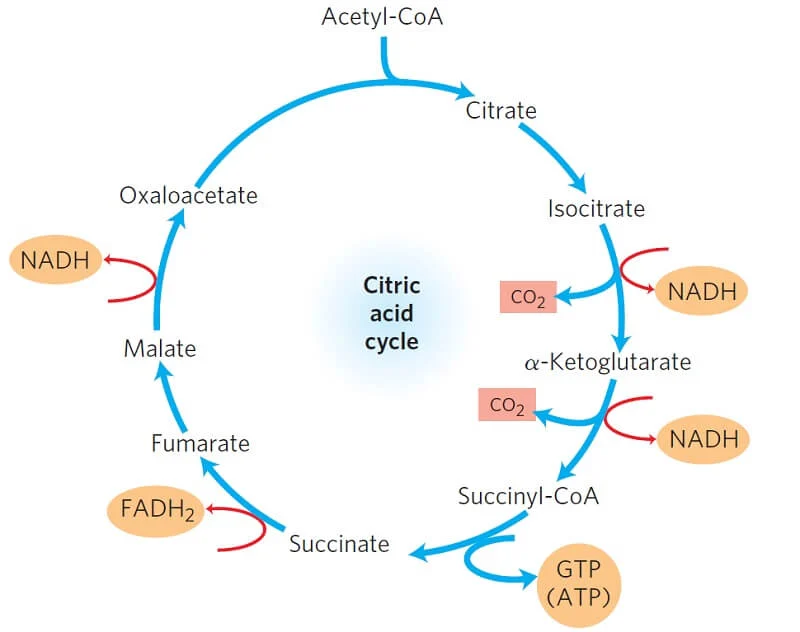
β-Hydroxybutyrate (ketone) → Acetoacetate (ketone) → Acetyl-CoA
after that
Acetyl-CoA+Oxaloacetate→Citrate→Citric Acid Cycle→ATP
since all of this happens in the brain and not the liver, there is Oxaloacetate available to convert it into citrate!
This is how the body can permanently live of no carbohydrates!
This post was more about ketogenesis and not gluconeogenesis. Gluconeogenesis is a high effort process to convert non carbs into glucose. The problem here is that this process requires a shit ton of protein. Where do we get that? Your fucking muscles. So at the end of the day Gluconeogenesis cant function without ketogenesis, since if not you will lose a shit ton of muscles and we don't want that.


