UNDERTONES GUIDE

Askinov

Askinov

𝙱𝚅𝙻𝙻 | 𝓦.𝓓 - 𝓢𝓾𝓫 𝓻𝓸𝓼𝓪 ® |
Joined
Oct 31, 2025
Posts
5,572
Reputation
13,344
LETS GET TO UNDERTONES ~ MY SECOND LAST THREAD


1790487031215


Eumelanin

1790438939624


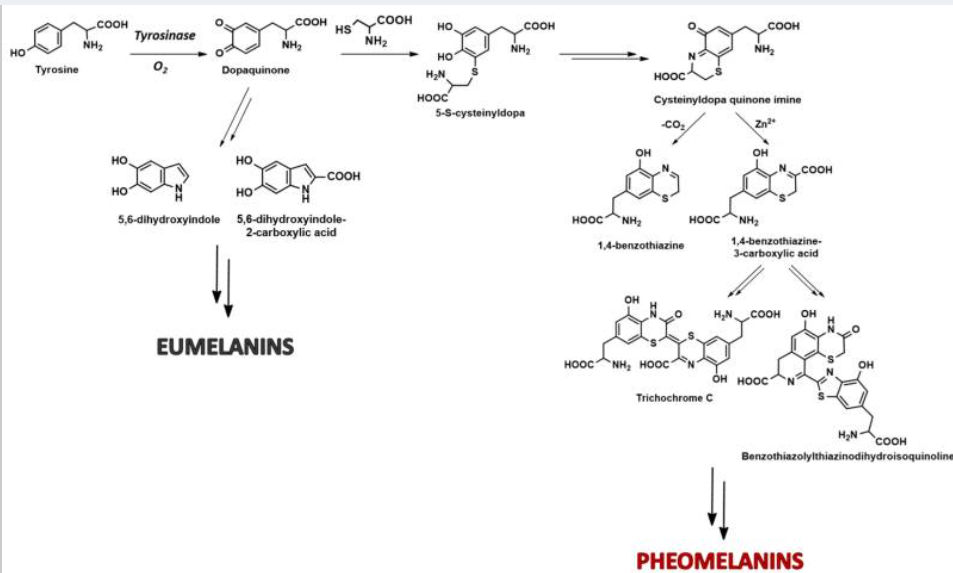
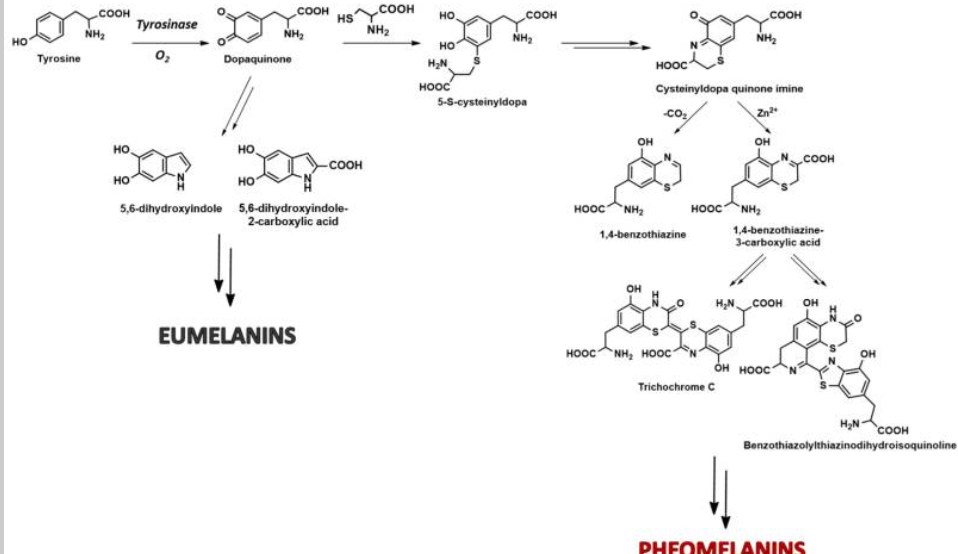
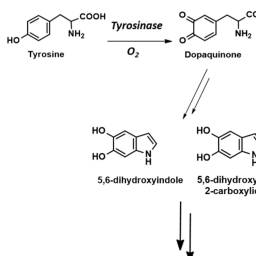
eumelanin has two forms ~ 5,6 - dihydroxyindole (DHI ) and 5,6 - dihydroxyindole - 2 carboxylic acid ( DHICA)

DHI is Dark brown or black and is insoluble form of eumelanin
DHICA is a lighter and soluble form of eumelanin soluble in alkali

Both arises from oxidation of tyrosine in melanosomes catalyzed from tyrosinase

In natural condition DHI n DHICA can co polymerize and result into wide range of eumelanin polymers these polymers will contribute into ~ light yellow / red pheomelanin to light brown DHICA enriched eumelanin and dark brown DHI enrinched eumelanin

in the analysis of ftz type V an VI

eumelanin was up to 60 to 70 % and DHICA eumelanin up to 25 to 35 % and pheomelanin by 2 to 5 %


and also note that DHICA down = DHI up
these are present in skin and hair and small amount of this pigment will give blonde hair to bitches


Pheomelanin

Concentrated in lips ,nipple, glans of dih and puh these are usually yellow to red color . small amount of eumelanin in hair = blonde and if mixed with pheomelanin will give orange
since pheomelanin is the regulators of yellow or pinkish skin
yeah exposure to uv increases both eumelanin and pheomelanin content but since eumelanin absorbs more light it grows faster
and pheomelanin rather absorbing light they reflect red and yellow light

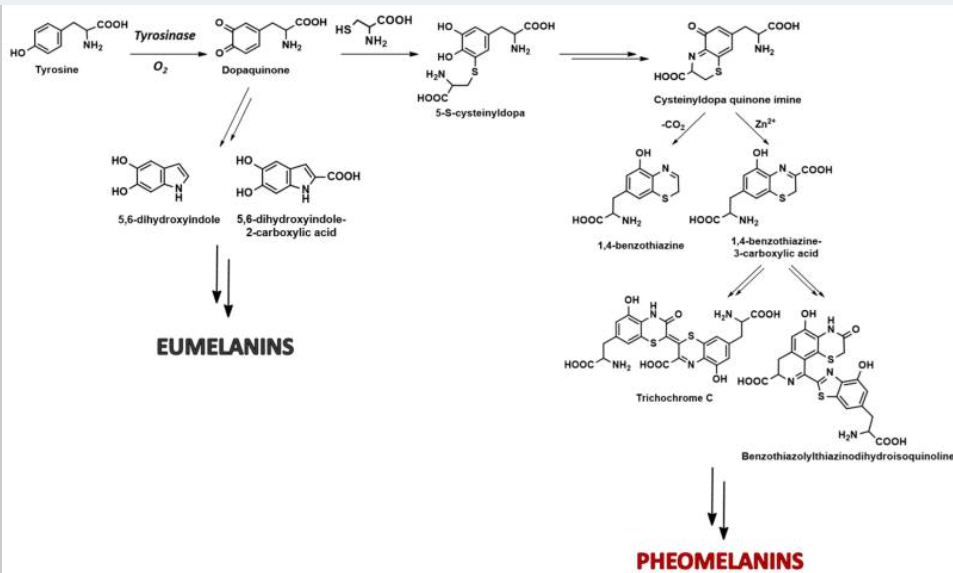
pheomelanin production is also dependent in the availibity of cysteine which is transported into melanosome reacting with dopaquinone to form cys ~dopaquinone

pheomelanin contains two variants contains benzothiazine and benzothiazole

​


see these reactions again

Screenshot 2026 09 27 111528


Screenshot 2026 09 27 113811


https://pmc.ncbi.nlm.nih.gov/articles/PMC10488698/#sec2-molecules-28-06237


As i told from wiki earlier l cysteine is a major shit to produce pheomelanin

enzymatic reduction of tyrosinase can be activated by SH group ( - Sulfhydryl group ) ( Thiol ) group

so include these thiol group flood your system with these


SH group Pathway outcome
L-Cysteinamide ( best ) dual action Coordinates with copper active site + highly efficient dopaquinone diversion.Decreases eumelanin and total melanin; selectively increases pheomelanin ratio.
Glutathione (GSH)Direct antioxidant reduction of dopachrome precursors + chemical conjugation.Suppresses overall melanogenesis; systematically shifts the eumelanin/pheomelanin ratio.
Captopril & MethimazoleSynthetic sulfur/thiol-containing pharmaceutical agents that cross-react with copper proteins.Act as potent clinical/in vitro tyrosinase inhibitors.


it will be counter productive to say that blocking tyrosine is good cause as it is the main precursor to make pheomelanin to what i am trying to do is shifting the ratio of eumelanin to pheomelanin production

Next step is to lower intramelanosomal ph (keep it 5.8 to 6.3 )

from this article
." We found that pheomelanin production either from dopa or tyrosine in the presence of cysteine by tyrosinase was greatest at pH values of 5.8-6.3, while eumelanin production was suppressed at pH 5.8 "

how to lower ?


cAMP

The primary thing that makes melanosomes neutral (alkaline) is cAMP pathway, usually activated by UV light or alpha-MSH. When cAMP rises, it signals the cell to pump out protons and neutralize the environment, prompting eumelanin production

how to do it using Pka inhibitor (H89 )

or

soluble adenylyl cyclase (sAC) activators/inhibitors

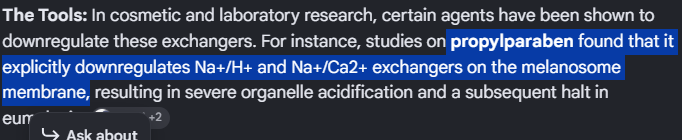
2. You can also Suppress Ion and Proton Exchangers (OCA2 and SLC45A2)

Melanosomes rely on specific gateway proteins on their membranes to pump protons out and keep the area alkaline . Two of the most critical are the P-protein (encoded by the OCA2 gene) and SLC45A2. When these proteins are highly active, pH rises and eumelanin increases

i am actually not sure on here but
1790498140373
​

those are the good pathways to lower the eumelanin and increase pheomelanin

3. Is to mimic or upregulate Agouti Signaling Protein (ASP)


When alpha-MSH binds to MC1R, it signals the cell to make eumelanin. However a molecule ASP acts as a natural antagonist and it blocks MC1R


When ASP blocks the receptor, it suppresses the transcription of downstream eumelanic enzymes (like TRP-1 and TRP-2) without totally killing tyrosinase activity. This causes cell to produce pheomelanin by default.

some peptides that can do it are

Nonapeptide-1

Acetyl Hexapeptide-1


i will not talk much about them as you can do the research yourself tho you shouldn't skip on thiol group .


Ok so you have finally shifted the eumelanin to pheomelanin ratio but what about the colors you get red or yellow what determines that ?

So from this article what i know is https://onlinelibrary.wiley.com/doi/full/10.1111/j.1755-148X.2009.00589.x

the new work was done on mice and the conversion of 1,4 benzothiazines to benzothiazole is the reason why some have reddish undertones over time though the data is still limited for now

and plus


Screenshot 2026 09 27 132007


and its on you who research more i already purpose this new thing now yall need to advance it


​


hemoglobin oxygen level (low or high )

In grade 11 or 12 we have learnt that metal oxides produces color and has a wide variety of colors this happens due to chemical crystalline structure , oxidation state , charge transfer and d-orbital electron transitions if i explain have to explain this it will be a chapter explaining every stuff
so either google it or go check high school book again

oxidized hemoglobin is bright red in color

and why is deoxygenated hemoglobin looks purple in color ?

When oxygen is removed , the protein shifts into a "Taut" (T) state. This is the structural rearrangement that will change the energy level of the iron electrons making the molecule to absorb much more visible red light than it did before. Because it absorbs a significant portion of the red spectrum, the reflected light dims into a dark red and with vein color it looks purple

and also according to this study

in this study they use oxygen inhalers or oxygen boost and the findings were that oxygen inhalation significantly raised blood oxygen saturation and the placebo did not.

" Skin showed a significant increase in the "redness" (a*) dimension after oxygen, and a decrease in "blueness" (b*) "

as i told earlier

so you can use oxygen inhalers too

they took around 15 inhalers per treatment though i can not fully predict the dosages

and also to max it out other way

you can take compound which can increase blood flow overall

do exercises

consume a decent amount of iron ( imo won't matter cause you need 02 to bond with iron rather than having iron more )

repeated hitting / slapping / micro trauma can also increase it ) ~ it more about the blood flow tho don't get it wrong


beta-carotene and lycopene and Astaxanthin


heavily talked oversaturated topic imo
but here is the water for you
carotenoids are pure hydrocarbons containing no oxygen and they are hydrophobic cause they are tetraterpenoids and lack strong polar groups
so they cant be washed with water and dissolve with fat cause of molecular structure and also gets converted into vitamin A
its really good to get golden undertone with this esp if you are fitzpatrick 1 to 3 and skin bleaching is really easy
and this also deposits into stratum corneum upper layer of skin between the oil spaces between skin cell ( lipid lamellae )
take around ~ 10 to 15 mg daily
1790524213855

and lycopene for red hue same is a carotenoid and has a same behaviour of carotenoid as i mentioned above just gives a different glow ( a bit pinkish - orange i say ) cause of different structure
dosing is ~ 15 mg daily is fine
1790524286896


astaxanthin is non hydrophobic but your body doesnot convert it into vitamin A unlike beta and lyco and is still attaches into stratum corneum and gives a pinkish hue to the skin

8 to 12 mg must be fine

1790524477921


@HST @Sayori @buccalfatremoval @Sycophant @BigBallsLarry

​
 

Attachments

  • 1790429036787.png
    1790429036787.png
    279.1 KB · Views: 0
  • 1790487004423.png
    1790487004423.png
    200.1 KB · Views: 0
  • 1790487016927.png
    1790487016927.png
    29.1 KB · Views: 0
  • Screenshot 2026-09-27 131456.png
    Screenshot 2026-09-27 131456.png
    18.1 KB · Views: 0
  • Screenshot 2026-09-27 132146.png
    Screenshot 2026-09-27 132146.png
    26.5 KB · Views: 0
  • +1
  • Love it
  • Woah
Reactions: Jason Voorhees, bhsoda_destroyer, BigBallsLarry and 13 others
i have red undertones is that good?
 
  • +1
Reactions: Jgns, ESR, jnxy and 2 others
  • +1
  • JFL
Reactions: WonkyChin186, jnxy, ICR and 2 others
@Nerogen @Vrilltrum @ESR @Hernan @Gargantuan
 
  • +1
Reactions: hate, Brava, ESR and 2 others
@76.1 @illusion @Navity @buccalfatremoval @ICR

​

 
  • +1
Reactions: hate, Nerogen and ICR
  • +1
Reactions: ESR
Yo i was abt to read the thread but this thread somg is shit
 
  • JFL
Reactions: ESR
Why u still don’t have that cosmetic contributior badge
It’s a shame :AngryArthur:
 
Last edited:
  • +1
Reactions: Askinov
LETS GET TO UNDERTONES ~ MY SECOND LAST THREAD


View attachment 5696707

Eumelanin

View attachment 5694450


eumelanin has two forms ~ 5,6 - dihydroxyindole (DHI ) and 5,6 - dihydroxyindole - 2 carboxylic acid ( DHICA)

DHI is Dark brown or black and is insoluble form of eumelanin
DHICA is a lighter and soluble form of eumelanin soluble in alkali

Both arises from oxidation of tyrosine in melanosomes catalyzed from tyrosinase

In natural condition DHI n DHICA can co polymerize and result into wide range of eumelanin polymers these polymers will contribute into ~ light yellow / red pheomelanin to light brown DHICA enriched eumelanin and dark brown DHI enrinched eumelanin

in the analysis of ftz type V an VI

eumelanin was up to 60 to 70 % and DHICA eumelanin up to 25 to 35 % and pheomelanin by 2 to 5 %


and also note that DHICA down = DHI up
these are present in skin and hair and small amount of this pigment will give blonde hair to bitches


Pheomelanin

Concentrated in lips ,nipple, glans of dih and puh these are usually yellow to red color . small amount of eumelanin in hair = blonde and if mixed with pheomelanin will give orange
since pheomelanin is the regulators of yellow or pinkish skin
yeah exposure to uv increases both eumelanin and pheomelanin content but since eumelanin absorbs more light it grows faster
and pheomelanin rather absorbing light they reflect red and yellow light

pheomelanin production is also dependent in the availibity of cysteine which is transported into melanosome reacting with dopaquinone to form cys ~dopaquinone

pheomelanin contains two variants contains benzothiazine and benzothiazole

​


see these reactions again

View attachment 5696823


View attachment 5696828

https://pmc.ncbi.nlm.nih.gov/articles/PMC10488698/#sec2-molecules-28-06237


As i told from wiki earlier l cysteine is a major shit to produce pheomelanin

enzymatic reduction of tyrosinase can be activated by SH group ( - Sulfhydryl group ) ( Thiol ) group

so include these thiol group flood your system with these


SH group Pathway outcome
L-Cysteinamide ( best ) dual action Coordinates with copper active site + highly efficient dopaquinone diversion.Decreases eumelanin and total melanin; selectively increases pheomelanin ratio.
Glutathione (GSH)Direct antioxidant reduction of dopachrome precursors + chemical conjugation.Suppresses overall melanogenesis; systematically shifts the eumelanin/pheomelanin ratio.
Captopril & MethimazoleSynthetic sulfur/thiol-containing pharmaceutical agents that cross-react with copper proteins.Act as potent clinical/in vitro tyrosinase inhibitors.


it will be counter productive to say that blocking tyrosine is good cause as it is the main precursor to make pheomelanin to what i am trying to do is shifting the ratio of eumelanin to pheomelanin production

Next step is to lower intramelanosomal ph (keep it 5.8 to 6.3 )

from this article
." We found that pheomelanin production either from dopa or tyrosine in the presence of cysteine by tyrosinase was greatest at pH values of 5.8-6.3, while eumelanin production was suppressed at pH 5.8 "

how to lower ?


cAMP

The primary thing that makes melanosomes neutral (alkaline) is cAMP pathway, usually activated by UV light or alpha-MSH. When cAMP rises, it signals the cell to pump out protons and neutralize the environment, prompting eumelanin production

how to do it using Pka inhibitor (H89 )

or

soluble adenylyl cyclase (sAC) activators/inhibitors

2. You can also Suppress Ion and Proton Exchangers (OCA2 and SLC45A2)

Melanosomes rely on specific gateway proteins on their membranes to pump protons out and keep the area alkaline . Two of the most critical are the P-protein (encoded by the OCA2 gene) and SLC45A2. When these proteins are highly active, pH rises and eumelanin increases

i am actually not sure on here but

View attachment 5697109
​

those are the good pathways to lower the eumelanin and increase pheomelanin

3. Is to mimic or upregulate Agouti Signaling Protein (ASP)


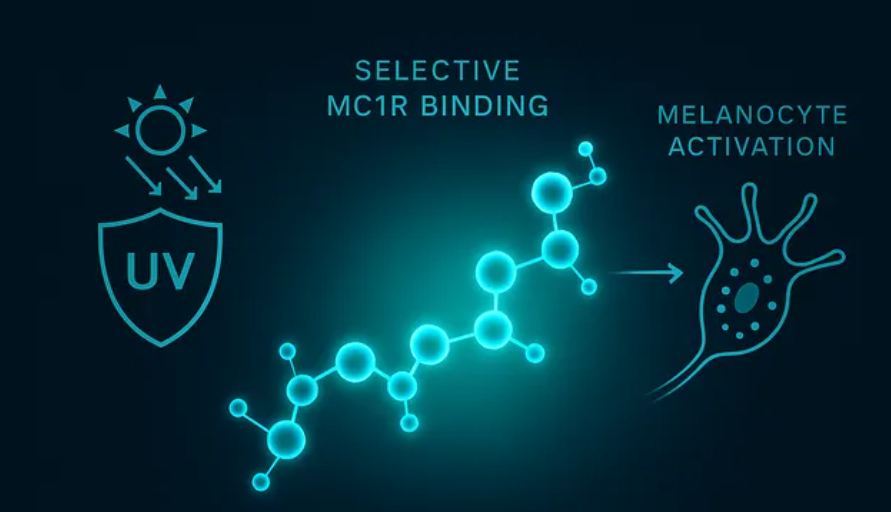
When alpha-MSH binds to MC1R, it signals the cell to make eumelanin. However a molecule ASP acts as a natural antagonist and it blocks MC1R


When ASP blocks the receptor, it suppresses the transcription of downstream eumelanic enzymes (like TRP-1 and TRP-2) without totally killing tyrosinase activity. This causes cell to produce pheomelanin by default.

some peptides that can do it are

Nonapeptide-1

Acetyl Hexapeptide-1


i will not talk much about them as you can do the research yourself tho you shouldn't skip on thiol group .


Ok so you have finally shifted the eumelanin to pheomelanin ratio but what about the colors you get red or yellow what determines that ?

So from this article what i know is https://onlinelibrary.wiley.com/doi/full/10.1111/j.1755-148X.2009.00589.x

the new work was done on mice and the conversion of 1,4 benzothiazines to benzothiazole is the reason why some have reddish undertones over time though the data is still limited for now

and plus


View attachment 5697152


and its on you who research more i already purpose this new thing now yall need to advance it


​


hemoglobin oxygen level (low or high )

In grade 11 or 12 we have learnt that metal oxides produces color and has a wide variety of colors this happens due to chemical crystalline structure , oxidation state , charge transfer and d-orbital electron transitions if i explain have to explain this it will be a chapter explaining every stuff
so either google it or go check high school book again

oxidized hemoglobin is bright red in color

and why is deoxygenated hemoglobin looks purple in color ?

When oxygen is removed , the protein shifts into a "Taut" (T) state. This is the structural rearrangement that will change the energy level of the iron electrons making the molecule to absorb much more visible red light than it did before. Because it absorbs a significant portion of the red spectrum, the reflected light dims into a dark red and with vein color it looks purple

and also according to this study


in this study they use oxygen inhalers or oxygen boost and the findings were that oxygen inhalation significantly raised blood oxygen saturation and the placebo did not.

" Skin showed a significant increase in the "redness" (a*) dimension after oxygen, and a decrease in "blueness" (b*) "

as i told earlier

so you can use oxygen inhalers too

they took around 15 inhalers per treatment though i can not fully predict the dosages

and also to max it out other way

you can take compound which can increase blood flow overall

do exercises

consume a decent amount of iron ( imo won't matter cause you need 02 to bond with iron rather than having iron more )

repeated hitting / slapping / micro trauma can also increase it ) ~ it more about the blood flow tho don't get it wrong


beta-carotene and lycopene and Astaxanthin


heavily talked oversaturated topic imo
but here is the water for you
carotenoids are pure hydrocarbons containing no oxygen and they are hydrophobic cause they are tetraterpenoids and lack strong polar groups
so they cant be washed with water and dissolve with fat cause of molecular structure and also gets converted into vitamin A
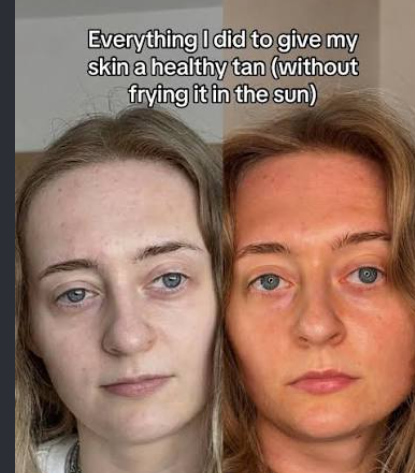
its really good to get golden undertone with this esp if you are fitzpatrick 1 to 3 and skin bleaching is really easy
and this also deposits into stratum corneum upper layer of skin between the oil spaces between skin cell ( lipid lamellae )
take around ~ 10 to 15 mg daily
View attachment 5698221
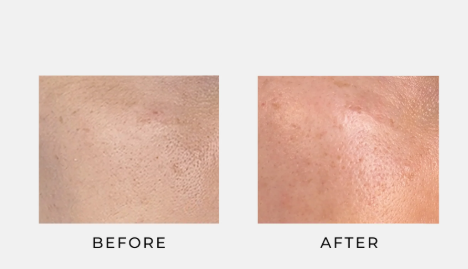
and lycopene for red hue same is a carotenoid and has a same behaviour of carotenoid as i mentioned above just gives a different glow ( a bit pinkish - orange i say ) cause of different structure
dosing is ~ 15 mg daily is fine
View attachment 5698232

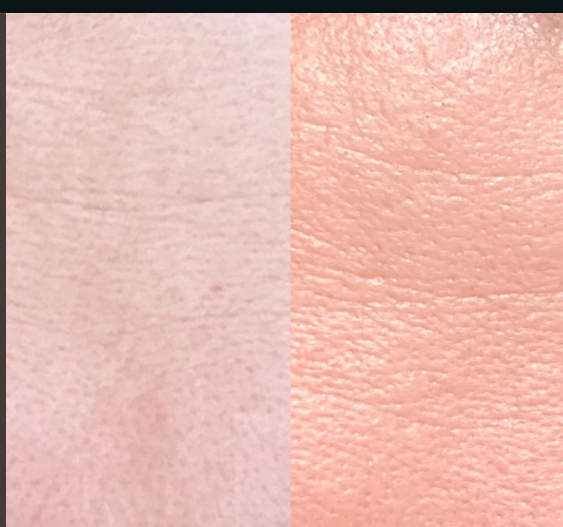
astaxanthin is non hydrophobic but your body doesnot convert it into vitamin A unlike beta and lyco and is still attaches into stratum corneum and gives a pinkish hue to the skin

8 to 12 mg must be fine
View attachment 5698248

@HST @Sayori @buccalfatremoval @Sycophant @BigBallsLarry
​

Yo guys rate my undertone:

India Wow GIF by CaptainBNB
 
  • +1
  • JFL
Reactions: Askinov, ESR and Nerogen
  • JFL
Reactions: Magnus, jnxy and Nerogen
  • +1
Reactions: Askinov, Nerogen and jnxy
  • +1
Reactions: WonkyChin186 and ESR
@chang cypionate @sasha108 @Brava @Shirobon @Jason Voorhees
 
  • +1
Reactions: sasha108, Jason Voorhees, WonkyChin186 and 2 others
@Mr. Squarepants @Jgns @Menas @Sadist
 
  • +1
Reactions: Jgns
@chang cypionate @sasha108 @Brava @Shirobon @Jason Voorhees
I've actually been looking for some info about undertones, good stuff
 
  • +1
Reactions: Askinov
@Atra @literallytaxidriver @zennn @0ogrpostcel @WonkyChin186
 
  • +1
Reactions: sasha108, 0ogrpostcel, WonkyChin186 and 2 others
  • Love it
Reactions: chang cypionate
@Gengar’s Ghost pin this big nigga

@astatin @Krivi. @Mai Sakurajima. @hate
 
  • +1
Reactions: hate and Krivi.
LETS GET TO UNDERTONES ~ MY SECOND LAST THREAD


View attachment 5696707

Eumelanin

View attachment 5694450


eumelanin has two forms ~ 5,6 - dihydroxyindole (DHI ) and 5,6 - dihydroxyindole - 2 carboxylic acid ( DHICA)

DHI is Dark brown or black and is insoluble form of eumelanin
DHICA is a lighter and soluble form of eumelanin soluble in alkali

Both arises from oxidation of tyrosine in melanosomes catalyzed from tyrosinase

In natural condition DHI n DHICA can co polymerize and result into wide range of eumelanin polymers these polymers will contribute into ~ light yellow / red pheomelanin to light brown DHICA enriched eumelanin and dark brown DHI enrinched eumelanin

in the analysis of ftz type V an VI

eumelanin was up to 60 to 70 % and DHICA eumelanin up to 25 to 35 % and pheomelanin by 2 to 5 %


and also note that DHICA down = DHI up
these are present in skin and hair and small amount of this pigment will give blonde hair to bitches


Pheomelanin

Concentrated in lips ,nipple, glans of dih and puh these are usually yellow to red color . small amount of eumelanin in hair = blonde and if mixed with pheomelanin will give orange
since pheomelanin is the regulators of yellow or pinkish skin
yeah exposure to uv increases both eumelanin and pheomelanin content but since eumelanin absorbs more light it grows faster
and pheomelanin rather absorbing light they reflect red and yellow light

pheomelanin production is also dependent in the availibity of cysteine which is transported into melanosome reacting with dopaquinone to form cys ~dopaquinone

pheomelanin contains two variants contains benzothiazine and benzothiazole

​


see these reactions again

View attachment 5696823


View attachment 5696828

https://pmc.ncbi.nlm.nih.gov/articles/PMC10488698/#sec2-molecules-28-06237


As i told from wiki earlier l cysteine is a major shit to produce pheomelanin

enzymatic reduction of tyrosinase can be activated by SH group ( - Sulfhydryl group ) ( Thiol ) group

so include these thiol group flood your system with these


SH group Pathway outcome
L-Cysteinamide ( best ) dual action Coordinates with copper active site + highly efficient dopaquinone diversion.Decreases eumelanin and total melanin; selectively increases pheomelanin ratio.
Glutathione (GSH)Direct antioxidant reduction of dopachrome precursors + chemical conjugation.Suppresses overall melanogenesis; systematically shifts the eumelanin/pheomelanin ratio.
Captopril & MethimazoleSynthetic sulfur/thiol-containing pharmaceutical agents that cross-react with copper proteins.Act as potent clinical/in vitro tyrosinase inhibitors.


it will be counter productive to say that blocking tyrosine is good cause as it is the main precursor to make pheomelanin to what i am trying to do is shifting the ratio of eumelanin to pheomelanin production

Next step is to lower intramelanosomal ph (keep it 5.8 to 6.3 )

from this article
." We found that pheomelanin production either from dopa or tyrosine in the presence of cysteine by tyrosinase was greatest at pH values of 5.8-6.3, while eumelanin production was suppressed at pH 5.8 "

how to lower ?


cAMP

The primary thing that makes melanosomes neutral (alkaline) is cAMP pathway, usually activated by UV light or alpha-MSH. When cAMP rises, it signals the cell to pump out protons and neutralize the environment, prompting eumelanin production

how to do it using Pka inhibitor (H89 )

or

soluble adenylyl cyclase (sAC) activators/inhibitors

2. You can also Suppress Ion and Proton Exchangers (OCA2 and SLC45A2)

Melanosomes rely on specific gateway proteins on their membranes to pump protons out and keep the area alkaline . Two of the most critical are the P-protein (encoded by the OCA2 gene) and SLC45A2. When these proteins are highly active, pH rises and eumelanin increases

i am actually not sure on here but

View attachment 5697109
​

those are the good pathways to lower the eumelanin and increase pheomelanin

3. Is to mimic or upregulate Agouti Signaling Protein (ASP)


When alpha-MSH binds to MC1R, it signals the cell to make eumelanin. However a molecule ASP acts as a natural antagonist and it blocks MC1R


When ASP blocks the receptor, it suppresses the transcription of downstream eumelanic enzymes (like TRP-1 and TRP-2) without totally killing tyrosinase activity. This causes cell to produce pheomelanin by default.

some peptides that can do it are

Nonapeptide-1

Acetyl Hexapeptide-1


i will not talk much about them as you can do the research yourself tho you shouldn't skip on thiol group .


Ok so you have finally shifted the eumelanin to pheomelanin ratio but what about the colors you get red or yellow what determines that ?

So from this article what i know is https://onlinelibrary.wiley.com/doi/full/10.1111/j.1755-148X.2009.00589.x

the new work was done on mice and the conversion of 1,4 benzothiazines to benzothiazole is the reason why some have reddish undertones over time though the data is still limited for now

and plus


View attachment 5697152


and its on you who research more i already purpose this new thing now yall need to advance it


​


hemoglobin oxygen level (low or high )

In grade 11 or 12 we have learnt that metal oxides produces color and has a wide variety of colors this happens due to chemical crystalline structure , oxidation state , charge transfer and d-orbital electron transitions if i explain have to explain this it will be a chapter explaining every stuff
so either google it or go check high school book again

oxidized hemoglobin is bright red in color

and why is deoxygenated hemoglobin looks purple in color ?

When oxygen is removed , the protein shifts into a "Taut" (T) state. This is the structural rearrangement that will change the energy level of the iron electrons making the molecule to absorb much more visible red light than it did before. Because it absorbs a significant portion of the red spectrum, the reflected light dims into a dark red and with vein color it looks purple

and also according to this study


in this study they use oxygen inhalers or oxygen boost and the findings were that oxygen inhalation significantly raised blood oxygen saturation and the placebo did not.

" Skin showed a significant increase in the "redness" (a*) dimension after oxygen, and a decrease in "blueness" (b*) "

as i told earlier

so you can use oxygen inhalers too

they took around 15 inhalers per treatment though i can not fully predict the dosages

and also to max it out other way

you can take compound which can increase blood flow overall

do exercises

consume a decent amount of iron ( imo won't matter cause you need 02 to bond with iron rather than having iron more )

repeated hitting / slapping / micro trauma can also increase it ) ~ it more about the blood flow tho don't get it wrong


beta-carotene and lycopene and Astaxanthin


heavily talked oversaturated topic imo
but here is the water for you
carotenoids are pure hydrocarbons containing no oxygen and they are hydrophobic cause they are tetraterpenoids and lack strong polar groups
so they cant be washed with water and dissolve with fat cause of molecular structure and also gets converted into vitamin A
its really good to get golden undertone with this esp if you are fitzpatrick 1 to 3 and skin bleaching is really easy
and this also deposits into stratum corneum upper layer of skin between the oil spaces between skin cell ( lipid lamellae )
take around ~ 10 to 15 mg daily
View attachment 5698221
and lycopene for red hue same is a carotenoid and has a same behaviour of carotenoid as i mentioned above just gives a different glow ( a bit pinkish - orange i say ) cause of different structure
dosing is ~ 15 mg daily is fine
View attachment 5698232

astaxanthin is non hydrophobic but your body doesnot convert it into vitamin A unlike beta and lyco and is still attaches into stratum corneum and gives a pinkish hue to the skin

8 to 12 mg must be fine

View attachment 5698248

@HST @Sayori @buccalfatremoval @Sycophant @BigBallsLarry
​

my undertone is neon green
 
  • +1
Reactions: Askinov and hate
My undertone is red
 
  • +1
Reactions: Askinov and zennn
LETS GET TO UNDERTONES ~ MY SECOND LAST THREAD


View attachment 5696707

Eumelanin

View attachment 5694450


eumelanin has two forms ~ 5,6 - dihydroxyindole (DHI ) and 5,6 - dihydroxyindole - 2 carboxylic acid ( DHICA)

DHI is Dark brown or black and is insoluble form of eumelanin
DHICA is a lighter and soluble form of eumelanin soluble in alkali

Both arises from oxidation of tyrosine in melanosomes catalyzed from tyrosinase

In natural condition DHI n DHICA can co polymerize and result into wide range of eumelanin polymers these polymers will contribute into ~ light yellow / red pheomelanin to light brown DHICA enriched eumelanin and dark brown DHI enrinched eumelanin

in the analysis of ftz type V an VI

eumelanin was up to 60 to 70 % and DHICA eumelanin up to 25 to 35 % and pheomelanin by 2 to 5 %


and also note that DHICA down = DHI up
these are present in skin and hair and small amount of this pigment will give blonde hair to bitches


Pheomelanin

Concentrated in lips ,nipple, glans of dih and puh these are usually yellow to red color . small amount of eumelanin in hair = blonde and if mixed with pheomelanin will give orange
since pheomelanin is the regulators of yellow or pinkish skin
yeah exposure to uv increases both eumelanin and pheomelanin content but since eumelanin absorbs more light it grows faster
and pheomelanin rather absorbing light they reflect red and yellow light

pheomelanin production is also dependent in the availibity of cysteine which is transported into melanosome reacting with dopaquinone to form cys ~dopaquinone

pheomelanin contains two variants contains benzothiazine and benzothiazole

​


see these reactions again

View attachment 5696823


View attachment 5696828

https://pmc.ncbi.nlm.nih.gov/articles/PMC10488698/#sec2-molecules-28-06237


As i told from wiki earlier l cysteine is a major shit to produce pheomelanin

enzymatic reduction of tyrosinase can be activated by SH group ( - Sulfhydryl group ) ( Thiol ) group

so include these thiol group flood your system with these


SH group Pathway outcome
L-Cysteinamide ( best ) dual action Coordinates with copper active site + highly efficient dopaquinone diversion.Decreases eumelanin and total melanin; selectively increases pheomelanin ratio.
Glutathione (GSH)Direct antioxidant reduction of dopachrome precursors + chemical conjugation.Suppresses overall melanogenesis; systematically shifts the eumelanin/pheomelanin ratio.
Captopril & MethimazoleSynthetic sulfur/thiol-containing pharmaceutical agents that cross-react with copper proteins.Act as potent clinical/in vitro tyrosinase inhibitors.


it will be counter productive to say that blocking tyrosine is good cause as it is the main precursor to make pheomelanin to what i am trying to do is shifting the ratio of eumelanin to pheomelanin production

Next step is to lower intramelanosomal ph (keep it 5.8 to 6.3 )

from this article
." We found that pheomelanin production either from dopa or tyrosine in the presence of cysteine by tyrosinase was greatest at pH values of 5.8-6.3, while eumelanin production was suppressed at pH 5.8 "

how to lower ?


cAMP

The primary thing that makes melanosomes neutral (alkaline) is cAMP pathway, usually activated by UV light or alpha-MSH. When cAMP rises, it signals the cell to pump out protons and neutralize the environment, prompting eumelanin production

how to do it using Pka inhibitor (H89 )

or

soluble adenylyl cyclase (sAC) activators/inhibitors

2. You can also Suppress Ion and Proton Exchangers (OCA2 and SLC45A2)

Melanosomes rely on specific gateway proteins on their membranes to pump protons out and keep the area alkaline . Two of the most critical are the P-protein (encoded by the OCA2 gene) and SLC45A2. When these proteins are highly active, pH rises and eumelanin increases

i am actually not sure on here but

View attachment 5697109
​

those are the good pathways to lower the eumelanin and increase pheomelanin

3. Is to mimic or upregulate Agouti Signaling Protein (ASP)


When alpha-MSH binds to MC1R, it signals the cell to make eumelanin. However a molecule ASP acts as a natural antagonist and it blocks MC1R


When ASP blocks the receptor, it suppresses the transcription of downstream eumelanic enzymes (like TRP-1 and TRP-2) without totally killing tyrosinase activity. This causes cell to produce pheomelanin by default.

some peptides that can do it are

Nonapeptide-1

Acetyl Hexapeptide-1


i will not talk much about them as you can do the research yourself tho you shouldn't skip on thiol group .


Ok so you have finally shifted the eumelanin to pheomelanin ratio but what about the colors you get red or yellow what determines that ?

So from this article what i know is https://onlinelibrary.wiley.com/doi/full/10.1111/j.1755-148X.2009.00589.x

the new work was done on mice and the conversion of 1,4 benzothiazines to benzothiazole is the reason why some have reddish undertones over time though the data is still limited for now

and plus


View attachment 5697152


and its on you who research more i already purpose this new thing now yall need to advance it


​


hemoglobin oxygen level (low or high )

In grade 11 or 12 we have learnt that metal oxides produces color and has a wide variety of colors this happens due to chemical crystalline structure , oxidation state , charge transfer and d-orbital electron transitions if i explain have to explain this it will be a chapter explaining every stuff
so either google it or go check high school book again

oxidized hemoglobin is bright red in color

and why is deoxygenated hemoglobin looks purple in color ?

When oxygen is removed , the protein shifts into a "Taut" (T) state. This is the structural rearrangement that will change the energy level of the iron electrons making the molecule to absorb much more visible red light than it did before. Because it absorbs a significant portion of the red spectrum, the reflected light dims into a dark red and with vein color it looks purple

and also according to this study


in this study they use oxygen inhalers or oxygen boost and the findings were that oxygen inhalation significantly raised blood oxygen saturation and the placebo did not.

" Skin showed a significant increase in the "redness" (a*) dimension after oxygen, and a decrease in "blueness" (b*) "

as i told earlier

so you can use oxygen inhalers too

they took around 15 inhalers per treatment though i can not fully predict the dosages

and also to max it out other way

you can take compound which can increase blood flow overall

do exercises

consume a decent amount of iron ( imo won't matter cause you need 02 to bond with iron rather than having iron more )

repeated hitting / slapping / micro trauma can also increase it ) ~ it more about the blood flow tho don't get it wrong


beta-carotene and lycopene and Astaxanthin


heavily talked oversaturated topic imo
but here is the water for you
carotenoids are pure hydrocarbons containing no oxygen and they are hydrophobic cause they are tetraterpenoids and lack strong polar groups
so they cant be washed with water and dissolve with fat cause of molecular structure and also gets converted into vitamin A
its really good to get golden undertone with this esp if you are fitzpatrick 1 to 3 and skin bleaching is really easy
and this also deposits into stratum corneum upper layer of skin between the oil spaces between skin cell ( lipid lamellae )
take around ~ 10 to 15 mg daily
View attachment 5698221
and lycopene for red hue same is a carotenoid and has a same behaviour of carotenoid as i mentioned above just gives a different glow ( a bit pinkish - orange i say ) cause of different structure
dosing is ~ 15 mg daily is fine
View attachment 5698232

astaxanthin is non hydrophobic but your body doesnot convert it into vitamin A unlike beta and lyco and is still attaches into stratum corneum and gives a pinkish hue to the skin

8 to 12 mg must be fine

View attachment 5698248

@HST @Sayori @buccalfatremoval @Sycophant @BigBallsLarry
​

Holy bhai mirin. I was ACUTALLY trying to figure out how should I improve my coloring. This helped me bookmarked
 
  • +1
Reactions: Askinov
  • JFL
Reactions: WonkyChin186 and zennn
LETS GET TO UNDERTONES ~ MY SECOND LAST THREAD


View attachment 5696707

Eumelanin

View attachment 5694450


eumelanin has two forms ~ 5,6 - dihydroxyindole (DHI ) and 5,6 - dihydroxyindole - 2 carboxylic acid ( DHICA)

DHI is Dark brown or black and is insoluble form of eumelanin
DHICA is a lighter and soluble form of eumelanin soluble in alkali

Both arises from oxidation of tyrosine in melanosomes catalyzed from tyrosinase

In natural condition DHI n DHICA can co polymerize and result into wide range of eumelanin polymers these polymers will contribute into ~ light yellow / red pheomelanin to light brown DHICA enriched eumelanin and dark brown DHI enrinched eumelanin

in the analysis of ftz type V an VI

eumelanin was up to 60 to 70 % and DHICA eumelanin up to 25 to 35 % and pheomelanin by 2 to 5 %


and also note that DHICA down = DHI up
these are present in skin and hair and small amount of this pigment will give blonde hair to bitches


Pheomelanin

Concentrated in lips ,nipple, glans of dih and puh these are usually yellow to red color . small amount of eumelanin in hair = blonde and if mixed with pheomelanin will give orange
since pheomelanin is the regulators of yellow or pinkish skin
yeah exposure to uv increases both eumelanin and pheomelanin content but since eumelanin absorbs more light it grows faster
and pheomelanin rather absorbing light they reflect red and yellow light

pheomelanin production is also dependent in the availibity of cysteine which is transported into melanosome reacting with dopaquinone to form cys ~dopaquinone

pheomelanin contains two variants contains benzothiazine and benzothiazole

​


see these reactions again

View attachment 5696823


View attachment 5696828

https://pmc.ncbi.nlm.nih.gov/articles/PMC10488698/#sec2-molecules-28-06237


As i told from wiki earlier l cysteine is a major shit to produce pheomelanin

enzymatic reduction of tyrosinase can be activated by SH group ( - Sulfhydryl group ) ( Thiol ) group

so include these thiol group flood your system with these


SH group Pathway outcome
L-Cysteinamide ( best ) dual action Coordinates with copper active site + highly efficient dopaquinone diversion.Decreases eumelanin and total melanin; selectively increases pheomelanin ratio.
Glutathione (GSH)Direct antioxidant reduction of dopachrome precursors + chemical conjugation.Suppresses overall melanogenesis; systematically shifts the eumelanin/pheomelanin ratio.
Captopril & MethimazoleSynthetic sulfur/thiol-containing pharmaceutical agents that cross-react with copper proteins.Act as potent clinical/in vitro tyrosinase inhibitors.


it will be counter productive to say that blocking tyrosine is good cause as it is the main precursor to make pheomelanin to what i am trying to do is shifting the ratio of eumelanin to pheomelanin production

Next step is to lower intramelanosomal ph (keep it 5.8 to 6.3 )

from this article
." We found that pheomelanin production either from dopa or tyrosine in the presence of cysteine by tyrosinase was greatest at pH values of 5.8-6.3, while eumelanin production was suppressed at pH 5.8 "

how to lower ?


cAMP

The primary thing that makes melanosomes neutral (alkaline) is cAMP pathway, usually activated by UV light or alpha-MSH. When cAMP rises, it signals the cell to pump out protons and neutralize the environment, prompting eumelanin production

how to do it using Pka inhibitor (H89 )

or

soluble adenylyl cyclase (sAC) activators/inhibitors

2. You can also Suppress Ion and Proton Exchangers (OCA2 and SLC45A2)

Melanosomes rely on specific gateway proteins on their membranes to pump protons out and keep the area alkaline . Two of the most critical are the P-protein (encoded by the OCA2 gene) and SLC45A2. When these proteins are highly active, pH rises and eumelanin increases

i am actually not sure on here but

View attachment 5697109
​

those are the good pathways to lower the eumelanin and increase pheomelanin

3. Is to mimic or upregulate Agouti Signaling Protein (ASP)


When alpha-MSH binds to MC1R, it signals the cell to make eumelanin. However a molecule ASP acts as a natural antagonist and it blocks MC1R


When ASP blocks the receptor, it suppresses the transcription of downstream eumelanic enzymes (like TRP-1 and TRP-2) without totally killing tyrosinase activity. This causes cell to produce pheomelanin by default.

some peptides that can do it are

Nonapeptide-1

Acetyl Hexapeptide-1


i will not talk much about them as you can do the research yourself tho you shouldn't skip on thiol group .


Ok so you have finally shifted the eumelanin to pheomelanin ratio but what about the colors you get red or yellow what determines that ?

So from this article what i know is https://onlinelibrary.wiley.com/doi/full/10.1111/j.1755-148X.2009.00589.x

the new work was done on mice and the conversion of 1,4 benzothiazines to benzothiazole is the reason why some have reddish undertones over time though the data is still limited for now

and plus


View attachment 5697152


and its on you who research more i already purpose this new thing now yall need to advance it


​


hemoglobin oxygen level (low or high )

In grade 11 or 12 we have learnt that metal oxides produces color and has a wide variety of colors this happens due to chemical crystalline structure , oxidation state , charge transfer and d-orbital electron transitions if i explain have to explain this it will be a chapter explaining every stuff
so either google it or go check high school book again

oxidized hemoglobin is bright red in color

and why is deoxygenated hemoglobin looks purple in color ?

When oxygen is removed , the protein shifts into a "Taut" (T) state. This is the structural rearrangement that will change the energy level of the iron electrons making the molecule to absorb much more visible red light than it did before. Because it absorbs a significant portion of the red spectrum, the reflected light dims into a dark red and with vein color it looks purple

and also according to this study


in this study they use oxygen inhalers or oxygen boost and the findings were that oxygen inhalation significantly raised blood oxygen saturation and the placebo did not.

" Skin showed a significant increase in the "redness" (a*) dimension after oxygen, and a decrease in "blueness" (b*) "

as i told earlier

so you can use oxygen inhalers too

they took around 15 inhalers per treatment though i can not fully predict the dosages

and also to max it out other way

you can take compound which can increase blood flow overall

do exercises

consume a decent amount of iron ( imo won't matter cause you need 02 to bond with iron rather than having iron more )

repeated hitting / slapping / micro trauma can also increase it ) ~ it more about the blood flow tho don't get it wrong


beta-carotene and lycopene and Astaxanthin


heavily talked oversaturated topic imo
but here is the water for you
carotenoids are pure hydrocarbons containing no oxygen and they are hydrophobic cause they are tetraterpenoids and lack strong polar groups
so they cant be washed with water and dissolve with fat cause of molecular structure and also gets converted into vitamin A
its really good to get golden undertone with this esp if you are fitzpatrick 1 to 3 and skin bleaching is really easy
and this also deposits into stratum corneum upper layer of skin between the oil spaces between skin cell ( lipid lamellae )
take around ~ 10 to 15 mg daily
View attachment 5698221
and lycopene for red hue same is a carotenoid and has a same behaviour of carotenoid as i mentioned above just gives a different glow ( a bit pinkish - orange i say ) cause of different structure
dosing is ~ 15 mg daily is fine
View attachment 5698232

astaxanthin is non hydrophobic but your body doesnot convert it into vitamin A unlike beta and lyco and is still attaches into stratum corneum and gives a pinkish hue to the skin

8 to 12 mg must be fine

View attachment 5698248

@HST @Sayori @buccalfatremoval @Sycophant @BigBallsLarry

​

BOTB

I got lucky with pink ideal undertones but I'm naturally pale even with lots of sun
 
  • +1
Reactions: Askinov
BOTB

I got lucky with pink ideal undertones but I'm naturally pale even with lots of sun
thanks

low natural tyrosinase activity or body pheomelanin
 
  • +1
Reactions: sasha108 and WonkyChin186
@0ogrpostcel pin this :ogre:
 
  • +1
Reactions: sasha108
@Niggas @Niggas @Niggas @Niggas
 
  • +1
  • JFL
Reactions: sasha108 and psltristan1
@BigBallsLarry this was banger imo
 
  • +1
Reactions: sasha108, psltristan1 and BigBallsLarry
@Tesarossa @Heartache @cold_nano @indianniggers
 
  • +1
Reactions: sasha108 and psltristan1
@negative @sasha108 @psltristan1 @ℤ𝕪𝕘𝕠
 
  • +1
Reactions: sasha108 and psltristan1
@Jason Voorhees what do you wanna say about this thread
 
Which ones would you recommend for people with darker skin tones. I think astaxanthin can get good undertone if you are darker. The red shade looks good but astaxanthin is a stronger anti oxidant not necessarily better for coloring. Beta cartone still seems to be optimal if your main goal is the skin tint
 

Similar threads

selfhatingcurrycel
Replies
0
Views
45
selfhatingcurrycel
selfhatingcurrycel
jersomes
Replies
0
Views
31
jersomes
jersomes
ICR
Replies
52
Views
444
ascensionisnigh11@
ascensionisnigh11@
ICR
Replies
39
Views
193
brazilianltn
brazilianltn
Andre10
Replies
6
Views
76
Andre10
Andre10

Users who are viewing this thread

  • machinebog
  • Hadee
  • psltristan1
  • sub5147
  • Oscaridk
  • shitshitshit
  • WonkyChin186
  • 0ogrpostcel
  • zentabrezz
  • hate
  • Wurttzcope_.
  • zennn
  • norwoodnegative
  • Krivi.
  • cat1234
  • Brava
  • tongtongalim23
  • hitdog223
  • ESR
  • Nerogen
  • autistretard77
  • jnxy
  • i<3cats
  • milkshake_addict
  • RedDragonSlayer
  • ImogUto0blivion
  • cash1m
  • wannabechad_
Back
Top