MangoLover
#No 1 Ranked Mango Enthusiast
- Joined
- Nov 8, 2025
- Posts
- 1,568
- Reputation
- 4,513
Introduction:
University/college is an important educational stage for several individuals. University/college determines most young people's work-related future and income. Hence it's important to note what a college/university may bring to the table, the possible goods and bads of them.
Pros
Independence
As you enter university/college you have free will in different cases. You can determine and decide whether or not you can skip lectures, going to the bathroom during classes without asking for your lecturer's permission and you can also willingly leave in between lectures. As your past the adolescence stage of your life you are independent when it comes to your educational related choices, and you are now a biological adult. So when you choose to skip lectures, leave during lectures and go to the bathroom in the middle of lectures without depending on your lecturer's permission to do so and leave during lectures whenever you like, you don't have to suffer and fear the consequences of doing so since they are nonexistent , lecturers won't care about these kind of choices since they obviously know you are an adult , and they know you are mature enough at this stage of your life to make the choices you wish regarding these educaional related things.
References:

 collegeedc.com
Improves Cognitive Intelligence
Intelligence test scores and educational duration are positively correlated in 2 ways. 1 Students with greater propensity for intelligence complete their education more. 2 Or a longer education increases intelligence. One hundred and forty two effect sizes from 42 data sets involving 600,000+ participants showed evidence of great effects of education on cognitive abilities of approximately 1-5 more IQ points for 1 more year of education. The effects were present on all broad categories of cognitive ability studied. Education seems to be the best method for increasing intelligence.
Fig: Effect of 1 Additional Year of Education
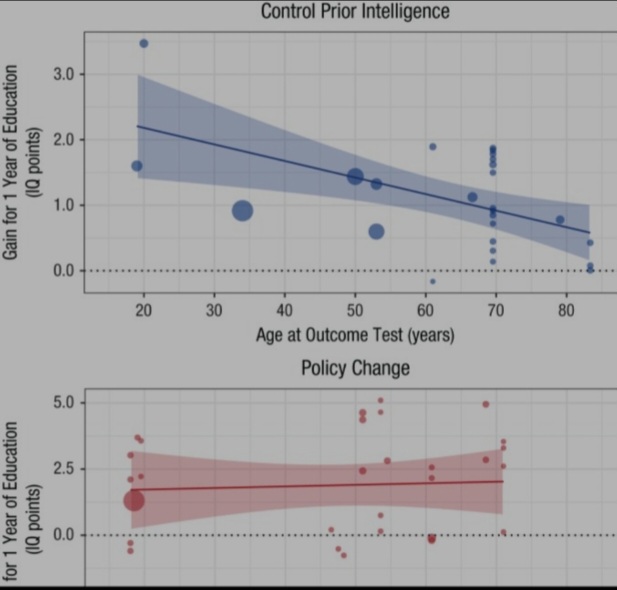
The shaded area around the regression line = 95% confidence interval.
(Larger bubbles = more accurate studies).
Higher levels of education = later ages of peak cognitive functioning. Higher levels of education may fight off age-related cognitive decline. Higher levels of education = better cognitive performance for people who fall within the age range of 15-60 year olds. Education also aids performance with reasoning rather than processing speed. This is all based on research done on 196,000 indviduals from diverse backgrounds(within the likes of people from the United States, Canada and Australia).
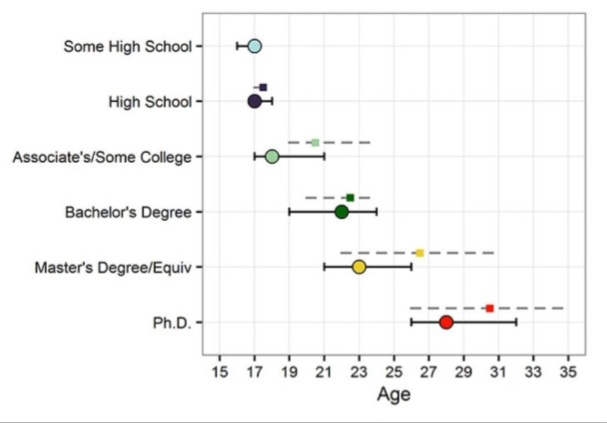
The following chart above shows the age at which cognitive performance peaks align with the average age of completion of educational degrees by participants in a study of education and cognition. Colored points = median age of maximum performance, grey dotted lines = the age range of peak performance and colored squares = median age of graduation for each level. The brain adapts due to challenges. It was found that improvements in cognitive skills are derived from cognitively involved coursework. Differences in performance were small for subjects with a bachelor's degree compared to those with a high school diploma. Background data= 196,000 people from the USA, Canada and Australia who came from a diverse background and a subset of approximately 70,000 individuals. Subjects were cognitively trained, and 70,000 of them were analysed on before and after assessments they previously did.
References:

 pubmed.ncbi.nlm.nih.gov

 www.universityofcalifornia.edu
Social Activities
Research was observed on undergraduate university/college students in terms of extracurricular activities, and co-curricular activities and their impact on social skills development. Few studies associate engagement in ECAs and CCAs with social skills development. Both quantitative and qualitative research was undertook on this subject.
Extracurricular activities are a key part of student life. ECA's being: sports, music, volunteer work, etc. Research shows that students involved in ECA's often have better academic performance. ECA's provide students with structured routines. This structure could lead to improved focus and discipline in education. Additionally the skills gained from these ECA's are teamwork and probelm-solving, can enhance a student's ability to do well in their studies. Doing ECA's provides a constructive output for stress and anxiety. Activities like sports or creative arts helps students destress from academic pressure. This can lead to better mental health and well-being, which can positively effect academic performance. Students who do activities they enjoy are often more balanced and focused, which contributes to a more positive academic experience.
References:
 ibec.org.uk
Internships
Internships increase graduates incomes according to research. Students should invest in internships because they improve their quality of education. Internships provide structured learning in the workplace. Students gain skills during internships, increasing their productivity and thus employability. Those skills could either be general or specific to the company or field of the internship. Theories shows that the internship helps the student communicate their skills to potential employers. Internships effects employment through the social capital and networks students develop in the workplace. There are benefits of internships that correlates with labour market outcomes. Positive wage effects can possibly originate from changes in mandatory internships. There is a possible increase in income due to internships. Internship experience leads to more interview requests according to a résumé audit.
Internship participation anytime in one's undergraduate career was associated with a powerful increase in students GPA at the end of the 4th year, boosting their academic performance by around a 1/4 of a standard deviation. This is a small-medium effect. This effect came from students with lower GPAs. GPA = Grade Point Average. It's clear that internships are beneficial for more than a student's post-graduation outcomes. Internships boost academic performance for all students, stronger effect is found with those students with lower GPAs.
References:
 link.springer.com

 digest.cic.edu
Cons
Unemployment Rates
The unemployment rate for workers with college/university experience increased in 2025 , while it has fallen for workers without college/university experience. Industries that hire the most college/university graduates lost an average of 9,000 jobs per month from 2023-2025, degree holders were once favoured. The frozen labour market is the main driver of unemployment for university/college students. A college/university degree has been one of the most reliable sheilds against unemployment. The unemployment rate for workers with a bachelor's degree or higher climbed to 2.8% in December, up from 2.6% a year earlier, according to the Bureau of Labour Statistics. College/university-educated workers are facing an increasingly unfavourable labour market than others.
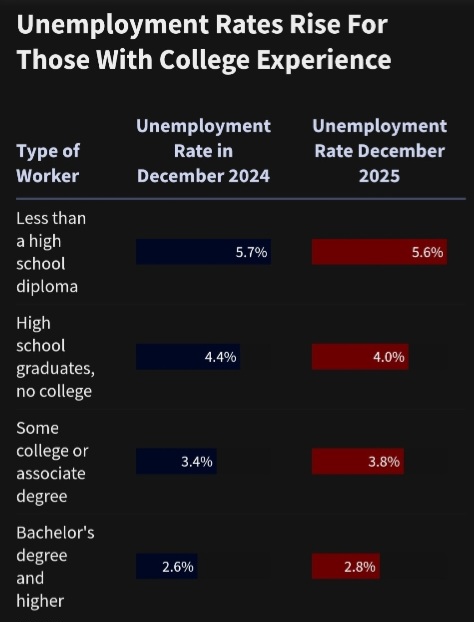
The unemployment rate of workers without university/college experience
The unemployment rate of workers with some university/college experience
Unemployment rates can change rapidly from month to month, labour dynamics could be shifting.
Unemployment rates among recent college/university graduates is 5.6%, lower than the 7.8% rate of young workers without a college/university degree, higher than the 3.1% rate for college educated workers ages 22-65 and the 4.2% rate for adults overall. Those figures came from a newly released Federal Reserve Bank of New York study, The Labour Market for Recent College Graduates, that analyzed unemployment and underemployment rates along with early-career and mid-career earnings for 73 different college majors. Recent college/university grads were 22-27 with a bachelor's degree or higher. The data were drawn from 2024 U.S. Census data, which were the most recent available. Among recent uni/college grads, anthropology majors had the highest unemployment rate of 7.9%. After anthropology, the majors with the highest unemployment were: computer engineering (7.8%), fine arts (7.7%), performing arts (7%), computer science (7%), etc. The poor employment prospects for majors in the fine and performing arts are not surprising, but others like computer engineering and computer science long seen as reliable pathways to good jobs appear to be facing new issues, supporting that the AI revolution is disrupting the job market.
References:

 www.investopedia.com

 www.forbes.com
University/College Debt
Debt results in stress, this condition has presence among the college/university crowd. A new study in the Jorunal of Financial Therapy finds that nearly 3/4 students feel stressed about their finances, student loans are a big reason. In 2012, the average senior owned $29,400. Student debt is a barrier to homeownership and a cause of bankruptcy among young adults. Paying back the loans is also very difficult when borrowers don't graduate and earn less in their jobs. Stress is a key contributor when borrowing for college/uni. Students who have debt in their inventory or expect to be in debt after college/university - whether college/university loans, credit cards, or car loans - are more likely to report financial stress than students who didn't have any debt, the study reported. This finding was based on a survey of nearly 4,500 ohio college/uni students who answered 100 qs in the Ohio Student Finanaical Wellness Survey. The study controlled for a range of factors, including race, GPA, sex, etc. Debt and coming-of-age issues, such as peer pressure, to heighten college borrowers stress levels. E.g. one of the largest sources of stress was not being able to afford to participate in activities with their peers, the researchers found. Spending more than one can afford and borrowing to fill in the holes also contributed to stress levels. Stress=anxiety, lower academic performance and difficultly getting a degree. Student debt is stressful.
Student debt = greater hardship and financial difficulty. Higher loan amounts = health care hardship. Monthly repayment amounts = hardship/financial difficulty. Not finishing college/uni correlates with hardship and economic disadvantage. Evidence shows that higher education is a wise investment, generating economic and social returns for graduates. The costs of higher education in the USA, also concerns about rising student loan debt. Almost 70% of USA college/university students borrow to finance their degree, amounting to an average debt burden of $28,950 for 4th year graduates. Cumulative student debt is associated to be estimated to be $1.2 trillion, exceeding credit cards as largest form of consumer debt in the USA. The proportion of houses with student debt rose from 9% in 1989 to 19% in 2010, and the size of houses with student debt totaling $25,000 or greater increased by 24 percentage points.
References:


 www.sciencedirect.com
Student Commuting Costs
Four out of five students live away from their university/college campus and spend around £50/$66.30 a month travelling to their campus. Students living off campus travel around 11 miles back and foward to attend lectures, with 1 in 8(13%) of students facing a daily round-trip of 40 miles or more, according to a report by the banking group Santandar. Those students who travel 40+ miles spend an average of a £100 a month on their daily commute, according to a study. It uses data collected by the Higher Education Statistics Agency, which cover about 1.35million students, and a YouthSight survey of 1,000 full-time undergraduate students. The average cost of student travel to and from university/college is about £600 per year, according to a report. Twenty percent of students who live away from home also say they are considering accommodation that is further away from their uni/college campus for next year to save money. Not all students can afford to live near their university/college and commuting is costly for many students. The cost of attending university/college puts most students under alot of financial pressure, so having to cover the rising cost of transportation is likely to be a real burden. Students are spending a collective £640/$848 million per year commuting to and from university/college, the research concludes.
Since the pandemic, a new divide has emerged in higher education between commuter students and on-campus students. The findings of a student and money wellbeing survey include that commuter students face financial struggle and growing isolation from campus. An academic divide had emerged: the commuter student vs the on-campus student. These types of students may be studying in the same academic location, but they may be living different lives from each other. One is navigating the daily demands of travel and balancing the complexities of academic and home life. The other is more likely to be fully into university/college life, enjoying the social benefits and activities from university/college life. These are higher education's new outsiders and insiders. While many students rely on their parents money/one of their parents money or their own money.
There is a rise of commuter students impacting the higher education landscape. Many students nessesarily commute to universities/colleges and deal with the incline of university/college accommodation. On average students estimate they need £621/$832 extra a month to complete their degree. But this figure rises to £782/$1,048 for students who have to commute to university/college. This brings emotional and educational worry. Just over 1 in 2 students say they have received a lower grade than expected due to cutting down on going to campus. For commuter students, this increases to 2 in 3. This is caused by not being able to study independently or use university/college facilities. Commuter students are more likely to be working while they are studying. Six in ten students commute due to necessity rather than choice who worry about finances say that their anxiety impacts their mental health.
References:
 www.timeshighereducation.com

 blogs.lse.ac.uk
Student Stress
According to some research, a demographic sheet and DASS-21 (Depression, Anxiety Stress Scale) were used to measure depression, anxiety and stress. Data was scored according to the standard scoring procedure for each subscale and for further analysis frequency distribution method was applied through statistical package for social sciences (SPSS. 21). Means of depression, anxiety and stress are M=15.08, M=18.24 and M=19.02. The frequency of depression, anxiety and stress among university/college students=75%, 88.4% and 84.4%. More findings: prevalence of depression within the range of normal (25%), mild (16%), moderate (35.8%), severe (14.6%) and extremely severe (8.6%). The prevalence of anxiety was found to be in the range of normal (11.6%), mild (4.4%), moderate (19.4%), severe (17.8%) and extremely severe (46.8%). Stress was normal (15.6%), mild (33.8%), moderate (35.4%), severe (13.2%), and extremely severe (2.8%). Symptoms of anxiety and stress of moderate-extremely severe range > depression. Urgent care is needed for those students who struggle with mental health.
Academic stress may be the most dominant stress factor that effects the mental wellbeing of college/university students. Some groups of students may experience more stress than others. Survey findings: worse academic stress=poor mental well-being in all students, who reported a worsening of stress due to the pandemic. The best mental health and lowest academic stress was found in male students and women students reported higher academic stress than men, according to PAS scores. The same pattern held as a reaction to COVID-19 related stress. PAS scores and the responses related to the pandemic varied by the year of study, but no obvious patterns showed. These results indicate that academic stress in college/uni=psychological well-being in the students who responded to a survey done on them. Some groups of college/uni students are more effected by stress than others, and more support should be provided for them. Late adolescence are changing periods which includes physiological and psychological changes, including elevated stress. This pattern is true for college/uni students. According to an American College Health Association- National College Health Assessment survey, 3 in 4 college students felt stressed, while 1 in 5 college students reported suicidal stress. Studies show that a stressor that experienced stress in college maybe potentially undergo a mental health diagnoses.
References:
pubmed.ncbi.nlm.nih.gov
Conclusion:
This thread was typed up using my own words, wording from the references and includes different types of graphs.
Universities/colleges determine many individuals futures and it's important to note it. Universities/colleges have advantages and disadvantages. Universities/colleges have advantages(freedom on campus, improvement in intelligence, mental benefits, etc). Universities/colleges have disadvantages(employment wise, financially and mentally). Universities/colleges suit some people(those who would benefit psychologicallly, financially, etc from higher education) and should be avoided for other people for the best(individuals who would suffer from mental stress, financially, etc from higher education).
University/college is an important educational stage for several individuals. University/college determines most young people's work-related future and income. Hence it's important to note what a college/university may bring to the table, the possible goods and bads of them.
Pros
Independence
As you enter university/college you have free will in different cases. You can determine and decide whether or not you can skip lectures, going to the bathroom during classes without asking for your lecturer's permission and you can also willingly leave in between lectures. As your past the adolescence stage of your life you are independent when it comes to your educational related choices, and you are now a biological adult. So when you choose to skip lectures, leave during lectures and go to the bathroom in the middle of lectures without depending on your lecturer's permission to do so and leave during lectures whenever you like, you don't have to suffer and fear the consequences of doing so since they are nonexistent
, lecturers won't care about these kind of choices since they obviously know you are an adult , and they know you are mature enough at this stage of your life to make the choices you wish regarding these educaional related things.References:
Unspoken Rules of College You Won’t Find in the Handbook - College EDC
Unspoken Rules of College You Won't Find in the Handbook Beneath the surface of lecture halls, dorm rooms, and campus quads lies a hidden curriculum — the unspoken rules that can make or break your college experience. Navigating these unwritten guidelines can prevent you from experiencing some...
collegeedc.com
Improves Cognitive Intelligence
Intelligence test scores and educational duration are positively correlated in 2 ways. 1 Students with greater propensity for intelligence complete their education more. 2 Or a longer education increases intelligence. One hundred and forty two effect sizes from 42 data sets involving 600,000+ participants showed evidence of great effects of education on cognitive abilities of approximately 1-5 more IQ points for 1 more year of education
. The effects were present on all broad categories of cognitive ability studied. Education seems to be the best method for increasing intelligence.Fig: Effect of 1 Additional Year of Education
The shaded area around the regression line = 95% confidence interval.
(Larger bubbles = more accurate studies).
Higher levels of education = later ages of peak cognitive functioning. Higher levels of education may fight off age-related cognitive decline. Higher levels of education = better cognitive performance for people who fall within the age range of 15-60 year olds. Education also aids performance with reasoning rather than processing speed. This is all based on research done on 196,000 indviduals from diverse backgrounds(within the likes of people from the United States, Canada and Australia).
The following chart above shows the age at which cognitive performance peaks align with the average age of completion of educational degrees by participants in a study of education and cognition. Colored points = median age of maximum performance, grey dotted lines = the age range of peak performance and colored squares = median age of graduation for each level. The brain adapts due to challenges. It was found that improvements in cognitive skills are derived from cognitively involved coursework. Differences in performance were small for subjects with a bachelor's degree compared to those with a high school diploma. Background data= 196,000 people from the USA, Canada and Australia who came from a diverse background and a subset of approximately 70,000 individuals. Subjects were cognitively trained, and 70,000 of them were analysed on before and after assessments they previously did.
References:
How Much Does Education Improve Intelligence? A Meta-Analysis - PubMed
Intelligence test scores and educational duration are positively correlated. This correlation could be interpreted in two ways: Students with greater propensity for intelligence go on to complete more education, or a longer education increases intelligence. We meta-analyzed three categories of...
pubmed.ncbi.nlm.nih.gov
More education linked to better cognitive functioning later in life
Higher levels of education may help stave off age-related cognitive decline, researchers find.
Social Activities
Research was observed on undergraduate university/college students in terms of extracurricular activities, and co-curricular activities and their impact on social skills development. Few studies associate engagement in ECAs and CCAs with social skills development. Both quantitative and qualitative research was undertook on this subject.
Extracurricular activities are a key part of student life. ECA's being: sports, music, volunteer work, etc. Research shows that students involved in ECA's often have better academic performance. ECA's provide students with structured routines. This structure could lead to improved focus and discipline in education. Additionally the skills gained from these ECA's are teamwork and probelm-solving, can enhance a student's ability to do well in their studies. Doing ECA's provides a constructive output for stress and anxiety. Activities like sports or creative arts helps students destress from academic pressure. This can lead to better mental health and well-being, which can positively effect academic performance. Students who do activities they enjoy are often more balanced and focused, which contributes to a more positive academic experience.
References:
The Effect of Extracurricular Activities on Academic Success - Ibec
Extracurricular activities are a key component of student life that go beyond the regular classroom curriculum. They include a range […]
ibec.org.uk
Internships
Internships increase graduates incomes
according to research. Students should invest in internships because they improve their quality of education. Internships provide structured learning in the workplace. Students gain skills during internships, increasing their productivity and thus employability. Those skills could either be general or specific to the company or field of the internship. Theories shows that the internship helps the student communicate their skills to potential employers. Internships effects employment through the social capital and networks students develop in the workplace. There are benefits of internships that correlates with labour market outcomes. Positive wage effects can possibly originate from changes in mandatory internships. There is a possible increase in income due to internships. Internship experience leads to more interview requests according to a résumé audit.Internship participation anytime in one's undergraduate career was associated with a powerful increase in students GPA at the end of the 4th year, boosting their academic performance by around a 1/4 of a standard deviation. This is a small-medium effect. This effect came from students with lower GPAs. GPA = Grade Point Average. It's clear that internships are beneficial for more than a student's post-graduation outcomes. Internships boost academic performance for all students, stronger effect is found with those students with lower GPAs.
References:
Valuable Experience: How University Internships Affect Graduates’ Income - Research in Higher Education
This paper analyzes whether and how attending an internship during tertiary education affects income. We address endogeneity with an IV approach that exploits information regarding whether the internship was a mandatory component of the study. We further address selection into programs with...
link.springer.com
Boosting Academic Performance with Internships
Internships are traditionally geared toward aiding student employment after graduation from college, but do they improve students’ academic abilities as well? To answer this question, the authors o…
digest.cic.edu
Cons
Unemployment Rates
The unemployment rate for workers with college/university experience increased in 2025 , while it has fallen for workers without college/university experience. Industries that hire the most college/university graduates lost an average of 9,000 jobs per month from 2023-2025, degree holders were once favoured. The frozen labour market is the main driver of unemployment for university/college students. A college/university degree has been one of the most reliable sheilds against unemployment. The unemployment rate for workers with a bachelor's degree or higher climbed to 2.8% in December, up from 2.6% a year earlier, according to the Bureau of Labour Statistics. College/university-educated workers are facing an increasingly unfavourable labour market than others.
The unemployment rate of workers without university/college experience
The unemployment rate of workers with some university/college experience
Unemployment rates can change rapidly from month to month, labour dynamics could be shifting.
Unemployment rates among recent college/university graduates is 5.6%, lower than the 7.8% rate of young workers without a college/university degree, higher than the 3.1% rate for college educated workers ages 22-65 and the 4.2% rate for adults overall. Those figures came from a newly released Federal Reserve Bank of New York study, The Labour Market for Recent College Graduates, that analyzed unemployment and underemployment rates along with early-career and mid-career earnings for 73 different college majors. Recent college/university grads were 22-27 with a bachelor's degree or higher. The data were drawn from 2024 U.S. Census data, which were the most recent available. Among recent uni/college grads, anthropology majors had the highest unemployment rate of 7.9%. After anthropology, the majors with the highest unemployment were: computer engineering (7.8%), fine arts (7.7%), performing arts (7%), computer science (7%), etc. The poor employment prospects for majors in the fine and performing arts are not surprising, but others like computer engineering and computer science long seen as reliable pathways to good jobs appear to be facing new issues, supporting that the AI revolution is disrupting the job market.
References:
Goldman Sachs Warns College Graduates About Job Market Shifts
Unemployment rates are increasing for workers with college experience, at the same time it is falling for workers who did not attend college.
Unemployment And Underemployment Rates Among Recent College Graduates
Unemployment among recent college graduates is 5.6%, lower than the 7.8% for young workers without a college degree but higher than that for adults overall (4.2%).
www.forbes.com
University/College Debt
Debt results in stress, this condition has presence among the college/university crowd. A new study in the Jorunal of Financial Therapy finds that nearly 3/4 students feel stressed about their finances, student loans are a big reason. In 2012, the average senior owned $29,400. Student debt is a barrier to homeownership and a cause of bankruptcy among young adults. Paying back the loans is also very difficult when borrowers don't graduate and earn less in their jobs. Stress is a key contributor when borrowing for college/uni. Students who have debt in their inventory or expect to be in debt after college/university - whether college/university loans, credit cards, or car loans - are more likely to report financial stress than students who didn't have any debt, the study reported. This finding was based on a survey of nearly 4,500 ohio college/uni students who answered 100 qs in the Ohio Student Finanaical Wellness Survey. The study controlled for a range of factors, including race, GPA, sex, etc. Debt and coming-of-age issues, such as peer pressure, to heighten college borrowers stress levels. E.g. one of the largest sources of stress was not being able to afford to participate in activities with their peers, the researchers found. Spending more than one can afford and borrowing to fill in the holes also contributed to stress levels. Stress=anxiety, lower academic performance and difficultly getting a degree. Student debt is stressful.
Student debt = greater hardship and financial difficulty. Higher loan amounts = health care hardship. Monthly repayment amounts = hardship/financial difficulty. Not finishing college/uni correlates with hardship and economic disadvantage. Evidence shows that higher education is a wise investment, generating economic and social returns for graduates. The costs of higher education in the USA
, also concerns about rising student loan debt. Almost 70% of USA college/university students borrow to finance their degree, amounting to an average debt burden of $28,950 for 4th year graduates. Cumulative student debt is associated to be estimated to be $1.2 trillion, exceeding credit cards as largest form of consumer debt in the USA. The proportion of houses with student debt rose from 9% in 1989 to 19% in 2010, and the size of houses with student debt totaling $25,000 or greater increased by 24 percentage points.References:
College Debt = Student Stress
crr.bc.edu
Student debt and hardship: Evidence from a large sample of low- and moderate-income households
Student debt has risen in recent years as higher education costs have shifted to students and their families, particularly those with low-to-moderate …
Student Commuting Costs
Four out of five students live away from their university/college campus and spend around £50/$66.30 a month travelling to their campus. Students living off campus travel around 11 miles back and foward to attend lectures, with 1 in 8(13%) of students facing a daily round-trip of 40 miles or more, according to a report by the banking group Santandar. Those students who travel 40+ miles spend an average of a £100 a month on their daily commute, according to a study. It uses data collected by the Higher Education Statistics Agency, which cover about 1.35million students, and a YouthSight survey of 1,000 full-time undergraduate students. The average cost of student travel to and from university/college is about £600 per year, according to a report. Twenty percent of students who live away from home also say they are considering accommodation that is further away from their uni/college campus for next year to save money. Not all students can afford to live near their university/college and commuting is costly for many students. The cost of attending university/college puts most students under alot of financial pressure, so having to cover the rising cost of transportation is likely to be a real burden. Students are spending a collective £640/$848 million per year commuting to and from university/college, the research concludes.
Since the pandemic, a new divide has emerged in higher education between commuter students and on-campus students. The findings of a student and money wellbeing survey include that commuter students face financial struggle and growing isolation from campus. An academic divide had emerged: the commuter student vs the on-campus student. These types of students may be studying in the same academic location, but they may be living different lives from each other. One is navigating the daily demands of travel and balancing the complexities of academic and home life. The other is more likely to be fully into university/college life, enjoying the social benefits and activities from university/college life. These are higher education's new outsiders and insiders. While many students rely on their parents money/one of their parents money or their own money.
There is a rise of commuter students impacting the higher education landscape. Many students nessesarily commute to universities/colleges and deal with the incline of university/college accommodation. On average students estimate they need £621/$832 extra a month to complete their degree. But this figure rises to £782/$1,048 for students who have to commute to university/college. This brings emotional and educational worry. Just over 1 in 2 students say they have received a lower grade than expected due to cutting down on going to campus. For commuter students, this increases to 2 in 3. This is caused by not being able to study independently or use university/college facilities. Commuter students are more likely to be working while they are studying. Six in ten students commute due to necessity rather than choice who worry about finances say that their anxiety impacts their mental health.
References:
Students spending millions commuting
Four out of five students live away from their university campus and spend around £50 a month travelling to their studies, new research shows.
The spiralling costs of higher education are hitting stay at home students harder - LSE Inequalities
Commuter students face financial struggle and a growing sense of isolation from campus, according to the findings of a new student money and wellbeing survey
blogs.lse.ac.uk
Student Stress
According to some research, a demographic sheet and DASS-21 (Depression, Anxiety Stress Scale) were used to measure depression, anxiety and stress. Data was scored according to the standard scoring procedure for each subscale and for further analysis frequency distribution method was applied through statistical package for social sciences (SPSS. 21). Means of depression, anxiety and stress are M=15.08, M=18.24 and M=19.02. The frequency of depression, anxiety and stress among university/college students=75%, 88.4% and 84.4%. More findings: prevalence of depression within the range of normal (25%), mild (16%), moderate (35.8%), severe (14.6%) and extremely severe (8.6%)
. The prevalence of anxiety was found to be in the range of normal (11.6%), mild (4.4%), moderate (19.4%), severe (17.8%) and extremely severe (46.8%). Stress was normal (15.6%), mild (33.8%), moderate (35.4%), severe (13.2%), and extremely severe (2.8%). Symptoms of anxiety and stress of moderate-extremely severe range > depression. Urgent care is needed for those students who struggle with mental health.Academic stress may be the most dominant stress factor that effects the mental wellbeing of college/university students. Some groups of students may experience more stress than others. Survey findings: worse academic stress=poor mental well-being in all students, who reported a worsening of stress due to the pandemic. The best mental health and lowest academic stress was found in male students and women students reported higher academic stress than men, according to PAS scores. The same pattern held as a reaction to COVID-19 related stress. PAS scores and the responses related to the pandemic varied by the year of study, but no obvious patterns showed. These results indicate that academic stress in college/uni=psychological well-being in the students who responded to a survey done on them. Some groups of college/uni students are more effected by stress than others, and more support should be provided for them. Late adolescence are changing periods which includes physiological and psychological changes, including elevated stress. This pattern is true for college/uni students. According to an American College Health Association- National College Health Assessment survey, 3 in 4 college students felt stressed, while 1 in 5 college students reported suicidal stress. Studies show that a stressor that experienced stress in college maybe potentially undergo a mental health diagnoses.
References:
Frequency of depression, anxiety and stress among university students - PubMed
It is concluded that symptoms of anxiety and stress are more prevalent with moderate to extremely severe range than depression in the current sample. These findings suggest urgent need of some preventive measures and interventions to improve the mental health of students.
pubmed.ncbi.nlm.nih.gov
Conclusion:
This thread was typed up using my own words, wording from the references and includes different types of graphs.
Universities/colleges determine many individuals futures and it's important to note it. Universities/colleges have advantages and disadvantages. Universities/colleges have advantages(freedom on campus, improvement in intelligence, mental benefits, etc). Universities/colleges have disadvantages(employment wise, financially and mentally). Universities/colleges suit some people(those who would benefit psychologicallly, financially, etc from higher education) and should be avoided for other people for the best(individuals who would suffer from mental stress, financially, etc from higher education).
[ @luuk @Sloppyseconds @nvr3noug6 @cryptt /SPOILER]
Last edited: