glashaut2
Iron
- Joined
- Jun 22, 2026
- Posts
- 72
- Reputation
- 102
Most of you think DHT is just the reason your hair falls out and your skin is oily and full of acne. That's true but today I learned that DHT is actually poison at the cellular level and if you are genetically prone to it, it will literally mutate your skin tissue.
I'm talking about KELOIDS. If you don't know what they are, they are thick, raised scars that never stop growing and ruin your skin texture permanently.

Once you have them, it's over for you because it's so fucking hard to get rid of them. Actually, it's nearly impossible to get rid of them. You can only try to flatten them with corticosteroid injections. Many people develop keloids after cystic acne, so I can imagine there are some unlucky people here who deal with this. And guess what one important driver behind this literal death sentence is? DHT.
Here is some science for you:
1. Increased androgen binding in keloids
They looked at keloid tissue, normal skin, and normal scars. The results are brutal. Normal scars had an androgen binding capacity of 37–60 fmol/mg. Keloids? 510 to 1149 fmol/mg. Your body is literally hoarding androgens in these mutated scars. Estrogen and progesterone binding in the same tissue were practically non-existent. Keloids are essentially hyper-androgenic zones on your skin.
2. Elevated levels of testosterone receptors in keloid tissue
They analyzed "testosterone-binding receptor proteins" (which are just Androgen Receptors) in 24 keloid patients, specifically categorizing the scars by how biologically aggressive they were (hyperemia/redness, pain, rapid growth). The data showed that clinically active, fast-growing keloid tissue has significantly elevated levels of these receptors. But don't get confused by the term "testosterone receptor". It's the exact same receptor that DHT binds to. DHT binds to these receptors with up to 5x higher affinity than testosterone and degrades much slower. When those receptor levels are elevated in keloids, it is DHT that makes them grow nonstop. The link is so undeniable that the researchers straight up suggested topical anti-androgen treatments just to stop the tissue from expanding.
3. Finasteride ascends skin texture
A patient with massive chest keloids started taking Finasteride. Not for his keloids though but for an entirely different reason. The result? The texture and severe itching of his chest keloids unexpectedly improved.
TLDR: Nuke your DHT to the ground if you want to keep your skin flawless.
I'm talking about KELOIDS. If you don't know what they are, they are thick, raised scars that never stop growing and ruin your skin texture permanently.
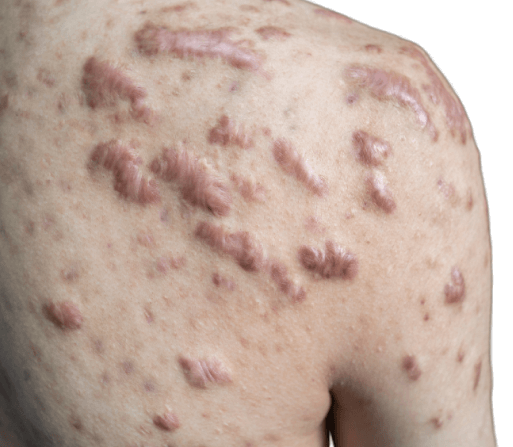
Once you have them, it's over for you because it's so fucking hard to get rid of them. Actually, it's nearly impossible to get rid of them. You can only try to flatten them with corticosteroid injections. Many people develop keloids after cystic acne, so I can imagine there are some unlucky people here who deal with this. And guess what one important driver behind this literal death sentence is? DHT.
Here is some science for you:
1. Increased androgen binding in keloids
They looked at keloid tissue, normal skin, and normal scars. The results are brutal. Normal scars had an androgen binding capacity of 37–60 fmol/mg. Keloids? 510 to 1149 fmol/mg. Your body is literally hoarding androgens in these mutated scars. Estrogen and progesterone binding in the same tissue were practically non-existent. Keloids are essentially hyper-androgenic zones on your skin.
2. Elevated levels of testosterone receptors in keloid tissue
They analyzed "testosterone-binding receptor proteins" (which are just Androgen Receptors) in 24 keloid patients, specifically categorizing the scars by how biologically aggressive they were (hyperemia/redness, pain, rapid growth). The data showed that clinically active, fast-growing keloid tissue has significantly elevated levels of these receptors. But don't get confused by the term "testosterone receptor". It's the exact same receptor that DHT binds to. DHT binds to these receptors with up to 5x higher affinity than testosterone and degrades much slower. When those receptor levels are elevated in keloids, it is DHT that makes them grow nonstop. The link is so undeniable that the researchers straight up suggested topical anti-androgen treatments just to stop the tissue from expanding.
3. Finasteride ascends skin texture
A patient with massive chest keloids started taking Finasteride. Not for his keloids though but for an entirely different reason. The result? The texture and severe itching of his chest keloids unexpectedly improved.
TLDR: Nuke your DHT to the ground if you want to keep your skin flawless.