Seth Walsh

Iconoclast
Contributor
- Joined
- Jan 12, 2020
- Posts
- 10,988
- Reputation
- 22,457
If AI takes over enough that income becomes unreliable, the hierarchy changes:
Probability estimate:
The IMF has already estimated that around 60% of jobs in advanced economies may be affected by AI, with some exposed roles facing lower labour demand, wages, or disappearance. OECD work similarly says AI exposure is concentrated in high-skilled white-collar roles, even though aggregate employment collapse has not yet clearly appeared. Stanford’s 2026 AI Index shows the split: experts are much more optimistic than the public, but labour-market effects are already showing up unevenly.
Blunt view: full AI takeover is not the base case. Income fragility is.
For you, the correct frame is:
Maximize ownership, liquidity, AI leverage, high-status network access, and claims on surplus. Minimize dependence on being “employed” by someone who can replace marginal cognitive labour with agents.





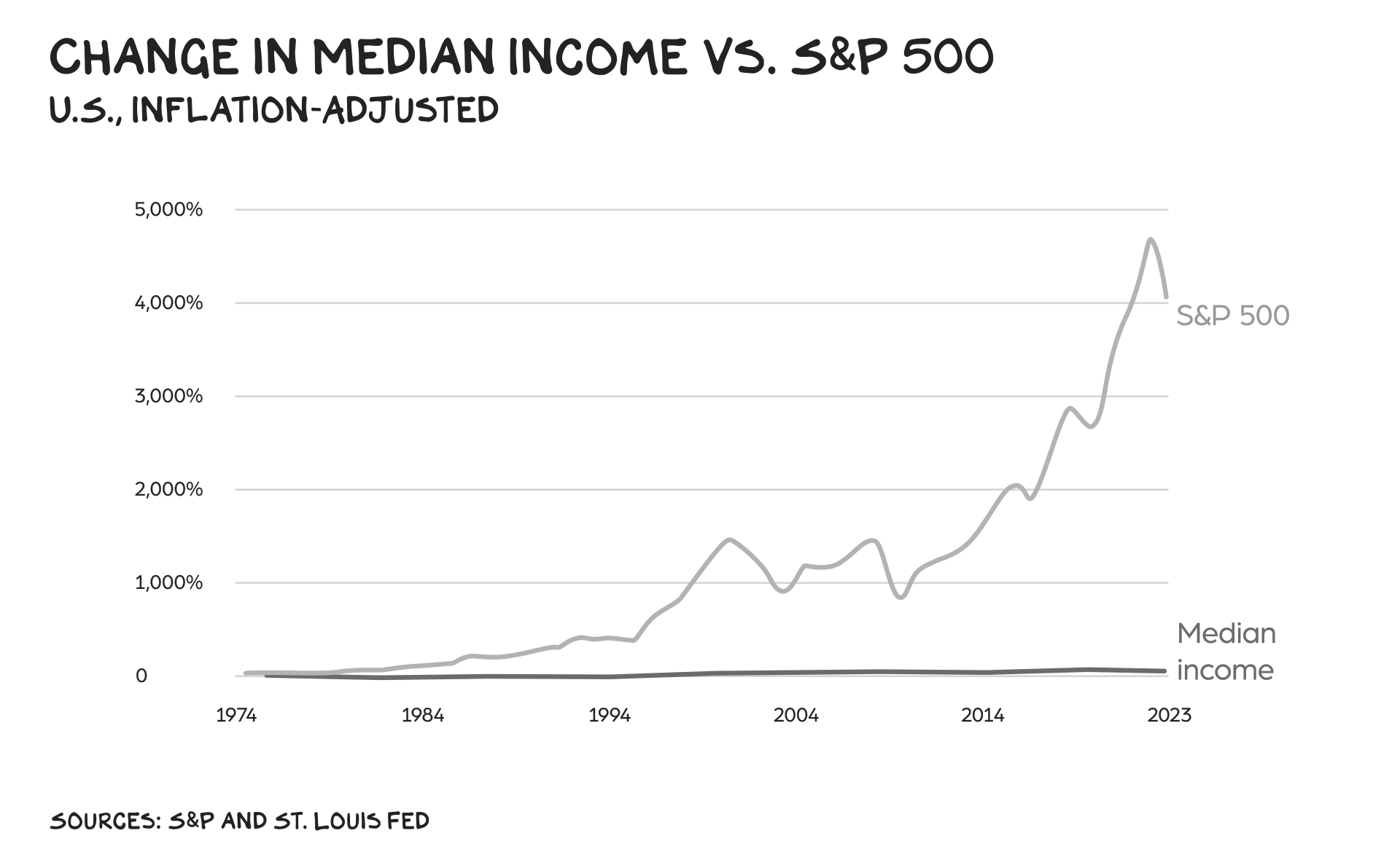
- Ownership beats salary
Equity, real estate, productive assets, private business ownership, IP, data, distribution, licenses, and access to scarce infrastructure matter more than job title. - Low fixed costs become power
No debt, low rent/mortgage exposure, liquid runway, and no forced selling. Survival optionality becomes alpha. - Control of scarce real-world assets matters
Housing, energy, land, healthcare access, residency rights, trusted legal/accounting advice, and family balance-sheet structure. - Social trust becomes more valuable
When synthetic output is infinite, verified human trust, reputation, network access, taste, judgment, discretion, and room access become scarce. - AI leverage matters more than “skills”
The valuable person is not the one who “knows Excel/Python.” It is the person who can aim AI at valuable problems, verify outputs, allocate capital, manage risk, and make decisions under uncertainty. - Claims on surplus matter
Pension, inheritance, equity, profit share, carry, trading PnL, advisory economics, business ownership, and asset appreciation beat wages. - Political positioning matters
If labour income weakens, governments will respond through taxation, welfare, UBI-like transfers, housing policy, pension rules, and regulation. Being in the right jurisdiction and asset class matters.
Probability estimate:
| Scenario | By 2030 | By 2035 | By 2045 |
|---|---|---|---|
| AI materially weakens normal white-collar career income | 45% | 65% | 80% |
| Graduate/corporate career ladders become structurally unreliable | 35% | 60% | 75% |
| Ownership/platform/capital access dominates labour income even more brutally | 40% | 60% | 75% |
| Literal AI “takes over” society/economy in a hard loss-of-control sense | 3–8% | 8–15% | 15–25% |
The IMF has already estimated that around 60% of jobs in advanced economies may be affected by AI, with some exposed roles facing lower labour demand, wages, or disappearance. OECD work similarly says AI exposure is concentrated in high-skilled white-collar roles, even though aggregate employment collapse has not yet clearly appeared. Stanford’s 2026 AI Index shows the split: experts are much more optimistic than the public, but labour-market effects are already showing up unevenly.
Blunt view: full AI takeover is not the base case. Income fragility is.
For you, the correct frame is:
Maximize ownership, liquidity, AI leverage, high-status network access, and claims on surplus. Minimize dependence on being “employed” by someone who can replace marginal cognitive labour with agents.