Who is interested in spirituality?

v0lcel

v0lcel

I hope you make it brah (sincerely)
Joined
Mar 21, 2026
Posts
254
Reputation
138
I feel so empty receiving compliments, attention and social oportunities from girls and males. Like no matter how much i receive, ill never be satisfied.
I have good parents, good genetics, a good development, a good financial situation... i dont really care at the end of the day, even after comparing my life of people making it way worse or way better than me.
I just started to invest my time on understanding what is actual happiness from the book below.
From what i can understand for now, it s that externals factors like looks, money, status... are all mere illusions we cling to for our happiness. We do not realize that after reaching these, we find others thing to be unhappy about, maybe in athletics goals, skills to master or whatever. This cycle of permanant insatisfaction continues to our deaths, no matter how much we achieve. That is the fate of the people who are unaware of a higher mental state that allows them to not identify with our conscious mind, the pain it generates, so it puts us in an eternal bliss. Now im being introduced to it in the book so you can look for yourself.
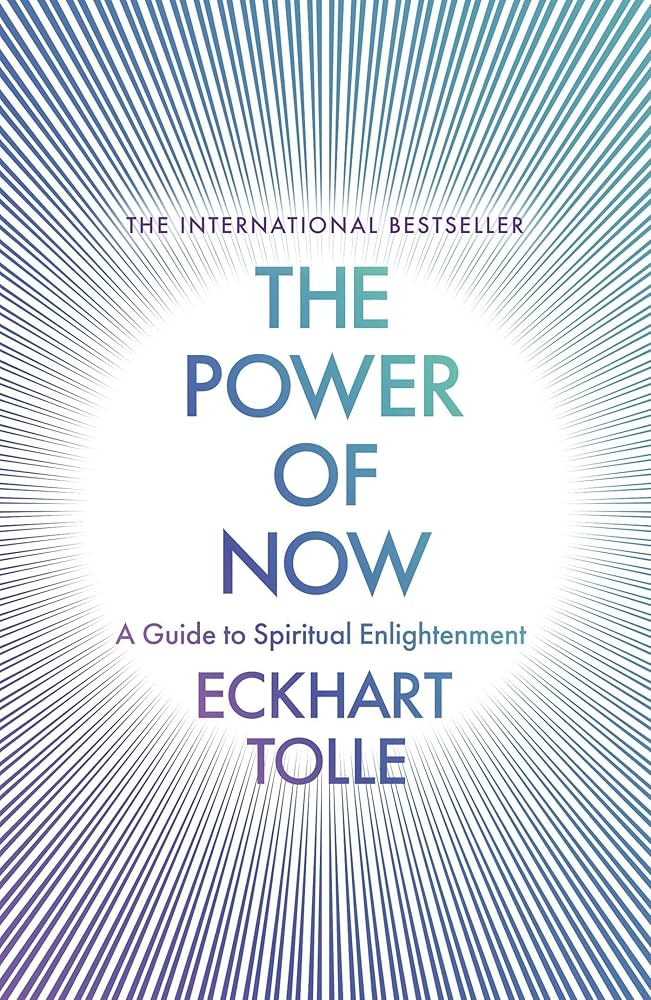
 

Attachments

  • 91eGsYabODL._AC_UF1000,1000_QL80_.jpg
    91eGsYabODL._AC_UF1000,1000_QL80_.jpg
    166 KB · Views: 0
I feel so empty receiving compliments, attention and social oportunities from girls and males. Like no matter how much i receive, ill never be satisfied.
I have good parents, good genetics, a good development, a good financial situation... i dont really care at the end of the day, even after comparing my life of people making it way worse or way better than me.
I just started to invest my time on understanding what is actual happiness from the book below.
From what i can understand for now, it s that externals factors like looks, money, status... are all mere illusions we cling to for our happiness. We do not realize that after reaching these, we find others thing to be unhappy about, maybe in athletics goals, skills to master or whatever. This cycle of permanant insatisfaction continues to our deaths, no matter how much we achieve. That is the fate of the people who are unaware of a higher mental state that allows them to not identify with our conscious mind, the pain it generates, so it puts us in an eternal bliss. Now im being introduced to it in the book so you can look for yourself.
Dnr
 
I feel so empty receiving compliments, attention and social oportunities from girls and males. Like no matter how much i receive, ill never be satisfied.
I have good parents, good genetics, a good development, a good financial situation... i dont really care at the end of the day, even after comparing my life of people making it way worse or way better than me.
I just started to invest my time on understanding what is actual happiness from the book below.
From what i can understand for now, it s that externals factors like looks, money, status... are all mere illusions we cling to for our happiness. We do not realize that after reaching these, we find others thing to be unhappy about, maybe in athletics goals, skills to master or whatever. This cycle of permanant insatisfaction continues to our deaths, no matter how much we achieve. That is the fate of the people who are unaware of a higher mental state that allows them to not identify with our conscious mind, the pain it generates, so it puts us in an eternal bliss. Now im being introduced to it in the book so you can look for yourself.
dnr, become catholic
 
  • Ugh..
Reactions: PrinceLuenLeoncur
dnr, become catholic
Are you actually catholic? Or you re just that type of guy that puts a cross in its ig bio? Did you read the bible in its entirety (not in an accusing tone, just genuinely asking)?
 
dnr, become catholic
Roman Catholicism removed all the mystery and spirituality that the religion had to begin with. Don’t even get me started on the cult of Protestantism which is just even more retarded RCs like you bruh.

Imagine In 2026 telling people to become Roman Catholic 🤣
 
Are you actually catholic? Or you re just that type of guy that puts a cross in its ig bio? Did you read the bible in its entirety (not in an accusing tone, just genuinely asking)?
I'm not catholic and I’m not baptized, but I don’t see any errors or inconsistencies on the part of the catholic xhurch, and no, I haven’t read more than three or four books of the bible, nor is there any reason to
 
  • +1
Reactions: v0lcel
Roman Catholicism removed all the mystery and spirituality that the religion had to begin with. Don’t even get me started on the cult of Protestantism which is just even more retarded RCs like you bruh.

Imagine In 2026 telling people to become Roman Catholic 🤣
let me guess you larp as orthodox?
 
I feel so empty receiving compliments, attention and social oportunities from girls and males. Like no matter how much i receive, ill never be satisfied.
I have good parents, good genetics, a good development, a good financial situation... i dont really care at the end of the day, even after comparing my life of people making it way worse or way better than me.
I just started to invest my time on understanding what is actual happiness from the book below.
From what i can understand for now, it s that externals factors like looks, money, status... are all mere illusions we cling to for our happiness. We do not realize that after reaching these, we find others thing to be unhappy about, maybe in athletics goals, skills to master or whatever. This cycle of permanant insatisfaction continues to our deaths, no matter how much we achieve. That is the fate of the people who are unaware of a higher mental state that allows them to not identify with our conscious mind, the pain it generates, so it puts us in an eternal bliss. Now im being introduced to it in the book so you can look for yourself.
The blessed saints speak of what you speak off. A shame you foudntngis out reading a secular source instead of finding that there is only one that can bring true happiness and resolve, Christ. Only through him will you have the answer but your on the right path brother


I won’t be shocked if you turn to holy orthodoxy within 3 years. Yes look into it I can recommend you videos on it if you want. It’s one of the greatest well kept secrets
 
  • +1
Reactions: v0lcel and Viriato_catholic
The blessed saints speak of what you speak off. A shame you foudntngis out reading a secular source instead of finding that there is only one that can bring true happiness and resolve, Christ. Only through him will you have the answer but your on the right path brother


I won’t be shocked if you turn to holy orthodoxy within 3 years. Yes look into it I can recommend you videos on it if you want. It’s one of the greatest well kept secrets
Alr bro, recommend me, im in
 
let me guess you larp as orthodox?
Larp? I’m confirmed orthodox since last Easter lmfao.

No larp here, no hate either, just pains me to see those with lesser intellect being fooled into silly cults that are going the way of the Dodo be it Islam Protestantism or Roman Catholicism. Such a shame seeing people willing to subvert their prefrontal cortex to chase emotional validation and pleasure instead of pursuing the truth and following logic and reason
 
Larp? I’m confirmed orthodox since last Easter lmfao.

No larp here, no hate either, just pains me to see those with lesser intellect being fooled into silly cults that are going the way of the Dodo be it Islam Protestantism or Roman Catholicism. Such a shame seeing people willing to subvert their prefrontal cortex to chase emotional validation and pleasure instead of pursuing the truth and following logic and reason
I want you to explain to me why roman catholicism is not correct and why orthodoxy is the right path, and why you reject papal authority, to me these orthodox nigga are just like "trads" trying to be more tuff
 
Alr bro, recommend me, im in


Honestly there’s far more and it would take me 1k years to post everything so to not mind dump ima jsut post these here but the 2nd videos from these two channels I posted under the first video is great for navigating life honestly


The faith is more than the “bible” it’s a system of How to analyse and navigate life, it’s a perspective and an outlook not just a faith and a religion.
 
  • +1
Reactions: v0lcel


Honestly there’s far more and it would take me 1k years to post everything so to not mind dump ima jsut post these here but the 2nd videos from these two channels I posted under the first video is great for navigating life honestly


The faith is more than the “bible” it’s a system of How to analyse and navigate life, it’s a perspective and an outlook not just a faith and a religion.

Really appreciate it, and yeah i can understand you have a lot to show me, but ill research by myself. I will try to change my algorythm for the better
 
  • +1
Reactions: PrinceLuenLeoncur
I want you to explain to me why roman catholicism is not correct and why orthodoxy is the right path, and why you reject papal authority, to me these orthodox nigga are just like "trads" trying to be more tuff
Because according to the church fathers and early popes such as Gregory, the Pope wasn’t the supreme authority of all Christian’s, (your own modern Vatican admits this in the G80 documents btw which alone disproves the Roman Catholics claim :forcedsmile::forcedsmile::forcedsmile: dunno why they’d openly admit to jt as it destroys RC but oh well) he was jsut a bishop of the western provinces, nothing more nothing less. The change jey word CHANGE to him being supreme pontiff is a abberstion and new innovation conspired by the western Europeans charged by the Frankish/Germanics in the 10th century. Many debates took place over this just read the debates with Hillary.


Filioque is anti Christian by deadly not only philosophically is is inept but it also once again contradicts the church fathers of the council of Constantinople 1 (2nd ecumenical council) which states the spirit proceeds from the FATHER ALONE.

Indulgences and Purgatory were innovations based upon st Augustine’s city of God where guys such as Anselm came along in the 11th century and started misinterpreting shit which led to the RCs doing indulgences and purgatory despite neither being believed by the ancient Jews nor early church. The RCs only accepted it as dogma in the council of Trent and Florence. Indulgences also led to the Protestant reformation 😂

There’s many more but why bother?

The Roman Catholics are just Western Europeans that decided to make additions changes and alterations to the religion so it suited their Germanic feudal mindset and culture instead of holding to the faith handed down to them from the Orthodox. They are unironically no different than the Protestants which sprang fourth from the Roman Catholics.

BTW your OWN CHRUCH accepts the Orthdoox have made 0 CHANGES to our religion that goes against the early church 😂 so even by your own church’s logic we are still valid. The same cannot be said the other way round, to us your heretics and only 2/3rds Christian
 
Last edited:
Really appreciate it, and yeah i can understand you have a lot to show me, but I’ll research by myself. I will try to change my algorythm for the better
Yeah man you’ll enjoy the videos esp by “Harmony” he has great editing skills and brings to life the true meaning and propose of existence outside of Vapid materialistic things

It’s amazing man. Such a shame western Christian’s have no idea about the spiritualists origins of their faith which is only still kept with us eastern adherents it’s heart breaking 💔
 
  • +1
Reactions: v0lcel


Honestly there’s far more and it would take me 1k years to post everything so to not mind dump ima jsut post these here but the 2nd videos from these two channels I posted under the first video is great for navigating life honestly


The faith is more than the “bible” it’s a system of How to analyse and navigate life, it’s a perspective and an outlook not just a faith and a religion.

Other genuine questions:
Do you question sometimes what you learn from the religion, or do you see it as the absolute truth to not doubt, as it could prove that you have no faith (beliefs without certainty)?
Do you consider (thoroughly) the point of view of atheism, islam, protestantism, catholism and judaism?
If God is loving, why is there so much suffering, besides those who believe in him?
Why is that that those who never heard of God must suffer, if he s loving?
If he was truly loving, he would comunicate to ignorants that salvation exist through him, but many (everywhere in the world) will never hear about it.
And it s not like they suffer a little bit, their pain can be indescriptible for the unaware ones.
Why is that that sacred texts are filled with contradictory primitive science, not texts from the omniscient God?
And would a loving God really threathen those who do not obey with eternal suffering in the afterlife?
 
Because according to the church fathers and early popes such as Gregory, the Pope wasn’t the supreme authority of all Christian’s, (your own modern Vatican admits this in the G80 documents btw which alone disproves the Roman Catholics claim :forcedsmile::forcedsmile::forcedsmile: dunno why they’d openly admit to jt as it destroys RC but oh well) he was jsut a bishop of the western provinces, nothing more nothing less. The change jey word CHANGE to him being supreme pontiff is a abberstion and new innovation conspired by the western Europeans charged by the Frankish/Germanics in the 10th century. Many debates took place over this just read the debates with Hillary.


Filioque is anti Christian by deadly not only philosophically is is inept but it also once again contradicts the church fathers of the council of Constantinople 1 (2nd ecumenical council) which states the spirit proceeds from the FATHER ALONE.

Indulgences and Purgatory were innovations based upon st Augustine’s city of God where guys such as Anselm came along in the 11th century and started misinterpreting shit which led to the RCs doing indulgences and purgatory despite neither being believed by the ancient Jews nor early church. The RCs only accepted it as dogma in the council of Trent and Florence. Indulgences also led to the Protestant reformation 😂

There’s many more but why bother?

The Roman Catholics are just Western Europeans that decided to make additions changes and alterations to the religion so it suited their Germanic feudal mindset and culture instead of holding to the faith handed down to them from the Orthodox. They are unironically no different than the Protestants which sprang fourth from the Roman Catholics.

BTW your OWN CHRUCH accepts the Orthdoox have made 0 CHANGES to our religion that goes against the early church 😂 so even by your own church’s logic we are still valid. The same cannot be said the other way round, to us your heretics and only 2/3rds Christian
You raised four different theses: papal primacy in the early Church, the Filioque, indulgences/purgatory, and their relationship to the Reformation. I can confidently address only the issue of the Filioque. As for the other three claims, no sources were provided to determine exactly what "the Fathers and the early Popes" taught, nor to document the chronology and causality (Florence/Trent → purgatory/indulgences → Reformation).

The Filioque: What It Affirms (and Why It Is Not Simply "Contrary" to the First Council of Constantinople)

The Catholic Church professes that the Holy Spirit has His origin from the Father, but that this origin is not "isolated" from the Son within the eternal life of God. The Filioque stands at the center of this formulation.

What the First Council of Constantinople Actually Confesses

The Creed of 381 states that the Holy Spirit "proceeds from the Father."

The Catechism explains that this confession recognizes the Father as "the source and origin of the whole divinity," while adding that the eternal origin of the Spirit is not "disconnected" from the origin of the Son. The Spirit is called not only the "Spirit of the Father," but also the "Spirit of both the Father and the Son."

In other words, while beginning with the phrase "proceeds from the Father," the Catholic tradition understands this in continuity with the full confession of the Trinitarian mystery ("the Spirit of both").

What the Filioque Intends to Teach (Catholic Doctrine: "One Principle")

The Catholic Encyclopedia summarizes the dogmatic point clearly:

«"The Filioque expresses the procession of the Holy Spirit from the Father and the Son as from one Principle."»

It further explains that this is "directly opposed" to the error of denying the Spirit's relationship to the Son at the level of His eternal procession. In other words, it is not an arbitrary addition, but a formulation intended to safeguard the Trinitarian mystery against a particular theological error.

The same doctrinal teaching appears explicitly in a traditional patristic and conciliar declaration cited in the Enchiridion:

«"We declare that the Holy Spirit proceeds eternally from the Father and the Son, not as from two principles, but from one principle... and not by two spirations, but by one."»

This directly addresses the claim that the Filioque is "anti-Christian because it contradicts Constantinople." According to Catholic theology, it neither teaches "two origins" nor denies the Father as the ultimate source. Rather, it teaches that the Spirit proceeds eternally from the Father and the Son as one principle, which is understood to be fully compatible with the Creed's confession that He proceeds "from the Father."

"But Doesn't the Phrase 'From the Father' Exclude the Son?"

The theological discussion generally distinguishes between two emphases:

- The Greek term associated with the idea of "origin" (ekporeusis) emphasizes that the Spirit comes from the Father as the ultimate source.
- The Latin term (processio) describes the mode of Trinitarian communion flowing from that origin, including the consubstantial communion of the Father and the Son.

A work of Catholic-Orthodox dialogue (cited in the material provided) expresses it this way:

«"Ekporeusis signifies... the relationship of origin from the Father; processio signifies 'the communication of the consubstantial divinity from the Father to the Son, and from the Father, through and with the Son, to the Spirit.'"»

When this legitimate complementarity is maintained (without forcing an artificial distinction), the identity of faith concerning the same mystery remains unchanged.

When Did the Catholic Church Formulate This More Explicitly?

The Catechism also shows that the affirmation of the Filioque did not first appear "in the tenth century" as an improvised innovation. It states that Pope Leo I had already confessed this doctrine dogmatically in 447, before the Creed of 381 was formally received by later councils.

Furthermore, the Catechism explains that the inclusion of the Filioque in the liturgical recitation of the Creed developed gradually within the Latin Church between the eighth and eleventh centuries.

It also acknowledges that this remains a point of disagreement with the Orthodox Churches.

Conclusion Regarding the Claim That It "Contradicts Constantinople I"

Based on the sources provided, the Filioque is presented as a theological clarification that preserves the confession that the Holy Spirit "proceeds from the Father" (the Father remaining the source and origin of the Godhead), while also affirming the eternal communion involving the Son ("from the Father and the Son as one principle"). For this reason, the Catholic tradition does not regard the Filioque as a departure from the faith professed at the First Council of Constantinople.

Papal Primacy ("Gregory Was Not the Supreme Authority"; "A Tenth-Century Innovation")

Since no sources have been provided, it is difficult to discuss:

- whether Gregory I (or the early Popes) denied spiritual primacy in the Catholic sense;
- whether there was an "aberration" or "recent innovation" in the tenth century driven specifically by the Franks and Germans;
- or the discussions involving Hilary that you mentioned.

The available sources on this subject are, at most, indirect and contextual.

For example, a document from the Dicastery for Promoting Christian Unity mentions political developments and the decline of temporal predominance during the second millennium, but it neither proves nor disproves the historical-theological claim regarding papal primacy in the early Church.

Indulgences and Purgatory

("Innovations" derived from The City of God; only defined as dogma at Florence/Trent; not accepted by the early Church.)

Again, there are no documented sources available to establish that:

- indulgences and purgatory originated from a mistaken interpretation of The City of God;
- these concepts were rejected by ancient Judaism or by the early Church as a historical fact;
- or that the Roman Catholic Church accepted them as dogma only at the Councils of Florence and Trent (I would need the relevant conciliar and historical sources to discuss this accurately).

Augustine's The City of God contains passages referring to "indulgence" in a broad sense within an ancient context, but this alone is insufficient to establish the historical development leading to Florence or Trent, or to evaluate the doctrinal development of purgatory and indulgences across the centuries.

Indulgences → The Protestant Reformation ("Indulgences Caused the Reformation")

I also do not have sufficient sources here to establish that "indulgences caused the Reformation" in the way you formulated the claim.

The only material available is a general statement in a document from the Dicastery regarding polemical writings on papal primacy from the late sixteenth century onward, but it does not directly address the relationship between indulgences and the Reformation as its principal cause.

---

Closing Remarks

- Regarding the Filioque: with the sources available, it can be shown that the Catholic position is compatible with the First Council of Constantinople in the sense that "the Father is the source and origin," while the eternal procession of the Holy Spirit is confessed as being "from the Father and the Son as one principle."

- As for the claims concerning Gregory the Great and papal primacy, indulgences and purgatory, and their causal relationship to the Protestant Reformation, I cannot reach a reliable conclusion without more specific historical and conciliar sources.

fontes:
[^1] [First Council of Constantinople (A.D. 381), Creed](https://www.magisterium.com/docs/3e84ab9e-6dc4-40c0-83b1-c3751cdd2c9f/ref/Creed)
[^2] [CCC, 245](https://www.magisterium.com/docs/0583c069-d4bf-42dd-97de-c19f0b80150f/ref/245)
[^3] [Catholic Encyclopedia, Filioque](https://www.magisterium.com/docs/f2c979a8-871d-4f46-a059-320d3b837a76/ref/Filioque)
[^4] [The Sources of Catholic Dogma (Enchiridion Symbolorum), 850](https://www.magisterium.com/docs/17f50f07-de81-4bf5-997c-f41ee830c033/ref/850)
[^5] [Clarifying the Filioque: The Catholic-Orthodox Dialogue, page4](https://www.magisterium.com/docs/cbee644e-2e03-489e-a8d9-616e30c2cb3c/ref/page4)
[^6] [CCC, 247](https://www.magisterium.com/docs/0583c069-d4bf-42dd-97de-c19f0b80150f/ref/247)
[^7] [Synodality and Primacy in the Second Millennium and Today, 1.14](https://www.magisterium.com/docs/4001dcd3-ed5f-42df-a0a0-16b51da0e952/ref/1.14)
[^8] [The City of God, 21.20](https://www.magisterium.com/docs/aa14d474-556e-4bf6-94fc-819608afbb3c/ref/21.20)
[^9] [The City of God, 21.27](https://www.magisterium.com/docs/aa14d474-556e-4bf6-94fc-819608afbb3c/ref/21.27)
[^10] [Synodality and Primacy in the Second Millennium and Today, 2.5](https://www.magisterium.com/docs/4001dcd3-ed5f-42df-a0a0-16b51da0e952/ref/2.5)
 
  • Hmm...
Reactions: PrinceLuenLeoncur
You raised four different theses: papal primacy in the early Church, the Filioque, indulgences/purgatory, and their relationship to the Reformation. I can confidently address only the issue of the Filioque. As for the other three claims, no sources were provided to determine exactly what "the Fathers and the early Popes" taught, nor to document the chronology and causality (Florence/Trent → purgatory/indulgences → Reformation).

The Filioque: What It Affirms (and Why It Is Not Simply "Contrary" to the First Council of Constantinople)

The Catholic Church professes that the Holy Spirit has His origin from the Father, but that this origin is not "isolated" from the Son within the eternal life of God. The Filioque stands at the center of this formulation.

What the First Council of Constantinople Actually Confesses

The Creed of 381 states that the Holy Spirit "proceeds from the Father."

The Catechism explains that this confession recognizes the Father as "the source and origin of the whole divinity," while adding that the eternal origin of the Spirit is not "disconnected" from the origin of the Son. The Spirit is called not only the "Spirit of the Father," but also the "Spirit of both the Father and the Son."

In other words, while beginning with the phrase "proceeds from the Father," the Catholic tradition understands this in continuity with the full confession of the Trinitarian mystery ("the Spirit of both").

What the Filioque Intends to Teach (Catholic Doctrine: "One Principle")

The Catholic Encyclopedia summarizes the dogmatic point clearly:

«"The Filioque expresses the procession of the Holy Spirit from the Father and the Son as from one Principle."»

It further explains that this is "directly opposed" to the error of denying the Spirit's relationship to the Son at the level of His eternal procession. In other words, it is not an arbitrary addition, but a formulation intended to safeguard the Trinitarian mystery against a particular theological error.

The same doctrinal teaching appears explicitly in a traditional patristic and conciliar declaration cited in the Enchiridion:

«"We declare that the Holy Spirit proceeds eternally from the Father and the Son, not as from two principles, but from one principle... and not by two spirations, but by one."»

This directly addresses the claim that the Filioque is "anti-Christian because it contradicts Constantinople." According to Catholic theology, it neither teaches "two origins" nor denies the Father as the ultimate source. Rather, it teaches that the Spirit proceeds eternally from the Father and the Son as one principle, which is understood to be fully compatible with the Creed's confession that He proceeds "from the Father."

"But Doesn't the Phrase 'From the Father' Exclude the Son?"

The theological discussion generally distinguishes between two emphases:

- The Greek term associated with the idea of "origin" (ekporeusis) emphasizes that the Spirit comes from the Father as the ultimate source.
- The Latin term (processio) describes the mode of Trinitarian communion flowing from that origin, including the consubstantial communion of the Father and the Son.

A work of Catholic-Orthodox dialogue (cited in the material provided) expresses it this way:

«"Ekporeusis signifies... the relationship of origin from the Father; processio signifies 'the communication of the consubstantial divinity from the Father to the Son, and from the Father, through and with the Son, to the Spirit.'"»

When this legitimate complementarity is maintained (without forcing an artificial distinction), the identity of faith concerning the same mystery remains unchanged.

When Did the Catholic Church Formulate This More Explicitly?

The Catechism also shows that the affirmation of the Filioque did not first appear "in the tenth century" as an improvised innovation. It states that Pope Leo I had already confessed this doctrine dogmatically in 447, before the Creed of 381 was formally received by later councils.

Furthermore, the Catechism explains that the inclusion of the Filioque in the liturgical recitation of the Creed developed gradually within the Latin Church between the eighth and eleventh centuries.

It also acknowledges that this remains a point of disagreement with the Orthodox Churches.

Conclusion Regarding the Claim That It "Contradicts Constantinople I"

Based on the sources provided, the Filioque is presented as a theological clarification that preserves the confession that the Holy Spirit "proceeds from the Father" (the Father remaining the source and origin of the Godhead), while also affirming the eternal communion involving the Son ("from the Father and the Son as one principle"). For this reason, the Catholic tradition does not regard the Filioque as a departure from the faith professed at the First Council of Constantinople.

Papal Primacy ("Gregory Was Not the Supreme Authority"; "A Tenth-Century Innovation")

Since no sources have been provided, it is difficult to discuss:

- whether Gregory I (or the early Popes) denied spiritual primacy in the Catholic sense;
- whether there was an "aberration" or "recent innovation" in the tenth century driven specifically by the Franks and Germans;
- or the discussions involving Hilary that you mentioned.

The available sources on this subject are, at most, indirect and contextual.

For example, a document from the Dicastery for Promoting Christian Unity mentions political developments and the decline of temporal predominance during the second millennium, but it neither proves nor disproves the historical-theological claim regarding papal primacy in the early Church.

Indulgences and Purgatory

("Innovations" derived from The City of God; only defined as dogma at Florence/Trent; not accepted by the early Church.)

Again, there are no documented sources available to establish that:

- indulgences and purgatory originated from a mistaken interpretation of The City of God;
- these concepts were rejected by ancient Judaism or by the early Church as a historical fact;
- or that the Roman Catholic Church accepted them as dogma only at the Councils of Florence and Trent (I would need the relevant conciliar and historical sources to discuss this accurately).

Augustine's The City of God contains passages referring to "indulgence" in a broad sense within an ancient context, but this alone is insufficient to establish the historical development leading to Florence or Trent, or to evaluate the doctrinal development of purgatory and indulgences across the centuries.

Indulgences → The Protestant Reformation ("Indulgences Caused the Reformation")

I also do not have sufficient sources here to establish that "indulgences caused the Reformation" in the way you formulated the claim.

The only material available is a general statement in a document from the Dicastery regarding polemical writings on papal primacy from the late sixteenth century onward, but it does not directly address the relationship between indulgences and the Reformation as its principal cause.

---

Closing Remarks

- Regarding the Filioque: with the sources available, it can be shown that the Catholic position is compatible with the First Council of Constantinople in the sense that "the Father is the source and origin," while the eternal procession of the Holy Spirit is confessed as being "from the Father and the Son as one principle."

- As for the claims concerning Gregory the Great and papal primacy, indulgences and purgatory, and their causal relationship to the Protestant Reformation, I cannot reach a reliable conclusion without more specific historical and conciliar sources.

fontes:
[^1] [First Council of Constantinople (A.D. 381), Creed](https://www.magisterium.com/docs/3e84ab9e-6dc4-40c0-83b1-c3751cdd2c9f/ref/Creed)
[^2] [CCC, 245](https://www.magisterium.com/docs/0583c069-d4bf-42dd-97de-c19f0b80150f/ref/245)
[^3] [Catholic Encyclopedia, Filioque](https://www.magisterium.com/docs/f2c979a8-871d-4f46-a059-320d3b837a76/ref/Filioque)
[^4] [The Sources of Catholic Dogma (Enchiridion Symbolorum), 850](https://www.magisterium.com/docs/17f50f07-de81-4bf5-997c-f41ee830c033/ref/850)
[^5] [Clarifying the Filioque: The Catholic-Orthodox Dialogue, page4](https://www.magisterium.com/docs/cbee644e-2e03-489e-a8d9-616e30c2cb3c/ref/page4)
[^6] [CCC, 247](https://www.magisterium.com/docs/0583c069-d4bf-42dd-97de-c19f0b80150f/ref/247)
[^7] [Synodality and Primacy in the Second Millennium and Today, 1.14](https://www.magisterium.com/docs/4001dcd3-ed5f-42df-a0a0-16b51da0e952/ref/1.14)
[^8] [The City of God, 21.20](https://www.magisterium.com/docs/aa14d474-556e-4bf6-94fc-819608afbb3c/ref/21.20)
[^9] [The City of God, 21.27](https://www.magisterium.com/docs/aa14d474-556e-4bf6-94fc-819608afbb3c/ref/21.27)
[^10] [Synodality and Primacy in the Second Millennium and Today, 2.5](https://www.magisterium.com/docs/4001dcd3-ed5f-42df-a0a0-16b51da0e952/ref/2.5)
Filioque is directly debunked by the Cappaodian brothers (Gregory of Nysa and Basil speak on this and agree with the orthodox view not the Roman Catholic view which you also agreed with until the 10th century), maybe if your Chruch attended this ecumenical council instead of being heretics back (meletian schism) then you lot would know this 🤭. St maximus the confessor (7th century) also espoused this. And that’s not to mention the Bible also agreeing with me John 16 and 14 are very clear but ok buddy

what your mistaking is Trinitarian Economea and origin. The Roman Catholic Church is clear that the SPIRIT has his ORIGIN AS A PERSON in the SON AND FATHER. We however both agree that the trinity begin with the father through the son in the spirit as an eternal Motion known as “Perichorisis” which means mutal indwelling of the persons


This part is theretire all cope “
«"The Filioque expresses the procession of the Holy Spirit from the Father and the Son as from one Principle."»

It further explains that this is "directly opposed" to the error of denying the Spirit's relationship to the Son at the level of His eternal procession. In other words, it is not an arbitrary addition, but a formulation intended to safeguard the Trinitarian mystery against a particular theological error.”


The errror was the Spaniards in Toledo being idiots and you guys caving into those heretics. At least you fools learnt your lesson and dealt with the Cathars that came next accordingly. You even admitted here that it’s about his origin why must you RCs cope so fucking much and try to pretend it’s only speaking in terms of trinitarian economy? This is about his origin even your stupid gay fake Nicene creed which is once again altered and changed (something WE AGREED TO NOT ALTER AFTER THE 4th COUNCIL ONCE AGAIN YOU GUYS GO AGAINST THE CHRUCH :forcedsmile:) Spirit “proceeds from the Father” (John 15:26). It does not say “from the Father and the Son. Even if the theology had earlier precedents, the Filioque was still added unilaterally to the Creed in the West without the consent of an Ecumenical Council, contrary to the canonical prohibition against altering the Nicene-Constantinopolitan Creed.

LINGUISTICS


The distinction between Greek ekporeusis and Latin processio is a later explanatory framework. The objection is that if the Filioque is understood as describing the Spirit’s eternal hypostatic origin, it attributes causality to the Son alongside the Father, contradicting the Father’s monarchy. Saying the Spirit proceeds “from the Father and the Son as one principle” does not solve the problem. The Greek Fathers taught that the Father alone is the single arche (principle/cause) of the Son and the Spirit. Making the Son part of that one principle is precisely the issue.

Now you’re appealing to the Pope? You mean the guy who also submits to the authority of the ecumenical councils. Appealing to Pope Leo I does not establish ecumenical authority. No pope can unilaterally define or alter the faith received by an Ecumenical Council.

And speaking about pope Leo did you know he was against the altering of the creed?
Around 809 he had the original Greek and Latin text of the Niceno-Constantinopolitan Creed engraved on two silver shields displayed in Rome without the Filioque.

And let’s continue Pope Gregory the Great wrote: “I confidently say that whoever calls himself, or desires to be called, universal priest is the precursor of Antichrist.” And he also added “Whoever exalts himself above the other bishops in pride falls from the faith.”
:forcedsmile::forcedsmile::forcedsmile::forcedsmile::forcedsmile::forcedsmile::forcedsmile::forcedsmile: RC on site support rn ngl

You RCs are not monarchical trinitarians your Thomists and Scotists so you guys can’t even use st maximus the confessor to back you. Maximus says the Latin expression is acceptable only if it means the Spirit is manifested or comes forth through the Son, not that the Son is another source or cause of the Spirit’s hypostatic origin.

What the RC catechism states

The Roman Catholic Church officially teaches (as expressed in the Catechism of the Catholic Church and defined at the Council of Florence):
  • The Holy Spirit proceeds eternally from the Father and the Son.
  • The Father and the Son are “one principle” (unum principium) and one spiration of the Spirit.
  • The Father remains the “first origin” because the Son receives everything, including the ability to spirate the Spirit, from the Father.

Florence states:
“The Holy Spirit is eternally from the Father and the Son; He has His essence and His subsistent being from the Father together with the Son, and proceeds eternally from both as from one principle and a single spiration.”


So what do we make of this?

Even if Florence says “one principle,” it still makes the Son participate in the Spirit’s eternal procession in a way Maximus denied. For the eastern Fathers:
  • Cause (aitia) belongs to the Father alone.
  • The Spirit proceeds from the Father.
  • The Spirit is manifested or shines forth through the Son, but not from the Son as a principle of origin.
TLDR: if the Son is part of the principle of the Spirit’s eternal procession, then he is participating in causality, which contradicts Maximus’ insistence that “the Father is the one cause.” And thus goes against the council…. Making you guys heretics 😂


INDULGENCES AND MORE WESTERN EUROPEAN TAINT:


There is no evidence that the early Church taught the medieval feudal doctrine of purgatory defined at the Council of Florence and the Council of Trent which is what I said in my previous msg jfl, esp when it comes with a purifying state involving temporal punishment remitted through indulgences. Prayers for the dead are not equivalent to the later Roman doctrine you guys need to stop this sacrilege.

Augustine of Hippo contributed significantly to Western ideas about post-mortem purification, but the mature doctrine of purgatory developed gradually over centuries. Even many Catholic historians describe it as a doctrinal development rather than an explicit apostolic teaching and once again like the G80 document you morons admit you guys changed your religion ironically the Muslims have an argument when they say you faggots corrupted shit.

Indulgences, as understood in medieval Catholicism—the remission of temporal punishment from the Church’s treasury of merits—have no clear parallel in the first millennium. They arose alongside later penitential theology which once again as I states is due to dialogue and influence from the Frankish Germanic cultures during that period.

The doctrines were dogmatically defined at Florence and Trent precisely because they were disputed. Definition is not proof of apostolic origin. Especially when those councils ONLY EXIST within the RC.

Regarding the Reformation, it is historically inaccurate to say indulgences alone caused it I admit that much, however the abuse and sale of indulgences was undeniably the main catalyst for Protestant Reformation after Martin Luther wrote the Ninety-five Theses.
 
  • +1
Reactions: Viriato_catholic
Filioque is directly debunked by the Cappaodian brothers (Gregory of Nysa and Basil speak on this and agree with the orthodox view not the Roman Catholic view which you also agreed with until the 10th century), maybe if your Chruch attended this ecumenical council instead of being heretics back (meletian schism) then you lot would know this 🤭. St maximus the confessor (7th century) also espoused this. And that’s not to mention the Bible also agreeing with me John 16 and 14 are very clear but ok buddy

what your mistaking is Trinitarian Economea and origin. The Roman Catholic Church is clear that the SPIRIT has his ORIGIN AS A PERSON in the SON AND FATHER. We however both agree that the trinity begin with the father through the son in the spirit as an eternal Motion known as “Perichorisis” which means mutal indwelling of the persons


This part is theretire all cope “
«"The Filioque expresses the procession of the Holy Spirit from the Father and the Son as from one Principle."»

It further explains that this is "directly opposed" to the error of denying the Spirit's relationship to the Son at the level of His eternal procession. In other words, it is not an arbitrary addition, but a formulation intended to safeguard the Trinitarian mystery against a particular theological error.”


The errror was the Spaniards in Toledo being idiots and you guys caving into those heretics. At least you fools learnt your lesson and dealt with the Cathars that came next accordingly. You even admitted here that it’s about his origin why must you RCs cope so fucking much and try to pretend it’s only speaking in terms of trinitarian economy? This is about his origin even your stupid gay fake Nicene creed which is once again altered and changed (something WE AGREED TO NOT ALTER AFTER THE 4th COUNCIL ONCE AGAIN YOU GUYS GO AGAINST THE CHRUCH :forcedsmile:) Spirit “proceeds from the Father” (John 15:26). It does not say “from the Father and the Son. Even if the theology had earlier precedents, the Filioque was still added unilaterally to the Creed in the West without the consent of an Ecumenical Council, contrary to the canonical prohibition against altering the Nicene-Constantinopolitan Creed.

LINGUISTICS


The distinction between Greek ekporeusis and Latin processio is a later explanatory framework. The objection is that if the Filioque is understood as describing the Spirit’s eternal hypostatic origin, it attributes causality to the Son alongside the Father, contradicting the Father’s monarchy. Saying the Spirit proceeds “from the Father and the Son as one principle” does not solve the problem. The Greek Fathers taught that the Father alone is the single arche (principle/cause) of the Son and the Spirit. Making the Son part of that one principle is precisely the issue.

Now you’re appealing to the Pope? You mean the guy who also submits to the authority of the ecumenical councils. Appealing to Pope Leo I does not establish ecumenical authority. No pope can unilaterally define or alter the faith received by an Ecumenical Council.

And speaking about pope Leo did you know he was against the altering of the creed?
Around 809 he had the original Greek and Latin text of the Niceno-Constantinopolitan Creed engraved on two silver shields displayed in Rome without the Filioque.

And let’s continue Pope Gregory the Great wrote: “I confidently say that whoever calls himself, or desires to be called, universal priest is the precursor of Antichrist.” And he also added “Whoever exalts himself above the other bishops in pride falls from the faith.”
:forcedsmile::forcedsmile::forcedsmile::forcedsmile::forcedsmile::forcedsmile::forcedsmile::forcedsmile: RC on site support rn ngl

You RCs are not monarchical trinitarians your Thomists and Scotists so you guys can’t even use st maximus the confessor to back you. Maximus says the Latin expression is acceptable only if it means the Spirit is manifested or comes forth through the Son, not that the Son is another source or cause of the Spirit’s hypostatic origin.

What the RC catechism states

The Roman Catholic Church officially teaches (as expressed in the Catechism of the Catholic Church and defined at the Council of Florence):
  • The Holy Spirit proceeds eternally from the Father and the Son.
  • The Father and the Son are “one principle” (unum principium) and one spiration of the Spirit.
  • The Father remains the “first origin” because the Son receives everything, including the ability to spirate the Spirit, from the Father.

Florence states:
“The Holy Spirit is eternally from the Father and the Son; He has His essence and His subsistent being from the Father together with the Son, and proceeds eternally from both as from one principle and a single spiration.”


So what do we make of this?

Even if Florence says “one principle,” it still makes the Son participate in the Spirit’s eternal procession in a way Maximus denied. For the eastern Fathers:
  • Cause (aitia) belongs to the Father alone.
  • The Spirit proceeds from the Father.
  • The Spirit is manifested or shines forth through the Son, but not from the Son as a principle of origin.
TLDR: if the Son is part of the principle of the Spirit’s eternal procession, then he is participating in causality, which contradicts Maximus’ insistence that “the Father is the one cause.” And thus goes against the council…. Making you guys heretics 😂


INDULGENCES AND MORE WESTERN EUROPEAN TAINT:


There is no evidence that the early Church taught the medieval feudal doctrine of purgatory defined at the Council of Florence and the Council of Trent which is what I said in my previous msg jfl, esp when it comes with a purifying state involving temporal punishment remitted through indulgences. Prayers for the dead are not equivalent to the later Roman doctrine you guys need to stop this sacrilege.

Augustine of Hippo contributed significantly to Western ideas about post-mortem purification, but the mature doctrine of purgatory developed gradually over centuries. Even many Catholic historians describe it as a doctrinal development rather than an explicit apostolic teaching and once again like the G80 document you morons admit you guys changed your religion ironically the Muslims have an argument when they say you faggots corrupted shit.

Indulgences, as understood in medieval Catholicism—the remission of temporal punishment from the Church’s treasury of merits—have no clear parallel in the first millennium. They arose alongside later penitential theology which once again as I states is due to dialogue and influence from the Frankish Germanic cultures during that period.

The doctrines were dogmatically defined at Florence and Trent precisely because they were disputed. Definition is not proof of apostolic origin. Especially when those councils ONLY EXIST within the RC.

Regarding the Reformation, it is historically inaccurate to say indulgences alone caused it I admit that much, however the abuse and sale of indulgences was undeniably the main catalyst for Protestant Reformation after Martin Luther wrote the Ninety-five Theses.
I will not read for now but I will make a thread tomorrow and tag you
 
  • +1
Reactions: PrinceLuenLeoncur
I will not read for now but I will make a thread tomorrow and tag you
Re was when you can. This is is the Holy Spirit leading you to the one true church not this Western European make belief Germanic cult
 
  • Hmm...
Reactions: Viriato_catholic
Other genuine questions:
Do you question sometimes what you learn from the religion, or do you see it as the absolute truth to not doubt, as it could prove that you have no faith (beliefs without certainty)?
Do you consider (thoroughly) the point of view of atheism, islam, protestantism, catholism and judaism?
If God is loving, why is there so much suffering, besides those who believe in him?
Why is that that those who never heard of God must suffer, if he s loving?
If he was truly loving, he would comunicate to ignorants that salvation exist through him, but many (everywhere in the world) will never hear about it.
And it s not like they suffer a little bit, their pain can be indescriptible for the unaware ones.
Why is that that sacred texts are filled with contradictory primitive science, not texts from the omniscient God?
And would a loving God really threathen those who do not obey with eternal suffering in the afterlife?
Yes thankfully with philosophy and great guidance from many greta men such as Jay dyer I have had these questions tackled and answered 😊

I’ll use a GPT response for you on this as I’m quite tired and I’ve answered this here many times. Pls don’t be offended but I’ll be less TLDRey if I do it this way trust ME

Faith isn’t “blind belief without certainty,” but participation in divine revelation and lived tradition
Everyone already has presuppositions (atheism included)
The real question is not “do you doubt?” but which worldview actually accounts for reality

Ive studied atheism, Islam, Protestantism, Judaism, etc.But he sees them as either incomplete or philosophically inconsistent compared to Orthodox Christianity


2. “Why is there suffering?”
  • Suffering is not “evidence against God,” but a consequence of fallen creation
  • God permits suffering for therapeutic/spiritual purposes, not because He is indifferent
  • The goal of life is theosis (healing and union with God), not comfort
  • that “a loving God = maximum comfort and no suffering” that is a modern emotional definition of love, not a metaphysical one.
For 3
  • God judges according to light received
  • No one is condemned for what they truly could not know
  • God is perfectly just and merciful, not arbitrary

4. “Why doesn’t God clearly reveal Himself everywhere?”
  • God has revealed Himself, but not in a coercive way
  • If God were “obvious like gravity,” free response and love would be undermined
  • The world is structured to allow free response to truth, not forced assent

Modern ppl assume:


“God must behave like an empirical object which is a category error.


5. “Why is scripture primitive or contradictory scientifically?”
  • Scripture is not a science textbook
  • Ancient language is phenomenological and symbolic
  • The purpose is theological truth, not modern scientific description
  • Modern science itself rests on metaphysical assumptions it cannot justify
  • So appealing to “science vs scripture” is philosophically loaded

6 Hell
  • Hell is not “God torturing people”
  • Hell is the experience of God’s presence as torment for those who reject Him
  • God does not remove love; people experience it differently depending on their state
  • But it is experienced either as joy or suffering depending on the person’s condition
 

Similar threads

farfr0m_4dam
Replies
0
Views
12
farfr0m_4dam
farfr0m_4dam
dogedogedoge
Replies
4
Views
59
dogedogedoge
dogedogedoge
Frenulum
Replies
0
Views
28
Frenulum
Frenulum
оrg
Replies
19
Views
128
arlo_420
arlo_420

Users who are viewing this thread

Back
Top