
iRylsooZ
Iron
- Joined
- Apr 22, 2025
- Posts
- 119
- Reputation
- 131
The pharmacological combinations and mechanisms proposed in this article are purely theoretical hypotheses based on literature review and do not constitute clinical guidelines or medical advice. This work is intended solely for educational and research purposes. The author disclaims any liability or responsibility for any direct or indirect consequences, adverse effects, or misuse of the information presented herein. No clinical application should be attempted without strict medical supervision and authorized clinical trials."
- Table of Contents
1. What's the root cause of Depression
2. BDNF
3. SRRIs and why they're bad
4. ketamine and why its superior to SRRIs
5. how to replicate the effects of ketamine using Cough medicine
What's the root cause of Depression
Depression occurs when the brain has lower BDNF than normal levels as you can see here in this study:

Altered gene expression of brain-derived neurotrophic factor and receptor tyrosine kinase B in postmortem brain of suicide subjects - PubMed
Given the importance of BDNF in mediating physiological functions, including cell survival and synaptic plasticity, our findings of reduced expression of BDNF and trk B in postmortem brain in suicide subjects suggest that these molecules may play an important role in the pathophysiological...
 pubmed.ncbi.nlm.nih.gov
Scientists examined the brains of deceased individuals after their death. Half of them suffered from severe depression and died by suicide, while the other half were healthy individuals who died of natural causes.
What did they find?
They found that the brain cells of depressed individuals were severely lacking in a protein called BDNF and its receptors, while the healthy individuals had an abundance of active BDNF. So, as we see, BDNF has a major role in depression and other crucial things.
What is BDNF?
Brain-Derived Neurotrophic Factor is a protein which is very important and crucial for growth, synapsing together, learning, and memory, along with a lot of other things.
Why do lower levels of BDNF cause depression?
Because of its crucial role in the brain, especially in the hippocampus (the primary center of memory and mood regulation). When someone is born with a genetic mutation that naturally decreases the levels of BDNF (also chronic stress), it will reduce the volume of the hippocampus, which will lead to cognitive decline, brain fog, emotional dysregulation, a hyperactive stress axis, and MDD.
SSRIs and why they're bad for you
Selective Serotonin Reuptake Inhibitors are a first-line treatment for depression. These medications boost the availability of serotonin (a neurotransmitter that helps regulate mood and emotional responses).
Why theyre bad for you?
in this study
Sequenced treatment alternatives to relieve depression (STAR*D): rationale and design - PubMed
STAR*D is a multisite, prospective, randomized, multistep clinical trial of outpatients with nonpsychotic major depressive disorder. The study compares various treatment options for those who do not attain a satisfactory response with citalopram, a selective serotonin reuptake inhibitor...
pubmed.ncbi.nlm.nih.gov
These drugs don't work for the majority of patients, and they have to swallow these pills for a whole 6 weeks only to see if they could work or not, lmao. Also, because of their harsh side effects like nausea, weight gain, sexual dysfunction, insomnia, and gastrointestinal disturbances. In some cases, individuals may experience heightened anxiety during the first few weeks of treatment, and long-term use of SSRIs can lead to concerns like dependence, metabolic changes, and cardiovascular issues.
What's ketamine and why it is superior to SSRIs
Ketamine was initially developed as an anesthetic but has gained significant attention as an alternative treatment for depression and other mental health disorders. Unlike antidepressants, ketamine works through a different mechanism in the brain, blocking proteins called NMDA receptors. This mechanism modulates the signaling of the neurotransmitter glutamate, leading to several downstream effects, including:
1. Increased neural activity in the prefrontal cortex (PFC) a region that is often underactive in depression.
2. Increased synaptic plasticity, the ability of nerve cells to strengthen and to form new connections, helping modulate nerve circuits associated with emotional regulation.
3. Increased production of BDNF.
The side effects are:
Temporary dissociation
Dizziness
Nausea
Increased blood pressure
Why it's superior to SSRIs?
In this study,
A randomized trial of an N-methyl-D-aspartate antagonist in treatment-resistant major depression - PubMed
Robust and rapid antidepressant effects resulted from a single intravenous dose of an N-methyl-D-aspartate antagonist; onset occurred within 2 hours postinfusion and continued to remain significant for 1 week.
pubmed.ncbi.nlm.nih.gov
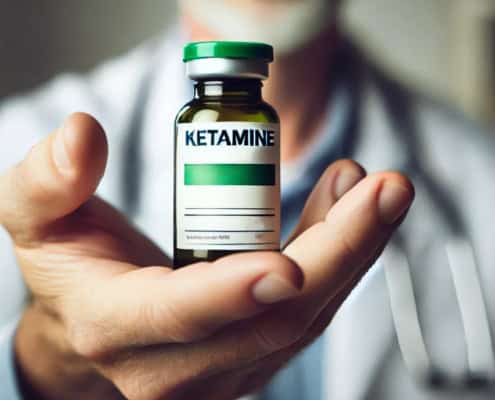
But sadly, it's hard to put your hands on ketamine and it's expensive asf.
How to replicate the effects of ketamine using cough syrup medicine
By using DXM and CYP2D6-inhibiting antidepressants, piracetam, and glutamine.
Here's a study on it:
DXM, CYP2D6-inhibiting antidepressants, piracetam, and glutamine: proposing a ketamine-class antidepressant regimen with existing drugs - PMC
Rapid-acting antidepressants show that mood can lift within hours when glutamatergic circuits shift from an “NMDA-dominant” to an “AMPA-dominant” state. Intravenous ketamine achieves this flip but is hampered by dissociation and logistics, while ...
 pmc.ncbi.nlm.nih.gov
These drugs are cheap asf and easily obtained
And personally I think this protocol is better than ketamine alone because DXM is a sigma-1 agonist which provides neuroprotection.