ariser
You just need one victory
- Joined
- May 12, 2026
- Posts
- 34
- Reputation
- 49
Sup guys. I've noticed that there aren't many people talking about Nasolabial Folds so I wanted to make this thread.
I want to specify that I'm no doctor, I'm a dude that LDARs while reading research papers.
NASOLABIAL FOLDS - THE ANATOMY & CAUSES
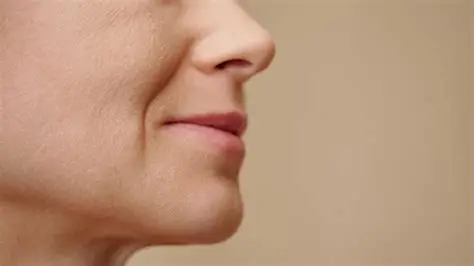
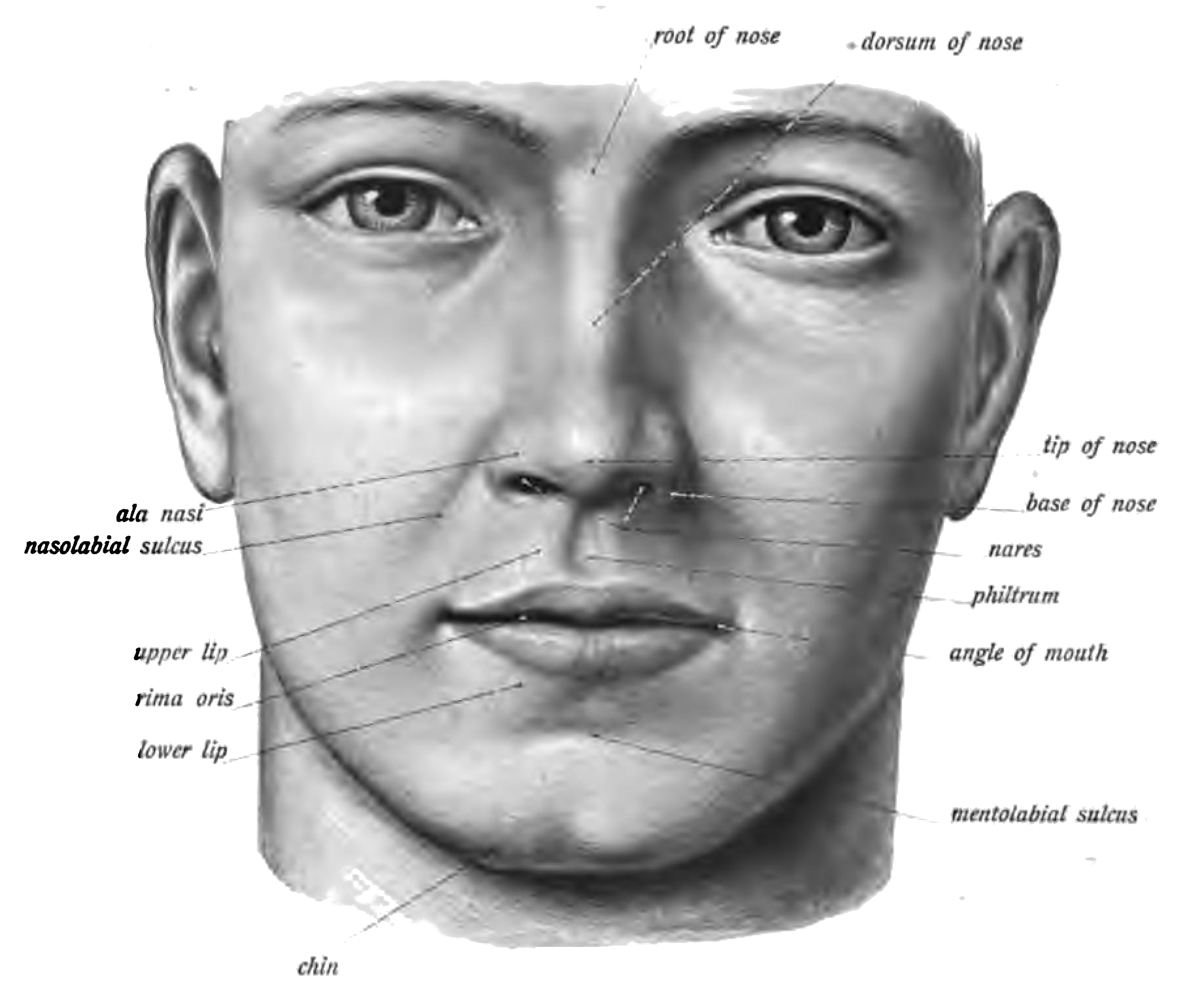
Nasolabial Folds (or Nasolabial Sulcus) are those creases that extend bilaterally from the alar base of the nose to the corners of the mouth.
There are 3 causes for NLFs, and tendentially there are 3 different treatments, depending on the cause (mind you that often, the problems are multiple and they are a mixture. However, there is certainly one of the 3 that has a major role in contrast of the others).
Causes:
This problem is more likely to occurr if you are 20+.
How to determine if this is the major problem:
This is one of the least common causes, especially the younger you are. People often misdiagnosed themselves with this instead of cause (3). If you have a lot of buccal fat, you'll know it just by looking at yourself.
Does putting 2 fingers on your cheek and lifting it makes your fold almost erased?
And most importantly, does your Nasolabial Fold look worse when you are bloated?
If yes, it could be an indication that the sagging of buccal fat is causing your NLF to show even at rest.
How to determine if this is the major problem:
At rest your folds are barely visible / they just cast a small shadow, but when you smile they become EXPLOSIVELY deeper?
Everyone has them when smiling. But if yours get really visible and then at rest they are okay-ish, maybe this could be the cause.
How to determine if this is the major problem:
First clue, the fold's are visible even when you're not smiling, if yes, it's a 50/50 between this or buccal fat sagging. The younger and leaner you are, the more is probable that it's a maxillary problem, if they still are there.
The forums have extensively talked about how to determine maxillary recession.
In my opinion you shouldn't spike your cortisol if they are visible from smiling. everyone's are visible from smiling:


Except if the folds become incredibly and largely deeper from smiling, then it can indicate cause (2).
What you should care about most is how they appear at rest.
A small subtle shadow can still be an indicative of having to take action to not further aggravate the situation.
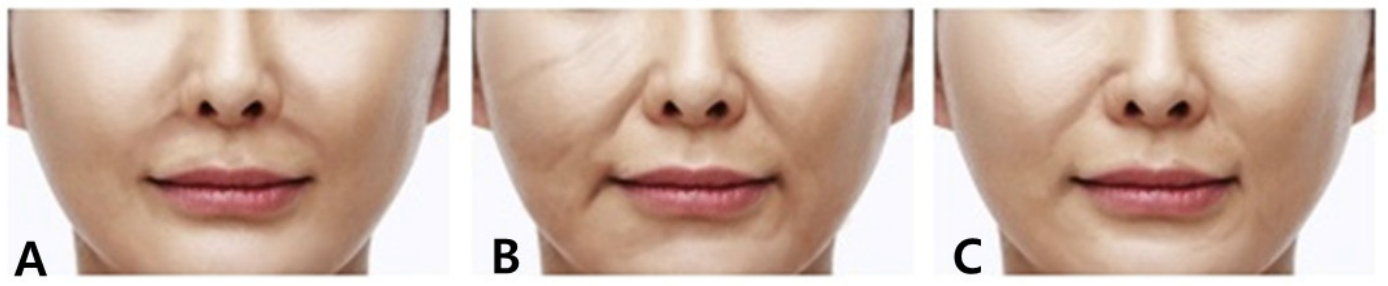
It's kinda hard to put a finger on it, but these 3 different images show 3 different causes of Nasolabial Folds.
A is caused by maxillary recession.
B by buccal fat sagging.
C by muscle contractions pulling down.
SOLUTIONS - FROM SOFTMAXXES TO INJECTIONS
Now that we know what causes it, let's address how to solve it.
If you are a teen reading this, and you noticed a bit (or a lot) of visible NLFs at rest, the first softmax is the most classic one, which is mewing.
By mewing during development, and doing it correctly and continuously this will happen:
You should already be mewing so this is water.
Another softmax are face muscle's massages and stretches. Girls have extensive content on this "face yoga" stuff and some of them are useful. It will not fix the underline problem but it could reduce bloatedness / muscle tension that makes Nasolabial Folds worse.
These massages often promote lymphatic drainage, better circulation, less muscle tension. All things that add on the looks of your NLF.
Doing stretches and massages regularly could temporarily give you a better look.
Also, if the cause is buccal fat, leanmaxxing helps.
Solutions:
1 - Solution if the cause is sagging of buccal fat
If your face is sagging down from fat, then the no brainer solutions are Threads.
Threads lift the sagging, tighten the loose tissue above the fold, reduce that thick contrast and are generally safer than fillers (we will talk about them on solution (3)
To be precised, the best of the best would be a
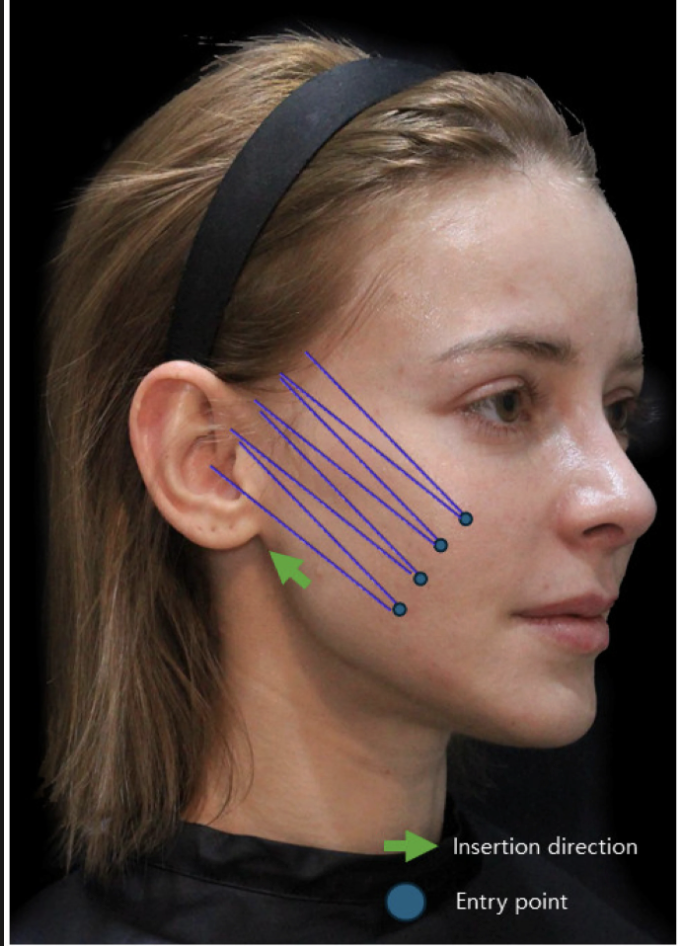
Reverse technique: an entry point is placed outside the fold. threads pass under the nasolabial fat, they hook into strong ligaments (like zygomatic outer maxillary) and lift up the sagging pad, upward and forward.
Cross technique: this is for volumizing the threads. Placed vertically along the fold, tightens the loose tissues above the crease. It smoothens the boundary between upper lip and cheeks.
Why not just go with fillers?
If your problem is buccal fat, your face is already full. This is not a problem of volume deficiency. It's fat sagging down + tissues laxity.
Adding filler will just make the area look heavier.
USA general cost: 800$ - 2000$
Europe general cost: 400€ - 1200€
The cost varies depending on the amount of threads used.
Threads have very few risks and basically all of them are either temporary or easily treatable.
The alternative is buccal fat removal if you want to look like a tim burton character.
2 - Solution if the cause is muscle-driven
Threads are also the best solution if your problem is muscle driven.
An alternative could be a micro-botox but I'd just go with threads.
However, not the same technique should be used if the problem is not fat sagging.
You should ONLY use the cross technique.
Why?
Because it stimulates the area to make it firmer. Here you are dealing with overactive elevator muscles that cause a dynamic folding when smiling. since there is no fat to lift, the reverse technique is not needed.
3 - Solution if the cause is recessed maxilla
For this cause, Dermal Fillers are the standard of today's clinical settings.
Time ago they went by implants or fat grafting, they are still valid methods, but nowadays fillers are so minimally invasive, low likelihood of side effects, and have shorter periods of recovery, that they are preferred and suggested.
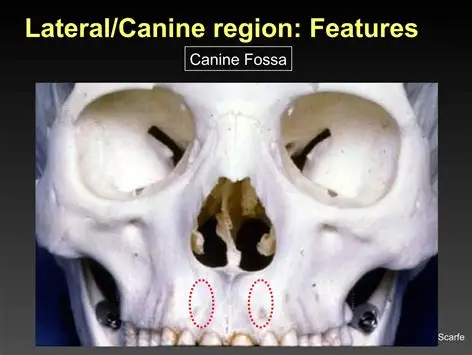
What they do is inject filler on the canine fossa, those circled in red spots on the maxilla, right above your upper teeth. This adds support for forward and upward projection, acting as the bone that you're missing on volume.
Should you use HA - hyaluronic acid or CaHA - calcium hydroxyapatite?
HA fillers are the most common, reversible and offer a subtle structural support; which is often all you need.
CaHA fillers are used by patients in need of a strong projection, usually people older than 40-50yo. Not for first timers.
In the end is case dependent and you should ask your specialist, but generally you'd go with hyaluronic acid.
Here's what's expected to happen after procedure:
The reason is because near the fold (5 mm distance, or for 70% of people directly on the fold) sits the facial artery.
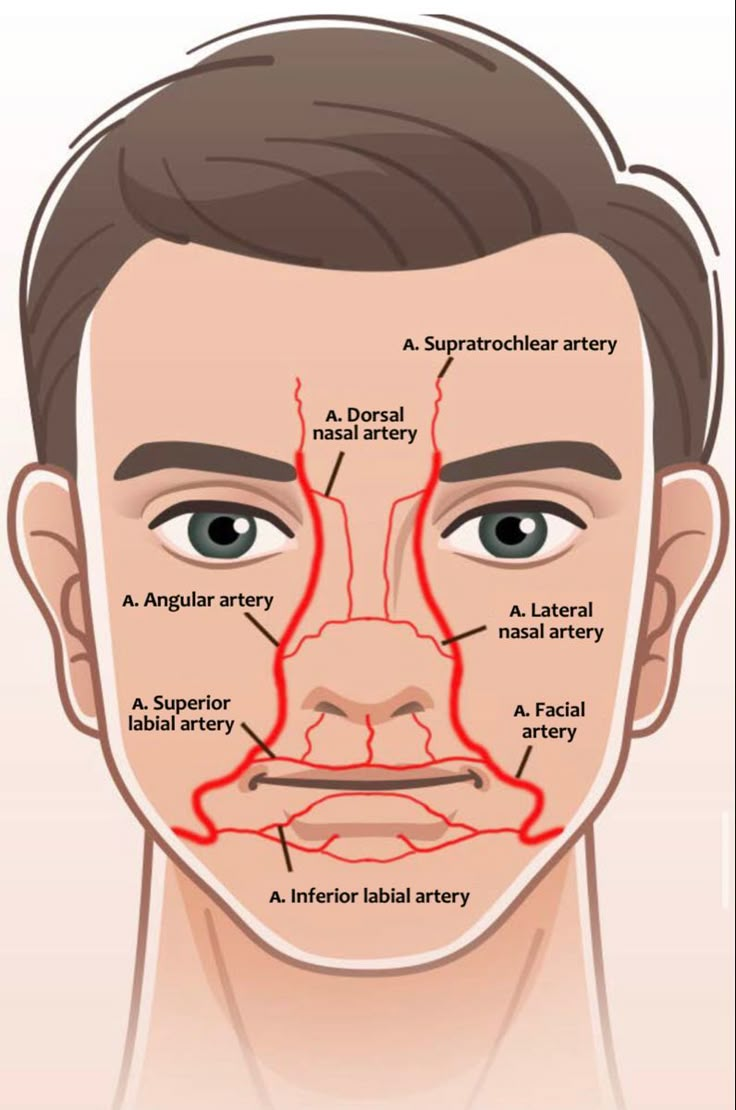
If the filler were to hit this artery by an inexperienced specialist, some serious complications could occurr such as:
Vascular occlusion (thankfully majorly not permanent),
Irreversible skin tissue necrosis. Which causes your skin to die because of lack of blood flow, as it is being blocked by the filler.
Vision loss, if the filler travels towards the eye.
These are rare and extreme cases, I read published complications rates and it goes something like this:
You'd have to misfortunemaxx to get these, however the rate is not 0.
Deep filler on the canine, instead of superficial filler on the fold, is far safer, anatomically correct and best way to solve it, if the cause is maxillary recession.
In the end the choice is yours, maybe your less afraid to inject filler on a less deeper level. But generally I'd go with canine injections.
This was my first time writing a megathread.
I chose to educate myself and you guys on nasolabial folds since it's something not often talked about. Hope you had fun reading.
I am an iqlet neurodivergent bastard but I found that I can actually learn some stuff if I get down to it to get some reputations points from some strangers online. Who would have guessed. Maybe I should start school again.
I hope this helped someone.
Peace
I want to specify that I'm no doctor, I'm a dude that LDARs while reading research papers.
NASOLABIAL FOLDS - THE ANATOMY & CAUSES
Nasolabial Folds (or Nasolabial Sulcus) are those creases that extend bilaterally from the alar base of the nose to the corners of the mouth.
There are 3 causes for NLFs, and tendentially there are 3 different treatments, depending on the cause (mind you that often, the problems are multiple and they are a mixture. However, there is certainly one of the 3 that has a major role in contrast of the others).
Causes:
1 - Sagging of the buccal fat
- With age, superficial nasolabial fat enlarges
- Buccal fat below the fold shrinks
- Creates a sharp thickness contrast above vs below the fold
This problem is more likely to occurr if you are 20+.
When I read this I wondered if being bloated could somehow affect the appearance of NLFs, and if yes, would they be better or worse?
And apparently yes, being bloated does slightly change the looks of it, and for the worst.
It deepens them because water retention adds volume above the fold (aka the nasolabial fat), it pushes buccal fat upward and adds weight to the 'SMAS'* which brings to a downward pull.
*SMAS stands for Superficial Musculo‑Aponeurotic System, in two words it's a fibrous layer that supports and connects your skin to muscles and fat pads.
And apparently yes, being bloated does slightly change the looks of it, and for the worst.
It deepens them because water retention adds volume above the fold (aka the nasolabial fat), it pushes buccal fat upward and adds weight to the 'SMAS'* which brings to a downward pull.
*SMAS stands for Superficial Musculo‑Aponeurotic System, in two words it's a fibrous layer that supports and connects your skin to muscles and fat pads.
This is one of the least common causes, especially the younger you are. People often misdiagnosed themselves with this instead of cause (3). If you have a lot of buccal fat, you'll know it just by looking at yourself.
Does putting 2 fingers on your cheek and lifting it makes your fold almost erased?
And most importantly, does your Nasolabial Fold look worse when you are bloated?
If yes, it could be an indication that the sagging of buccal fat is causing your NLF to show even at rest.
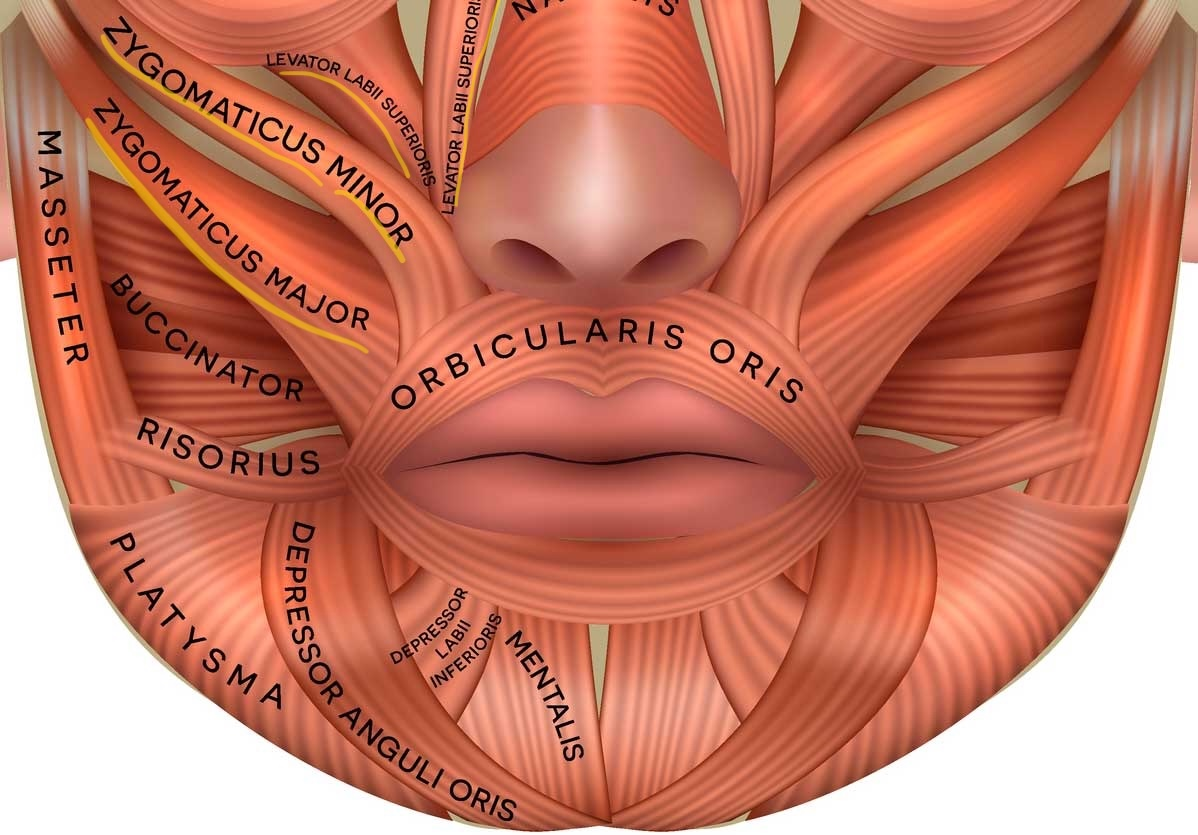
2 - Muscle-driven NLFs
- Caused by specific fibers of:
- levator labii superioris alaeque nasi
- levator labii superioris
- zygomaticus major/minor
- These fibers attach directly near the fold and pull the skin downward during smiling
- Over time, repeated smiling makes the fold visible even at rest (yes, it's not a larp from tiktokcels)
How to determine if this is the major problem:
At rest your folds are barely visible / they just cast a small shadow, but when you smile they become EXPLOSIVELY deeper?
Everyone has them when smiling. But if yours get really visible and then at rest they are okay-ish, maybe this could be the cause.
3 - Recession near the alar base
- Caused by recession of the maxilla
- Leads to hollowing under the alar and prominent nasolabial fat above the fold
How to determine if this is the major problem:
First clue, the fold's are visible even when you're not smiling, if yes, it's a 50/50 between this or buccal fat sagging. The younger and leaner you are, the more is probable that it's a maxillary problem, if they still are there.
The forums have extensively talked about how to determine maxillary recession.
In my opinion you shouldn't spike your cortisol if they are visible from smiling. everyone's are visible from smiling:
Except if the folds become incredibly and largely deeper from smiling, then it can indicate cause (2).
What you should care about most is how they appear at rest.
A small subtle shadow can still be an indicative of having to take action to not further aggravate the situation.
It's kinda hard to put a finger on it, but these 3 different images show 3 different causes of Nasolabial Folds.
A is caused by maxillary recession.
B by buccal fat sagging.
C by muscle contractions pulling down.
SOLUTIONS - FROM SOFTMAXXES TO INJECTIONS
Now that we know what causes it, let's address how to solve it.
If you are a teen reading this, and you noticed a bit (or a lot) of visible NLFs at rest, the first softmax is the most classic one, which is mewing.
By mewing during development, and doing it correctly and continuously this will happen:
- the midface becomes more projected
- the cheek fat pads sit higher
- the nasolabial ligament is less exposed
- the nasolabial fat pad doesn’t pile up
- the fold becomes shallow or doesn’t form at all
You should already be mewing so this is water.
Learned this from jester patel and actually works: bring your head forward simulating bad posture → say outloud the word "King", when saying "ng" your tongue should be on the roof of your mouth, let it there" → now keep repeating just "ng" for 3/4 times and when you do, raise your eyebrows, smile and swallow your saliva. After 3/4 times your tongue should be fully suctioned at the roof.
These massages often promote lymphatic drainage, better circulation, less muscle tension. All things that add on the looks of your NLF.
Doing stretches and massages regularly could temporarily give you a better look.
Also, if the cause is buccal fat, leanmaxxing helps.
Solutions:
1 - Solution if the cause is sagging of buccal fat
If your face is sagging down from fat, then the no brainer solutions are Threads.
Threads lift the sagging, tighten the loose tissue above the fold, reduce that thick contrast and are generally safer than fillers (we will talk about them on solution (3)
To be precised, the best of the best would be a
Thread lifting (Reverse Technique + Cross Technique)
Reverse technique: an entry point is placed outside the fold. threads pass under the nasolabial fat, they hook into strong ligaments (like zygomatic outer maxillary) and lift up the sagging pad, upward and forward.
Cross technique: this is for volumizing the threads. Placed vertically along the fold, tightens the loose tissues above the crease. It smoothens the boundary between upper lip and cheeks.
Why not just go with fillers?
If your problem is buccal fat, your face is already full. This is not a problem of volume deficiency. It's fat sagging down + tissues laxity.
Adding filler will just make the area look heavier.
USA general cost: 800$ - 2000$
Europe general cost: 400€ - 1200€
The cost varies depending on the amount of threads used.
Threads have very few risks and basically all of them are either temporary or easily treatable.
The alternative is buccal fat removal if you want to look like a tim burton character.
2 - Solution if the cause is muscle-driven
Threads are also the best solution if your problem is muscle driven.
An alternative could be a micro-botox but I'd just go with threads.
However, not the same technique should be used if the problem is not fat sagging.
You should ONLY use the cross technique.
Why?
Because it stimulates the area to make it firmer. Here you are dealing with overactive elevator muscles that cause a dynamic folding when smiling. since there is no fat to lift, the reverse technique is not needed.
3 - Solution if the cause is recessed maxilla
For this cause, Dermal Fillers are the standard of today's clinical settings.
Time ago they went by implants or fat grafting, they are still valid methods, but nowadays fillers are so minimally invasive, low likelihood of side effects, and have shorter periods of recovery, that they are preferred and suggested.
What they do is inject filler on the canine fossa, those circled in red spots on the maxilla, right above your upper teeth. This adds support for forward and upward projection, acting as the bone that you're missing on volume.
Should you use HA - hyaluronic acid or CaHA - calcium hydroxyapatite?
HA fillers are the most common, reversible and offer a subtle structural support; which is often all you need.
CaHA fillers are used by patients in need of a strong projection, usually people older than 40-50yo. Not for first timers.
In the end is case dependent and you should ask your specialist, but generally you'd go with hyaluronic acid.
Here's what's expected to happen after procedure:
- Immediate softening of the nasolabial fold, less shadow, smoother look. Subtle but makes the difference.
- Feeling of pressure and fullness that usually fades in 24-48 hours.
- Mild swelling. Goes away in 1-3 days.
- Tender when pressing the area for some days.
- In the first hours the filler starts to integrate with the deep tissues
The reason is because near the fold (5 mm distance, or for 70% of people directly on the fold) sits the facial artery.
If the filler were to hit this artery by an inexperienced specialist, some serious complications could occurr such as:
Vascular occlusion (thankfully majorly not permanent),
Irreversible skin tissue necrosis. Which causes your skin to die because of lack of blood flow, as it is being blocked by the filler.
Vision loss, if the filler travels towards the eye.
These are rare and extreme cases, I read published complications rates and it goes something like this:
| Risks | Rates | Solution |
|---|---|---|
| Vascular Occlusion | 1 in 6,000 / 10,000 injections. 0.01% - 0.016% | Most vascular occlusions are small & easily treatable, especially if used HA. |
| Skin tissue necrosis | 1 in 100,000 injections - 0.001% | Very rare. Early treatment prevents most damage |
| Blindness | 1 in 1,000,000 injections - 0.0001% | Worst case scenario. Extremely rare. Nothing to do. |
Deep filler on the canine, instead of superficial filler on the fold, is far safer, anatomically correct and best way to solve it, if the cause is maxillary recession.
In the end the choice is yours, maybe your less afraid to inject filler on a less deeper level. But generally I'd go with canine injections.
This was my first time writing a megathread.
I chose to educate myself and you guys on nasolabial folds since it's something not often talked about. Hope you had fun reading.
I am an iqlet neurodivergent bastard but I found that I can actually learn some stuff if I get down to it to get some reputations points from some strangers online. Who would have guessed. Maybe I should start school again.
I hope this helped someone.
Peace
Last edited: