ballskin
Checkout any time you like.But you can never leave
- Joined
- Dec 15, 2021
- Posts
- 1,290
- Reputation
- 1,700
Let's look at the data:
https://quillette.com/2019/03/12/attraction-inequality-and-the-dating-economy/
Or in other words, if you treat "likes" as currency, then the inequality in sexual opportunity on hinge is significantly higher then the US economy.
In criminology, there exists this idea called strain theory. Strain theory states that society puts pressure on people to achieve certain goals, and when these goals cannot be achieved, people are pressured into five common ways of coping: (stolen from wikipedia)
Now let's look at it through the lens of the incel community:
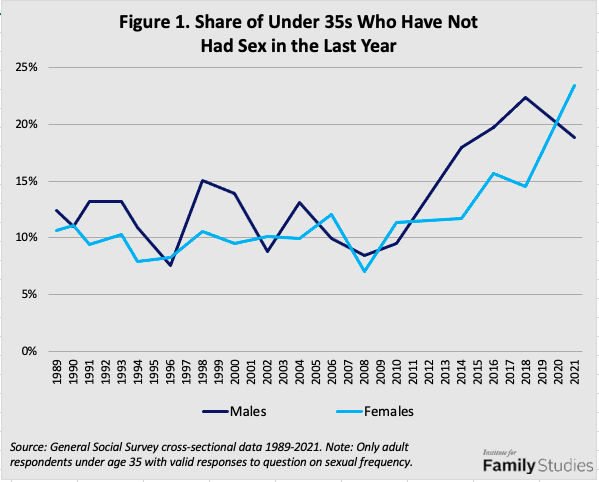
If we look at incels through the lens of strain theory: Society is telling these young men that sex is something desirable, and that everyone else is doing it. Therefore, their inability to get laid is creating strain. This drives those men to communities for innovation, ritualism, retreatism, or rebellion.
During times of high economic inequality, we aren't surprised to see the emergence of various radical, heterodox, economic extremists. The Jacobins, Bolsheviks, and Chavistas all appeared during times of extreme economic inequality.
https://quillette.com/2019/03/12/attraction-inequality-and-the-dating-economy/
A data scientist representing the popular dating app “Hinge” reported on the Gini coefficients he had found in his company’s abundant data, treating “likes” as the equivalent of income. He reported that heterosexual females faced a Gini coefficient of 0.324, while heterosexual males faced a much higher Gini coefficient of 0.542. So neither sex has complete equality: in both cases, there are some “wealthy” people with access to more romantic experiences and some “poor” who have access to few or none. But while the situation for women is something like an economy with some poor, some middle class, and some millionaires, the situation for men is closer to a world with a small number of super-billionaires surrounded by huge masses who possess almost nothing.
Or in other words, if you treat "likes" as currency, then the inequality in sexual opportunity on hinge is significantly higher then the US economy.
In criminology, there exists this idea called strain theory. Strain theory states that society puts pressure on people to achieve certain goals, and when these goals cannot be achieved, people are pressured into five common ways of coping: (stolen from wikipedia)
Conformity: pursuing cultural goals through socially approved means.
Innovation: using socially unapproved or unconventional means to obtain culturally approved goals. Example: dealing drugs or stealing to achieve financial security.
Ritualism: using the same socially approved means to achieve less elusive goals (more modest and humble).
Retreatism: to reject both the cultural goals and the means to obtain it, then find a way to escape it.
Rebellion: to reject cultural goals and the prescribed means to achieve them, then work towards replace both of them.
Now let's look at it through the lens of the incel community:
Conformity: ask out a large number of girls, follow all the guides on the internet, and hope one of them will go out with you.
Innovation: just hire a prostitute man...
Ritualism: I can't find someone willing to date me/sleep with me, but I got a friend at last!
Retreatism: the /r/mgtow idea. Who needs women anyways right?
Rebellion: Who needs sex when you got hentai? I prefer 2d girls anyways!
If we look at incels through the lens of strain theory: Society is telling these young men that sex is something desirable, and that everyone else is doing it. Therefore, their inability to get laid is creating strain. This drives those men to communities for innovation, ritualism, retreatism, or rebellion.
During times of high economic inequality, we aren't surprised to see the emergence of various radical, heterodox, economic extremists. The Jacobins, Bolsheviks, and Chavistas all appeared during times of extreme economic inequality.