davidlazaryako
#1 effort posts
- Joined
- Aug 3, 2026
- Posts
- 32
- Reputation
- 58
Disclaimer: double check everything i say, i'm not the second coming of Christ and i am open to mistakes, so please double check what i say and dont take it as the word of God. do your own research.
Each compound has four short lines:
Risk (main way it can hurt you)
Minimize (practical steps that cut the harm)
Ancillaries (medication category + named examples)
Monitor (the bloodwork or checks that matter)
welcome to the ancillary library

1. Testosterone (all esters)
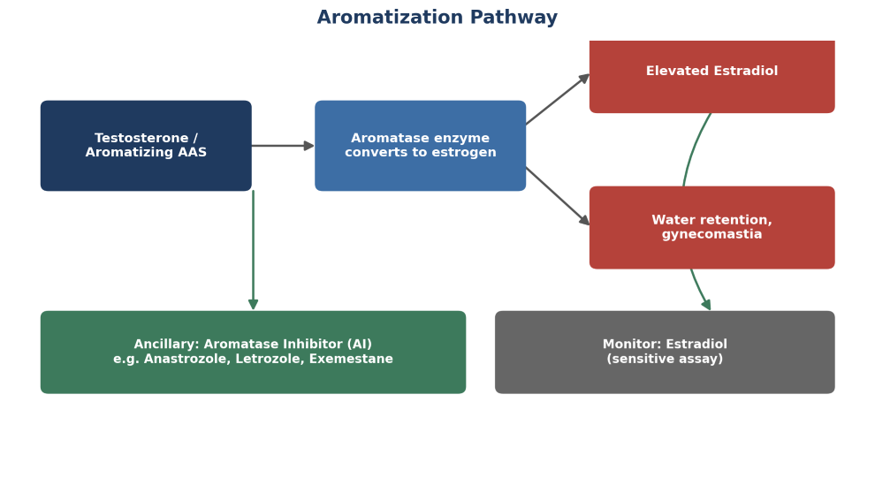
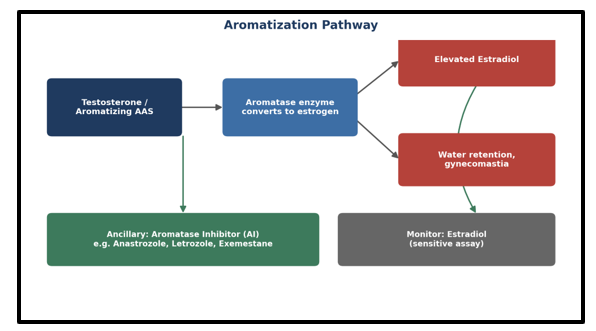
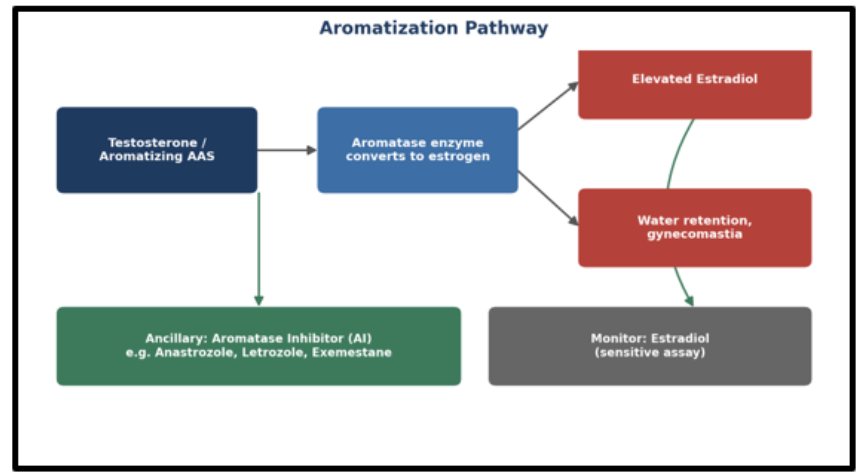
Risk: Turns into estrogen. Can cause water retention and gyno risk. Shuts down your natural HPTA. Also raises blood pressure in a lot of people, even at moderate doses.
Minimize: Don’t stack a bunch of aromatizing compounds at once. Lower body fat helps cut peripheral conversion.
Ancillaries: Aromatase inhibitor (AI) if estrogen symptoms show up: Anastrozole (Arimidex), Letrozole (Femara), Exemestane (Aromasin). SERM for restart: Tamoxifen (Nolvadex), Clomiphene (Clomid).
Monitor: Sensitive estradiol, total and free testosterone, LH, FSH. Track blood pressure regularly.
2. Dianabol (Methandrostenolone)
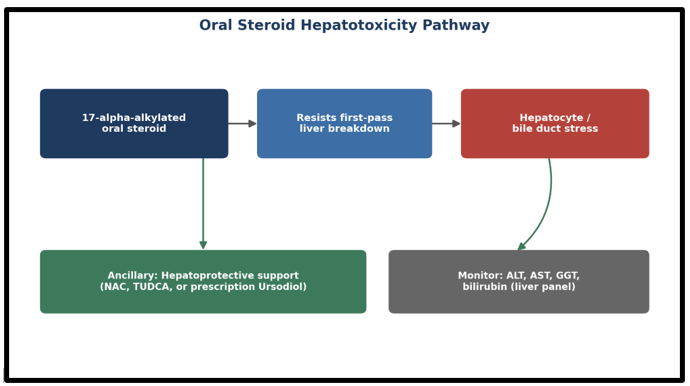
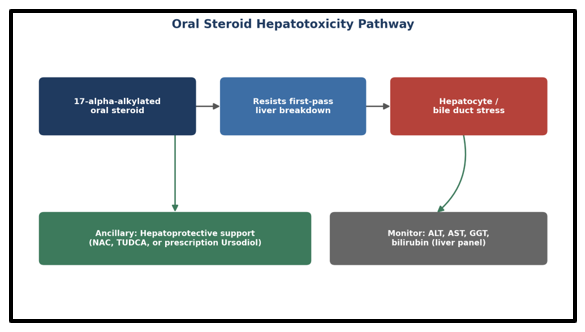
Risk: 17-alpha-alkylated oral so it’s hard on the liver. Aromatizes easily, water retention and gyno possible.
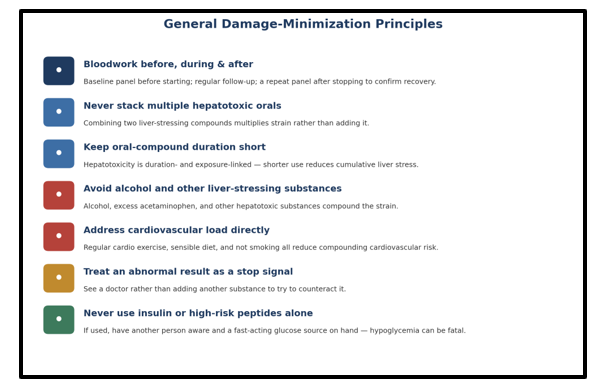
Minimize: Never run it with another liver-toxic oral. Skip alcohol completely. Keep the run as short as you can. Liver damage builds with time.
Ancillaries: Liver support (NAC, TUDCA, or prescription Ursodiol). AI if estrogen sides show up.
Monitor: Liver panel (ALT, AST, GGT, bilirubin).

3. Anadrol (Oxymetholone)
Risk:17-alpha-alkylated oral — significant hepatotoxicity. Strong estrogenic activity. Notable blood pressure elevation.
Minimize: Avoid alcohol and other liver-stressing substances; watch dietary sodium given the BP impact; never stack with another hepatotoxic oral.
Ancillaries: Hepatoprotectant; AI or SERM; ACE inhibitor / ARB / beta-blocker (Lisinopril, Losartan) if BP confirmed elevated. Blood pressure meds (Telmisartan, Losartan, Lisinopril, or a beta-blocker) if BP is elevated.
Monitor: Liver panel; blood pressure (regularly, not just at bloodwork).
4. Equipoise / EQ (Boldenone)
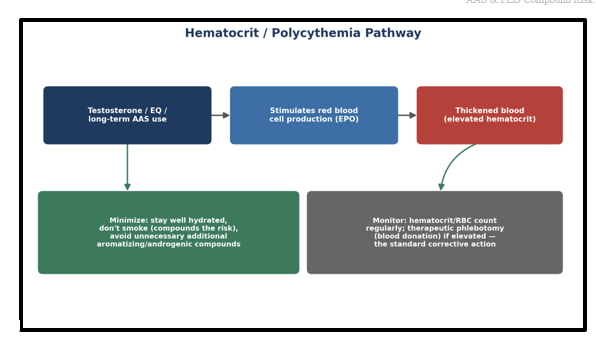
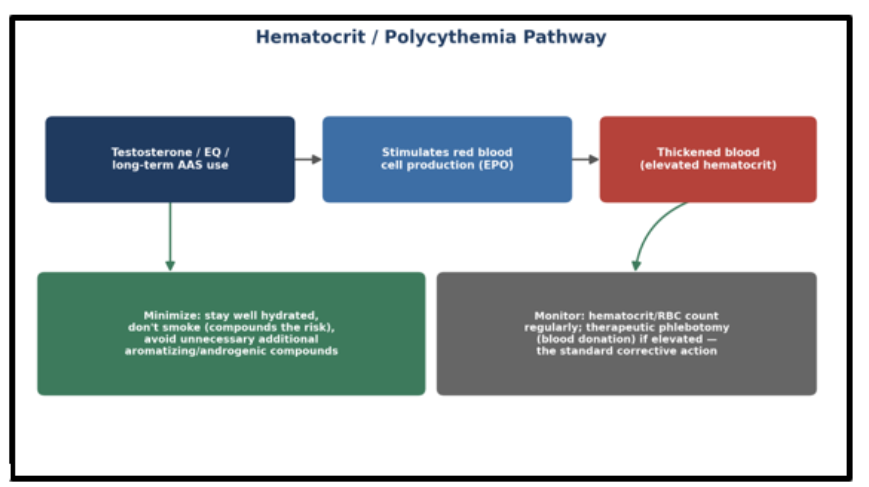
Risk: Long-acting. Appetite stimulation. Raises RBC count/hematocrit (polycythemia risk). Mild aromatization.
Minimize: Stay well hydrated; don't smoke (compounds clotting risk with elevated hematocrit); schedule regular blood donation if hematocrit trends high.
Ancillaries: Therapeutic phlebotomy (blood donation) for elevated hematocrit — no drug reverses this. AI if estrogenic symptoms appear.
Monitor: Hematocrit/RBC count and estradiol.

1. Winstrol (Stanozolol)
Risk: 17-alpha-alkylated oral, hepatotoxicity. Harsh negative lipid impact. Joint dryness/pain.
Minimize: Avoid alcohol; never combine with another hepatotoxic oral; prioritize cardio exercise given the lipid impact; joint support (omega-3s) can ease joint dryness.
Ancillaries: Hepatoprotectant, statin (Atorvastatin/Lipitor, Rosuvastatin/Crestor) or fenofibrate if lipids confirmed abnormal.
Monitor: Liver panel; lipid panel (HDL, LDL, triglycerides).
2. Masteron (Drostanolone)
Risk: Mild but still suppressive. Can worsen hair loss/prostate issues in predisposed individuals.
Minimize: Assess personal hair-loss/prostate risk factors before use; avoid combining with other strongly androgenic compounds if already predisposed.
Ancillaries: Finasteride / Dutasteride (prescription 5-alpha reductase inhibitors) if hair/prostate concerns present note: contested interaction with AAS, flag rather than resolve in your paper. SERM-based PCT.
Monitor: Hormone panel post-use.
3. Anavar (Oxandrolone)
Risk: Milder hepatotoxicity than other orals but still liver-taxing. Suppresses HDL cholesterol.
Minimize: Keep duration conservative even though it's comparatively milder; avoid alcohol; monitor lipids given HDL suppression.
Ancillaries: Hepatoprotectant; statin if lipids confirmed abnormal.
Monitor: Liver panel; lipid panel.
4. Turinabol
Risk: 17-alpha-alkylated oral — hepatotoxic. Negative lipid impact. Non-aromatizing.
Minimize: Never combine with another hepatotoxic oral; avoid alcohol; keep duration short.
Ancillaries: Hepatoprotectant; statin/fenofibrate if needed.
Monitor: Liver panel; lipid panel.

5. Superdrol (Methasterone)
Risk: Extremely hepatotoxic oral. Severe lipid impact even on short cycles.
Minimize: Given the severity of hepatotoxicity and lipid impact, the clearest damage-minimization step is the shortest possible duration and never combining with any other oral.
Ancillaries: Aggressive hepatoprotective support; often flagged high-risk regardless of ancillary use.
Monitor: Liver panel (frequent); lipid panel.
6. Halotestin (Fluoxymesterone)
Risk: Extremely hepatotoxic even short-term. Minimal muscle benefit relative to liver strain.
Minimize: Given how disproportionate the liver strain is to the benefit, minimization here means extremely short duration if used at all, and never stacking with another hepatotoxic compound.
Ancillaries: Hepatoprotectant; strict liver enzyme monitoring is the primary mitigation.
Monitor: Liver panel (frequent).

1. Deca-Durabolin (Nandrolone)
Risk: Long-acting, heavy, prolonged HPTA suppression. Progestin-related side effects. Reported erectile dysfunction ("Deca dick").
Minimize: Avoid running long-ester compounds back-to-back without adequate time off; address prolactin symptoms early rather than waiting for them to worsen.
Ancillaries: Dopamine agonist for prolactin Cabergoline (Dostinex), Bromocriptine (Parlodel). Extended SERM-based PCT. hCG (Pregnyl, Novarel) sometimes used off-label by TRT-prescribing doctors, contested, not universally endorsed.
Monitor: Prolactin; hormone panel post-use.
2. Trenbolone
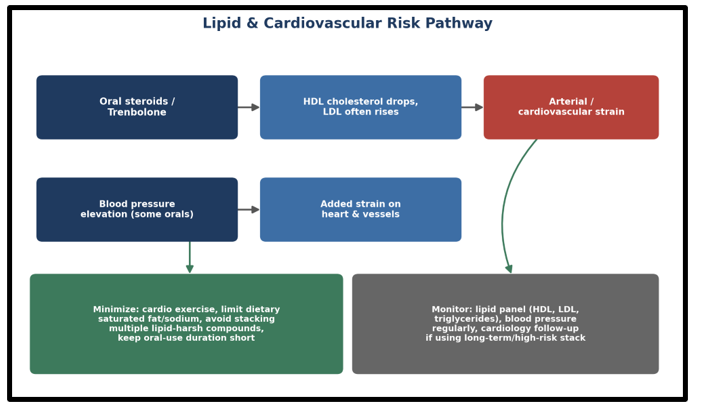
Risk: Non-aromatizing but strongly androgenic. Progestin-like activity, insomnia, anxiety. Sharp HDL suppression and cardiovascular strain.
Minimize: Prioritize cardiovascular health directly, cardio exercise, diet, not smoking; protect sleep given the insomnia/anxiety profile; avoid stacking with other harsh-on-lipids compounds.
Ancillaries: Dopamine agonist for prolactin if needed (Cabergoline). Statin or fenofibrate if lipids are bad. Blood pressure control (Telmisartan is popular here too).
Monitor: Prolactin; lipid panel; blood pressure; cardiovascular follow-up.
3. Primobolan (Methenolone)
Risk: Comparatively milder profile. Still suppresses natural testosterone production.
Minimize: Still complete a full PCT even though suppression is milder, don't skip monitoring just because the compound is considered gentler.
Ancillaries: SERM-based PCT for HPTA recovery.
Monitor: Hormone panel post-use.

1. Growth Hormone (Somatropin / HGH)
Risk: Insulin resistance. Joint/soft tissue overgrowth. Fluid retention. Potential cardiac hypertrophy with sustained high-level use.
Minimize: Manage insulin sensitivity through diet (lower simple-carbohydrate load); get periodic cardiac screening with sustained use rather than waiting for symptoms.
Ancillaries: No true pharmacological ancillary — management is blood glucose monitoring and cardiology follow-up, not a counteracting drug.
Monitor: Fasting glucose, HbA1c; echocardiogram for sustained use.
2. Insulin (used exogenously)
Risk: Hypoglycemia is acute and can be fatal. The single most dangerous substance commonly discussed in this space.
Minimize: This is the compound where minimization matters most: never use alone, always have someone aware who can respond, keep fast-acting glucose immediately on hand, and know the signs of hypoglycemia before ever using it.
Ancillaries: None meaningfully mitigate the core risk — worth framing explicitly as a case where "ancillary support" doesn't exist.
Monitor: Blood glucose (continuous awareness, not periodic).

1. Ostarine (MK-2866)
Risk: Marketed as mild, but still suppresses natural testosterone. Some reports of liver enzyme elevation.
Minimize: Don't assume "mild" means no PCT is needed, suppression still occurs; avoid stacking with other SARMs.
Ancillaries: SERM-based PCT for HPTA recovery. Clomid and/or Nolvadex
Monitor: Liver panel; hormone panel post-use.
2. LGD-4033 (Ligandrol)
Risk: More suppressive than Ostarine — testosterone suppression reported even at low doses in trials.
Minimize: Avoid stacking with other SARMs or AAS simultaneously; complete a full SERM-based PCT given the suppression profile.
Ancillaries: SERM-based PCT.
Monitor — Hormone panel (LH, FSH, total/free testosterone) post-use.
3. RAD-140 (Testolone)
Risk: Among the more potent SARMs for suppression. Limited human trial data; some case reports of liver injury.
Minimize: Monitor liver enzymes given case reports of injury; avoid stacking with other potentially hepatotoxic compounds.
Ancillaries: SERM-based PCT; liver panel monitoring.
Monitor: Liver panel; hormone panel post-use.


Worthy of BOTB yet? @foidslayer5000
if i missed anything lmk ill try and stay online and add anything i missed.
@cowmuncher26 @resting @Stalker @Big Boss @Regret @ragu @Gengar’s Ghost @buccalfatremoval
i accidentally closed the tab twice while doing the research for this @Master can you fucking make it so post drafts save or something
Each compound has four short lines:
Risk (main way it can hurt you)
Minimize (practical steps that cut the harm)
Ancillaries (medication category + named examples)
Monitor (the bloodwork or checks that matter)
welcome to the ancillary library
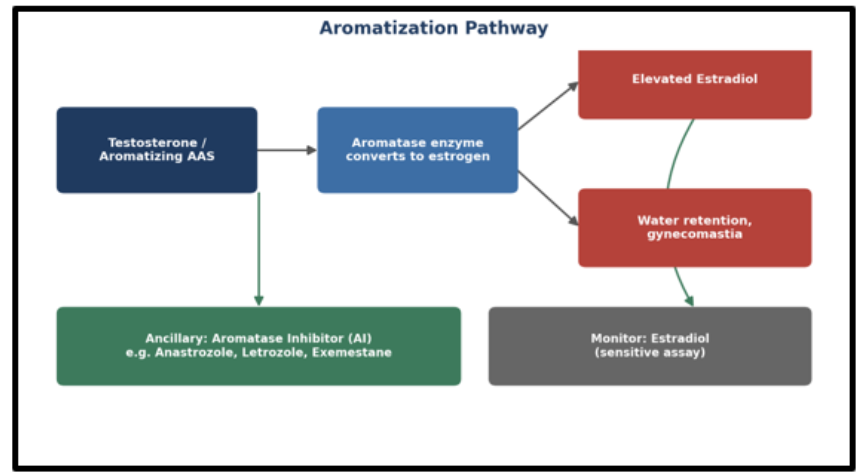
1. Testosterone (all esters)
Risk: Turns into estrogen. Can cause water retention and gyno risk. Shuts down your natural HPTA. Also raises blood pressure in a lot of people, even at moderate doses.
Minimize: Don’t stack a bunch of aromatizing compounds at once. Lower body fat helps cut peripheral conversion.
Ancillaries: Aromatase inhibitor (AI) if estrogen symptoms show up: Anastrozole (Arimidex), Letrozole (Femara), Exemestane (Aromasin). SERM for restart: Tamoxifen (Nolvadex), Clomiphene (Clomid).
Monitor: Sensitive estradiol, total and free testosterone, LH, FSH. Track blood pressure regularly.
2. Dianabol (Methandrostenolone)
Risk: 17-alpha-alkylated oral so it’s hard on the liver. Aromatizes easily, water retention and gyno possible.
Minimize: Never run it with another liver-toxic oral. Skip alcohol completely. Keep the run as short as you can. Liver damage builds with time.
Ancillaries: Liver support (NAC, TUDCA, or prescription Ursodiol). AI if estrogen sides show up.
Monitor: Liver panel (ALT, AST, GGT, bilirubin).
3. Anadrol (Oxymetholone)
Risk:17-alpha-alkylated oral — significant hepatotoxicity. Strong estrogenic activity. Notable blood pressure elevation.
Minimize: Avoid alcohol and other liver-stressing substances; watch dietary sodium given the BP impact; never stack with another hepatotoxic oral.
Ancillaries: Hepatoprotectant; AI or SERM; ACE inhibitor / ARB / beta-blocker (Lisinopril, Losartan) if BP confirmed elevated. Blood pressure meds (Telmisartan, Losartan, Lisinopril, or a beta-blocker) if BP is elevated.
Monitor: Liver panel; blood pressure (regularly, not just at bloodwork).
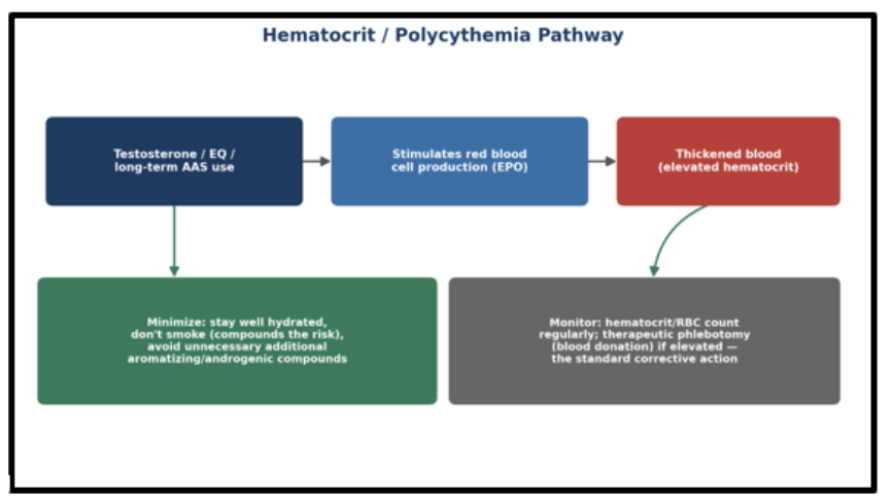
4. Equipoise / EQ (Boldenone)
Risk: Long-acting. Appetite stimulation. Raises RBC count/hematocrit (polycythemia risk). Mild aromatization.
Minimize: Stay well hydrated; don't smoke (compounds clotting risk with elevated hematocrit); schedule regular blood donation if hematocrit trends high.
Ancillaries: Therapeutic phlebotomy (blood donation) for elevated hematocrit — no drug reverses this. AI if estrogenic symptoms appear.
Monitor: Hematocrit/RBC count and estradiol.
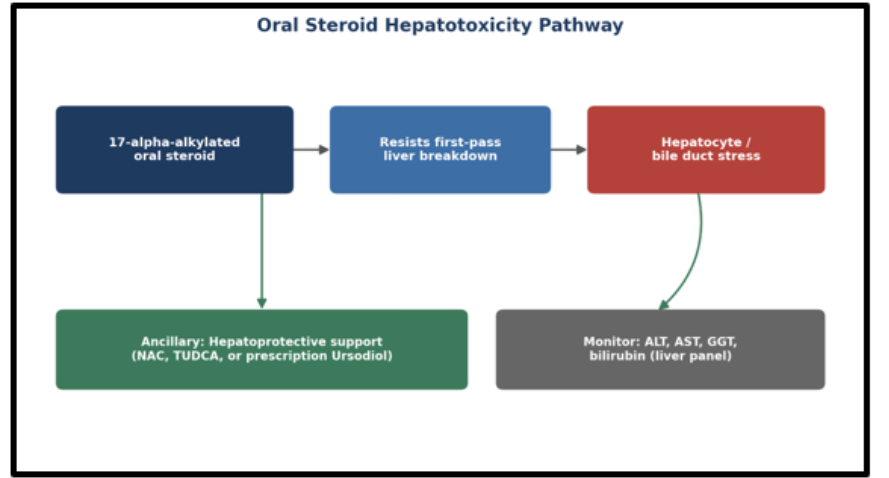
1. Winstrol (Stanozolol)
Risk: 17-alpha-alkylated oral, hepatotoxicity. Harsh negative lipid impact. Joint dryness/pain.
Minimize: Avoid alcohol; never combine with another hepatotoxic oral; prioritize cardio exercise given the lipid impact; joint support (omega-3s) can ease joint dryness.
Ancillaries: Hepatoprotectant, statin (Atorvastatin/Lipitor, Rosuvastatin/Crestor) or fenofibrate if lipids confirmed abnormal.
Monitor: Liver panel; lipid panel (HDL, LDL, triglycerides).
2. Masteron (Drostanolone)
Risk: Mild but still suppressive. Can worsen hair loss/prostate issues in predisposed individuals.
Minimize: Assess personal hair-loss/prostate risk factors before use; avoid combining with other strongly androgenic compounds if already predisposed.
Ancillaries: Finasteride / Dutasteride (prescription 5-alpha reductase inhibitors) if hair/prostate concerns present note: contested interaction with AAS, flag rather than resolve in your paper. SERM-based PCT.
Monitor: Hormone panel post-use.
3. Anavar (Oxandrolone)
Risk: Milder hepatotoxicity than other orals but still liver-taxing. Suppresses HDL cholesterol.
Minimize: Keep duration conservative even though it's comparatively milder; avoid alcohol; monitor lipids given HDL suppression.
Ancillaries: Hepatoprotectant; statin if lipids confirmed abnormal.
Monitor: Liver panel; lipid panel.
4. Turinabol
Risk: 17-alpha-alkylated oral — hepatotoxic. Negative lipid impact. Non-aromatizing.
Minimize: Never combine with another hepatotoxic oral; avoid alcohol; keep duration short.
Ancillaries: Hepatoprotectant; statin/fenofibrate if needed.
Monitor: Liver panel; lipid panel.
5. Superdrol (Methasterone)
Risk: Extremely hepatotoxic oral. Severe lipid impact even on short cycles.
Minimize: Given the severity of hepatotoxicity and lipid impact, the clearest damage-minimization step is the shortest possible duration and never combining with any other oral.
Ancillaries: Aggressive hepatoprotective support; often flagged high-risk regardless of ancillary use.
Monitor: Liver panel (frequent); lipid panel.
6. Halotestin (Fluoxymesterone)
Risk: Extremely hepatotoxic even short-term. Minimal muscle benefit relative to liver strain.
Minimize: Given how disproportionate the liver strain is to the benefit, minimization here means extremely short duration if used at all, and never stacking with another hepatotoxic compound.
Ancillaries: Hepatoprotectant; strict liver enzyme monitoring is the primary mitigation.
Monitor: Liver panel (frequent).
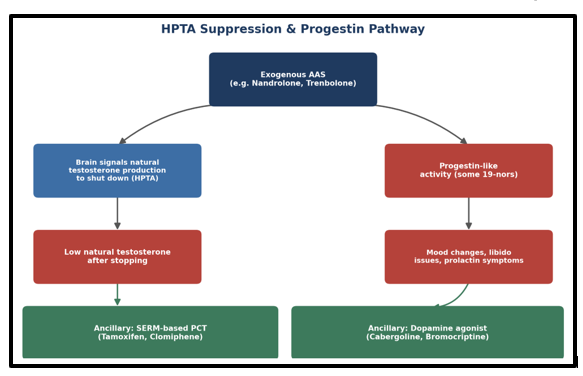
1. Deca-Durabolin (Nandrolone)
Risk: Long-acting, heavy, prolonged HPTA suppression. Progestin-related side effects. Reported erectile dysfunction ("Deca dick").
Minimize: Avoid running long-ester compounds back-to-back without adequate time off; address prolactin symptoms early rather than waiting for them to worsen.
Ancillaries: Dopamine agonist for prolactin Cabergoline (Dostinex), Bromocriptine (Parlodel). Extended SERM-based PCT. hCG (Pregnyl, Novarel) sometimes used off-label by TRT-prescribing doctors, contested, not universally endorsed.
Monitor: Prolactin; hormone panel post-use.
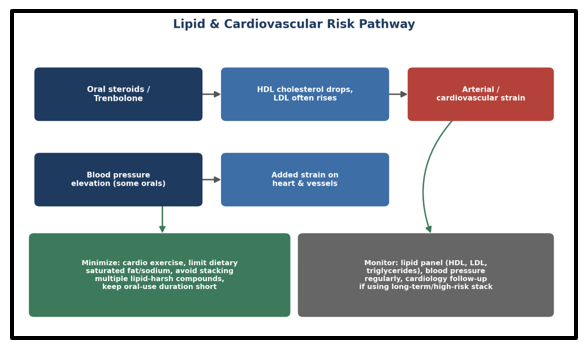
2. Trenbolone
Risk: Non-aromatizing but strongly androgenic. Progestin-like activity, insomnia, anxiety. Sharp HDL suppression and cardiovascular strain.
Minimize: Prioritize cardiovascular health directly, cardio exercise, diet, not smoking; protect sleep given the insomnia/anxiety profile; avoid stacking with other harsh-on-lipids compounds.
Ancillaries: Dopamine agonist for prolactin if needed (Cabergoline). Statin or fenofibrate if lipids are bad. Blood pressure control (Telmisartan is popular here too).
Monitor: Prolactin; lipid panel; blood pressure; cardiovascular follow-up.
3. Primobolan (Methenolone)
Risk: Comparatively milder profile. Still suppresses natural testosterone production.
Minimize: Still complete a full PCT even though suppression is milder, don't skip monitoring just because the compound is considered gentler.
Ancillaries: SERM-based PCT for HPTA recovery.
Monitor: Hormone panel post-use.
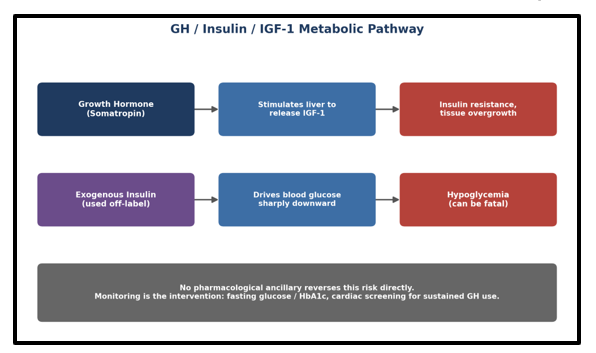
1. Growth Hormone (Somatropin / HGH)
Risk: Insulin resistance. Joint/soft tissue overgrowth. Fluid retention. Potential cardiac hypertrophy with sustained high-level use.
Minimize: Manage insulin sensitivity through diet (lower simple-carbohydrate load); get periodic cardiac screening with sustained use rather than waiting for symptoms.
Ancillaries: No true pharmacological ancillary — management is blood glucose monitoring and cardiology follow-up, not a counteracting drug.
Monitor: Fasting glucose, HbA1c; echocardiogram for sustained use.
2. Insulin (used exogenously)
Risk: Hypoglycemia is acute and can be fatal. The single most dangerous substance commonly discussed in this space.
Minimize: This is the compound where minimization matters most: never use alone, always have someone aware who can respond, keep fast-acting glucose immediately on hand, and know the signs of hypoglycemia before ever using it.
Ancillaries: None meaningfully mitigate the core risk — worth framing explicitly as a case where "ancillary support" doesn't exist.
Monitor: Blood glucose (continuous awareness, not periodic).
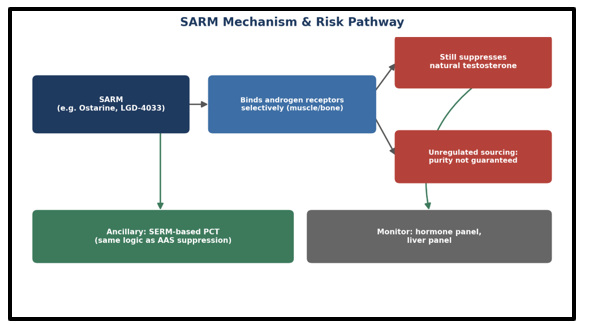
1. Ostarine (MK-2866)
Risk: Marketed as mild, but still suppresses natural testosterone. Some reports of liver enzyme elevation.
Minimize: Don't assume "mild" means no PCT is needed, suppression still occurs; avoid stacking with other SARMs.
Ancillaries: SERM-based PCT for HPTA recovery. Clomid and/or Nolvadex
Monitor: Liver panel; hormone panel post-use.
2. LGD-4033 (Ligandrol)
Risk: More suppressive than Ostarine — testosterone suppression reported even at low doses in trials.
Minimize: Avoid stacking with other SARMs or AAS simultaneously; complete a full SERM-based PCT given the suppression profile.
Ancillaries: SERM-based PCT.
Monitor — Hormone panel (LH, FSH, total/free testosterone) post-use.
3. RAD-140 (Testolone)
Risk: Among the more potent SARMs for suppression. Limited human trial data; some case reports of liver injury.
Minimize: Monitor liver enzymes given case reports of injury; avoid stacking with other potentially hepatotoxic compounds.
Ancillaries: SERM-based PCT; liver panel monitoring.
Monitor: Liver panel; hormone panel post-use.
Basaria, S., Collins, L., Dillon, E. L., Orwoll, K., Storer, T. W., Miciek, R., Ulloor, J., Zhang, A., Eder, R., Zientek, H., Gordon, G., Kazmi, S., Sheffield-Moore, M., & Bhasin, S. (2013). The safety, pharmacokinetics, and effects of LGD-4033, a novel nonsteroidal oral, selective androgen receptor modulator, in healthy young men. The Journals of Gerontology: Series A, Biological Sciences and Medical Sciences, 68(1), 87–95. https://doi.org/10.1093/gerona/gls078
Bonnecaze, A. K., O’Connor, T., & Burns, C. A. (2021). Harm reduction in male patients actively using anabolic androgenic steroids (AAS) and performance-enhancing drugs (PEDs): A review. Journal of General Internal Medicine, 36(7), 2055–2064. https://doi.org/10.1007/s11606-021-06751-3
Coviello, A. D., Kaplan, B., Lakshman, K. M., Chen, T., Singh, A. B., & Bhasin, S. (2008). Effects of graded doses of testosterone on erythropoiesis in healthy young and older men. The Journal of Clinical Endocrinology & Metabolism, 93(3), 914–919. https://doi.org/10.1210/jc.2007-1692
Kanakis, G. A., Nordkap, L., Bang, A. K., Calogero, A. E., Bártfai, G., Corona, G., Forti, G., Toppari, J., Goulis, D. G., & Jørgensen, N. (2019). EAA clinical practice guidelines—gynecomastia evaluation and management. Andrology, 7(6), 778–793. https://doi.org/10.1111/andr.12636
National Institute of Diabetes and Digestive and Kidney Diseases. (n.d.). Androgenic steroids. LiverTox: Clinical and Research Information on Drug-Induced Liver Injury. https://www.ncbi.nlm.nih.gov/books/NBK548931/
Petrovic, A., Vukadin, S., Sikora, R., Bojanic, K., Smolic, R., Plavec, D., Wu, G. Y., & Smolic, M. (2022). Anabolic androgenic steroid-induced liver injury: An update. World Journal of Gastroenterology, 28(26), 3071–3080. https://doi.org/10.3748/wjg.v28.i26.3071
Rajmil, O., & Moreno-Sepulveda, J. (2024). Recovery of spermatogenesis after androgenic anabolic steroids abuse in men: A systematic review of the literature. Actas Urológicas Españolas, 48(2), 116–124. https://doi.org/10.1016/j.acuro.2023.07.005
Thompson, P. D., Cullinane, E. M., Sady, S. P., Chenevert, C., Saritelli, A. L., Sady, M. A., & Herbert, P. N. (1989). Contrasting effects of testosterone and stanozolol on serum lipoprotein levels. JAMA, 261(8), 1165–1168. https://doi.org/10.1001/jama.1989.03420080085036
aggish, A. L., Weiner, R. B., Kanayama, G., Hudson, J. I., Lu, M. T., Hoffmann, U., & Pope, H. G., Jr. (2017). Cardiovascular toxicity of illicit anabolic-androgenic steroid use. Circulation, 135(21), 1991–2002. https://doi.org/10.1161/CIRCULATIONAHA.116.026880
Rahnema, C. D., Lipshultz, L. I., Crosnoe, L. E., Kovac, J. R., & Kim, E. D. (2014). Anabolic steroid–induced hypogonadism: Diagnosis and treatment. Fertility and Sterility, 101(5), 1271–1279. https://doi.org/10.1016/j.fertnstert.2014.02.002
Bonnecaze, A. K., O’Connor, T., & Burns, C. A. (2021). Harm reduction in male patients actively using anabolic androgenic steroids (AAS) and performance-enhancing drugs (PEDs): A review. Journal of General Internal Medicine, 36(7), 2055–2064. https://doi.org/10.1007/s11606-021-06751-3
Coviello, A. D., Kaplan, B., Lakshman, K. M., Chen, T., Singh, A. B., & Bhasin, S. (2008). Effects of graded doses of testosterone on erythropoiesis in healthy young and older men. The Journal of Clinical Endocrinology & Metabolism, 93(3), 914–919. https://doi.org/10.1210/jc.2007-1692
Kanakis, G. A., Nordkap, L., Bang, A. K., Calogero, A. E., Bártfai, G., Corona, G., Forti, G., Toppari, J., Goulis, D. G., & Jørgensen, N. (2019). EAA clinical practice guidelines—gynecomastia evaluation and management. Andrology, 7(6), 778–793. https://doi.org/10.1111/andr.12636
National Institute of Diabetes and Digestive and Kidney Diseases. (n.d.). Androgenic steroids. LiverTox: Clinical and Research Information on Drug-Induced Liver Injury. https://www.ncbi.nlm.nih.gov/books/NBK548931/
Petrovic, A., Vukadin, S., Sikora, R., Bojanic, K., Smolic, R., Plavec, D., Wu, G. Y., & Smolic, M. (2022). Anabolic androgenic steroid-induced liver injury: An update. World Journal of Gastroenterology, 28(26), 3071–3080. https://doi.org/10.3748/wjg.v28.i26.3071
Rajmil, O., & Moreno-Sepulveda, J. (2024). Recovery of spermatogenesis after androgenic anabolic steroids abuse in men: A systematic review of the literature. Actas Urológicas Españolas, 48(2), 116–124. https://doi.org/10.1016/j.acuro.2023.07.005
Thompson, P. D., Cullinane, E. M., Sady, S. P., Chenevert, C., Saritelli, A. L., Sady, M. A., & Herbert, P. N. (1989). Contrasting effects of testosterone and stanozolol on serum lipoprotein levels. JAMA, 261(8), 1165–1168. https://doi.org/10.1001/jama.1989.03420080085036
aggish, A. L., Weiner, R. B., Kanayama, G., Hudson, J. I., Lu, M. T., Hoffmann, U., & Pope, H. G., Jr. (2017). Cardiovascular toxicity of illicit anabolic-androgenic steroid use. Circulation, 135(21), 1991–2002. https://doi.org/10.1161/CIRCULATIONAHA.116.026880
Rahnema, C. D., Lipshultz, L. I., Crosnoe, L. E., Kovac, J. R., & Kim, E. D. (2014). Anabolic steroid–induced hypogonadism: Diagnosis and treatment. Fertility and Sterility, 101(5), 1271–1279. https://doi.org/10.1016/j.fertnstert.2014.02.002
Worthy of BOTB yet? @foidslayer5000
if i missed anything lmk ill try and stay online and add anything i missed.
@cowmuncher26 @resting @Stalker @Big Boss @Regret @ragu @Gengar’s Ghost @buccalfatremoval
i accidentally closed the tab twice while doing the research for this @Master can you fucking make it so post drafts save or something
Attachments
Last edited: