Organ
was it all worth it?
- Joined
- Jul 9, 2026
- Posts
- 564
- Reputation
- 1,893
Anti-Aging Lasers: The Full Breakdown
Comprehensive guide by Organ
I am not a medical professional, and the information provided here is for general educational and informational purposes only. It does not constitute professional medical advice, diagnosis, or treatment.
Table of Contents
1. Reference Ratings Table
2. What Anti-Aging Lasers Actually Do
3. Two Spectrums That Explain Every Laser
4. Fully Ablative Resurfacing
5. Fractional Ablative Lasers
6. Hybrid Fractional Lasers
7. Non-Ablative Fractional Lasers
8. Gentle Fractional Lasers
9. Superficial Ablative Peel Lasers
10. IPL & BBL: Not Actually Lasers
11. Pulse Dye Laser
12. Where Lasers Actually Fit
13. Disclaimer
1. Reference Ratings Table
Two important notes on IPL/BBL: It is a 10/10 at the one specific thing that it does which is clearing brown and red discoloration, but it drops to a 5/10 once you factor in the results fade over time and that it does not treat fine lines or wrinkles.
Every row above gets fully explained in its own section below (this can just be used as a cheat sheet or a TLDR)
2. What Anti-Aging Lasers Actually Do
There are eight main types of anti-aging laser treatments that people talk about. Some of them physically remove skin. Some just heat the skin from underneath and leave the top layer alone. Some aren't even lasers at all, they're light devices that get grouped in with lasers because they're used in the same places. Picking the wrong one isn't just a waste of money, it can mean weeks of recovery for a treatment that was never going to fix your actual problem. In the worst cases, it can cause permanent skin damage that can't be undone.
3. Two Spectrums That Explain Every Laser
Before we get into each treatment, there are two basic ideas that apply to almost every laser on this list. Once you understand these two things, everything else is much easier to follow.
1. Ablative vs. Non-Ablative
The first is ablative versus non-ablative. Ablative means the laser physically destroys and removes a layer of skin. It targets the water in your skin and burns off a layer of skin with each pass. Non-ablative means nothing is removed. The laser sends energy deeper into the skin to trigger a healing response, mainly more collagen, without creating a wound on the surface. Ablative treatments work faster and stronger, but come with more downtime and more risk if done poorly. Non-ablative treatments are gentler and safer, but slower, so you'll need several sessions instead of one big one.
2. Full Field vs. Fractional
The second idea is full-field versus fractional. Full-field means the laser touches every bit of skin in the treatment area. This is why full-field ablative treatments can fully erase deep wrinkles, but it's also why the recovery takes so long. Fractional means the laser only touches part of the skin, usually around 11 to 22 percent, in a pattern of tiny dots or columns. The untreated skin around each dot is what helps the area heal so much faster. The tradeoff is that fractional treatments usually need several sessions to build up to the kind of results a full-field treatment gives in one visit.
4. Fully Ablative Resurfacing
This is the strongest treatment on the list, which is why the results are so extreme. Two main types are used here, CO2 and Erbium YAG. They do similar things, but they're not the same. In the Erbium group, you'll see names like Sciton's Contour TRL (TRL stands for tunable resurfacing laser), and that adjustability is the main reason Erbium has become the more popular choice over CO2 in most top practices today.
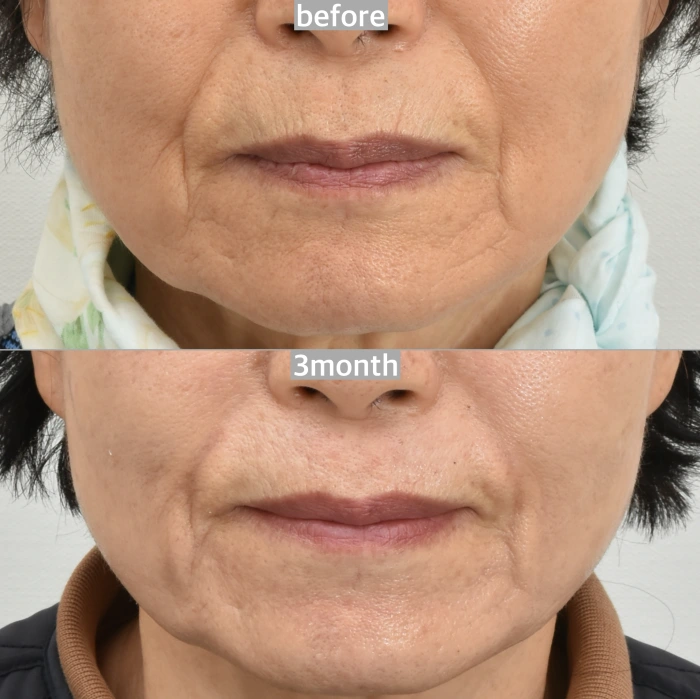
CO2 has been around longer than almost any other laser used in medicine, and it does work well, but it's less precise. CO2 can cause something called nonspecific thermal injury, which means the heat spreads further into the skin than intended. This leads to longer swelling and a higher chance of dark or light spots forming afterward. Dark spots usually fade over time and can be treated with lightening creams. Light spots, where the skin loses its color, don't come back, ever. That's the main reason CO2 has become less popular for full-face treatments, even though it's still a solid laser.
Erbium YAG fixes this problem by letting the provider remove skin down to a very exact depth. That precision means a shorter, more predictable recovery, usually about 14 days, unless treating a deeper area like around the mouth, which can add another week.
Who Is This For
People in their 50s, 60s, and up who have years of sun damage, dullness, and uneven skin tone and haven't done much skincare, and also anyone with deep vertical lines around the mouth, which is the most common reason people get this treatment, even if the rest of their skin looks great.
Cost
Cost runs $2,500 to $8,000 or more, depending on how deep the treatment goes and how experienced the provider is. However, for something like deep lip lines, this is usually a one-time treatment, not something you repeat.
5. Fractional Ablative Lasers
This uses the same basic idea as full-field resurfacing as it removes skin, but only through that dotted pattern instead of covering the whole surface. In the CO2 group you'll see names like Lutronics eCO2 or Candela CORE. In the Erbium group you'll see names like Sciton's ProFractional or Fontana.
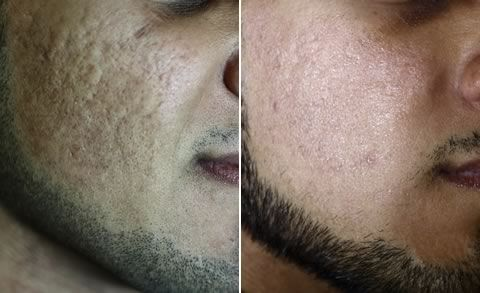
Since only part of the skin is treated at once, the untreated skin around it helps everything heal much faster than full-field treatments allow. This allows it to do something full-field can't do well. This category is the top choice for acne scars, surgical scars, and general skin-quality improvement, along with some help for fine lines and tone. It won't fully get rid of a deep wrinkle the way full-field resurfacing can as that's not really its job. Its job is broad, low-risk improvement, and it can be used on the neck, which full-field ablative can't.
Who Is This For
The ideal patient is in their 40s or 50s, wants something stronger than a light treatment but doesn't want the long recovery of full-field resurfacing and doesn't need it.
Cost
Cost usually runs $2,000 to $5,000 per session, and this treatment needs several sessions, plan on three to five to get the result you're actually hoping for. If you can't commit to the full series, it may not be worth starting at all, since one session alone often isn't enough and tends to disappoint people.
6. Hybrid Fractional Lasers
This treatment combines two types of laser energy in one device: an ablative type that works on texture like fractional lasers do, and a non-ablative type that targets discoloration, both browns and reds, at the same time. The best-known device here is Sciton's Halo, with Alma also offering something similar.
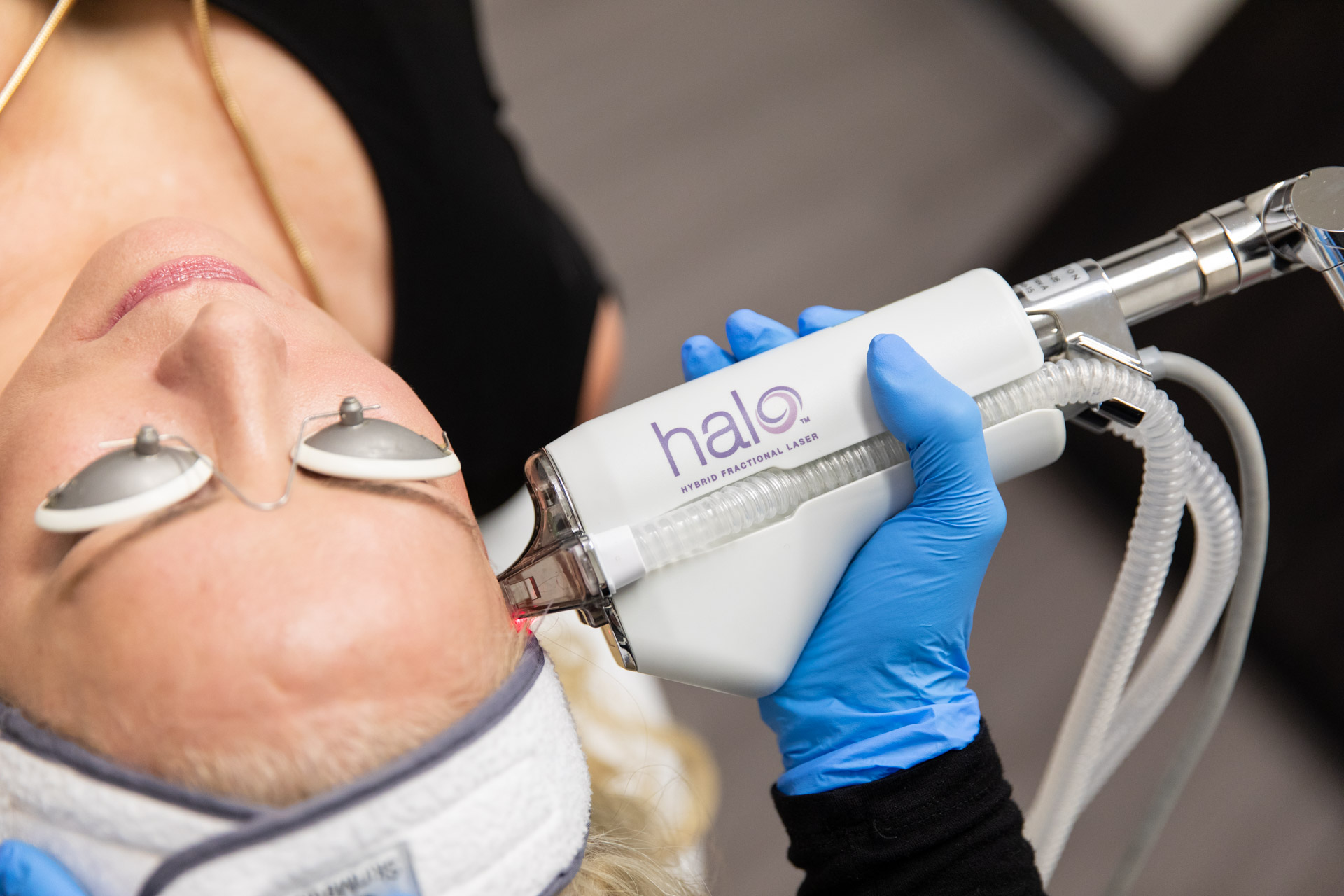
The appeal is simple, you get better texture and better tone from one visit instead of doing two separate treatments.
Who Is This For
It also works for a younger age group than full resurfacing, generally 30s through 50s, and can be used on the face, neck, and chest.
Cost
Cost runs $1,500 to $2,500 per session. You'll see some change after one treatment, but most people need two to four sessions to get the kind of results that actually satisfy them, since only part of the skin is treated each time.
It's a solid, well-rounded option that doesn't ask too much of you, but it's not the best at any one thing. Dedicated pigment treatments like IPL/BBL do better with discoloration, and fractional ablative lasers do better with texture and wrinkles. It's a well rounded treatment, which is exactly what makes it appealing to a lot of people, and also why it's not the top pick for any single specific problem.
7. Non-Ablative Fractional Lasers
No skin is removed here at all. The laser sends energy into the deeper layers of skin to trigger more collagen and modestly improve discoloration, without creating a wound on the surface. Fraxel Restore is the name most people know in this group.
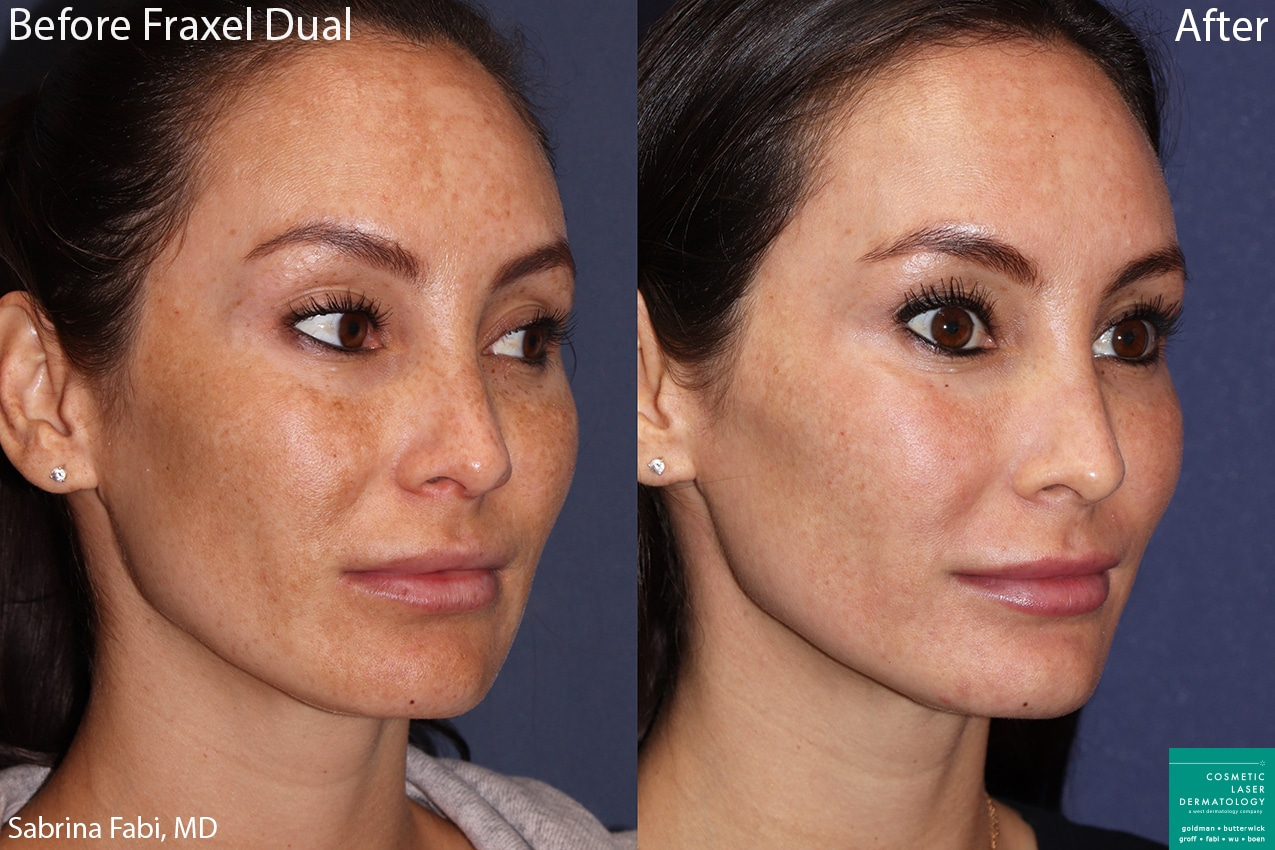
This is more of an upkeep and prevention treatment than a fix.
Who Is This For
The ideal person is in their 30s or 40s, wants to get ahead of collagen loss before it shows, and understands going in that changes will be slow and small, not dramatic.
Cost
Cost runs $500 to $2,500 per session, and like most non-ablative fractional treatments, it takes a series of sessions.
8. Gentle Fractional Lasers
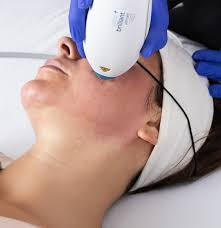
This works the same way as Fraxel, just turned down even further. It's basically the more simple version of non-ablative fractional treatment. Clear + Brilliant, made by the same company as Fraxel, is the name most people know in this group.
Who Is This For
This is meant for people in their 20s and 30s who want to stay ahead of skin aging without much downtime or cost.
Cost
It's priced to match, $250 to $750 per session, usually done as a starting series of three to six sessions, then kept up every so often after that.
9. Superficial Ablative Peel Lasers
This one gets overlooked a lot, and it's honestly one of the most efficient treatments on this whole list. Sciton's Contour Micro Laser Peel is the name most tied to this category. It works by removing just the very top layer of skin, adjustable from about 4 to 10 microns deep, taking off the dull outer layer in a single pass. It works a lot like a chemical peel, but the laser gives much more control over exactly how deep it goes.
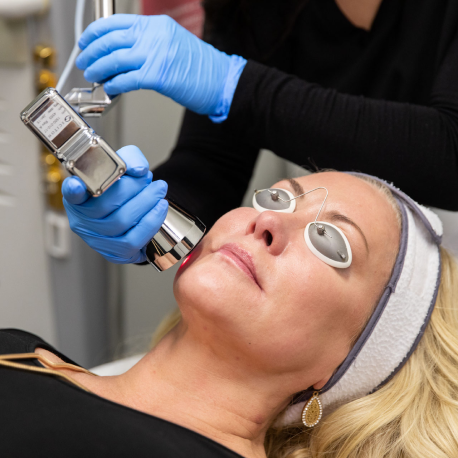
Because a whole layer is removed rather than just a fraction of the surface, you'll see results after just one session, unlike most fractional treatments above that need several sessions before you notice a real change.
Who Is This For
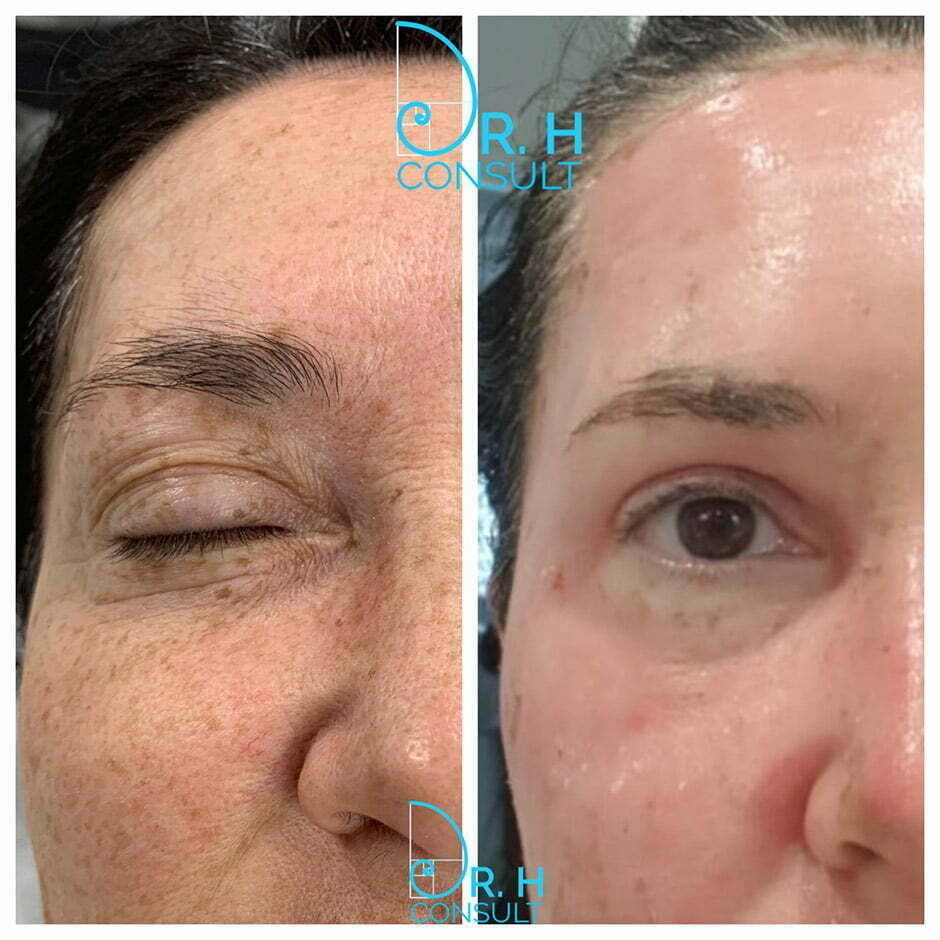
This is a great option for people in their 30s, 40s, and 50s who mainly want that bright, glowing, freshly-exfoliated look. It also gives some help with light lines, mild discoloration, and a bit of collagen boost, without asking much of you in return.
Cost
Cost is $250 to $700, and recovery is 4 to 5 days of redness, nowhere close to what a deeper treatment requires. Numbing is often barely needed since it's not very painful.
10. IPL & BBL: Not Actually Lasers
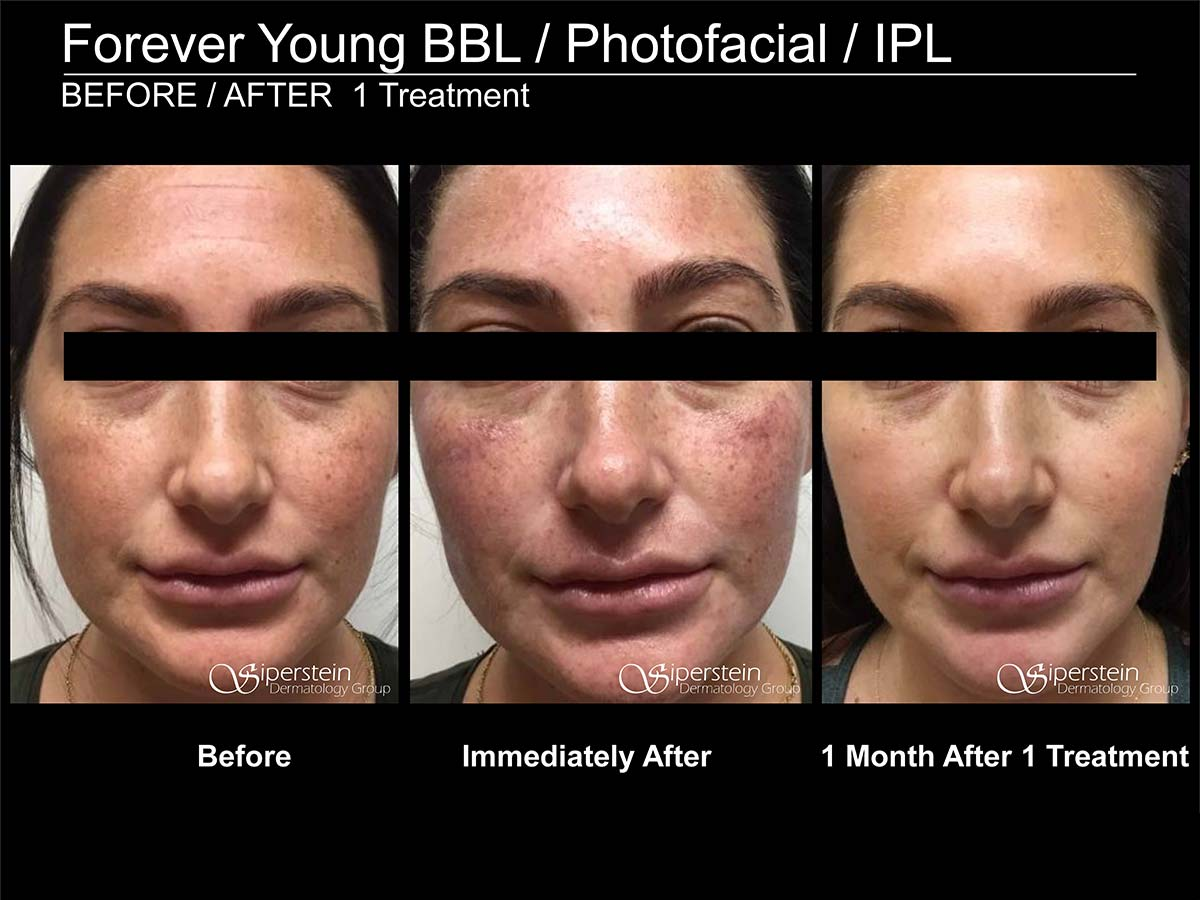
IPL and BBL aren't technically lasers at all. They're light devices, a broad range of light rather than one exact wavelength, and they target specific colors in the skin: melanin for brown spots and hemoglobin for red spots, with adjustable settings depending on which one you're treating. IPL is the general name most companies use for their version of this. BBL, short for broadband light, is Sciton's own version, using a slightly different and wider range of light with more settings for different skin types and conditions.
Who Is This For
Good for almost any age from the 30s through the 60s and beyond, wherever discoloration is the main concern. It reaches deeper into the skin than a micro laser peel, and in many cases deeper than a full resurfacing laser too, which is why it's seen as the top choice specifically for fixing discoloration.
Cost
Cost runs $400 to $700 per session, usually covering the face, neck, and often the chest for even tone all around. It takes a series, usually three to five sessions depending on how much discoloration there is.
This is also one of the more technically tricky treatments on the list. Choosing the right settings for someone's specific skin type and issue takes skill and experience, and getting it wrong risks burns, streaking, or new dark spots, which is especially risky for anyone with melasma.
The discoloration clears, but whatever caused it in the first place is still there, so new spots will eventually show up again, and treated blood vessels can come back too. If you pair this with a good skincare routine that keeps new pigment from forming, the results from a round of IPL/BBL can last for years without repeating the treatment. Neglect the skincare afterward, and you'll likely be redoing this again and again. Also worth noting, this does nothing for fine lines or wrinkles, if that's your main concern, this isn't the right tool.
11. Pulse Dye Laser
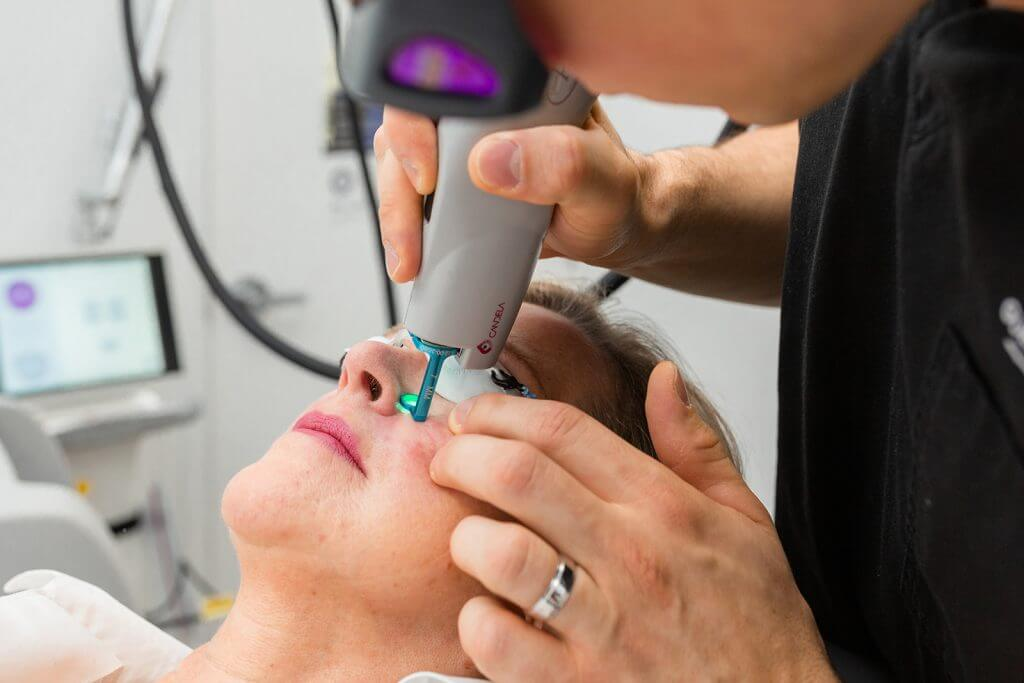
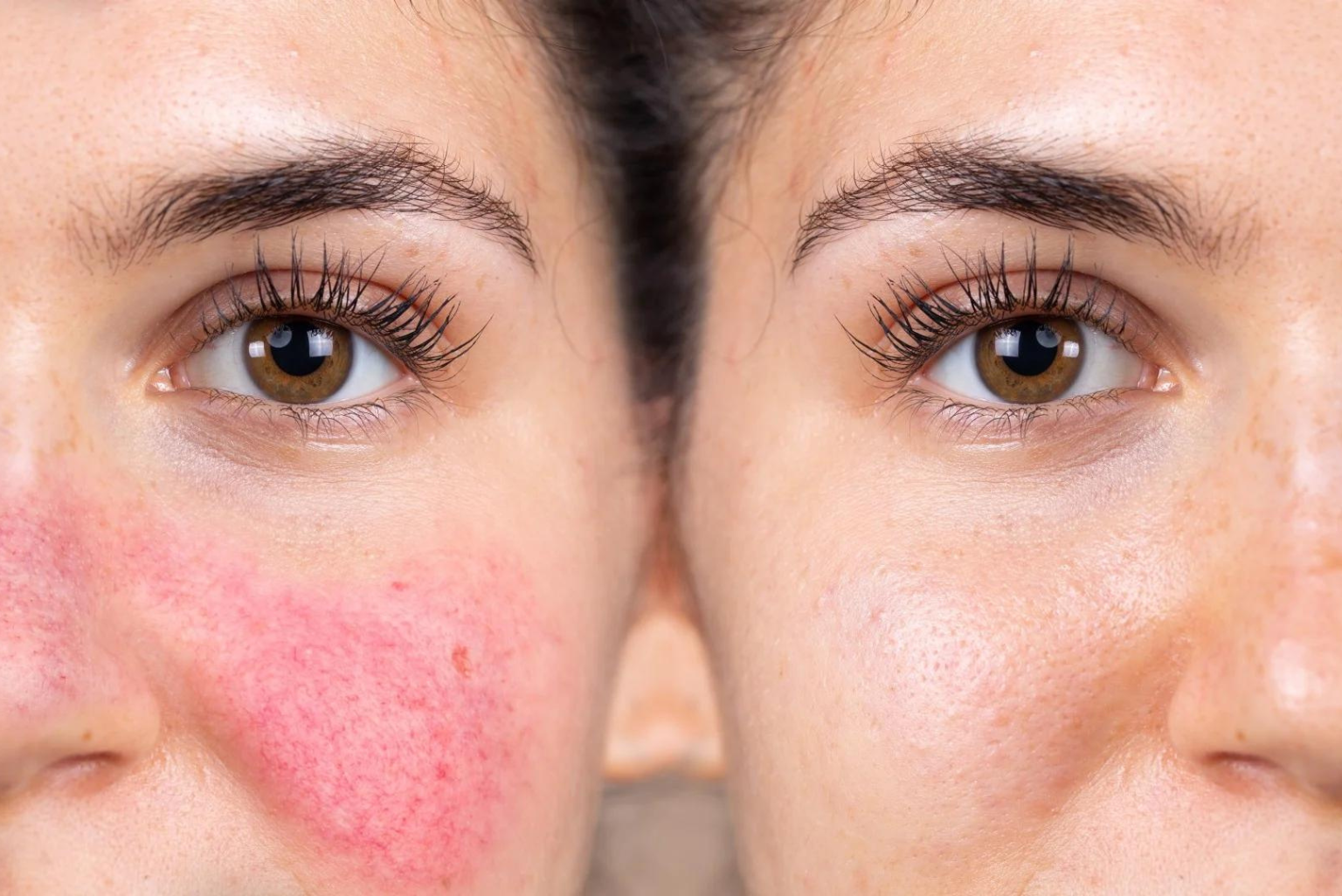
The most specific treatment on this whole list, built for one purpose: redness. Vbeam is the name you'll hear most often here. This laser targets hemoglobin directly, breaking it up enough that the resulting heat causes the targeted blood vessel to shrink and collapse. Unlike IPL/BBL, which mostly works well on small capillaries, PDL handles both small and larger blood vessels well, making it the strongest choice on this list for redness caused by blood vessels.
Who Is This For
This works at any age, for anyone dealing with broken capillaries, most often around the nose, ongoing rosacea, birthmarks, or lingering redness after surgery or acne. Redness along a healing scar can be one of the most upsetting parts of recovery, since scars can stay inflamed for up to a year, and treating that redness early with PDL can noticeably shorten how long a scar looks red and obvious.
Cost
Cost is low compared to most of this list: $150 for small spot treatments up to $500 for larger areas, with one to five sessions depending on how bad it is.
This isn't permanent. New blood vessels form over time through a process called neovascularization, and eventually they'll need treatment again too. It's not a one-time fix, but rather it is an ongoing upkeep for something that naturally comes back on its own.
12. Where Lasers Actually Fit
Discoloration that clears will eventually come back, since whatever caused it in the first place hasn't gone away. Blood vessels that collapse can grow back. Collagen boosted by a treatment still breaks down over time the same way it always has. Even a deep Erbium treatment that permanently removes one wrinkle doesn't stop the rest of your skin from aging normally afterward.
The real work behind all of this is daily sun protection and a well chosen skincare routine: ingredients like retinol, vitamin C, niacinamide, and peptides working on your skin every single day. That's the only thing that can keep working non-stop to prevent new discoloration and keep building collagen, instead of doing it in short bursts every few months or years. Lasers are best thought of as a tool for one specific problem: deep lip lines, a stubborn patch of discoloration, redness along a scar, not as something that will save you like a magical wish. Someone with a steady daily routine will usually need fewer laser treatments over time, and whatever laser treatment they do get will last longer than the same treatment on someone with no skincare routine at all.
13. Disclaimer
I am not a licensed medical professional. This is for general information only, not medical advice. Talk to a licensed provider before getting any treatment.
@Sayori @illusion @Sadist @blinkers @sample
Comprehensive guide by Organ
I am not a medical professional, and the information provided here is for general educational and informational purposes only. It does not constitute professional medical advice, diagnosis, or treatment.
Table of Contents
1. Reference Ratings Table
2. What Anti-Aging Lasers Actually Do
3. Two Spectrums That Explain Every Laser
4. Fully Ablative Resurfacing
5. Fractional Ablative Lasers
6. Hybrid Fractional Lasers
7. Non-Ablative Fractional Lasers
8. Gentle Fractional Lasers
9. Superficial Ablative Peel Lasers
10. IPL & BBL: Not Actually Lasers
11. Pulse Dye Laser
12. Where Lasers Actually Fit
13. Disclaimer
1. Reference Ratings Table
| Treatment | My Rating | Effectiveness | Downtime | Cost Per Session | Best For |
| Erbium YAG | 10/10 | 10/10 | ~ 14 days | $2,500 - $8,000+ | Deep mouth lines, heavy sun damage |
| CO2 | 9/10 | 10/10 | ~ 14+ days, more risky | $2,500 - $8,000+ | Deep mouth lines, heavy sun damage |
| Fractional Ablative | 9/10 | 8/10 | ~ 5-10 days | $2,000 - $5,000 | Acne scars, surgical scars, texture |
| Pulse Dye Laser | 9/10 | 9/10 | Minimal (bruising) | $150 - $500 | Redness, broken capillaries, rosacea |
| Micro Laser Peel | 8/10 | 7/10 | ~ 4-5 days | $250 - $700 | Quick glow up, dullness |
| Hybrid Fractional | 7/10 | 6/10 | ~ 5-7 days | $1,500 - $2,500 | Texture and tone |
| Clear + Brilliant | 7/10 | 4/10 | ~ 1-2 days | $250 - $750 | Prevention in 20s - 30s |
| Fraxel Restore | 6/10 | 5/10 | ~3-5 days | $500 - $2,500 | Slow steady collagen building |
| IPL/BBL | 5/10 | 10/10 | ~ 7-14 days | $400 - $700 | Brown/red discoloration (not lasers, not permanent) |
Two important notes on IPL/BBL: It is a 10/10 at the one specific thing that it does which is clearing brown and red discoloration, but it drops to a 5/10 once you factor in the results fade over time and that it does not treat fine lines or wrinkles.
Every row above gets fully explained in its own section below (this can just be used as a cheat sheet or a TLDR)
2. What Anti-Aging Lasers Actually Do
There are eight main types of anti-aging laser treatments that people talk about. Some of them physically remove skin. Some just heat the skin from underneath and leave the top layer alone. Some aren't even lasers at all, they're light devices that get grouped in with lasers because they're used in the same places. Picking the wrong one isn't just a waste of money, it can mean weeks of recovery for a treatment that was never going to fix your actual problem. In the worst cases, it can cause permanent skin damage that can't be undone.
This guide is long because there's a lot to cover: eight treatment types, each with its own price, recovery time, best fit patient, and downside. There's also a section at the end on why skincare is what really keeps your skin looking good over time.
3. Two Spectrums That Explain Every Laser
Before we get into each treatment, there are two basic ideas that apply to almost every laser on this list. Once you understand these two things, everything else is much easier to follow.
1. Ablative vs. Non-Ablative
The first is ablative versus non-ablative. Ablative means the laser physically destroys and removes a layer of skin. It targets the water in your skin and burns off a layer of skin with each pass. Non-ablative means nothing is removed. The laser sends energy deeper into the skin to trigger a healing response, mainly more collagen, without creating a wound on the surface. Ablative treatments work faster and stronger, but come with more downtime and more risk if done poorly. Non-ablative treatments are gentler and safer, but slower, so you'll need several sessions instead of one big one.
2. Full Field vs. Fractional
The second idea is full-field versus fractional. Full-field means the laser touches every bit of skin in the treatment area. This is why full-field ablative treatments can fully erase deep wrinkles, but it's also why the recovery takes so long. Fractional means the laser only touches part of the skin, usually around 11 to 22 percent, in a pattern of tiny dots or columns. The untreated skin around each dot is what helps the area heal so much faster. The tradeoff is that fractional treatments usually need several sessions to build up to the kind of results a full-field treatment gives in one visit.
4. Fully Ablative Resurfacing
This is the strongest treatment on the list, which is why the results are so extreme. Two main types are used here, CO2 and Erbium YAG. They do similar things, but they're not the same. In the Erbium group, you'll see names like Sciton's Contour TRL (TRL stands for tunable resurfacing laser), and that adjustability is the main reason Erbium has become the more popular choice over CO2 in most top practices today.
CO2 has been around longer than almost any other laser used in medicine, and it does work well, but it's less precise. CO2 can cause something called nonspecific thermal injury, which means the heat spreads further into the skin than intended. This leads to longer swelling and a higher chance of dark or light spots forming afterward. Dark spots usually fade over time and can be treated with lightening creams. Light spots, where the skin loses its color, don't come back, ever. That's the main reason CO2 has become less popular for full-face treatments, even though it's still a solid laser.
Erbium YAG fixes this problem by letting the provider remove skin down to a very exact depth. That precision means a shorter, more predictable recovery, usually about 14 days, unless treating a deeper area like around the mouth, which can add another week.
Who Is This For
People in their 50s, 60s, and up who have years of sun damage, dullness, and uneven skin tone and haven't done much skincare, and also anyone with deep vertical lines around the mouth, which is the most common reason people get this treatment, even if the rest of their skin looks great.
This treatment does nothing for loose or sagging skin. Lasering loose skin flat won't tighten it, that requires an actual lift. Doing this treatment on loose skin without fixing the looseness first is a common mistake. Also, it can't be used on the neck at all, the skin there is too thin.
Cost
Cost runs $2,500 to $8,000 or more, depending on how deep the treatment goes and how experienced the provider is. However, for something like deep lip lines, this is usually a one-time treatment, not something you repeat.
5. Fractional Ablative Lasers
This uses the same basic idea as full-field resurfacing as it removes skin, but only through that dotted pattern instead of covering the whole surface. In the CO2 group you'll see names like Lutronics eCO2 or Candela CORE. In the Erbium group you'll see names like Sciton's ProFractional or Fontana.
Since only part of the skin is treated at once, the untreated skin around it helps everything heal much faster than full-field treatments allow. This allows it to do something full-field can't do well. This category is the top choice for acne scars, surgical scars, and general skin-quality improvement, along with some help for fine lines and tone. It won't fully get rid of a deep wrinkle the way full-field resurfacing can as that's not really its job. Its job is broad, low-risk improvement, and it can be used on the neck, which full-field ablative can't.
Who Is This For
The ideal patient is in their 40s or 50s, wants something stronger than a light treatment but doesn't want the long recovery of full-field resurfacing and doesn't need it.
Cost
Cost usually runs $2,000 to $5,000 per session, and this treatment needs several sessions, plan on three to five to get the result you're actually hoping for. If you can't commit to the full series, it may not be worth starting at all, since one session alone often isn't enough and tends to disappoint people.
Recovery is shorter than full-field, usually 5 to 10 days depending on how deep each spot goes. Erbium again gives more control over that depth than CO2 does in this fractional style.
6. Hybrid Fractional Lasers
This treatment combines two types of laser energy in one device: an ablative type that works on texture like fractional lasers do, and a non-ablative type that targets discoloration, both browns and reds, at the same time. The best-known device here is Sciton's Halo, with Alma also offering something similar.
The appeal is simple, you get better texture and better tone from one visit instead of doing two separate treatments.
Who Is This For
It also works for a younger age group than full resurfacing, generally 30s through 50s, and can be used on the face, neck, and chest.
Cost
Cost runs $1,500 to $2,500 per session. You'll see some change after one treatment, but most people need two to four sessions to get the kind of results that actually satisfy them, since only part of the skin is treated each time.
Plan for at least 5 to 7 days of recovery. This is worth mentioning specifically, because Halo was originally marketed as a treatment with basically no downtime, and that wasn't accurate. Some patients booked it expecting to go right back to normal life and instead dealt with several days of swelling and dark, gritty-looking flaking that no one warned them about. If a provider tells you this has zero downtime, it's worth asking more questions.
It's a solid, well-rounded option that doesn't ask too much of you, but it's not the best at any one thing. Dedicated pigment treatments like IPL/BBL do better with discoloration, and fractional ablative lasers do better with texture and wrinkles. It's a well rounded treatment, which is exactly what makes it appealing to a lot of people, and also why it's not the top pick for any single specific problem.
7. Non-Ablative Fractional Lasers
No skin is removed here at all. The laser sends energy into the deeper layers of skin to trigger more collagen and modestly improve discoloration, without creating a wound on the surface. Fraxel Restore is the name most people know in this group.
This is more of an upkeep and prevention treatment than a fix.
Who Is This For
The ideal person is in their 30s or 40s, wants to get ahead of collagen loss before it shows, and understands going in that changes will be slow and small, not dramatic.
Cost
Cost runs $500 to $2,500 per session, and like most non-ablative fractional treatments, it takes a series of sessions.
Recovery is 3 to 5 days of redness, and the skin often feels rough, a bit like a mild sunburn.
8. Gentle Fractional Lasers
This works the same way as Fraxel, just turned down even further. It's basically the more simple version of non-ablative fractional treatment. Clear + Brilliant, made by the same company as Fraxel, is the name most people know in this group.
Who Is This For
This is meant for people in their 20s and 30s who want to stay ahead of skin aging without much downtime or cost.
Cost
It's priced to match, $250 to $750 per session, usually done as a starting series of three to six sessions, then kept up every so often after that.
Downtime is about as low as it gets on this whole list, just a day or two of light pinkness.
9. Superficial Ablative Peel Lasers
This one gets overlooked a lot, and it's honestly one of the most efficient treatments on this whole list. Sciton's Contour Micro Laser Peel is the name most tied to this category. It works by removing just the very top layer of skin, adjustable from about 4 to 10 microns deep, taking off the dull outer layer in a single pass. It works a lot like a chemical peel, but the laser gives much more control over exactly how deep it goes.
Because a whole layer is removed rather than just a fraction of the surface, you'll see results after just one session, unlike most fractional treatments above that need several sessions before you notice a real change.
Who Is This For
This is a great option for people in their 30s, 40s, and 50s who mainly want that bright, glowing, freshly-exfoliated look. It also gives some help with light lines, mild discoloration, and a bit of collagen boost, without asking much of you in return.
Cost
Cost is $250 to $700, and recovery is 4 to 5 days of redness, nowhere close to what a deeper treatment requires. Numbing is often barely needed since it's not very painful.
10. IPL & BBL: Not Actually Lasers
IPL and BBL aren't technically lasers at all. They're light devices, a broad range of light rather than one exact wavelength, and they target specific colors in the skin: melanin for brown spots and hemoglobin for red spots, with adjustable settings depending on which one you're treating. IPL is the general name most companies use for their version of this. BBL, short for broadband light, is Sciton's own version, using a slightly different and wider range of light with more settings for different skin types and conditions.
Who Is This For
Good for almost any age from the 30s through the 60s and beyond, wherever discoloration is the main concern. It reaches deeper into the skin than a micro laser peel, and in many cases deeper than a full resurfacing laser too, which is why it's seen as the top choice specifically for fixing discoloration.
Cost
Cost runs $400 to $700 per session, usually covering the face, neck, and often the chest for even tone all around. It takes a series, usually three to five sessions depending on how much discoloration there is.
Recovery shows up as a dark, gritty look on brown spots over about 7 to 14 days as the pigment rises and flakes off, and for red spots, you may see some bruising as the blood vessels shrink. One important note, you need to avoid sun for about two weeks both before and after this treatment, since a tan or sun exposure raises your risk of burns during the session.
This is also one of the more technically tricky treatments on the list. Choosing the right settings for someone's specific skin type and issue takes skill and experience, and getting it wrong risks burns, streaking, or new dark spots, which is especially risky for anyone with melasma.
The discoloration clears, but whatever caused it in the first place is still there, so new spots will eventually show up again, and treated blood vessels can come back too. If you pair this with a good skincare routine that keeps new pigment from forming, the results from a round of IPL/BBL can last for years without repeating the treatment. Neglect the skincare afterward, and you'll likely be redoing this again and again. Also worth noting, this does nothing for fine lines or wrinkles, if that's your main concern, this isn't the right tool.
11. Pulse Dye Laser
The most specific treatment on this whole list, built for one purpose: redness. Vbeam is the name you'll hear most often here. This laser targets hemoglobin directly, breaking it up enough that the resulting heat causes the targeted blood vessel to shrink and collapse. Unlike IPL/BBL, which mostly works well on small capillaries, PDL handles both small and larger blood vessels well, making it the strongest choice on this list for redness caused by blood vessels.
Who Is This For
This works at any age, for anyone dealing with broken capillaries, most often around the nose, ongoing rosacea, birthmarks, or lingering redness after surgery or acne. Redness along a healing scar can be one of the most upsetting parts of recovery, since scars can stay inflamed for up to a year, and treating that redness early with PDL can noticeably shorten how long a scar looks red and obvious.
Cost
Cost is low compared to most of this list: $150 for small spot treatments up to $500 for larger areas, with one to five sessions depending on how bad it is.
Downtime is minimal, though bruising is common and can take a few days to fade, worth planning around if you have anything coming up.
This isn't permanent. New blood vessels form over time through a process called neovascularization, and eventually they'll need treatment again too. It's not a one-time fix, but rather it is an ongoing upkeep for something that naturally comes back on its own.
12. Where Lasers Actually Fit
Discoloration that clears will eventually come back, since whatever caused it in the first place hasn't gone away. Blood vessels that collapse can grow back. Collagen boosted by a treatment still breaks down over time the same way it always has. Even a deep Erbium treatment that permanently removes one wrinkle doesn't stop the rest of your skin from aging normally afterward.
The real work behind all of this is daily sun protection and a well chosen skincare routine: ingredients like retinol, vitamin C, niacinamide, and peptides working on your skin every single day. That's the only thing that can keep working non-stop to prevent new discoloration and keep building collagen, instead of doing it in short bursts every few months or years. Lasers are best thought of as a tool for one specific problem: deep lip lines, a stubborn patch of discoloration, redness along a scar, not as something that will save you like a magical wish. Someone with a steady daily routine will usually need fewer laser treatments over time, and whatever laser treatment they do get will last longer than the same treatment on someone with no skincare routine at all.
13. Disclaimer
I am not a licensed medical professional. This is for general information only, not medical advice. Talk to a licensed provider before getting any treatment.
@Sayori @illusion @Sadist @blinkers @sample