D
doriansss
Iron
- Joined
- Apr 16, 2026
- Posts
- 13
- Reputation
- 9
I bumped into this compound so i went to study it and this is what i found(every information below is given by deep search gemini)
BAPN (Beta-Aminopropionitrile) Technical Analysis: Molecular Pharmacology, Bone Remodeling, and Professional Sourcing in Rome/Lazio
Beta-Aminopropionitrile (BAPN), also known as 3-aminopropanonitrile, is a molecule of extreme interest in experimental biochemistry and translational medicine. In the scientific community, it is known as a specific and irreversible inhibitor of the Lysyl Oxidase (LOX) and Lysyl Oxidase-like (LOXL) enzymes. These enzymes are the "glue" of our body: they create the cross-links in collagen and elastin that give stability and rigidity to the extracellular matrix.
By inhibiting these enzymes, BAPN prevents the hardening of new collagen, making tissues temporarily "plastic." Historically linked to a condition called lathyrism, BAPN is now used to model aortic issues, study fibrosis, and explore bone and craniofacial plasticity.
Chemical Features and How It Works
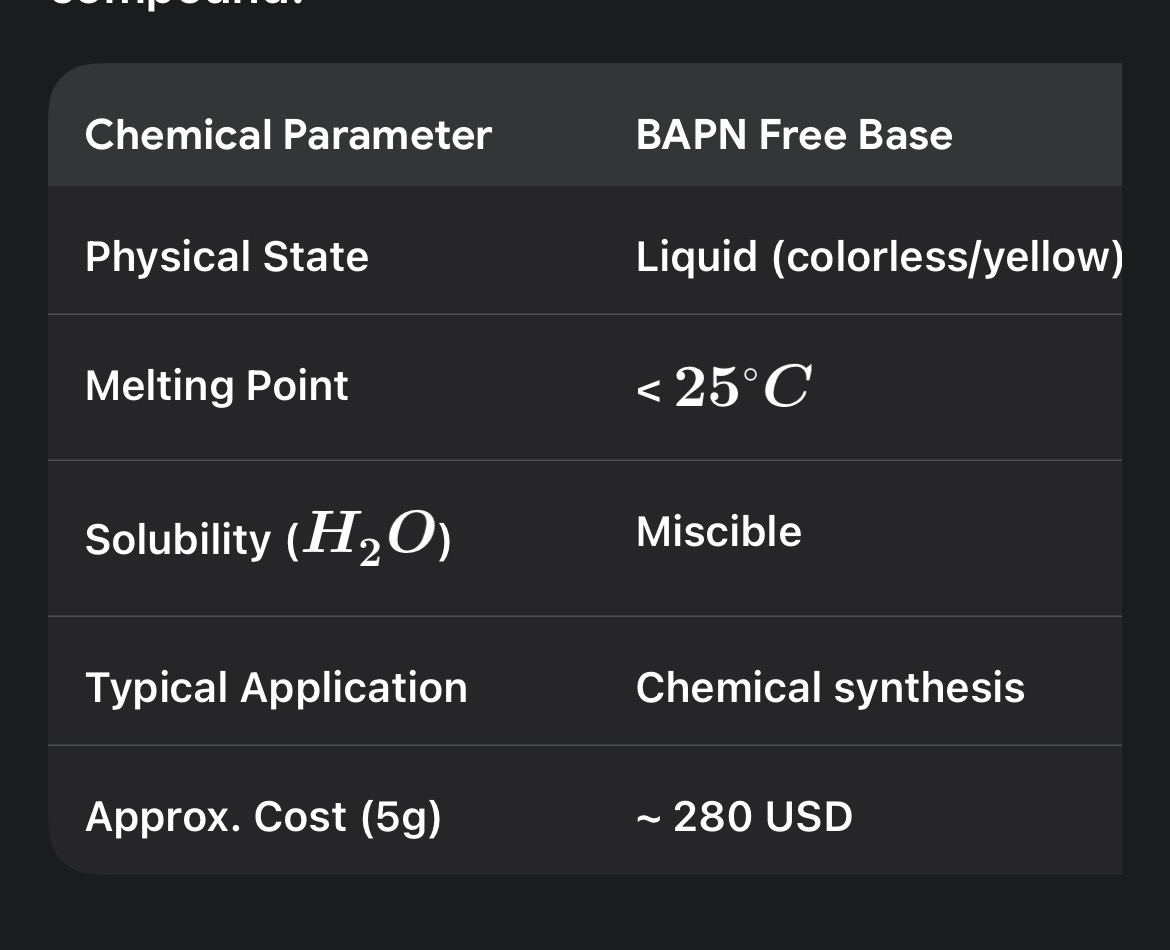
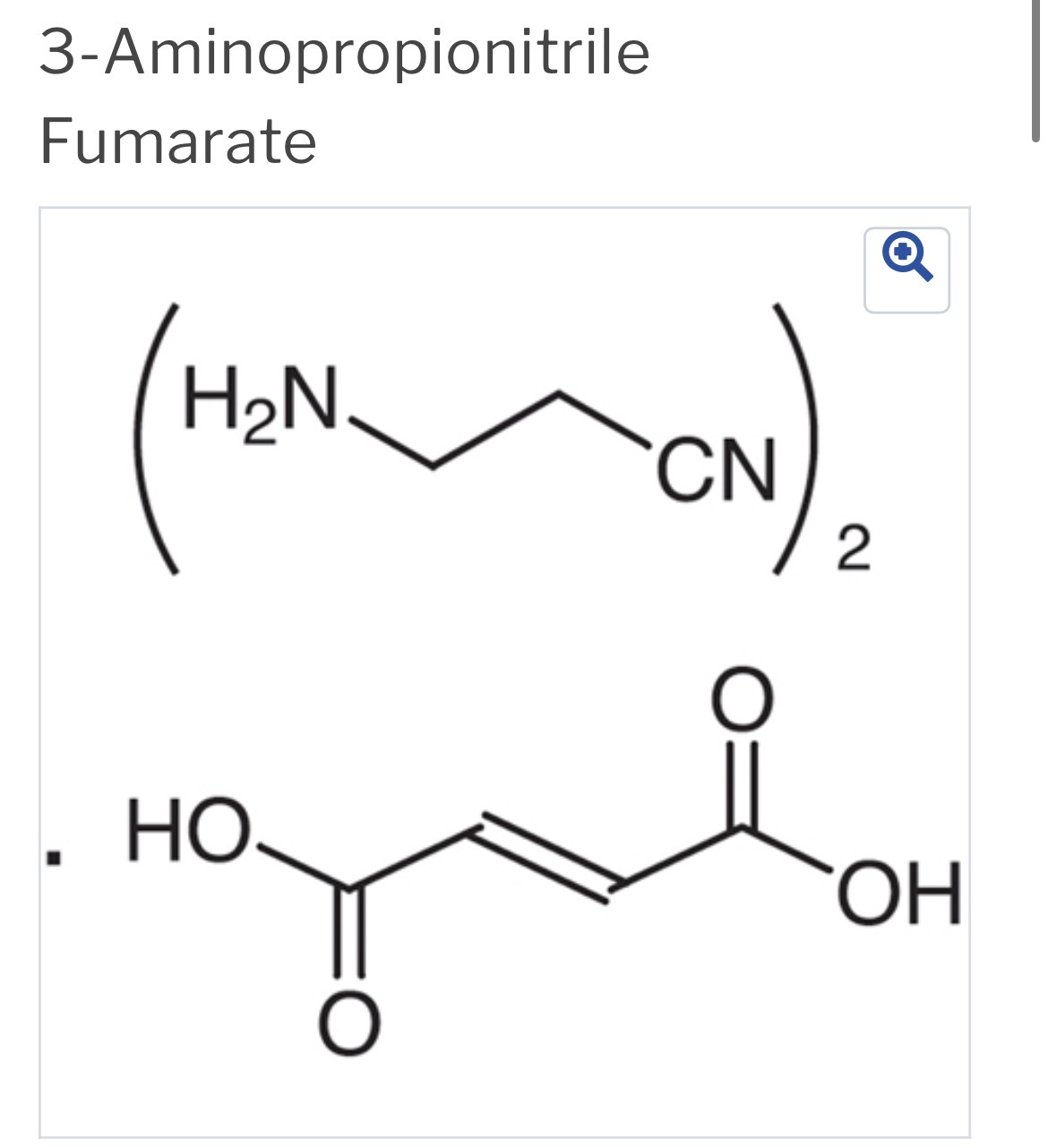
BAPN is an organic compound (nitrile). In its pure form, it’s a colorless liquid, but it is usually sold as a salt—BAPN Fumarate or BAPN Hydrochloride—to make it stable. The pure liquid is very reactive and can polymerize (harden) if exposed to air, sometimes becoming unstable.
The "Suicide Inhibition" Mechanism
BAPN works through what scientists call "suicide inhibition." The LOX enzyme uses copper and a specific cofactor to create the bonds that make collagen and elastin strong. BAPN "tricks" the enzyme by binding to its active site permanently. Once bound, the enzyme is neutralized. This allows you to reduce the rigidity of the tissue matrix without stopping the actual production of collagen, making the "new" tissue much softer and more moldable.
Bone and Craniofacial Remodeling Dynamics
In the context of looksmaxxing and bone remodeling, BAPN is studied for its ability to induce temporary "plasticity" in Type I collagen, which is the main organic component of our bones.
Effects on Bone Structure and Softness
Inhibition of LOX through BAPN changes how collagen fibers are packed. Studies using Atomic Force Microscopy (AFM) show that BAPN shifts the spacing of collagen fibrils. This leads to a bone matrix that is mechanically less rigid.
Interestingly, BAPN can change the "quality" of the bone without necessarily dropping the Bone Mineral Density (BMD). However, biomechanical tests show a massive drop in "stiffness" and an increase in how much the bone can deform before breaking. In animal studies (rat femurs), BAPN decreased bone stiffness by 40% and increased deformability by 30%. This proves that the organic matrix (collagen) is just as important as minerals for bone mechanics.
Difference between Facial and Body Bones
This is crucial for facial remodeling: the jaw (mandible) has much higher collagen maturity and mineral density than long bones like the femur. When BAPN is used during growth phases, the jaw shows a much stronger reaction, suggesting that craniofacial bones are more sensitive to LOX inhibitors than the rest of the skeleton. This makes BAPN a potential "key" for orthopedic or mechanical forces (like jaw CCW rotation or palate expansion).
Toxicology: The "Black Swan" Risk
BAPN is extremely dangerous. The same process that makes bones "soft" also weakens the arteries.
• Aortic Dissection: BAPN is the standard tool used in labs to cause aortic aneurysms in mice. Chronic use leads to the fragmentation of elastic fibers in the heart's main vessels. Sudden death from aortic rupture is a very real risk (incidence between 20% and 80% in specific studies).
• Cyanide Metabolism: In mammals, BAPN is processed by the liver, which can release cyanide ions. Chronic exposure can lead to neurological damage (neurolathyrism) and thyroid issues.
• Reproductive Toxicity: It is officially classified as toxic for fertility and the fetus, causing severe skeletal deformities.
Buying BAPN in Rome: Suppliers and Logistics
Acquiring BAPN in Rome/Italy is strictly for professionals (labs, universities, chemical companies). Sale to individuals is prohibited.
• 3V Chimica: The main local distributor in Rome (headquarters in Via G. B. Aleotti).
• Other Channels: Distribution usually goes through hospital networks (Tor Vergata, Umberto I) or CNR research centers.
• Pricing: Costs vary from 120 USD for 5g of BAPN Fumarate (Sigma-Aldrich) to nearly 900 USD for large 500g formats (TCI Chemicals).
BAPN (Beta-Aminopropionitrile) Technical Analysis: Molecular Pharmacology, Bone Remodeling, and Professional Sourcing in Rome/Lazio
Beta-Aminopropionitrile (BAPN), also known as 3-aminopropanonitrile, is a molecule of extreme interest in experimental biochemistry and translational medicine. In the scientific community, it is known as a specific and irreversible inhibitor of the Lysyl Oxidase (LOX) and Lysyl Oxidase-like (LOXL) enzymes. These enzymes are the "glue" of our body: they create the cross-links in collagen and elastin that give stability and rigidity to the extracellular matrix.
By inhibiting these enzymes, BAPN prevents the hardening of new collagen, making tissues temporarily "plastic." Historically linked to a condition called lathyrism, BAPN is now used to model aortic issues, study fibrosis, and explore bone and craniofacial plasticity.
Chemical Features and How It Works
BAPN is an organic compound (nitrile). In its pure form, it’s a colorless liquid, but it is usually sold as a salt—BAPN Fumarate or BAPN Hydrochloride—to make it stable. The pure liquid is very reactive and can polymerize (harden) if exposed to air, sometimes becoming unstable.
The "Suicide Inhibition" Mechanism
BAPN works through what scientists call "suicide inhibition." The LOX enzyme uses copper and a specific cofactor to create the bonds that make collagen and elastin strong. BAPN "tricks" the enzyme by binding to its active site permanently. Once bound, the enzyme is neutralized. This allows you to reduce the rigidity of the tissue matrix without stopping the actual production of collagen, making the "new" tissue much softer and more moldable.
Bone and Craniofacial Remodeling Dynamics
In the context of looksmaxxing and bone remodeling, BAPN is studied for its ability to induce temporary "plasticity" in Type I collagen, which is the main organic component of our bones.
Effects on Bone Structure and Softness
Inhibition of LOX through BAPN changes how collagen fibers are packed. Studies using Atomic Force Microscopy (AFM) show that BAPN shifts the spacing of collagen fibrils. This leads to a bone matrix that is mechanically less rigid.
Interestingly, BAPN can change the "quality" of the bone without necessarily dropping the Bone Mineral Density (BMD). However, biomechanical tests show a massive drop in "stiffness" and an increase in how much the bone can deform before breaking. In animal studies (rat femurs), BAPN decreased bone stiffness by 40% and increased deformability by 30%. This proves that the organic matrix (collagen) is just as important as minerals for bone mechanics.
Difference between Facial and Body Bones
This is crucial for facial remodeling: the jaw (mandible) has much higher collagen maturity and mineral density than long bones like the femur. When BAPN is used during growth phases, the jaw shows a much stronger reaction, suggesting that craniofacial bones are more sensitive to LOX inhibitors than the rest of the skeleton. This makes BAPN a potential "key" for orthopedic or mechanical forces (like jaw CCW rotation or palate expansion).
Toxicology: The "Black Swan" Risk
BAPN is extremely dangerous. The same process that makes bones "soft" also weakens the arteries.
• Aortic Dissection: BAPN is the standard tool used in labs to cause aortic aneurysms in mice. Chronic use leads to the fragmentation of elastic fibers in the heart's main vessels. Sudden death from aortic rupture is a very real risk (incidence between 20% and 80% in specific studies).
• Cyanide Metabolism: In mammals, BAPN is processed by the liver, which can release cyanide ions. Chronic exposure can lead to neurological damage (neurolathyrism) and thyroid issues.
• Reproductive Toxicity: It is officially classified as toxic for fertility and the fetus, causing severe skeletal deformities.
Buying BAPN in Rome: Suppliers and Logistics
Acquiring BAPN in Rome/Italy is strictly for professionals (labs, universities, chemical companies). Sale to individuals is prohibited.
• 3V Chimica: The main local distributor in Rome (headquarters in Via G. B. Aleotti).
• Other Channels: Distribution usually goes through hospital networks (Tor Vergata, Umberto I) or CNR research centers.
• Pricing: Costs vary from 120 USD for 5g of BAPN Fumarate (Sigma-Aldrich) to nearly 900 USD for large 500g formats (TCI Chemicals).