Andremln
Luminary
- Joined
- May 14, 2023
- Posts
- 5,732
- Reputation
- 6,661
Height and size
Both are very important factors for attractiveness, and for physical dominance over other men, but do we understand which factors influenced certain populations to be taller, and bigger? or more importantly, what type of environment favors sexual selection for men with larger body size?
First of all i have to be clear, this isn't a guide and the mechanism that explains this phenomenom can not longer be used to maximize your offspring's height because most people have access to artificial heat and nowadays most girls want a tall man anyways, this is a thread for anyone interested in why some populations show extreme variability in height.
Have you ever wondered why nordic countries have people that are extremely tall on average? or why jungle fuckers are so small and fragile looking? well, the German biologist Carl Bergmann was interested in this phenomenom as well, the core idea is that within a species or closely related species (mammal or birds which are endotherms), individuals tend to have a larger body mass and size at higher latitudes and colder climates.
some examples:






Why does this happen?
Answer is because of the physics of heat, the key is the relationship between volume and surface area, volume grows cubically (x^3) while surface area only grows quadratically (x^2), this means a larger body has proportionally less skin relative to its mass, and since heat is lost through the surface, a bigger animal loses heat much more slowly per unit of bodyweight than a smaller one.
As endotherms, we generate our own body heat through metabolism, primarily by burning food, maintaining a stable internal temperature (~37°C) costs a lot of energy, and the amount of energy required depends on how fast heat escapes to the environment.
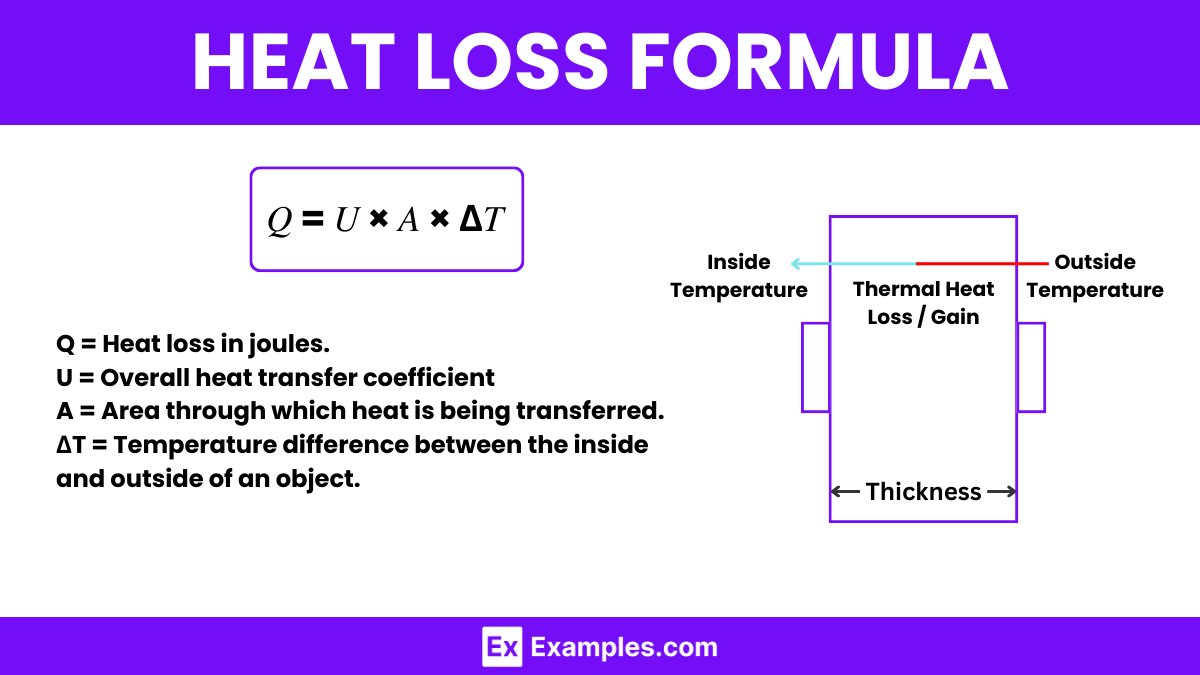
So in a cold environment, the temperature difference is large, and heat escapes fast, the only geometric solution available to evolution is to reduce the ratio of surface area to volume, which is exactly what a larger body achieves.
Now consider two spheres (rough approximation of a body):
- Small sphere: radius (1), surface area (12.57 square units), volume (4.19 cubic units)
- Big sphere: radius (3), surface area (113.1 square units), volume (113.1 cubic units)
In the small sphere we have a 3:1 sa/v ratio whereas in the big sphere we have a 1:1 sa/v ratio, meaning the large sphere retains heat 3x more efficiently per unit of mass than the small sphere, this is a geometrically powerful advantage. A larger mammal is not just a little better at retaining heat, it is dramatically more efficient per unit of mass.
The Metabolic Rate Dimension
There's another layer that reinforces this; Kleiber's law, which states that metabolic rate scales to body mass at roughly the 3/4 power, not linearly, this means two things:
- A larger animal generates relatively less heat per kilogram of body mass than a smaller one.
- But it also loses proportionally less heat due to lower SA/Volume
The net effect still favors larger animals in the cold, because the heat retention advantage from geometry outpaces the heat generation disadvantage from scaling metabolism.
Large animals are essentially more thermally inertial, meaning they heat up slowly, but they cool down slowly too, which is exactly what you want in a cold environment, on the contrary, in hot climates, this inertia becomes a liability, a small, weak, lean body can dump excess heat rapidly, which is why equatorial mammals tend to be not just smaller but also longer limbed and leaner.
The Truth
As i said at the start of the thread, it is worth being explicit about the evolutionary mechanism, Bergmann's rule doesn't happen because the cold and extreme latitude climates forces the species genetics to become bigger, but In cold climates, larger individuals survive winters better, reproduce more successfully, and pass their genes on at higher rates, while smaller individuals get left out to die without producing offspring, and over many generations, the population shifts towards larger average size.
An interesting human case of this are the Patagonians, genetically they were close to equal to natives from the Andes, but upon arrival the spaniards described them as extremely tall and robust, averaging 185 - 190 cms, and having massive shoulders and torsos, Patagonia literally meaning "Land of the Big Feet" in old Spanish.
While early accounts exaggerated, modern anthropological analysis confirms they were genuinely among the tallest human populations ever recorded, and why is this? well, the Patagonia is one of the best natural laboratories for Bergmann's rule because it represents an extreme environment at the southern tip of the Americas with very specific conditions:
- Intense cold, especially the wind chill from Patagonian winds, which is physiologically more damaging than still cold air.
- High caloric resources. the pampas and steppe supported enormous herds of guanaco, rhea, and other megafauna, (Plus, indigenous from America have the highest Ancient North Eurasian genetic admixture, surpassing 50% in recorded cases, these were archaic human populations that hunted giant megafauna at some point).
- Relative isolation; populations evolved under consistent selective pressure for thousands of years.