Biomechanics Megathread

ℤ𝕪𝕘𝕠

ℤ𝕪𝕘𝕠

Made In Heaven
Joined
Jul 2, 2026
Posts
2,889
Reputation
6,570
Biomechanics and why they are important
-Megathread created by Zygo-

university of vermont uvm GIF


Zygo, what good is improving my biomechanics if it won't improve my appearance at all?
Well, if you had ideal biomechanics, you would achieve:


Lifted, defined contours
Smoother skin surface
Less puffiness and dark circles

Radiant, even-toned complexion
Relaxed, open expression


(You would get all of this from an ideal fascia, and besides, this has already been proven)

And ideal biomechanics gives you the frame (correct skeletal position and force distribution)
​

To begin with, we must understand what biomechanics is:

-Biomechanics is basically the study of how living things move and why. It asks questions like: why does your knee bend that way when you walk? What happens to your bones when you jump? Why do you get injured when you land wrong?


(Think of it as treating your body like a machine and asking how all the parts: bones, muscles, joints, tendons and etc. work together to move, hold up, and absorb impact)​

Now that we understand this rather simplified concept, let's get started with the Megathread


-FASCIA-
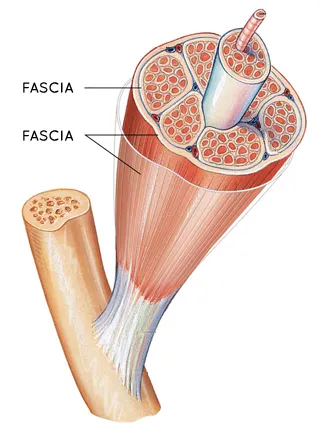
Fascia
​


-Fascia is a continuous web of connective tissue that wraps around and connects every structure in the body muscles, bones, organs, nerves, blood vessels, and tendons. It provides support, separates and stabilizes tissues, allows them to glide smoothly over one another, and transmits force during movement


-It's divided into three layers:


  • Superficial fascia: just under the skin, containing fat, nerves, and blood vessels. ​
  • Deep fascia: a dense fibrous layer that surrounds and compartmentalizes muscles and bones. ​
  • Visceral fascia: wraps and suspends the internal organs​


How fascia really works:​

Tight fascia:
-Tight fascia is characterized by a shift from the smooth, slippery, hydrated tissue you'd have in an ideal state to something
thicker, stickier, drier, and more rigid


Characteristics:


The ground substance dries out, so layers that should glide freely become "stuck together" like cling wrap


The tissue becomes denser and less elastic, losing its ability to stretch and recoil


Instead of smooth separation between layers, the fascia bonds to itself and to underlying muscle, bone, or nerve


Healthy fascia is a 3D lattice that holds fluid; tight fascia collapses into a flat, compressed sheet


All of this will end up causing you very poor posture, physical pain, and discomfort

Aside from the clearly bad appearance


posture GIF


​


Ideal fascia:
-Ideal fascia is the mirror image of tight fascia
a hydrated, elastic, freely gliding 3D lattice rather than a rigid, adhered sheet


Characteristics:

The hyaluronan (HA) is present at full molecular weight, binding large volumes of water into a gel-like matrix. Fascia is ~70–75% water by volume in this state

Type I and III collagen fibers are loosely woven with elastin, maintaining the tissue's ability to stretch and recoil. No excessive cross linking

The specialized cells that secrete hyaluronan are active at the sliding interfaces between layers, continuously renewing the lubricating film

The loose connective tissue between dense fascial sheets maintains its normal thickness (~43 µm), keeping layers as independent, gliding planes rather than fused sheets


In essence, it is the exact opposite of tight fascia
And as you might imagine, this fascia will also provide you with an ideal posture, which translates into proper craniofacial development

Sideprofile
​


After learning this, you are probably wondering...


-How to fix your fascia-

​
-First of all: Move (the single MOST IMPORTANT factor)

Fascia is a hydraulic tissue, it only hydrates when you pump fluid through it.


  • Daily walking (even 20 or 30 min) is the baseline
  • Slow, multi directional movement spirals, undulations, side bends, rotations, diagonal reaches. This is what actually moves fluid between fascial layers, not just within muscle
  • Eccentric strength training (slow, controlled lowering phases) remodels collagen and improves fascial resilience
  • Rebounding / bouncing, rhythmic, springy movement is the most effective single motion for fascial hydration
  • Avoid long static sitting; stand up and move every 30 min
Athletic Wear Running GIF by GYMREAPERS


-Hydration:


    • Drink water steadily throughout the day (not one big glass)
    • Add electrolytes (sodium, potassium, magnesium), plain water passes through; minerals help cells actually absorb and retain it
    • Eat water-rich foods: cucumber, celery, watermelon, leafy greens
    • Timing matters: sip before and after movement sessions
Water Stay Hydrated GIF
​

-Self-myofascial release:


    • Foam rolling 30–60 seconds per area, 2–5 passes. Evidence supports short-term gains in joint ROM and reduced DOMS.
    • Tennis/lacrosse ball, for smaller, targeted areas (feet, glutes, upper back, jaw). Hold static pressure for ~90 seconds to let the tissue release
    • Massage gun — useful for breaking up localized adhesions before a hydration session.
Cat Spa GIF
​

-Nutrition


    • Vitamin C: essential cofactor for collagen synthesis.
    • Adequate protein: provides the amino acids for collagen and elastin repair.
    • Omega-3s: reduce the low-grade inflammation that drives cross-linking and stiffening.
    • Magnesium: helps relax fascial and muscular tone.
    • Collagen peptides / bone broth, though direct evidence for "building fascia" is still emerging.

Season 8 Workout GIF by The Simpsons


​


What to avoid (the things that cause tight fascia)


  • Prolonged immobility / static postures
  • Chronic stress (sympathetic tone keeps fascia contracted)
  • Repetitive, single plane motion without variation
  • Dehydration
  • High sugar / pro-inflammatory diet (accelerates collagen cross-linking)
danger GIF


​


-How to WALK properly-

Keanu Reeves Walking GIF by John Wick: Chapter 3 - Parabellum


​

​

​


Ideal Walking:​


    • Foot lands soft and under your body
    • The leg acts as a spring, the knee flexes slightly on landing to absorb impact
    • The hip does the work, the glutes decelerate the swinging leg and drive the body forward
    • Trunk is upright and relaxed, slight forward lean is fine, but no hunching
    • Arms swing naturally in opposition


Unideal walking (suboptimal):

    • Overstriding, the foot lands way ahead of your body, creating a braking force at every step
    • Forward head / hunched trunk, from screens and sitting
    • Anterior pelvic tilt, glutes asleep, lower back overworked. The gait has a "sway" and the lumbar spine is in chronic compression
    • Frozen upper body, arms pinned, shoulders hiked, jaw clenched, breath shallow
    • Stiff ankle / locked knee, no shock absorption on landing. Impact transmits straight up the skeletal column


How do i fix this?


    • Shorten your stride: foot lands under your hips, not in front. Quick cadence, not long reaches.
    • Upright posture: ears over shoulders, ribs stacked over hips, slight forward lean from the ankles
    • Wake up the glutes: bridges + banded lateral steps before walking; consciously squeeze the stance glute mid-stride
    • Pre-walk drills (2–3 min): high knees, A-skips, lateral band walks, single leg balance
    • Address root causes: break up sitting, stretch hip flexors and calves, unclench jaw/shoulders, consider flatter shoes
    • Film yourself: side and rear angles, slow-mo. You'll see your own pattern immediately


Thx for reading :AUGH:


​
@Mai Sakurajima. @j1gga @Nocturnal @trav191 @Gravitas


​
 
Last edited:
  • +1
  • Love it
Reactions: IndecentEyes, zennn, Gravitas and 11 others
Mirin:love:

Ill read it when i have time
 
  • +1
Reactions: IndecentEyes, Gravitas, trav191 and 4 others
hymen
 
  • +1
  • JFL
Reactions: IndecentEyes, trav191, Mai Sakurajima. and 2 others
obv dnr rn but will read later:love:
 
  • +1
  • Love it
Reactions: IndecentEyes, trav191, Mai Sakurajima. and 2 others
@RedDragonSlayer @IndecentEyes @zennn
 
  • +1
Reactions: IndecentEyes, zennn, trav191 and 3 others
Nice read
 
  • +1
Reactions: Nocturnal, Mai Sakurajima. and ℤ𝕪𝕘𝕠
this shit is so ass
 
  • WTF
  • So Sad
Reactions: Mai Sakurajima. and RedDragonSlayer
Biomechanics and why they are important
-Megathread created by Zygo-

university of vermont uvm GIF


Zygo, what good is improving my biomechanics if it won't improve my appearance at all?
Well, if you had ideal biomechanics, you would achieve:


Lifted, defined contours
Smoother skin surface
Less puffiness and dark circles

Radiant, even-toned complexion
Relaxed, open expression


(You would get all of this from an ideal fascia, and besides, this has already been proven)

And ideal biomechanics gives you the frame (correct skeletal position and force distribution)
​

To begin with, we must understand what biomechanics is:

-Biomechanics is basically the study of how living things move and why. It asks questions like: why does your knee bend that way when you walk? What happens to your bones when you jump? Why do you get injured when you land wrong?


(Think of it as treating your body like a machine and asking how all the parts: bones, muscles, joints, tendons and etc. work together to move, hold up, and absorb impact)​

Now that we understand this rather simplified concept, let's get started with the Megathread


-Fascia is a continuous web of connective tissue that wraps around and connects every structure in the body muscles, bones, organs, nerves, blood vessels, and tendons. It provides support, separates and stabilizes tissues, allows them to glide smoothly over one another, and transmits force during movement


-It's divided into three layers:


  • Superficial fascia: just under the skin, containing fat, nerves, and blood vessels. ​
  • Deep fascia: a dense fibrous layer that surrounds and compartmentalizes muscles and bones. ​
  • Visceral fascia: wraps and suspends the internal organs​


How fascia really works:​

Tight fascia:
-Tight fascia is characterized by a shift from the smooth, slippery, hydrated tissue you'd have in an ideal state to something
thicker, stickier, drier, and more rigid


Characteristics:


The ground substance dries out, so layers that should glide freely become "stuck together" like cling wrap


The tissue becomes denser and less elastic, losing its ability to stretch and recoil


Instead of smooth separation between layers, the fascia bonds to itself and to underlying muscle, bone, or nerve


Healthy fascia is a 3D lattice that holds fluid; tight fascia collapses into a flat, compressed sheet


All of this will end up causing you very poor posture, physical pain, and discomfort

Aside from the clearly bad appearance


posture GIF


​


Ideal fascia:
-Ideal fascia is the mirror image of tight fascia
a hydrated, elastic, freely gliding 3D lattice rather than a rigid, adhered sheet


Characteristics:

The hyaluronan (HA) is present at full molecular weight, binding large volumes of water into a gel-like matrix. Fascia is ~70–75% water by volume in this state

Type I and III collagen fibers are loosely woven with elastin, maintaining the tissue's ability to stretch and recoil. No excessive cross linking

The specialized cells that secrete hyaluronan are active at the sliding interfaces between layers, continuously renewing the lubricating film

The loose connective tissue between dense fascial sheets maintains its normal thickness (~43 µm), keeping layers as independent, gliding planes rather than fused sheets


In essence, it is the exact opposite of tight fascia
And as you might imagine, this fascia will also provide you with an ideal posture, which translates into proper craniofacial development


After learning this, you are probably wondering...


-How to fix your fascia-

​
-First of all: Move (the single MOST IMPORTANT factor)

Fascia is a hydraulic tissue, it only hydrates when you pump fluid through it.


  • Daily walking (even 20 or 30 min) is the baseline
  • Slow, multi directional movement spirals, undulations, side bends, rotations, diagonal reaches. This is what actually moves fluid between fascial layers, not just within muscle
  • Eccentric strength training (slow, controlled lowering phases) remodels collagen and improves fascial resilience
  • Rebounding / bouncing, rhythmic, springy movement is the most effective single motion for fascial hydration
  • Avoid long static sitting; stand up and move every 30 min
Athletic Wear Running GIF by GYMREAPERS


-Hydration:


    • Drink water steadily throughout the day (not one big glass)
    • Add electrolytes (sodium, potassium, magnesium), plain water passes through; minerals help cells actually absorb and retain it
    • Eat water-rich foods: cucumber, celery, watermelon, leafy greens
    • Timing matters: sip before and after movement sessions
Water Stay Hydrated GIF
​

-Self-myofascial release:


    • Foam rolling 30–60 seconds per area, 2–5 passes. Evidence supports short-term gains in joint ROM and reduced DOMS.
    • Tennis/lacrosse ball, for smaller, targeted areas (feet, glutes, upper back, jaw). Hold static pressure for ~90 seconds to let the tissue release
    • Massage gun — useful for breaking up localized adhesions before a hydration session.
Cat Spa GIF
​

-Nutrition


    • Vitamin C: essential cofactor for collagen synthesis.
    • Adequate protein: provides the amino acids for collagen and elastin repair.
    • Omega-3s: reduce the low-grade inflammation that drives cross-linking and stiffening.
    • Magnesium: helps relax fascial and muscular tone.
    • Collagen peptides / bone broth, though direct evidence for "building fascia" is still emerging.

Season 8 Workout GIF by The Simpsons


​


What to avoid (the things that cause tight fascia)


  • Prolonged immobility / static postures
  • Chronic stress (sympathetic tone keeps fascia contracted)
  • Repetitive, single plane motion without variation
  • Dehydration
  • High sugar / pro-inflammatory diet (accelerates collagen cross-linking)
danger GIF


​


-How to WALK properly-

Keanu Reeves Walking GIF by John Wick: Chapter 3 - Parabellum


​

​

​


Ideal Walking:​


    • Foot lands soft and under your body
    • The leg acts as a spring, the knee flexes slightly on landing to absorb impact
    • The hip does the work, the glutes decelerate the swinging leg and drive the body forward
    • Trunk is upright and relaxed, slight forward lean is fine, but no hunching
    • Arms swing naturally in opposition


Unideal walking (suboptimal):

    • Overstriding, the foot lands way ahead of your body, creating a braking force at every step
    • Forward head / hunched trunk, from screens and sitting
    • Anterior pelvic tilt, glutes asleep, lower back overworked. The gait has a "sway" and the lumbar spine is in chronic compression
    • Frozen upper body, arms pinned, shoulders hiked, jaw clenched, breath shallow
    • Stiff ankle / locked knee, no shock absorption on landing. Impact transmits straight up the skeletal column


How do i fix this?


    • Shorten your stride: foot lands under your hips, not in front. Quick cadence, not long reaches.
    • Upright posture: ears over shoulders, ribs stacked over hips, slight forward lean from the ankles
    • Wake up the glutes: bridges + banded lateral steps before walking; consciously squeeze the stance glute mid-stride
    • Pre-walk drills (2–3 min): high knees, A-skips, lateral band walks, single leg balance
    • Address root causes: break up sitting, stretch hip flexors and calves, unclench jaw/shoulders, consider flatter shoes
    • Film yourself: side and rear angles, slow-mo. You'll see your own pattern immediately


Thx for reading :AUGH:


​
@Mai Sakurajima. @j1gga @Nocturnal @trav191 @Gravitas


​
very cool formatting, it looks like an OG megathread you'd stumble upon and see half the users in there are banned.
 
  • +1
Reactions: Mai Sakurajima. and ℤ𝕪𝕘𝕠
bump, nice read through
 
  • Love it
Reactions: ℤ𝕪𝕘𝕠
Mirin the effort
 
  • +1
Reactions: ℤ𝕪𝕘𝕠
Dnr but high effort so I’ll rep
 
  • +1
Reactions: ℤ𝕪𝕘𝕠
good thread but ill RIL

made this a while back because i was interested in biomechanics but its mostly just some cool visuals i made compiled into an "edit"
 

Attachments

  • you probably arent using your body to its full potential.mp4
    3.5 MB

Similar threads

logicalpill850
  • Article
Replies
7
Views
160
logicalpill850
logicalpill850
dourememberme
Replies
0
Views
37
dourememberme
dourememberme
GuyFromSingapore
Replies
1
Views
53
GuyFromSingapore
GuyFromSingapore
fractual
Replies
9
Views
181
soyjack
soyjack
C
Replies
4
Views
152
GoldenSeahorse
GoldenSeahorse

Users who are viewing this thread

Back
Top