Quatza33
5,9 framcel Arise femto
- Joined
- Jun 12, 2025
- Posts
- 782
- Reputation
- 1,066
Kinda water, but idk
sources: https://www.nature.com/articles/s41598-019-40463-3/figures/1 https://www.frontiersin.org/journals/endocrinology/articles/10.3389/fendo.2020.606947/full?
Masticatory muscle influence on craniofacial by growthStavros Kiliaridis
1. Bone is load-responsive tissue.
Bones are not dead rocks. They are constantly being resorbed and rebuilt. Remodeling maintains structural integrity, and exercise and loading are part of what drives it.
2. Why tension matters
When bone gets loaded, the matrix deforms and fluid shifts through the osteocyte network. Osteocytes sense that mechanical change and alter the signaling that controls formation and resorption. This is the mechanostat logic in plain English.
3. The cells that matter
Osteocytes are the sensors. Osteoblasts build. Osteoclasts resorb. Under higher loading, osteocyte signaling tends to move in a more osteogenic direction, including lower sclerostin signaling and other changes that favor formation.
4. Important point, adaptation is local
Bone does not respond like a magical global face-growth button. Remodeling happens where strain is relevant. Experimental loading studies show regional responses, and the jaw-specific mouse mastication paper found increased bone formation at the masseter enthesis, not a uniform miracle across the whole skull.
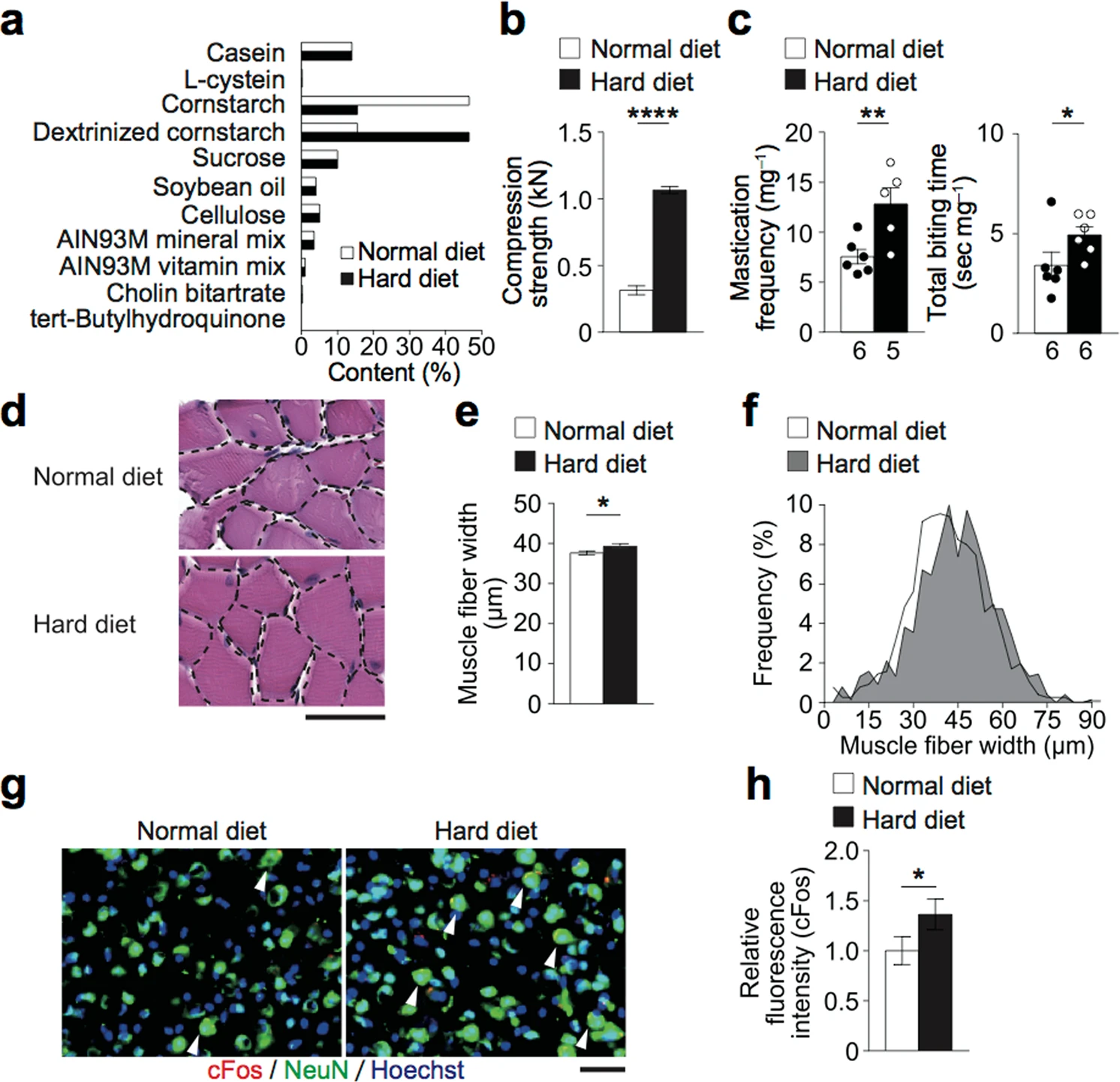
Caption: Mechanical loading changes osteocyte signaling, which shifts bone remodeling locally. For the most on-topic image, use a figure from Forceful mastication activates osteocytes and builds a stout jawbone or, if you want a simpler anatomy visual, use a Wikimedia mandible image with attribution.
Attribution example: Inoue M, Ono T, Kameo Y, et al. Scientific Reports 2019, CC BY 4.0. Or, if using Commons anatomy, “Mandible bone.png”, Wikimedia Commons, CC BY-SA 2.1 Japan.
5. Jawbone is still bone
The masticatory system puts real load into the jaws. Reviews describe normal mastication as producing repeated loads that shape jaw form through modeling and remodeling
6. Harder chewing changes the signal
In the strongest jaw-specific mechanistic model, harder mastication increased osteocyte IGF-1, reduced sclerostin, and increased bone formation in the mandibular region under masseter load. That is the closest thing to a direct mechanobiology receipt for jaw loading.
7. Growth window matters
If you are still growing, the leverage is better. Modeling is most active during growth. That is exactly why soft-vs-hard diet studies are most convincing in developmental settings. Adults still remodel bone, but that is not the same as claiming easy late facial growth.
8. What this means in practice
Stop thinking only in terms of gum. Real food texture is the missing variable. If your entire diet is soft and low-demand, your baseline masticatory loading is also low. Existing jaw threads mention hard diet, but they usually bury it under product talk (grifter fags ). That is backwards. The baseline matters.
9. Best way to apply it
Use normal, tolerable, bilateral chewing on real foods that require actual mastication. Treat gum, if you use it at all, like an accessory (not a replacement for hard foods). Bone responds to meaningful loading, but general bone-loading literature also shows diminishing returns and better responses when loading is not just endless monotony.
10. Do not be unilateral
If you always chew on one side, that is a bad habit. There is literature linking unilateral chewing patterns with asymmetry and altered craniofacial growth.
11. Do not overdo it
More is not automatically better. Excessive chewing can cause jaw muscle pain and fatigue, and the gum-chewing and TMD evidence is mixed enough that mindless marathon chewing is a stupid hill to die on.
12. Practical rule
You want enough loading to create a signal, not enough to inflame the joint. If you get TMJ pain, frequent clicking, headaches, or obvious morning jaw soreness, don't push harder, it water but yk. Your first move is to back off and fix the dysfunction.
13. Final takeaway
Bone follows load. Osteocytes read strain. Jawbone is bone. If you want jaw remodeling to happen, you need meaningful, tolerable, repeated masticatory loading.
TL;DR
Mechanical tension is the signal. Osteocytes are the sensors. Mastication is one way the jaw gets loaded. Real food texture matters, growth stage matters, local strain matters, and overuse is retarded.
sources: https://www.nature.com/articles/s41598-019-40463-3/figures/1 https://www.frontiersin.org/journals/endocrinology/articles/10.3389/fendo.2020.606947/full?
Masticatory muscle influence on craniofacial by growthStavros Kiliaridis
1. Bone is load-responsive tissue.
Bones are not dead rocks. They are constantly being resorbed and rebuilt. Remodeling maintains structural integrity, and exercise and loading are part of what drives it.
2. Why tension matters
When bone gets loaded, the matrix deforms and fluid shifts through the osteocyte network. Osteocytes sense that mechanical change and alter the signaling that controls formation and resorption. This is the mechanostat logic in plain English.
3. The cells that matter
Osteocytes are the sensors. Osteoblasts build. Osteoclasts resorb. Under higher loading, osteocyte signaling tends to move in a more osteogenic direction, including lower sclerostin signaling and other changes that favor formation.
4. Important point, adaptation is local
Bone does not respond like a magical global face-growth button. Remodeling happens where strain is relevant. Experimental loading studies show regional responses, and the jaw-specific mouse mastication paper found increased bone formation at the masseter enthesis, not a uniform miracle across the whole skull.
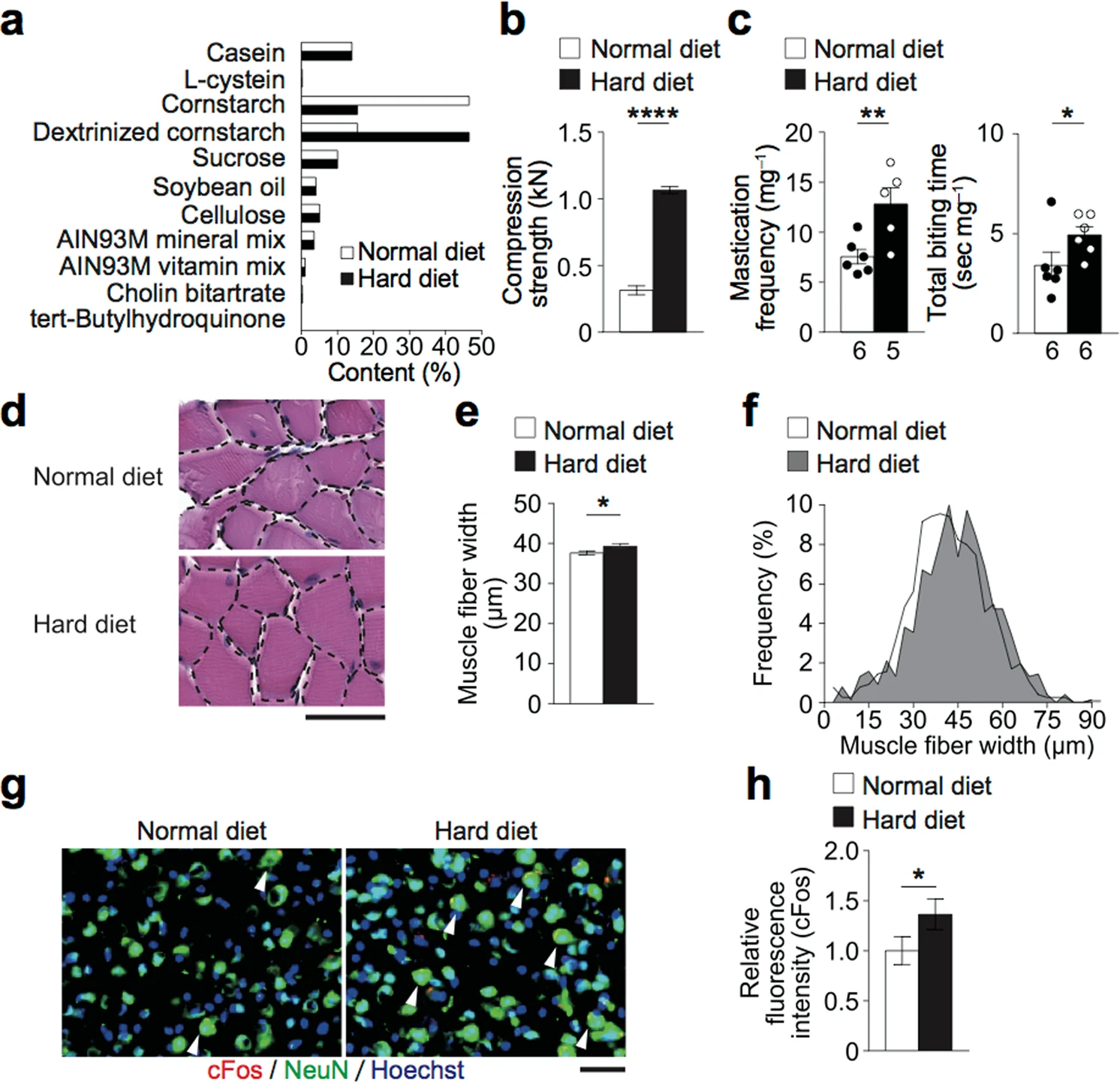
Caption: Mechanical loading changes osteocyte signaling, which shifts bone remodeling locally. For the most on-topic image, use a figure from Forceful mastication activates osteocytes and builds a stout jawbone or, if you want a simpler anatomy visual, use a Wikimedia mandible image with attribution.
Attribution example: Inoue M, Ono T, Kameo Y, et al. Scientific Reports 2019, CC BY 4.0. Or, if using Commons anatomy, “Mandible bone.png”, Wikimedia Commons, CC BY-SA 2.1 Japan.
5. Jawbone is still bone
The masticatory system puts real load into the jaws. Reviews describe normal mastication as producing repeated loads that shape jaw form through modeling and remodeling
6. Harder chewing changes the signal
In the strongest jaw-specific mechanistic model, harder mastication increased osteocyte IGF-1, reduced sclerostin, and increased bone formation in the mandibular region under masseter load. That is the closest thing to a direct mechanobiology receipt for jaw loading.
7. Growth window matters
If you are still growing, the leverage is better. Modeling is most active during growth. That is exactly why soft-vs-hard diet studies are most convincing in developmental settings. Adults still remodel bone, but that is not the same as claiming easy late facial growth.
8. What this means in practice
Stop thinking only in terms of gum. Real food texture is the missing variable. If your entire diet is soft and low-demand, your baseline masticatory loading is also low. Existing jaw threads mention hard diet, but they usually bury it under product talk (grifter fags
). That is backwards. The baseline matters.9. Best way to apply it
Use normal, tolerable, bilateral chewing on real foods that require actual mastication. Treat gum, if you use it at all, like an accessory (not a replacement for hard foods). Bone responds to meaningful loading, but general bone-loading literature also shows diminishing returns and better responses when loading is not just endless monotony.
10. Do not be unilateral
If you always chew on one side, that is a bad habit. There is literature linking unilateral chewing patterns with asymmetry and altered craniofacial growth.
11. Do not overdo it
More is not automatically better. Excessive chewing can cause jaw muscle pain and fatigue, and the gum-chewing and TMD evidence is mixed enough that mindless marathon chewing is a stupid hill to die on.
12. Practical rule
You want enough loading to create a signal, not enough to inflame the joint. If you get TMJ pain, frequent clicking, headaches, or obvious morning jaw soreness, don't push harder, it water but yk. Your first move is to back off and fix the dysfunction.
13. Final takeaway
Bone follows load. Osteocytes read strain. Jawbone is bone. If you want jaw remodeling to happen, you need meaningful, tolerable, repeated masticatory loading.
TL;DR
Mechanical tension is the signal. Osteocytes are the sensors. Mastication is one way the jaw gets loaded. Real food texture matters, growth stage matters, local strain matters, and overuse is retarded.