[BOTB] Why Social Class is Everything

Seth Walsh

Seth Walsh

Iconoclast
Contributor
Joined
Jan 12, 2020
Posts
10,319
Reputation
21,036
People here talk about face, height, frame, money, status, voice, halo, game, clothes, gym, teeth, skin, all of it.

Fine.

But social class is underneath nearly all of those things.

Not because rich kids are automatically better people.

Not because poor kids are automatically doomed.

Because social class decides how much of yourself you get to keep while growing up.

That is the part nobody wants to say.

photo-1740596261028-29a7ad308157

This is not just architecture. This is a nervous system with front doors.

A rich kid does not just inherit money.

He inherits calm.

He inherits adults who answer questions without exploding.

He inherits clean rooms, quiet mornings, safe streets, soft landings, dentists, sports clubs, tutors, family friends, internships, normal holidays, and parents who know which doors matter.

He inherits the idea that the world is negotiable.

That is class.

The lower-class kid inherits noise.

Not always abuse. Not always poverty porn. Sometimes it is just constant friction.

The bus is late. The house is cramped. The parent is tired. The money is tense. The school is chaotic. The local area is ugly. Nobody explains anything. Every mistake feels bigger than it should. Every choice has consequences. Every small problem steals bandwidth.

Then both kids turn 22.

One walks into the room loose.

The other walks in slightly tense.

People call the first one “confident.”

They call the second one “awkward,” “tryhard,” “intense,” “low status,” “off.”

That is the class pill.

Class is not just money.

Money is the visible part.

Class is the hidden operating system.

It is how you speak.
How you sit.
How you pause.
How you handle silence.
How you order food.
How you talk to older adults.
How you talk to authority.
How you disagree without sounding threatened.
How you ask for help without sounding desperate.
How you take up space without feeling like you are stealing it.

A rich kid has done that since childhood.

At restaurants.
At family dinners.
At airports.
At sports clubs.
At school events.
At friends’ houses.
Around lawyers, bankers, doctors, founders, headmasters, property people, private tutors, and adults who calmly explain how the world works.

He has reps.

The lower-status kid has different reps.

Being rushed.
Being corrected harshly.
Being ignored.
Watching adults panic.
Hiding ambition.
Avoiding humiliation.
Not asking too much.
Trying not to be a burden.
Scanning the room for danger.
Explaining himself too much because he is used to being misunderstood.

Both are training.

One training produces ease.

The other training produces survival behavior.

photo-1641417755078-e4f3938afdf5

Background stress is not dramatic. That is why people underestimate it.

This is why rich kids seem “naturally” better.

They are not always smarter.

They are not always better looking.

They are not always more talented.

They are often just less interrupted.

Less interrupted sleep.
Less interrupted confidence.
Less interrupted education.
Less interrupted health.
Less interrupted identity formation.
Less interrupted ambition.
Less interrupted compounding.

The rich kid compounds in a straight line.

The lower-status kid compounds in fragments.

Build.
Get hit.
Recover.

Build.
Get hit.
Recover.

Build.
Get hit.
Recover.

By 30, one has polish.

The other has scar tissue.

People then call the difference “personality.”

No.

A lot of it is interruption history.

Look at two boys.

Same IQ.
Same face tier.
Same height.
Same basic potential.

Boy A grows up in a calm house.

His parents are not perfect, but they are functional. There is food in the fridge. His room has a desk. The house is not constantly loud. His school is not full of chaos. His parents know what universities matter. They know which sports look good. They know that braces are not optional. They book the dermatologist early. They pay for tutoring before the grades collapse. They fix problems before problems become identity.

He fails a test and someone says:

“Okay. What happened? Let’s sort it.”

Boy B grows up in friction.

Not necessarily hell. Just friction.

The house is loud. The money mood changes every week. Adults are tired. Nobody has bandwidth. The school is mediocre. Teachers are overworked. Peers are chaotic. Nobody tells him what matters until it is already too late. He learns by getting punished. He learns by embarrassment. He learns by watching people lose.

He fails a test and the house turns into a funeral.

Same failure.

Different emotional price.

That changes a person.

One kid learns mistakes are information.

The other learns mistakes are danger.

That is why class enters the body.

People think posture is just posture.

It is not.

Posture is years of not being rushed.

Eye contact is years of not being threatened.

A calm voice is years of not needing to defend yourself.

Good social timing is years of being around people who are not constantly dysregulated.

Taste is years of being allowed to choose slowly.

Confidence is often just a nervous system that was not trained for threat detection.

cambridge.JPG

This is where “natural confidence” gets rehearsed for 18 years.

This is the brutal part for looksmaxxing:

Your face is not viewed in isolation.

Nobody sees only your skull.

They see the whole package around it.

They see your teeth.
Your skin.
Your haircut.
Your clothes.
Your voice.
Your manners.
Your posture.
Your social circle.
Your location.
Your hobbies.
Your career trajectory.
Your confidence.
Your future.

Social class touches all of those.

Rich kids get orthodontics before the teeth become a meme.

They get sports before the body becomes soft.

They get good food before the skin gets wrecked.

They get sleep before the face gets cortisol-bloated.

They get stable routines before discipline becomes a war.

They get clothes that fit because someone around them knows what “fit” means.

They get haircuts from people who do not destroy them.

They get dental cleanings.

They get holidays, sunlight, hobbies, skiing, tennis, rowing, rugby, music lessons, summer programs, clean friend groups, and family networks.

Even when they are mid, they are packaged well.

A middle/lower-class guy can be genetically decent and still look worse because his life has been leaking value for years.

Bad sleep.
Cheap food.
Stress face.
Mouth breathing never corrected.
Bad teeth.
No style guidance.
No sports culture.
No private space.
No calm social reps.
No adult male model with taste.
No one saying “stand straight, speak slower, buy this, not that.”

Then he turns 20 and some guy online says:

“Just be confident bro.”

Joke advice.

Confidence is not a hoodie you put on.

Confidence is the result of repeated proof that life will not collapse if you act.

And rich kids get that proof constantly.

They can try.
They can fail.
They can recover.

That is the floor.

The floor is everything.

A floor means:

You can quit a bad job.
You can take an unpaid internship.
You can move city.
You can wait for the better opportunity.
You can take a career risk.
You can start a business.
You can leave a bad relationship.
You can say no.
You can be selective.
You can be patient.

No floor means:

Take whatever you can get.
Do not risk the rent.
Do not offend anyone.
Do not leave the job.
Do not move unless guaranteed.
Do not experiment.
Do not fail.
Do not be picky.
Do not wait.

Then society looks at both people and says:

“Why is the rich kid more ambitious?”

Because ambition is easier when failure has padding.

Without a floor, risk is not “exciting.”

It is existential.
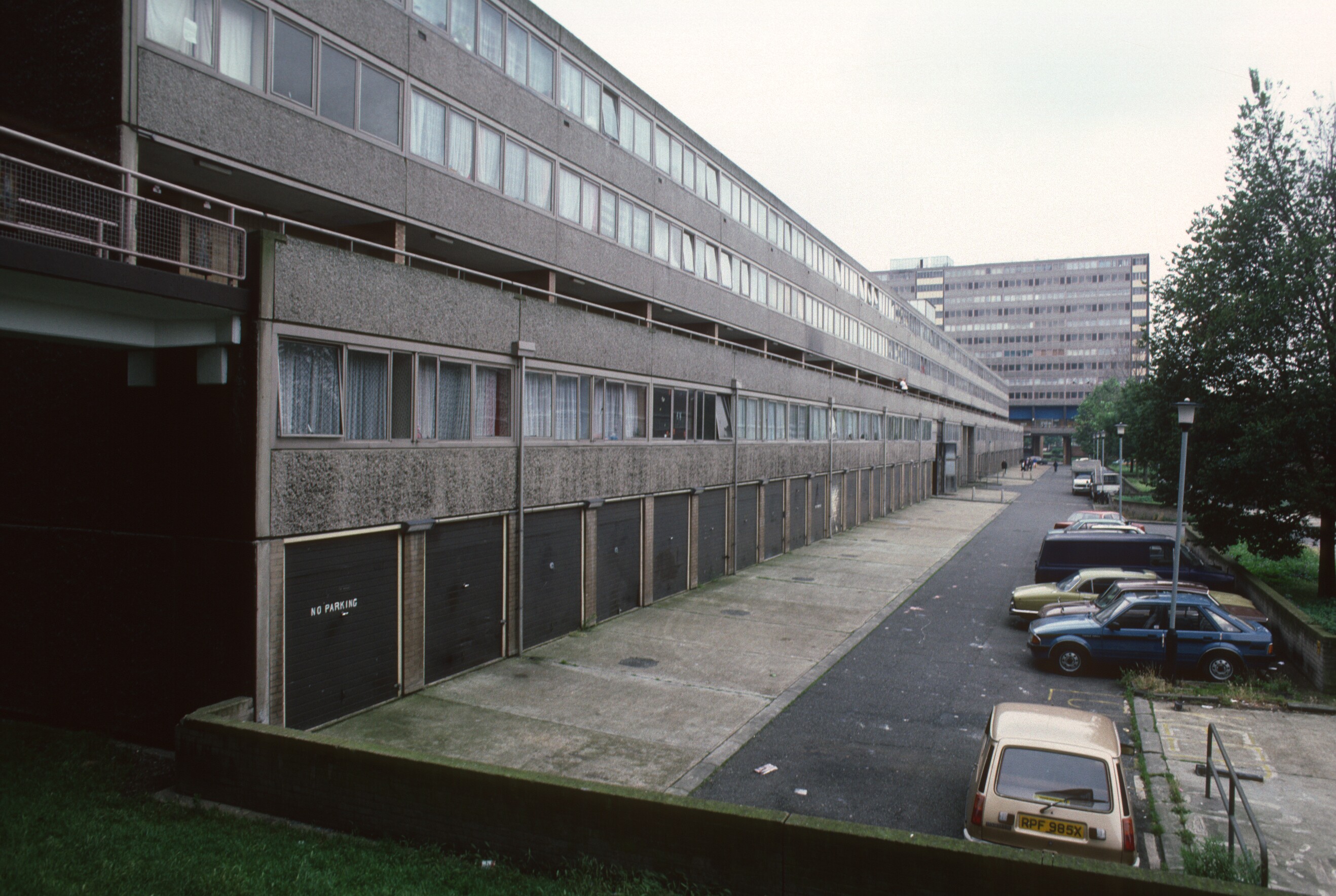
Tower_Block_UK_photo_l40-11.jpg

Different childhood. Different time horizon. Different posture toward life.

Two guys can earn the same salary and still be in different classes.

Guy A earns £35k.

He pays rent.
Helps family.
Has no savings.
Commutes far.
Cannot miss work.
Cannot move casually.
Cannot wait.
Cannot take risks.
Cannot afford therapy.
Cannot afford proper dental.
Cannot afford a social life without budgeting.
Cannot afford to fail.

Guy B earns £35k.

Parents helped with deposit.
No debt panic.
Family home is available.
Dad knows someone in finance.
Mum knows someone in law.
Rent is partly handled.
Grandparents gave him money.
He can take holidays.
He can buy decent clothes.
He can work the job like a stepping stone.

Same salary.

Different universe.

One is surviving.

One is compounding.

This is why “just copy rich people” is mostly cope.

You can copy the clothes.

You can buy loafers.

You can wear a quarter zip.

You can get the haircut.

You can drink the coffee.

You can say “mate” in a slower voice.

You can go to the same bar once and take pictures.

But you cannot instantly copy 20 years of being raised around calm, competent adults who knew how the game worked.

You cannot copy being introduced instead of applying cold.

You cannot copy never feeling ashamed in expensive rooms.

You cannot copy being assumed legitimate.

You cannot copy having a family name that makes people pause before disrespecting you.

You cannot copy growing up believing the future belongs to you.

That belief is class.

And people can smell when it is missing.

They detect urgency.

They detect scarcity.

They detect over-explaining.

They detect when you are trying to extract value from the room because you cannot afford to just exist in it.

That is why real upper-class people do less.

They do not perform as hard.

They do not sell themselves as aggressively.

They do not laugh too loudly.

They do not need to prove they belong.

They already assume the room has space for them.

Lower-status climbers often overdo everything because they are trying to compensate for invisible exclusion.

Too much gym.
Too much logo.
Too much explaining.
Too much networking.
Too much posting.
Too much hustle language.
Too much aggression.
Too much self-improvement vocabulary.

The rich kid just says:

“Yeah, I’m doing something with a friend from school.”

And that “friend from school” is the son of someone important.

That is social class.

Class is the ability to be casual around opportunity.

For the rich kid, opportunity is normal.

For the poor/middle kid, opportunity feels like a rare animal. He chases it too hard and scares it away.

That is why the upper-class guy can seem charming.

He is not necessarily more charismatic.

He is less hungry in public.

Hunger is useful privately.

In public, hunger makes people nervous.

This is also why social mobility is so psychologically expensive.

You are not just trying to make money.

You are trying to rebuild your nervous system while competing against people whose nervous systems were built correctly the first time.

You have to earn while healing.

Network while insecure.

Look relaxed while under pressure.

Develop taste while budgeting.

Build status while hiding desperation.

Take risks while unsupported.

Learn social codes everyone else absorbed at 12.

That is why it feels brutal.

Because you are not only behind financially.

You are behind in reps.

The rich kid has thousands more reps of:

- being listened to
- being guided
- being corrected gently
- being around high-agency adults
- being in clean environments
- speaking to authority
- being trusted
- being forgiven
- traveling
- ordering
- choosing
- waiting
- saying no
- seeing money discussed calmly
- seeing adults allocate capital
- assuming problems are solvable

The lower-status kid often has thousands more reps of:

- being rushed
- being ignored
- absorbing stress
- hiding needs
- avoiding risk
- watching adults panic
- being corrected harshly
- taking bad options fast
- accepting ugly environments
- laughing off humiliation
- killing ambition before others mock it
- treating comfort as suspicious

Then people pretend both are starting the same race.

They are not.

One is running.

One is running with ankle weights.

The most brutal thing class gives you is not luxury.

It gives you a clean relationship with the future.

The upper-class kid thinks in years.

The lower-status kid thinks in weeks.

The rich kid can wait for the right job.

The poor kid needs the next paycheck.

The rich kid can date slowly.

The poor kid often clings because stability is rare.

The rich kid can work on taste.

The poor kid is still fixing emergencies.

The rich kid can build a reputation.

The poor kid is trying not to drown.

Different time horizons create different people.

A long time horizon makes you calm, selective, strategic.

A short time horizon makes you reactive, intense, needy.

Then the world rewards the long time horizon and calls it “maturity.”

No.

It is often just safety.

photo-1572196889272-209dd237194f

People say “environment doesn’t matter” while environment quietly edits the person every day.

So what is the real blackpill?

Social class is not just what your parents gave you.

It is what they protected you from.

They protected you from bad schools.
Bad teeth.
Bad housing.
Bad adults.
Bad peer groups.
Bad diets.
Bad sleep.
Bad debt.
Bad jobs.
Bad neighborhoods.
Bad information.
Bad role models.
Bad emergencies.
Bad confidence damage.

That is the hidden inheritance.

Damage prevention.

A rich kid does not need to be insanely strong because the environment absorbs shocks for him.

A lower-class kid gets told to be “resilient.”

Resilience is often just what people call damage after it becomes useful.

Yes, you may become tougher.

But toughness is not free.

You paid for it with softness, trust, years, sleep, attention, and clean development.

The rich kid gets confidence without trauma.

The poor kid gets “character.”

Brutal trade.

This is why social class is everything.

It decides your baseline stress.

It decides your standards.

It decides your room quality.

It decides your school quality.

It decides who you meet.

It decides what adults teach you.

It decides whether mistakes are lessons or disasters.

It decides whether risk is exciting or suicidal.

It decides whether you grow continuously or in broken pieces.

It decides how your face ages.

It decides how your voice sounds.

It decides whether you look relaxed.

It decides whether you seem like you belong.

It decides how much of your potential survives childhood.

That last line is the real one.

Potential is not enough.

Potential needs an environment that does not keep interrupting it.

A seed can be genetically perfect.

Put it in bad soil, no light, irregular water, constant damage, and it grows crooked.

Then people point at the crooked tree and say:

“Bad genetics.”

No.

Bad conditions.

Now, the cope answer is to pretend class does not matter.

The loser answer is to say it matters so much that nothing can be done.

The real answer is worse but useful:

You have to build your own artificial floor.

Not aesthetic cosplay.

A real floor.

Emergency savings.
Stable sleep.
Clean room.
Good diet.
Dental.
Skin.
Gym.
Better area if possible.
No chaotic friends.
No humiliation rituals.
No begging for low-quality people.
No visible desperation.
Learn how higher-status people speak.
Learn how they dress.
Learn how they handle silence.
Learn how they disagree.
Learn how they network.
Learn how they make plans.
Learn how they think in years instead of days.

You cannot redo your childhood.

But you can stop extending it.

A lot of people from bad environments keep recreating the same chaos because calm feels unfamiliar.

They say they want to ascend but still live like everything is an emergency.

They keep ugly rooms.
Ugly friends.
Ugly routines.
Ugly speech.
Ugly media.
Ugly sleep.
Ugly food.
Ugly arguments.
Ugly impulses.

Then wonder why they cannot look or feel high class.

Class is partly an environment you build around yourself until your nervous system updates.

It takes years.

That is the brutal part.

But it is possible to reduce drag.

And reducing drag is the whole game.

Because the rich kid’s real advantage was never just money.

It was low friction.

Low friction made him calm.

Calm made him selective.

Selective made him tasteful.

Tasteful made him socially legible.

Socially legible got him better rooms.

Better rooms got him better people.

Better people got him better opportunities.

Better opportunities made him look “naturally” superior.

That is the loop.

Social class is everything because it decides whether life is a staircase or a trapdoor.

Rich kids climb.

Lower-status kids climb while holding the floor shut.

When people call the rich kid “natural,” they are usually just looking at uninterrupted development.
 
  • +1
  • JFL
  • WTF
Reactions: ØUROBOROS, yasuoh, iwishicouldbediff and 11 others
dnr buddy never making it into botb
 
  • +1
  • JFL
Reactions: ØUROBOROS, yasuoh, Niebvll and 7 others
 
  • JFL
  • +1
Reactions: ØUROBOROS, yasuoh, bmdoc and 1 other person
Bookmarked ngl
 
  • JFL
  • +1
Reactions: JbwKlassik and inceliusndius
People here talk about face, height, frame, money, status, voice, halo, game, clothes, gym, teeth, skin, all of it.

Fine.

But social class is underneath nearly all of those things.

Not because rich kids are automatically better people.

Not because poor kids are automatically doomed.

Because social class decides how much of yourself you get to keep while growing up.

That is the part nobody wants to say.

photo-1740596261028-29a7ad308157

This is not just architecture. This is a nervous system with front doors.

A rich kid does not just inherit money.

He inherits calm.

He inherits adults who answer questions without exploding.

He inherits clean rooms, quiet mornings, safe streets, soft landings, dentists, sports clubs, tutors, family friends, internships, normal holidays, and parents who know which doors matter.

He inherits the idea that the world is negotiable.

That is class.

The lower-class kid inherits noise.

Not always abuse. Not always poverty porn. Sometimes it is just constant friction.

The bus is late. The house is cramped. The parent is tired. The money is tense. The school is chaotic. The local area is ugly. Nobody explains anything. Every mistake feels bigger than it should. Every choice has consequences. Every small problem steals bandwidth.

Then both kids turn 22.

One walks into the room loose.

The other walks in slightly tense.

People call the first one “confident.”

They call the second one “awkward,” “tryhard,” “intense,” “low status,” “off.”

That is the class pill.

Class is not just money.

Money is the visible part.

Class is the hidden operating system.

It is how you speak.
How you sit.
How you pause.
How you handle silence.
How you order food.
How you talk to older adults.
How you talk to authority.
How you disagree without sounding threatened.
How you ask for help without sounding desperate.
How you take up space without feeling like you are stealing it.

A rich kid has done that since childhood.

At restaurants.
At family dinners.
At airports.
At sports clubs.
At school events.
At friends’ houses.
Around lawyers, bankers, doctors, founders, headmasters, property people, private tutors, and adults who calmly explain how the world works.

He has reps.

The lower-status kid has different reps.

Being rushed.
Being corrected harshly.
Being ignored.
Watching adults panic.
Hiding ambition.
Avoiding humiliation.
Not asking too much.
Trying not to be a burden.
Scanning the room for danger.
Explaining himself too much because he is used to being misunderstood.

Both are training.

One training produces ease.

The other training produces survival behavior.

photo-1641417755078-e4f3938afdf5

Background stress is not dramatic. That is why people underestimate it.

This is why rich kids seem “naturally” better.

They are not always smarter.

They are not always better looking.

They are not always more talented.

They are often just less interrupted.

Less interrupted sleep.
Less interrupted confidence.
Less interrupted education.
Less interrupted health.
Less interrupted identity formation.
Less interrupted ambition.
Less interrupted compounding.

The rich kid compounds in a straight line.

The lower-status kid compounds in fragments.

Build.
Get hit.
Recover.

Build.
Get hit.
Recover.

Build.
Get hit.
Recover.

By 30, one has polish.

The other has scar tissue.

People then call the difference “personality.”

No.

A lot of it is interruption history.

Look at two boys.

Same IQ.
Same face tier.
Same height.
Same basic potential.

Boy A grows up in a calm house.

His parents are not perfect, but they are functional. There is food in the fridge. His room has a desk. The house is not constantly loud. His school is not full of chaos. His parents know what universities matter. They know which sports look good. They know that braces are not optional. They book the dermatologist early. They pay for tutoring before the grades collapse. They fix problems before problems become identity.

He fails a test and someone says:

“Okay. What happened? Let’s sort it.”

Boy B grows up in friction.

Not necessarily hell. Just friction.

The house is loud. The money mood changes every week. Adults are tired. Nobody has bandwidth. The school is mediocre. Teachers are overworked. Peers are chaotic. Nobody tells him what matters until it is already too late. He learns by getting punished. He learns by embarrassment. He learns by watching people lose.

He fails a test and the house turns into a funeral.

Same failure.

Different emotional price.

That changes a person.

One kid learns mistakes are information.

The other learns mistakes are danger.

That is why class enters the body.

People think posture is just posture.

It is not.

Posture is years of not being rushed.

Eye contact is years of not being threatened.

A calm voice is years of not needing to defend yourself.

Good social timing is years of being around people who are not constantly dysregulated.

Taste is years of being allowed to choose slowly.

Confidence is often just a nervous system that was not trained for threat detection.

cambridge.JPG

This is where “natural confidence” gets rehearsed for 18 years.

This is the brutal part for looksmaxxing:

Your face is not viewed in isolation.

Nobody sees only your skull.

They see the whole package around it.

They see your teeth.
Your skin.
Your haircut.
Your clothes.
Your voice.
Your manners.
Your posture.
Your social circle.
Your location.
Your hobbies.
Your career trajectory.
Your confidence.
Your future.

Social class touches all of those.

Rich kids get orthodontics before the teeth become a meme.

They get sports before the body becomes soft.

They get good food before the skin gets wrecked.

They get sleep before the face gets cortisol-bloated.

They get stable routines before discipline becomes a war.

They get clothes that fit because someone around them knows what “fit” means.

They get haircuts from people who do not destroy them.

They get dental cleanings.

They get holidays, sunlight, hobbies, skiing, tennis, rowing, rugby, music lessons, summer programs, clean friend groups, and family networks.

Even when they are mid, they are packaged well.

A middle/lower-class guy can be genetically decent and still look worse because his life has been leaking value for years.

Bad sleep.
Cheap food.
Stress face.
Mouth breathing never corrected.
Bad teeth.
No style guidance.
No sports culture.
No private space.
No calm social reps.
No adult male model with taste.
No one saying “stand straight, speak slower, buy this, not that.”

Then he turns 20 and some guy online says:

“Just be confident bro.”

Joke advice.

Confidence is not a hoodie you put on.

Confidence is the result of repeated proof that life will not collapse if you act.

And rich kids get that proof constantly.

They can try.
They can fail.
They can recover.

That is the floor.

The floor is everything.

A floor means:

You can quit a bad job.
You can take an unpaid internship.
You can move city.
You can wait for the better opportunity.
You can take a career risk.
You can start a business.
You can leave a bad relationship.
You can say no.
You can be selective.
You can be patient.

No floor means:

Take whatever you can get.
Do not risk the rent.
Do not offend anyone.
Do not leave the job.
Do not move unless guaranteed.
Do not experiment.
Do not fail.
Do not be picky.
Do not wait.

Then society looks at both people and says:

“Why is the rich kid more ambitious?”

Because ambition is easier when failure has padding.

Without a floor, risk is not “exciting.”

It is existential.

Tower_Block_UK_photo_l40-11.jpg

Different childhood. Different time horizon. Different posture toward life.

Two guys can earn the same salary and still be in different classes.

Guy A earns £35k.

He pays rent.
Helps family.
Has no savings.
Commutes far.
Cannot miss work.
Cannot move casually.
Cannot wait.
Cannot take risks.
Cannot afford therapy.
Cannot afford proper dental.
Cannot afford a social life without budgeting.
Cannot afford to fail.

Guy B earns £35k.

Parents helped with deposit.
No debt panic.
Family home is available.
Dad knows someone in finance.
Mum knows someone in law.
Rent is partly handled.
Grandparents gave him money.
He can take holidays.
He can buy decent clothes.
He can work the job like a stepping stone.

Same salary.

Different universe.

One is surviving.

One is compounding.

This is why “just copy rich people” is mostly cope.

You can copy the clothes.

You can buy loafers.

You can wear a quarter zip.

You can get the haircut.

You can drink the coffee.

You can say “mate” in a slower voice.

You can go to the same bar once and take pictures.

But you cannot instantly copy 20 years of being raised around calm, competent adults who knew how the game worked.

You cannot copy being introduced instead of applying cold.

You cannot copy never feeling ashamed in expensive rooms.

You cannot copy being assumed legitimate.

You cannot copy having a family name that makes people pause before disrespecting you.

You cannot copy growing up believing the future belongs to you.

That belief is class.

And people can smell when it is missing.

They detect urgency.

They detect scarcity.

They detect over-explaining.

They detect when you are trying to extract value from the room because you cannot afford to just exist in it.

That is why real upper-class people do less.

They do not perform as hard.

They do not sell themselves as aggressively.

They do not laugh too loudly.

They do not need to prove they belong.

They already assume the room has space for them.

Lower-status climbers often overdo everything because they are trying to compensate for invisible exclusion.

Too much gym.
Too much logo.
Too much explaining.
Too much networking.
Too much posting.
Too much hustle language.
Too much aggression.
Too much self-improvement vocabulary.

The rich kid just says:

“Yeah, I’m doing something with a friend from school.”

And that “friend from school” is the son of someone important.

That is social class.

Class is the ability to be casual around opportunity.

For the rich kid, opportunity is normal.

For the poor/middle kid, opportunity feels like a rare animal. He chases it too hard and scares it away.

That is why the upper-class guy can seem charming.

He is not necessarily more charismatic.

He is less hungry in public.

Hunger is useful privately.

In public, hunger makes people nervous.

This is also why social mobility is so psychologically expensive.

You are not just trying to make money.

You are trying to rebuild your nervous system while competing against people whose nervous systems were built correctly the first time.

You have to earn while healing.

Network while insecure.

Look relaxed while under pressure.

Develop taste while budgeting.

Build status while hiding desperation.

Take risks while unsupported.

Learn social codes everyone else absorbed at 12.

That is why it feels brutal.

Because you are not only behind financially.

You are behind in reps.

The rich kid has thousands more reps of:

- being listened to
- being guided
- being corrected gently
- being around high-agency adults
- being in clean environments
- speaking to authority
- being trusted
- being forgiven
- traveling
- ordering
- choosing
- waiting
- saying no
- seeing money discussed calmly
- seeing adults allocate capital
- assuming problems are solvable

The lower-status kid often has thousands more reps of:

- being rushed
- being ignored
- absorbing stress
- hiding needs
- avoiding risk
- watching adults panic
- being corrected harshly
- taking bad options fast
- accepting ugly environments
- laughing off humiliation
- killing ambition before others mock it
- treating comfort as suspicious

Then people pretend both are starting the same race.

They are not.

One is running.

One is running with ankle weights.

The most brutal thing class gives you is not luxury.

It gives you a clean relationship with the future.

The upper-class kid thinks in years.

The lower-status kid thinks in weeks.

The rich kid can wait for the right job.

The poor kid needs the next paycheck.

The rich kid can date slowly.

The poor kid often clings because stability is rare.

The rich kid can work on taste.

The poor kid is still fixing emergencies.

The rich kid can build a reputation.

The poor kid is trying not to drown.

Different time horizons create different people.

A long time horizon makes you calm, selective, strategic.

A short time horizon makes you reactive, intense, needy.

Then the world rewards the long time horizon and calls it “maturity.”

No.

It is often just safety.

photo-1572196889272-209dd237194f

People say “environment doesn’t matter” while environment quietly edits the person every day.

So what is the real blackpill?

Social class is not just what your parents gave you.

It is what they protected you from.

They protected you from bad schools.
Bad teeth.
Bad housing.
Bad adults.
Bad peer groups.
Bad diets.
Bad sleep.
Bad debt.
Bad jobs.
Bad neighborhoods.
Bad information.
Bad role models.
Bad emergencies.
Bad confidence damage.

That is the hidden inheritance.

Damage prevention.

A rich kid does not need to be insanely strong because the environment absorbs shocks for him.

A lower-class kid gets told to be “resilient.”

Resilience is often just what people call damage after it becomes useful.

Yes, you may become tougher.

But toughness is not free.

You paid for it with softness, trust, years, sleep, attention, and clean development.

The rich kid gets confidence without trauma.

The poor kid gets “character.”

Brutal trade.

This is why social class is everything.

It decides your baseline stress.

It decides your standards.

It decides your room quality.

It decides your school quality.

It decides who you meet.

It decides what adults teach you.

It decides whether mistakes are lessons or disasters.

It decides whether risk is exciting or suicidal.

It decides whether you grow continuously or in broken pieces.

It decides how your face ages.

It decides how your voice sounds.

It decides whether you look relaxed.

It decides whether you seem like you belong.

It decides how much of your potential survives childhood.

That last line is the real one.

Potential is not enough.

Potential needs an environment that does not keep interrupting it.

A seed can be genetically perfect.

Put it in bad soil, no light, irregular water, constant damage, and it grows crooked.

Then people point at the crooked tree and say:

“Bad genetics.”

No.

Bad conditions.

Now, the cope answer is to pretend class does not matter.

The loser answer is to say it matters so much that nothing can be done.

The real answer is worse but useful:

You have to build your own artificial floor.

Not aesthetic cosplay.

A real floor.

Emergency savings.
Stable sleep.
Clean room.
Good diet.
Dental.
Skin.
Gym.
Better area if possible.
No chaotic friends.
No humiliation rituals.
No begging for low-quality people.
No visible desperation.
Learn how higher-status people speak.
Learn how they dress.
Learn how they handle silence.
Learn how they disagree.
Learn how they network.
Learn how they make plans.
Learn how they think in years instead of days.

You cannot redo your childhood.

But you can stop extending it.

A lot of people from bad environments keep recreating the same chaos because calm feels unfamiliar.

They say they want to ascend but still live like everything is an emergency.

They keep ugly rooms.
Ugly friends.
Ugly routines.
Ugly speech.
Ugly media.
Ugly sleep.
Ugly food.
Ugly arguments.
Ugly impulses.

Then wonder why they cannot look or feel high class.

Class is partly an environment you build around yourself until your nervous system updates.

It takes years.

That is the brutal part.

But it is possible to reduce drag.

And reducing drag is the whole game.

Because the rich kid’s real advantage was never just money.

It was low friction.

Low friction made him calm.

Calm made him selective.

Selective made him tasteful.

Tasteful made him socially legible.

Socially legible got him better rooms.

Better rooms got him better people.

Better people got him better opportunities.

Better opportunities made him look “naturally” superior.

That is the loop.

Social class is everything because it decides whether life is a staircase or a trapdoor.

Rich kids climb.

Lower-status kids climb while holding the floor shut.

When people call the rich kid “natural,” they are usually just looking at uninterrupted development.
Nigga genuinely no one reading this
 
People here talk about face, height, frame, money, status, voice, halo, game, clothes, gym, teeth, skin, all of it.

Fine.

But social class is underneath nearly all of those things.

Not because rich kids are automatically better people.

Not because poor kids are automatically doomed.

Because social class decides how much of yourself you get to keep while growing up.

That is the part nobody wants to say.

photo-1740596261028-29a7ad308157

This is not just architecture. This is a nervous system with front doors.

A rich kid does not just inherit money.

He inherits calm.

He inherits adults who answer questions without exploding.

He inherits clean rooms, quiet mornings, safe streets, soft landings, dentists, sports clubs, tutors, family friends, internships, normal holidays, and parents who know which doors matter.

He inherits the idea that the world is negotiable.

That is class.

The lower-class kid inherits noise.

Not always abuse. Not always poverty porn. Sometimes it is just constant friction.

The bus is late. The house is cramped. The parent is tired. The money is tense. The school is chaotic. The local area is ugly. Nobody explains anything. Every mistake feels bigger than it should. Every choice has consequences. Every small problem steals bandwidth.

Then both kids turn 22.

One walks into the room loose.

The other walks in slightly tense.

People call the first one “confident.”

They call the second one “awkward,” “tryhard,” “intense,” “low status,” “off.”

That is the class pill.

Class is not just money.

Money is the visible part.

Class is the hidden operating system.

It is how you speak.
How you sit.
How you pause.
How you handle silence.
How you order food.
How you talk to older adults.
How you talk to authority.
How you disagree without sounding threatened.
How you ask for help without sounding desperate.
How you take up space without feeling like you are stealing it.

A rich kid has done that since childhood.

At restaurants.
At family dinners.
At airports.
At sports clubs.
At school events.
At friends’ houses.
Around lawyers, bankers, doctors, founders, headmasters, property people, private tutors, and adults who calmly explain how the world works.

He has reps.

The lower-status kid has different reps.

Being rushed.
Being corrected harshly.
Being ignored.
Watching adults panic.
Hiding ambition.
Avoiding humiliation.
Not asking too much.
Trying not to be a burden.
Scanning the room for danger.
Explaining himself too much because he is used to being misunderstood.

Both are training.

One training produces ease.

The other training produces survival behavior.

photo-1641417755078-e4f3938afdf5

Background stress is not dramatic. That is why people underestimate it.

This is why rich kids seem “naturally” better.

They are not always smarter.

They are not always better looking.

They are not always more talented.

They are often just less interrupted.

Less interrupted sleep.
Less interrupted confidence.
Less interrupted education.
Less interrupted health.
Less interrupted identity formation.
Less interrupted ambition.
Less interrupted compounding.

The rich kid compounds in a straight line.

The lower-status kid compounds in fragments.

Build.
Get hit.
Recover.

Build.
Get hit.
Recover.

Build.
Get hit.
Recover.

By 30, one has polish.

The other has scar tissue.

People then call the difference “personality.”

No.

A lot of it is interruption history.

Look at two boys.

Same IQ.
Same face tier.
Same height.
Same basic potential.

Boy A grows up in a calm house.

His parents are not perfect, but they are functional. There is food in the fridge. His room has a desk. The house is not constantly loud. His school is not full of chaos. His parents know what universities matter. They know which sports look good. They know that braces are not optional. They book the dermatologist early. They pay for tutoring before the grades collapse. They fix problems before problems become identity.

He fails a test and someone says:

“Okay. What happened? Let’s sort it.”

Boy B grows up in friction.

Not necessarily hell. Just friction.

The house is loud. The money mood changes every week. Adults are tired. Nobody has bandwidth. The school is mediocre. Teachers are overworked. Peers are chaotic. Nobody tells him what matters until it is already too late. He learns by getting punished. He learns by embarrassment. He learns by watching people lose.

He fails a test and the house turns into a funeral.

Same failure.

Different emotional price.

That changes a person.

One kid learns mistakes are information.

The other learns mistakes are danger.

That is why class enters the body.

People think posture is just posture.

It is not.

Posture is years of not being rushed.

Eye contact is years of not being threatened.

A calm voice is years of not needing to defend yourself.

Good social timing is years of being around people who are not constantly dysregulated.

Taste is years of being allowed to choose slowly.

Confidence is often just a nervous system that was not trained for threat detection.

cambridge.JPG

This is where “natural confidence” gets rehearsed for 18 years.

This is the brutal part for looksmaxxing:

Your face is not viewed in isolation.

Nobody sees only your skull.

They see the whole package around it.

They see your teeth.
Your skin.
Your haircut.
Your clothes.
Your voice.
Your manners.
Your posture.
Your social circle.
Your location.
Your hobbies.
Your career trajectory.
Your confidence.
Your future.

Social class touches all of those.

Rich kids get orthodontics before the teeth become a meme.

They get sports before the body becomes soft.

They get good food before the skin gets wrecked.

They get sleep before the face gets cortisol-bloated.

They get stable routines before discipline becomes a war.

They get clothes that fit because someone around them knows what “fit” means.

They get haircuts from people who do not destroy them.

They get dental cleanings.

They get holidays, sunlight, hobbies, skiing, tennis, rowing, rugby, music lessons, summer programs, clean friend groups, and family networks.

Even when they are mid, they are packaged well.

A middle/lower-class guy can be genetically decent and still look worse because his life has been leaking value for years.

Bad sleep.
Cheap food.
Stress face.
Mouth breathing never corrected.
Bad teeth.
No style guidance.
No sports culture.
No private space.
No calm social reps.
No adult male model with taste.
No one saying “stand straight, speak slower, buy this, not that.”

Then he turns 20 and some guy online says:

“Just be confident bro.”

Joke advice.

Confidence is not a hoodie you put on.

Confidence is the result of repeated proof that life will not collapse if you act.

And rich kids get that proof constantly.

They can try.
They can fail.
They can recover.

That is the floor.

The floor is everything.

A floor means:

You can quit a bad job.
You can take an unpaid internship.
You can move city.
You can wait for the better opportunity.
You can take a career risk.
You can start a business.
You can leave a bad relationship.
You can say no.
You can be selective.
You can be patient.

No floor means:

Take whatever you can get.
Do not risk the rent.
Do not offend anyone.
Do not leave the job.
Do not move unless guaranteed.
Do not experiment.
Do not fail.
Do not be picky.
Do not wait.

Then society looks at both people and says:

“Why is the rich kid more ambitious?”

Because ambition is easier when failure has padding.

Without a floor, risk is not “exciting.”

It is existential.

Tower_Block_UK_photo_l40-11.jpg

Different childhood. Different time horizon. Different posture toward life.

Two guys can earn the same salary and still be in different classes.

Guy A earns £35k.

He pays rent.
Helps family.
Has no savings.
Commutes far.
Cannot miss work.
Cannot move casually.
Cannot wait.
Cannot take risks.
Cannot afford therapy.
Cannot afford proper dental.
Cannot afford a social life without budgeting.
Cannot afford to fail.

Guy B earns £35k.

Parents helped with deposit.
No debt panic.
Family home is available.
Dad knows someone in finance.
Mum knows someone in law.
Rent is partly handled.
Grandparents gave him money.
He can take holidays.
He can buy decent clothes.
He can work the job like a stepping stone.

Same salary.

Different universe.

One is surviving.

One is compounding.

This is why “just copy rich people” is mostly cope.

You can copy the clothes.

You can buy loafers.

You can wear a quarter zip.

You can get the haircut.

You can drink the coffee.

You can say “mate” in a slower voice.

You can go to the same bar once and take pictures.

But you cannot instantly copy 20 years of being raised around calm, competent adults who knew how the game worked.

You cannot copy being introduced instead of applying cold.

You cannot copy never feeling ashamed in expensive rooms.

You cannot copy being assumed legitimate.

You cannot copy having a family name that makes people pause before disrespecting you.

You cannot copy growing up believing the future belongs to you.

That belief is class.

And people can smell when it is missing.

They detect urgency.

They detect scarcity.

They detect over-explaining.

They detect when you are trying to extract value from the room because you cannot afford to just exist in it.

That is why real upper-class people do less.

They do not perform as hard.

They do not sell themselves as aggressively.

They do not laugh too loudly.

They do not need to prove they belong.

They already assume the room has space for them.

Lower-status climbers often overdo everything because they are trying to compensate for invisible exclusion.

Too much gym.
Too much logo.
Too much explaining.
Too much networking.
Too much posting.
Too much hustle language.
Too much aggression.
Too much self-improvement vocabulary.

The rich kid just says:

“Yeah, I’m doing something with a friend from school.”

And that “friend from school” is the son of someone important.

That is social class.

Class is the ability to be casual around opportunity.

For the rich kid, opportunity is normal.

For the poor/middle kid, opportunity feels like a rare animal. He chases it too hard and scares it away.

That is why the upper-class guy can seem charming.

He is not necessarily more charismatic.

He is less hungry in public.

Hunger is useful privately.

In public, hunger makes people nervous.

This is also why social mobility is so psychologically expensive.

You are not just trying to make money.

You are trying to rebuild your nervous system while competing against people whose nervous systems were built correctly the first time.

You have to earn while healing.

Network while insecure.

Look relaxed while under pressure.

Develop taste while budgeting.

Build status while hiding desperation.

Take risks while unsupported.

Learn social codes everyone else absorbed at 12.

That is why it feels brutal.

Because you are not only behind financially.

You are behind in reps.

The rich kid has thousands more reps of:

- being listened to
- being guided
- being corrected gently
- being around high-agency adults
- being in clean environments
- speaking to authority
- being trusted
- being forgiven
- traveling
- ordering
- choosing
- waiting
- saying no
- seeing money discussed calmly
- seeing adults allocate capital
- assuming problems are solvable

The lower-status kid often has thousands more reps of:

- being rushed
- being ignored
- absorbing stress
- hiding needs
- avoiding risk
- watching adults panic
- being corrected harshly
- taking bad options fast
- accepting ugly environments
- laughing off humiliation
- killing ambition before others mock it
- treating comfort as suspicious

Then people pretend both are starting the same race.

They are not.

One is running.

One is running with ankle weights.

The most brutal thing class gives you is not luxury.

It gives you a clean relationship with the future.

The upper-class kid thinks in years.

The lower-status kid thinks in weeks.

The rich kid can wait for the right job.

The poor kid needs the next paycheck.

The rich kid can date slowly.

The poor kid often clings because stability is rare.

The rich kid can work on taste.

The poor kid is still fixing emergencies.

The rich kid can build a reputation.

The poor kid is trying not to drown.

Different time horizons create different people.

A long time horizon makes you calm, selective, strategic.

A short time horizon makes you reactive, intense, needy.

Then the world rewards the long time horizon and calls it “maturity.”

No.

It is often just safety.

photo-1572196889272-209dd237194f

People say “environment doesn’t matter” while environment quietly edits the person every day.

So what is the real blackpill?

Social class is not just what your parents gave you.

It is what they protected you from.

They protected you from bad schools.
Bad teeth.
Bad housing.
Bad adults.
Bad peer groups.
Bad diets.
Bad sleep.
Bad debt.
Bad jobs.
Bad neighborhoods.
Bad information.
Bad role models.
Bad emergencies.
Bad confidence damage.

That is the hidden inheritance.

Damage prevention.

A rich kid does not need to be insanely strong because the environment absorbs shocks for him.

A lower-class kid gets told to be “resilient.”

Resilience is often just what people call damage after it becomes useful.

Yes, you may become tougher.

But toughness is not free.

You paid for it with softness, trust, years, sleep, attention, and clean development.

The rich kid gets confidence without trauma.

The poor kid gets “character.”

Brutal trade.

This is why social class is everything.

It decides your baseline stress.

It decides your standards.

It decides your room quality.

It decides your school quality.

It decides who you meet.

It decides what adults teach you.

It decides whether mistakes are lessons or disasters.

It decides whether risk is exciting or suicidal.

It decides whether you grow continuously or in broken pieces.

It decides how your face ages.

It decides how your voice sounds.

It decides whether you look relaxed.

It decides whether you seem like you belong.

It decides how much of your potential survives childhood.

That last line is the real one.

Potential is not enough.

Potential needs an environment that does not keep interrupting it.

A seed can be genetically perfect.

Put it in bad soil, no light, irregular water, constant damage, and it grows crooked.

Then people point at the crooked tree and say:

“Bad genetics.”

No.

Bad conditions.

Now, the cope answer is to pretend class does not matter.

The loser answer is to say it matters so much that nothing can be done.

The real answer is worse but useful:

You have to build your own artificial floor.

Not aesthetic cosplay.

A real floor.

Emergency savings.
Stable sleep.
Clean room.
Good diet.
Dental.
Skin.
Gym.
Better area if possible.
No chaotic friends.
No humiliation rituals.
No begging for low-quality people.
No visible desperation.
Learn how higher-status people speak.
Learn how they dress.
Learn how they handle silence.
Learn how they disagree.
Learn how they network.
Learn how they make plans.
Learn how they think in years instead of days.

You cannot redo your childhood.

But you can stop extending it.

A lot of people from bad environments keep recreating the same chaos because calm feels unfamiliar.

They say they want to ascend but still live like everything is an emergency.

They keep ugly rooms.
Ugly friends.
Ugly routines.
Ugly speech.
Ugly media.
Ugly sleep.
Ugly food.
Ugly arguments.
Ugly impulses.

Then wonder why they cannot look or feel high class.

Class is partly an environment you build around yourself until your nervous system updates.

It takes years.

That is the brutal part.

But it is possible to reduce drag.

And reducing drag is the whole game.

Because the rich kid’s real advantage was never just money.

It was low friction.

Low friction made him calm.

Calm made him selective.

Selective made him tasteful.

Tasteful made him socially legible.

Socially legible got him better rooms.

Better rooms got him better people.

Better people got him better opportunities.

Better opportunities made him look “naturally” superior.

That is the loop.

Social class is everything because it decides whether life is a staircase or a trapdoor.

Rich kids climb.

Lower-status kids climb while holding the floor shut.

When people call the rich kid “natural,” they are usually just looking at uninterrupted development.
high effort but still water:lul:
 
  • Love it
  • +1
Reactions: _Nazareth_ and Seth Walsh
Dnr +
Your all fucking poor and im a future billionare
54316
 
  • JFL
Reactions: Seth Walsh
Tldr : Being born into generational wealth is a huge privilege
 
  • +1
Reactions: AryanSchizo and Seth Walsh
  • +1
Reactions: _Nazareth_
niggas be titling their own threads “BOTB”
isnt this a reupload anyways
 
  • JFL
  • +1
Reactions: inceliusndius, brotato78, _Nazareth_ and 1 other person
Go read it and I'll rep you.

It's important you read. No one teaches you this in school.
I read half but you dragged it and made multiple threads on this already. And my dad has already taught me all this shit especially since he had to learn it all himself as an immigrant
 
  • +1
Reactions: Seth Walsh
niggas be titling their own threads “BOTB”
isnt this a reupload anyways
Seen this guy post this type of thread a million times
 
  • +1
Reactions: luuk
I read half but you dragged it and made multiple threads on this already. And my dad has already taught me all this shit especially since he had to learn it all himself as an immigrant
Good stuff and W Dad.

shots liquor GIF
 
  • +1
Reactions: _Nazareth_
i mean this is the most water concept of “the social class you are born into gives you the foundation for a much easier life” stretched into a ridiculous amount of lines by chatgpt. entirely unnecessary
 
  • Woah
Reactions: Seth Walsh
Shut the fuck up, ts will never be botb also water, more money = more good heeeeheeeeheeeee
 
  • Woah
  • +1
Reactions: Seth Walsh and luuk
People here talk about face, height, frame, money, status, voice, halo, game, clothes, gym, teeth, skin, all of it.

Fine.

But social class is underneath nearly all of those things.

Not because rich kids are automatically better people.

Not because poor kids are automatically doomed.

Because social class decides how much of yourself you get to keep while growing up.

That is the part nobody wants to say.

photo-1740596261028-29a7ad308157

This is not just architecture. This is a nervous system with front doors.

A rich kid does not just inherit money.

He inherits calm.

He inherits adults who answer questions without exploding.

He inherits clean rooms, quiet mornings, safe streets, soft landings, dentists, sports clubs, tutors, family friends, internships, normal holidays, and parents who know which doors matter.

He inherits the idea that the world is negotiable.

That is class.

The lower-class kid inherits noise.

Not always abuse. Not always poverty porn. Sometimes it is just constant friction.

The bus is late. The house is cramped. The parent is tired. The money is tense. The school is chaotic. The local area is ugly. Nobody explains anything. Every mistake feels bigger than it should. Every choice has consequences. Every small problem steals bandwidth.

Then both kids turn 22.

One walks into the room loose.

The other walks in slightly tense.

People call the first one “confident.”

They call the second one “awkward,” “tryhard,” “intense,” “low status,” “off.”

That is the class pill.

Class is not just money.

Money is the visible part.

Class is the hidden operating system.

It is how you speak.
How you sit.
How you pause.
How you handle silence.
How you order food.
How you talk to older adults.
How you talk to authority.
How you disagree without sounding threatened.
How you ask for help without sounding desperate.
How you take up space without feeling like you are stealing it.

A rich kid has done that since childhood.

At restaurants.
At family dinners.
At airports.
At sports clubs.
At school events.
At friends’ houses.
Around lawyers, bankers, doctors, founders, headmasters, property people, private tutors, and adults who calmly explain how the world works.

He has reps.

The lower-status kid has different reps.

Being rushed.
Being corrected harshly.
Being ignored.
Watching adults panic.
Hiding ambition.
Avoiding humiliation.
Not asking too much.
Trying not to be a burden.
Scanning the room for danger.
Explaining himself too much because he is used to being misunderstood.

Both are training.

One training produces ease.

The other training produces survival behavior.

photo-1641417755078-e4f3938afdf5

Background stress is not dramatic. That is why people underestimate it.

This is why rich kids seem “naturally” better.

They are not always smarter.

They are not always better looking.

They are not always more talented.

They are often just less interrupted.

Less interrupted sleep.
Less interrupted confidence.
Less interrupted education.
Less interrupted health.
Less interrupted identity formation.
Less interrupted ambition.
Less interrupted compounding.

The rich kid compounds in a straight line.

The lower-status kid compounds in fragments.

Build.
Get hit.
Recover.

Build.
Get hit.
Recover.

Build.
Get hit.
Recover.

By 30, one has polish.

The other has scar tissue.

People then call the difference “personality.”

No.

A lot of it is interruption history.

Look at two boys.

Same IQ.
Same face tier.
Same height.
Same basic potential.

Boy A grows up in a calm house.

His parents are not perfect, but they are functional. There is food in the fridge. His room has a desk. The house is not constantly loud. His school is not full of chaos. His parents know what universities matter. They know which sports look good. They know that braces are not optional. They book the dermatologist early. They pay for tutoring before the grades collapse. They fix problems before problems become identity.

He fails a test and someone says:

“Okay. What happened? Let’s sort it.”

Boy B grows up in friction.

Not necessarily hell. Just friction.

The house is loud. The money mood changes every week. Adults are tired. Nobody has bandwidth. The school is mediocre. Teachers are overworked. Peers are chaotic. Nobody tells him what matters until it is already too late. He learns by getting punished. He learns by embarrassment. He learns by watching people lose.

He fails a test and the house turns into a funeral.

Same failure.

Different emotional price.

That changes a person.

One kid learns mistakes are information.

The other learns mistakes are danger.

That is why class enters the body.

People think posture is just posture.

It is not.

Posture is years of not being rushed.

Eye contact is years of not being threatened.

A calm voice is years of not needing to defend yourself.

Good social timing is years of being around people who are not constantly dysregulated.

Taste is years of being allowed to choose slowly.

Confidence is often just a nervous system that was not trained for threat detection.

cambridge.JPG

This is where “natural confidence” gets rehearsed for 18 years.

This is the brutal part for looksmaxxing:

Your face is not viewed in isolation.

Nobody sees only your skull.

They see the whole package around it.

They see your teeth.
Your skin.
Your haircut.
Your clothes.
Your voice.
Your manners.
Your posture.
Your social circle.
Your location.
Your hobbies.
Your career trajectory.
Your confidence.
Your future.

Social class touches all of those.

Rich kids get orthodontics before the teeth become a meme.

They get sports before the body becomes soft.

They get good food before the skin gets wrecked.

They get sleep before the face gets cortisol-bloated.

They get stable routines before discipline becomes a war.

They get clothes that fit because someone around them knows what “fit” means.

They get haircuts from people who do not destroy them.

They get dental cleanings.

They get holidays, sunlight, hobbies, skiing, tennis, rowing, rugby, music lessons, summer programs, clean friend groups, and family networks.

Even when they are mid, they are packaged well.

A middle/lower-class guy can be genetically decent and still look worse because his life has been leaking value for years.

Bad sleep.
Cheap food.
Stress face.
Mouth breathing never corrected.
Bad teeth.
No style guidance.
No sports culture.
No private space.
No calm social reps.
No adult male model with taste.
No one saying “stand straight, speak slower, buy this, not that.”

Then he turns 20 and some guy online says:

“Just be confident bro.”

Joke advice.

Confidence is not a hoodie you put on.

Confidence is the result of repeated proof that life will not collapse if you act.

And rich kids get that proof constantly.

They can try.
They can fail.
They can recover.

That is the floor.

The floor is everything.

A floor means:

You can quit a bad job.
You can take an unpaid internship.
You can move city.
You can wait for the better opportunity.
You can take a career risk.
You can start a business.
You can leave a bad relationship.
You can say no.
You can be selective.
You can be patient.

No floor means:

Take whatever you can get.
Do not risk the rent.
Do not offend anyone.
Do not leave the job.
Do not move unless guaranteed.
Do not experiment.
Do not fail.
Do not be picky.
Do not wait.

Then society looks at both people and says:

“Why is the rich kid more ambitious?”

Because ambition is easier when failure has padding.

Without a floor, risk is not “exciting.”

It is existential.

Tower_Block_UK_photo_l40-11.jpg

Different childhood. Different time horizon. Different posture toward life.

Two guys can earn the same salary and still be in different classes.

Guy A earns £35k.

He pays rent.
Helps family.
Has no savings.
Commutes far.
Cannot miss work.
Cannot move casually.
Cannot wait.
Cannot take risks.
Cannot afford therapy.
Cannot afford proper dental.
Cannot afford a social life without budgeting.
Cannot afford to fail.

Guy B earns £35k.

Parents helped with deposit.
No debt panic.
Family home is available.
Dad knows someone in finance.
Mum knows someone in law.
Rent is partly handled.
Grandparents gave him money.
He can take holidays.
He can buy decent clothes.
He can work the job like a stepping stone.

Same salary.

Different universe.

One is surviving.

One is compounding.

This is why “just copy rich people” is mostly cope.

You can copy the clothes.

You can buy loafers.

You can wear a quarter zip.

You can get the haircut.

You can drink the coffee.

You can say “mate” in a slower voice.

You can go to the same bar once and take pictures.

But you cannot instantly copy 20 years of being raised around calm, competent adults who knew how the game worked.

You cannot copy being introduced instead of applying cold.

You cannot copy never feeling ashamed in expensive rooms.

You cannot copy being assumed legitimate.

You cannot copy having a family name that makes people pause before disrespecting you.

You cannot copy growing up believing the future belongs to you.

That belief is class.

And people can smell when it is missing.

They detect urgency.

They detect scarcity.

They detect over-explaining.

They detect when you are trying to extract value from the room because you cannot afford to just exist in it.

That is why real upper-class people do less.

They do not perform as hard.

They do not sell themselves as aggressively.

They do not laugh too loudly.

They do not need to prove they belong.

They already assume the room has space for them.

Lower-status climbers often overdo everything because they are trying to compensate for invisible exclusion.

Too much gym.
Too much logo.
Too much explaining.
Too much networking.
Too much posting.
Too much hustle language.
Too much aggression.
Too much self-improvement vocabulary.

The rich kid just says:

“Yeah, I’m doing something with a friend from school.”

And that “friend from school” is the son of someone important.

That is social class.

Class is the ability to be casual around opportunity.

For the rich kid, opportunity is normal.

For the poor/middle kid, opportunity feels like a rare animal. He chases it too hard and scares it away.

That is why the upper-class guy can seem charming.

He is not necessarily more charismatic.

He is less hungry in public.

Hunger is useful privately.

In public, hunger makes people nervous.

This is also why social mobility is so psychologically expensive.

You are not just trying to make money.

You are trying to rebuild your nervous system while competing against people whose nervous systems were built correctly the first time.

You have to earn while healing.

Network while insecure.

Look relaxed while under pressure.

Develop taste while budgeting.

Build status while hiding desperation.

Take risks while unsupported.

Learn social codes everyone else absorbed at 12.

That is why it feels brutal.

Because you are not only behind financially.

You are behind in reps.

The rich kid has thousands more reps of:

- being listened to
- being guided
- being corrected gently
- being around high-agency adults
- being in clean environments
- speaking to authority
- being trusted
- being forgiven
- traveling
- ordering
- choosing
- waiting
- saying no
- seeing money discussed calmly
- seeing adults allocate capital
- assuming problems are solvable

The lower-status kid often has thousands more reps of:

- being rushed
- being ignored
- absorbing stress
- hiding needs
- avoiding risk
- watching adults panic
- being corrected harshly
- taking bad options fast
- accepting ugly environments
- laughing off humiliation
- killing ambition before others mock it
- treating comfort as suspicious

Then people pretend both are starting the same race.

They are not.

One is running.

One is running with ankle weights.

The most brutal thing class gives you is not luxury.

It gives you a clean relationship with the future.

The upper-class kid thinks in years.

The lower-status kid thinks in weeks.

The rich kid can wait for the right job.

The poor kid needs the next paycheck.

The rich kid can date slowly.

The poor kid often clings because stability is rare.

The rich kid can work on taste.

The poor kid is still fixing emergencies.

The rich kid can build a reputation.

The poor kid is trying not to drown.

Different time horizons create different people.

A long time horizon makes you calm, selective, strategic.

A short time horizon makes you reactive, intense, needy.

Then the world rewards the long time horizon and calls it “maturity.”

No.

It is often just safety.

photo-1572196889272-209dd237194f

People say “environment doesn’t matter” while environment quietly edits the person every day.

So what is the real blackpill?

Social class is not just what your parents gave you.

It is what they protected you from.

They protected you from bad schools.
Bad teeth.
Bad housing.
Bad adults.
Bad peer groups.
Bad diets.
Bad sleep.
Bad debt.
Bad jobs.
Bad neighborhoods.
Bad information.
Bad role models.
Bad emergencies.
Bad confidence damage.

That is the hidden inheritance.

Damage prevention.

A rich kid does not need to be insanely strong because the environment absorbs shocks for him.

A lower-class kid gets told to be “resilient.”

Resilience is often just what people call damage after it becomes useful.

Yes, you may become tougher.

But toughness is not free.

You paid for it with softness, trust, years, sleep, attention, and clean development.

The rich kid gets confidence without trauma.

The poor kid gets “character.”

Brutal trade.

This is why social class is everything.

It decides your baseline stress.

It decides your standards.

It decides your room quality.

It decides your school quality.

It decides who you meet.

It decides what adults teach you.

It decides whether mistakes are lessons or disasters.

It decides whether risk is exciting or suicidal.

It decides whether you grow continuously or in broken pieces.

It decides how your face ages.

It decides how your voice sounds.

It decides whether you look relaxed.

It decides whether you seem like you belong.

It decides how much of your potential survives childhood.

That last line is the real one.

Potential is not enough.

Potential needs an environment that does not keep interrupting it.

A seed can be genetically perfect.

Put it in bad soil, no light, irregular water, constant damage, and it grows crooked.

Then people point at the crooked tree and say:

“Bad genetics.”

No.

Bad conditions.

Now, the cope answer is to pretend class does not matter.

The loser answer is to say it matters so much that nothing can be done.

The real answer is worse but useful:

You have to build your own artificial floor.

Not aesthetic cosplay.

A real floor.

Emergency savings.
Stable sleep.
Clean room.
Good diet.
Dental.
Skin.
Gym.
Better area if possible.
No chaotic friends.
No humiliation rituals.
No begging for low-quality people.
No visible desperation.
Learn how higher-status people speak.
Learn how they dress.
Learn how they handle silence.
Learn how they disagree.
Learn how they network.
Learn how they make plans.
Learn how they think in years instead of days.

You cannot redo your childhood.

But you can stop extending it.

A lot of people from bad environments keep recreating the same chaos because calm feels unfamiliar.

They say they want to ascend but still live like everything is an emergency.

They keep ugly rooms.
Ugly friends.
Ugly routines.
Ugly speech.
Ugly media.
Ugly sleep.
Ugly food.
Ugly arguments.
Ugly impulses.

Then wonder why they cannot look or feel high class.

Class is partly an environment you build around yourself until your nervous system updates.

It takes years.

That is the brutal part.

But it is possible to reduce drag.

And reducing drag is the whole game.

Because the rich kid’s real advantage was never just money.

It was low friction.

Low friction made him calm.

Calm made him selective.

Selective made him tasteful.

Tasteful made him socially legible.

Socially legible got him better rooms.

Better rooms got him better people.

Better people got him better opportunities.

Better opportunities made him look “naturally” superior.

That is the loop.

Social class is everything because it decides whether life is a staircase or a trapdoor.

Rich kids climb.

Lower-status kids climb while holding the floor shut.

When people call the rich kid “natural,” they are usually just looking at uninterrupted development.

Dnr not botb worthy I've made better threads
 
  • JFL
Reactions: Seth Walsh
People here talk about face, height, frame, money, status, voice, halo, game, clothes, gym, teeth, skin, all of it.

Fine.

But social class is underneath nearly all of those things.

Not because rich kids are automatically better people.

Not because poor kids are automatically doomed.

Because social class decides how much of yourself you get to keep while growing up.

That is the part nobody wants to say.

photo-1740596261028-29a7ad308157

This is not just architecture. This is a nervous system with front doors.

A rich kid does not just inherit money.

He inherits calm.

He inherits adults who answer questions without exploding.

He inherits clean rooms, quiet mornings, safe streets, soft landings, dentists, sports clubs, tutors, family friends, internships, normal holidays, and parents who know which doors matter.

He inherits the idea that the world is negotiable.

That is class.

The lower-class kid inherits noise.

Not always abuse. Not always poverty porn. Sometimes it is just constant friction.

The bus is late. The house is cramped. The parent is tired. The money is tense. The school is chaotic. The local area is ugly. Nobody explains anything. Every mistake feels bigger than it should. Every choice has consequences. Every small problem steals bandwidth.

Then both kids turn 22.

One walks into the room loose.

The other walks in slightly tense.

People call the first one “confident.”

They call the second one “awkward,” “tryhard,” “intense,” “low status,” “off.”

That is the class pill.

Class is not just money.

Money is the visible part.

Class is the hidden operating system.

It is how you speak.
How you sit.
How you pause.
How you handle silence.
How you order food.
How you talk to older adults.
How you talk to authority.
How you disagree without sounding threatened.
How you ask for help without sounding desperate.
How you take up space without feeling like you are stealing it.

A rich kid has done that since childhood.

At restaurants.
At family dinners.
At airports.
At sports clubs.
At school events.
At friends’ houses.
Around lawyers, bankers, doctors, founders, headmasters, property people, private tutors, and adults who calmly explain how the world works.

He has reps.

The lower-status kid has different reps.

Being rushed.
Being corrected harshly.
Being ignored.
Watching adults panic.
Hiding ambition.
Avoiding humiliation.
Not asking too much.
Trying not to be a burden.
Scanning the room for danger.
Explaining himself too much because he is used to being misunderstood.

Both are training.

One training produces ease.

The other training produces survival behavior.

photo-1641417755078-e4f3938afdf5

Background stress is not dramatic. That is why people underestimate it.

This is why rich kids seem “naturally” better.

They are not always smarter.

They are not always better looking.

They are not always more talented.

They are often just less interrupted.

Less interrupted sleep.
Less interrupted confidence.
Less interrupted education.
Less interrupted health.
Less interrupted identity formation.
Less interrupted ambition.
Less interrupted compounding.

The rich kid compounds in a straight line.

The lower-status kid compounds in fragments.

Build.
Get hit.
Recover.

Build.
Get hit.
Recover.

Build.
Get hit.
Recover.

By 30, one has polish.

The other has scar tissue.

People then call the difference “personality.”

No.

A lot of it is interruption history.

Look at two boys.

Same IQ.
Same face tier.
Same height.
Same basic potential.

Boy A grows up in a calm house.

His parents are not perfect, but they are functional. There is food in the fridge. His room has a desk. The house is not constantly loud. His school is not full of chaos. His parents know what universities matter. They know which sports look good. They know that braces are not optional. They book the dermatologist early. They pay for tutoring before the grades collapse. They fix problems before problems become identity.

He fails a test and someone says:

“Okay. What happened? Let’s sort it.”

Boy B grows up in friction.

Not necessarily hell. Just friction.

The house is loud. The money mood changes every week. Adults are tired. Nobody has bandwidth. The school is mediocre. Teachers are overworked. Peers are chaotic. Nobody tells him what matters until it is already too late. He learns by getting punished. He learns by embarrassment. He learns by watching people lose.

He fails a test and the house turns into a funeral.

Same failure.

Different emotional price.

That changes a person.

One kid learns mistakes are information.

The other learns mistakes are danger.

That is why class enters the body.

People think posture is just posture.

It is not.

Posture is years of not being rushed.

Eye contact is years of not being threatened.

A calm voice is years of not needing to defend yourself.

Good social timing is years of being around people who are not constantly dysregulated.

Taste is years of being allowed to choose slowly.

Confidence is often just a nervous system that was not trained for threat detection.

cambridge.JPG

This is where “natural confidence” gets rehearsed for 18 years.

This is the brutal part for looksmaxxing:

Your face is not viewed in isolation.

Nobody sees only your skull.

They see the whole package around it.

They see your teeth.
Your skin.
Your haircut.
Your clothes.
Your voice.
Your manners.
Your posture.
Your social circle.
Your location.
Your hobbies.
Your career trajectory.
Your confidence.
Your future.

Social class touches all of those.

Rich kids get orthodontics before the teeth become a meme.

They get sports before the body becomes soft.

They get good food before the skin gets wrecked.

They get sleep before the face gets cortisol-bloated.

They get stable routines before discipline becomes a war.

They get clothes that fit because someone around them knows what “fit” means.

They get haircuts from people who do not destroy them.

They get dental cleanings.

They get holidays, sunlight, hobbies, skiing, tennis, rowing, rugby, music lessons, summer programs, clean friend groups, and family networks.

Even when they are mid, they are packaged well.

A middle/lower-class guy can be genetically decent and still look worse because his life has been leaking value for years.

Bad sleep.
Cheap food.
Stress face.
Mouth breathing never corrected.
Bad teeth.
No style guidance.
No sports culture.
No private space.
No calm social reps.
No adult male model with taste.
No one saying “stand straight, speak slower, buy this, not that.”

Then he turns 20 and some guy online says:

“Just be confident bro.”

Joke advice.

Confidence is not a hoodie you put on.

Confidence is the result of repeated proof that life will not collapse if you act.

And rich kids get that proof constantly.

They can try.
They can fail.
They can recover.

That is the floor.

The floor is everything.

A floor means:

You can quit a bad job.
You can take an unpaid internship.
You can move city.
You can wait for the better opportunity.
You can take a career risk.
You can start a business.
You can leave a bad relationship.
You can say no.
You can be selective.
You can be patient.

No floor means:

Take whatever you can get.
Do not risk the rent.
Do not offend anyone.
Do not leave the job.
Do not move unless guaranteed.
Do not experiment.
Do not fail.
Do not be picky.
Do not wait.

Then society looks at both people and says:

“Why is the rich kid more ambitious?”

Because ambition is easier when failure has padding.

Without a floor, risk is not “exciting.”

It is existential.

Tower_Block_UK_photo_l40-11.jpg

Different childhood. Different time horizon. Different posture toward life.

Two guys can earn the same salary and still be in different classes.

Guy A earns £35k.

He pays rent.
Helps family.
Has no savings.
Commutes far.
Cannot miss work.
Cannot move casually.
Cannot wait.
Cannot take risks.
Cannot afford therapy.
Cannot afford proper dental.
Cannot afford a social life without budgeting.
Cannot afford to fail.

Guy B earns £35k.

Parents helped with deposit.
No debt panic.
Family home is available.
Dad knows someone in finance.
Mum knows someone in law.
Rent is partly handled.
Grandparents gave him money.
He can take holidays.
He can buy decent clothes.
He can work the job like a stepping stone.

Same salary.

Different universe.

One is surviving.

One is compounding.

This is why “just copy rich people” is mostly cope.

You can copy the clothes.

You can buy loafers.

You can wear a quarter zip.

You can get the haircut.

You can drink the coffee.

You can say “mate” in a slower voice.

You can go to the same bar once and take pictures.

But you cannot instantly copy 20 years of being raised around calm, competent adults who knew how the game worked.

You cannot copy being introduced instead of applying cold.

You cannot copy never feeling ashamed in expensive rooms.

You cannot copy being assumed legitimate.

You cannot copy having a family name that makes people pause before disrespecting you.

You cannot copy growing up believing the future belongs to you.

That belief is class.

And people can smell when it is missing.

They detect urgency.

They detect scarcity.

They detect over-explaining.

They detect when you are trying to extract value from the room because you cannot afford to just exist in it.

That is why real upper-class people do less.

They do not perform as hard.

They do not sell themselves as aggressively.

They do not laugh too loudly.

They do not need to prove they belong.

They already assume the room has space for them.

Lower-status climbers often overdo everything because they are trying to compensate for invisible exclusion.

Too much gym.
Too much logo.
Too much explaining.
Too much networking.
Too much posting.
Too much hustle language.
Too much aggression.
Too much self-improvement vocabulary.

The rich kid just says:

“Yeah, I’m doing something with a friend from school.”

And that “friend from school” is the son of someone important.

That is social class.

Class is the ability to be casual around opportunity.

For the rich kid, opportunity is normal.

For the poor/middle kid, opportunity feels like a rare animal. He chases it too hard and scares it away.

That is why the upper-class guy can seem charming.

He is not necessarily more charismatic.

He is less hungry in public.

Hunger is useful privately.

In public, hunger makes people nervous.

This is also why social mobility is so psychologically expensive.

You are not just trying to make money.

You are trying to rebuild your nervous system while competing against people whose nervous systems were built correctly the first time.

You have to earn while healing.

Network while insecure.

Look relaxed while under pressure.

Develop taste while budgeting.

Build status while hiding desperation.

Take risks while unsupported.

Learn social codes everyone else absorbed at 12.

That is why it feels brutal.

Because you are not only behind financially.

You are behind in reps.

The rich kid has thousands more reps of:

- being listened to
- being guided
- being corrected gently
- being around high-agency adults
- being in clean environments
- speaking to authority
- being trusted
- being forgiven
- traveling
- ordering
- choosing
- waiting
- saying no
- seeing money discussed calmly
- seeing adults allocate capital
- assuming problems are solvable

The lower-status kid often has thousands more reps of:

- being rushed
- being ignored
- absorbing stress
- hiding needs
- avoiding risk
- watching adults panic
- being corrected harshly
- taking bad options fast
- accepting ugly environments
- laughing off humiliation
- killing ambition before others mock it
- treating comfort as suspicious

Then people pretend both are starting the same race.

They are not.

One is running.

One is running with ankle weights.

The most brutal thing class gives you is not luxury.

It gives you a clean relationship with the future.

The upper-class kid thinks in years.

The lower-status kid thinks in weeks.

The rich kid can wait for the right job.

The poor kid needs the next paycheck.

The rich kid can date slowly.

The poor kid often clings because stability is rare.

The rich kid can work on taste.

The poor kid is still fixing emergencies.

The rich kid can build a reputation.

The poor kid is trying not to drown.

Different time horizons create different people.

A long time horizon makes you calm, selective, strategic.

A short time horizon makes you reactive, intense, needy.

Then the world rewards the long time horizon and calls it “maturity.”

No.

It is often just safety.

photo-1572196889272-209dd237194f

People say “environment doesn’t matter” while environment quietly edits the person every day.

So what is the real blackpill?

Social class is not just what your parents gave you.

It is what they protected you from.

They protected you from bad schools.
Bad teeth.
Bad housing.
Bad adults.
Bad peer groups.
Bad diets.
Bad sleep.
Bad debt.
Bad jobs.
Bad neighborhoods.
Bad information.
Bad role models.
Bad emergencies.
Bad confidence damage.

That is the hidden inheritance.

Damage prevention.

A rich kid does not need to be insanely strong because the environment absorbs shocks for him.

A lower-class kid gets told to be “resilient.”

Resilience is often just what people call damage after it becomes useful.

Yes, you may become tougher.

But toughness is not free.

You paid for it with softness, trust, years, sleep, attention, and clean development.

The rich kid gets confidence without trauma.

The poor kid gets “character.”

Brutal trade.

This is why social class is everything.

It decides your baseline stress.

It decides your standards.

It decides your room quality.

It decides your school quality.

It decides who you meet.

It decides what adults teach you.

It decides whether mistakes are lessons or disasters.

It decides whether risk is exciting or suicidal.

It decides whether you grow continuously or in broken pieces.

It decides how your face ages.

It decides how your voice sounds.

It decides whether you look relaxed.

It decides whether you seem like you belong.

It decides how much of your potential survives childhood.

That last line is the real one.

Potential is not enough.

Potential needs an environment that does not keep interrupting it.

A seed can be genetically perfect.

Put it in bad soil, no light, irregular water, constant damage, and it grows crooked.

Then people point at the crooked tree and say:

“Bad genetics.”

No.

Bad conditions.

Now, the cope answer is to pretend class does not matter.

The loser answer is to say it matters so much that nothing can be done.

The real answer is worse but useful:

You have to build your own artificial floor.

Not aesthetic cosplay.

A real floor.

Emergency savings.
Stable sleep.
Clean room.
Good diet.
Dental.
Skin.
Gym.
Better area if possible.
No chaotic friends.
No humiliation rituals.
No begging for low-quality people.
No visible desperation.
Learn how higher-status people speak.
Learn how they dress.
Learn how they handle silence.
Learn how they disagree.
Learn how they network.
Learn how they make plans.
Learn how they think in years instead of days.

You cannot redo your childhood.

But you can stop extending it.

A lot of people from bad environments keep recreating the same chaos because calm feels unfamiliar.

They say they want to ascend but still live like everything is an emergency.

They keep ugly rooms.
Ugly friends.
Ugly routines.
Ugly speech.
Ugly media.
Ugly sleep.
Ugly food.
Ugly arguments.
Ugly impulses.

Then wonder why they cannot look or feel high class.

Class is partly an environment you build around yourself until your nervous system updates.

It takes years.

That is the brutal part.

But it is possible to reduce drag.

And reducing drag is the whole game.

Because the rich kid’s real advantage was never just money.

It was low friction.

Low friction made him calm.

Calm made him selective.

Selective made him tasteful.

Tasteful made him socially legible.

Socially legible got him better rooms.

Better rooms got him better people.

Better people got him better opportunities.

Better opportunities made him look “naturally” superior.

That is the loop.

Social class is everything because it decides whether life is a staircase or a trapdoor.

Rich kids climb.

Lower-status kids climb while holding the floor shut.

When people call the rich kid “natural,” they are usually just looking at uninterrupted development.
dnr wordswordswords
gptslop = cope
 
  • Woah
Reactions: Seth Walsh
This is the brutal part for looksmaxxing:

Your face is not viewed in isolation.

Nobody sees only your skull.

They see the whole package around it.

They see your teeth.
Your skin.
Your haircut.
Your clothes.
Your voice.
Your manners.
Your posture.
Your social circle.
Your location.
Your hobbies.
Your career trajectory.
Your confidence.
Your future.

Social class touches all of those.
 
  • +1
Reactions: AryanSchizo
Didn’t read all of it cuz my attention span is so cooked but I know this is high IQ
 
People here talk about face, height, frame, money, status, voice, halo, game, clothes, gym, teeth, skin, all of it.

Fine.

But social class is underneath nearly all of those things.

Not because rich kids are automatically better people.

Not because poor kids are automatically doomed.

Because social class decides how much of yourself you get to keep while growing up.

That is the part nobody wants to say.

photo-1740596261028-29a7ad308157

This is not just architecture. This is a nervous system with front doors.

A rich kid does not just inherit money.

He inherits calm.

He inherits adults who answer questions without exploding.

He inherits clean rooms, quiet mornings, safe streets, soft landings, dentists, sports clubs, tutors, family friends, internships, normal holidays, and parents who know which doors matter.

He inherits the idea that the world is negotiable.

That is class.

The lower-class kid inherits noise.

Not always abuse. Not always poverty porn. Sometimes it is just constant friction.

The bus is late. The house is cramped. The parent is tired. The money is tense. The school is chaotic. The local area is ugly. Nobody explains anything. Every mistake feels bigger than it should. Every choice has consequences. Every small problem steals bandwidth.

Then both kids turn 22.

One walks into the room loose.

The other walks in slightly tense.

People call the first one “confident.”

They call the second one “awkward,” “tryhard,” “intense,” “low status,” “off.”

That is the class pill.

Class is not just money.

Money is the visible part.

Class is the hidden operating system.

It is how you speak.
How you sit.
How you pause.
How you handle silence.
How you order food.
How you talk to older adults.
How you talk to authority.
How you disagree without sounding threatened.
How you ask for help without sounding desperate.
How you take up space without feeling like you are stealing it.

A rich kid has done that since childhood.

At restaurants.
At family dinners.
At airports.
At sports clubs.
At school events.
At friends’ houses.
Around lawyers, bankers, doctors, founders, headmasters, property people, private tutors, and adults who calmly explain how the world works.

He has reps.

The lower-status kid has different reps.

Being rushed.
Being corrected harshly.
Being ignored.
Watching adults panic.
Hiding ambition.
Avoiding humiliation.
Not asking too much.
Trying not to be a burden.
Scanning the room for danger.
Explaining himself too much because he is used to being misunderstood.

Both are training.

One training produces ease.

The other training produces survival behavior.

photo-1641417755078-e4f3938afdf5

Background stress is not dramatic. That is why people underestimate it.

This is why rich kids seem “naturally” better.

They are not always smarter.

They are not always better looking.

They are not always more talented.

They are often just less interrupted.

Less interrupted sleep.
Less interrupted confidence.
Less interrupted education.
Less interrupted health.
Less interrupted identity formation.
Less interrupted ambition.
Less interrupted compounding.

The rich kid compounds in a straight line.

The lower-status kid compounds in fragments.

Build.
Get hit.
Recover.

Build.
Get hit.
Recover.

Build.
Get hit.
Recover.

By 30, one has polish.

The other has scar tissue.

People then call the difference “personality.”

No.

A lot of it is interruption history.

Look at two boys.

Same IQ.
Same face tier.
Same height.
Same basic potential.

Boy A grows up in a calm house.

His parents are not perfect, but they are functional. There is food in the fridge. His room has a desk. The house is not constantly loud. His school is not full of chaos. His parents know what universities matter. They know which sports look good. They know that braces are not optional. They book the dermatologist early. They pay for tutoring before the grades collapse. They fix problems before problems become identity.

He fails a test and someone says:

“Okay. What happened? Let’s sort it.”

Boy B grows up in friction.

Not necessarily hell. Just friction.

The house is loud. The money mood changes every week. Adults are tired. Nobody has bandwidth. The school is mediocre. Teachers are overworked. Peers are chaotic. Nobody tells him what matters until it is already too late. He learns by getting punished. He learns by embarrassment. He learns by watching people lose.

He fails a test and the house turns into a funeral.

Same failure.

Different emotional price.

That changes a person.

One kid learns mistakes are information.

The other learns mistakes are danger.

That is why class enters the body.

People think posture is just posture.

It is not.

Posture is years of not being rushed.

Eye contact is years of not being threatened.

A calm voice is years of not needing to defend yourself.

Good social timing is years of being around people who are not constantly dysregulated.

Taste is years of being allowed to choose slowly.

Confidence is often just a nervous system that was not trained for threat detection.

cambridge.JPG

This is where “natural confidence” gets rehearsed for 18 years.

This is the brutal part for looksmaxxing:

Your face is not viewed in isolation.

Nobody sees only your skull.

They see the whole package around it.

They see your teeth.
Your skin.
Your haircut.
Your clothes.
Your voice.
Your manners.
Your posture.
Your social circle.
Your location.
Your hobbies.
Your career trajectory.
Your confidence.
Your future.

Social class touches all of those.

Rich kids get orthodontics before the teeth become a meme.

They get sports before the body becomes soft.

They get good food before the skin gets wrecked.

They get sleep before the face gets cortisol-bloated.

They get stable routines before discipline becomes a war.

They get clothes that fit because someone around them knows what “fit” means.

They get haircuts from people who do not destroy them.

They get dental cleanings.

They get holidays, sunlight, hobbies, skiing, tennis, rowing, rugby, music lessons, summer programs, clean friend groups, and family networks.

Even when they are mid, they are packaged well.

A middle/lower-class guy can be genetically decent and still look worse because his life has been leaking value for years.

Bad sleep.
Cheap food.
Stress face.
Mouth breathing never corrected.
Bad teeth.
No style guidance.
No sports culture.
No private space.
No calm social reps.
No adult male model with taste.
No one saying “stand straight, speak slower, buy this, not that.”

Then he turns 20 and some guy online says:

“Just be confident bro.”

Joke advice.

Confidence is not a hoodie you put on.

Confidence is the result of repeated proof that life will not collapse if you act.

And rich kids get that proof constantly.

They can try.
They can fail.
They can recover.

That is the floor.

The floor is everything.

A floor means:

You can quit a bad job.
You can take an unpaid internship.
You can move city.
You can wait for the better opportunity.
You can take a career risk.
You can start a business.
You can leave a bad relationship.
You can say no.
You can be selective.
You can be patient.

No floor means:

Take whatever you can get.
Do not risk the rent.
Do not offend anyone.
Do not leave the job.
Do not move unless guaranteed.
Do not experiment.
Do not fail.
Do not be picky.
Do not wait.

Then society looks at both people and says:

“Why is the rich kid more ambitious?”

Because ambition is easier when failure has padding.

Without a floor, risk is not “exciting.”

It is existential.

Tower_Block_UK_photo_l40-11.jpg

Different childhood. Different time horizon. Different posture toward life.

Two guys can earn the same salary and still be in different classes.

Guy A earns £35k.

He pays rent.
Helps family.
Has no savings.
Commutes far.
Cannot miss work.
Cannot move casually.
Cannot wait.
Cannot take risks.
Cannot afford therapy.
Cannot afford proper dental.
Cannot afford a social life without budgeting.
Cannot afford to fail.

Guy B earns £35k.

Parents helped with deposit.
No debt panic.
Family home is available.
Dad knows someone in finance.
Mum knows someone in law.
Rent is partly handled.
Grandparents gave him money.
He can take holidays.
He can buy decent clothes.
He can work the job like a stepping stone.

Same salary.

Different universe.

One is surviving.

One is compounding.

This is why “just copy rich people” is mostly cope.

You can copy the clothes.

You can buy loafers.

You can wear a quarter zip.

You can get the haircut.

You can drink the coffee.

You can say “mate” in a slower voice.

You can go to the same bar once and take pictures.

But you cannot instantly copy 20 years of being raised around calm, competent adults who knew how the game worked.

You cannot copy being introduced instead of applying cold.

You cannot copy never feeling ashamed in expensive rooms.

You cannot copy being assumed legitimate.

You cannot copy having a family name that makes people pause before disrespecting you.

You cannot copy growing up believing the future belongs to you.

That belief is class.

And people can smell when it is missing.

They detect urgency.

They detect scarcity.

They detect over-explaining.

They detect when you are trying to extract value from the room because you cannot afford to just exist in it.

That is why real upper-class people do less.

They do not perform as hard.

They do not sell themselves as aggressively.

They do not laugh too loudly.

They do not need to prove they belong.

They already assume the room has space for them.

Lower-status climbers often overdo everything because they are trying to compensate for invisible exclusion.

Too much gym.
Too much logo.
Too much explaining.
Too much networking.
Too much posting.
Too much hustle language.
Too much aggression.
Too much self-improvement vocabulary.

The rich kid just says:

“Yeah, I’m doing something with a friend from school.”

And that “friend from school” is the son of someone important.

That is social class.

Class is the ability to be casual around opportunity.

For the rich kid, opportunity is normal.

For the poor/middle kid, opportunity feels like a rare animal. He chases it too hard and scares it away.

That is why the upper-class guy can seem charming.

He is not necessarily more charismatic.

He is less hungry in public.

Hunger is useful privately.

In public, hunger makes people nervous.

This is also why social mobility is so psychologically expensive.

You are not just trying to make money.

You are trying to rebuild your nervous system while competing against people whose nervous systems were built correctly the first time.

You have to earn while healing.

Network while insecure.

Look relaxed while under pressure.

Develop taste while budgeting.

Build status while hiding desperation.

Take risks while unsupported.

Learn social codes everyone else absorbed at 12.

That is why it feels brutal.

Because you are not only behind financially.

You are behind in reps.

The rich kid has thousands more reps of:

- being listened to
- being guided
- being corrected gently
- being around high-agency adults
- being in clean environments
- speaking to authority
- being trusted
- being forgiven
- traveling
- ordering
- choosing
- waiting
- saying no
- seeing money discussed calmly
- seeing adults allocate capital
- assuming problems are solvable

The lower-status kid often has thousands more reps of:

- being rushed
- being ignored
- absorbing stress
- hiding needs
- avoiding risk
- watching adults panic
- being corrected harshly
- taking bad options fast
- accepting ugly environments
- laughing off humiliation
- killing ambition before others mock it
- treating comfort as suspicious

Then people pretend both are starting the same race.

They are not.

One is running.

One is running with ankle weights.

The most brutal thing class gives you is not luxury.

It gives you a clean relationship with the future.

The upper-class kid thinks in years.

The lower-status kid thinks in weeks.

The rich kid can wait for the right job.

The poor kid needs the next paycheck.

The rich kid can date slowly.

The poor kid often clings because stability is rare.

The rich kid can work on taste.

The poor kid is still fixing emergencies.

The rich kid can build a reputation.

The poor kid is trying not to drown.

Different time horizons create different people.

A long time horizon makes you calm, selective, strategic.

A short time horizon makes you reactive, intense, needy.

Then the world rewards the long time horizon and calls it “maturity.”

No.

It is often just safety.

photo-1572196889272-209dd237194f

People say “environment doesn’t matter” while environment quietly edits the person every day.

So what is the real blackpill?

Social class is not just what your parents gave you.

It is what they protected you from.

They protected you from bad schools.
Bad teeth.
Bad housing.
Bad adults.
Bad peer groups.
Bad diets.
Bad sleep.
Bad debt.
Bad jobs.
Bad neighborhoods.
Bad information.
Bad role models.
Bad emergencies.
Bad confidence damage.

That is the hidden inheritance.

Damage prevention.

A rich kid does not need to be insanely strong because the environment absorbs shocks for him.

A lower-class kid gets told to be “resilient.”

Resilience is often just what people call damage after it becomes useful.

Yes, you may become tougher.

But toughness is not free.

You paid for it with softness, trust, years, sleep, attention, and clean development.

The rich kid gets confidence without trauma.

The poor kid gets “character.”

Brutal trade.

This is why social class is everything.

It decides your baseline stress.

It decides your standards.

It decides your room quality.

It decides your school quality.

It decides who you meet.

It decides what adults teach you.

It decides whether mistakes are lessons or disasters.

It decides whether risk is exciting or suicidal.

It decides whether you grow continuously or in broken pieces.

It decides how your face ages.

It decides how your voice sounds.

It decides whether you look relaxed.

It decides whether you seem like you belong.

It decides how much of your potential survives childhood.

That last line is the real one.

Potential is not enough.

Potential needs an environment that does not keep interrupting it.

A seed can be genetically perfect.

Put it in bad soil, no light, irregular water, constant damage, and it grows crooked.

Then people point at the crooked tree and say:

“Bad genetics.”

No.

Bad conditions.

Now, the cope answer is to pretend class does not matter.

The loser answer is to say it matters so much that nothing can be done.

The real answer is worse but useful:

You have to build your own artificial floor.

Not aesthetic cosplay.

A real floor.

Emergency savings.
Stable sleep.
Clean room.
Good diet.
Dental.
Skin.
Gym.
Better area if possible.
No chaotic friends.
No humiliation rituals.
No begging for low-quality people.
No visible desperation.
Learn how higher-status people speak.
Learn how they dress.
Learn how they handle silence.
Learn how they disagree.
Learn how they network.
Learn how they make plans.
Learn how they think in years instead of days.

You cannot redo your childhood.

But you can stop extending it.

A lot of people from bad environments keep recreating the same chaos because calm feels unfamiliar.

They say they want to ascend but still live like everything is an emergency.

They keep ugly rooms.
Ugly friends.
Ugly routines.
Ugly speech.
Ugly media.
Ugly sleep.
Ugly food.
Ugly arguments.
Ugly impulses.

Then wonder why they cannot look or feel high class.

Class is partly an environment you build around yourself until your nervous system updates.

It takes years.

That is the brutal part.

But it is possible to reduce drag.

And reducing drag is the whole game.

Because the rich kid’s real advantage was never just money.

It was low friction.

Low friction made him calm.

Calm made him selective.

Selective made him tasteful.

Tasteful made him socially legible.

Socially legible got him better rooms.

Better rooms got him better people.

Better people got him better opportunities.

Better opportunities made him look “naturally” superior.

That is the loop.

Social class is everything because it decides whether life is a staircase or a trapdoor.

Rich kids climb.

Lower-status kids climb while holding the floor shut.

When people call the rich kid “natural,” they are usually just looking at uninterrupted development.
Truthnuke."Natural confidence" is often just a lack of trauma, and "awkwardness" is just survival behavior, this is a heavy pill to swallow.
 
  • +1
Reactions: Seth Walsh
aight unc
 
  • JFL
Reactions: Seth Walsh
People here talk about face, height, frame, money, status, voice, halo, game, clothes, gym, teeth, skin, all of it.

Fine.

But social class is underneath nearly all of those things.

Not because rich kids are automatically better people.

Not because poor kids are automatically doomed.

Because social class decides how much of yourself you get to keep while growing up.

That is the part nobody wants to say.

photo-1740596261028-29a7ad308157

This is not just architecture. This is a nervous system with front doors.

A rich kid does not just inherit money.

He inherits calm.

He inherits adults who answer questions without exploding.

He inherits clean rooms, quiet mornings, safe streets, soft landings, dentists, sports clubs, tutors, family friends, internships, normal holidays, and parents who know which doors matter.

He inherits the idea that the world is negotiable.

That is class.

The lower-class kid inherits noise.

Not always abuse. Not always poverty porn. Sometimes it is just constant friction.

The bus is late. The house is cramped. The parent is tired. The money is tense. The school is chaotic. The local area is ugly. Nobody explains anything. Every mistake feels bigger than it should. Every choice has consequences. Every small problem steals bandwidth.

Then both kids turn 22.

One walks into the room loose.

The other walks in slightly tense.

People call the first one “confident.”

They call the second one “awkward,” “tryhard,” “intense,” “low status,” “off.”

That is the class pill.

Class is not just money.

Money is the visible part.

Class is the hidden operating system.

It is how you speak.
How you sit.
How you pause.
How you handle silence.
How you order food.
How you talk to older adults.
How you talk to authority.
How you disagree without sounding threatened.
How you ask for help without sounding desperate.
How you take up space without feeling like you are stealing it.

A rich kid has done that since childhood.

At restaurants.
At family dinners.
At airports.
At sports clubs.
At school events.
At friends’ houses.
Around lawyers, bankers, doctors, founders, headmasters, property people, private tutors, and adults who calmly explain how the world works.

He has reps.

The lower-status kid has different reps.

Being rushed.
Being corrected harshly.
Being ignored.
Watching adults panic.
Hiding ambition.
Avoiding humiliation.
Not asking too much.
Trying not to be a burden.
Scanning the room for danger.
Explaining himself too much because he is used to being misunderstood.

Both are training.

One training produces ease.

The other training produces survival behavior.

photo-1641417755078-e4f3938afdf5

Background stress is not dramatic. That is why people underestimate it.

This is why rich kids seem “naturally” better.

They are not always smarter.

They are not always better looking.

They are not always more talented.

They are often just less interrupted.

Less interrupted sleep.
Less interrupted confidence.
Less interrupted education.
Less interrupted health.
Less interrupted identity formation.
Less interrupted ambition.
Less interrupted compounding.

The rich kid compounds in a straight line.

The lower-status kid compounds in fragments.

Build.
Get hit.
Recover.

Build.
Get hit.
Recover.

Build.
Get hit.
Recover.

By 30, one has polish.

The other has scar tissue.

People then call the difference “personality.”

No.

A lot of it is interruption history.

Look at two boys.

Same IQ.
Same face tier.
Same height.
Same basic potential.

Boy A grows up in a calm house.

His parents are not perfect, but they are functional. There is food in the fridge. His room has a desk. The house is not constantly loud. His school is not full of chaos. His parents know what universities matter. They know which sports look good. They know that braces are not optional. They book the dermatologist early. They pay for tutoring before the grades collapse. They fix problems before problems become identity.

He fails a test and someone says:

“Okay. What happened? Let’s sort it.”

Boy B grows up in friction.

Not necessarily hell. Just friction.

The house is loud. The money mood changes every week. Adults are tired. Nobody has bandwidth. The school is mediocre. Teachers are overworked. Peers are chaotic. Nobody tells him what matters until it is already too late. He learns by getting punished. He learns by embarrassment. He learns by watching people lose.

He fails a test and the house turns into a funeral.

Same failure.

Different emotional price.

That changes a person.

One kid learns mistakes are information.

The other learns mistakes are danger.

That is why class enters the body.

People think posture is just posture.

It is not.

Posture is years of not being rushed.

Eye contact is years of not being threatened.

A calm voice is years of not needing to defend yourself.

Good social timing is years of being around people who are not constantly dysregulated.

Taste is years of being allowed to choose slowly.

Confidence is often just a nervous system that was not trained for threat detection.

cambridge.JPG

This is where “natural confidence” gets rehearsed for 18 years.

This is the brutal part for looksmaxxing:

Your face is not viewed in isolation.

Nobody sees only your skull.

They see the whole package around it.

They see your teeth.
Your skin.
Your haircut.
Your clothes.
Your voice.
Your manners.
Your posture.
Your social circle.
Your location.
Your hobbies.
Your career trajectory.
Your confidence.
Your future.

Social class touches all of those.

Rich kids get orthodontics before the teeth become a meme.

They get sports before the body becomes soft.

They get good food before the skin gets wrecked.

They get sleep before the face gets cortisol-bloated.

They get stable routines before discipline becomes a war.

They get clothes that fit because someone around them knows what “fit” means.

They get haircuts from people who do not destroy them.

They get dental cleanings.

They get holidays, sunlight, hobbies, skiing, tennis, rowing, rugby, music lessons, summer programs, clean friend groups, and family networks.

Even when they are mid, they are packaged well.

A middle/lower-class guy can be genetically decent and still look worse because his life has been leaking value for years.

Bad sleep.
Cheap food.
Stress face.
Mouth breathing never corrected.
Bad teeth.
No style guidance.
No sports culture.
No private space.
No calm social reps.
No adult male model with taste.
No one saying “stand straight, speak slower, buy this, not that.”

Then he turns 20 and some guy online says:

“Just be confident bro.”

Joke advice.

Confidence is not a hoodie you put on.

Confidence is the result of repeated proof that life will not collapse if you act.

And rich kids get that proof constantly.

They can try.
They can fail.
They can recover.

That is the floor.

The floor is everything.

A floor means:

You can quit a bad job.
You can take an unpaid internship.
You can move city.
You can wait for the better opportunity.
You can take a career risk.
You can start a business.
You can leave a bad relationship.
You can say no.
You can be selective.
You can be patient.

No floor means:

Take whatever you can get.
Do not risk the rent.
Do not offend anyone.
Do not leave the job.
Do not move unless guaranteed.
Do not experiment.
Do not fail.
Do not be picky.
Do not wait.

Then society looks at both people and says:

“Why is the rich kid more ambitious?”

Because ambition is easier when failure has padding.

Without a floor, risk is not “exciting.”

It is existential.

Tower_Block_UK_photo_l40-11.jpg

Different childhood. Different time horizon. Different posture toward life.

Two guys can earn the same salary and still be in different classes.

Guy A earns £35k.

He pays rent.
Helps family.
Has no savings.
Commutes far.
Cannot miss work.
Cannot move casually.
Cannot wait.
Cannot take risks.
Cannot afford therapy.
Cannot afford proper dental.
Cannot afford a social life without budgeting.
Cannot afford to fail.

Guy B earns £35k.

Parents helped with deposit.
No debt panic.
Family home is available.
Dad knows someone in finance.
Mum knows someone in law.
Rent is partly handled.
Grandparents gave him money.
He can take holidays.
He can buy decent clothes.
He can work the job like a stepping stone.

Same salary.

Different universe.

One is surviving.

One is compounding.

This is why “just copy rich people” is mostly cope.

You can copy the clothes.

You can buy loafers.

You can wear a quarter zip.

You can get the haircut.

You can drink the coffee.

You can say “mate” in a slower voice.

You can go to the same bar once and take pictures.

But you cannot instantly copy 20 years of being raised around calm, competent adults who knew how the game worked.

You cannot copy being introduced instead of applying cold.

You cannot copy never feeling ashamed in expensive rooms.

You cannot copy being assumed legitimate.

You cannot copy having a family name that makes people pause before disrespecting you.

You cannot copy growing up believing the future belongs to you.

That belief is class.

And people can smell when it is missing.

They detect urgency.

They detect scarcity.

They detect over-explaining.

They detect when you are trying to extract value from the room because you cannot afford to just exist in it.

That is why real upper-class people do less.

They do not perform as hard.

They do not sell themselves as aggressively.

They do not laugh too loudly.

They do not need to prove they belong.

They already assume the room has space for them.

Lower-status climbers often overdo everything because they are trying to compensate for invisible exclusion.

Too much gym.
Too much logo.
Too much explaining.
Too much networking.
Too much posting.
Too much hustle language.
Too much aggression.
Too much self-improvement vocabulary.

The rich kid just says:

“Yeah, I’m doing something with a friend from school.”

And that “friend from school” is the son of someone important.

That is social class.

Class is the ability to be casual around opportunity.

For the rich kid, opportunity is normal.

For the poor/middle kid, opportunity feels like a rare animal. He chases it too hard and scares it away.

That is why the upper-class guy can seem charming.

He is not necessarily more charismatic.

He is less hungry in public.

Hunger is useful privately.

In public, hunger makes people nervous.

This is also why social mobility is so psychologically expensive.

You are not just trying to make money.

You are trying to rebuild your nervous system while competing against people whose nervous systems were built correctly the first time.

You have to earn while healing.

Network while insecure.

Look relaxed while under pressure.

Develop taste while budgeting.

Build status while hiding desperation.

Take risks while unsupported.

Learn social codes everyone else absorbed at 12.

That is why it feels brutal.

Because you are not only behind financially.

You are behind in reps.

The rich kid has thousands more reps of:

- being listened to
- being guided
- being corrected gently
- being around high-agency adults
- being in clean environments
- speaking to authority
- being trusted
- being forgiven
- traveling
- ordering
- choosing
- waiting
- saying no
- seeing money discussed calmly
- seeing adults allocate capital
- assuming problems are solvable

The lower-status kid often has thousands more reps of:

- being rushed
- being ignored
- absorbing stress
- hiding needs
- avoiding risk
- watching adults panic
- being corrected harshly
- taking bad options fast
- accepting ugly environments
- laughing off humiliation
- killing ambition before others mock it
- treating comfort as suspicious

Then people pretend both are starting the same race.

They are not.

One is running.

One is running with ankle weights.

The most brutal thing class gives you is not luxury.

It gives you a clean relationship with the future.

The upper-class kid thinks in years.

The lower-status kid thinks in weeks.

The rich kid can wait for the right job.

The poor kid needs the next paycheck.

The rich kid can date slowly.

The poor kid often clings because stability is rare.

The rich kid can work on taste.

The poor kid is still fixing emergencies.

The rich kid can build a reputation.

The poor kid is trying not to drown.

Different time horizons create different people.

A long time horizon makes you calm, selective, strategic.

A short time horizon makes you reactive, intense, needy.

Then the world rewards the long time horizon and calls it “maturity.”

No.

It is often just safety.

photo-1572196889272-209dd237194f

People say “environment doesn’t matter” while environment quietly edits the person every day.

So what is the real blackpill?

Social class is not just what your parents gave you.

It is what they protected you from.

They protected you from bad schools.
Bad teeth.
Bad housing.
Bad adults.
Bad peer groups.
Bad diets.
Bad sleep.
Bad debt.
Bad jobs.
Bad neighborhoods.
Bad information.
Bad role models.
Bad emergencies.
Bad confidence damage.

That is the hidden inheritance.

Damage prevention.

A rich kid does not need to be insanely strong because the environment absorbs shocks for him.

A lower-class kid gets told to be “resilient.”

Resilience is often just what people call damage after it becomes useful.

Yes, you may become tougher.

But toughness is not free.

You paid for it with softness, trust, years, sleep, attention, and clean development.

The rich kid gets confidence without trauma.

The poor kid gets “character.”

Brutal trade.

This is why social class is everything.

It decides your baseline stress.

It decides your standards.

It decides your room quality.

It decides your school quality.

It decides who you meet.

It decides what adults teach you.

It decides whether mistakes are lessons or disasters.

It decides whether risk is exciting or suicidal.

It decides whether you grow continuously or in broken pieces.

It decides how your face ages.

It decides how your voice sounds.

It decides whether you look relaxed.

It decides whether you seem like you belong.

It decides how much of your potential survives childhood.

That last line is the real one.

Potential is not enough.

Potential needs an environment that does not keep interrupting it.

A seed can be genetically perfect.

Put it in bad soil, no light, irregular water, constant damage, and it grows crooked.

Then people point at the crooked tree and say:

“Bad genetics.”

No.

Bad conditions.

Now, the cope answer is to pretend class does not matter.

The loser answer is to say it matters so much that nothing can be done.

The real answer is worse but useful:

You have to build your own artificial floor.

Not aesthetic cosplay.

A real floor.

Emergency savings.
Stable sleep.
Clean room.
Good diet.
Dental.
Skin.
Gym.
Better area if possible.
No chaotic friends.
No humiliation rituals.
No begging for low-quality people.
No visible desperation.
Learn how higher-status people speak.
Learn how they dress.
Learn how they handle silence.
Learn how they disagree.
Learn how they network.
Learn how they make plans.
Learn how they think in years instead of days.

You cannot redo your childhood.

But you can stop extending it.

A lot of people from bad environments keep recreating the same chaos because calm feels unfamiliar.

They say they want to ascend but still live like everything is an emergency.

They keep ugly rooms.
Ugly friends.
Ugly routines.
Ugly speech.
Ugly media.
Ugly sleep.
Ugly food.
Ugly arguments.
Ugly impulses.

Then wonder why they cannot look or feel high class.

Class is partly an environment you build around yourself until your nervous system updates.

It takes years.

That is the brutal part.

But it is possible to reduce drag.

And reducing drag is the whole game.

Because the rich kid’s real advantage was never just money.

It was low friction.

Low friction made him calm.

Calm made him selective.

Selective made him tasteful.

Tasteful made him socially legible.

Socially legible got him better rooms.

Better rooms got him better people.

Better people got him better opportunities.

Better opportunities made him look “naturally” superior.

That is the loop.

Social class is everything because it decides whether life is a staircase or a trapdoor.

Rich kids climb.

Lower-status kids climb while holding the floor shut.

When people call the rich kid “natural,” they are usually just looking at uninterrupted development.
a whole lot of space:Chadge:
 
  • Love it
Reactions: Seth Walsh
Truthnuke."Natural confidence" is often just a lack of trauma, and "awkwardness" is just survival behavior, this is a heavy pill to swallow.
Smart grey.

REPPED
 
  • +1
Reactions: diarrhetic

Similar threads

Seth Walsh
Replies
6
Views
58
Seth Walsh
Seth Walsh
Avskinov
Replies
2
Views
44
Avskinov
Avskinov
buccalfatremoval
Replies
5
Views
29
buccalfatremoval
buccalfatremoval
Genetics
Replies
14
Views
66
Genetics
Genetics
buccalfatremoval
Replies
11
Views
57
eryy21
eryy21

Users who are viewing this thread

Back
Top