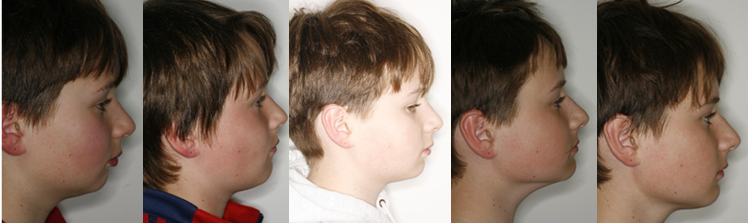
Complete Guide to Orthodontic Ascension

zeke.htn

zeke.htn

Iron
Joined
Dec 10, 2025
Posts
131
Reputation
170
Table of Contents

I. Introduction

II. The maxilla as the control node of the circummaxillary complex

III. Orthodontics relative to other determinants of facial form

IV. Expansion modalities and force resolution

V. Skeletal expansion vs dentoalveolar camouflage

VI. Sutural mechanics and downstream facial effects

VII. Individual requirements, constraints, and indications

VIII. Functional environment and stabilization

IX. Observed patterns

X. Conclusion

XI. Sources


I. Guide


Introduction

This is a full guide to ascend with orthodontics. Most conversations about orthodontics never move past teeth, and even most expansion discussions stop at palatal width. That framing is incomplete. The maxilla is not important because it widens an arch. It’s important because it sits at the center of the circummaxillary sutural system and distributes orthopedic force through the midface.

When expansion produces facial change, it isn’t incidental or cosmetic. It’s the predictable result of loading sutures that define midface width, orientation, and support. When it doesn’t, it’s usually because force never left the dentoalveolar system.

This is not a post about whether orthodontics can change the face. That question is already settled. This is about when it does, why it does, and who it actually applies to.

All claims here are grounded in CBCT evidence, sutural biology, and repeatable biomechanical patterns, not surface-level before-and-after photos.[/ISPOILER]

---

II. The maxilla as the control node of the circummaxillary complex

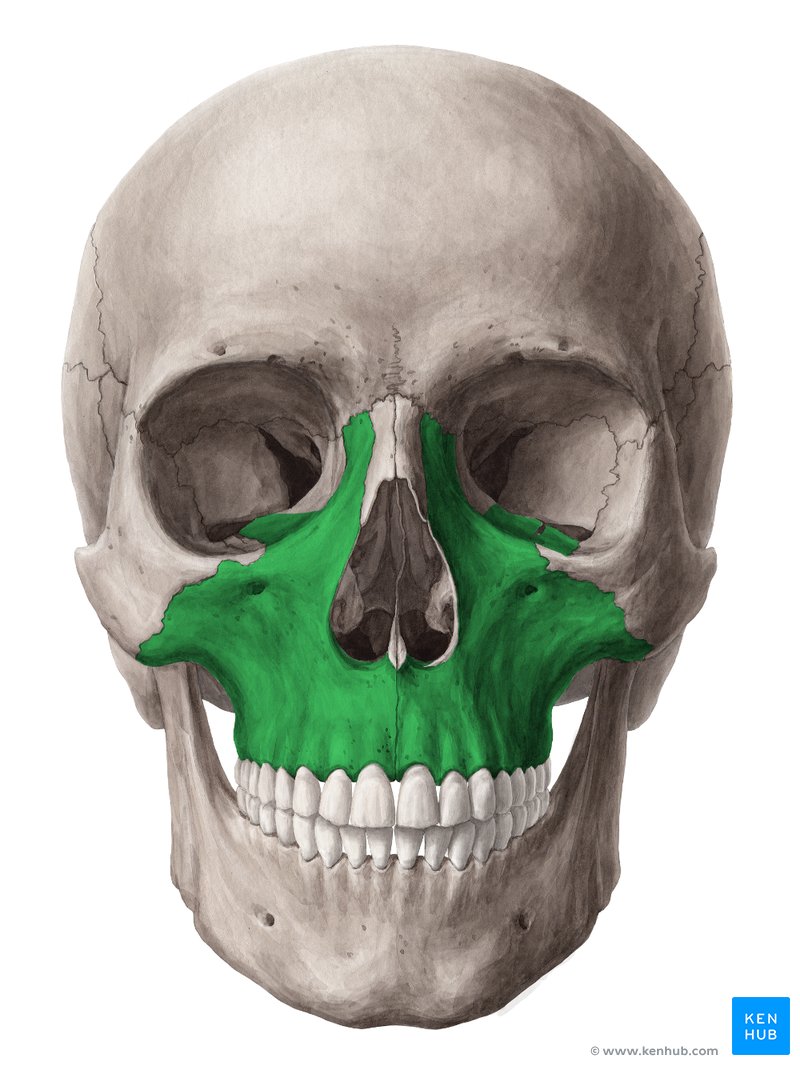
The maxilla articulates with nearly every structurally relevant facial bone. Beyond the midpalatal suture, it interfaces with the zygomatic bones, nasal bones, frontal bone, palatine bones, vomer, and indirectly the sphenoid through the pterygopalatine region.

Because of this, the maxilla functions as a load distributor. Once sufficient force overcomes dentoalveolar resistance and initiates sutural displacement, that force propagates through the circummaxillary system, especially the zygomaticomaxillary, frontomaxillary, nasomaxillary, and pterygopalatine sutures.

This is why true skeletal expansion is never purely transverse. It is a three-dimensional displacement constrained by cranial base anchorage and sutural interdigitation. Faces change not because bone “grows,” but because spatial relationships within the craniofacial complex are altered.
IMG 2873

---

III. Orthodontics relative to other determinants of facial form

From a structural hierarchy standpoint:

Cranial base orientation → maxillary position and width → mandibular posture → dental expression

Orthodontics only becomes facially relevant when it interacts upstream of the dentition. Dentoalveolar changes occur downstream and do not reorganize facial constraints.

This explains why identical occlusal outcomes can coexist with radically different facial outcomes. One case altered skeletal boundaries. The other optimized within them.

---

IV. Expansion modalities and force resolution

The meaningful distinction between expansion systems is not speed or branding, but where force resolves.

Removable and tooth-borne expanders dissipate force into alveolar bone and the periodontal ligament. Outside early childhood, skeletal engagement is minimal.

Facemask therapy loads the circummaxillary sutures anteriorly, targeting forward displacement of the maxilla. Its effectiveness is dictated by sutural patency and timing, not compliance alone.

MARPE introduces skeletal anchorage but still loses a significant portion of force dentally. In mature patients, sutural opening is often incomplete or non-parallel.

MSE is engineered to bypass alveolar dissipation and engage both maxillary cortices. When successful, force transmits laterally into the zygomatic buttresses and posteriorly toward the pterygopalatine region, producing effects beyond the dental arch.

MASPE attempts to further refine vector control, but the underlying principle remains identical: maximize sutural loading and minimize dentoalveolar loss.

The appliance is not the treatment. The force distribution is.

---

V. Skeletal expansion vs dentoalveolar camouflage

Dentoalveolar expansion increases arch perimeter while preserving facial constraints. Skeletal expansion alters the constraints themselves.

Camouflage presents as:

* Buccal tipping
* Cortical thinning
* Minimal nasal or midface response
* High relapse risk

Skeletal response presents as:

* Midpalatal separation
* Lateral displacement of the zygomatic buttresses
* Increased nasal volume
* Secondary mandibular repositioning

This distinction is obvious on CBCT and ambiguous in photographs, which is why confusion persists.

---

VI. Sutural mechanics and downstream facial effects

Zygomatic complex: Force transmitted through the zygomaticomaxillary sutures alters the spatial relationship between the midface and cranial base. This expresses as increased midface width and lateral support, not literal cheekbone growth.

CCW mandibular rotation: Expansion does not rotate the mandible directly. Improved airway volume and tongue posture shift the functional equilibrium, allowing counterclockwise adaptation in susceptible cases.

Orbital support: The maxilla contributes to the inferior orbital rim and floor. Sutural displacement can improve under-eye support subtly. Claims beyond this require imaging, not anecdote.

Smile expression: A widened skeletal base allows teeth to upright into a broader arc without compensatory flaring, improving smile fullness and lip support.
IMG 2874

---

VII. Individual requirements, constraints, and indications

Expansion is not universal. Outcomes depend on starting constraints.

Key variables:

* Age and sutural maturation
* Maxillary width versus AP position
* Vertical growth pattern
* Mandibular posture
* Airway status and breathing mode
* Degree of existing dentoalveolar compensation

Narrow maxilla, adequate AP position

Best indication for skeletal expansion. Typically responds with improved interzygomatic width, better nasal airflow, and subtle CCW mandibular adaptation. Expansion alone is often sufficient.

Narrow and retrusive maxilla

Expansion alone addresses width but not projection. Without AP correction, transverse gain may exaggerate midface flatness. These cases require controlled vector planning and often protraction earlier in life.

Vertically excessive patterns

High-angle cases are sensitive to force direction. Poorly controlled expansion can worsen facial length. When airway and function improve, CCW adaptation is possible, but this is conditional, not guaranteed.

Adolescents versus adults

In adolescents, circummaxillary sutures retain plasticity and respond more globally. In adults, midpalatal separation may occur, but circummaxillary resistance limits facial change. Expectations should be structural, not transformational.

Dentoalveolar compensation-dominant cases

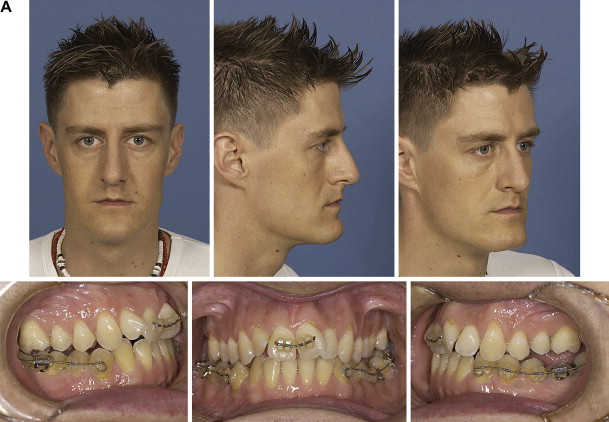
Flared teeth and thin cortical plates often indicate compensation rather than true skeletal deficiency. Expansion here is frequently unnecessary or harmful. Decompensation may be the correct move.

Perfect example of someone who needs expansion:
IMG 2875

---

VIII. Functional environment and stabilization

Sutures adapt under load but stabilize under function.

Without nasal breathing, palatal tongue posture, and closed-mouth rest position, relapse pressure remains constant. Expansion fails not because sutures close, but because functional forces never realign to support the new configuration.

Orthodontics sets boundary conditions. Function determines equilibrium.

---

IX. Observed patterns

Meaningful facial change correlates with:

* Multisutural engagement rather than isolated midpalatal opening
* Force magnitude sufficient to overcome circummaxillary resistance
* Residual sutural plasticity
* A post-treatment functional environment that reinforces expansion

Cases that disappoint aesthetically almost always succeed dentally.

---

X. Conclusion

Orthodontics alters faces only when it alters constraints. The maxilla matters not because it holds teeth, but because it distributes force through a sutural system that defines midface structure.

If sutures are not meaningfully engaged, facial change is incidental.
If they are, it is structural.

---

XI. Sources

Angelieri F, Cevidanes LHS, Franchi L, Gonçalves JR, Benavides E, McNamara JA. Midpalatal suture maturation: classification method for individual assessment before rapid maxillary expansion. American Journal of Orthodontics and Dentofacial Orthopedics. 2013;144(5):759–769.

Cantarella D, Dominguez-Mompell R, Moschik C, et al. Changes in the midfacial complex following maxillary skeletal expander (MSE) therapy: a CBCT study. Progress in Orthodontics. 2017;18(1):1–11.

Enlow DH, Hans MG. Essentials of Facial Growth. Philadelphia: W.B. Saunders; 1996.

Proffit WR, Fields HW, Larson BE, Sarver DM. Contemporary Orthodontics. 6th ed. St. Louis: Elsevier; 2019.

Carlson DS. Sutural growth of the craniofacial skeleton. In: McNamara JA, ed. Determinants of Mandibular Form and Growth. Ann Arbor: University of Michigan; 1984.
 
Last edited:
  • +1
Reactions: Denkaren, swinginginhiscell, alexias and 7 others
First guide, format is kinda shit
 
  • +1
Reactions: -hgh-, alexias and Glorious King
DNR, bookmarked
 
  • +1
  • JFL
Reactions: -hgh-, alexias, Gurt. and 2 others
Just read over it great thread and good info however its currently 2am for me and nothing went it, What can be done for forward maxilla growth? My certain variables are: 16 on HGH not sure if necessary and have had a palate expander and braces in the past.
 
  • +1
Reactions: alexias
Just read over it great thread and good info however its currently 2am for me and nothing went it, What can be done for forward maxilla growth? My certain variables are: 16 on HGH not sure if necessary and have had a palate expander and braces in the past.
It depends on your sutures. At 16 they are most likely not fully closed, I recommend getting a face mask, hard mewing, and premolar chewing as much as you can. This should give you a degrees of ccw rotation by the time your 18 and a few mm of forward growth.
 
  • +1
Reactions: alexias
good guide my nigga bookmarking ts
 
  • +1
Reactions: alexias and zeke.htn
Removing wisdom teeth > recession > all other shit to fix what's being ruined by wisdom teeth removal
 
  • +1
Reactions: alexias, ascendtocl122 and Glorious King
Any specific face mask?
It depends on your sutures. At 16 they are most likely not fully closed, I recommend getting a face mask, hard mewing, and premolar chewing as much as you can. This should give you a degrees of ccw rotation by the time your 18 and a few mm of forward growth.
 
  • +1
Reactions: alexias
Table of Contents

I. Introduction

II. The maxilla as the control node of the circummaxillary complex

III. Orthodontics relative to other determinants of facial form

IV. Expansion modalities and force resolution

V. Skeletal expansion vs dentoalveolar camouflage

VI. Sutural mechanics and downstream facial effects

VII. Individual requirements, constraints, and indications

VIII. Functional environment and stabilization

IX. Observed patterns

X. Conclusion

XI. Sources


I. Guide


Introduction

This is a full guide to ascend with orthodontics. Most conversations about orthodontics never move past teeth, and even most expansion discussions stop at palatal width. That framing is incomplete. The maxilla is not important because it widens an arch. It’s important because it sits at the center of the circummaxillary sutural system and distributes orthopedic force through the midface.

When expansion produces facial change, it isn’t incidental or cosmetic. It’s the predictable result of loading sutures that define midface width, orientation, and support. When it doesn’t, it’s usually because force never left the dentoalveolar system.

This is not a post about whether orthodontics can change the face. That question is already settled. This is about when it does, why it does, and who it actually applies to.

All claims here are grounded in CBCT evidence, sutural biology, and repeatable biomechanical patterns, not surface-level before-and-after photos.[/ISPOILER]

---

II. The maxilla as the control node of the circummaxillary complex

The maxilla articulates with nearly every structurally relevant facial bone. Beyond the midpalatal suture, it interfaces with the zygomatic bones, nasal bones, frontal bone, palatine bones, vomer, and indirectly the sphenoid through the pterygopalatine region.

Because of this, the maxilla functions as a load distributor. Once sufficient force overcomes dentoalveolar resistance and initiates sutural displacement, that force propagates through the circummaxillary system, especially the zygomaticomaxillary, frontomaxillary, nasomaxillary, and pterygopalatine sutures.

This is why true skeletal expansion is never purely transverse. It is a three-dimensional displacement constrained by cranial base anchorage and sutural interdigitation. Faces change not because bone “grows,” but because spatial relationships within the craniofacial complex are altered.
View attachment 4482176

---

III. Orthodontics relative to other determinants of facial form

From a structural hierarchy standpoint:

Cranial base orientation → maxillary position and width → mandibular posture → dental expression

Orthodontics only becomes facially relevant when it interacts upstream of the dentition. Dentoalveolar changes occur downstream and do not reorganize facial constraints.

This explains why identical occlusal outcomes can coexist with radically different facial outcomes. One case altered skeletal boundaries. The other optimized within them.

---

IV. Expansion modalities and force resolution

The meaningful distinction between expansion systems is not speed or branding, but where force resolves.

Removable and tooth-borne expanders dissipate force into alveolar bone and the periodontal ligament. Outside early childhood, skeletal engagement is minimal.

Facemask therapy loads the circummaxillary sutures anteriorly, targeting forward displacement of the maxilla. Its effectiveness is dictated by sutural patency and timing, not compliance alone.

MARPE introduces skeletal anchorage but still loses a significant portion of force dentally. In mature patients, sutural opening is often incomplete or non-parallel.

MSE is engineered to bypass alveolar dissipation and engage both maxillary cortices. When successful, force transmits laterally into the zygomatic buttresses and posteriorly toward the pterygopalatine region, producing effects beyond the dental arch.

MASPE attempts to further refine vector control, but the underlying principle remains identical: maximize sutural loading and minimize dentoalveolar loss.

The appliance is not the treatment. The force distribution is.

---

V. Skeletal expansion vs dentoalveolar camouflage

Dentoalveolar expansion increases arch perimeter while preserving facial constraints. Skeletal expansion alters the constraints themselves.

Camouflage presents as:

* Buccal tipping
* Cortical thinning
* Minimal nasal or midface response
* High relapse risk

Skeletal response presents as:

* Midpalatal separation
* Lateral displacement of the zygomatic buttresses
* Increased nasal volume
* Secondary mandibular repositioning

This distinction is obvious on CBCT and ambiguous in photographs, which is why confusion persists.

---

VI. Sutural mechanics and downstream facial effects

Zygomatic complex: Force transmitted through the zygomaticomaxillary sutures alters the spatial relationship between the midface and cranial base. This expresses as increased midface width and lateral support, not literal cheekbone growth.

CCW mandibular rotation: Expansion does not rotate the mandible directly. Improved airway volume and tongue posture shift the functional equilibrium, allowing counterclockwise adaptation in susceptible cases.

Orbital support: The maxilla contributes to the inferior orbital rim and floor. Sutural displacement can improve under-eye support subtly. Claims beyond this require imaging, not anecdote.

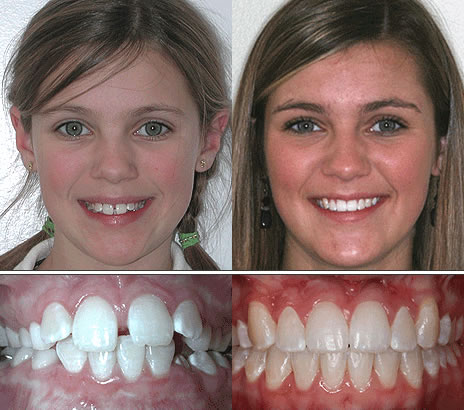
Smile expression: A widened skeletal base allows teeth to upright into a broader arc without compensatory flaring, improving smile fullness and lip support.
View attachment 4482191

---

VII. Individual requirements, constraints, and indications

Expansion is not universal. Outcomes depend on starting constraints.

Key variables:

* Age and sutural maturation
* Maxillary width versus AP position
* Vertical growth pattern
* Mandibular posture
* Airway status and breathing mode
* Degree of existing dentoalveolar compensation

Narrow maxilla, adequate AP position

Best indication for skeletal expansion. Typically responds with improved interzygomatic width, better nasal airflow, and subtle CCW mandibular adaptation. Expansion alone is often sufficient.

Narrow and retrusive maxilla

Expansion alone addresses width but not projection. Without AP correction, transverse gain may exaggerate midface flatness. These cases require controlled vector planning and often protraction earlier in life.

Vertically excessive patterns

High-angle cases are sensitive to force direction. Poorly controlled expansion can worsen facial length. When airway and function improve, CCW adaptation is possible, but this is conditional, not guaranteed.

Adolescents versus adults

In adolescents, circummaxillary sutures retain plasticity and respond more globally. In adults, midpalatal separation may occur, but circummaxillary resistance limits facial change. Expectations should be structural, not transformational.

Dentoalveolar compensation-dominant cases

Flared teeth and thin cortical plates often indicate compensation rather than true skeletal deficiency. Expansion here is frequently unnecessary or harmful. Decompensation may be the correct move.

Perfect example of someone who needs expansion:
View attachment 4482198

---

VIII. Functional environment and stabilization

Sutures adapt under load but stabilize under function.

Without nasal breathing, palatal tongue posture, and closed-mouth rest position, relapse pressure remains constant. Expansion fails not because sutures close, but because functional forces never realign to support the new configuration.

Orthodontics sets boundary conditions. Function determines equilibrium.

---

IX. Observed patterns

Meaningful facial change correlates with:

* Multisutural engagement rather than isolated midpalatal opening
* Force magnitude sufficient to overcome circummaxillary resistance
* Residual sutural plasticity
* A post-treatment functional environment that reinforces expansion

Cases that disappoint aesthetically almost always succeed dentally.

---

X. Conclusion

Orthodontics alters faces only when it alters constraints. The maxilla matters not because it holds teeth, but because it distributes force through a sutural system that defines midface structure.

If sutures are not meaningfully engaged, facial change is incidental.
If they are, it is structural.

---

XI. Sources

Angelieri F, Cevidanes LHS, Franchi L, Gonçalves JR, Benavides E, McNamara JA. Midpalatal suture maturation: classification method for individual assessment before rapid maxillary expansion. American Journal of Orthodontics and Dentofacial Orthopedics. 2013;144(5):759–769.

Cantarella D, Dominguez-Mompell R, Moschik C, et al. Changes in the midfacial complex following maxillary skeletal expander (MSE) therapy: a CBCT study. Progress in Orthodontics. 2017;18(1):1–11.

Enlow DH, Hans MG. Essentials of Facial Growth. Philadelphia: W.B. Saunders; 1996.

Proffit WR, Fields HW, Larson BE, Sarver DM. Contemporary Orthodontics. 6th ed. St. Louis: Elsevier; 2019.

Carlson DS. Sutural growth of the craniofacial skeleton. In: McNamara JA, ed. Determinants of Mandibular Form and Growth. Ann Arbor: University of Michigan; 1984.
Bookmarked, good thread
 
  • +1
Reactions: alexias and zeke.htn
Good thread u know your shit
 
  • +1
Reactions: alexias and zeke.htn
No actually wtf I might actually cry because this is accurate
 
  • +1
Reactions: alexias and zeke.htn
mirin for effort
 
  • +1
Reactions: alexias and zeke.htn
Thank god someone made a guide on this, i wanted to but realised i was too stupid

anyways this is my progression (2022 -> 2024) with twin blocks
still have a long way to go, but this is also outdated
 

Attachments

  • 1768002807008.png
    1768002807008.png
    255.6 KB · Views: 0
  • +1
Reactions: alexias
I read the whole thing but i'm honestly just not that educated in these topics yet. Im 17 and my ortho is telling me to remove all 4 wisdom teeth and at that same time I would also get the MARPE im getting installed to my face. I just want to know if removing my wisdom teeth is going to make me uglier aswell as if I should just request for SARPE instead of MARPE because I dont want to go through the entire process just for it to be un affective, which it seems it might be given my age and some of the stuff you said. pls help
 
  • +1
Reactions: alexias
mirin for effort
I read the whole thing but i'm honestly just not that educated in these topics yet. Im 17 and my ortho is telling me to remove all 4 wisdom teeth and at that same time I would also get the MARPE im getting installed to my face. I just want to know if removing my wisdom teeth is going to make me uglier aswell as if I should just request for SARPE instead of MARPE because I dont want to go through the entire process just for it to be un affective, which it seems it might be given my age and some of the stuff you said. pls help
If it’s impacting your other teeth or causing pain yes you should remove them. As long as its not your premolars getting removed its much less likely to cause recession. And I recommend you get MARPE, your 17 so its most likely gonna work because your sutures are not fully fused at that age. And its much less expensive.
 
  • +1
Reactions: alexias
If it’s impacting your other teeth or causing pain yes you should remove them. As long as its not your premolars getting removed its much less likely to cause recession. And I recommend you get MARPE, your 17 so its most likely gonna work because your sutures are not fully fused at that age. And its much less expensive.
Ok thanks, the ortho said my wisdom teeth aren't affecting my others yet but its just a matter of time.
 
  • +1
Reactions: alexias and zeke.htn
Table of Contents

I. Introduction

II. The maxilla as the control node of the circummaxillary complex

III. Orthodontics relative to other determinants of facial form

IV. Expansion modalities and force resolution

V. Skeletal expansion vs dentoalveolar camouflage

VI. Sutural mechanics and downstream facial effects

VII. Individual requirements, constraints, and indications

VIII. Functional environment and stabilization

IX. Observed patterns

X. Conclusion

XI. Sources


I. Guide


Introduction

This is a full guide to ascend with orthodontics. Most conversations about orthodontics never move past teeth, and even most expansion discussions stop at palatal width. That framing is incomplete. The maxilla is not important because it widens an arch. It’s important because it sits at the center of the circummaxillary sutural system and distributes orthopedic force through the midface.

When expansion produces facial change, it isn’t incidental or cosmetic. It’s the predictable result of loading sutures that define midface width, orientation, and support. When it doesn’t, it’s usually because force never left the dentoalveolar system.

This is not a post about whether orthodontics can change the face. That question is already settled. This is about when it does, why it does, and who it actually applies to.

All claims here are grounded in CBCT evidence, sutural biology, and repeatable biomechanical patterns, not surface-level before-and-after photos.[/ISPOILER]

---

II. The maxilla as the control node of the circummaxillary complex

The maxilla articulates with nearly every structurally relevant facial bone. Beyond the midpalatal suture, it interfaces with the zygomatic bones, nasal bones, frontal bone, palatine bones, vomer, and indirectly the sphenoid through the pterygopalatine region.

Because of this, the maxilla functions as a load distributor. Once sufficient force overcomes dentoalveolar resistance and initiates sutural displacement, that force propagates through the circummaxillary system, especially the zygomaticomaxillary, frontomaxillary, nasomaxillary, and pterygopalatine sutures.

This is why true skeletal expansion is never purely transverse. It is a three-dimensional displacement constrained by cranial base anchorage and sutural interdigitation. Faces change not because bone “grows,” but because spatial relationships within the craniofacial complex are altered.
View attachment 4482176

---

III. Orthodontics relative to other determinants of facial form

From a structural hierarchy standpoint:

Cranial base orientation → maxillary position and width → mandibular posture → dental expression

Orthodontics only becomes facially relevant when it interacts upstream of the dentition. Dentoalveolar changes occur downstream and do not reorganize facial constraints.

This explains why identical occlusal outcomes can coexist with radically different facial outcomes. One case altered skeletal boundaries. The other optimized within them.

---

IV. Expansion modalities and force resolution

The meaningful distinction between expansion systems is not speed or branding, but where force resolves.

Removable and tooth-borne expanders dissipate force into alveolar bone and the periodontal ligament. Outside early childhood, skeletal engagement is minimal.

Facemask therapy loads the circummaxillary sutures anteriorly, targeting forward displacement of the maxilla. Its effectiveness is dictated by sutural patency and timing, not compliance alone.

MARPE introduces skeletal anchorage but still loses a significant portion of force dentally. In mature patients, sutural opening is often incomplete or non-parallel.

MSE is engineered to bypass alveolar dissipation and engage both maxillary cortices. When successful, force transmits laterally into the zygomatic buttresses and posteriorly toward the pterygopalatine region, producing effects beyond the dental arch.

MASPE attempts to further refine vector control, but the underlying principle remains identical: maximize sutural loading and minimize dentoalveolar loss.

The appliance is not the treatment. The force distribution is.

---

V. Skeletal expansion vs dentoalveolar camouflage

Dentoalveolar expansion increases arch perimeter while preserving facial constraints. Skeletal expansion alters the constraints themselves.

Camouflage presents as:

* Buccal tipping
* Cortical thinning
* Minimal nasal or midface response
* High relapse risk

Skeletal response presents as:

* Midpalatal separation
* Lateral displacement of the zygomatic buttresses
* Increased nasal volume
* Secondary mandibular repositioning

This distinction is obvious on CBCT and ambiguous in photographs, which is why confusion persists.

---

VI. Sutural mechanics and downstream facial effects

Zygomatic complex: Force transmitted through the zygomaticomaxillary sutures alters the spatial relationship between the midface and cranial base. This expresses as increased midface width and lateral support, not literal cheekbone growth.

CCW mandibular rotation: Expansion does not rotate the mandible directly. Improved airway volume and tongue posture shift the functional equilibrium, allowing counterclockwise adaptation in susceptible cases.

Orbital support: The maxilla contributes to the inferior orbital rim and floor. Sutural displacement can improve under-eye support subtly. Claims beyond this require imaging, not anecdote.

Smile expression: A widened skeletal base allows teeth to upright into a broader arc without compensatory flaring, improving smile fullness and lip support.
View attachment 4482191

---

VII. Individual requirements, constraints, and indications

Expansion is not universal. Outcomes depend on starting constraints.

Key variables:

* Age and sutural maturation
* Maxillary width versus AP position
* Vertical growth pattern
* Mandibular posture
* Airway status and breathing mode
* Degree of existing dentoalveolar compensation

Narrow maxilla, adequate AP position

Best indication for skeletal expansion. Typically responds with improved interzygomatic width, better nasal airflow, and subtle CCW mandibular adaptation. Expansion alone is often sufficient.

Narrow and retrusive maxilla

Expansion alone addresses width but not projection. Without AP correction, transverse gain may exaggerate midface flatness. These cases require controlled vector planning and often protraction earlier in life.

Vertically excessive patterns

High-angle cases are sensitive to force direction. Poorly controlled expansion can worsen facial length. When airway and function improve, CCW adaptation is possible, but this is conditional, not guaranteed.

Adolescents versus adults

In adolescents, circummaxillary sutures retain plasticity and respond more globally. In adults, midpalatal separation may occur, but circummaxillary resistance limits facial change. Expectations should be structural, not transformational.

Dentoalveolar compensation-dominant cases

Flared teeth and thin cortical plates often indicate compensation rather than true skeletal deficiency. Expansion here is frequently unnecessary or harmful. Decompensation may be the correct move.

Perfect example of someone who needs expansion:
View attachment 4482198

---

VIII. Functional environment and stabilization

Sutures adapt under load but stabilize under function.

Without nasal breathing, palatal tongue posture, and closed-mouth rest position, relapse pressure remains constant. Expansion fails not because sutures close, but because functional forces never realign to support the new configuration.

Orthodontics sets boundary conditions. Function determines equilibrium.

---

IX. Observed patterns

Meaningful facial change correlates with:

* Multisutural engagement rather than isolated midpalatal opening
* Force magnitude sufficient to overcome circummaxillary resistance
* Residual sutural plasticity
* A post-treatment functional environment that reinforces expansion

Cases that disappoint aesthetically almost always succeed dentally.

---

X. Conclusion

Orthodontics alters faces only when it alters constraints. The maxilla matters not because it holds teeth, but because it distributes force through a sutural system that defines midface structure.

If sutures are not meaningfully engaged, facial change is incidental.
If they are, it is structural.

---

XI. Sources

Angelieri F, Cevidanes LHS, Franchi L, Gonçalves JR, Benavides E, McNamara JA. Midpalatal suture maturation: classification method for individual assessment before rapid maxillary expansion. American Journal of Orthodontics and Dentofacial Orthopedics. 2013;144(5):759–769.

Cantarella D, Dominguez-Mompell R, Moschik C, et al. Changes in the midfacial complex following maxillary skeletal expander (MSE) therapy: a CBCT study. Progress in Orthodontics. 2017;18(1):1–11.

Enlow DH, Hans MG. Essentials of Facial Growth. Philadelphia: W.B. Saunders; 1996.

Proffit WR, Fields HW, Larson BE, Sarver DM. Contemporary Orthodontics. 6th ed. St. Louis: Elsevier; 2019.

Carlson DS. Sutural growth of the craniofacial skeleton. In: McNamara JA, ed. Determinants of Mandibular Form and Growth. Ann Arbor: University of Michigan; 1984.
What do you think about plierpulling?
It's basically a diy mse
 
  • +1
Reactions: alexias
What do you think about plierpulling?
It's basically a diy mse
In terms of lateral force its above thumb pulling, but for forward thumb pulling its more effective with your thumbs (premaxilla pushing orally)
 
  • +1
Reactions: alexias
Bone-Anchored Maxillary Protraction (BAMP) is the most effective.
I have read the whole thread but im not sure what to do. Im 17 nearly 18. My Maxilla is a little recessed and the left side of my palate is not as wide. Im thinking of getting Bamp with mse or Marpe. But i dont know how this will affect my Assymetrie or if thumbpulling is more safe and the better option for me. Im also planning on running Hgh, would this combined with thumbpulling be a better alternative for forward growth. pls help
 
Last edited:
  • +1
Reactions: alexias
I have read the whole thread but im not sure what to do. Im 17 nearly 18. My Maxilla is a little recessed and the left side of my palate is not as wide. Im thinking of getting Bamp with mse or Marpe. But i dont know how this will affect my Assymetrie or if thumbpulling is more safe and the better option for me. Im also planning on running Hgh, would this combined with thumbpulling be a better alternative for forward growth. pls help
Dude I'm the same age and thinking the same thing, but how in the world would we pay for this stuff at 17? It's expensive af
 
  • +1
Reactions: alexias
Dude I'm the same age and thinking the same thing, but how in the world would we pay for this stuff at 17? It's expensive af
Where do you live? in Germany its almost all covered by insurance
 
  • +1
Reactions: alexias
Table of Contents

I. Introduction

II. The maxilla as the control node of the circummaxillary complex

III. Orthodontics relative to other determinants of facial form

IV. Expansion modalities and force resolution

V. Skeletal expansion vs dentoalveolar camouflage

VI. Sutural mechanics and downstream facial effects

VII. Individual requirements, constraints, and indications

VIII. Functional environment and stabilization

IX. Observed patterns

X. Conclusion

XI. Sources


I. Guide


Introduction

This is a full guide to ascend with orthodontics. Most conversations about orthodontics never move past teeth, and even most expansion discussions stop at palatal width. That framing is incomplete. The maxilla is not important because it widens an arch. It’s important because it sits at the center of the circummaxillary sutural system and distributes orthopedic force through the midface.

When expansion produces facial change, it isn’t incidental or cosmetic. It’s the predictable result of loading sutures that define midface width, orientation, and support. When it doesn’t, it’s usually because force never left the dentoalveolar system.

This is not a post about whether orthodontics can change the face. That question is already settled. This is about when it does, why it does, and who it actually applies to.

All claims here are grounded in CBCT evidence, sutural biology, and repeatable biomechanical patterns, not surface-level before-and-after photos.[/ISPOILER]

---

II. The maxilla as the control node of the circummaxillary complex

The maxilla articulates with nearly every structurally relevant facial bone. Beyond the midpalatal suture, it interfaces with the zygomatic bones, nasal bones, frontal bone, palatine bones, vomer, and indirectly the sphenoid through the pterygopalatine region.

Because of this, the maxilla functions as a load distributor. Once sufficient force overcomes dentoalveolar resistance and initiates sutural displacement, that force propagates through the circummaxillary system, especially the zygomaticomaxillary, frontomaxillary, nasomaxillary, and pterygopalatine sutures.

This is why true skeletal expansion is never purely transverse. It is a three-dimensional displacement constrained by cranial base anchorage and sutural interdigitation. Faces change not because bone “grows,” but because spatial relationships within the craniofacial complex are altered.
View attachment 4482176

---

III. Orthodontics relative to other determinants of facial form

From a structural hierarchy standpoint:

Cranial base orientation → maxillary position and width → mandibular posture → dental expression

Orthodontics only becomes facially relevant when it interacts upstream of the dentition. Dentoalveolar changes occur downstream and do not reorganize facial constraints.

This explains why identical occlusal outcomes can coexist with radically different facial outcomes. One case altered skeletal boundaries. The other optimized within them.

---

IV. Expansion modalities and force resolution

The meaningful distinction between expansion systems is not speed or branding, but where force resolves.

Removable and tooth-borne expanders dissipate force into alveolar bone and the periodontal ligament. Outside early childhood, skeletal engagement is minimal.

Facemask therapy loads the circummaxillary sutures anteriorly, targeting forward displacement of the maxilla. Its effectiveness is dictated by sutural patency and timing, not compliance alone.

MARPE introduces skeletal anchorage but still loses a significant portion of force dentally. In mature patients, sutural opening is often incomplete or non-parallel.

MSE is engineered to bypass alveolar dissipation and engage both maxillary cortices. When successful, force transmits laterally into the zygomatic buttresses and posteriorly toward the pterygopalatine region, producing effects beyond the dental arch.

MASPE attempts to further refine vector control, but the underlying principle remains identical: maximize sutural loading and minimize dentoalveolar loss.

The appliance is not the treatment. The force distribution is.

---

V. Skeletal expansion vs dentoalveolar camouflage

Dentoalveolar expansion increases arch perimeter while preserving facial constraints. Skeletal expansion alters the constraints themselves.

Camouflage presents as:

* Buccal tipping
* Cortical thinning
* Minimal nasal or midface response
* High relapse risk

Skeletal response presents as:

* Midpalatal separation
* Lateral displacement of the zygomatic buttresses
* Increased nasal volume
* Secondary mandibular repositioning

This distinction is obvious on CBCT and ambiguous in photographs, which is why confusion persists.

---

VI. Sutural mechanics and downstream facial effects

Zygomatic complex: Force transmitted through the zygomaticomaxillary sutures alters the spatial relationship between the midface and cranial base. This expresses as increased midface width and lateral support, not literal cheekbone growth.

CCW mandibular rotation: Expansion does not rotate the mandible directly. Improved airway volume and tongue posture shift the functional equilibrium, allowing counterclockwise adaptation in susceptible cases.

Orbital support: The maxilla contributes to the inferior orbital rim and floor. Sutural displacement can improve under-eye support subtly. Claims beyond this require imaging, not anecdote.

Smile expression: A widened skeletal base allows teeth to upright into a broader arc without compensatory flaring, improving smile fullness and lip support.
View attachment 4482191

---

VII. Individual requirements, constraints, and indications

Expansion is not universal. Outcomes depend on starting constraints.

Key variables:

* Age and sutural maturation
* Maxillary width versus AP position
* Vertical growth pattern
* Mandibular posture
* Airway status and breathing mode
* Degree of existing dentoalveolar compensation

Narrow maxilla, adequate AP position

Best indication for skeletal expansion. Typically responds with improved interzygomatic width, better nasal airflow, and subtle CCW mandibular adaptation. Expansion alone is often sufficient.

Narrow and retrusive maxilla

Expansion alone addresses width but not projection. Without AP correction, transverse gain may exaggerate midface flatness. These cases require controlled vector planning and often protraction earlier in life.

Vertically excessive patterns

High-angle cases are sensitive to force direction. Poorly controlled expansion can worsen facial length. When airway and function improve, CCW adaptation is possible, but this is conditional, not guaranteed.

Adolescents versus adults

In adolescents, circummaxillary sutures retain plasticity and respond more globally. In adults, midpalatal separation may occur, but circummaxillary resistance limits facial change. Expectations should be structural, not transformational.

Dentoalveolar compensation-dominant cases

Flared teeth and thin cortical plates often indicate compensation rather than true skeletal deficiency. Expansion here is frequently unnecessary or harmful. Decompensation may be the correct move.

Perfect example of someone who needs expansion:
View attachment 4482198

---

VIII. Functional environment and stabilization

Sutures adapt under load but stabilize under function.

Without nasal breathing, palatal tongue posture, and closed-mouth rest position, relapse pressure remains constant. Expansion fails not because sutures close, but because functional forces never realign to support the new configuration.

Orthodontics sets boundary conditions. Function determines equilibrium.

---

IX. Observed patterns

Meaningful facial change correlates with:

* Multisutural engagement rather than isolated midpalatal opening
* Force magnitude sufficient to overcome circummaxillary resistance
* Residual sutural plasticity
* A post-treatment functional environment that reinforces expansion

Cases that disappoint aesthetically almost always succeed dentally.

---

X. Conclusion

Orthodontics alters faces only when it alters constraints. The maxilla matters not because it holds teeth, but because it distributes force through a sutural system that defines midface structure.

If sutures are not meaningfully engaged, facial change is incidental.
If they are, it is structural.

---

XI. Sources

Angelieri F, Cevidanes LHS, Franchi L, Gonçalves JR, Benavides E, McNamara JA. Midpalatal suture maturation: classification method for individual assessment before rapid maxillary expansion. American Journal of Orthodontics and Dentofacial Orthopedics. 2013;144(5):759–769.

Cantarella D, Dominguez-Mompell R, Moschik C, et al. Changes in the midfacial complex following maxillary skeletal expander (MSE) therapy: a CBCT study. Progress in Orthodontics. 2017;18(1):1–11.

Enlow DH, Hans MG. Essentials of Facial Growth. Philadelphia: W.B. Saunders; 1996.

Proffit WR, Fields HW, Larson BE, Sarver DM. Contemporary Orthodontics. 6th ed. St. Louis: Elsevier; 2019.

Carlson DS. Sutural growth of the craniofacial skeleton. In: McNamara JA, ed. Determinants of Mandibular Form and Growth. Ann Arbor: University of Michigan; 1984.
Mirin
 
  • +1
Reactions: zeke.htn
Thank god someone made a guide on this, i wanted to but realised i was too stupid

anyways this is my progression (2022 -> 2024) with twin blocks
still have a long way to go, but this is also outdated
What treatment did u have?
 
Where do you live? in Germany its almost all covered by insurance
Also unfortunately don't have insurance atm but will next year when I go to college
 
USA is fucked maybe its even better for you to save up for bimax
Dang didn't know usa was so bad. Never getting a bimax lol too invasive and I need more width for my tongue to fit in my palate.
 
Table of Contents

I. Introduction

II. The maxilla as the control node of the circummaxillary complex

III. Orthodontics relative to other determinants of facial form

IV. Expansion modalities and force resolution

V. Skeletal expansion vs dentoalveolar camouflage

VI. Sutural mechanics and downstream facial effects

VII. Individual requirements, constraints, and indications

VIII. Functional environment and stabilization

IX. Observed patterns

X. Conclusion

XI. Sources


I. Guide


Introduction

This is a full guide to ascend with orthodontics. Most conversations about orthodontics never move past teeth, and even most expansion discussions stop at palatal width. That framing is incomplete. The maxilla is not important because it widens an arch. It’s important because it sits at the center of the circummaxillary sutural system and distributes orthopedic force through the midface.

When expansion produces facial change, it isn’t incidental or cosmetic. It’s the predictable result of loading sutures that define midface width, orientation, and support. When it doesn’t, it’s usually because force never left the dentoalveolar system.

This is not a post about whether orthodontics can change the face. That question is already settled. This is about when it does, why it does, and who it actually applies to.

All claims here are grounded in CBCT evidence, sutural biology, and repeatable biomechanical patterns, not surface-level before-and-after photos.[/ISPOILER]

---

II. The maxilla as the control node of the circummaxillary complex

The maxilla articulates with nearly every structurally relevant facial bone. Beyond the midpalatal suture, it interfaces with the zygomatic bones, nasal bones, frontal bone, palatine bones, vomer, and indirectly the sphenoid through the pterygopalatine region.

Because of this, the maxilla functions as a load distributor. Once sufficient force overcomes dentoalveolar resistance and initiates sutural displacement, that force propagates through the circummaxillary system, especially the zygomaticomaxillary, frontomaxillary, nasomaxillary, and pterygopalatine sutures.

This is why true skeletal expansion is never purely transverse. It is a three-dimensional displacement constrained by cranial base anchorage and sutural interdigitation. Faces change not because bone “grows,” but because spatial relationships within the craniofacial complex are altered.
View attachment 4482176

---

III. Orthodontics relative to other determinants of facial form

From a structural hierarchy standpoint:

Cranial base orientation → maxillary position and width → mandibular posture → dental expression

Orthodontics only becomes facially relevant when it interacts upstream of the dentition. Dentoalveolar changes occur downstream and do not reorganize facial constraints.

This explains why identical occlusal outcomes can coexist with radically different facial outcomes. One case altered skeletal boundaries. The other optimized within them.

---

IV. Expansion modalities and force resolution

The meaningful distinction between expansion systems is not speed or branding, but where force resolves.

Removable and tooth-borne expanders dissipate force into alveolar bone and the periodontal ligament. Outside early childhood, skeletal engagement is minimal.

Facemask therapy loads the circummaxillary sutures anteriorly, targeting forward displacement of the maxilla. Its effectiveness is dictated by sutural patency and timing, not compliance alone.

MARPE introduces skeletal anchorage but still loses a significant portion of force dentally. In mature patients, sutural opening is often incomplete or non-parallel.

MSE is engineered to bypass alveolar dissipation and engage both maxillary cortices. When successful, force transmits laterally into the zygomatic buttresses and posteriorly toward the pterygopalatine region, producing effects beyond the dental arch.

MASPE attempts to further refine vector control, but the underlying principle remains identical: maximize sutural loading and minimize dentoalveolar loss.

The appliance is not the treatment. The force distribution is.

---

V. Skeletal expansion vs dentoalveolar camouflage

Dentoalveolar expansion increases arch perimeter while preserving facial constraints. Skeletal expansion alters the constraints themselves.

Camouflage presents as:

* Buccal tipping
* Cortical thinning
* Minimal nasal or midface response
* High relapse risk

Skeletal response presents as:

* Midpalatal separation
* Lateral displacement of the zygomatic buttresses
* Increased nasal volume
* Secondary mandibular repositioning

This distinction is obvious on CBCT and ambiguous in photographs, which is why confusion persists.

---

VI. Sutural mechanics and downstream facial effects

Zygomatic complex: Force transmitted through the zygomaticomaxillary sutures alters the spatial relationship between the midface and cranial base. This expresses as increased midface width and lateral support, not literal cheekbone growth.

CCW mandibular rotation: Expansion does not rotate the mandible directly. Improved airway volume and tongue posture shift the functional equilibrium, allowing counterclockwise adaptation in susceptible cases.

Orbital support: The maxilla contributes to the inferior orbital rim and floor. Sutural displacement can improve under-eye support subtly. Claims beyond this require imaging, not anecdote.

Smile expression: A widened skeletal base allows teeth to upright into a broader arc without compensatory flaring, improving smile fullness and lip support.
View attachment 4482191

---

VII. Individual requirements, constraints, and indications

Expansion is not universal. Outcomes depend on starting constraints.

Key variables:

* Age and sutural maturation
* Maxillary width versus AP position
* Vertical growth pattern
* Mandibular posture
* Airway status and breathing mode
* Degree of existing dentoalveolar compensation

Narrow maxilla, adequate AP position

Best indication for skeletal expansion. Typically responds with improved interzygomatic width, better nasal airflow, and subtle CCW mandibular adaptation. Expansion alone is often sufficient.

Narrow and retrusive maxilla

Expansion alone addresses width but not projection. Without AP correction, transverse gain may exaggerate midface flatness. These cases require controlled vector planning and often protraction earlier in life.

Vertically excessive patterns

High-angle cases are sensitive to force direction. Poorly controlled expansion can worsen facial length. When airway and function improve, CCW adaptation is possible, but this is conditional, not guaranteed.

Adolescents versus adults

In adolescents, circummaxillary sutures retain plasticity and respond more globally. In adults, midpalatal separation may occur, but circummaxillary resistance limits facial change. Expectations should be structural, not transformational.

Dentoalveolar compensation-dominant cases

Flared teeth and thin cortical plates often indicate compensation rather than true skeletal deficiency. Expansion here is frequently unnecessary or harmful. Decompensation may be the correct move.

Perfect example of someone who needs expansion:
View attachment 4482198

---

VIII. Functional environment and stabilization

Sutures adapt under load but stabilize under function.

Without nasal breathing, palatal tongue posture, and closed-mouth rest position, relapse pressure remains constant. Expansion fails not because sutures close, but because functional forces never realign to support the new configuration.

Orthodontics sets boundary conditions. Function determines equilibrium.

---

IX. Observed patterns

Meaningful facial change correlates with:

* Multisutural engagement rather than isolated midpalatal opening
* Force magnitude sufficient to overcome circummaxillary resistance
* Residual sutural plasticity
* A post-treatment functional environment that reinforces expansion

Cases that disappoint aesthetically almost always succeed dentally.

---

X. Conclusion

Orthodontics alters faces only when it alters constraints. The maxilla matters not because it holds teeth, but because it distributes force through a sutural system that defines midface structure.

If sutures are not meaningfully engaged, facial change is incidental.
If they are, it is structural.

---

XI. Sources

Angelieri F, Cevidanes LHS, Franchi L, Gonçalves JR, Benavides E, McNamara JA. Midpalatal suture maturation: classification method for individual assessment before rapid maxillary expansion. American Journal of Orthodontics and Dentofacial Orthopedics. 2013;144(5):759–769.

Cantarella D, Dominguez-Mompell R, Moschik C, et al. Changes in the midfacial complex following maxillary skeletal expander (MSE) therapy: a CBCT study. Progress in Orthodontics. 2017;18(1):1–11.

Enlow DH, Hans MG. Essentials of Facial Growth. Philadelphia: W.B. Saunders; 1996.

Proffit WR, Fields HW, Larson BE, Sarver DM. Contemporary Orthodontics. 6th ed. St. Louis: Elsevier; 2019.

Carlson DS. Sutural growth of the craniofacial skeleton. In: McNamara JA, ed. Determinants of Mandibular Form and Growth. Ann Arbor: University of Michigan; 1984.
i dont have a narrow or wide palette its kind of in the middle im 14 would u recommend mse or marpe?im also on 8 ius of gh and adding test soon
 
i dont have a narrow or wide palette its kind of in the middle im 14 would u recommend mse or marpe?im also on 8 ius of gh and adding test soon
Bro actually chill with the test you gonna fuck up your puberty. GH is illegal if doing sports but that will make you taller and isn't so unhealthy but don't do the test
 
Table of Contents

I. Introduction

II. The maxilla as the control node of the circummaxillary complex

III. Orthodontics relative to other determinants of facial form

IV. Expansion modalities and force resolution

V. Skeletal expansion vs dentoalveolar camouflage

VI. Sutural mechanics and downstream facial effects

VII. Individual requirements, constraints, and indications

VIII. Functional environment and stabilization

IX. Observed patterns

X. Conclusion

XI. Sources


I. Guide


Introduction

This is a full guide to ascend with orthodontics. Most conversations about orthodontics never move past teeth, and even most expansion discussions stop at palatal width. That framing is incomplete. The maxilla is not important because it widens an arch. It’s important because it sits at the center of the circummaxillary sutural system and distributes orthopedic force through the midface.

When expansion produces facial change, it isn’t incidental or cosmetic. It’s the predictable result of loading sutures that define midface width, orientation, and support. When it doesn’t, it’s usually because force never left the dentoalveolar system.

This is not a post about whether orthodontics can change the face. That question is already settled. This is about when it does, why it does, and who it actually applies to.

All claims here are grounded in CBCT evidence, sutural biology, and repeatable biomechanical patterns, not surface-level before-and-after photos.[/ISPOILER]

---

II. The maxilla as the control node of the circummaxillary complex

The maxilla articulates with nearly every structurally relevant facial bone. Beyond the midpalatal suture, it interfaces with the zygomatic bones, nasal bones, frontal bone, palatine bones, vomer, and indirectly the sphenoid through the pterygopalatine region.

Because of this, the maxilla functions as a load distributor. Once sufficient force overcomes dentoalveolar resistance and initiates sutural displacement, that force propagates through the circummaxillary system, especially the zygomaticomaxillary, frontomaxillary, nasomaxillary, and pterygopalatine sutures.

This is why true skeletal expansion is never purely transverse. It is a three-dimensional displacement constrained by cranial base anchorage and sutural interdigitation. Faces change not because bone “grows,” but because spatial relationships within the craniofacial complex are altered.
View attachment 4482176

---

III. Orthodontics relative to other determinants of facial form

From a structural hierarchy standpoint:

Cranial base orientation → maxillary position and width → mandibular posture → dental expression

Orthodontics only becomes facially relevant when it interacts upstream of the dentition. Dentoalveolar changes occur downstream and do not reorganize facial constraints.

This explains why identical occlusal outcomes can coexist with radically different facial outcomes. One case altered skeletal boundaries. The other optimized within them.

---

IV. Expansion modalities and force resolution

The meaningful distinction between expansion systems is not speed or branding, but where force resolves.

Removable and tooth-borne expanders dissipate force into alveolar bone and the periodontal ligament. Outside early childhood, skeletal engagement is minimal.

Facemask therapy loads the circummaxillary sutures anteriorly, targeting forward displacement of the maxilla. Its effectiveness is dictated by sutural patency and timing, not compliance alone.

MARPE introduces skeletal anchorage but still loses a significant portion of force dentally. In mature patients, sutural opening is often incomplete or non-parallel.

MSE is engineered to bypass alveolar dissipation and engage both maxillary cortices. When successful, force transmits laterally into the zygomatic buttresses and posteriorly toward the pterygopalatine region, producing effects beyond the dental arch.

MASPE attempts to further refine vector control, but the underlying principle remains identical: maximize sutural loading and minimize dentoalveolar loss.

The appliance is not the treatment. The force distribution is.

---

V. Skeletal expansion vs dentoalveolar camouflage

Dentoalveolar expansion increases arch perimeter while preserving facial constraints. Skeletal expansion alters the constraints themselves.

Camouflage presents as:

* Buccal tipping
* Cortical thinning
* Minimal nasal or midface response
* High relapse risk

Skeletal response presents as:

* Midpalatal separation
* Lateral displacement of the zygomatic buttresses
* Increased nasal volume
* Secondary mandibular repositioning

This distinction is obvious on CBCT and ambiguous in photographs, which is why confusion persists.

---

VI. Sutural mechanics and downstream facial effects

Zygomatic complex: Force transmitted through the zygomaticomaxillary sutures alters the spatial relationship between the midface and cranial base. This expresses as increased midface width and lateral support, not literal cheekbone growth.

CCW mandibular rotation: Expansion does not rotate the mandible directly. Improved airway volume and tongue posture shift the functional equilibrium, allowing counterclockwise adaptation in susceptible cases.

Orbital support: The maxilla contributes to the inferior orbital rim and floor. Sutural displacement can improve under-eye support subtly. Claims beyond this require imaging, not anecdote.

Smile expression: A widened skeletal base allows teeth to upright into a broader arc without compensatory flaring, improving smile fullness and lip support.
View attachment 4482191

---

VII. Individual requirements, constraints, and indications

Expansion is not universal. Outcomes depend on starting constraints.

Key variables:

* Age and sutural maturation
* Maxillary width versus AP position
* Vertical growth pattern
* Mandibular posture
* Airway status and breathing mode
* Degree of existing dentoalveolar compensation

Narrow maxilla, adequate AP position

Best indication for skeletal expansion. Typically responds with improved interzygomatic width, better nasal airflow, and subtle CCW mandibular adaptation. Expansion alone is often sufficient.

Narrow and retrusive maxilla

Expansion alone addresses width but not projection. Without AP correction, transverse gain may exaggerate midface flatness. These cases require controlled vector planning and often protraction earlier in life.

Vertically excessive patterns

High-angle cases are sensitive to force direction. Poorly controlled expansion can worsen facial length. When airway and function improve, CCW adaptation is possible, but this is conditional, not guaranteed.

Adolescents versus adults

In adolescents, circummaxillary sutures retain plasticity and respond more globally. In adults, midpalatal separation may occur, but circummaxillary resistance limits facial change. Expectations should be structural, not transformational.

Dentoalveolar compensation-dominant cases

Flared teeth and thin cortical plates often indicate compensation rather than true skeletal deficiency. Expansion here is frequently unnecessary or harmful. Decompensation may be the correct move.

Perfect example of someone who needs expansion:
View attachment 4482198

---

VIII. Functional environment and stabilization

Sutures adapt under load but stabilize under function.

Without nasal breathing, palatal tongue posture, and closed-mouth rest position, relapse pressure remains constant. Expansion fails not because sutures close, but because functional forces never realign to support the new configuration.

Orthodontics sets boundary conditions. Function determines equilibrium.

---

IX. Observed patterns

Meaningful facial change correlates with:

* Multisutural engagement rather than isolated midpalatal opening
* Force magnitude sufficient to overcome circummaxillary resistance
* Residual sutural plasticity
* A post-treatment functional environment that reinforces expansion

Cases that disappoint aesthetically almost always succeed dentally.

---

X. Conclusion

Orthodontics alters faces only when it alters constraints. The maxilla matters not because it holds teeth, but because it distributes force through a sutural system that defines midface structure.

If sutures are not meaningfully engaged, facial change is incidental.
If they are, it is structural.

---

XI. Sources

Angelieri F, Cevidanes LHS, Franchi L, Gonçalves JR, Benavides E, McNamara JA. Midpalatal suture maturation: classification method for individual assessment before rapid maxillary expansion. American Journal of Orthodontics and Dentofacial Orthopedics. 2013;144(5):759–769.

Cantarella D, Dominguez-Mompell R, Moschik C, et al. Changes in the midfacial complex following maxillary skeletal expander (MSE) therapy: a CBCT study. Progress in Orthodontics. 2017;18(1):1–11.

Enlow DH, Hans MG. Essentials of Facial Growth. Philadelphia: W.B. Saunders; 1996.

Proffit WR, Fields HW, Larson BE, Sarver DM. Contemporary Orthodontics. 6th ed. St. Louis: Elsevier; 2019.

Carlson DS. Sutural growth of the craniofacial skeleton. In: McNamara JA, ed. Determinants of Mandibular Form and Growth. Ann Arbor: University of Michigan; 1984.
Bro can you help me? I don’t know what to do and idk if I’ll fuck up my facial measurements + if my plan is good. Can I just use a hawley retainer + arrow clasps at 16 with an orthodontics bow for 500g total force to get good improvement? Please look at my forum and help bro
 
i dont have a narrow or wide palette its kind of in the middle im 14 would u recommend mse or marpe?im also on 8 ius of gh and adding test soon
Stay away from test. Elevated estrogen closes growth plates earlier and can't be prevented with an ai.
 
Stay away from test. Elevated estrogen closes growth plates earlier and can't be prevented with an ai.
I dont plan on crazy levels of test.Not enough to close my growth plates.
 
  • +1
Reactions: Vulcan57
Bro can you help me? I don’t know what to do and idk if I’ll fuck up my facial measurements + if my plan is good. Can I just use a hawley retainer + arrow clasps at 16 with an orthodontics bow for 500g total force to get good improvement? Please look at my forum and help bro
500g is too much force, it will damage your teeth
 
i dont have a narrow or wide palette its kind of in the middle im 14 would u recommend mse or marpe?im also on 8 ius of gh and adding test soon
If you have a bad fwhr (long) I recommend it, but if it's ideal or too wide it will descend you
 
Where do you live? in Germany its almost all covered by insurance
Dachte nur bei medizinischer notwendigkeit, bin auch am überlegen zu machen, wäre gut zu wissen wie viel die krankenkasse übernimmt
 

Similar threads

0bs
Replies
28
Views
541
0bs
0bs
lol
Replies
7
Views
314
FrancoAgain
FrancoAgain
shyaa
Replies
56
Views
1K
jackmice
J

Users who are viewing this thread

Back
Top