occipital
31 February, 2019
- Joined
- Mar 3, 2026
- Posts
- 1,253
- Reputation
- 2,210
KY19382
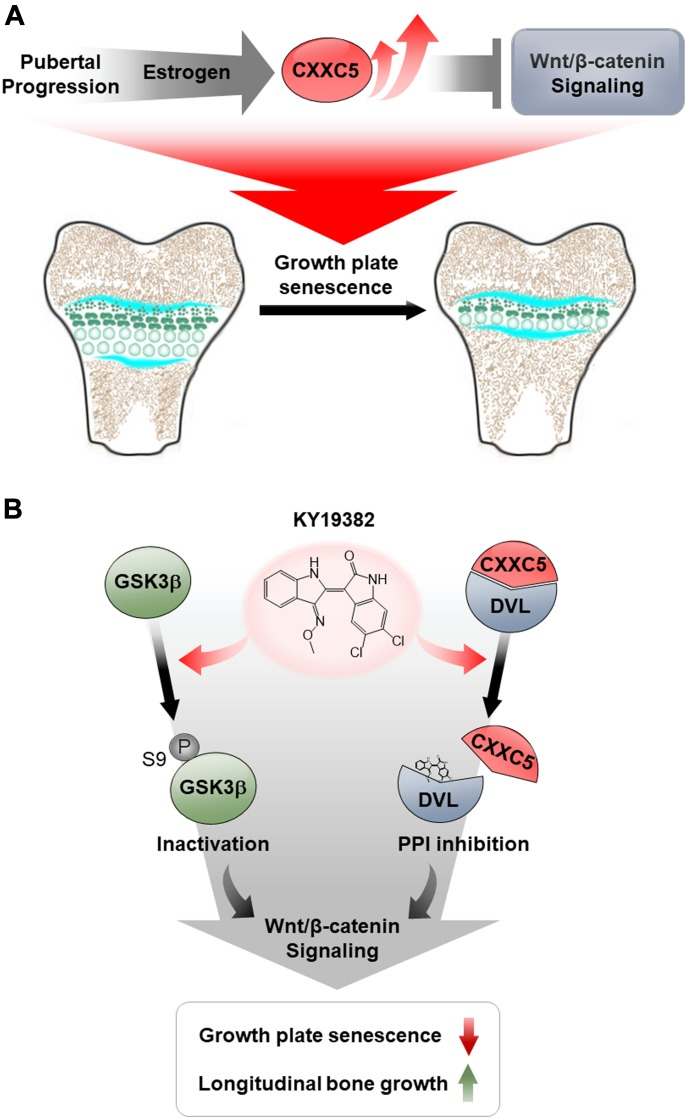
KY19382 is a synthetic drug that inhibits both GSK3β kinase activity and CXXC5–DVL interaction
What is GSK3β and CXXC5?
How do these things affect β-catenin?
β-catenin is the main "go" signal in the Wnt pathway
high β-catenin = growth genes ON
low β-catenin = growth genes OFF
What is Wnt and what happens when it's signaling increases?
Wnt is one of the main regulators in the growth plate. It signals the chondrocytes to divide rapidly.
Wnt signaling increase = More β-catenin = More profilerating chondrocytes = more cartilage produced = longer bones
Wnt signaling decrease = less β-catenin = lessprofilerating chondrocytes = growth plate senescense ( closing of plates )
In summary
KY19382 boosts Wnt/β-catenin signaling in two ways:
1. It inhibits GSK3β
Stops GSK3β from destroying β-catenin.
β-catenin builds up in the cell.
β-catenin turns on genes that promote chondrocyte growth and bone elongation.
2. It blocks CXXC5 from binding to DVL
CXXC5 normally acts as a brake on Wnt signaling.
By blocking this interaction, DVL can activate the Wnt pathway more effectively.
This leads to even more β-catenin accumulation.
KY19382 is a synthetic drug that inhibits both GSK3β kinase activity and CXXC5–DVL interaction
What is GSK3β and CXXC5?
GSK3β is a serine/threonine kinase, which means that it adds phosphate groups to proteins
CXXC5 (CXXC finger protein 5) is not an enzyme. It doesn't phosphorylate or degrade other proteins. It functions mainly by binding to other proteins and changing how signaling pathways operate.
β-catenin is the main "go" signal in the Wnt pathway
high β-catenin = growth genes ON
low β-catenin = growth genes OFF
an excess of GSK3β has been shown to phosphorylate β-catenin, therefore β-catenin gets degraded or even destroyed, ultimately causing minimal growth plate activity.
CXXC5 binds to DVL (disheveled) and leads to Wnt signaling decreasing by a large margin. When Wnt is activated, β-catenin enters the nucleus which leads to CXXC5 increasing. Which then leads to Wnt supression. ( negative feedback )
What is Wnt and what happens when it's signaling increases?
Wnt is one of the main regulators in the growth plate. It signals the chondrocytes to divide rapidly.
Wnt signaling increase = More β-catenin = More profilerating chondrocytes = more cartilage produced = longer bones
Wnt signaling decrease = less β-catenin = lessprofilerating chondrocytes = growth plate senescense ( closing of plates )
In summary
KY19382 boosts Wnt/β-catenin signaling in two ways:
1. It inhibits GSK3β
Stops GSK3β from destroying β-catenin.
β-catenin builds up in the cell.
β-catenin turns on genes that promote chondrocyte growth and bone elongation.
2. It blocks CXXC5 from binding to DVL
CXXC5 normally acts as a brake on Wnt signaling.
By blocking this interaction, DVL can activate the Wnt pathway more effectively.
This leads to even more β-catenin accumulation.
Why this is important
A typical GSK3β inhibitor only prevents β-catenin from being broken down.
KY19382 does more: it also removes one of the pathway's natural brakes (CXXC5), allowing Wnt signaling to stay more active.
As a result, KY19382 activates the Wnt/β-catenin pathway more strongly than a GSK3β inhibitor alone.
Would this have any meaningful effect on bone growth/elongation?
Considering KY19382's effect on major bone growth pathways, the drug could have meaningful effect on humans.
HOWEVER
There are ZERO published human studies on KY19382 so there is limited knowledge on the topic.
KY19382 does have studies on mice however, very interesting one you ALL should look at. ( I'll link it )
)
Are there any potential risks with KY19382?
The Wnt/β-catenin pathway is meant to divide cells. (which is beneficial in the growth plate since chondrocytes need to divide for bones to elongate.)
What other "risk" requires rapid cell division?
CANCER
GSK3β inhibiting also has potential risks
GSK3β is responsible for much more than just destroying β-catenin.
GSK3β is responsible for regulating hundreds of proteins in the body involved in many things such as:
glucose metabolism
immune function
brain signaling
circadian rhythms
cell-cycle control
apoptosis (programmed cell death)
Therefore, inhibiting GSK3β could lead to issues like:
altered metabolism
unintended effects on other organs
disruption of normal cell signaling
CXXC5 is also not only found in the growth plate.
CXXC5 is involved in many other places such as:
hair follicles
skin
bone remodeling
stem cell regulation
wound healing
Inhibiting CXXC5 throughout the whole body could therefore affect other tissues too. Causing perhaps undesirable effects.
General consensus
KY19382 could be another "niche" bone growth method. However unlike many other compounds like Erdafitinib or PTH analogues.
KY19382 has ZERO research done on humans. And is therefore risky to take since long term side effects are unkown but very much present.
Additionally, it is hard to source and is starting to get recognition leading to more fakes appearing on the market.
There are also other benefits to KY19382 however I assume many people are only interested in the effect it can have on bones.
Since there is minimal knowledge on KY19382 making a "full guide" on it is difficult.
However for tips on sourcing or planning a KY19382 usage. Feel free to PM me.
KY19382 does more: it also removes one of the pathway's natural brakes (CXXC5), allowing Wnt signaling to stay more active.
As a result, KY19382 activates the Wnt/β-catenin pathway more strongly than a GSK3β inhibitor alone.
Would this have any meaningful effect on bone growth/elongation?
Considering KY19382's effect on major bone growth pathways, the drug could have meaningful effect on humans.
HOWEVER
There are ZERO published human studies on KY19382 so there is limited knowledge on the topic.
KY19382 does have studies on mice however, very interesting one you ALL should look at. ( I'll link it
)Are there any potential risks with KY19382?
The Wnt/β-catenin pathway is meant to divide cells. (which is beneficial in the growth plate since chondrocytes need to divide for bones to elongate.)
What other "risk" requires rapid cell division?
CANCER
since the Wnt/β-catenin pathway divides cells and makes sure cells survive, cancerous cells might receive the same signaling. Leading to a more rapid tumor growth. Which of course, isn't beneficial. ( INB4 "muh pituitary gland cancer for more GH" )
GSK3β inhibiting also has potential risks
GSK3β is responsible for much more than just destroying β-catenin.
GSK3β is responsible for regulating hundreds of proteins in the body involved in many things such as:
glucose metabolism
immune function
brain signaling
circadian rhythms
cell-cycle control
apoptosis (programmed cell death)
Therefore, inhibiting GSK3β could lead to issues like:
altered metabolism
unintended effects on other organs
disruption of normal cell signaling
CXXC5 is also not only found in the growth plate.
CXXC5 is involved in many other places such as:
hair follicles
skin
bone remodeling
stem cell regulation
wound healing
Inhibiting CXXC5 throughout the whole body could therefore affect other tissues too. Causing perhaps undesirable effects.
General consensus
KY19382 could be another "niche" bone growth method. However unlike many other compounds like Erdafitinib or PTH analogues.
KY19382 has ZERO research done on humans. And is therefore risky to take since long term side effects are unkown but very much present.
Additionally, it is hard to source and is starting to get recognition leading to more fakes appearing on the market.
There are also other benefits to KY19382 however I assume many people are only interested in the effect it can have on bones.
Since there is minimal knowledge on KY19382 making a "full guide" on it is difficult.
However for tips on sourcing or planning a KY19382 usage. Feel free to PM me.
I am NOT a doctor and am NOT advocating for the use of this. I am simply sharing my knowledge on the subject with my fellow people on this forum.
@Stalker @Vrilltrum @buccalfatremoval @zennn @Scarlet @Panchitosbroncs @lumified
Also take a look at @sy934821's TikTok on KY19382
https://pmc.ncbi.nlm.nih.gov/articles/PMC6458850/ Is one of the main studies I quoted in this "guide". CHECK IT OUT.