
Fat Grafting: Biology, Technique, Risk and is DIY Fat Grafting possible?

Orka

Orka

DIY Aesthetician
Joined
Sep 8, 2024
Posts
16,451
Reputation
55,293
Fat Grafting: Biology, Technique, Risk and is DIY Fat Grafting possible?
Tagging fellow DIY autists
@dawooddX @aids @Tigermoggerlol @ivan.kuk @Zuffster


Do not DIY this you fucking retards, if you do its NOT my fault if you botch yourself.


Table Of Contents:
1. What is Fat Grafting?
2. Extraction & Technique
3. Cleaning & Purification
4. Filtering & Dividing Fat Cells
5. Injection site
6. Recovery process
7. Disclaimer


1. What is Fat Grafting?
Fat grafting, or Fat Transfer is a procedure where a patient’s own fat is extracted, then reinjected into another part of their face. This is a semi-permanent procedure done to add volume & improve shape.
The fat is taken from areas with extra fat, like the stomach or thighs, and injected into the face, breasts or other areas that require volume.
After the fat is transferred, not all of the fat survives, but the fat that does survive typically stays forever.

Fat grafting is a popular semi-permanent solution because fat is living tissue, meaning once the injected fat gets a blood supply, it can stay there for decades. For the first few days after the procedure, the fat keeps itself alive by soaking up oxygen & nutrients from surrounding tissue fluid. This is why surgeons inject fat in tiny strands/drops instead of one big spot, smaller bits of fat have more surface area touching the healthy tissue, so they can absorb nutrients & oxygen from that while the body starts creating a new blood supply for the fat.

After that, the area releases signals that bring in new capillaries, and the tiny blood vessels from the surrounding tissue grow into the graft (angiogenesis). If the fat was placed in small enough amounts & close to the well supplied tissue, the new vessels can connect and the fat becomes connected & alive long term. If too much fat is packed into one spot, the center of that fat doesn’t get enough oxygen before the vessels reach it, which can result in that area of fat dying, making the result underwhelming.


2. Extraction & Technique
To extract & collect the fat, surgeons use liposuction with a blunt cannula in a 2-3mm cut created on your body. The cannula is moved back & forth to loosen the fat so it can be removed evenly. This movement looks really rough but usually doesn’t hurt. The area is injected with lidocaine/a numbing agent before this process occurs.


The way the fat is removed can vary depending on the surgeons preference & the area being treated. For somebody DIYing this, this method would be far too aggressive. It is possible to extract in a much slower manner without this much force being used using a regular low gauge syringe, but the method above is far more effective. If you’re DIYing this I would suggest getting 2 people to do it, as some of this stuff is hard to do on yourself without feeling lightheaded.

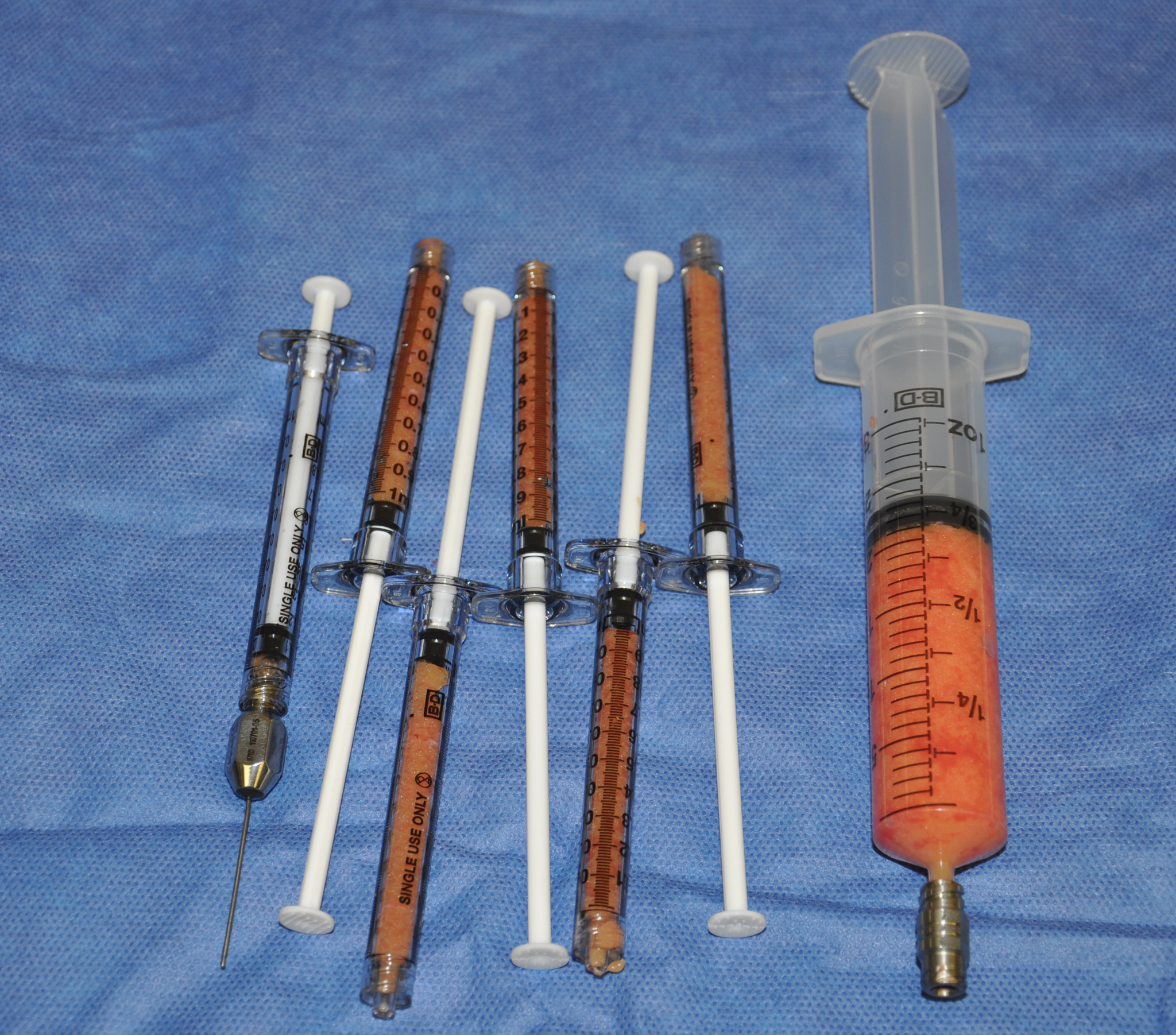
Regardless of the technique, at the end of the extraction you’ll be left with a syringe full of an orange substance. This is a mix of fat tissue, blood & oils.
1769690892501


Once the surgeon sees this, the extraction process is over.


3. Cleaning & Purification
Now there’s syringes full of blood, oil & fat. You can’t inject the mixed dirty substance, the oil can cause irritation to the area surrounding it and is usually released by other destroyed fat cells, damaged fat cells can’t connect to new blood supplies, rendering them useless in this process.

Now, the goal is to remove the blood & oils from this mixture, there’s a few methods for that.

1. Centrifugation
1769690892525

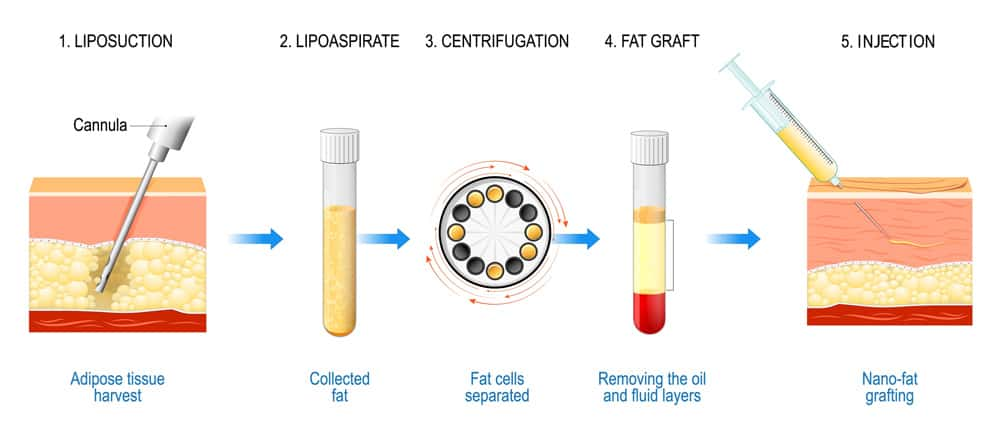
The mixture is spun in a centrifuge, which separates it into layers of blood that sits at the bottom, fat that sits in the middle, and oil that rises to the top. The blood & oil layer is removed, and the fat might be spun again to make sure no blood or oils are left.

2. Gravity Separation
1769690892542

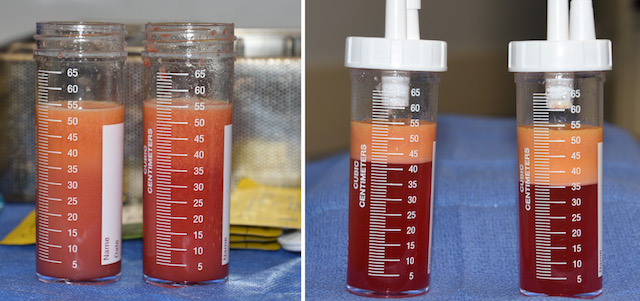
The mixture is left to sit and gravity separates them into the 3 layers I mentioned. This is a far slower process and unpopular in professional medical spaces. Gravity separates the layers in around 30-40 minutes, the fat cells do not die in this timeframe and rely on stored energy to survive.

3. Filtration
1769690892572

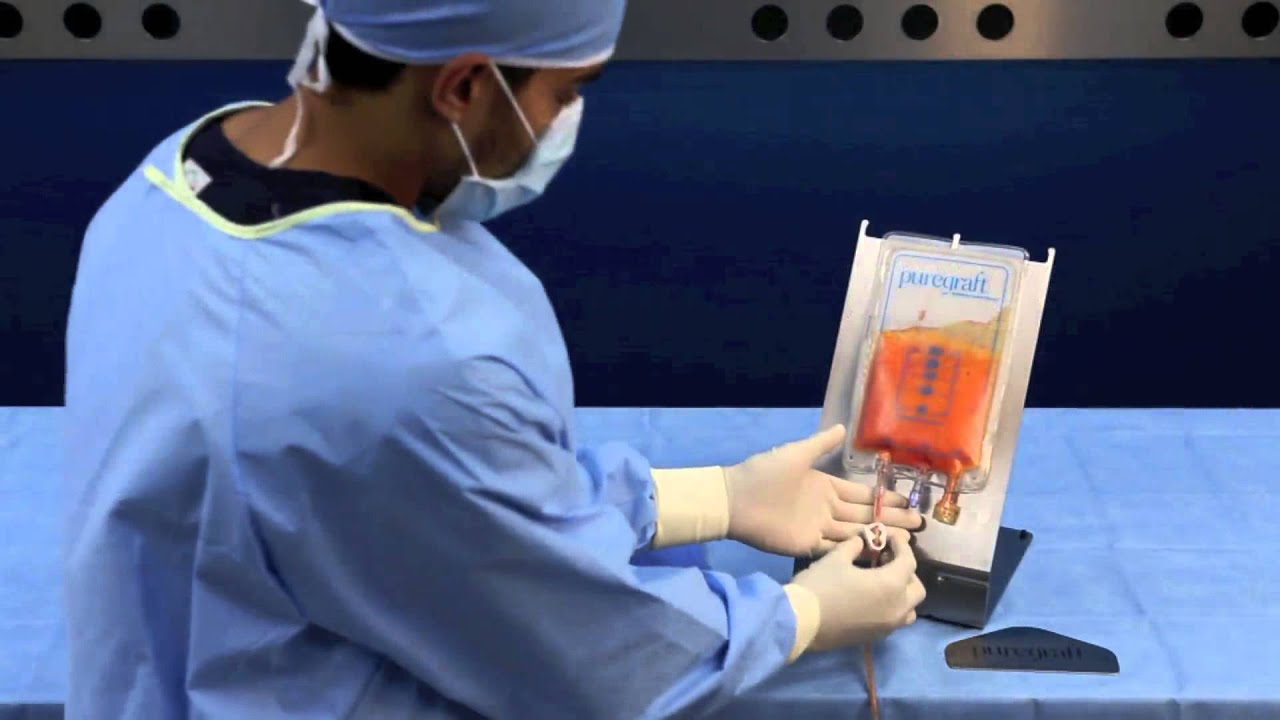
The fat is passed through specialized filters (such as PUREGRAFT bags) that strain out fluid, oil, and tissue fragments while preserving intact fat cells. Many modern surgeons use this method.


4. Filtering & Dividing fat cells
1769690892594

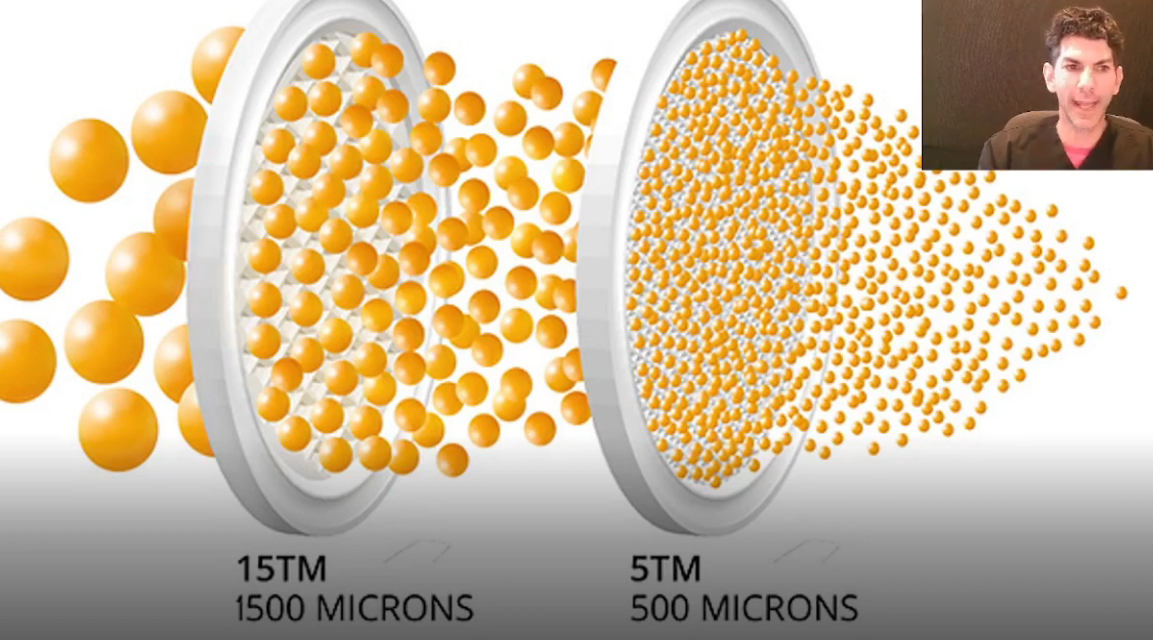
When fat is harvested, it comes in different sizes, and the sizes matter depending on where the fat is placed. Through filtering, we’re able to separate out debris and damaged tissue, but this also results in fat being divided into smaller or larger clusters.

Smaller clusters of fat are better for delicate areas like the lips & undereyes (which we’re dealing with), where the skin is thinner and uneven texture is much more noticeable if you place large clusters of fat too superficially. Smaller fat clusters spread more evenly, integrate more smoothly with surrounding tissue, and have an easier time receiving oxygen and nutrients early on.
1769690892608

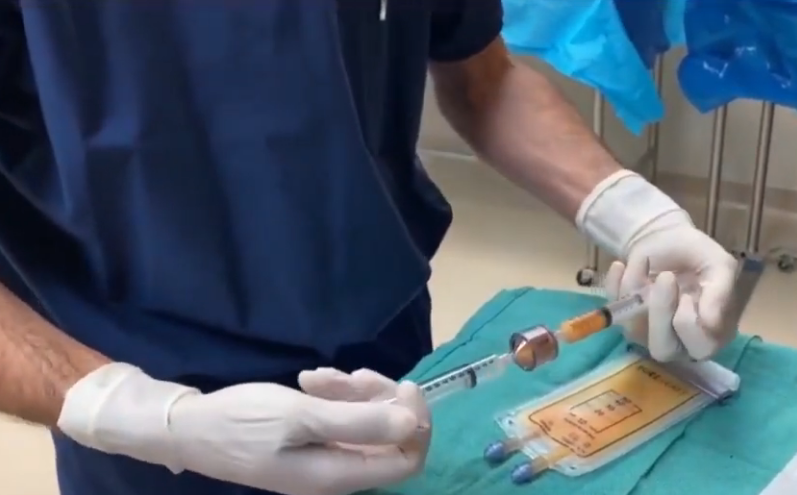
A filter like this one is placed between two syringes, then filtered through around 10-15 times to achieve the micron size needed.


5. Injection Site
I’ll be going over two injection sites in this thread, lips & undereyes. If you’re curious about other areas, research for yourself.

1. Infra & Supraorbital area
1769690892620

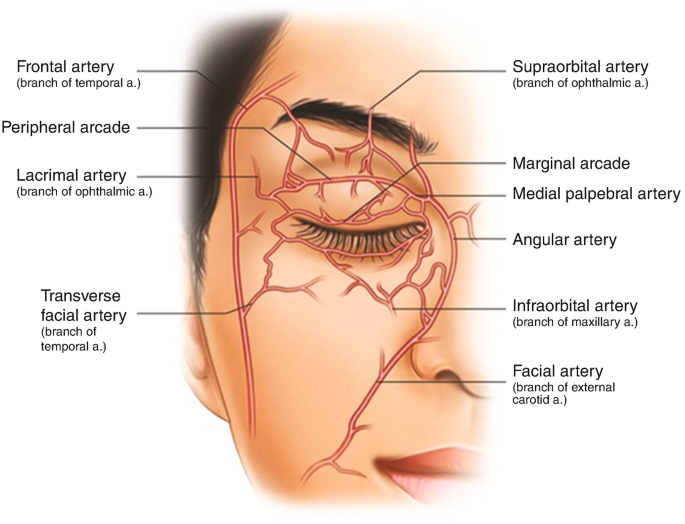
The eye area is one of the most vascular areas on your face, there’s several nerves & arteries running through the area. Injections are done in MICRODROPLETS in this area, they’re injected bone-deep or just above the bone, since that region already has a good blood supply for the fat to connect to and because this decreases the chances of lumps of fat being visible texture.
1769690892632

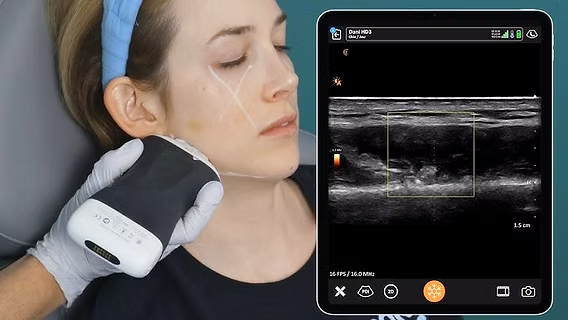
A small real-time ultrasound is common practice to find where arteries are for filler injections. This is not a guarantee at all though, this would just be good to see what areas are most populated with vessels, the likelihood of you using an ultrasound to accurately map out where all the vessels on your face are are close to zero.
1769690892643

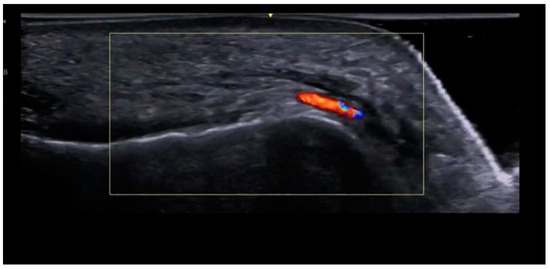
This is an image from a Color Doppler ultrasound, these types of ultrasounds highlight bloodflow, meaning the red you see on the screen is a vein, artery or any vessel that carries blood.
(Red = blood is flowing towards the device, blue = blood is flowing away from it).

Buying these machines is expensive, usually $2k+ (at which point you can literally just get professional fat grafting). But thankfully you’re able to rent these kinds of machines online, I found a place local to me that rents it & lets me take it home for just a few hundred euros.

Personally I don't like ultrasounds for this as it gives you a false sense of security, but I need to include this as a safety measure incase some idiot uses this as a guide.

If you’re not financially able to afford an ultrasound (which I would not say is a worthwhile investment), then you can still rely on injection technique.

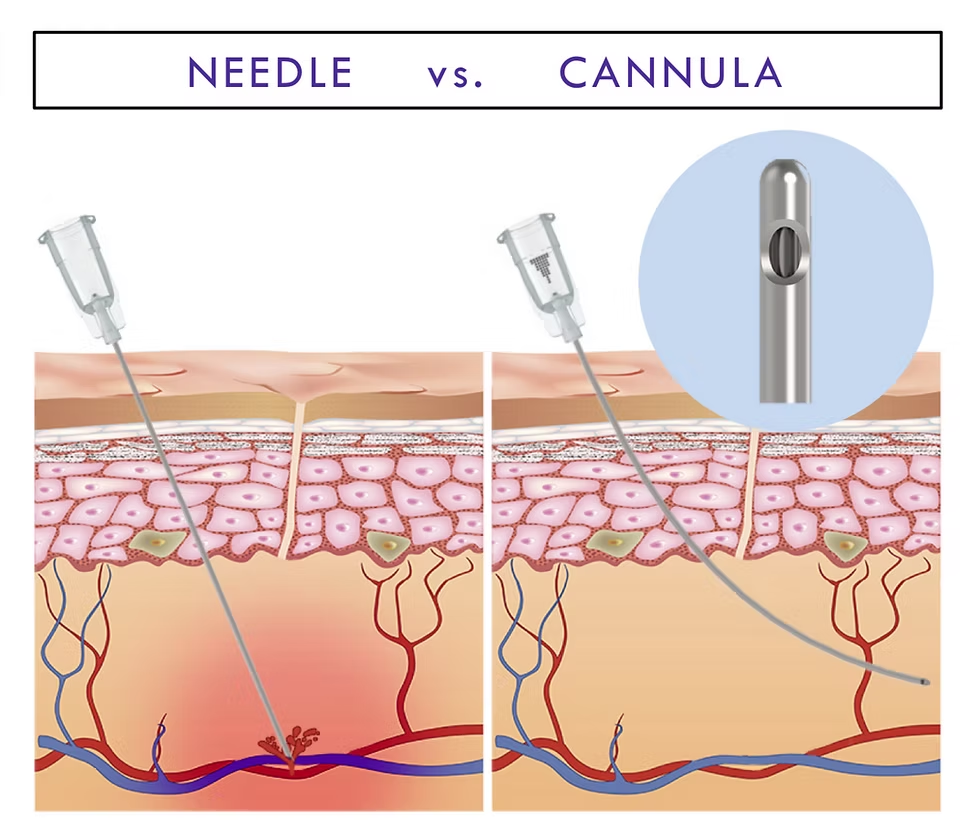
The main risk when injecting anything solid into somebody, like filler or fat, is a vascular occlusion, a vascular occlusion is when a foreign substance either fills an artery/vessel, or sits next to it and puts enough pressure onto it to clog it and slow down or block blood flow. With filler this is reversible using hyaluronidase, in this instance with fat it is not possible to reverse or dissolve fat if you get it stuck inside.

Using a cannula, you’re able to evenly spread out the microdroplets of fat through different areas, the logic behind injecting microdroplets should be obvious, the less you’re injecting at once the less likely you are to inject a large enough amount to block off vessels.
1769690892661


On both the supra & infraorbital region you want to place the fat graft on the bone itself or a tiny bit above the bone. I would not recommend even attempting to DIY this if you haven’t already had filler done professionally, or preferably DIY’d filler by this point.


2. Lips
Your lips are also a highly vascular region, this along with the eye region are both the highest risk areas for filler, and you’re seriously contemplating injecting your own fat into here huh, i wonder what brought us to this situation.

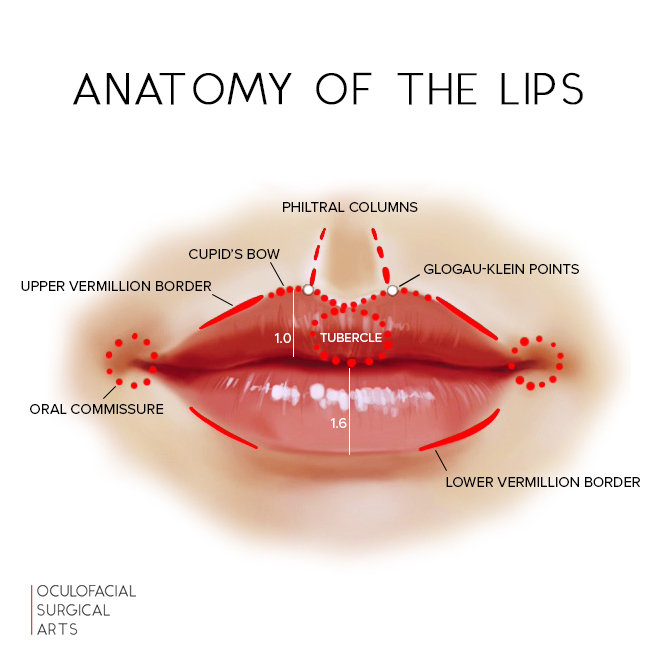
Anyways, you’ll typically want to inject into the vermillion border or vermillion body of your lips, this helps shape your lips & add volume.
1769690892674

Microdroplet injections into the aforementioned areas is standard. But if you’re considering doing this, do your own research & analyze filler techniques for lips, injecting fat is fairly similar.


6. Recovery Process
1769690892684
1769690892701

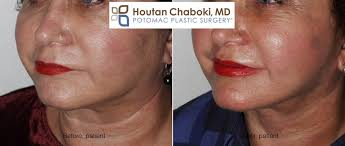
Recovery after fat grafting isn’t immediate, and results don’t show right away. Swelling and bruising are normal at first, especially in areas like the face, and this can make things look fuller or uneven early on. During the first few days, the fat doesn't have a blood supply yet and survives by pulling oxygen and nutrients from the surrounding tissue.

Over the next few weeks, your body starts growing new blood vessels into the fat graft. Fat that successfully connects will stay (like 50-70% when done professionally), while fat that doesn’t is slowly absorbed. As swelling goes down, the area softens and the final result becomes clearer.


7. Disclaimer & Conclusion
You read a thread made by a high school student, if you seriously consider using this thread as instructions to DIY fat grafting instead of doing your own research you’re a retard, this is a thread about hypotheticals & an explanation of how professionals do fat grafting

As a conclusion, yes, DIY Fat grafting is possible, whether or not it's a good idea is up to you. I might attempt this, but I'm lower inhib than you are, so maybe wait until I botch myself before considering this.
 
  • +1
  • Love it
  • Woah
Reactions: crimsonn, idahomey, Seeyenar and 125 others
If this gets like 500 reps or something I'll attempt DIYing it with my gf. (since DIY is a 2 person job in this case)
 
  • +1
  • JFL
  • Hmm...
Reactions: wearegettingtohtn, DavidePollo, ImaASCENDsoon and 37 others
Admiring, encouraging me to write my surgery guide thread.

BOTB, bookmarked.
 
  • +1
Reactions: ImaASCENDsoon, 3pider, Deleted member 251512 and 11 others
Fat Grafting: Biology, Technique, Risk and is DIY Fat Grafting possible?
Tagging fellow DIY autists
@dawooddX @aids @Tigermoggerlol @ivan.kuk @Zuffster


Do not DIY this you fucking retards, if you do its NOT my fault if you botch yourself.


Table Of Contents:
1. What is Fat Grafting?
2. Extraction & Technique
3. Cleaning & Purification
4. Filtering & Dividing Fat Cells
5. Injection site
6. Recovery process
7. Disclaimer


1. What is Fat Grafting?
Fat grafting, or Fat Transfer is a procedure where a patient’s own fat is extracted, then reinjected into another part of their face. This is a semi-permanent procedure done to add volume & improve shape.
The fat is taken from areas with extra fat, like the stomach or thighs, and injected into the face, breasts or other areas that require volume.
After the fat is transferred, not all of the fat survives, but the fat that does survive typically stays forever.

Fat grafting is a popular semi-permanent solution because fat is living tissue, meaning once the injected fat gets a blood supply, it can stay there for decades. For the first few days after the procedure, the fat keeps itself alive by soaking up oxygen & nutrients from surrounding tissue fluid. This is why surgeons inject fat in tiny strands/drops instead of one big spot, smaller bits of fat have more surface area touching the healthy tissue, so they can absorb nutrients & oxygen from that while the body starts creating a new blood supply for the fat.

After that, the area releases signals that bring in new capillaries, and the tiny blood vessels from the surrounding tissue grow into the graft (angiogenesis). If the fat was placed in small enough amounts & close to the well supplied tissue, the new vessels can connect and the fat becomes connected & alive long term. If too much fat is packed into one spot, the center of that fat doesn’t get enough oxygen before the vessels reach it, which can result in that area of fat dying, making the result underwhelming.


2. Extraction & Technique
To extract & collect the fat, surgeons use liposuction with a blunt cannula in a 2-3mm cut created on your body. The cannula is moved back & forth to loosen the fat so it can be removed evenly. This movement looks really rough but usually doesn’t hurt. The area is injected with lidocaine/a numbing agent before this process occurs.


The way the fat is removed can vary depending on the surgeons preference & the area being treated. For somebody DIYing this, this method would be far too aggressive. It is possible to extract in a much slower manner without this much force being used using a regular low gauge syringe, but the method above is far more effective. If you’re DIYing this I would suggest getting 2 people to do it, as some of this stuff is hard to do on yourself without feeling lightheaded.

Regardless of the technique, at the end of the extraction you’ll be left with a syringe full of an orange substance. This is a mix of fat tissue, blood & oils.

View attachment 4594516

Once the surgeon sees this, the extraction process is over.


3. Cleaning & Purification
Now there’s syringes full of blood, oil & fat. You can’t inject the mixed dirty substance, the oil can cause irritation to the area surrounding it and is usually released by other destroyed fat cells, damaged fat cells can’t connect to new blood supplies, rendering them useless in this process.

Now, the goal is to remove the blood & oils from this mixture, there’s a few methods for that.

1. Centrifugation
View attachment 4594503
The mixture is spun in a centrifuge, which separates it into layers of blood that sits at the bottom, fat that sits in the middle, and oil that rises to the top. The blood & oil layer is removed, and the fat might be spun again to make sure no blood or oils are left.

2. Gravity Separation
View attachment 4594505
The mixture is left to sit and gravity separates them into the 3 layers I mentioned. This is a far slower process and unpopular in professional medical spaces. Gravity separates the layers in around 30-40 minutes, the fat cells do not die in this timeframe and rely on stored energy to survive.

3. Filtration
View attachment 4594513
The fat is passed through specialized filters (such as PUREGRAFT bags) that strain out fluid, oil, and tissue fragments while preserving intact fat cells. Many modern surgeons use this method.


4. Filtering & Dividing fat cells
View attachment 4594512
When fat is harvested, it comes in different sizes, and the sizes matter depending on where the fat is placed. Through filtering, we’re able to separate out debris and damaged tissue, but this also results in fat being divided into smaller or larger clusters.

Smaller clusters of fat are better for delicate areas like the lips & undereyes (which we’re dealing with), where the skin is thinner and uneven texture is much more noticeable if you place large clusters of fat too superficially. Smaller fat clusters spread more evenly, integrate more smoothly with surrounding tissue, and have an easier time receiving oxygen and nutrients early on.

View attachment 4594510
A filter like this one is placed between two syringes, then filtered through around 10-15 times to achieve the micron size needed.


5. Injection Site
I’ll be going over two injection sites in this thread, lips & undereyes. If you’re curious about other areas, research for yourself.

1. Infra & Supraorbital area
View attachment 4594509
The eye area is one of the most vascular areas on your face, there’s several nerves & arteries running through the area. Injections are done in MICRODROPLETS in this area, they’re injected bone-deep or just above the bone, since that region already has a good blood supply for the fat to connect to and because this decreases the chances of lumps of fat being visible texture.

View attachment 4594507
A small real-time ultrasound is common practice to find where arteries are for filler injections. This is not a guarantee at all though, this would just be good to see what areas are most populated with vessels, the likelihood of you using an ultrasound to accurately map out where all the vessels on your face are are close to zero.

View attachment 4594506
This is an image from a Color Doppler ultrasound, these types of ultrasounds highlight bloodflow, meaning the red you see on the screen is a vein, artery or any vessel that carries blood.
(Red = blood is flowing towards the device, blue = blood is flowing away from it).

Buying these machines is expensive, usually $2k+ (at which point you can literally just get professional fat grafting). But thankfully you’re able to rent these kinds of machines online, I found a place local to me that rents it & lets me take it home for just a few hundred euros.

Personally I don't like ultrasounds for this as it gives you a false sense of security, but I need to include this as a safety measure incase some idiot uses this as a guide.

If you’re not financially able to afford an ultrasound (which I would not say is a worthwhile investment), then you can still rely on injection technique.

The main risk when injecting anything solid into somebody, like filler or fat, is a vascular occlusion, a vascular occlusion is when a foreign substance either fills an artery/vessel, or sits next to it and puts enough pressure onto it to clog it and slow down or block blood flow. With filler this is reversible using hyaluronidase, in this instance with fat it is not possible to reverse or dissolve fat if you get it stuck inside.

Using a cannula, you’re able to evenly spread out the microdroplets of fat through different areas, the logic behind injecting microdroplets should be obvious, the less you’re injecting at once the less likely you are to inject a large enough amount to block off vessels.

View attachment 4594514

On both the supra & infraorbital region you want to place the fat graft on the bone itself or a tiny bit above the bone. I would not recommend even attempting to DIY this if you haven’t already had filler done professionally, or preferably DIY’d filler by this point.


2. Lips
Your lips are also a highly vascular region, this along with the eye region are both the highest risk areas for filler, and you’re seriously contemplating injecting your own fat into here huh, i wonder what brought us to this situation.

Anyways, you’ll typically want to inject into the vermillion border or vermillion body of your lips, this helps shape your lips & add volume.
View attachment 4594508
Microdroplet injections into the aforementioned areas is standard. But if you’re considering doing this, do your own research & analyze filler techniques for lips, injecting fat is fairly similar.


6. Recovery Process
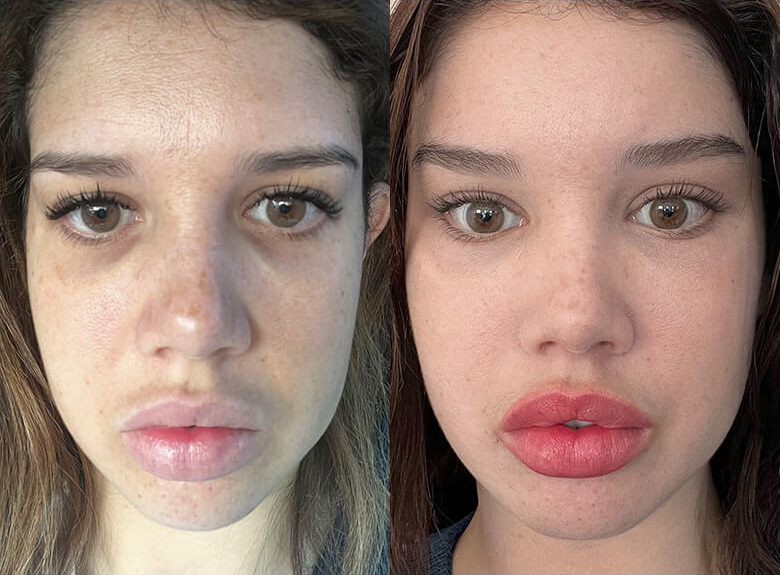
View attachment 4594504View attachment 4594511
Recovery after fat grafting isn’t immediate, and results don’t show right away. Swelling and bruising are normal at first, especially in areas like the face, and this can make things look fuller or uneven early on. During the first few days, the fat doesn't have a blood supply yet and survives by pulling oxygen and nutrients from the surrounding tissue.

Over the next few weeks, your body starts growing new blood vessels into the fat graft. Fat that successfully connects will stay (like 50-70% when done professionally), while fat that doesn’t is slowly absorbed. As swelling goes down, the area softens and the final result becomes clearer.


7. Disclaimer & Conclusion
You read a thread made by a high school student, if you seriously consider using this thread as instructions to DIY fat grafting instead of doing your own research you’re a retard, this is a thread about hypotheticals & an explanation of how professionals do fat grafting

As a conclusion, yes, DIY Fat grafting is possible, whether or not it's a good idea is up to you. I might attempt this, but I'm lower inhib than you are, so maybe wait until I botch myself before considering this.

Bump

This seems like a good read:ROWOW:

mirin effort will respond again once I'm finished
 
  • +1
Reactions: ImaASCENDsoon, SolaHGH, LDAR_till_htn and 2 others
If this gets like 500 reps or something I'll attempt DIYing it with my gf. (since DIY is a 2 person job in this case)
utterly insane bro
 
  • +1
  • JFL
Reactions: ImaASCENDsoon, Deleted member 251512, ascendtocl122 and 4 others
inb4 botb tbh
 
  • +1
Reactions: Sayori, SolaHGH, Deleted member 307488 and 1 other person
Mirin and Bookmarked

Inb4 BOTB + inb4 someone thinks dnr is funny
 
Last edited:
  • +1
Reactions: yamface, SolaHGH, Sayori and 3 others
  • +1
  • JFL
  • Hmm...
Reactions: Aox Ofwar, FutureExoticChad, N.N and 7 others
w girlfriend
If this gets like 500 reps or something I'll attempt DIYing it with my gf. (since DIY is a 2 person job in this case)
 
  • +1
Reactions: Striated, Wuzzdio, Deleted member 307488 and 1 other person
no way in hell does this get 500 reps

also I'm pretty sure I've got some sort of kink with syringes & needles
I think ive developed such a thing I want to pin needles into myself all the time now:feelsrope:
 
  • +1
  • JFL
Reactions: karmacitathugmaxx, Tr0ubLe, LDAR_till_htn and 1 other person
I think ive developed such a thing I want to pin needles into myself all the time now:feelsrope:
exactly, now imagine a hot htb doing it to you :smonk:
 
  • +1
  • JFL
Reactions: karmacitathugmaxx, Tr0ubLe, LDAR_till_htn and 1 other person
Great thread
 
  • +1
Reactions: Orka
  • Love it
  • +1
Reactions: LDAR_till_htn and Orka
no way in hell does this get 500 reps

also I'm pretty sure I've got some sort of kink with syringes & needles
ask your girl to kick you in the nuts until fluid builds up then have her drain it
 
  • JFL
  • +1
Reactions: Striated, Aox Ofwar, N.N and 2 others
If this gets like 500 reps or something I'll attempt DIYing it with my gf. (since DIY is a 2 person job in this case)
Gonna read it tmmr in the bus
 
  • +1
Reactions: Wuzzdio and Orka
Fat Grafting: Biology, Technique, Risk and is DIY Fat Grafting possible?
Tagging fellow DIY autists
@dawooddX @aids @Tigermoggerlol @ivan.kuk @Zuffster


Do not DIY this you fucking retards, if you do its NOT my fault if you botch yourself.


Table Of Contents:
1. What is Fat Grafting?
2. Extraction & Technique
3. Cleaning & Purification
4. Filtering & Dividing Fat Cells
5. Injection site
6. Recovery process
7. Disclaimer


1. What is Fat Grafting?
Fat grafting, or Fat Transfer is a procedure where a patient’s own fat is extracted, then reinjected into another part of their face. This is a semi-permanent procedure done to add volume & improve shape.
The fat is taken from areas with extra fat, like the stomach or thighs, and injected into the face, breasts or other areas that require volume.
After the fat is transferred, not all of the fat survives, but the fat that does survive typically stays forever.

Fat grafting is a popular semi-permanent solution because fat is living tissue, meaning once the injected fat gets a blood supply, it can stay there for decades. For the first few days after the procedure, the fat keeps itself alive by soaking up oxygen & nutrients from surrounding tissue fluid. This is why surgeons inject fat in tiny strands/drops instead of one big spot, smaller bits of fat have more surface area touching the healthy tissue, so they can absorb nutrients & oxygen from that while the body starts creating a new blood supply for the fat.

After that, the area releases signals that bring in new capillaries, and the tiny blood vessels from the surrounding tissue grow into the graft (angiogenesis). If the fat was placed in small enough amounts & close to the well supplied tissue, the new vessels can connect and the fat becomes connected & alive long term. If too much fat is packed into one spot, the center of that fat doesn’t get enough oxygen before the vessels reach it, which can result in that area of fat dying, making the result underwhelming.


2. Extraction & Technique
To extract & collect the fat, surgeons use liposuction with a blunt cannula in a 2-3mm cut created on your body. The cannula is moved back & forth to loosen the fat so it can be removed evenly. This movement looks really rough but usually doesn’t hurt. The area is injected with lidocaine/a numbing agent before this process occurs.


The way the fat is removed can vary depending on the surgeons preference & the area being treated. For somebody DIYing this, this method would be far too aggressive. It is possible to extract in a much slower manner without this much force being used using a regular low gauge syringe, but the method above is far more effective. If you’re DIYing this I would suggest getting 2 people to do it, as some of this stuff is hard to do on yourself without feeling lightheaded.

Regardless of the technique, at the end of the extraction you’ll be left with a syringe full of an orange substance. This is a mix of fat tissue, blood & oils.

View attachment 4594516

Once the surgeon sees this, the extraction process is over.


3. Cleaning & Purification
Now there’s syringes full of blood, oil & fat. You can’t inject the mixed dirty substance, the oil can cause irritation to the area surrounding it and is usually released by other destroyed fat cells, damaged fat cells can’t connect to new blood supplies, rendering them useless in this process.

Now, the goal is to remove the blood & oils from this mixture, there’s a few methods for that.

1. Centrifugation
View attachment 4594503
The mixture is spun in a centrifuge, which separates it into layers of blood that sits at the bottom, fat that sits in the middle, and oil that rises to the top. The blood & oil layer is removed, and the fat might be spun again to make sure no blood or oils are left.

2. Gravity Separation
View attachment 4594505
The mixture is left to sit and gravity separates them into the 3 layers I mentioned. This is a far slower process and unpopular in professional medical spaces. Gravity separates the layers in around 30-40 minutes, the fat cells do not die in this timeframe and rely on stored energy to survive.

3. Filtration
View attachment 4594513
The fat is passed through specialized filters (such as PUREGRAFT bags) that strain out fluid, oil, and tissue fragments while preserving intact fat cells. Many modern surgeons use this method.


4. Filtering & Dividing fat cells
View attachment 4594512
When fat is harvested, it comes in different sizes, and the sizes matter depending on where the fat is placed. Through filtering, we’re able to separate out debris and damaged tissue, but this also results in fat being divided into smaller or larger clusters.

Smaller clusters of fat are better for delicate areas like the lips & undereyes (which we’re dealing with), where the skin is thinner and uneven texture is much more noticeable if you place large clusters of fat too superficially. Smaller fat clusters spread more evenly, integrate more smoothly with surrounding tissue, and have an easier time receiving oxygen and nutrients early on.

View attachment 4594510
A filter like this one is placed between two syringes, then filtered through around 10-15 times to achieve the micron size needed.


5. Injection Site
I’ll be going over two injection sites in this thread, lips & undereyes. If you’re curious about other areas, research for yourself.

1. Infra & Supraorbital area
View attachment 4594509
The eye area is one of the most vascular areas on your face, there’s several nerves & arteries running through the area. Injections are done in MICRODROPLETS in this area, they’re injected bone-deep or just above the bone, since that region already has a good blood supply for the fat to connect to and because this decreases the chances of lumps of fat being visible texture.

View attachment 4594507
A small real-time ultrasound is common practice to find where arteries are for filler injections. This is not a guarantee at all though, this would just be good to see what areas are most populated with vessels, the likelihood of you using an ultrasound to accurately map out where all the vessels on your face are are close to zero.

View attachment 4594506
This is an image from a Color Doppler ultrasound, these types of ultrasounds highlight bloodflow, meaning the red you see on the screen is a vein, artery or any vessel that carries blood.
(Red = blood is flowing towards the device, blue = blood is flowing away from it).

Buying these machines is expensive, usually $2k+ (at which point you can literally just get professional fat grafting). But thankfully you’re able to rent these kinds of machines online, I found a place local to me that rents it & lets me take it home for just a few hundred euros.

Personally I don't like ultrasounds for this as it gives you a false sense of security, but I need to include this as a safety measure incase some idiot uses this as a guide.

If you’re not financially able to afford an ultrasound (which I would not say is a worthwhile investment), then you can still rely on injection technique.

The main risk when injecting anything solid into somebody, like filler or fat, is a vascular occlusion, a vascular occlusion is when a foreign substance either fills an artery/vessel, or sits next to it and puts enough pressure onto it to clog it and slow down or block blood flow. With filler this is reversible using hyaluronidase, in this instance with fat it is not possible to reverse or dissolve fat if you get it stuck inside.

Using a cannula, you’re able to evenly spread out the microdroplets of fat through different areas, the logic behind injecting microdroplets should be obvious, the less you’re injecting at once the less likely you are to inject a large enough amount to block off vessels.

View attachment 4594514

On both the supra & infraorbital region you want to place the fat graft on the bone itself or a tiny bit above the bone. I would not recommend even attempting to DIY this if you haven’t already had filler done professionally, or preferably DIY’d filler by this point.


2. Lips
Your lips are also a highly vascular region, this along with the eye region are both the highest risk areas for filler, and you’re seriously contemplating injecting your own fat into here huh, i wonder what brought us to this situation.

Anyways, you’ll typically want to inject into the vermillion border or vermillion body of your lips, this helps shape your lips & add volume.
View attachment 4594508
Microdroplet injections into the aforementioned areas is standard. But if you’re considering doing this, do your own research & analyze filler techniques for lips, injecting fat is fairly similar.


6. Recovery Process
View attachment 4594504View attachment 4594511
Recovery after fat grafting isn’t immediate, and results don’t show right away. Swelling and bruising are normal at first, especially in areas like the face, and this can make things look fuller or uneven early on. During the first few days, the fat doesn't have a blood supply yet and survives by pulling oxygen and nutrients from the surrounding tissue.

Over the next few weeks, your body starts growing new blood vessels into the fat graft. Fat that successfully connects will stay (like 50-70% when done professionally), while fat that doesn’t is slowly absorbed. As swelling goes down, the area softens and the final result becomes clearer.


7. Disclaimer & Conclusion
You read a thread made by a high school student, if you seriously consider using this thread as instructions to DIY fat grafting instead of doing your own research you’re a retard, this is a thread about hypotheticals & an explanation of how professionals do fat grafting

As a conclusion, yes, DIY Fat grafting is possible, whether or not it's a good idea is up to you. I might attempt this, but I'm lower inhib than you are, so maybe wait until I botch myself before considering this.

Don’t DIY this nigga ts dumb asf
 
  • +1
Reactions: N.N, LDAR_till_htn, SolaHGH and 1 other person
Fat Grafting: Biology, Technique, Risk and is DIY Fat Grafting possible?
Tagging fellow DIY autists
@dawooddX @aids @Tigermoggerlol @ivan.kuk @Zuffster


Do not DIY this you fucking retards, if you do its NOT my fault if you botch yourself.


Table Of Contents:
1. What is Fat Grafting?
2. Extraction & Technique
3. Cleaning & Purification
4. Filtering & Dividing Fat Cells
5. Injection site
6. Recovery process
7. Disclaimer


1. What is Fat Grafting?
Fat grafting, or Fat Transfer is a procedure where a patient’s own fat is extracted, then reinjected into another part of their face. This is a semi-permanent procedure done to add volume & improve shape.
The fat is taken from areas with extra fat, like the stomach or thighs, and injected into the face, breasts or other areas that require volume.
After the fat is transferred, not all of the fat survives, but the fat that does survive typically stays forever.

Fat grafting is a popular semi-permanent solution because fat is living tissue, meaning once the injected fat gets a blood supply, it can stay there for decades. For the first few days after the procedure, the fat keeps itself alive by soaking up oxygen & nutrients from surrounding tissue fluid. This is why surgeons inject fat in tiny strands/drops instead of one big spot, smaller bits of fat have more surface area touching the healthy tissue, so they can absorb nutrients & oxygen from that while the body starts creating a new blood supply for the fat.

After that, the area releases signals that bring in new capillaries, and the tiny blood vessels from the surrounding tissue grow into the graft (angiogenesis). If the fat was placed in small enough amounts & close to the well supplied tissue, the new vessels can connect and the fat becomes connected & alive long term. If too much fat is packed into one spot, the center of that fat doesn’t get enough oxygen before the vessels reach it, which can result in that area of fat dying, making the result underwhelming.


2. Extraction & Technique
To extract & collect the fat, surgeons use liposuction with a blunt cannula in a 2-3mm cut created on your body. The cannula is moved back & forth to loosen the fat so it can be removed evenly. This movement looks really rough but usually doesn’t hurt. The area is injected with lidocaine/a numbing agent before this process occurs.


The way the fat is removed can vary depending on the surgeons preference & the area being treated. For somebody DIYing this, this method would be far too aggressive. It is possible to extract in a much slower manner without this much force being used using a regular low gauge syringe, but the method above is far more effective. If you’re DIYing this I would suggest getting 2 people to do it, as some of this stuff is hard to do on yourself without feeling lightheaded.

Regardless of the technique, at the end of the extraction you’ll be left with a syringe full of an orange substance. This is a mix of fat tissue, blood & oils.

View attachment 4594516

Once the surgeon sees this, the extraction process is over.


3. Cleaning & Purification
Now there’s syringes full of blood, oil & fat. You can’t inject the mixed dirty substance, the oil can cause irritation to the area surrounding it and is usually released by other destroyed fat cells, damaged fat cells can’t connect to new blood supplies, rendering them useless in this process.

Now, the goal is to remove the blood & oils from this mixture, there’s a few methods for that.

1. Centrifugation
View attachment 4594503
The mixture is spun in a centrifuge, which separates it into layers of blood that sits at the bottom, fat that sits in the middle, and oil that rises to the top. The blood & oil layer is removed, and the fat might be spun again to make sure no blood or oils are left.

2. Gravity Separation
View attachment 4594505
The mixture is left to sit and gravity separates them into the 3 layers I mentioned. This is a far slower process and unpopular in professional medical spaces. Gravity separates the layers in around 30-40 minutes, the fat cells do not die in this timeframe and rely on stored energy to survive.

3. Filtration
View attachment 4594513
The fat is passed through specialized filters (such as PUREGRAFT bags) that strain out fluid, oil, and tissue fragments while preserving intact fat cells. Many modern surgeons use this method.


4. Filtering & Dividing fat cells
View attachment 4594512
When fat is harvested, it comes in different sizes, and the sizes matter depending on where the fat is placed. Through filtering, we’re able to separate out debris and damaged tissue, but this also results in fat being divided into smaller or larger clusters.

Smaller clusters of fat are better for delicate areas like the lips & undereyes (which we’re dealing with), where the skin is thinner and uneven texture is much more noticeable if you place large clusters of fat too superficially. Smaller fat clusters spread more evenly, integrate more smoothly with surrounding tissue, and have an easier time receiving oxygen and nutrients early on.

View attachment 4594510
A filter like this one is placed between two syringes, then filtered through around 10-15 times to achieve the micron size needed.


5. Injection Site
I’ll be going over two injection sites in this thread, lips & undereyes. If you’re curious about other areas, research for yourself.

1. Infra & Supraorbital area
View attachment 4594509
The eye area is one of the most vascular areas on your face, there’s several nerves & arteries running through the area. Injections are done in MICRODROPLETS in this area, they’re injected bone-deep or just above the bone, since that region already has a good blood supply for the fat to connect to and because this decreases the chances of lumps of fat being visible texture.

View attachment 4594507
A small real-time ultrasound is common practice to find where arteries are for filler injections. This is not a guarantee at all though, this would just be good to see what areas are most populated with vessels, the likelihood of you using an ultrasound to accurately map out where all the vessels on your face are are close to zero.

View attachment 4594506
This is an image from a Color Doppler ultrasound, these types of ultrasounds highlight bloodflow, meaning the red you see on the screen is a vein, artery or any vessel that carries blood.
(Red = blood is flowing towards the device, blue = blood is flowing away from it).

Buying these machines is expensive, usually $2k+ (at which point you can literally just get professional fat grafting). But thankfully you’re able to rent these kinds of machines online, I found a place local to me that rents it & lets me take it home for just a few hundred euros.

Personally I don't like ultrasounds for this as it gives you a false sense of security, but I need to include this as a safety measure incase some idiot uses this as a guide.

If you’re not financially able to afford an ultrasound (which I would not say is a worthwhile investment), then you can still rely on injection technique.

The main risk when injecting anything solid into somebody, like filler or fat, is a vascular occlusion, a vascular occlusion is when a foreign substance either fills an artery/vessel, or sits next to it and puts enough pressure onto it to clog it and slow down or block blood flow. With filler this is reversible using hyaluronidase, in this instance with fat it is not possible to reverse or dissolve fat if you get it stuck inside.

Using a cannula, you’re able to evenly spread out the microdroplets of fat through different areas, the logic behind injecting microdroplets should be obvious, the less you’re injecting at once the less likely you are to inject a large enough amount to block off vessels.

View attachment 4594514

On both the supra & infraorbital region you want to place the fat graft on the bone itself or a tiny bit above the bone. I would not recommend even attempting to DIY this if you haven’t already had filler done professionally, or preferably DIY’d filler by this point.


2. Lips
Your lips are also a highly vascular region, this along with the eye region are both the highest risk areas for filler, and you’re seriously contemplating injecting your own fat into here huh, i wonder what brought us to this situation.

Anyways, you’ll typically want to inject into the vermillion border or vermillion body of your lips, this helps shape your lips & add volume.
View attachment 4594508
Microdroplet injections into the aforementioned areas is standard. But if you’re considering doing this, do your own research & analyze filler techniques for lips, injecting fat is fairly similar.


6. Recovery Process
View attachment 4594504View attachment 4594511
Recovery after fat grafting isn’t immediate, and results don’t show right away. Swelling and bruising are normal at first, especially in areas like the face, and this can make things look fuller or uneven early on. During the first few days, the fat doesn't have a blood supply yet and survives by pulling oxygen and nutrients from the surrounding tissue.

Over the next few weeks, your body starts growing new blood vessels into the fat graft. Fat that successfully connects will stay (like 50-70% when done professionally), while fat that doesn’t is slowly absorbed. As swelling goes down, the area softens and the final result becomes clearer.


7. Disclaimer & Conclusion
You read a thread made by a high school student, if you seriously consider using this thread as instructions to DIY fat grafting instead of doing your own research you’re a retard, this is a thread about hypotheticals & an explanation of how professionals do fat grafting

As a conclusion, yes, DIY Fat grafting is possible, whether or not it's a good idea is up to you. I might attempt this, but I'm lower inhib than you are, so maybe wait until I botch myself before considering this.

Mirin im mirilow from . Gg
 
  • Woah
Reactions: Orka
mirin
 
  • +1
Reactions: Orka
  • +1
  • JFL
Reactions: Tr0ubLe, Deleted member 307488, truewarlord and 2 others
Fat Grafting: Biology, Technique, Risk and is DIY Fat Grafting possible?
Tagging fellow DIY autists
@dawooddX @aids @Tigermoggerlol @ivan.kuk @Zuffster


Do not DIY this you fucking retards, if you do its NOT my fault if you botch yourself.


Table Of Contents:
1. What is Fat Grafting?
2. Extraction & Technique
3. Cleaning & Purification
4. Filtering & Dividing Fat Cells
5. Injection site
6. Recovery process
7. Disclaimer


1. What is Fat Grafting?
Fat grafting, or Fat Transfer is a procedure where a patient’s own fat is extracted, then reinjected into another part of their face. This is a semi-permanent procedure done to add volume & improve shape.
The fat is taken from areas with extra fat, like the stomach or thighs, and injected into the face, breasts or other areas that require volume.
After the fat is transferred, not all of the fat survives, but the fat that does survive typically stays forever.

Fat grafting is a popular semi-permanent solution because fat is living tissue, meaning once the injected fat gets a blood supply, it can stay there for decades. For the first few days after the procedure, the fat keeps itself alive by soaking up oxygen & nutrients from surrounding tissue fluid. This is why surgeons inject fat in tiny strands/drops instead of one big spot, smaller bits of fat have more surface area touching the healthy tissue, so they can absorb nutrients & oxygen from that while the body starts creating a new blood supply for the fat.

After that, the area releases signals that bring in new capillaries, and the tiny blood vessels from the surrounding tissue grow into the graft (angiogenesis). If the fat was placed in small enough amounts & close to the well supplied tissue, the new vessels can connect and the fat becomes connected & alive long term. If too much fat is packed into one spot, the center of that fat doesn’t get enough oxygen before the vessels reach it, which can result in that area of fat dying, making the result underwhelming.


2. Extraction & Technique
To extract & collect the fat, surgeons use liposuction with a blunt cannula in a 2-3mm cut created on your body. The cannula is moved back & forth to loosen the fat so it can be removed evenly. This movement looks really rough but usually doesn’t hurt. The area is injected with lidocaine/a numbing agent before this process occurs.


The way the fat is removed can vary depending on the surgeons preference & the area being treated. For somebody DIYing this, this method would be far too aggressive. It is possible to extract in a much slower manner without this much force being used using a regular low gauge syringe, but the method above is far more effective. If you’re DIYing this I would suggest getting 2 people to do it, as some of this stuff is hard to do on yourself without feeling lightheaded.

Regardless of the technique, at the end of the extraction you’ll be left with a syringe full of an orange substance. This is a mix of fat tissue, blood & oils.

View attachment 4594516

Once the surgeon sees this, the extraction process is over.


3. Cleaning & Purification
Now there’s syringes full of blood, oil & fat. You can’t inject the mixed dirty substance, the oil can cause irritation to the area surrounding it and is usually released by other destroyed fat cells, damaged fat cells can’t connect to new blood supplies, rendering them useless in this process.

Now, the goal is to remove the blood & oils from this mixture, there’s a few methods for that.

1. Centrifugation
View attachment 4594503
The mixture is spun in a centrifuge, which separates it into layers of blood that sits at the bottom, fat that sits in the middle, and oil that rises to the top. The blood & oil layer is removed, and the fat might be spun again to make sure no blood or oils are left.

2. Gravity Separation
View attachment 4594505
The mixture is left to sit and gravity separates them into the 3 layers I mentioned. This is a far slower process and unpopular in professional medical spaces. Gravity separates the layers in around 30-40 minutes, the fat cells do not die in this timeframe and rely on stored energy to survive.

3. Filtration
View attachment 4594513
The fat is passed through specialized filters (such as PUREGRAFT bags) that strain out fluid, oil, and tissue fragments while preserving intact fat cells. Many modern surgeons use this method.


4. Filtering & Dividing fat cells
View attachment 4594512
When fat is harvested, it comes in different sizes, and the sizes matter depending on where the fat is placed. Through filtering, we’re able to separate out debris and damaged tissue, but this also results in fat being divided into smaller or larger clusters.

Smaller clusters of fat are better for delicate areas like the lips & undereyes (which we’re dealing with), where the skin is thinner and uneven texture is much more noticeable if you place large clusters of fat too superficially. Smaller fat clusters spread more evenly, integrate more smoothly with surrounding tissue, and have an easier time receiving oxygen and nutrients early on.

View attachment 4594510
A filter like this one is placed between two syringes, then filtered through around 10-15 times to achieve the micron size needed.


5. Injection Site
I’ll be going over two injection sites in this thread, lips & undereyes. If you’re curious about other areas, research for yourself.

1. Infra & Supraorbital area
View attachment 4594509
The eye area is one of the most vascular areas on your face, there’s several nerves & arteries running through the area. Injections are done in MICRODROPLETS in this area, they’re injected bone-deep or just above the bone, since that region already has a good blood supply for the fat to connect to and because this decreases the chances of lumps of fat being visible texture.

View attachment 4594507
A small real-time ultrasound is common practice to find where arteries are for filler injections. This is not a guarantee at all though, this would just be good to see what areas are most populated with vessels, the likelihood of you using an ultrasound to accurately map out where all the vessels on your face are are close to zero.

View attachment 4594506
This is an image from a Color Doppler ultrasound, these types of ultrasounds highlight bloodflow, meaning the red you see on the screen is a vein, artery or any vessel that carries blood.
(Red = blood is flowing towards the device, blue = blood is flowing away from it).

Buying these machines is expensive, usually $2k+ (at which point you can literally just get professional fat grafting). But thankfully you’re able to rent these kinds of machines online, I found a place local to me that rents it & lets me take it home for just a few hundred euros.

Personally I don't like ultrasounds for this as it gives you a false sense of security, but I need to include this as a safety measure incase some idiot uses this as a guide.

If you’re not financially able to afford an ultrasound (which I would not say is a worthwhile investment), then you can still rely on injection technique.

The main risk when injecting anything solid into somebody, like filler or fat, is a vascular occlusion, a vascular occlusion is when a foreign substance either fills an artery/vessel, or sits next to it and puts enough pressure onto it to clog it and slow down or block blood flow. With filler this is reversible using hyaluronidase, in this instance with fat it is not possible to reverse or dissolve fat if you get it stuck inside.

Using a cannula, you’re able to evenly spread out the microdroplets of fat through different areas, the logic behind injecting microdroplets should be obvious, the less you’re injecting at once the less likely you are to inject a large enough amount to block off vessels.

View attachment 4594514

On both the supra & infraorbital region you want to place the fat graft on the bone itself or a tiny bit above the bone. I would not recommend even attempting to DIY this if you haven’t already had filler done professionally, or preferably DIY’d filler by this point.


2. Lips
Your lips are also a highly vascular region, this along with the eye region are both the highest risk areas for filler, and you’re seriously contemplating injecting your own fat into here huh, i wonder what brought us to this situation.

Anyways, you’ll typically want to inject into the vermillion border or vermillion body of your lips, this helps shape your lips & add volume.
View attachment 4594508
Microdroplet injections into the aforementioned areas is standard. But if you’re considering doing this, do your own research & analyze filler techniques for lips, injecting fat is fairly similar.


6. Recovery Process
View attachment 4594504View attachment 4594511
Recovery after fat grafting isn’t immediate, and results don’t show right away. Swelling and bruising are normal at first, especially in areas like the face, and this can make things look fuller or uneven early on. During the first few days, the fat doesn't have a blood supply yet and survives by pulling oxygen and nutrients from the surrounding tissue.

Over the next few weeks, your body starts growing new blood vessels into the fat graft. Fat that successfully connects will stay (like 50-70% when done professionally), while fat that doesn’t is slowly absorbed. As swelling goes down, the area softens and the final result becomes clearer.


7. Disclaimer & Conclusion
You read a thread made by a high school student, if you seriously consider using this thread as instructions to DIY fat grafting instead of doing your own research you’re a retard, this is a thread about hypotheticals & an explanation of how professionals do fat grafting

As a conclusion, yes, DIY Fat grafting is possible, whether or not it's a good idea is up to you. I might attempt this, but I'm lower inhib than you are, so maybe wait until I botch myself before considering this.

:Comfy:mirin effort❤️
 
  • Love it
Reactions: Orka
Fat Grafting: Biology, Technique, Risk and is DIY Fat Grafting possible?
Tagging fellow DIY autists
@dawooddX @aids @Tigermoggerlol @ivan.kuk @Zuffster


Do not DIY this you fucking retards, if you do its NOT my fault if you botch yourself.


Table Of Contents:
1. What is Fat Grafting?
2. Extraction & Technique
3. Cleaning & Purification
4. Filtering & Dividing Fat Cells
5. Injection site
6. Recovery process
7. Disclaimer


1. What is Fat Grafting?
Fat grafting, or Fat Transfer is a procedure where a patient’s own fat is extracted, then reinjected into another part of their face. This is a semi-permanent procedure done to add volume & improve shape.
The fat is taken from areas with extra fat, like the stomach or thighs, and injected into the face, breasts or other areas that require volume.
After the fat is transferred, not all of the fat survives, but the fat that does survive typically stays forever.

Fat grafting is a popular semi-permanent solution because fat is living tissue, meaning once the injected fat gets a blood supply, it can stay there for decades. For the first few days after the procedure, the fat keeps itself alive by soaking up oxygen & nutrients from surrounding tissue fluid. This is why surgeons inject fat in tiny strands/drops instead of one big spot, smaller bits of fat have more surface area touching the healthy tissue, so they can absorb nutrients & oxygen from that while the body starts creating a new blood supply for the fat.

After that, the area releases signals that bring in new capillaries, and the tiny blood vessels from the surrounding tissue grow into the graft (angiogenesis). If the fat was placed in small enough amounts & close to the well supplied tissue, the new vessels can connect and the fat becomes connected & alive long term. If too much fat is packed into one spot, the center of that fat doesn’t get enough oxygen before the vessels reach it, which can result in that area of fat dying, making the result underwhelming.


2. Extraction & Technique
To extract & collect the fat, surgeons use liposuction with a blunt cannula in a 2-3mm cut created on your body. The cannula is moved back & forth to loosen the fat so it can be removed evenly. This movement looks really rough but usually doesn’t hurt. The area is injected with lidocaine/a numbing agent before this process occurs.


The way the fat is removed can vary depending on the surgeons preference & the area being treated. For somebody DIYing this, this method would be far too aggressive. It is possible to extract in a much slower manner without this much force being used using a regular low gauge syringe, but the method above is far more effective. If you’re DIYing this I would suggest getting 2 people to do it, as some of this stuff is hard to do on yourself without feeling lightheaded.

Regardless of the technique, at the end of the extraction you’ll be left with a syringe full of an orange substance. This is a mix of fat tissue, blood & oils.

View attachment 4594516

Once the surgeon sees this, the extraction process is over.


3. Cleaning & Purification
Now there’s syringes full of blood, oil & fat. You can’t inject the mixed dirty substance, the oil can cause irritation to the area surrounding it and is usually released by other destroyed fat cells, damaged fat cells can’t connect to new blood supplies, rendering them useless in this process.

Now, the goal is to remove the blood & oils from this mixture, there’s a few methods for that.

1. Centrifugation
View attachment 4594503
The mixture is spun in a centrifuge, which separates it into layers of blood that sits at the bottom, fat that sits in the middle, and oil that rises to the top. The blood & oil layer is removed, and the fat might be spun again to make sure no blood or oils are left.

2. Gravity Separation
View attachment 4594505
The mixture is left to sit and gravity separates them into the 3 layers I mentioned. This is a far slower process and unpopular in professional medical spaces. Gravity separates the layers in around 30-40 minutes, the fat cells do not die in this timeframe and rely on stored energy to survive.

3. Filtration
View attachment 4594513
The fat is passed through specialized filters (such as PUREGRAFT bags) that strain out fluid, oil, and tissue fragments while preserving intact fat cells. Many modern surgeons use this method.


4. Filtering & Dividing fat cells
View attachment 4594512
When fat is harvested, it comes in different sizes, and the sizes matter depending on where the fat is placed. Through filtering, we’re able to separate out debris and damaged tissue, but this also results in fat being divided into smaller or larger clusters.

Smaller clusters of fat are better for delicate areas like the lips & undereyes (which we’re dealing with), where the skin is thinner and uneven texture is much more noticeable if you place large clusters of fat too superficially. Smaller fat clusters spread more evenly, integrate more smoothly with surrounding tissue, and have an easier time receiving oxygen and nutrients early on.

View attachment 4594510
A filter like this one is placed between two syringes, then filtered through around 10-15 times to achieve the micron size needed.


5. Injection Site
I’ll be going over two injection sites in this thread, lips & undereyes. If you’re curious about other areas, research for yourself.

1. Infra & Supraorbital area
View attachment 4594509
The eye area is one of the most vascular areas on your face, there’s several nerves & arteries running through the area. Injections are done in MICRODROPLETS in this area, they’re injected bone-deep or just above the bone, since that region already has a good blood supply for the fat to connect to and because this decreases the chances of lumps of fat being visible texture.

View attachment 4594507
A small real-time ultrasound is common practice to find where arteries are for filler injections. This is not a guarantee at all though, this would just be good to see what areas are most populated with vessels, the likelihood of you using an ultrasound to accurately map out where all the vessels on your face are are close to zero.

View attachment 4594506
This is an image from a Color Doppler ultrasound, these types of ultrasounds highlight bloodflow, meaning the red you see on the screen is a vein, artery or any vessel that carries blood.
(Red = blood is flowing towards the device, blue = blood is flowing away from it).

Buying these machines is expensive, usually $2k+ (at which point you can literally just get professional fat grafting). But thankfully you’re able to rent these kinds of machines online, I found a place local to me that rents it & lets me take it home for just a few hundred euros.

Personally I don't like ultrasounds for this as it gives you a false sense of security, but I need to include this as a safety measure incase some idiot uses this as a guide.

If you’re not financially able to afford an ultrasound (which I would not say is a worthwhile investment), then you can still rely on injection technique.

The main risk when injecting anything solid into somebody, like filler or fat, is a vascular occlusion, a vascular occlusion is when a foreign substance either fills an artery/vessel, or sits next to it and puts enough pressure onto it to clog it and slow down or block blood flow. With filler this is reversible using hyaluronidase, in this instance with fat it is not possible to reverse or dissolve fat if you get it stuck inside.

Using a cannula, you’re able to evenly spread out the microdroplets of fat through different areas, the logic behind injecting microdroplets should be obvious, the less you’re injecting at once the less likely you are to inject a large enough amount to block off vessels.

View attachment 4594514

On both the supra & infraorbital region you want to place the fat graft on the bone itself or a tiny bit above the bone. I would not recommend even attempting to DIY this if you haven’t already had filler done professionally, or preferably DIY’d filler by this point.


2. Lips
Your lips are also a highly vascular region, this along with the eye region are both the highest risk areas for filler, and you’re seriously contemplating injecting your own fat into here huh, i wonder what brought us to this situation.

Anyways, you’ll typically want to inject into the vermillion border or vermillion body of your lips, this helps shape your lips & add volume.
View attachment 4594508
Microdroplet injections into the aforementioned areas is standard. But if you’re considering doing this, do your own research & analyze filler techniques for lips, injecting fat is fairly similar.


6. Recovery Process
View attachment 4594504View attachment 4594511
Recovery after fat grafting isn’t immediate, and results don’t show right away. Swelling and bruising are normal at first, especially in areas like the face, and this can make things look fuller or uneven early on. During the first few days, the fat doesn't have a blood supply yet and survives by pulling oxygen and nutrients from the surrounding tissue.

Over the next few weeks, your body starts growing new blood vessels into the fat graft. Fat that successfully connects will stay (like 50-70% when done professionally), while fat that doesn’t is slowly absorbed. As swelling goes down, the area softens and the final result becomes clearer.


7. Disclaimer & Conclusion
You read a thread made by a high school student, if you seriously consider using this thread as instructions to DIY fat grafting instead of doing your own research you’re a retard, this is a thread about hypotheticals & an explanation of how professionals do fat grafting

As a conclusion, yes, DIY Fat grafting is possible, whether or not it's a good idea is up to you. I might attempt this, but I'm lower inhib than you are, so maybe wait until I botch myself before considering this.


  • +1
Reactions: Orka
If this gets like 500 reps or something I'll attempt DIYing it with my gf. (since DIY is a 2 person job in this case)
nigga didn't you said you are khhv how come you have a gf and be khhv at the same time? and ai anime waifu doesn't count
 
  • JFL
Reactions: Orka
nigga didn't you said you are khhv how come you have a gf and be khhv at the same time? and ai anime waifu doesn't count
Orka is exposed 4k no fluff:aheago::aheago:
 
  • JFL
Reactions: Orka
nigga didn't you said you are khhv how come you have a gf and be khhv at the same time? and ai anime waifu doesn't count
Think about it.
 
  • Hmm...
Reactions: niggero0
Buccal fat removal is very different from extractions & injections. I'm heavily considering DIYing this
Ggs nigga plz be careful ur funny:feelswhy::feelswhy:
 
  • JFL
Reactions: Orka
  • +1
Reactions: karmacitathugmaxx and Orka
No, I got with her very recently
oh mirin bhai seems like the chin filler was worth it :feelsahh:
and here I am seeing another nigga lose his khhv status :Comfy:
 
  • +1
Reactions: Orka
@TechnoBoss @Hernan mind pinning this?
 
  • +1
Reactions: TechnoBoss
will read
 
  • +1
Reactions: Orka
Mirin thread
 
  • +1
Reactions: Deleted member 288890 and Orka
Stickied.
 
  • +1
  • Love it
Reactions: ecstazy, Deleted member 288890 and Orka
Fat Grafting: Biology, Technique, Risk and is DIY Fat Grafting possible?
Tagging fellow DIY autists
@dawooddX @aids @Tigermoggerlol @ivan.kuk @Zuffster


Do not DIY this you fucking retards, if you do its NOT my fault if you botch yourself.


Table Of Contents:
1. What is Fat Grafting?
2. Extraction & Technique
3. Cleaning & Purification
4. Filtering & Dividing Fat Cells
5. Injection site
6. Recovery process
7. Disclaimer


1. What is Fat Grafting?
Fat grafting, or Fat Transfer is a procedure where a patient’s own fat is extracted, then reinjected into another part of their face. This is a semi-permanent procedure done to add volume & improve shape.
The fat is taken from areas with extra fat, like the stomach or thighs, and injected into the face, breasts or other areas that require volume.
After the fat is transferred, not all of the fat survives, but the fat that does survive typically stays forever.

Fat grafting is a popular semi-permanent solution because fat is living tissue, meaning once the injected fat gets a blood supply, it can stay there for decades. For the first few days after the procedure, the fat keeps itself alive by soaking up oxygen & nutrients from surrounding tissue fluid. This is why surgeons inject fat in tiny strands/drops instead of one big spot, smaller bits of fat have more surface area touching the healthy tissue, so they can absorb nutrients & oxygen from that while the body starts creating a new blood supply for the fat.

After that, the area releases signals that bring in new capillaries, and the tiny blood vessels from the surrounding tissue grow into the graft (angiogenesis). If the fat was placed in small enough amounts & close to the well supplied tissue, the new vessels can connect and the fat becomes connected & alive long term. If too much fat is packed into one spot, the center of that fat doesn’t get enough oxygen before the vessels reach it, which can result in that area of fat dying, making the result underwhelming.


2. Extraction & Technique
To extract & collect the fat, surgeons use liposuction with a blunt cannula in a 2-3mm cut created on your body. The cannula is moved back & forth to loosen the fat so it can be removed evenly. This movement looks really rough but usually doesn’t hurt. The area is injected with lidocaine/a numbing agent before this process occurs.


The way the fat is removed can vary depending on the surgeons preference & the area being treated. For somebody DIYing this, this method would be far too aggressive. It is possible to extract in a much slower manner without this much force being used using a regular low gauge syringe, but the method above is far more effective. If you’re DIYing this I would suggest getting 2 people to do it, as some of this stuff is hard to do on yourself without feeling lightheaded.

Regardless of the technique, at the end of the extraction you’ll be left with a syringe full of an orange substance. This is a mix of fat tissue, blood & oils.

View attachment 4594516

Once the surgeon sees this, the extraction process is over.


3. Cleaning & Purification
Now there’s syringes full of blood, oil & fat. You can’t inject the mixed dirty substance, the oil can cause irritation to the area surrounding it and is usually released by other destroyed fat cells, damaged fat cells can’t connect to new blood supplies, rendering them useless in this process.

Now, the goal is to remove the blood & oils from this mixture, there’s a few methods for that.

1. Centrifugation
View attachment 4594503
The mixture is spun in a centrifuge, which separates it into layers of blood that sits at the bottom, fat that sits in the middle, and oil that rises to the top. The blood & oil layer is removed, and the fat might be spun again to make sure no blood or oils are left.

2. Gravity Separation
View attachment 4594505
The mixture is left to sit and gravity separates them into the 3 layers I mentioned. This is a far slower process and unpopular in professional medical spaces. Gravity separates the layers in around 30-40 minutes, the fat cells do not die in this timeframe and rely on stored energy to survive.

3. Filtration
View attachment 4594513
The fat is passed through specialized filters (such as PUREGRAFT bags) that strain out fluid, oil, and tissue fragments while preserving intact fat cells. Many modern surgeons use this method.


4. Filtering & Dividing fat cells
View attachment 4594512
When fat is harvested, it comes in different sizes, and the sizes matter depending on where the fat is placed. Through filtering, we’re able to separate out debris and damaged tissue, but this also results in fat being divided into smaller or larger clusters.

Smaller clusters of fat are better for delicate areas like the lips & undereyes (which we’re dealing with), where the skin is thinner and uneven texture is much more noticeable if you place large clusters of fat too superficially. Smaller fat clusters spread more evenly, integrate more smoothly with surrounding tissue, and have an easier time receiving oxygen and nutrients early on.

View attachment 4594510
A filter like this one is placed between two syringes, then filtered through around 10-15 times to achieve the micron size needed.


5. Injection Site
I’ll be going over two injection sites in this thread, lips & undereyes. If you’re curious about other areas, research for yourself.

1. Infra & Supraorbital area
View attachment 4594509
The eye area is one of the most vascular areas on your face, there’s several nerves & arteries running through the area. Injections are done in MICRODROPLETS in this area, they’re injected bone-deep or just above the bone, since that region already has a good blood supply for the fat to connect to and because this decreases the chances of lumps of fat being visible texture.

View attachment 4594507
A small real-time ultrasound is common practice to find where arteries are for filler injections. This is not a guarantee at all though, this would just be good to see what areas are most populated with vessels, the likelihood of you using an ultrasound to accurately map out where all the vessels on your face are are close to zero.

View attachment 4594506
This is an image from a Color Doppler ultrasound, these types of ultrasounds highlight bloodflow, meaning the red you see on the screen is a vein, artery or any vessel that carries blood.
(Red = blood is flowing towards the device, blue = blood is flowing away from it).

Buying these machines is expensive, usually $2k+ (at which point you can literally just get professional fat grafting). But thankfully you’re able to rent these kinds of machines online, I found a place local to me that rents it & lets me take it home for just a few hundred euros.

Personally I don't like ultrasounds for this as it gives you a false sense of security, but I need to include this as a safety measure incase some idiot uses this as a guide.

If you’re not financially able to afford an ultrasound (which I would not say is a worthwhile investment), then you can still rely on injection technique.

The main risk when injecting anything solid into somebody, like filler or fat, is a vascular occlusion, a vascular occlusion is when a foreign substance either fills an artery/vessel, or sits next to it and puts enough pressure onto it to clog it and slow down or block blood flow. With filler this is reversible using hyaluronidase, in this instance with fat it is not possible to reverse or dissolve fat if you get it stuck inside.

Using a cannula, you’re able to evenly spread out the microdroplets of fat through different areas, the logic behind injecting microdroplets should be obvious, the less you’re injecting at once the less likely you are to inject a large enough amount to block off vessels.

View attachment 4594514

On both the supra & infraorbital region you want to place the fat graft on the bone itself or a tiny bit above the bone. I would not recommend even attempting to DIY this if you haven’t already had filler done professionally, or preferably DIY’d filler by this point.


2. Lips
Your lips are also a highly vascular region, this along with the eye region are both the highest risk areas for filler, and you’re seriously contemplating injecting your own fat into here huh, i wonder what brought us to this situation.

Anyways, you’ll typically want to inject into the vermillion border or vermillion body of your lips, this helps shape your lips & add volume.
View attachment 4594508
Microdroplet injections into the aforementioned areas is standard. But if you’re considering doing this, do your own research & analyze filler techniques for lips, injecting fat is fairly similar.


6. Recovery Process
View attachment 4594504View attachment 4594511
Recovery after fat grafting isn’t immediate, and results don’t show right away. Swelling and bruising are normal at first, especially in areas like the face, and this can make things look fuller or uneven early on. During the first few days, the fat doesn't have a blood supply yet and survives by pulling oxygen and nutrients from the surrounding tissue.

Over the next few weeks, your body starts growing new blood vessels into the fat graft. Fat that successfully connects will stay (like 50-70% when done professionally), while fat that doesn’t is slowly absorbed. As swelling goes down, the area softens and the final result becomes clearer.


7. Disclaimer & Conclusion
You read a thread made by a high school student, if you seriously consider using this thread as instructions to DIY fat grafting instead of doing your own research you’re a retard, this is a thread about hypotheticals & an explanation of how professionals do fat grafting

As a conclusion, yes, DIY Fat grafting is possible, whether or not it's a good idea is up to you. I might attempt this, but I'm lower inhib than you are, so maybe wait until I botch myself before considering this.

mirin :AlienPls:
 
  • +1
Reactions: Orka
Reading every nanogram
 
  • +1
  • Love it
  • JFL
Reactions: Tr0ubLe, Deleted member 288890 and Orka
This honestly doesn't seem too bad to diy from what ive read here

However, what I am worried about here is infection risk from this diy since you are working with live cells

filler is sterile fat is not + the processed of extraction increase the like hood of the fat becoming more bacteria filled

This is my first though after reading this thread even considering what I said it seems like a great diy to preform
 
  • +1
Reactions: Orka
This honestly doesn't seem too bad to diy from what ive read here

However, what I am worried about here is infection risk from this diy since you are working with live cells

filler is sterile fat is not + the processed of extraction increase the like hood of the fat becoming more bacteria filled

This is my first though after reading this thread even considering what I said it seems like a great diy to preform
Far from safe, infection risk is high, I would need to steralize everything.

But god the thought of my hot gf doing this shit to me turns me on :fuk:
 
  • +1
  • JFL
Reactions: 3pider, Tr0ubLe and Sayori
Far from safe, infection risk is high, I would need to steralize everything.

But god the thought of my hot gf doing this shit to me turns me on :fuk:
Worth it!!

I wonder if there is method to sterilize the fat
 
  • +1
Reactions: Orka
Fr will u DIY? What will u do infras?
 
  • +1
Reactions: Orka
If this gets like 500 reps or something I'll attempt DIYing it with my gf. (since DIY is a 2 person job in this case)
 
  • +1
Reactions: Orka
Great read botb please
 
  • +1
Reactions: Sayori and Orka
diy fat graft must be top 5 worst diy ever

just go to thailand and pay 2k brother
 
  • +1
Reactions: mltn2mtn and Orka
diy fat graft must be top 5 worst diy ever

just go to thailand and pay 2k brother
I have some sort of needle/syringe kink, can you imagine a htb extracting the fat for you then injecting you & making out after? hot af

but I do DIY for fun in general, I'm able to afford filler & shit professionally but I don't feel as rewarded.
 
  • JFL
Reactions: hasba1feuj
I have some sort of needle/syringe kink, can you imagine a htb extracting the fat for you then injecting you & making out after? hot af

but I do DIY for fun in general, I'm able to afford filler & shit professionally but I don't feel as rewarded.
yeah okay you trippin
 
  • JFL
  • +1
Reactions: SolaHGH and Orka
Mirin pinned
 
  • +1
Reactions: SolaHGH and Orka
Fat Grafting: Biology, Technique, Risk and is DIY Fat Grafting possible?
Tagging fellow DIY autists
@dawooddX @aids @Tigermoggerlol @ivan.kuk @Zuffster


Do not DIY this you fucking retards, if you do its NOT my fault if you botch yourself.


Table Of Contents:
1. What is Fat Grafting?
2. Extraction & Technique
3. Cleaning & Purification
4. Filtering & Dividing Fat Cells
5. Injection site
6. Recovery process
7. Disclaimer


1. What is Fat Grafting?
Fat grafting, or Fat Transfer is a procedure where a patient’s own fat is extracted, then reinjected into another part of their face. This is a semi-permanent procedure done to add volume & improve shape.
The fat is taken from areas with extra fat, like the stomach or thighs, and injected into the face, breasts or other areas that require volume.
After the fat is transferred, not all of the fat survives, but the fat that does survive typically stays forever.

Fat grafting is a popular semi-permanent solution because fat is living tissue, meaning once the injected fat gets a blood supply, it can stay there for decades. For the first few days after the procedure, the fat keeps itself alive by soaking up oxygen & nutrients from surrounding tissue fluid. This is why surgeons inject fat in tiny strands/drops instead of one big spot, smaller bits of fat have more surface area touching the healthy tissue, so they can absorb nutrients & oxygen from that while the body starts creating a new blood supply for the fat.

After that, the area releases signals that bring in new capillaries, and the tiny blood vessels from the surrounding tissue grow into the graft (angiogenesis). If the fat was placed in small enough amounts & close to the well supplied tissue, the new vessels can connect and the fat becomes connected & alive long term. If too much fat is packed into one spot, the center of that fat doesn’t get enough oxygen before the vessels reach it, which can result in that area of fat dying, making the result underwhelming.


2. Extraction & Technique
To extract & collect the fat, surgeons use liposuction with a blunt cannula in a 2-3mm cut created on your body. The cannula is moved back & forth to loosen the fat so it can be removed evenly. This movement looks really rough but usually doesn’t hurt. The area is injected with lidocaine/a numbing agent before this process occurs.


The way the fat is removed can vary depending on the surgeons preference & the area being treated. For somebody DIYing this, this method would be far too aggressive. It is possible to extract in a much slower manner without this much force being used using a regular low gauge syringe, but the method above is far more effective. If you’re DIYing this I would suggest getting 2 people to do it, as some of this stuff is hard to do on yourself without feeling lightheaded.

Regardless of the technique, at the end of the extraction you’ll be left with a syringe full of an orange substance. This is a mix of fat tissue, blood & oils.

View attachment 4594516

Once the surgeon sees this, the extraction process is over.


3. Cleaning & Purification
Now there’s syringes full of blood, oil & fat. You can’t inject the mixed dirty substance, the oil can cause irritation to the area surrounding it and is usually released by other destroyed fat cells, damaged fat cells can’t connect to new blood supplies, rendering them useless in this process.

Now, the goal is to remove the blood & oils from this mixture, there’s a few methods for that.

1. Centrifugation
View attachment 4594503
The mixture is spun in a centrifuge, which separates it into layers of blood that sits at the bottom, fat that sits in the middle, and oil that rises to the top. The blood & oil layer is removed, and the fat might be spun again to make sure no blood or oils are left.

2. Gravity Separation
View attachment 4594505
The mixture is left to sit and gravity separates them into the 3 layers I mentioned. This is a far slower process and unpopular in professional medical spaces. Gravity separates the layers in around 30-40 minutes, the fat cells do not die in this timeframe and rely on stored energy to survive.

3. Filtration
View attachment 4594513
The fat is passed through specialized filters (such as PUREGRAFT bags) that strain out fluid, oil, and tissue fragments while preserving intact fat cells. Many modern surgeons use this method.


4. Filtering & Dividing fat cells
View attachment 4594512
When fat is harvested, it comes in different sizes, and the sizes matter depending on where the fat is placed. Through filtering, we’re able to separate out debris and damaged tissue, but this also results in fat being divided into smaller or larger clusters.

Smaller clusters of fat are better for delicate areas like the lips & undereyes (which we’re dealing with), where the skin is thinner and uneven texture is much more noticeable if you place large clusters of fat too superficially. Smaller fat clusters spread more evenly, integrate more smoothly with surrounding tissue, and have an easier time receiving oxygen and nutrients early on.

View attachment 4594510
A filter like this one is placed between two syringes, then filtered through around 10-15 times to achieve the micron size needed.


5. Injection Site
I’ll be going over two injection sites in this thread, lips & undereyes. If you’re curious about other areas, research for yourself.

1. Infra & Supraorbital area
View attachment 4594509
The eye area is one of the most vascular areas on your face, there’s several nerves & arteries running through the area. Injections are done in MICRODROPLETS in this area, they’re injected bone-deep or just above the bone, since that region already has a good blood supply for the fat to connect to and because this decreases the chances of lumps of fat being visible texture.

View attachment 4594507
A small real-time ultrasound is common practice to find where arteries are for filler injections. This is not a guarantee at all though, this would just be good to see what areas are most populated with vessels, the likelihood of you using an ultrasound to accurately map out where all the vessels on your face are are close to zero.

View attachment 4594506
This is an image from a Color Doppler ultrasound, these types of ultrasounds highlight bloodflow, meaning the red you see on the screen is a vein, artery or any vessel that carries blood.
(Red = blood is flowing towards the device, blue = blood is flowing away from it).

Buying these machines is expensive, usually $2k+ (at which point you can literally just get professional fat grafting). But thankfully you’re able to rent these kinds of machines online, I found a place local to me that rents it & lets me take it home for just a few hundred euros.

Personally I don't like ultrasounds for this as it gives you a false sense of security, but I need to include this as a safety measure incase some idiot uses this as a guide.

If you’re not financially able to afford an ultrasound (which I would not say is a worthwhile investment), then you can still rely on injection technique.

The main risk when injecting anything solid into somebody, like filler or fat, is a vascular occlusion, a vascular occlusion is when a foreign substance either fills an artery/vessel, or sits next to it and puts enough pressure onto it to clog it and slow down or block blood flow. With filler this is reversible using hyaluronidase, in this instance with fat it is not possible to reverse or dissolve fat if you get it stuck inside.

Using a cannula, you’re able to evenly spread out the microdroplets of fat through different areas, the logic behind injecting microdroplets should be obvious, the less you’re injecting at once the less likely you are to inject a large enough amount to block off vessels.

View attachment 4594514

On both the supra & infraorbital region you want to place the fat graft on the bone itself or a tiny bit above the bone. I would not recommend even attempting to DIY this if you haven’t already had filler done professionally, or preferably DIY’d filler by this point.


2. Lips
Your lips are also a highly vascular region, this along with the eye region are both the highest risk areas for filler, and you’re seriously contemplating injecting your own fat into here huh, i wonder what brought us to this situation.

Anyways, you’ll typically want to inject into the vermillion border or vermillion body of your lips, this helps shape your lips & add volume.
View attachment 4594508
Microdroplet injections into the aforementioned areas is standard. But if you’re considering doing this, do your own research & analyze filler techniques for lips, injecting fat is fairly similar.


6. Recovery Process
View attachment 4594504View attachment 4594511
Recovery after fat grafting isn’t immediate, and results don’t show right away. Swelling and bruising are normal at first, especially in areas like the face, and this can make things look fuller or uneven early on. During the first few days, the fat doesn't have a blood supply yet and survives by pulling oxygen and nutrients from the surrounding tissue.

Over the next few weeks, your body starts growing new blood vessels into the fat graft. Fat that successfully connects will stay (like 50-70% when done professionally), while fat that doesn’t is slowly absorbed. As swelling goes down, the area softens and the final result becomes clearer.


7. Disclaimer & Conclusion
You read a thread made by a high school student, if you seriously consider using this thread as instructions to DIY fat grafting instead of doing your own research you’re a retard, this is a thread about hypotheticals & an explanation of how professionals do fat grafting

As a conclusion, yes, DIY Fat grafting is possible, whether or not it's a good idea is up to you. I might attempt this, but I'm lower inhib than you are, so maybe wait until I botch myself before considering this.

Nice work dude, problem is this is a 2 person job, my girlfriend isnt autistic enough to this, its fucking over.

Should I start going for men after this thread?
 
  • +1
Reactions: Striated and Orka
Nice work dude, problem is this is a 2 person job, my girlfriend isnt autistic enough to this, its fucking over.

Should I start going for men after this thread?
find urself a ND girl from .com to do it with you :smonk:
 
  • Woah
  • Hmm...
  • +1
Reactions: karmacitathugmaxx, SolaHGH and Org3cel
find urself a ND girl from .com to do it with you :smonk:
On a real talk, it seems promissing as fuck, I think even a guy on here made the surgery on thailand and it went well so theres hope!
btw Im soon gonna perform Pulsed Dye Laser on a clinic, hope I dont get toasted.
 
  • +1
Reactions: Orka

Similar threads

S
Replies
19
Views
350
nishka
N
retafied
Replies
35
Views
915
FoidFumbler
FoidFumbler
StyIix
Replies
78
Views
712
StyIix
StyIix
hye732
Replies
60
Views
2K
greylord
greylord

Users who are viewing this thread

Back
Top