finally, for the first time, someone ends the debate on whether bone smashing is effective or not ( ultra high iq thread)

You said previously that you gained some results in your zygos. Could you tell please at what age you started and how long it took you. Maybe you said it before but i looked through and couldn't find it.
 
You said previously that you gained some results in your zygos. Could you tell please at what age you started and how long it took you. Maybe you said it before but i looked through and couldn't find it.
Im 17, im doing it from one year
 
Bone smashing works I tried it and it 100% works. The issue is symmetry and not becoming deformed and uncanny. If done correctly it can be beneficial
For my hands from punching a boxing bag and gardening ive seen mild remodelling on my hands. How long did it take for ur face from looking at studies on boxers it tends to show over 3 years they get around 10% thickening on certain areas.
 
  • +1
Reactions: kuroganeikki and Baldingman1998
For my hands from punching a boxing bag and gardening ive seen mild remodelling on my hands. How long did it take for ur face from looking at studies on boxers it tends to show over 3 years they get around 10% thickening on certain areas.
Fighters try avoid getting hit in flights and it's at random places. Bone smashing is more precise and controlled. But my chuckles grew for sure from punching and so did my head from headbutting when I was younger
 
  • +1
Reactions: kuroganeikki and Tyler_Durden14
Fighters try avoid getting hit in flights and it's at random places. Bone smashing is more precise and controlled. But my chuckles grew for sure from punching and so did my head from headbutting when I was younger
Ahaha yeah they try to avoid it, wouldn't say their very successful with that looking at their brain scans.
 
  • +1
Reactions: Baldingman1998
Ahaha yeah they try to avoid it, wouldn't say their very successful with that looking at their brain scans.
Also fighters get hit too hard not ideal. It can grow bone from inflammation but also can cause fractures and it's very very assymetical and random. In bone smashing you can minimize injury risk and keep adding inflammation and bruising in a controlled manner.
 
  • +1
Reactions: kuroganeikki and Tyler_Durden14
Also fighters get hit too hard not ideal. It can grow bone from inflammation but also can cause fractures and it's very very assymetical and random. In bone smashing you can minimize injury risk and keep adding inflammation and bruising in a controlled manner.
Yeah absolutely tbh tho u can see with most fighters while their bonemass looks uncanny and caveman like. It still tends to be resembly symmetrical.
 
  • +1
Reactions: kuroganeikki and Baldingman1998
I think im gonna make better one since i got more data
Nigga just make a ultimate guide about both height and bonesmashing lmao you're so into this shit your guide would probably go to BoTB
 
  • +1
Reactions: kuroganeikki
DNR LOW IQ THREAD YOU SPELLED “TWO” AS “TOW”
 
It’s always been over whether you become Chad by bonesmashing and raw meat or didn’t, do it by drugs or surgery it’s irrelevant

Whether you become chad or not it won’t really matter

Looksmaxxing won’t save you, let’s say you get all the attention you desire, what then?

Go “further”? That’s a black hole

You won’t find the salvation you seek from bonesmashing bro
His life is already over let him fix it or destroy it either way it doesn't matter
 
  • +1
Reactions: kuroganeikki
The never-ending debate in this community has always been: Does bone smashing actually work? Unfortunately, when people try to prove it, they almost always rely on Wolff’s law. All that Wolff’s law states is that trabecular and cortical bone increase in density when exposed to mechanical stress (https://www.ncbi.nlm.nih.gov/books/NBK499863/). It never says anything about bones increasing in size as a result of trauma.


On the other side, those who argue that it doesn’t work usually bring up weak points as well, saying that bone only increases in density, not size, and that bones need controlled, physiological types of stress to adapt, such as chewing, running, or exercising, rather than random hits.


So in the end, whether it’s the people who believe bone smashing works or those who completely dismiss it, both sides usually end up presenting weak arguments.

So thats leave the question: does bone smashing actually work

this post will divide to Tow parts

  1. A scientific explanation of how it works.
  2. Real-life scientific evidence that proves its effectiveness.
So lets stast with the first part : science based explanation
In the beginning, when a bone is struck directly, small blood vessels known as subperiosteal capillaries can rupture. Once these vessels break, blood leaks out and forms what is called a subperiosteal hematoma. This condition causes the periosteum to lift away from the cortical bone, creating an inflammatory space between the cortical bone and the periosteum.


The periosteum itself has an inner layer called the cambium, which is very rich in mesenchymal stem cells (MSCs) and immature osteoblasts. Under normal conditions this layer remains relatively inactive, but it quickly becomes activated when the periosteum is lifted away from the cortex.


This elevation of the periosteum triggers an increase in the expression of Runx2, TGF-β2, and the Wnt/β-catenin signaling pathway. The activation of these pathways rapidly recruits immature osteoblasts to mature into active bone-forming cells, while also driving osteoprogenitor cells to differentiate into new osteoblasts. As a result, the hematoma that formed between the periosteum and the cortex begins to calcify, leading to the formation of a new bony layer.

View attachment 4165471View attachment 4165472View attachment 4165477View attachment 4165478View attachment 4165481View attachment 4165482View attachment 4165484View attachment 4165485View attachment 4165487


Sources:
-https://pmc.ncbi.nlm.nih.gov/articles/PMC11786143/
-
https://sharondewitte.wordpress.com...-and-healed-periosteal-new-bone-formation.pdf


Summary: When a bone receives a direct trauam, the blood vessels rupture, leading to the formation of a subperiosteal hematoma. This lifts the periosteum, and eventually the hematoma calcifies and transforms into new bone


So after reading this, ask yourself: isn’t the swelling and bulge caused by bone smashing the clearest evidence of its effectiveness according to bone biology? Luckily, the answer is: yes.


so now i will move to part 2 :
I will show alot of studies to prove my point, so get ready please.

Study #1


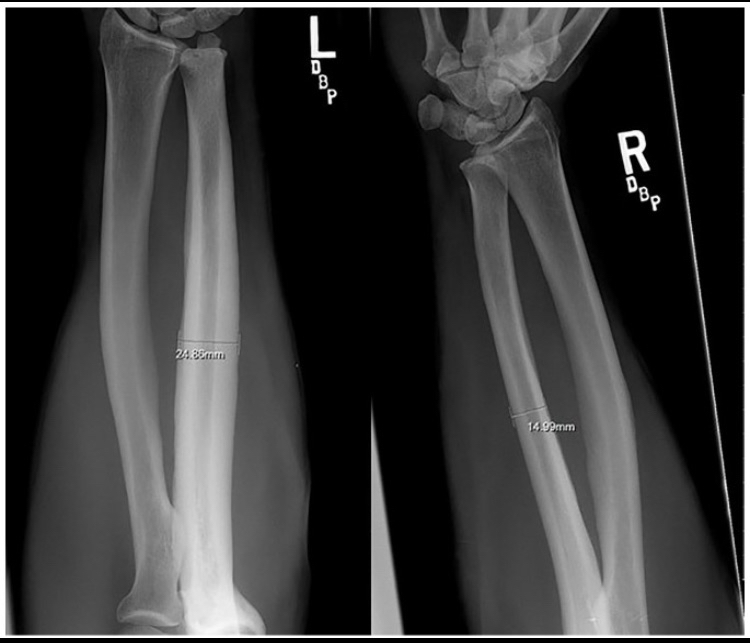
This study examined professional bareback rodeo riders (without a saddle), showing extreme bone hypertrophy in the ulna. The hypertrophy results from direct trauma and impact with the hip bone. For perspective, some individuals had up to a 92% increase in bone diameter and a 268% increase in cross-sectional area, which is extremely unusual. The image in the study shows significant hypertrophy, though not the individual with nearly doubled bone diameter.


If anyone claims this hypertrophy is caused by muscle pull alone, that is incorrect. The main reason is direct trauma to the bone, supported by the following:


  1. Many other sports generate high torsional forces on the bone, but hypertrophy does not exceed 10% compared to rodeo riders, indicating torsion alone cannot explain the extreme growth. Direct trauma plays a key role.
  2. The hypertrophy occurs only in the area where the humerus contacts the hip bone, exactly at the point of contact and impact. This localized growth confirms direct pressure and trauma are the main causes.
  3. Hypertrophy was observed only in riders without a saddle, where the humerus presses directly against the hip. Saddles act as a barrier that reduces direct pressure and trauma, preventing bone growth.
  4. The large variation in hypertrophy between individuals is due to some using protective pads that reduce trauma, while others did not. This shows how protection affects trauma and the extent of hypertrophy.
  5. Significant hypertrophy is seen in bareback riders, but not in saddle riders, further supporting that direct trauma and impact are the main drivers of bone growth.


View attachment 4165512View attachment 4165514[ATTACH type="full"]4165516[/ATTACH][ATTACH type="full"]4165519[/ATTACH]
Study #2


https://reader.z-library.sk/read/bc...4f5ca2d25511e411cd99274aaa2a01e1e75af408e60e1


Honestly, this is personally my favorite study to prove the effectiveness of bone smashing. This study was conducted in 1980 on 60 participants, 37 of whom were professional riders without a saddle. Guess what? As I mentioned before, significant bone hypertrophy occurred only in those who practiced horseback riding without a saddle (I explained the reason before, because this type requires the rider’s ulna to hit and contact the hip). To understand more about this process that happens during the race, here is a direct quote from the study:


“On observing a contestant who is riding, the riding arm is noted to contact the anterior iliac crest and the heavily resined chaps (Fig. 3). The event requires strength, timing, balance, and courage. Ideally, the forearm should be tucked against the pelvis and chaps. Failure to maintain this position, resulting in hammering action of the forearm against pelvis and chaps.”


Oh my God, I can’t believe it, the scientists literally wrote “hammering action”! Who would believe this? Hammering movements on the bone cause severe bone hypertrophy. Wait, what does this remind you of? Yes, exactly the same thing you were trying to prove wrong, which is hammering your face. And luckily, the scientists also mentioned that bone hypertrophy occurred due to periosteal inflammation resulting from trauma to the bone. Yes, literally. You can look at the image below and you will notice severe bone hypertrophy at the place where the ulna hits the hip. Oh my God, all this hypertrophy happens in just an 8-second round!!! Just this very short time is enough to cause extreme bone growth. The answer is yes, lol


View attachment 4165526View attachment 4165527View attachment 4165528View attachment 4165530View attachment 4165531
Study #3


The scientists wanted to study the effect of direct impacts on bone shape in skull bones. They designed a device to deliver a direct impact to the bone. They applied the impact only twice (just two light hits) and measured after two weeks and after ten weeks. After two weeks, there was mild bone hypertrophy, but after ten weeks, there was severe and very clear bone hypertrophy. This shows that the effects on bone hypertrophy continued to increase even after only two impacts. The study also mentioned that bone hypertrophy could occur due to trauma.


View attachment 4165535[ATTACH type="full"]4165536[/ATTACH][ATTACH type="full"]4165537[/ATTACH]

Study #4


The scientists reported that some children had increased thickness in the midshaft of the femur, and they stated that the cause of some of these cases was direct trauma to the bone.

View attachment 4165539


Therefore, this is evidence that direct trauma can cause bone hypertrophy.


Study #5


Once again, the scientists observed hypertrophy of the cortical bone due to direct trauma to the bone.

View attachment 4165540


Study #6


A 15-year-old child experienced direct trauma to his femur (yes, the scientists literally mentioned direct trauma). You can look at the image below, where you will find severe bone hypertrophy at the site of the injury.

View attachment 4165548


Org does now allow me for add more photos after this , so i will share the studies without photos , if u want to see the bone hypertrophy, click in the link
Study #6


A 15-year-old child experienced direct trauma to his femur (yes, the scientists literally mentioned direct trauma). You can look at the image below, where you will find severe bone hypertrophy at the site of the direct trauma

Study #7


A case report on a Lacrosse player (this sport requires direct contact with the opponent to gain possession of the ball). The player reported pain in the area left exposed “between his shoulder and elbow pads”. Because the area was exposed, it was subjected to direct trauma, which caused a subperiosteal hematoma. Then it calcified and became bone (visible on X-ray). Oh my God, this conclusively proves my theory!! I previously explained that direct trauma to the bone causes a hematoma by rupturing the blood vessels between the periosteum and the bone, lifting the periosteum and forming a subperiosteal hematoma, which then forms new bone, exactly like this case, as described literally by the scientists.


So doesn’t this perfectly match what happens in bone smashing???


Study number 8#


On a 17-year-old football player, the ulna bone kept being exposed to direct trauma, scientists reported after a period swelling at the exact site of the injury, and they reported that the cause of this swelling is “repeated micro trauma.” You can look at the study to see the hypertrophy

Proof 9#


A person fell and injured his ankle. Scientists reported very severe bone hypertrophy at the exact site of the injury, and the reason? Subperiosteal hematoma followed by calcification into bone (they mentioned this verbatim). Oh my God, this once again agrees with my statement that direct trauma to the bone causes a subperiosteal hematoma, which then calcifies and becomes bone. Another direct piece of evidence


Proof 10#


A 35-year-old woman experienced a very severe injury to her frontal bone. After a period, X-rays showed very severe bone hypertrophy at the exact site of the injury. You can look at the study and you will see massive bone hypertrophy


Proof 11#


A 30-year-old woman directly hit her finger on a cabinet, and severe bone hypertrophy occurred at the site of the injury. This means the cause of this hypertrophy is direct trauma


Proof 12#


A Muay Thai boxer, her bone was exposed to direct micro trauma. X-rays show periosteal hypertrophy at the site exposed to the impact


Proof 13#


If you know the sport of sumo before, you will notice that participants hit each other directly. As a result, in two cases, bone hypertrophy occurred at the site of impact (as scientists mentioned verbatim due to “repeated micro trauma”). Even with a very high fat mass protecting the bones, some force still reached the bones and caused clear hypertrophy


Proof 14#


I do not know exactly what sport this is, but the athlete repeatedly hits the bone of his foot. You can look at the image below and you will see very severe bone hypertrophy, perhaps even double the bone, especially in the fibulaView attachment 4165594


I’m done. I believe the scientific explanation and the evidence are sufficient to conclusively prove the effectiveness of bone smashing. If you want to debate or think you have a chance to win an argument against me about whether bone smashing is effective or not, you can present your argument no one is stopping you, and I will respond to it. If you start presenting stupid arguments or try to make fun of this post, I will automatically consider you a person with a very low IQ, and I will not debate you
high iq post bhai
 
  • Love it
Reactions: ihatemySOST
Its time to bonesmash boys
 
Impressive. Very nice

Now explain why professional fighters who get smashed with extreme force in the face thousands of times aren't all giga chads
many of them have crazy bone mass
1764792039615
 
  • +1
Reactions: kuroganeikki
w
The never-ending debate in this community has always been: Does bone smashing actually work? Unfortunately, when people try to prove it, they almost always rely on Wolff’s law. All that Wolff’s law states is that trabecular and cortical bone increase in density when exposed to mechanical stress (https://www.ncbi.nlm.nih.gov/books/NBK499863/). It never says anything about bones increasing in size as a result of trauma.


On the other side, those who argue that it doesn’t work usually bring up weak points as well, saying that bone only increases in density, not size, and that bones need controlled, physiological types of stress to adapt, such as chewing, running, or exercising, rather than random hits.


So in the end, whether it’s the people who believe bone smashing works or those who completely dismiss it, both sides usually end up presenting weak arguments.

So thats leave the question: does bone smashing actually work

this post will divide to Tow parts

  1. A scientific explanation of how it works.
  2. Real-life scientific evidence that proves its effectiveness.
So lets stast with the first part : science based explanation
In the beginning, when a bone is struck directly, small blood vessels known as subperiosteal capillaries can rupture. Once these vessels break, blood leaks out and forms what is called a subperiosteal hematoma. This condition causes the periosteum to lift away from the cortical bone, creating an inflammatory space between the cortical bone and the periosteum.


The periosteum itself has an inner layer called the cambium, which is very rich in mesenchymal stem cells (MSCs) and immature osteoblasts. Under normal conditions this layer remains relatively inactive, but it quickly becomes activated when the periosteum is lifted away from the cortex.


This elevation of the periosteum triggers an increase in the expression of Runx2, TGF-β2, and the Wnt/β-catenin signaling pathway. The activation of these pathways rapidly recruits immature osteoblasts to mature into active bone-forming cells, while also driving osteoprogenitor cells to differentiate into new osteoblasts. As a result, the hematoma that formed between the periosteum and the cortex begins to calcify, leading to the formation of a new bony layer.

View attachment 4165471View attachment 4165472View attachment 4165477View attachment 4165478View attachment 4165481View attachment 4165482View attachment 4165484View attachment 4165485View attachment 4165487


Sources:
-https://pmc.ncbi.nlm.nih.gov/articles/PMC11786143/
-
https://sharondewitte.wordpress.com...-and-healed-periosteal-new-bone-formation.pdf


Summary: When a bone receives a direct trauam, the blood vessels rupture, leading to the formation of a subperiosteal hematoma. This lifts the periosteum, and eventually the hematoma calcifies and transforms into new bone


So after reading this, ask yourself: isn’t the swelling and bulge caused by bone smashing the clearest evidence of its effectiveness according to bone biology? Luckily, the answer is: yes.


so now i will move to part 2 :
I will show alot of studies to prove my point, so get ready please.

Study #1


This study examined professional bareback rodeo riders (without a saddle), showing extreme bone hypertrophy in the ulna. The hypertrophy results from direct trauma and impact with the hip bone. For perspective, some individuals had up to a 92% increase in bone diameter and a 268% increase in cross-sectional area, which is extremely unusual. The image in the study shows significant hypertrophy, though not the individual with nearly doubled bone diameter.


If anyone claims this hypertrophy is caused by muscle pull alone, that is incorrect. The main reason is direct trauma to the bone, supported by the following:


  1. Many other sports generate high torsional forces on the bone, but hypertrophy does not exceed 10% compared to rodeo riders, indicating torsion alone cannot explain the extreme growth. Direct trauma plays a key role.
  2. The hypertrophy occurs only in the area where the humerus contacts the hip bone, exactly at the point of contact and impact. This localized growth confirms direct pressure and trauma are the main causes.
  3. Hypertrophy was observed only in riders without a saddle, where the humerus presses directly against the hip. Saddles act as a barrier that reduces direct pressure and trauma, preventing bone growth.
  4. The large variation in hypertrophy between individuals is due to some using protective pads that reduce trauma, while others did not. This shows how protection affects trauma and the extent of hypertrophy.
  5. Significant hypertrophy is seen in bareback riders, but not in saddle riders, further supporting that direct trauma and impact are the main drivers of bone growth.


View attachment 4165512View attachment 4165514[ATTACH type="full"]4165516[/ATTACH][ATTACH type="full"]4165519[/ATTACH]
Study #2


https://reader.z-library.sk/read/bc...4f5ca2d25511e411cd99274aaa2a01e1e75af408e60e1


Honestly, this is personally my favorite study to prove the effectiveness of bone smashing. This study was conducted in 1980 on 60 participants, 37 of whom were professional riders without a saddle. Guess what? As I mentioned before, significant bone hypertrophy occurred only in those who practiced horseback riding without a saddle (I explained the reason before, because this type requires the rider’s ulna to hit and contact the hip). To understand more about this process that happens during the race, here is a direct quote from the study:


“On observing a contestant who is riding, the riding arm is noted to contact the anterior iliac crest and the heavily resined chaps (Fig. 3). The event requires strength, timing, balance, and courage. Ideally, the forearm should be tucked against the pelvis and chaps. Failure to maintain this position, resulting in hammering action of the forearm against pelvis and chaps.”


Oh my God, I can’t believe it, the scientists literally wrote “hammering action”! Who would believe this? Hammering movements on the bone cause severe bone hypertrophy. Wait, what does this remind you of? Yes, exactly the same thing you were trying to prove wrong, which is hammering your face. And luckily, the scientists also mentioned that bone hypertrophy occurred due to periosteal inflammation resulting from trauma to the bone. Yes, literally. You can look at the image below and you will notice severe bone hypertrophy at the place where the ulna hits the hip. Oh my God, all this hypertrophy happens in just an 8-second round!!! Just this very short time is enough to cause extreme bone growth. The answer is yes, lol


View attachment 4165526View attachment 4165527View attachment 4165528View attachment 4165530View attachment 4165531
Study #3


The scientists wanted to study the effect of direct impacts on bone shape in skull bones. They designed a device to deliver a direct impact to the bone. They applied the impact only twice (just two light hits) and measured after two weeks and after ten weeks. After two weeks, there was mild bone hypertrophy, but after ten weeks, there was severe and very clear bone hypertrophy. This shows that the effects on bone hypertrophy continued to increase even after only two impacts. The study also mentioned that bone hypertrophy could occur due to trauma.


View attachment 4165535[ATTACH type="full"]4165536[/ATTACH][ATTACH type="full"]4165537[/ATTACH]

Study #4


The scientists reported that some children had increased thickness in the midshaft of the femur, and they stated that the cause of some of these cases was direct trauma to the bone.

View attachment 4165539


Therefore, this is evidence that direct trauma can cause bone hypertrophy.


Study #5


Once again, the scientists observed hypertrophy of the cortical bone due to direct trauma to the bone.

View attachment 4165540


Study #6


A 15-year-old child experienced direct trauma to his femur (yes, the scientists literally mentioned direct trauma). You can look at the image below, where you will find severe bone hypertrophy at the site of the injury.

View attachment 4165548


Org does now allow me for add more photos after this , so i will share the studies without photos , if u want to see the bone hypertrophy, click in the link
Study #6


A 15-year-old child experienced direct trauma to his femur (yes, the scientists literally mentioned direct trauma). You can look at the image below, where you will find severe bone hypertrophy at the site of the direct trauma

Study #7


A case report on a Lacrosse player (this sport requires direct contact with the opponent to gain possession of the ball). The player reported pain in the area left exposed “between his shoulder and elbow pads”. Because the area was exposed, it was subjected to direct trauma, which caused a subperiosteal hematoma. Then it calcified and became bone (visible on X-ray). Oh my God, this conclusively proves my theory!! I previously explained that direct trauma to the bone causes a hematoma by rupturing the blood vessels between the periosteum and the bone, lifting the periosteum and forming a subperiosteal hematoma, which then forms new bone, exactly like this case, as described literally by the scientists.


So doesn’t this perfectly match what happens in bone smashing???


Study number 8#


On a 17-year-old football player, the ulna bone kept being exposed to direct trauma, scientists reported after a period swelling at the exact site of the injury, and they reported that the cause of this swelling is “repeated micro trauma.” You can look at the study to see the hypertrophy

Proof 9#


A person fell and injured his ankle. Scientists reported very severe bone hypertrophy at the exact site of the injury, and the reason? Subperiosteal hematoma followed by calcification into bone (they mentioned this verbatim). Oh my God, this once again agrees with my statement that direct trauma to the bone causes a subperiosteal hematoma, which then calcifies and becomes bone. Another direct piece of evidence


Proof 10#


A 35-year-old woman experienced a very severe injury to her frontal bone. After a period, X-rays showed very severe bone hypertrophy at the exact site of the injury. You can look at the study and you will see massive bone hypertrophy


Proof 11#


A 30-year-old woman directly hit her finger on a cabinet, and severe bone hypertrophy occurred at the site of the injury. This means the cause of this hypertrophy is direct trauma


Proof 12#


A Muay Thai boxer, her bone was exposed to direct micro trauma. X-rays show periosteal hypertrophy at the site exposed to the impact


Proof 13#


If you know the sport of sumo before, you will notice that participants hit each other directly. As a result, in two cases, bone hypertrophy occurred at the site of impact (as scientists mentioned verbatim due to “repeated micro trauma”). Even with a very high fat mass protecting the bones, some force still reached the bones and caused clear hypertrophy


Proof 14#


I do not know exactly what sport this is, but the athlete repeatedly hits the bone of his foot. You can look at the image below and you will see very severe bone hypertrophy, perhaps even double the bone, especially in the fibulaView attachment 4165594


I’m done. I believe the scientific explanation and the evidence are sufficient to conclusively prove the effectiveness of bone smashing. If you want to debate or think you have a chance to win an argument against me about whether bone smashing is effective or not, you can present your argument no one is stopping you, and I will respond to it. If you start presenting stupid arguments or try to make fun of this post, I will automatically consider you a person with a very low IQ, and I will not debate you
what would you say the optimal bonesmashing protocol is?
 
For my hands from punching a boxing bag and gardening ive seen mild remodelling on my hands. How long did it take for ur face from looking at studies on boxers it tends to show over 3 years they get around 10% thickening on certain areas.
Wdym remodeling what were the changes?
 
The never-ending debate in this community has always been: Does bone smashing actually work? Unfortunately, when people try to prove it, they almost always rely on Wolff’s law. All that Wolff’s law states is that trabecular and cortical bone increase in density when exposed to mechanical stress (https://www.ncbi.nlm.nih.gov/books/NBK499863/). It never says anything about bones increasing in size as a result of trauma.


On the other side, those who argue that it doesn’t work usually bring up weak points as well, saying that bone only increases in density, not size, and that bones need controlled, physiological types of stress to adapt, such as chewing, running, or exercising, rather than random hits.


So in the end, whether it’s the people who believe bone smashing works or those who completely dismiss it, both sides usually end up presenting weak arguments.

So thats leave the question: does bone smashing actually work

this post will divide to Tow parts

  1. A scientific explanation of how it works.
  2. Real-life scientific evidence that proves its effectiveness.
So lets stast with the first part : science based explanation
In the beginning, when a bone is struck directly, small blood vessels known as subperiosteal capillaries can rupture. Once these vessels break, blood leaks out and forms what is called a subperiosteal hematoma. This condition causes the periosteum to lift away from the cortical bone, creating an inflammatory space between the cortical bone and the periosteum.


The periosteum itself has an inner layer called the cambium, which is very rich in mesenchymal stem cells (MSCs) and immature osteoblasts. Under normal conditions this layer remains relatively inactive, but it quickly becomes activated when the periosteum is lifted away from the cortex.


This elevation of the periosteum triggers an increase in the expression of Runx2, TGF-β2, and the Wnt/β-catenin signaling pathway. The activation of these pathways rapidly recruits immature osteoblasts to mature into active bone-forming cells, while also driving osteoprogenitor cells to differentiate into new osteoblasts. As a result, the hematoma that formed between the periosteum and the cortex begins to calcify, leading to the formation of a new bony layer.

View attachment 4165471View attachment 4165472View attachment 4165477View attachment 4165478View attachment 4165481View attachment 4165482View attachment 4165484View attachment 4165485View attachment 4165487


Sources:
-https://pmc.ncbi.nlm.nih.gov/articles/PMC11786143/
-
https://sharondewitte.wordpress.com...-and-healed-periosteal-new-bone-formation.pdf


Summary: When a bone receives a direct trauam, the blood vessels rupture, leading to the formation of a subperiosteal hematoma. This lifts the periosteum, and eventually the hematoma calcifies and transforms into new bone


So after reading this, ask yourself: isn’t the swelling and bulge caused by bone smashing the clearest evidence of its effectiveness according to bone biology? Luckily, the answer is: yes.


so now i will move to part 2 :
I will show alot of studies to prove my point, so get ready please.

Study #1


This study examined professional bareback rodeo riders (without a saddle), showing extreme bone hypertrophy in the ulna. The hypertrophy results from direct trauma and impact with the hip bone. For perspective, some individuals had up to a 92% increase in bone diameter and a 268% increase in cross-sectional area, which is extremely unusual. The image in the study shows significant hypertrophy, though not the individual with nearly doubled bone diameter.


If anyone claims this hypertrophy is caused by muscle pull alone, that is incorrect. The main reason is direct trauma to the bone, supported by the following:


  1. Many other sports generate high torsional forces on the bone, but hypertrophy does not exceed 10% compared to rodeo riders, indicating torsion alone cannot explain the extreme growth. Direct trauma plays a key role.
  2. The hypertrophy occurs only in the area where the humerus contacts the hip bone, exactly at the point of contact and impact. This localized growth confirms direct pressure and trauma are the main causes.
  3. Hypertrophy was observed only in riders without a saddle, where the humerus presses directly against the hip. Saddles act as a barrier that reduces direct pressure and trauma, preventing bone growth.
  4. The large variation in hypertrophy between individuals is due to some using protective pads that reduce trauma, while others did not. This shows how protection affects trauma and the extent of hypertrophy.
  5. Significant hypertrophy is seen in bareback riders, but not in saddle riders, further supporting that direct trauma and impact are the main drivers of bone growth.


View attachment 4165512View attachment 4165514[ATTACH type="full"]4165516[/ATTACH][ATTACH type="full"]4165519[/ATTACH]
Study #2


https://reader.z-library.sk/read/bc...4f5ca2d25511e411cd99274aaa2a01e1e75af408e60e1


Honestly, this is personally my favorite study to prove the effectiveness of bone smashing. This study was conducted in 1980 on 60 participants, 37 of whom were professional riders without a saddle. Guess what? As I mentioned before, significant bone hypertrophy occurred only in those who practiced horseback riding without a saddle (I explained the reason before, because this type requires the rider’s ulna to hit and contact the hip). To understand more about this process that happens during the race, here is a direct quote from the study:


“On observing a contestant who is riding, the riding arm is noted to contact the anterior iliac crest and the heavily resined chaps (Fig. 3). The event requires strength, timing, balance, and courage. Ideally, the forearm should be tucked against the pelvis and chaps. Failure to maintain this position, resulting in hammering action of the forearm against pelvis and chaps.”


Oh my God, I can’t believe it, the scientists literally wrote “hammering action”! Who would believe this? Hammering movements on the bone cause severe bone hypertrophy. Wait, what does this remind you of? Yes, exactly the same thing you were trying to prove wrong, which is hammering your face. And luckily, the scientists also mentioned that bone hypertrophy occurred due to periosteal inflammation resulting from trauma to the bone. Yes, literally. You can look at the image below and you will notice severe bone hypertrophy at the place where the ulna hits the hip. Oh my God, all this hypertrophy happens in just an 8-second round!!! Just this very short time is enough to cause extreme bone growth. The answer is yes, lol


View attachment 4165526View attachment 4165527View attachment 4165528View attachment 4165530View attachment 4165531
Study #3


The scientists wanted to study the effect of direct impacts on bone shape in skull bones. They designed a device to deliver a direct impact to the bone. They applied the impact only twice (just two light hits) and measured after two weeks and after ten weeks. After two weeks, there was mild bone hypertrophy, but after ten weeks, there was severe and very clear bone hypertrophy. This shows that the effects on bone hypertrophy continued to increase even after only two impacts. The study also mentioned that bone hypertrophy could occur due to trauma.


View attachment 4165535[ATTACH type="full"]4165536[/ATTACH][ATTACH type="full"]4165537[/ATTACH]

Study #4


The scientists reported that some children had increased thickness in the midshaft of the femur, and they stated that the cause of some of these cases was direct trauma to the bone.

View attachment 4165539


Therefore, this is evidence that direct trauma can cause bone hypertrophy.


Study #5


Once again, the scientists observed hypertrophy of the cortical bone due to direct trauma to the bone.

View attachment 4165540


Study #6


A 15-year-old child experienced direct trauma to his femur (yes, the scientists literally mentioned direct trauma). You can look at the image below, where you will find severe bone hypertrophy at the site of the injury.

View attachment 4165548


Org does now allow me for add more photos after this , so i will share the studies without photos , if u want to see the bone hypertrophy, click in the link
Study #6


A 15-year-old child experienced direct trauma to his femur (yes, the scientists literally mentioned direct trauma). You can look at the image below, where you will find severe bone hypertrophy at the site of the direct trauma

Study #7


A case report on a Lacrosse player (this sport requires direct contact with the opponent to gain possession of the ball). The player reported pain in the area left exposed “between his shoulder and elbow pads”. Because the area was exposed, it was subjected to direct trauma, which caused a subperiosteal hematoma. Then it calcified and became bone (visible on X-ray). Oh my God, this conclusively proves my theory!! I previously explained that direct trauma to the bone causes a hematoma by rupturing the blood vessels between the periosteum and the bone, lifting the periosteum and forming a subperiosteal hematoma, which then forms new bone, exactly like this case, as described literally by the scientists.


So doesn’t this perfectly match what happens in bone smashing???


Study number 8#


On a 17-year-old football player, the ulna bone kept being exposed to direct trauma, scientists reported after a period swelling at the exact site of the injury, and they reported that the cause of this swelling is “repeated micro trauma.” You can look at the study to see the hypertrophy

Proof 9#


A person fell and injured his ankle. Scientists reported very severe bone hypertrophy at the exact site of the injury, and the reason? Subperiosteal hematoma followed by calcification into bone (they mentioned this verbatim). Oh my God, this once again agrees with my statement that direct trauma to the bone causes a subperiosteal hematoma, which then calcifies and becomes bone. Another direct piece of evidence


Proof 10#


A 35-year-old woman experienced a very severe injury to her frontal bone. After a period, X-rays showed very severe bone hypertrophy at the exact site of the injury. You can look at the study and you will see massive bone hypertrophy


Proof 11#


A 30-year-old woman directly hit her finger on a cabinet, and severe bone hypertrophy occurred at the site of the injury. This means the cause of this hypertrophy is direct trauma


Proof 12#


A Muay Thai boxer, her bone was exposed to direct micro trauma. X-rays show periosteal hypertrophy at the site exposed to the impact


Proof 13#


If you know the sport of sumo before, you will notice that participants hit each other directly. As a result, in two cases, bone hypertrophy occurred at the site of impact (as scientists mentioned verbatim due to “repeated micro trauma”). Even with a very high fat mass protecting the bones, some force still reached the bones and caused clear hypertrophy


Proof 14#


I do not know exactly what sport this is, but the athlete repeatedly hits the bone of his foot. You can look at the image below and you will see very severe bone hypertrophy, perhaps even double the bone, especially in the fibulaView attachment 4165594


I’m done. I believe the scientific explanation and the evidence are sufficient to conclusively prove the effectiveness of bone smashing. If you want to debate or think you have a chance to win an argument against me about whether bone smashing is effective or not, you can present your argument no one is stopping you, and I will respond to it. If you start presenting stupid arguments or try to make fun of this post, I will automatically consider you a person with a very low IQ, and I will not debate you
so does it work or no
 
The never-ending debate in this community has always been: Does bone smashing actually work? Unfortunately, when people try to prove it, they almost always rely on Wolff’s law. All that Wolff’s law states is that trabecular and cortical bone increase in density when exposed to mechanical stress (https://www.ncbi.nlm.nih.gov/books/NBK499863/). It never says anything about bones increasing in size as a result of trauma.


On the other side, those who argue that it doesn’t work usually bring up weak points as well, saying that bone only increases in density, not size, and that bones need controlled, physiological types of stress to adapt, such as chewing, running, or exercising, rather than random hits.


So in the end, whether it’s the people who believe bone smashing works or those who completely dismiss it, both sides usually end up presenting weak arguments.

So thats leave the question: does bone smashing actually work

this post will divide to Tow parts

  1. A scientific explanation of how it works.
  2. Real-life scientific evidence that proves its effectiveness.
So lets stast with the first part : science based explanation
In the beginning, when a bone is struck directly, small blood vessels known as subperiosteal capillaries can rupture. Once these vessels break, blood leaks out and forms what is called a subperiosteal hematoma. This condition causes the periosteum to lift away from the cortical bone, creating an inflammatory space between the cortical bone and the periosteum.


The periosteum itself has an inner layer called the cambium, which is very rich in mesenchymal stem cells (MSCs) and immature osteoblasts. Under normal conditions this layer remains relatively inactive, but it quickly becomes activated when the periosteum is lifted away from the cortex.


This elevation of the periosteum triggers an increase in the expression of Runx2, TGF-β2, and the Wnt/β-catenin signaling pathway. The activation of these pathways rapidly recruits immature osteoblasts to mature into active bone-forming cells, while also driving osteoprogenitor cells to differentiate into new osteoblasts. As a result, the hematoma that formed between the periosteum and the cortex begins to calcify, leading to the formation of a new bony layer.

View attachment 4165471View attachment 4165472View attachment 4165477View attachment 4165478View attachment 4165481View attachment 4165482View attachment 4165484View attachment 4165485View attachment 4165487


Sources:
-https://pmc.ncbi.nlm.nih.gov/articles/PMC11786143/
-
https://sharondewitte.wordpress.com...-and-healed-periosteal-new-bone-formation.pdf


Summary: When a bone receives a direct trauam, the blood vessels rupture, leading to the formation of a subperiosteal hematoma. This lifts the periosteum, and eventually the hematoma calcifies and transforms into new bone


So after reading this, ask yourself: isn’t the swelling and bulge caused by bone smashing the clearest evidence of its effectiveness according to bone biology? Luckily, the answer is: yes.


so now i will move to part 2 :
I will show alot of studies to prove my point, so get ready please.

Study #1


This study examined professional bareback rodeo riders (without a saddle), showing extreme bone hypertrophy in the ulna. The hypertrophy results from direct trauma and impact with the hip bone. For perspective, some individuals had up to a 92% increase in bone diameter and a 268% increase in cross-sectional area, which is extremely unusual. The image in the study shows significant hypertrophy, though not the individual with nearly doubled bone diameter.


If anyone claims this hypertrophy is caused by muscle pull alone, that is incorrect. The main reason is direct trauma to the bone, supported by the following:


  1. Many other sports generate high torsional forces on the bone, but hypertrophy does not exceed 10% compared to rodeo riders, indicating torsion alone cannot explain the extreme growth. Direct trauma plays a key role.
  2. The hypertrophy occurs only in the area where the humerus contacts the hip bone, exactly at the point of contact and impact. This localized growth confirms direct pressure and trauma are the main causes.
  3. Hypertrophy was observed only in riders without a saddle, where the humerus presses directly against the hip. Saddles act as a barrier that reduces direct pressure and trauma, preventing bone growth.
  4. The large variation in hypertrophy between individuals is due to some using protective pads that reduce trauma, while others did not. This shows how protection affects trauma and the extent of hypertrophy.
  5. Significant hypertrophy is seen in bareback riders, but not in saddle riders, further supporting that direct trauma and impact are the main drivers of bone growth.


View attachment 4165512View attachment 4165514[ATTACH type="full"]4165516[/ATTACH][ATTACH type="full"]4165519[/ATTACH]
Study #2


https://reader.z-library.sk/read/bc...4f5ca2d25511e411cd99274aaa2a01e1e75af408e60e1


Honestly, this is personally my favorite study to prove the effectiveness of bone smashing. This study was conducted in 1980 on 60 participants, 37 of whom were professional riders without a saddle. Guess what? As I mentioned before, significant bone hypertrophy occurred only in those who practiced horseback riding without a saddle (I explained the reason before, because this type requires the rider’s ulna to hit and contact the hip). To understand more about this process that happens during the race, here is a direct quote from the study:


“On observing a contestant who is riding, the riding arm is noted to contact the anterior iliac crest and the heavily resined chaps (Fig. 3). The event requires strength, timing, balance, and courage. Ideally, the forearm should be tucked against the pelvis and chaps. Failure to maintain this position, resulting in hammering action of the forearm against pelvis and chaps.”


Oh my God, I can’t believe it, the scientists literally wrote “hammering action”! Who would believe this? Hammering movements on the bone cause severe bone hypertrophy. Wait, what does this remind you of? Yes, exactly the same thing you were trying to prove wrong, which is hammering your face. And luckily, the scientists also mentioned that bone hypertrophy occurred due to periosteal inflammation resulting from trauma to the bone. Yes, literally. You can look at the image below and you will notice severe bone hypertrophy at the place where the ulna hits the hip. Oh my God, all this hypertrophy happens in just an 8-second round!!! Just this very short time is enough to cause extreme bone growth. The answer is yes, lol


View attachment 4165526View attachment 4165527View attachment 4165528View attachment 4165530View attachment 4165531
Study #3


The scientists wanted to study the effect of direct impacts on bone shape in skull bones. They designed a device to deliver a direct impact to the bone. They applied the impact only twice (just two light hits) and measured after two weeks and after ten weeks. After two weeks, there was mild bone hypertrophy, but after ten weeks, there was severe and very clear bone hypertrophy. This shows that the effects on bone hypertrophy continued to increase even after only two impacts. The study also mentioned that bone hypertrophy could occur due to trauma.


View attachment 4165535[ATTACH type="full"]4165536[/ATTACH][ATTACH type="full"]4165537[/ATTACH]

Study #4


The scientists reported that some children had increased thickness in the midshaft of the femur, and they stated that the cause of some of these cases was direct trauma to the bone.

View attachment 4165539


Therefore, this is evidence that direct trauma can cause bone hypertrophy.


Study #5


Once again, the scientists observed hypertrophy of the cortical bone due to direct trauma to the bone.

View attachment 4165540


Study #6


A 15-year-old child experienced direct trauma to his femur (yes, the scientists literally mentioned direct trauma). You can look at the image below, where you will find severe bone hypertrophy at the site of the injury.

View attachment 4165548


Org does now allow me for add more photos after this , so i will share the studies without photos , if u want to see the bone hypertrophy, click in the link
Study #6


A 15-year-old child experienced direct trauma to his femur (yes, the scientists literally mentioned direct trauma). You can look at the image below, where you will find severe bone hypertrophy at the site of the direct trauma

Study #7


A case report on a Lacrosse player (this sport requires direct contact with the opponent to gain possession of the ball). The player reported pain in the area left exposed “between his shoulder and elbow pads”. Because the area was exposed, it was subjected to direct trauma, which caused a subperiosteal hematoma. Then it calcified and became bone (visible on X-ray). Oh my God, this conclusively proves my theory!! I previously explained that direct trauma to the bone causes a hematoma by rupturing the blood vessels between the periosteum and the bone, lifting the periosteum and forming a subperiosteal hematoma, which then forms new bone, exactly like this case, as described literally by the scientists.


So doesn’t this perfectly match what happens in bone smashing???


Study number 8#


On a 17-year-old football player, the ulna bone kept being exposed to direct trauma, scientists reported after a period swelling at the exact site of the injury, and they reported that the cause of this swelling is “repeated micro trauma.” You can look at the study to see the hypertrophy

Proof 9#


A person fell and injured his ankle. Scientists reported very severe bone hypertrophy at the exact site of the injury, and the reason? Subperiosteal hematoma followed by calcification into bone (they mentioned this verbatim). Oh my God, this once again agrees with my statement that direct trauma to the bone causes a subperiosteal hematoma, which then calcifies and becomes bone. Another direct piece of evidence


Proof 10#


A 35-year-old woman experienced a very severe injury to her frontal bone. After a period, X-rays showed very severe bone hypertrophy at the exact site of the injury. You can look at the study and you will see massive bone hypertrophy


Proof 11#


A 30-year-old woman directly hit her finger on a cabinet, and severe bone hypertrophy occurred at the site of the injury. This means the cause of this hypertrophy is direct trauma


Proof 12#


A Muay Thai boxer, her bone was exposed to direct micro trauma. X-rays show periosteal hypertrophy at the site exposed to the impact


Proof 13#


If you know the sport of sumo before, you will notice that participants hit each other directly. As a result, in two cases, bone hypertrophy occurred at the site of impact (as scientists mentioned verbatim due to “repeated micro trauma”). Even with a very high fat mass protecting the bones, some force still reached the bones and caused clear hypertrophy


Proof 14#


I do not know exactly what sport this is, but the athlete repeatedly hits the bone of his foot. You can look at the image below and you will see very severe bone hypertrophy, perhaps even double the bone, especially in the fibulaView attachment 4165594


I’m done. I believe the scientific explanation and the evidence are sufficient to conclusively prove the effectiveness of bone smashing. If you want to debate or think you have a chance to win an argument against me about whether bone smashing is effective or not, you can present your argument no one is stopping you, and I will respond to it. If you start presenting stupid arguments or try to make fun of this post, I will automatically consider you a person with a very low IQ, and I will not debate you
mirin but why do you sound like you are about to cum, panicking mid thread
 
  • +1
Reactions: kuroganeikki and jeoyw9192
In the last 3.5 years I did around 150 sessions of 5 minutes of bone smashing on my brow ridge, and I don't see any difference. I do it before a date/clubbing because the swelling makes the glabella looks bigger, but the effect finishes in 5-6 hours.
 
The never-ending debate in this community has always been: Does bone smashing actually work? Unfortunately, when people try to prove it, they almost always rely on Wolff’s law. All that Wolff’s law states is that trabecular and cortical bone increase in density when exposed to mechanical stress (https://www.ncbi.nlm.nih.gov/books/NBK499863/). It never says anything about bones increasing in size as a result of trauma.


On the other side, those who argue that it doesn’t work usually bring up weak points as well, saying that bone only increases in density, not size, and that bones need controlled, physiological types of stress to adapt, such as chewing, running, or exercising, rather than random hits.


So in the end, whether it’s the people who believe bone smashing works or those who completely dismiss it, both sides usually end up presenting weak arguments.

So thats leave the question: does bone smashing actually work

this post will divide to Tow parts

  1. A scientific explanation of how it works.
  2. Real-life scientific evidence that proves its effectiveness.
So lets stast with the first part : science based explanation
In the beginning, when a bone is struck directly, small blood vessels known as subperiosteal capillaries can rupture. Once these vessels break, blood leaks out and forms what is called a subperiosteal hematoma. This condition causes the periosteum to lift away from the cortical bone, creating an inflammatory space between the cortical bone and the periosteum.


The periosteum itself has an inner layer called the cambium, which is very rich in mesenchymal stem cells (MSCs) and immature osteoblasts. Under normal conditions this layer remains relatively inactive, but it quickly becomes activated when the periosteum is lifted away from the cortex.


This elevation of the periosteum triggers an increase in the expression of Runx2, TGF-β2, and the Wnt/β-catenin signaling pathway. The activation of these pathways rapidly recruits immature osteoblasts to mature into active bone-forming cells, while also driving osteoprogenitor cells to differentiate into new osteoblasts. As a result, the hematoma that formed between the periosteum and the cortex begins to calcify, leading to the formation of a new bony layer.

View attachment 4165471View attachment 4165472View attachment 4165477View attachment 4165478View attachment 4165481View attachment 4165482View attachment 4165484View attachment 4165485View attachment 4165487


Sources:
-https://pmc.ncbi.nlm.nih.gov/articles/PMC11786143/
-
https://sharondewitte.wordpress.com...-and-healed-periosteal-new-bone-formation.pdf


Summary: When a bone receives a direct trauam, the blood vessels rupture, leading to the formation of a subperiosteal hematoma. This lifts the periosteum, and eventually the hematoma calcifies and transforms into new bone


So after reading this, ask yourself: isn’t the swelling and bulge caused by bone smashing the clearest evidence of its effectiveness according to bone biology? Luckily, the answer is: yes.


so now i will move to part 2 :
I will show alot of studies to prove my point, so get ready please.

Study #1


This study examined professional bareback rodeo riders (without a saddle), showing extreme bone hypertrophy in the ulna. The hypertrophy results from direct trauma and impact with the hip bone. For perspective, some individuals had up to a 92% increase in bone diameter and a 268% increase in cross-sectional area, which is extremely unusual. The image in the study shows significant hypertrophy, though not the individual with nearly doubled bone diameter.


If anyone claims this hypertrophy is caused by muscle pull alone, that is incorrect. The main reason is direct trauma to the bone, supported by the following:


  1. Many other sports generate high torsional forces on the bone, but hypertrophy does not exceed 10% compared to rodeo riders, indicating torsion alone cannot explain the extreme growth. Direct trauma plays a key role.
  2. The hypertrophy occurs only in the area where the humerus contacts the hip bone, exactly at the point of contact and impact. This localized growth confirms direct pressure and trauma are the main causes.
  3. Hypertrophy was observed only in riders without a saddle, where the humerus presses directly against the hip. Saddles act as a barrier that reduces direct pressure and trauma, preventing bone growth.
  4. The large variation in hypertrophy between individuals is due to some using protective pads that reduce trauma, while others did not. This shows how protection affects trauma and the extent of hypertrophy.
  5. Significant hypertrophy is seen in bareback riders, but not in saddle riders, further supporting that direct trauma and impact are the main drivers of bone growth.


View attachment 4165512View attachment 4165514[ATTACH type="full"]4165516[/ATTACH][ATTACH type="full"]4165519[/ATTACH]
Study #2


https://reader.z-library.sk/read/bc...4f5ca2d25511e411cd99274aaa2a01e1e75af408e60e1


Honestly, this is personally my favorite study to prove the effectiveness of bone smashing. This study was conducted in 1980 on 60 participants, 37 of whom were professional riders without a saddle. Guess what? As I mentioned before, significant bone hypertrophy occurred only in those who practiced horseback riding without a saddle (I explained the reason before, because this type requires the rider’s ulna to hit and contact the hip). To understand more about this process that happens during the race, here is a direct quote from the study:


“On observing a contestant who is riding, the riding arm is noted to contact the anterior iliac crest and the heavily resined chaps (Fig. 3). The event requires strength, timing, balance, and courage. Ideally, the forearm should be tucked against the pelvis and chaps. Failure to maintain this position, resulting in hammering action of the forearm against pelvis and chaps.”


Oh my God, I can’t believe it, the scientists literally wrote “hammering action”! Who would believe this? Hammering movements on the bone cause severe bone hypertrophy. Wait, what does this remind you of? Yes, exactly the same thing you were trying to prove wrong, which is hammering your face. And luckily, the scientists also mentioned that bone hypertrophy occurred due to periosteal inflammation resulting from trauma to the bone. Yes, literally. You can look at the image below and you will notice severe bone hypertrophy at the place where the ulna hits the hip. Oh my God, all this hypertrophy happens in just an 8-second round!!! Just this very short time is enough to cause extreme bone growth. The answer is yes, lol


View attachment 4165526View attachment 4165527View attachment 4165528View attachment 4165530View attachment 4165531
Study #3


The scientists wanted to study the effect of direct impacts on bone shape in skull bones. They designed a device to deliver a direct impact to the bone. They applied the impact only twice (just two light hits) and measured after two weeks and after ten weeks. After two weeks, there was mild bone hypertrophy, but after ten weeks, there was severe and very clear bone hypertrophy. This shows that the effects on bone hypertrophy continued to increase even after only two impacts. The study also mentioned that bone hypertrophy could occur due to trauma.


View attachment 4165535[ATTACH type="full"]4165536[/ATTACH][ATTACH type="full"]4165537[/ATTACH]

Study #4


The scientists reported that some children had increased thickness in the midshaft of the femur, and they stated that the cause of some of these cases was direct trauma to the bone.

View attachment 4165539


Therefore, this is evidence that direct trauma can cause bone hypertrophy.


Study #5


Once again, the scientists observed hypertrophy of the cortical bone due to direct trauma to the bone.

View attachment 4165540


Study #6


A 15-year-old child experienced direct trauma to his femur (yes, the scientists literally mentioned direct trauma). You can look at the image below, where you will find severe bone hypertrophy at the site of the injury.

View attachment 4165548


Org does now allow me for add more photos after this , so i will share the studies without photos , if u want to see the bone hypertrophy, click in the link
Study #6


A 15-year-old child experienced direct trauma to his femur (yes, the scientists literally mentioned direct trauma). You can look at the image below, where you will find severe bone hypertrophy at the site of the direct trauma

Study #7


A case report on a Lacrosse player (this sport requires direct contact with the opponent to gain possession of the ball). The player reported pain in the area left exposed “between his shoulder and elbow pads”. Because the area was exposed, it was subjected to direct trauma, which caused a subperiosteal hematoma. Then it calcified and became bone (visible on X-ray). Oh my God, this conclusively proves my theory!! I previously explained that direct trauma to the bone causes a hematoma by rupturing the blood vessels between the periosteum and the bone, lifting the periosteum and forming a subperiosteal hematoma, which then forms new bone, exactly like this case, as described literally by the scientists.


So doesn’t this perfectly match what happens in bone smashing???


Study number 8#


On a 17-year-old football player, the ulna bone kept being exposed to direct trauma, scientists reported after a period swelling at the exact site of the injury, and they reported that the cause of this swelling is “repeated micro trauma.” You can look at the study to see the hypertrophy

Proof 9#


A person fell and injured his ankle. Scientists reported very severe bone hypertrophy at the exact site of the injury, and the reason? Subperiosteal hematoma followed by calcification into bone (they mentioned this verbatim). Oh my God, this once again agrees with my statement that direct trauma to the bone causes a subperiosteal hematoma, which then calcifies and becomes bone. Another direct piece of evidence


Proof 10#


A 35-year-old woman experienced a very severe injury to her frontal bone. After a period, X-rays showed very severe bone hypertrophy at the exact site of the injury. You can look at the study and you will see massive bone hypertrophy


Proof 11#


A 30-year-old woman directly hit her finger on a cabinet, and severe bone hypertrophy occurred at the site of the injury. This means the cause of this hypertrophy is direct trauma


Proof 12#


A Muay Thai boxer, her bone was exposed to direct micro trauma. X-rays show periosteal hypertrophy at the site exposed to the impact


Proof 13#


If you know the sport of sumo before, you will notice that participants hit each other directly. As a result, in two cases, bone hypertrophy occurred at the site of impact (as scientists mentioned verbatim due to “repeated micro trauma”). Even with a very high fat mass protecting the bones, some force still reached the bones and caused clear hypertrophy


Proof 14#


I do not know exactly what sport this is, but the athlete repeatedly hits the bone of his foot. You can look at the image below and you will see very severe bone hypertrophy, perhaps even double the bone, especially in the fibulaView attachment 4165594


I’m done. I believe the scientific explanation and the evidence are sufficient to conclusively prove the effectiveness of bone smashing. If you want to debate or think you have a chance to win an argument against me about whether bone smashing is effective or not, you can present your argument no one is stopping you, and I will respond to it. If you start presenting stupid arguments or try to make fun of this post, I will automatically consider you a person with a very low IQ, and I will not debate you
high iq post
 
In the last 3.5 years I did around 150 sessions of 5 minutes of bone smashing on my brow ridge, and I don't see any difference. I do it before a date/clubbing because the swelling makes the glabella looks bigger, but the effect finishes in 5-6 hours.
I started doing it in 2024, well im 15 im in puberty so thats why but I usually do it for like 10-20 minutes right before bed and the next day the "swelling" remains more and the effect lasts longer. It only depends how much you do it
 
but calcification can be uneven and cause assymetry
your already assymetrical are you not? over time it’ll likely even out somewhat, as calcification may occur more greatly from one time period to another on one side, but later it may do the opposite.
 
  • +1
Reactions: unstable
The never-ending debate in this community has always been: Does bone smashing actually work? Unfortunately, when people try to prove it, they almost always rely on Wolff’s law. All that Wolff’s law states is that trabecular and cortical bone increase in density when exposed to mechanical stress (https://www.ncbi.nlm.nih.gov/books/NBK499863/). It never says anything about bones increasing in size as a result of trauma.


On the other side, those who argue that it doesn’t work usually bring up weak points as well, saying that bone only increases in density, not size, and that bones need controlled, physiological types of stress to adapt, such as chewing, running, or exercising, rather than random hits.


So in the end, whether it’s the people who believe bone smashing works or those who completely dismiss it, both sides usually end up presenting weak arguments.

So thats leave the question: does bone smashing actually work

this post will divide to Tow parts

  1. A scientific explanation of how it works.
  2. Real-life scientific evidence that proves its effectiveness.
So lets stast with the first part : science based explanation
In the beginning, when a bone is struck directly, small blood vessels known as subperiosteal capillaries can rupture. Once these vessels break, blood leaks out and forms what is called a subperiosteal hematoma. This condition causes the periosteum to lift away from the cortical bone, creating an inflammatory space between the cortical bone and the periosteum.


The periosteum itself has an inner layer called the cambium, which is very rich in mesenchymal stem cells (MSCs) and immature osteoblasts. Under normal conditions this layer remains relatively inactive, but it quickly becomes activated when the periosteum is lifted away from the cortex.


This elevation of the periosteum triggers an increase in the expression of Runx2, TGF-β2, and the Wnt/β-catenin signaling pathway. The activation of these pathways rapidly recruits immature osteoblasts to mature into active bone-forming cells, while also driving osteoprogenitor cells to differentiate into new osteoblasts. As a result, the hematoma that formed between the periosteum and the cortex begins to calcify, leading to the formation of a new bony layer.

View attachment 4165471View attachment 4165472View attachment 4165477View attachment 4165478View attachment 4165481View attachment 4165482View attachment 4165484View attachment 4165485View attachment 4165487


Sources:
-https://pmc.ncbi.nlm.nih.gov/articles/PMC11786143/
-
https://sharondewitte.wordpress.com...-and-healed-periosteal-new-bone-formation.pdf


Summary: When a bone receives a direct trauam, the blood vessels rupture, leading to the formation of a subperiosteal hematoma. This lifts the periosteum, and eventually the hematoma calcifies and transforms into new bone


So after reading this, ask yourself: isn’t the swelling and bulge caused by bone smashing the clearest evidence of its effectiveness according to bone biology? Luckily, the answer is: yes.


so now i will move to part 2 :
I will show alot of studies to prove my point, so get ready please.

Study #1


This study examined professional bareback rodeo riders (without a saddle), showing extreme bone hypertrophy in the ulna. The hypertrophy results from direct trauma and impact with the hip bone. For perspective, some individuals had up to a 92% increase in bone diameter and a 268% increase in cross-sectional area, which is extremely unusual. The image in the study shows significant hypertrophy, though not the individual with nearly doubled bone diameter.


If anyone claims this hypertrophy is caused by muscle pull alone, that is incorrect. The main reason is direct trauma to the bone, supported by the following:


  1. Many other sports generate high torsional forces on the bone, but hypertrophy does not exceed 10% compared to rodeo riders, indicating torsion alone cannot explain the extreme growth. Direct trauma plays a key role.
  2. The hypertrophy occurs only in the area where the humerus contacts the hip bone, exactly at the point of contact and impact. This localized growth confirms direct pressure and trauma are the main causes.
  3. Hypertrophy was observed only in riders without a saddle, where the humerus presses directly against the hip. Saddles act as a barrier that reduces direct pressure and trauma, preventing bone growth.
  4. The large variation in hypertrophy between individuals is due to some using protective pads that reduce trauma, while others did not. This shows how protection affects trauma and the extent of hypertrophy.
  5. Significant hypertrophy is seen in bareback riders, but not in saddle riders, further supporting that direct trauma and impact are the main drivers of bone growth.


View attachment 4165512View attachment 4165514[ATTACH type="full"]4165516[/ATTACH][ATTACH type="full"]4165519[/ATTACH]
Study #2


https://reader.z-library.sk/read/bc...4f5ca2d25511e411cd99274aaa2a01e1e75af408e60e1


Honestly, this is personally my favorite study to prove the effectiveness of bone smashing. This study was conducted in 1980 on 60 participants, 37 of whom were professional riders without a saddle. Guess what? As I mentioned before, significant bone hypertrophy occurred only in those who practiced horseback riding without a saddle (I explained the reason before, because this type requires the rider’s ulna to hit and contact the hip). To understand more about this process that happens during the race, here is a direct quote from the study:


“On observing a contestant who is riding, the riding arm is noted to contact the anterior iliac crest and the heavily resined chaps (Fig. 3). The event requires strength, timing, balance, and courage. Ideally, the forearm should be tucked against the pelvis and chaps. Failure to maintain this position, resulting in hammering action of the forearm against pelvis and chaps.”


Oh my God, I can’t believe it, the scientists literally wrote “hammering action”! Who would believe this? Hammering movements on the bone cause severe bone hypertrophy. Wait, what does this remind you of? Yes, exactly the same thing you were trying to prove wrong, which is hammering your face. And luckily, the scientists also mentioned that bone hypertrophy occurred due to periosteal inflammation resulting from trauma to the bone. Yes, literally. You can look at the image below and you will notice severe bone hypertrophy at the place where the ulna hits the hip. Oh my God, all this hypertrophy happens in just an 8-second round!!! Just this very short time is enough to cause extreme bone growth. The answer is yes, lol


View attachment 4165526View attachment 4165527View attachment 4165528View attachment 4165530View attachment 4165531
Study #3


The scientists wanted to study the effect of direct impacts on bone shape in skull bones. They designed a device to deliver a direct impact to the bone. They applied the impact only twice (just two light hits) and measured after two weeks and after ten weeks. After two weeks, there was mild bone hypertrophy, but after ten weeks, there was severe and very clear bone hypertrophy. This shows that the effects on bone hypertrophy continued to increase even after only two impacts. The study also mentioned that bone hypertrophy could occur due to trauma.


View attachment 4165535[ATTACH type="full"]4165536[/ATTACH][ATTACH type="full"]4165537[/ATTACH]

Study #4


The scientists reported that some children had increased thickness in the midshaft of the femur, and they stated that the cause of some of these cases was direct trauma to the bone.

View attachment 4165539


Therefore, this is evidence that direct trauma can cause bone hypertrophy.


Study #5


Once again, the scientists observed hypertrophy of the cortical bone due to direct trauma to the bone.

View attachment 4165540


Study #6


A 15-year-old child experienced direct trauma to his femur (yes, the scientists literally mentioned direct trauma). You can look at the image below, where you will find severe bone hypertrophy at the site of the injury.

View attachment 4165548


Org does now allow me for add more photos after this , so i will share the studies without photos , if u want to see the bone hypertrophy, click in the link
Study #6


A 15-year-old child experienced direct trauma to his femur (yes, the scientists literally mentioned direct trauma). You can look at the image below, where you will find severe bone hypertrophy at the site of the direct trauma

Study #7


A case report on a Lacrosse player (this sport requires direct contact with the opponent to gain possession of the ball). The player reported pain in the area left exposed “between his shoulder and elbow pads”. Because the area was exposed, it was subjected to direct trauma, which caused a subperiosteal hematoma. Then it calcified and became bone (visible on X-ray). Oh my God, this conclusively proves my theory!! I previously explained that direct trauma to the bone causes a hematoma by rupturing the blood vessels between the periosteum and the bone, lifting the periosteum and forming a subperiosteal hematoma, which then forms new bone, exactly like this case, as described literally by the scientists.


So doesn’t this perfectly match what happens in bone smashing???


Study number 8#


On a 17-year-old football player, the ulna bone kept being exposed to direct trauma, scientists reported after a period swelling at the exact site of the injury, and they reported that the cause of this swelling is “repeated micro trauma.” You can look at the study to see the hypertrophy

Proof 9#


A person fell and injured his ankle. Scientists reported very severe bone hypertrophy at the exact site of the injury, and the reason? Subperiosteal hematoma followed by calcification into bone (they mentioned this verbatim). Oh my God, this once again agrees with my statement that direct trauma to the bone causes a subperiosteal hematoma, which then calcifies and becomes bone. Another direct piece of evidence


Proof 10#


A 35-year-old woman experienced a very severe injury to her frontal bone. After a period, X-rays showed very severe bone hypertrophy at the exact site of the injury. You can look at the study and you will see massive bone hypertrophy


Proof 11#


A 30-year-old woman directly hit her finger on a cabinet, and severe bone hypertrophy occurred at the site of the injury. This means the cause of this hypertrophy is direct trauma


Proof 12#


A Muay Thai boxer, her bone was exposed to direct micro trauma. X-rays show periosteal hypertrophy at the site exposed to the impact


Proof 13#


If you know the sport of sumo before, you will notice that participants hit each other directly. As a result, in two cases, bone hypertrophy occurred at the site of impact (as scientists mentioned verbatim due to “repeated micro trauma”). Even with a very high fat mass protecting the bones, some force still reached the bones and caused clear hypertrophy


Proof 14#


I do not know exactly what sport this is, but the athlete repeatedly hits the bone of his foot. You can look at the image below and you will see very severe bone hypertrophy, perhaps even double the bone, especially in the fibulaView attachment 4165594


I’m done. I believe the scientific explanation and the evidence are sufficient to conclusively prove the effectiveness of bone smashing. If you want to debate or think you have a chance to win an argument against me about whether bone smashing is effective or not, you can present your argument no one is stopping you, and I will respond to it. If you start presenting stupid arguments or try to make fun of this post, I will automatically consider you a person with a very low IQ, and I will not debate you
So what is the correct way to bonesmash? The intensity reps , sets ..
 
Can u
put this in looksmaxx thread not offtopic

i grew very prominent zygos and i bonesmash them for a speicifc period i have no idea if that was the cause, my chin aswell and its taller yeah

no idea if i can ever believe bonesmashing works, emotionally yeah but logically i cant

but i still do it cuz it feels rlly good tbh and do whatever u can
Give me ur bonesmashing routine ?
 
Impressive. Very nice

Now explain why professional fighters who get smashed with extreme force in the face thousands of times aren't all giga chads
 
The never-ending debate in this community has always been: Does bone smashing actually work? Unfortunately, when people try to prove it, they almost always rely on Wolff’s law. All that Wolff’s law states is that trabecular and cortical bone increase in density when exposed to mechanical stress (https://www.ncbi.nlm.nih.gov/books/NBK499863/). It never says anything about bones increasing in size as a result of trauma.


On the other side, those who argue that it doesn’t work usually bring up weak points as well, saying that bone only increases in density, not size, and that bones need controlled, physiological types of stress to adapt, such as chewing, running, or exercising, rather than random hits.


So in the end, whether it’s the people who believe bone smashing works or those who completely dismiss it, both sides usually end up presenting weak arguments.

So thats leave the question: does bone smashing actually work

this post will divide to Tow parts

  1. A scientific explanation of how it works.
  2. Real-life scientific evidence that proves its effectiveness.
So lets stast with the first part : science based explanation
In the beginning, when a bone is struck directly, small blood vessels known as subperiosteal capillaries can rupture. Once these vessels break, blood leaks out and forms what is called a subperiosteal hematoma. This condition causes the periosteum to lift away from the cortical bone, creating an inflammatory space between the cortical bone and the periosteum.


The periosteum itself has an inner layer called the cambium, which is very rich in mesenchymal stem cells (MSCs) and immature osteoblasts. Under normal conditions this layer remains relatively inactive, but it quickly becomes activated when the periosteum is lifted away from the cortex.


This elevation of the periosteum triggers an increase in the expression of Runx2, TGF-β2, and the Wnt/β-catenin signaling pathway. The activation of these pathways rapidly recruits immature osteoblasts to mature into active bone-forming cells, while also driving osteoprogenitor cells to differentiate into new osteoblasts. As a result, the hematoma that formed between the periosteum and the cortex begins to calcify, leading to the formation of a new bony layer.

View attachment 4165471View attachment 4165472View attachment 4165477View attachment 4165478View attachment 4165481View attachment 4165482View attachment 4165484View attachment 4165485View attachment 4165487


Sources:
-https://pmc.ncbi.nlm.nih.gov/articles/PMC11786143/
-
https://sharondewitte.wordpress.com...-and-healed-periosteal-new-bone-formation.pdf


Summary: When a bone receives a direct trauam, the blood vessels rupture, leading to the formation of a subperiosteal hematoma. This lifts the periosteum, and eventually the hematoma calcifies and transforms into new bone


So after reading this, ask yourself: isn’t the swelling and bulge caused by bone smashing the clearest evidence of its effectiveness according to bone biology? Luckily, the answer is: yes.


so now i will move to part 2 :
I will show alot of studies to prove my point, so get ready please.

Study #1


This study examined professional bareback rodeo riders (without a saddle), showing extreme bone hypertrophy in the ulna. The hypertrophy results from direct trauma and impact with the hip bone. For perspective, some individuals had up to a 92% increase in bone diameter and a 268% increase in cross-sectional area, which is extremely unusual. The image in the study shows significant hypertrophy, though not the individual with nearly doubled bone diameter.


If anyone claims this hypertrophy is caused by muscle pull alone, that is incorrect. The main reason is direct trauma to the bone, supported by the following:


  1. Many other sports generate high torsional forces on the bone, but hypertrophy does not exceed 10% compared to rodeo riders, indicating torsion alone cannot explain the extreme growth. Direct trauma plays a key role.
  2. The hypertrophy occurs only in the area where the humerus contacts the hip bone, exactly at the point of contact and impact. This localized growth confirms direct pressure and trauma are the main causes.
  3. Hypertrophy was observed only in riders without a saddle, where the humerus presses directly against the hip. Saddles act as a barrier that reduces direct pressure and trauma, preventing bone growth.
  4. The large variation in hypertrophy between individuals is due to some using protective pads that reduce trauma, while others did not. This shows how protection affects trauma and the extent of hypertrophy.
  5. Significant hypertrophy is seen in bareback riders, but not in saddle riders, further supporting that direct trauma and impact are the main drivers of bone growth.


View attachment 4165512View attachment 4165514[ATTACH type="full"]4165516[/ATTACH][ATTACH type="full"]4165519[/ATTACH]
Study #2


https://reader.z-library.sk/read/bc...4f5ca2d25511e411cd99274aaa2a01e1e75af408e60e1


Honestly, this is personally my favorite study to prove the effectiveness of bone smashing. This study was conducted in 1980 on 60 participants, 37 of whom were professional riders without a saddle. Guess what? As I mentioned before, significant bone hypertrophy occurred only in those who practiced horseback riding without a saddle (I explained the reason before, because this type requires the rider’s ulna to hit and contact the hip). To understand more about this process that happens during the race, here is a direct quote from the study:


“On observing a contestant who is riding, the riding arm is noted to contact the anterior iliac crest and the heavily resined chaps (Fig. 3). The event requires strength, timing, balance, and courage. Ideally, the forearm should be tucked against the pelvis and chaps. Failure to maintain this position, resulting in hammering action of the forearm against pelvis and chaps.”


Oh my God, I can’t believe it, the scientists literally wrote “hammering action”! Who would believe this? Hammering movements on the bone cause severe bone hypertrophy. Wait, what does this remind you of? Yes, exactly the same thing you were trying to prove wrong, which is hammering your face. And luckily, the scientists also mentioned that bone hypertrophy occurred due to periosteal inflammation resulting from trauma to the bone. Yes, literally. You can look at the image below and you will notice severe bone hypertrophy at the place where the ulna hits the hip. Oh my God, all this hypertrophy happens in just an 8-second round!!! Just this very short time is enough to cause extreme bone growth. The answer is yes, lol


View attachment 4165526View attachment 4165527View attachment 4165528View attachment 4165530View attachment 4165531
Study #3


The scientists wanted to study the effect of direct impacts on bone shape in skull bones. They designed a device to deliver a direct impact to the bone. They applied the impact only twice (just two light hits) and measured after two weeks and after ten weeks. After two weeks, there was mild bone hypertrophy, but after ten weeks, there was severe and very clear bone hypertrophy. This shows that the effects on bone hypertrophy continued to increase even after only two impacts. The study also mentioned that bone hypertrophy could occur due to trauma.


View attachment 4165535[ATTACH type="full"]4165536[/ATTACH][ATTACH type="full"]4165537[/ATTACH]

Study #4


The scientists reported that some children had increased thickness in the midshaft of the femur, and they stated that the cause of some of these cases was direct trauma to the bone.

View attachment 4165539


Therefore, this is evidence that direct trauma can cause bone hypertrophy.


Study #5


Once again, the scientists observed hypertrophy of the cortical bone due to direct trauma to the bone.

View attachment 4165540


Study #6


A 15-year-old child experienced direct trauma to his femur (yes, the scientists literally mentioned direct trauma). You can look at the image below, where you will find severe bone hypertrophy at the site of the injury.

View attachment 4165548


Org does now allow me for add more photos after this , so i will share the studies without photos , if u want to see the bone hypertrophy, click in the link
Study #6


A 15-year-old child experienced direct trauma to his femur (yes, the scientists literally mentioned direct trauma). You can look at the image below, where you will find severe bone hypertrophy at the site of the direct trauma

Study #7


A case report on a Lacrosse player (this sport requires direct contact with the opponent to gain possession of the ball). The player reported pain in the area left exposed “between his shoulder and elbow pads”. Because the area was exposed, it was subjected to direct trauma, which caused a subperiosteal hematoma. Then it calcified and became bone (visible on X-ray). Oh my God, this conclusively proves my theory!! I previously explained that direct trauma to the bone causes a hematoma by rupturing the blood vessels between the periosteum and the bone, lifting the periosteum and forming a subperiosteal hematoma, which then forms new bone, exactly like this case, as described literally by the scientists.


So doesn’t this perfectly match what happens in bone smashing???


Study number 8#


On a 17-year-old football player, the ulna bone kept being exposed to direct trauma, scientists reported after a period swelling at the exact site of the injury, and they reported that the cause of this swelling is “repeated micro trauma.” You can look at the study to see the hypertrophy

Proof 9#


A person fell and injured his ankle. Scientists reported very severe bone hypertrophy at the exact site of the injury, and the reason? Subperiosteal hematoma followed by calcification into bone (they mentioned this verbatim). Oh my God, this once again agrees with my statement that direct trauma to the bone causes a subperiosteal hematoma, which then calcifies and becomes bone. Another direct piece of evidence


Proof 10#


A 35-year-old woman experienced a very severe injury to her frontal bone. After a period, X-rays showed very severe bone hypertrophy at the exact site of the injury. You can look at the study and you will see massive bone hypertrophy


Proof 11#


A 30-year-old woman directly hit her finger on a cabinet, and severe bone hypertrophy occurred at the site of the injury. This means the cause of this hypertrophy is direct trauma


Proof 12#


A Muay Thai boxer, her bone was exposed to direct micro trauma. X-rays show periosteal hypertrophy at the site exposed to the impact


Proof 13#


If you know the sport of sumo before, you will notice that participants hit each other directly. As a result, in two cases, bone hypertrophy occurred at the site of impact (as scientists mentioned verbatim due to “repeated micro trauma”). Even with a very high fat mass protecting the bones, some force still reached the bones and caused clear hypertrophy


Proof 14#


I do not know exactly what sport this is, but the athlete repeatedly hits the bone of his foot. You can look at the image below and you will see very severe bone hypertrophy, perhaps even double the bone, especially in the fibulaView attachment 4165594


I’m done. I believe the scientific explanation and the evidence are sufficient to conclusively prove the effectiveness of bone smashing. If you want to debate or think you have a chance to win an argument against me about whether bone smashing is effective or not, you can present your argument no one is stopping you, and I will respond to it. If you start presenting stupid arguments or try to make fun of this post, I will automatically consider you a person with a very low IQ, and I will not debate you
Not a singular photon reached my cornea
 
Im doing it from 9 months I can literally feel my zygos bone almost piercing my skin, but when I look in the mirror, there is definite growth especially in good lighting, but not massive + I have found a way to enhance the results so I expect to at least double the results in the coming period
ok I'm guessing you have probably seen Blake speaks make a video about your thread. I was wondering many times a day you would have to bone smash to keep these hematomas. Like what exactly do you do and what are you doing to double the results.
 
Post link?
https://looksmax.org/threads/my-current-bonesmashing-regime-guide.1020091/post-25402229

so an idiot mod shut down the thread right after I restarted activity in it. it is insane the dissonance: "Wolffs law doesn't work therefore bonesmashing was placebo or you got surgeries and are lying or just leanness or just swelling". meanwhile, axiomatically claiming a method can not work shut off these inferior minds to the potentiality of another mechanism of action such as what we are discussing here; what people used to call "growth via scar tissue" but now is actually being grounded as to a real mechanism as discussed here and one that explains why I and others (mostly not public, mostly people just share results in DMs etc) had real results

I also need to know if you agree with what Blake posited on this: that due to a shift in the expected mechanism we target, medium-intensity hits make more sense. I might still do intense hits (doing gonions now, if you see some of my posts or comments) and then medium hits as well so that I am covered on all fronts, lol. But wonder how this new scientific grounding impacts the ideal protocol; doing it like 2x daily medium intensity and trying to maintain swelling is ofc very different than 1x a day or EOD and high intensity shorter sessions (which can swell less long) etc.
 

Similar threads

D
Replies
74
Views
5K
indianprince
indianprince
BoneLord67
Replies
69
Views
5K
tomahawk
tomahawk
W
Replies
9
Views
532
narrator_313
narrator_313

Users who are viewing this thread

Back
Top