FULL SKIN MAXXING MEGA GUIDE (TRIED MY BEST)

Hadee

Hadee

Professional manlet coper.
Joined
Jan 26, 2026
Posts
270
Reputation
190
β•°β”€β€’β—ˆ 𝓣𝓐𝓑𝓛𝓔** π“žπ“• **π“’π“žπ“π“£π“”π“π“£π“’ β—ˆβ€’β”€β•―


π’‰­β€”βœ¦βŸ¦ π“£π“žπ“Ÿπ“˜π“’π“π“›** 𝓓𝓑𝓀𝓖𝓒 + π“’π“šπ“˜π“ **π“‘π“”π“–π“˜π“œπ“”π“


π“‘π“”π“£π“˜π“π“žπ“˜π““π“’


π“£π“‘π“”π“£π“˜π“π“žπ“˜π“


π“£π“π“©π“π“‘π“žπ“£π“”π“π“”


π“π“©π“”π“›π“π“˜π“’** **π“π“’π“˜π““


π“—π“¨π““π“‘π“žπ“ π“€π“˜π“π“žπ“π“”


π“œπ“˜π“π“žπ“§π“˜π““π“˜π“›


π“‘π“˜π“œπ“π“£π“žπ“Ÿπ“‘π“žπ“’π“£


π“”π“§π“•π“žπ“›π“˜π“π“π“£π“’ + π“’π“€π“Ÿπ“Ÿπ“žπ“‘π“£π“˜π“π“–** **π“π“’π“£π“˜π“₯𝓔𝓒


π“’π“Ÿπ“• / 𝓀π“₯** **π“’π“žπ“π“£π“‘π“žπ“›


π“—π“žπ“¦** π“£π“ž π“’π“£π“π“’π“š **𝓔π“₯π“”π“‘π“¨π“£π“—π“˜π“π“–


π“•π“˜π“π“π“›** **π“£π“—π“žπ“€π“–π“—π“£π“’ βŸ§βœ¦β€”π’‰­​


π“Šˆ π“˜π“·π“½π“»π“Έπ“­π“Ύπ“¬π“½π“²π“Έπ“·: π“Š‰


Hi bhai welcome to another thread i made.


THIS IS ONLY TALKING ABOUT TOPICAL DRUGS HERE ORALS ON NEXT PART


I wanted to make this one more focused because theres alot of random skincare info floating around and ppl end up throwing 7 actives on their face at once then wonder why their skin is red asf.


Im gonna go through the actual mechanisms, what each thing is good for, how i would structure it, and most importntly how to not destroy ur barrier while doing it.


Also sry for the goofy ahh formatting, i used Claude for formatting and some words from Gemini/research papers because doing 8000 characters of formatting manually is actual torture.


1. TRETINOIN


Spoiler: MAIN MECHANISM


Tretinoin is topical all-trans retinoic acid. Unlike retinol, it doesnt need to be converted into the active retinoic-acid form first.


It binds to nuclear retinoic acid receptors and changes gene transcription. Basically it pushes keratinocyte turnover, normalises abnormal follicular keratinisation, and over time stimulates dermal remodelling/collagen production.


This is why tret is useful for:


  • Acne
  • Comedones
  • Post-acne texture
  • Fine lines
  • Photoaging
  • Some pigmentation issues

It is NOT an instant exfoliant. The effect is much deeper than just "scrubbing off dead skin".


SIDE EFFECTS


Dryness, flaking, burning, redness, irritation and increased sensitivity are the big ones.


The classic mistake is thinking:


"more tret = faster results"


No. More irritation can actually make ur skin look worse and can cause inflammation + PIH, especially if ur skin is darker.


HOW I WOULD START


A pea-sized amount for the entire face at night.


Start around 2-3 nights per week, then increase slowly depending on tolerance.


Moisturiser before or after tret is completely fine if ur skin is sensitive. The "sandwich" method is literally just:


MOISTURISER β†’ TRET β†’ MOISTURISER


and it can make the first few weeks much more bearable.


IMPORTANT


Keep tret away from the immediate eyelid/lash margin, corners of the nose and lips unless a dermatologist specifically tells you otherwise. Those areas get irritated VERY easily.


A tiny amount of petrolatum around the lips and nose before application can act as a barrier so the tret doesnt migrate there.


2. TAZAROTENE


Spoiler: TRET'S MORE AGGRESSIVE COUSIN


Tazarotene is another topical retinoid and is converted in the skin to tazarotenic acid, which acts mainly through retinoid receptors.


It is commonly used for acne and plaque psoriasis, and can also improve some photoaging/texture concerns.


Compared with tretinoin, tazarotene is generally considered more irritating for a lot of ppl, although individual response varies.


WHY USE IT


If tret is giving you mediocre results and you tolerate retinoids well, tazarotene can be a very strong option.


But dont do the dumb thing where u use tret AND tazarotene together thinking ur getting 2x results.


You're mostly just buying yourself 2x irritation.


START LOW


Same principle:


2-3 nights weekly β†’ assess β†’ slowly increase.


And yes, SPF EVERY MORNING.


Retinoids dont make sunlight magically disappear just because you're using them.


3. AZELAIC ACID


Spoiler: THE UNDERRATED ONE


Azelaic acid is one of my favourite additions because it does a bunch of useful stuff without being a retinoid.


It has antimicrobial, anti-inflammatory and keratinisation-normalising effects and can also reduce pigmentation by interfering with tyrosinase activity.


Useful for:


  • Acne
  • PIH
  • Redness/inflammation
  • Uneven tone
  • Post-acne marks

Common strengths are 10%, 15% and 20%, depending on the product/country and whether its prescription.


HOW TO USE


This is where it gets nice.


You can use azelaic acid in the morning, especially if tret/tazarotene is your PM active.


Example:


AM


Cleanser
↓
Azelaic acid
↓
Moisturiser
↓
SPF 50


If ur skin is sensitive, start every other morning.


It can sting/itch when you first start. Thats not automatically an allergy, but severe burning, swelling or persistent dermatitis = stop.


4. HYDROQUINONE


Spoiler: THE PIGMENT NUKE


Hydroquinone is a topical depigmenting drug that inhibits tyrosinase, an important enzyme in melanin synthesis.


This makes it particularly useful for certain forms of hyperpigmentation/melasma.


SIDE EFFECTS


Skin irritation, dryness, burning, redness and contact dermatitis.


The scary one everyone talks about is:


EXOGENOUS OCHRONOSIS


A rare complication associated particularly with prolonged/improper use where the treated skin can develop a blue-black/gray-brown discoloration.


This is one reason hydroquinone isnt something i'd just slap on my entire face indefinitely.


HOW TO USE IT


Target the pigmented areas rather than covering healthy skin for no reason.


Usually used in the PM, and ideally under guidance from a dermatologist, especially if you're treating melasma.


Dont assume:


4% = automatically better than 2%


Higher concentration can mean more irritation without necessarily giving proportional benefits.


And again:


SPF IN THE MORNING IS NON-NEGOTIABLE.


If UV keeps stimulating melanogenesis while ur trying to suppress it, you're basically fighting urself.


5. BHA / SALICYLIC ACID


Spoiler: THE PORE GUY


Salicylic acid is a beta-hydroxy acid that is oil-soluble and helps loosen/remove corneocytes while penetrating into oily follicles.


Good for:


  • Blackheads
  • Whiteheads
  • Oily skin
  • Congested pores
  • Some acne

But this does NOT mean:


"I have acne therefore i need salicylic acid every day forever."


Nah.


If ur already using tret/tazarotene, you may need much less exfoliation than you think.


STARTING RULE


BHA 1-2x per week is more than enough for many ppl.


If your skin is already irritated from retinoids, skip it.


6. AHA'S


Glycolic, lactic and similar AHAs work mainly on the surface by weakening bonds between corneocytes and increasing exfoliation.


They can help with:


TEXTURE + DULLNESS + SOME PIGMENTATION


But once again:


MORE ACID β‰  MORE GLOW


Using glycolic acid + salicylic acid + tret + tazarotene in the same night is not some elite stack.


Its just irritationmaxxing.


Use acids on nights where your skin is otherwise calm, and dont force them into a routine that already has a retinoid.


7. NIACINAMIDE


Spoiler: THE SUPPORT ACTIVE


Niacinamide is not a prescription drug like tretinoin, but its one of the best supporting ingredients for a routine like this.


It can help support the skin barrier, reduce inflammation, and interfere with melanosome transfer from melanocytes to keratinocytes.


So it fits VERY nicely beside pigment treatments.


A basic AM stack can be:


NIACINAMIDE β†’ AZELAIC ACID β†’ MOISTURISER β†’ SPF


You dont need 15 different serums containing 2% niacinamide each btw.


8. VITAMIN C


Vitamin C is mainly useful as an antioxidant and can contribute to photoprotection when used alongside sunscreen. Certain formulations can also help with pigmentation.


The classic option is L-ascorbic acid, although it can be irritating and is less stable than some derivatives.


AM USE


Cleanser
↓
Vitamin C
↓
Niacinamide / Azelaic acid if tolerated
↓
Moisturiser
↓
SPF 50


Vitamin C is NOT a replacement for sunscreen.


It is the sidekick, not Batman.


9. TOPICAL MINOXIDIL


Spoiler: HAIR GROWTH


Topical minoxidil is primarily used for androgenetic alopecia and works through mechanisms involving potassium channels and vascular/growth signalling, with the exact mechanism of hair growth not being completely understood.


The important thing is:


IT IS FOR HAIR.


Scalp application is where the evidence is strongest.


Some people online use it on eyebrows/beard etc but those uses are less established and applying it close to the eyes is a completely different risk profile.


SIDE EFFECTS


Irritation, dryness, unwanted hair growth from transfer, and occasionally systemic effects such as dizziness or palpitations.


DO NOT PUT MINOXIDIL IN YOUR EYES.


And wash your hands after applying it.


If you're using it on the scalp, let it dry before lying down so you dont smear it onto your face/pillow.


10. BIMATOPROST


Spoiler: LASH GROWTH


Bimatoprost is a prostaglandin analogue used ophthalmically and is well known for increasing eyelash growth.


It can increase:


LENGTH + THICKNESS + DARKNESS


of eyelashes.


But this one needs more respect than random OTC lash serum.


SIDE EFFECTS


Potential periocular pigmentation, eye irritation and other ocular/periocular effects can occur.


One particularly important issue with prostaglandin analogues is periorbital fat atrophy, which can create a more hollow appearance around the eyes in some users.


So dont smear it all around your orbital area thinking:


"more surface area = more lashes"


The target is the upper lash line, and excessive spread around the eye is exactly what you want to avoid.


11. SPF


Spoiler: THE MOST BORING + MOST IMPORTANT STEP


If you're using tret, tazarotene, hydroquinone, azelaic acid, acids, vitamin C etc and you're walking around in strong UV with no sunscreen then bro what are we doing.


UV exposure contributes to:


PHOTOAGING + PIGMENTATION + COLLAGEN DAMAGE


Broad-spectrum sunscreen helps prevent further UV damage and makes pigmentation treatment much more sustainable.


SPF 30 MINIMUM


SPF 50 PREFERRED


Use enough to actually reach the labelled protection, and reapply when you're outdoors for extended periods, sweating, swimming etc.


Hat + shade are also based.


Sunscreen isnt just the final step of the routine.


ITS PART OF THE TREATMENT.


12. HOW TO STACK ALL OF THIS WITHOUT FUCKING YOUR FACE UP


AM:


1. CLEANSE


↓


2. VITAMIN C
optional


↓


3. NIACINAMIDE
optional


↓


4. AZELAIC ACID


↓


5. MOISTURISER


↓


6. SPF 50


Thats already a very good morning.


You do NOT need every serum known to mankind.


PM RETINOID NIGHT:


Cleanse


↓


Moisturiser if sensitive


↓


TRETINOIN OR TAZAROTENE


↓


Moisturiser


Done.


Dont start adding glycolic + salicylic + benzoyl peroxide + 3 peptide serums on top because ur bored.


PM HYDROQUINONE NIGHT:


Cleanse


↓


Moisturiser if needed


↓


HYDROQUINONE TO TARGET AREAS


↓


Moisturiser


Follow the prescribing instructions if its prescription HQ.


EXFOLIATION NIGHT:


Cleanse


↓


BHA OR AHA


↓


Moisturiser


Thats it.


No need to turn your bathroom into a chemistry lab.


PATHWAY HACKS + MINIMIZING SIDE EFFECTS


1. DONT CHASE IRRITATION


Peeling isnt proof that the product is "working harder".


Inflammation can actually worsen redness and pigmentation.


2. INTRODUCE ONE ACTIVE AT A TIME


If u start tret + tazarotene + azelaic + HQ + acids on the same day and your face explodes, you wont even know what caused it.


3. MOISTURISE


A healthy barrier makes the whole routine easier to maintain.


Ceramides, glycerin, petrolatum, squalane etc can all be useful depending on your skin.


4. PROTECT THE SENSITIVE AREAS


Lips, nostrils and eyelids are especially easy to irritate.


Petrolatum around areas prone to migration can help reduce accidental exposure.


5. NEVER FORGET SPF


Especially when treating pigmentation.


THE SIMPLE VERSION


AM


Cleanse
↓
Vit C optional
↓
Niacinamide optional
↓
Azelaic acid
↓
Moisturiser
↓
SPF 50


PM


Cleanse
↓
TRETINOIN OR TAZAROTENE
↓
Moisturiser


On separate nights:


BHA/AHA


and if prescribed/appropriate:


HYDROQUINONE


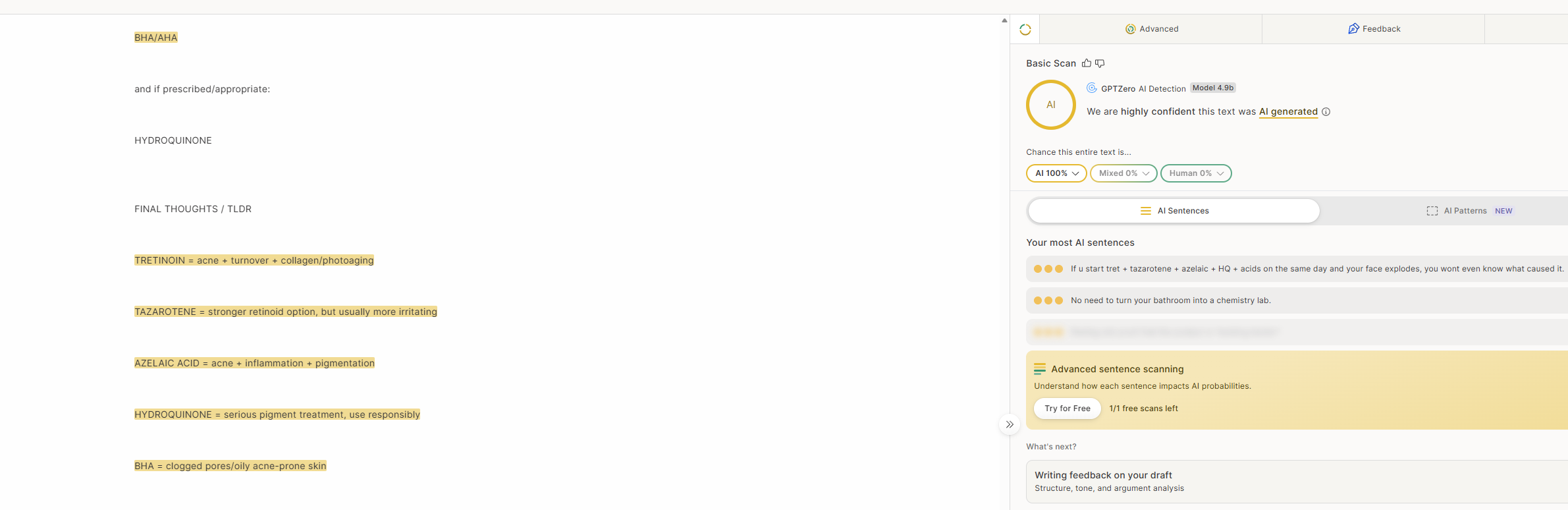
FINAL THOUGHTS / TLDR


TRETINOIN
= acne + turnover + collagen/photoaging


TAZAROTENE = stronger retinoid option, but usually more irritating


AZELAIC ACID = acne + inflammation + pigmentation


HYDROQUINONE = serious pigment treatment, use responsibly


BHA = clogged pores/oily acne-prone skin


AHA = surface texture/exfoliation


NIACINAMIDE = barrier + redness + pigment support


VIT C = antioxidant + pigment support


MINOXIDIL = hair growth


BIMATOPROST = eyelash growth


SPF 50 = literally the thing keeping half this thread from being pointless


And pls dont copy random protocols from threads and assume more drugs = more results.​


Sry for the long ahh thread bhai 😭 pls bumb my thread buddy boyos and wait lemme add the studies also almost forgot that
PubMed β€” Photoaging and Topical Rejuvenation


PubMed β€” Topical tretinoin for treating photoaging: systematic review


PubMed β€” Tretinoin for photodamaged facial skin: systematic review and meta-analysis


PubMed β€” Is tretinoin still a key agent for photoaging management?


PubMed β€” Tazarotene: therapeutic strategies in psoriasis, acne and photoaging


PubMed β€” Tazarotene vs tretinoin for facial photodamage


PubMed β€” Tazarotene photodamage pilot study


PubMed β€” Histological effects of tazarotene on photodamaged skin


PubMed β€” Tazarotene + hydroquinone for photodamaged facial skin


PubMed β€” Management of facial hyperpigmentation


PubMed β€” Topical Treatments for Photoaged Skin


PubMed β€” Comparative efficacy of topical interventions for facial photoaging


PubMed β€” Cosmetic retinoid use in photoaged skin: mechanisms and evidence


PubMed β€” Skincare ingredients recommended by cosmetic dermatologists: Delphi consensus


PubMed β€” Topical actives and skin aging mechanisms bumppppppp @Askinov @Sayori @buccalfatremoval @basedhood @Navity @Volpa @Hernan @Histy
 
  • +1
Reactions: Navity, buccalfatremoval and maxilla569
ohio dnr
 
  • Ugh..
Reactions: Hadee
@Fynn @Magnus bumpp this shit bro
 
@Orka // Tilikum @buccalfatremoval
 
bump guys rep me already
 
you can stop tagging people, nobody gives a fuck nigga
 
  • +1
Reactions: lumified
kys fag. i spent 9 hours on this thread not ur cheap ass and yes you are gay
dyslexic fuck nigga, nobody gives a fuck about your grey ass recycle thread that has been made a minimum of 231 times, should have spent that 9 hours on developing a plan to end your life
 
  • +1
Reactions: lumified
β•°β”€β€’β—ˆ 𝓣𝓐𝓑𝓛𝓔** π“žπ“• **π“’π“žπ“π“£π“”π“π“£π“’ β—ˆβ€’β”€β•―


π’‰­β€”βœ¦βŸ¦ π“£π“žπ“Ÿπ“˜π“’π“π“›** 𝓓𝓑𝓀𝓖𝓒 + π“’π“šπ“˜π“ **π“‘π“”π“–π“˜π“œπ“”π“


π“‘π“”π“£π“˜π“π“žπ“˜π““π“’


π“£π“‘π“”π“£π“˜π“π“žπ“˜π“


π“£π“π“©π“π“‘π“žπ“£π“”π“π“”


π“π“©π“”π“›π“π“˜π“’** **π“π“’π“˜π““


π“—π“¨π““π“‘π“žπ“ π“€π“˜π“π“žπ“π“”


π“œπ“˜π“π“žπ“§π“˜π““π“˜π“›


π“‘π“˜π“œπ“π“£π“žπ“Ÿπ“‘π“žπ“’π“£


π“”π“§π“•π“žπ“›π“˜π“π“π“£π“’ + π“’π“€π“Ÿπ“Ÿπ“žπ“‘π“£π“˜π“π“–** **π“π“’π“£π“˜π“₯𝓔𝓒


π“’π“Ÿπ“• / 𝓀π“₯** **π“’π“žπ“π“£π“‘π“žπ“›


π“—π“žπ“¦** π“£π“ž π“’π“£π“π“’π“š **𝓔π“₯π“”π“‘π“¨π“£π“—π“˜π“π“–


π“•π“˜π“π“π“›** **π“£π“—π“žπ“€π“–π“—π“£π“’ βŸ§βœ¦β€”π’‰­​


π“Šˆ π“˜π“·π“½π“»π“Έπ“­π“Ύπ“¬π“½π“²π“Έπ“·: π“Š‰


Hi bhai welcome to another thread i made.


THIS IS ONLY TALKING ABOUT TOPICAL DRUGS HERE ORALS ON NEXT PART


I wanted to make this one more focused because theres alot of random skincare info floating around and ppl end up throwing 7 actives on their face at once then wonder why their skin is red asf.


Im gonna go through the actual mechanisms, what each thing is good for, how i would structure it, and most importntly how to not destroy ur barrier while doing it.


Also sry for the goofy ahh formatting, i used Claude for formatting and some words from Gemini/research papers because doing 8000 characters of formatting manually is actual torture.


1. TRETINOIN


Spoiler: MAIN MECHANISM


Tretinoin is topical all-trans retinoic acid. Unlike retinol, it doesnt need to be converted into the active retinoic-acid form first.


It binds to nuclear retinoic acid receptors and changes gene transcription. Basically it pushes keratinocyte turnover, normalises abnormal follicular keratinisation, and over time stimulates dermal remodelling/collagen production.


This is why tret is useful for:


  • Acne
  • Comedones
  • Post-acne texture
  • Fine lines
  • Photoaging
  • Some pigmentation issues

It is NOT an instant exfoliant. The effect is much deeper than just "scrubbing off dead skin".


SIDE EFFECTS


Dryness, flaking, burning, redness, irritation and increased sensitivity are the big ones.


The classic mistake is thinking:


"more tret = faster results"


No. More irritation can actually make ur skin look worse and can cause inflammation + PIH, especially if ur skin is darker.


HOW I WOULD START


A pea-sized amount for the entire face at night.


Start around 2-3 nights per week, then increase slowly depending on tolerance.


Moisturiser before or after tret is completely fine if ur skin is sensitive. The "sandwich" method is literally just:


MOISTURISER β†’ TRET β†’ MOISTURISER


and it can make the first few weeks much more bearable.


IMPORTANT


Keep tret away from the immediate eyelid/lash margin, corners of the nose and lips unless a dermatologist specifically tells you otherwise. Those areas get irritated VERY easily.


A tiny amount of petrolatum around the lips and nose before application can act as a barrier so the tret doesnt migrate there.


2. TAZAROTENE


Spoiler: TRET'S MORE AGGRESSIVE COUSIN


Tazarotene is another topical retinoid and is converted in the skin to tazarotenic acid, which acts mainly through retinoid receptors.


It is commonly used for acne and plaque psoriasis, and can also improve some photoaging/texture concerns.


Compared with tretinoin, tazarotene is generally considered more irritating for a lot of ppl, although individual response varies.


WHY USE IT


If tret is giving you mediocre results and you tolerate retinoids well, tazarotene can be a very strong option.


But dont do the dumb thing where u use tret AND tazarotene together thinking ur getting 2x results.


You're mostly just buying yourself 2x irritation.


START LOW


Same principle:


2-3 nights weekly β†’ assess β†’ slowly increase.


And yes, SPF EVERY MORNING.


Retinoids dont make sunlight magically disappear just because you're using them.


3. AZELAIC ACID


Spoiler: THE UNDERRATED ONE


Azelaic acid is one of my favourite additions because it does a bunch of useful stuff without being a retinoid.


It has antimicrobial, anti-inflammatory and keratinisation-normalising effects and can also reduce pigmentation by interfering with tyrosinase activity.


Useful for:


  • Acne
  • PIH
  • Redness/inflammation
  • Uneven tone
  • Post-acne marks

Common strengths are 10%, 15% and 20%, depending on the product/country and whether its prescription.


HOW TO USE


This is where it gets nice.


You can use azelaic acid in the morning, especially if tret/tazarotene is your PM active.


Example:


AM


Cleanser
↓
Azelaic acid
↓
Moisturiser
↓
SPF 50


If ur skin is sensitive, start every other morning.


It can sting/itch when you first start. Thats not automatically an allergy, but severe burning, swelling or persistent dermatitis = stop.


4. HYDROQUINONE


Spoiler: THE PIGMENT NUKE


Hydroquinone is a topical depigmenting drug that inhibits tyrosinase, an important enzyme in melanin synthesis.


This makes it particularly useful for certain forms of hyperpigmentation/melasma.


SIDE EFFECTS


Skin irritation, dryness, burning, redness and contact dermatitis.


The scary one everyone talks about is:


EXOGENOUS OCHRONOSIS


A rare complication associated particularly with prolonged/improper use where the treated skin can develop a blue-black/gray-brown discoloration.


This is one reason hydroquinone isnt something i'd just slap on my entire face indefinitely.


HOW TO USE IT


Target the pigmented areas rather than covering healthy skin for no reason.


Usually used in the PM, and ideally under guidance from a dermatologist, especially if you're treating melasma.


Dont assume:


4% = automatically better than 2%


Higher concentration can mean more irritation without necessarily giving proportional benefits.


And again:


SPF IN THE MORNING IS NON-NEGOTIABLE.


If UV keeps stimulating melanogenesis while ur trying to suppress it, you're basically fighting urself.


5. BHA / SALICYLIC ACID


Spoiler: THE PORE GUY


Salicylic acid is a beta-hydroxy acid that is oil-soluble and helps loosen/remove corneocytes while penetrating into oily follicles.


Good for:


  • Blackheads
  • Whiteheads
  • Oily skin
  • Congested pores
  • Some acne

But this does NOT mean:


"I have acne therefore i need salicylic acid every day forever."


Nah.


If ur already using tret/tazarotene, you may need much less exfoliation than you think.


STARTING RULE


BHA 1-2x per week is more than enough for many ppl.


If your skin is already irritated from retinoids, skip it.


6. AHA'S


Glycolic, lactic and similar AHAs work mainly on the surface by weakening bonds between corneocytes and increasing exfoliation.


They can help with:


TEXTURE + DULLNESS + SOME PIGMENTATION


But once again:


MORE ACID β‰  MORE GLOW


Using glycolic acid + salicylic acid + tret + tazarotene in the same night is not some elite stack.


Its just irritationmaxxing.


Use acids on nights where your skin is otherwise calm, and dont force them into a routine that already has a retinoid.


7. NIACINAMIDE


Spoiler: THE SUPPORT ACTIVE


Niacinamide is not a prescription drug like tretinoin, but its one of the best supporting ingredients for a routine like this.


It can help support the skin barrier, reduce inflammation, and interfere with melanosome transfer from melanocytes to keratinocytes.


So it fits VERY nicely beside pigment treatments.


A basic AM stack can be:


NIACINAMIDE β†’ AZELAIC ACID β†’ MOISTURISER β†’ SPF


You dont need 15 different serums containing 2% niacinamide each btw.


8. VITAMIN C


Vitamin C is mainly useful as an antioxidant and can contribute to photoprotection when used alongside sunscreen. Certain formulations can also help with pigmentation.


The classic option is L-ascorbic acid, although it can be irritating and is less stable than some derivatives.


AM USE


Cleanser
↓
Vitamin C
↓
Niacinamide / Azelaic acid if tolerated
↓
Moisturiser
↓
SPF 50


Vitamin C is NOT a replacement for sunscreen.


It is the sidekick, not Batman.


9. TOPICAL MINOXIDIL


Spoiler: HAIR GROWTH


Topical minoxidil is primarily used for androgenetic alopecia and works through mechanisms involving potassium channels and vascular/growth signalling, with the exact mechanism of hair growth not being completely understood.


The important thing is:


IT IS FOR HAIR.


Scalp application is where the evidence is strongest.


Some people online use it on eyebrows/beard etc but those uses are less established and applying it close to the eyes is a completely different risk profile.


SIDE EFFECTS


Irritation, dryness, unwanted hair growth from transfer, and occasionally systemic effects such as dizziness or palpitations.


DO NOT PUT MINOXIDIL IN YOUR EYES.


And wash your hands after applying it.


If you're using it on the scalp, let it dry before lying down so you dont smear it onto your face/pillow.


10. BIMATOPROST


Spoiler: LASH GROWTH


Bimatoprost is a prostaglandin analogue used ophthalmically and is well known for increasing eyelash growth.


It can increase:


LENGTH + THICKNESS + DARKNESS


of eyelashes.


But this one needs more respect than random OTC lash serum.


SIDE EFFECTS


Potential periocular pigmentation, eye irritation and other ocular/periocular effects can occur.


One particularly important issue with prostaglandin analogues is periorbital fat atrophy, which can create a more hollow appearance around the eyes in some users.


So dont smear it all around your orbital area thinking:


"more surface area = more lashes"


The target is the upper lash line, and excessive spread around the eye is exactly what you want to avoid.


11. SPF


Spoiler: THE MOST BORING + MOST IMPORTANT STEP


If you're using tret, tazarotene, hydroquinone, azelaic acid, acids, vitamin C etc and you're walking around in strong UV with no sunscreen then bro what are we doing.


UV exposure contributes to:


PHOTOAGING + PIGMENTATION + COLLAGEN DAMAGE


Broad-spectrum sunscreen helps prevent further UV damage and makes pigmentation treatment much more sustainable.


SPF 30 MINIMUM


SPF 50 PREFERRED


Use enough to actually reach the labelled protection, and reapply when you're outdoors for extended periods, sweating, swimming etc.


Hat + shade are also based.


Sunscreen isnt just the final step of the routine.


ITS PART OF THE TREATMENT.


12. HOW TO STACK ALL OF THIS WITHOUT FUCKING YOUR FACE UP


AM:


1. CLEANSE


↓


2. VITAMIN C
optional


↓


3. NIACINAMIDE
optional


↓


4. AZELAIC ACID


↓


5. MOISTURISER


↓


6. SPF 50


Thats already a very good morning.


You do NOT need every serum known to mankind.


PM RETINOID NIGHT:


Cleanse


↓


Moisturiser if sensitive


↓


TRETINOIN OR TAZAROTENE


↓


Moisturiser


Done.


Dont start adding glycolic + salicylic + benzoyl peroxide + 3 peptide serums on top because ur bored.


PM HYDROQUINONE NIGHT:


Cleanse


↓


Moisturiser if needed


↓


HYDROQUINONE TO TARGET AREAS


↓


Moisturiser


Follow the prescribing instructions if its prescription HQ.


EXFOLIATION NIGHT:


Cleanse


↓


BHA OR AHA


↓


Moisturiser


Thats it.


No need to turn your bathroom into a chemistry lab.


PATHWAY HACKS + MINIMIZING SIDE EFFECTS


1. DONT CHASE IRRITATION


Peeling isnt proof that the product is "working harder".


Inflammation can actually worsen redness and pigmentation.


2. INTRODUCE ONE ACTIVE AT A TIME


If u start tret + tazarotene + azelaic + HQ + acids on the same day and your face explodes, you wont even know what caused it.


3. MOISTURISE


A healthy barrier makes the whole routine easier to maintain.


Ceramides, glycerin, petrolatum, squalane etc can all be useful depending on your skin.


4. PROTECT THE SENSITIVE AREAS


Lips, nostrils and eyelids are especially easy to irritate.


Petrolatum around areas prone to migration can help reduce accidental exposure.


5. NEVER FORGET SPF


Especially when treating pigmentation.


THE SIMPLE VERSION


AM


Cleanse
↓
Vit C optional
↓
Niacinamide optional
↓
Azelaic acid
↓
Moisturiser
↓
SPF 50


PM


Cleanse
↓
TRETINOIN OR TAZAROTENE
↓
Moisturiser


On separate nights:


BHA/AHA


and if prescribed/appropriate:


HYDROQUINONE


FINAL THOUGHTS / TLDR


TRETINOIN
= acne + turnover + collagen/photoaging


TAZAROTENE = stronger retinoid option, but usually more irritating


AZELAIC ACID = acne + inflammation + pigmentation


HYDROQUINONE = serious pigment treatment, use responsibly


BHA = clogged pores/oily acne-prone skin


AHA = surface texture/exfoliation


NIACINAMIDE = barrier + redness + pigment support


VIT C = antioxidant + pigment support


MINOXIDIL = hair growth


BIMATOPROST = eyelash growth


SPF 50 = literally the thing keeping half this thread from being pointless


And pls dont copy random protocols from threads and assume more drugs = more results.​


Sry for the long ahh thread bhai 😭 pls bumb my thread buddy boyos and wait lemme add the studies also almost forgot that
PubMed β€” Photoaging and Topical Rejuvenation


PubMed β€” Topical tretinoin for treating photoaging: systematic review


PubMed β€” Tretinoin for photodamaged facial skin: systematic review and meta-analysis


PubMed β€” Is tretinoin still a key agent for photoaging management?


PubMed β€” Tazarotene: therapeutic strategies in psoriasis, acne and photoaging


PubMed β€” Tazarotene vs tretinoin for facial photodamage


PubMed β€” Tazarotene photodamage pilot study


PubMed β€” Histological effects of tazarotene on photodamaged skin


PubMed β€” Tazarotene + hydroquinone for photodamaged facial skin


PubMed β€” Management of facial hyperpigmentation


PubMed β€” Topical Treatments for Photoaged Skin


PubMed β€” Comparative efficacy of topical interventions for facial photoaging


PubMed β€” Cosmetic retinoid use in photoaged skin: mechanisms and evidence


PubMed β€” Skincare ingredients recommended by cosmetic dermatologists: Delphi consensus


PubMed β€” Topical actives and skin aging mechanisms bumppppppp @Askinov @Sayori @buccalfatremoval @basedhood @Navity @Volpa @Hernan @Histy
Dnr ai slop
 
  • Ugh..
  • +1
Reactions: Hadee and iamnotgrayipromise
β•°β”€β€’β—ˆ 𝓣𝓐𝓑𝓛𝓔** π“žπ“• **π“’π“žπ“π“£π“”π“π“£π“’ β—ˆβ€’β”€β•―


π’‰­β€”βœ¦βŸ¦ π“£π“žπ“Ÿπ“˜π“’π“π“›** 𝓓𝓑𝓀𝓖𝓒 + π“’π“šπ“˜π“ **π“‘π“”π“–π“˜π“œπ“”π“


π“‘π“”π“£π“˜π“π“žπ“˜π““π“’


π“£π“‘π“”π“£π“˜π“π“žπ“˜π“


π“£π“π“©π“π“‘π“žπ“£π“”π“π“”


π“π“©π“”π“›π“π“˜π“’** **π“π“’π“˜π““


π“—π“¨π““π“‘π“žπ“ π“€π“˜π“π“žπ“π“”


π“œπ“˜π“π“žπ“§π“˜π““π“˜π“›


π“‘π“˜π“œπ“π“£π“žπ“Ÿπ“‘π“žπ“’π“£


π“”π“§π“•π“žπ“›π“˜π“π“π“£π“’ + π“’π“€π“Ÿπ“Ÿπ“žπ“‘π“£π“˜π“π“–** **π“π“’π“£π“˜π“₯𝓔𝓒


π“’π“Ÿπ“• / 𝓀π“₯** **π“’π“žπ“π“£π“‘π“žπ“›


π“—π“žπ“¦** π“£π“ž π“’π“£π“π“’π“š **𝓔π“₯π“”π“‘π“¨π“£π“—π“˜π“π“–


π“•π“˜π“π“π“›** **π“£π“—π“žπ“€π“–π“—π“£π“’ βŸ§βœ¦β€”π’‰­​


π“Šˆ π“˜π“·π“½π“»π“Έπ“­π“Ύπ“¬π“½π“²π“Έπ“·: π“Š‰


Hi bhai welcome to another thread i made.


THIS IS ONLY TALKING ABOUT TOPICAL DRUGS HERE ORALS ON NEXT PART


I wanted to make this one more focused because theres alot of random skincare info floating around and ppl end up throwing 7 actives on their face at once then wonder why their skin is red asf.


Im gonna go through the actual mechanisms, what each thing is good for, how i would structure it, and most importntly how to not destroy ur barrier while doing it.


Also sry for the goofy ahh formatting, i used Claude for formatting and some words from Gemini/research papers because doing 8000 characters of formatting manually is actual torture.


1. TRETINOIN


Spoiler: MAIN MECHANISM


Tretinoin is topical all-trans retinoic acid. Unlike retinol, it doesnt need to be converted into the active retinoic-acid form first.


It binds to nuclear retinoic acid receptors and changes gene transcription. Basically it pushes keratinocyte turnover, normalises abnormal follicular keratinisation, and over time stimulates dermal remodelling/collagen production.


This is why tret is useful for:


  • Acne
  • Comedones
  • Post-acne texture
  • Fine lines
  • Photoaging
  • Some pigmentation issues

It is NOT an instant exfoliant. The effect is much deeper than just "scrubbing off dead skin".


SIDE EFFECTS


Dryness, flaking, burning, redness, irritation and increased sensitivity are the big ones.


The classic mistake is thinking:


"more tret = faster results"


No. More irritation can actually make ur skin look worse and can cause inflammation + PIH, especially if ur skin is darker.


HOW I WOULD START


A pea-sized amount for the entire face at night.


Start around 2-3 nights per week, then increase slowly depending on tolerance.


Moisturiser before or after tret is completely fine if ur skin is sensitive. The "sandwich" method is literally just:


MOISTURISER β†’ TRET β†’ MOISTURISER


and it can make the first few weeks much more bearable.


IMPORTANT


Keep tret away from the immediate eyelid/lash margin, corners of the nose and lips unless a dermatologist specifically tells you otherwise. Those areas get irritated VERY easily.


A tiny amount of petrolatum around the lips and nose before application can act as a barrier so the tret doesnt migrate there.


2. TAZAROTENE


Spoiler: TRET'S MORE AGGRESSIVE COUSIN


Tazarotene is another topical retinoid and is converted in the skin to tazarotenic acid, which acts mainly through retinoid receptors.


It is commonly used for acne and plaque psoriasis, and can also improve some photoaging/texture concerns.


Compared with tretinoin, tazarotene is generally considered more irritating for a lot of ppl, although individual response varies.


WHY USE IT


If tret is giving you mediocre results and you tolerate retinoids well, tazarotene can be a very strong option.


But dont do the dumb thing where u use tret AND tazarotene together thinking ur getting 2x results.


You're mostly just buying yourself 2x irritation.


START LOW


Same principle:


2-3 nights weekly β†’ assess β†’ slowly increase.


And yes, SPF EVERY MORNING.


Retinoids dont make sunlight magically disappear just because you're using them.


3. AZELAIC ACID


Spoiler: THE UNDERRATED ONE


Azelaic acid is one of my favourite additions because it does a bunch of useful stuff without being a retinoid.


It has antimicrobial, anti-inflammatory and keratinisation-normalising effects and can also reduce pigmentation by interfering with tyrosinase activity.


Useful for:


  • Acne
  • PIH
  • Redness/inflammation
  • Uneven tone
  • Post-acne marks

Common strengths are 10%, 15% and 20%, depending on the product/country and whether its prescription.


HOW TO USE


This is where it gets nice.


You can use azelaic acid in the morning, especially if tret/tazarotene is your PM active.


Example:


AM


Cleanser
↓
Azelaic acid
↓
Moisturiser
↓
SPF 50


If ur skin is sensitive, start every other morning.


It can sting/itch when you first start. Thats not automatically an allergy, but severe burning, swelling or persistent dermatitis = stop.


4. HYDROQUINONE


Spoiler: THE PIGMENT NUKE


Hydroquinone is a topical depigmenting drug that inhibits tyrosinase, an important enzyme in melanin synthesis.


This makes it particularly useful for certain forms of hyperpigmentation/melasma.


SIDE EFFECTS


Skin irritation, dryness, burning, redness and contact dermatitis.


The scary one everyone talks about is:


EXOGENOUS OCHRONOSIS


A rare complication associated particularly with prolonged/improper use where the treated skin can develop a blue-black/gray-brown discoloration.


This is one reason hydroquinone isnt something i'd just slap on my entire face indefinitely.


HOW TO USE IT


Target the pigmented areas rather than covering healthy skin for no reason.


Usually used in the PM, and ideally under guidance from a dermatologist, especially if you're treating melasma.


Dont assume:


4% = automatically better than 2%


Higher concentration can mean more irritation without necessarily giving proportional benefits.


And again:


SPF IN THE MORNING IS NON-NEGOTIABLE.


If UV keeps stimulating melanogenesis while ur trying to suppress it, you're basically fighting urself.


5. BHA / SALICYLIC ACID


Spoiler: THE PORE GUY


Salicylic acid is a beta-hydroxy acid that is oil-soluble and helps loosen/remove corneocytes while penetrating into oily follicles.


Good for:


  • Blackheads
  • Whiteheads
  • Oily skin
  • Congested pores
  • Some acne

But this does NOT mean:


"I have acne therefore i need salicylic acid every day forever."


Nah.


If ur already using tret/tazarotene, you may need much less exfoliation than you think.


STARTING RULE


BHA 1-2x per week is more than enough for many ppl.


If your skin is already irritated from retinoids, skip it.


6. AHA'S


Glycolic, lactic and similar AHAs work mainly on the surface by weakening bonds between corneocytes and increasing exfoliation.


They can help with:


TEXTURE + DULLNESS + SOME PIGMENTATION


But once again:


MORE ACID β‰  MORE GLOW


Using glycolic acid + salicylic acid + tret + tazarotene in the same night is not some elite stack.


Its just irritationmaxxing.


Use acids on nights where your skin is otherwise calm, and dont force them into a routine that already has a retinoid.


7. NIACINAMIDE


Spoiler: THE SUPPORT ACTIVE


Niacinamide is not a prescription drug like tretinoin, but its one of the best supporting ingredients for a routine like this.


It can help support the skin barrier, reduce inflammation, and interfere with melanosome transfer from melanocytes to keratinocytes.


So it fits VERY nicely beside pigment treatments.


A basic AM stack can be:


NIACINAMIDE β†’ AZELAIC ACID β†’ MOISTURISER β†’ SPF


You dont need 15 different serums containing 2% niacinamide each btw.


8. VITAMIN C


Vitamin C is mainly useful as an antioxidant and can contribute to photoprotection when used alongside sunscreen. Certain formulations can also help with pigmentation.


The classic option is L-ascorbic acid, although it can be irritating and is less stable than some derivatives.


AM USE


Cleanser
↓
Vitamin C
↓
Niacinamide / Azelaic acid if tolerated
↓
Moisturiser
↓
SPF 50


Vitamin C is NOT a replacement for sunscreen.


It is the sidekick, not Batman.


9. TOPICAL MINOXIDIL


Spoiler: HAIR GROWTH


Topical minoxidil is primarily used for androgenetic alopecia and works through mechanisms involving potassium channels and vascular/growth signalling, with the exact mechanism of hair growth not being completely understood.


The important thing is:


IT IS FOR HAIR.


Scalp application is where the evidence is strongest.


Some people online use it on eyebrows/beard etc but those uses are less established and applying it close to the eyes is a completely different risk profile.


SIDE EFFECTS


Irritation, dryness, unwanted hair growth from transfer, and occasionally systemic effects such as dizziness or palpitations.


DO NOT PUT MINOXIDIL IN YOUR EYES.


And wash your hands after applying it.


If you're using it on the scalp, let it dry before lying down so you dont smear it onto your face/pillow.


10. BIMATOPROST


Spoiler: LASH GROWTH


Bimatoprost is a prostaglandin analogue used ophthalmically and is well known for increasing eyelash growth.


It can increase:


LENGTH + THICKNESS + DARKNESS


of eyelashes.


But this one needs more respect than random OTC lash serum.


SIDE EFFECTS


Potential periocular pigmentation, eye irritation and other ocular/periocular effects can occur.


One particularly important issue with prostaglandin analogues is periorbital fat atrophy, which can create a more hollow appearance around the eyes in some users.


So dont smear it all around your orbital area thinking:


"more surface area = more lashes"


The target is the upper lash line, and excessive spread around the eye is exactly what you want to avoid.


11. SPF


Spoiler: THE MOST BORING + MOST IMPORTANT STEP


If you're using tret, tazarotene, hydroquinone, azelaic acid, acids, vitamin C etc and you're walking around in strong UV with no sunscreen then bro what are we doing.


UV exposure contributes to:


PHOTOAGING + PIGMENTATION + COLLAGEN DAMAGE


Broad-spectrum sunscreen helps prevent further UV damage and makes pigmentation treatment much more sustainable.


SPF 30 MINIMUM


SPF 50 PREFERRED


Use enough to actually reach the labelled protection, and reapply when you're outdoors for extended periods, sweating, swimming etc.


Hat + shade are also based.


Sunscreen isnt just the final step of the routine.


ITS PART OF THE TREATMENT.


12. HOW TO STACK ALL OF THIS WITHOUT FUCKING YOUR FACE UP


AM:


1. CLEANSE


↓


2. VITAMIN C
optional


↓


3. NIACINAMIDE
optional


↓


4. AZELAIC ACID


↓


5. MOISTURISER


↓


6. SPF 50


Thats already a very good morning.


You do NOT need every serum known to mankind.


PM RETINOID NIGHT:


Cleanse


↓


Moisturiser if sensitive


↓


TRETINOIN OR TAZAROTENE


↓


Moisturiser


Done.


Dont start adding glycolic + salicylic + benzoyl peroxide + 3 peptide serums on top because ur bored.


PM HYDROQUINONE NIGHT:


Cleanse


↓


Moisturiser if needed


↓


HYDROQUINONE TO TARGET AREAS


↓


Moisturiser


Follow the prescribing instructions if its prescription HQ.


EXFOLIATION NIGHT:


Cleanse


↓


BHA OR AHA


↓


Moisturiser


Thats it.


No need to turn your bathroom into a chemistry lab.


PATHWAY HACKS + MINIMIZING SIDE EFFECTS


1. DONT CHASE IRRITATION


Peeling isnt proof that the product is "working harder".


Inflammation can actually worsen redness and pigmentation.


2. INTRODUCE ONE ACTIVE AT A TIME


If u start tret + tazarotene + azelaic + HQ + acids on the same day and your face explodes, you wont even know what caused it.


3. MOISTURISE


A healthy barrier makes the whole routine easier to maintain.


Ceramides, glycerin, petrolatum, squalane etc can all be useful depending on your skin.


4. PROTECT THE SENSITIVE AREAS


Lips, nostrils and eyelids are especially easy to irritate.


Petrolatum around areas prone to migration can help reduce accidental exposure.


5. NEVER FORGET SPF


Especially when treating pigmentation.


THE SIMPLE VERSION


AM


Cleanse
↓
Vit C optional
↓
Niacinamide optional
↓
Azelaic acid
↓
Moisturiser
↓
SPF 50


PM


Cleanse
↓
TRETINOIN OR TAZAROTENE
↓
Moisturiser


On separate nights:


BHA/AHA


and if prescribed/appropriate:


HYDROQUINONE


FINAL THOUGHTS / TLDR


TRETINOIN
= acne + turnover + collagen/photoaging


TAZAROTENE = stronger retinoid option, but usually more irritating


AZELAIC ACID = acne + inflammation + pigmentation


HYDROQUINONE = serious pigment treatment, use responsibly


BHA = clogged pores/oily acne-prone skin


AHA = surface texture/exfoliation


NIACINAMIDE = barrier + redness + pigment support


VIT C = antioxidant + pigment support


MINOXIDIL = hair growth


BIMATOPROST = eyelash growth


SPF 50 = literally the thing keeping half this thread from being pointless


And pls dont copy random protocols from threads and assume more drugs = more results.​


Sry for the long ahh thread bhai 😭 pls bumb my thread buddy boyos and wait lemme add the studies also almost forgot that
PubMed β€” Photoaging and Topical Rejuvenation


PubMed β€” Topical tretinoin for treating photoaging: systematic review


PubMed β€” Tretinoin for photodamaged facial skin: systematic review and meta-analysis


PubMed β€” Is tretinoin still a key agent for photoaging management?


PubMed β€” Tazarotene: therapeutic strategies in psoriasis, acne and photoaging


PubMed β€” Tazarotene vs tretinoin for facial photodamage


PubMed β€” Tazarotene photodamage pilot study


PubMed β€” Histological effects of tazarotene on photodamaged skin


PubMed β€” Tazarotene + hydroquinone for photodamaged facial skin


PubMed β€” Management of facial hyperpigmentation


PubMed β€” Topical Treatments for Photoaged Skin


PubMed β€” Comparative efficacy of topical interventions for facial photoaging


PubMed β€” Cosmetic retinoid use in photoaged skin: mechanisms and evidence


PubMed β€” Skincare ingredients recommended by cosmetic dermatologists: Delphi consensus


PubMed β€” Topical actives and skin aging mechanisms bumppppppp @Askinov @Sayori @buccalfatremoval @basedhood @Navity @Volpa @Hernan @Histy
1787587862513
Water and ai slop
 
nothing about Accutane ?
 
β•°β”€β€’β—ˆ 𝓣𝓐𝓑𝓛𝓔** π“žπ“• **π“’π“žπ“π“£π“”π“π“£π“’ β—ˆβ€’β”€β•―


π’‰­β€”βœ¦βŸ¦ π“£π“žπ“Ÿπ“˜π“’π“π“›** 𝓓𝓑𝓀𝓖𝓒 + π“’π“šπ“˜π“ **π“‘π“”π“–π“˜π“œπ“”π“


π“‘π“”π“£π“˜π“π“žπ“˜π““π“’


π“£π“‘π“”π“£π“˜π“π“žπ“˜π“


π“£π“π“©π“π“‘π“žπ“£π“”π“π“”


π“π“©π“”π“›π“π“˜π“’** **π“π“’π“˜π““


π“—π“¨π““π“‘π“žπ“ π“€π“˜π“π“žπ“π“”


π“œπ“˜π“π“žπ“§π“˜π““π“˜π“›


π“‘π“˜π“œπ“π“£π“žπ“Ÿπ“‘π“žπ“’π“£


π“”π“§π“•π“žπ“›π“˜π“π“π“£π“’ + π“’π“€π“Ÿπ“Ÿπ“žπ“‘π“£π“˜π“π“–** **π“π“’π“£π“˜π“₯𝓔𝓒


π“’π“Ÿπ“• / 𝓀π“₯** **π“’π“žπ“π“£π“‘π“žπ“›


π“—π“žπ“¦** π“£π“ž π“’π“£π“π“’π“š **𝓔π“₯π“”π“‘π“¨π“£π“—π“˜π“π“–


π“•π“˜π“π“π“›** **π“£π“—π“žπ“€π“–π“—π“£π“’ βŸ§βœ¦β€”π’‰­​


π“Šˆ π“˜π“·π“½π“»π“Έπ“­π“Ύπ“¬π“½π“²π“Έπ“·: π“Š‰


Hi bhai welcome to another thread i made.


THIS IS ONLY TALKING ABOUT TOPICAL DRUGS HERE ORALS ON NEXT PART


I wanted to make this one more focused because theres alot of random skincare info floating around and ppl end up throwing 7 actives on their face at once then wonder why their skin is red asf.


Im gonna go through the actual mechanisms, what each thing is good for, how i would structure it, and most importntly how to not destroy ur barrier while doing it.


Also sry for the goofy ahh formatting, i used Claude for formatting and some words from Gemini/research papers because doing 8000 characters of formatting manually is actual torture.


1. TRETINOIN


Spoiler: MAIN MECHANISM


Tretinoin is topical all-trans retinoic acid. Unlike retinol, it doesnt need to be converted into the active retinoic-acid form first.


It binds to nuclear retinoic acid receptors and changes gene transcription. Basically it pushes keratinocyte turnover, normalises abnormal follicular keratinisation, and over time stimulates dermal remodelling/collagen production.


This is why tret is useful for:


  • Acne
  • Comedones
  • Post-acne texture
  • Fine lines
  • Photoaging
  • Some pigmentation issues

It is NOT an instant exfoliant. The effect is much deeper than just "scrubbing off dead skin".


SIDE EFFECTS


Dryness, flaking, burning, redness, irritation and increased sensitivity are the big ones.


The classic mistake is thinking:


"more tret = faster results"


No. More irritation can actually make ur skin look worse and can cause inflammation + PIH, especially if ur skin is darker.


HOW I WOULD START


A pea-sized amount for the entire face at night.


Start around 2-3 nights per week, then increase slowly depending on tolerance.


Moisturiser before or after tret is completely fine if ur skin is sensitive. The "sandwich" method is literally just:


MOISTURISER β†’ TRET β†’ MOISTURISER


and it can make the first few weeks much more bearable.


IMPORTANT


Keep tret away from the immediate eyelid/lash margin, corners of the nose and lips unless a dermatologist specifically tells you otherwise. Those areas get irritated VERY easily.


A tiny amount of petrolatum around the lips and nose before application can act as a barrier so the tret doesnt migrate there.


2. TAZAROTENE


Spoiler: TRET'S MORE AGGRESSIVE COUSIN


Tazarotene is another topical retinoid and is converted in the skin to tazarotenic acid, which acts mainly through retinoid receptors.


It is commonly used for acne and plaque psoriasis, and can also improve some photoaging/texture concerns.


Compared with tretinoin, tazarotene is generally considered more irritating for a lot of ppl, although individual response varies.


WHY USE IT


If tret is giving you mediocre results and you tolerate retinoids well, tazarotene can be a very strong option.


But dont do the dumb thing where u use tret AND tazarotene together thinking ur getting 2x results.


You're mostly just buying yourself 2x irritation.


START LOW


Same principle:


2-3 nights weekly β†’ assess β†’ slowly increase.


And yes, SPF EVERY MORNING.


Retinoids dont make sunlight magically disappear just because you're using them.


3. AZELAIC ACID


Spoiler: THE UNDERRATED ONE


Azelaic acid is one of my favourite additions because it does a bunch of useful stuff without being a retinoid.


It has antimicrobial, anti-inflammatory and keratinisation-normalising effects and can also reduce pigmentation by interfering with tyrosinase activity.


Useful for:


  • Acne
  • PIH
  • Redness/inflammation
  • Uneven tone
  • Post-acne marks

Common strengths are 10%, 15% and 20%, depending on the product/country and whether its prescription.


HOW TO USE


This is where it gets nice.


You can use azelaic acid in the morning, especially if tret/tazarotene is your PM active.


Example:


AM


Cleanser
↓
Azelaic acid
↓
Moisturiser
↓
SPF 50


If ur skin is sensitive, start every other morning.


It can sting/itch when you first start. Thats not automatically an allergy, but severe burning, swelling or persistent dermatitis = stop.


4. HYDROQUINONE


Spoiler: THE PIGMENT NUKE


Hydroquinone is a topical depigmenting drug that inhibits tyrosinase, an important enzyme in melanin synthesis.


This makes it particularly useful for certain forms of hyperpigmentation/melasma.


SIDE EFFECTS


Skin irritation, dryness, burning, redness and contact dermatitis.


The scary one everyone talks about is:


EXOGENOUS OCHRONOSIS


A rare complication associated particularly with prolonged/improper use where the treated skin can develop a blue-black/gray-brown discoloration.


This is one reason hydroquinone isnt something i'd just slap on my entire face indefinitely.


HOW TO USE IT


Target the pigmented areas rather than covering healthy skin for no reason.


Usually used in the PM, and ideally under guidance from a dermatologist, especially if you're treating melasma.


Dont assume:


4% = automatically better than 2%


Higher concentration can mean more irritation without necessarily giving proportional benefits.


And again:


SPF IN THE MORNING IS NON-NEGOTIABLE.


If UV keeps stimulating melanogenesis while ur trying to suppress it, you're basically fighting urself.


5. BHA / SALICYLIC ACID


Spoiler: THE PORE GUY


Salicylic acid is a beta-hydroxy acid that is oil-soluble and helps loosen/remove corneocytes while penetrating into oily follicles.


Good for:


  • Blackheads
  • Whiteheads
  • Oily skin
  • Congested pores
  • Some acne

But this does NOT mean:


"I have acne therefore i need salicylic acid every day forever."


Nah.


If ur already using tret/tazarotene, you may need much less exfoliation than you think.


STARTING RULE


BHA 1-2x per week is more than enough for many ppl.


If your skin is already irritated from retinoids, skip it.


6. AHA'S


Glycolic, lactic and similar AHAs work mainly on the surface by weakening bonds between corneocytes and increasing exfoliation.


They can help with:


TEXTURE + DULLNESS + SOME PIGMENTATION


But once again:


MORE ACID β‰  MORE GLOW


Using glycolic acid + salicylic acid + tret + tazarotene in the same night is not some elite stack.


Its just irritationmaxxing.


Use acids on nights where your skin is otherwise calm, and dont force them into a routine that already has a retinoid.


7. NIACINAMIDE


Spoiler: THE SUPPORT ACTIVE


Niacinamide is not a prescription drug like tretinoin, but its one of the best supporting ingredients for a routine like this.


It can help support the skin barrier, reduce inflammation, and interfere with melanosome transfer from melanocytes to keratinocytes.


So it fits VERY nicely beside pigment treatments.


A basic AM stack can be:


NIACINAMIDE β†’ AZELAIC ACID β†’ MOISTURISER β†’ SPF


You dont need 15 different serums containing 2% niacinamide each btw.


8. VITAMIN C


Vitamin C is mainly useful as an antioxidant and can contribute to photoprotection when used alongside sunscreen. Certain formulations can also help with pigmentation.


The classic option is L-ascorbic acid, although it can be irritating and is less stable than some derivatives.


AM USE


Cleanser
↓
Vitamin C
↓
Niacinamide / Azelaic acid if tolerated
↓
Moisturiser
↓
SPF 50


Vitamin C is NOT a replacement for sunscreen.


It is the sidekick, not Batman.


9. TOPICAL MINOXIDIL


Spoiler: HAIR GROWTH


Topical minoxidil is primarily used for androgenetic alopecia and works through mechanisms involving potassium channels and vascular/growth signalling, with the exact mechanism of hair growth not being completely understood.


The important thing is:


IT IS FOR HAIR.


Scalp application is where the evidence is strongest.


Some people online use it on eyebrows/beard etc but those uses are less established and applying it close to the eyes is a completely different risk profile.


SIDE EFFECTS


Irritation, dryness, unwanted hair growth from transfer, and occasionally systemic effects such as dizziness or palpitations.


DO NOT PUT MINOXIDIL IN YOUR EYES.


And wash your hands after applying it.


If you're using it on the scalp, let it dry before lying down so you dont smear it onto your face/pillow.


10. BIMATOPROST


Spoiler: LASH GROWTH


Bimatoprost is a prostaglandin analogue used ophthalmically and is well known for increasing eyelash growth.


It can increase:


LENGTH + THICKNESS + DARKNESS


of eyelashes.


But this one needs more respect than random OTC lash serum.


SIDE EFFECTS


Potential periocular pigmentation, eye irritation and other ocular/periocular effects can occur.


One particularly important issue with prostaglandin analogues is periorbital fat atrophy, which can create a more hollow appearance around the eyes in some users.


So dont smear it all around your orbital area thinking:


"more surface area = more lashes"


The target is the upper lash line, and excessive spread around the eye is exactly what you want to avoid.


11. SPF


Spoiler: THE MOST BORING + MOST IMPORTANT STEP


If you're using tret, tazarotene, hydroquinone, azelaic acid, acids, vitamin C etc and you're walking around in strong UV with no sunscreen then bro what are we doing.


UV exposure contributes to:


PHOTOAGING + PIGMENTATION + COLLAGEN DAMAGE


Broad-spectrum sunscreen helps prevent further UV damage and makes pigmentation treatment much more sustainable.


SPF 30 MINIMUM


SPF 50 PREFERRED


Use enough to actually reach the labelled protection, and reapply when you're outdoors for extended periods, sweating, swimming etc.


Hat + shade are also based.


Sunscreen isnt just the final step of the routine.


ITS PART OF THE TREATMENT.


12. HOW TO STACK ALL OF THIS WITHOUT FUCKING YOUR FACE UP


AM:


1. CLEANSE


↓


2. VITAMIN C
optional


↓


3. NIACINAMIDE
optional


↓


4. AZELAIC ACID


↓


5. MOISTURISER


↓


6. SPF 50


Thats already a very good morning.


You do NOT need every serum known to mankind.


PM RETINOID NIGHT:


Cleanse


↓


Moisturiser if sensitive


↓


TRETINOIN OR TAZAROTENE


↓


Moisturiser


Done.


Dont start adding glycolic + salicylic + benzoyl peroxide + 3 peptide serums on top because ur bored.


PM HYDROQUINONE NIGHT:


Cleanse


↓


Moisturiser if needed


↓


HYDROQUINONE TO TARGET AREAS


↓


Moisturiser


Follow the prescribing instructions if its prescription HQ.


EXFOLIATION NIGHT:


Cleanse


↓


BHA OR AHA


↓


Moisturiser


Thats it.


No need to turn your bathroom into a chemistry lab.


PATHWAY HACKS + MINIMIZING SIDE EFFECTS


1. DONT CHASE IRRITATION


Peeling isnt proof that the product is "working harder".


Inflammation can actually worsen redness and pigmentation.


2. INTRODUCE ONE ACTIVE AT A TIME


If u start tret + tazarotene + azelaic + HQ + acids on the same day and your face explodes, you wont even know what caused it.


3. MOISTURISE


A healthy barrier makes the whole routine easier to maintain.


Ceramides, glycerin, petrolatum, squalane etc can all be useful depending on your skin.


4. PROTECT THE SENSITIVE AREAS


Lips, nostrils and eyelids are especially easy to irritate.


Petrolatum around areas prone to migration can help reduce accidental exposure.


5. NEVER FORGET SPF


Especially when treating pigmentation.


THE SIMPLE VERSION


AM


Cleanse
↓
Vit C optional
↓
Niacinamide optional
↓
Azelaic acid
↓
Moisturiser
↓
SPF 50


PM


Cleanse
↓
TRETINOIN OR TAZAROTENE
↓
Moisturiser


On separate nights:


BHA/AHA


and if prescribed/appropriate:


HYDROQUINONE


FINAL THOUGHTS / TLDR


TRETINOIN
= acne + turnover + collagen/photoaging


TAZAROTENE = stronger retinoid option, but usually more irritating


AZELAIC ACID = acne + inflammation + pigmentation


HYDROQUINONE = serious pigment treatment, use responsibly


BHA = clogged pores/oily acne-prone skin


AHA = surface texture/exfoliation


NIACINAMIDE = barrier + redness + pigment support


VIT C = antioxidant + pigment support


MINOXIDIL = hair growth


BIMATOPROST = eyelash growth


SPF 50 = literally the thing keeping half this thread from being pointless


And pls dont copy random protocols from threads and assume more drugs = more results.​


Sry for the long ahh thread bhai 😭 pls bumb my thread buddy boyos and wait lemme add the studies also almost forgot that
PubMed β€” Photoaging and Topical Rejuvenation


PubMed β€” Topical tretinoin for treating photoaging: systematic review


PubMed β€” Tretinoin for photodamaged facial skin: systematic review and meta-analysis


PubMed β€” Is tretinoin still a key agent for photoaging management?


PubMed β€” Tazarotene: therapeutic strategies in psoriasis, acne and photoaging


PubMed β€” Tazarotene vs tretinoin for facial photodamage


PubMed β€” Tazarotene photodamage pilot study


PubMed β€” Histological effects of tazarotene on photodamaged skin


PubMed β€” Tazarotene + hydroquinone for photodamaged facial skin


PubMed β€” Management of facial hyperpigmentation


PubMed β€” Topical Treatments for Photoaged Skin


PubMed β€” Comparative efficacy of topical interventions for facial photoaging


PubMed β€” Cosmetic retinoid use in photoaged skin: mechanisms and evidence


PubMed β€” Skincare ingredients recommended by cosmetic dermatologists: Delphi consensus


PubMed β€” Topical actives and skin aging mechanisms bumppppppp @Askinov @Sayori @buccalfatremoval @basedhood @Navity @Volpa @Hernan @Histy
You can only tag 5 users in one post.

@Volpa @Hernan
 

Similar threads

Juqss.
Replies
4
Views
230
Altairplanetsw
Altairplanetsw
Zygomatter
Replies
20
Views
265
Zygomatter
Zygomatter
Juqss.
Replies
54
Views
2K
Aristotle39twitch
Aristotle39twitch
Juqss.
Replies
13
Views
207
Juqss.
Juqss.
Tesarossa
Replies
39
Views
410
user223
user223

Users who are viewing this thread

  • Back
    Top