

GONADORELIN VS HCG
Why Gonadorelin Is The Smarter Choice For HPTA PreservationTable of Contents
1. Understanding The HPG Axis
2. How HCG Works And Where It Falls Short
3. How Gonadorelin Works And Why It's Different
4. The Half Life Problem And Why Dosing Frequency Is Everything
5. The Estrogen Consideration
6. Dosing Protocols
7. Which One Belongs In Your Protocol
2. How HCG Works And Where It Falls Short
3. How Gonadorelin Works And Why It's Different
4. The Half Life Problem And Why Dosing Frequency Is Everything
5. The Estrogen Consideration
6. Dosing Protocols
7. Which One Belongs In Your Protocol
HCG works, no doubt about it. But the real debate is whether gonadorelin does a better job and for a reason that can completely shift how you think about testicular maintenance during a cycle. To see why you have to dig into the HPG axis and figure out exactly where each compound actually intervenes.
1. Understanding The HPG Axis
The HPG axis runs top down. Hypothalamus fires off GnRH in pulses, which hits the pituitary and triggers both LH and FSH release. LH goes to the Leydig cells in the testes and tells them to make testosterone. FSH keeps spermatogenesis rolling. When exogenous testosterone enters the picture the hypothalamus detects the high levels and turns down GnRH. Less LH and FSH, testes dial back output. That's suppression.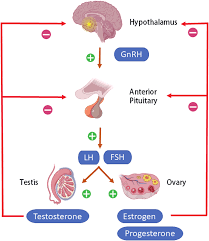
The HPG axis. Every step in this chain gets suppressed on cycle. Where you intervene determines how much damage gets done to your recovery.
The longer and heavier the cycle the deeper that suppression goes. So it's not just about keeping the testes active during the cycle. You've also got to think about keeping the communication chain above them running so recovery doesn't start at absolute zero. That's precisely where HCG and gonadorelin go down completely different paths.
2. How HCG Works And Where It Falls Short
HCG looks a lot like LH. Binds to LH receptors on Leydig cells, kicks up testosterone production, but skips the pituitary and hypothalamus entirely. It's a shortcut straight to the finish line acting only on the testes.For preventing testicular atrophy this shortcut works. Leydig cells stay busy, testosterone keeps flowing locally, testes maintain size and function. That's not up for debate.
But that shortcut creates a big problem.
The pituitary never gets a signal while HCG is running. GnRH neurons stay suppressed because of the exogenous testosterone. The pituitary sits dormant the entire cycle. When you finish and stop HCG your testes are still responsive but everything upstream has been asleep. Recovery now hinges on PCT compounds waking up the hypothalamus and pituitary from months of complete inactivity.There's also a documented desensitization risk. Clinical literature is clear. Run HCG at high doses for too long and Leydig cell receptors start to dull. You need bigger doses to get the same effect. That's not theoretical. It's real especially with longer cycles or higher dosing.
And HCG doesn't touch FSH. Spermatogenesis depends entirely on FSH. If fertility matters at all this is a glaring gap that too many guys overlook.
1. Bypasses hypothalamus and pituitary entirely
2. Pituitary stays dormant throughout the entire cycle
3. Documented Leydig cell desensitization at higher doses with prolonged use
4. Zero FSH stimulation meaning spermatogenesis is not maintained
5. Contributes meaningfully to aromatization through direct testicular testosterone stimulation
6. HPTA recovery post cycle starts from scratch because pituitary was never engaged
2. Pituitary stays dormant throughout the entire cycle
3. Documented Leydig cell desensitization at higher doses with prolonged use
4. Zero FSH stimulation meaning spermatogenesis is not maintained
5. Contributes meaningfully to aromatization through direct testicular testosterone stimulation
6. HPTA recovery post cycle starts from scratch because pituitary was never engaged
3. How Gonadorelin Works And Why It's Different
Gonadorelin is synthetic GnRH. Structurally identical to what your hypothalamus produces naturally. When injected it binds to GnRH receptors in the pituitary which then releases both LH and FSH. The whole cascade fires from higher up the chain.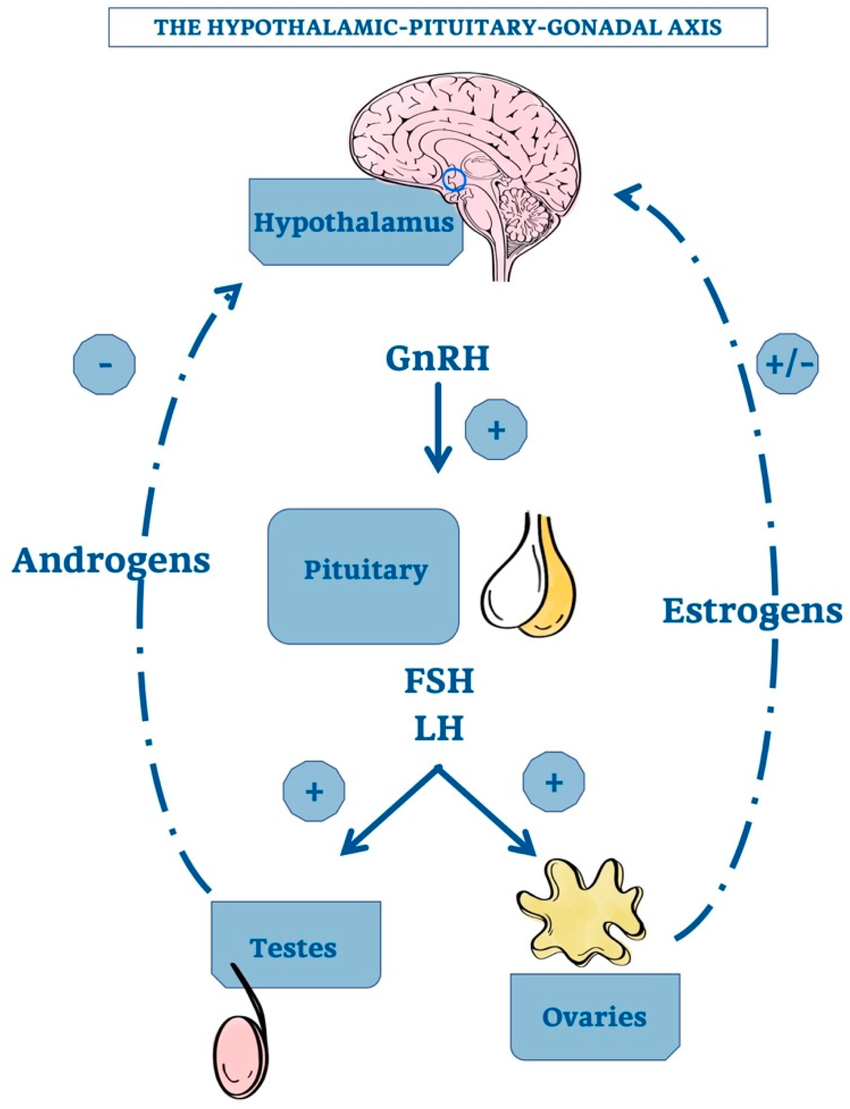
Where gonadorelin intervenes vs where HCG intervenes. The difference in intervention point is everything for recovery.
With gonadorelin the pituitary stays active throughout the cycle. It keeps pumping out LH and FSH whenever stimulated, sending signals to the testes through the normal physiological route. Not bypassing anything. Testosterone production and spermatogenesis maintained simultaneously.
That matters for HPTA recovery. The pituitary hasn't been dormant for 16 weeks. It's been responding to signals the whole time. When the cycle ends you don't need to jumpstart it from complete inactivity.
And because gonadorelin stimulates FSH alongside LH spermatogenesis continues during the cycle. Something HCG never manages regardless of dose.In a study involving 26 men including 13 with prior AAS use a single 100mcg dose of gonadorelin doubled LH levels across all groups. The system responds when given the right signal at the right point in the chain.
4. The Half Life Problem And Why Dosing Frequency Is Everything
Gonadorelin clears in about 2-4 minutes. That sounds like a flaw. It isn't. It's exactly how endogenous GnRH operates. The hypothalamus pulses GnRH every 60-90 minutes because continuous GnRH makes pituitary receptors insensitive and shuts down gonadotropin release entirely. This is why continuous GnRH agonist exposure is used to suppress hormones in prostate cancer treatment. Sustained exposure suppresses rather than stimulates.
Those twice weekly gonadorelin injections common in many protocols are not enough. The compound is gone in minutes. One pin gives a brief pulse then nothing for days. Research confirms only pulsatile dosing keeps the pituitary sensitive and responsive. Daily or every other day at 100-200mcg SubQ maintains stimulation in a pattern that actually mimics physiology.HCG sticks around for 36 hours. Twice weekly dosing keeps Leydig cells stimulated consistently all week. This is why HCG is practically easier to run correctly. The pharmacokinetics forgive infrequent dosing in a way gonadorelin simply cannot.
Code:
Natural GnRH pattern:
Pulse every 60-90 min → Pituitary responds → LH + FSH released → Testes produce testosterone
Gonadorelin twice weekly (WRONG):
Single pulse → clears in 4 min → 84 hours silence → pituitary loses signal
Gonadorelin daily or EOD (CORRECT):
Frequent pulses → pituitary stays engaged → LH + FSH maintained → proper HPTA preservation
5. The Estrogen Consideration
HCG boosts testosterone production directly in the testes adding to total circulating testosterone and by extension aromatization. Both research and clinical experience confirm it. Guys on HCG often report elevated estrogen that isn't explained just by their injectable dose. The HCG contribution is real and frequently underestimated when troubleshooting estrogen management on cycle.Gonadorelin's estrogen effect is lower because it works through the LH and FSH pathway instead of pushing Leydig cells into overdrive directly. If high estrogen is already a problem on cycle this difference is worth factoring into protocol design before touching AI dosing.
6. Dosing Protocols
| Compound | Dose | Frequency | When To Run | Stop |
|---|---|---|---|---|
| HCG | 1000-2000iu weekly | 2x weekly split | Last 3-5 weeks of cycle | Before PCT |
| Gonadorelin | 100-200mcg | Daily or EOD | Throughout cycle | Before PCT |
Running either compound during PCT keeps the testes artificially stimulated and blocks the natural HPTA restart that SERMs are designed to initiate. Two completely separate phases. Don't overlap them.
Some protocols combine HCG for direct testicular stimulation with gonadorelin to keep the pituitary signaling active simultaneously. The logic is sound on paper. Research describes this combination as redundant in most cases and it adds cost and complexity without clear additive benefit.
The more rational combination is gonadorelin plus a SERM post cycle rather than stacking both testicular maintenance compounds together.
The more rational combination is gonadorelin plus a SERM post cycle rather than stacking both testicular maintenance compounds together.
7. Which One Belongs In Your Protocol
HCG's strengths are practical. Easy to find, cheaper, forgiving dosing schedule, reliably prevents testicular atrophy. For short cycles with straightforward HPTA recovery and no fertility concerns HCG does the job.Gonadorelin's case is mechanistic. Keeps the pituitary active throughout the cycle, supports FSH and spermatogenesis, contributes less to estrogen burden, and leaves the HPG axis in a better position for recovery because the pituitary never fully shuts down.
Short cycle, test only, no fertility concerns. HCG is fine. Practical advantages are real.
Long cycle, heavy suppression, long term HPTA recovery matters, or fertility is a concern. Gonadorelin is the smarter play. Mechanism is cleaner and downstream recovery position is better.
Stuck with estrogen issues and the AI isn't cutting it. Factor in the HCG contribution before increasing your AI dose. Switching to gonadorelin sometimes fixes the estrogen problem without touching anything else.
Long cycle, heavy suppression, long term HPTA recovery matters, or fertility is a concern. Gonadorelin is the smarter play. Mechanism is cleaner and downstream recovery position is better.
Stuck with estrogen issues and the AI isn't cutting it. Factor in the HCG contribution before increasing your AI dose. Switching to gonadorelin sometimes fixes the estrogen problem without touching anything else.
Don't use either during PCT.
Both keep the HPG axis artificially stimulated and work directly against the natural recovery SERMs are designed to produce. Stop whichever you're running before PCT begins.
Both keep the HPG axis artificially stimulated and work directly against the natural recovery SERMs are designed to produce. Stop whichever you're running before PCT begins.
Sources: peptides.org | swolverine.com | fitscience.co | vitali-t.clinic | fullpotentialmen.com | excelmale.com


