resting
its never over bhai
- Joined
- Mar 24, 2026
- Posts
- 788
- Reputation
- 655
✧ ───────── ⋆⋅☆⋅⋆ ───────── ✧
✦Groundbreaking New Bone Growth Compound NELL-1 Just Dropped✦
✧ ───────── ⋆⋅☆⋅⋆ ───────── ✧
⟐ the overlooked osteoanabolic with a dual mechanism ⟐ •──────────────────────────•
Anyone who has done 0 research on it will say this:
“Bone growth compounds don’t exist”
“This is just another cope”
“Just run HGH, ERDA, TEST, HALO ETC.”
JFL
If you are not a fucking retard while looking at the research you’ll realise NELL-1 is one of the most interesting osteoanabolic proteins currently in development. Dual mechanism. Builds bone and reduces breakdown at the same time.
I have looked into every bone-related compound people obsess on here. HGH, high dose vitamin D, Halotestin, Testosterone, Tren and more. None of them come close to what the NELL-1 data is showing in terms of specificity. Most of you have never even heard of it because
no one on this forum has ever made a thread about it.
Zero discussion. Nothing. That’s how overlooked this is.
✦ Why NELL-1 in general? ✦
1. Actual published research showing increased bone formation
2. Dual action (stimulates osteoblasts + inhibits osteoclasts)
3. More bone-specific than anything else with less of the usual problems
4. Currently in early clinical development, not some random research chemical with zero data
✧ ─── ❖ ─── ✧ ─── ❖ ─── ✧
[TABLE OF CONTENTS]
✧ ─── ❖ ─── ✧ ─── ❖ ─── ✧
❖ CHAPTER I: What is NELL-1?
❖ CHAPTER II: Mechanism of Action
❖ CHAPTER III: Key Research & Evidence
❖ CHAPTER IV: Dosing
❖ CHAPTER V: Conclusion
✧ ─── ⋆⋅☆⋅⋆ ─── ✧
▸ I: What is NELL-1?
✧ ─── ⋆⋅☆⋅⋆ ─── ✧
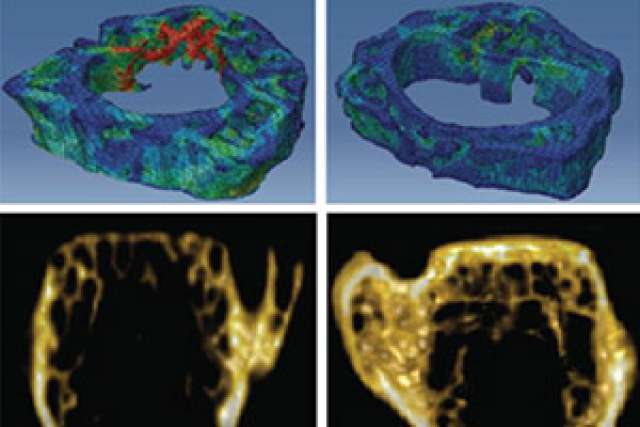
NELL-1 stands for Neural EGFL-like 1 (also called Nel-like molecule-1). It is a secreted osteogenic protein that was first identified in the mid-1990s. They found it heavily upregulated in the prematurely fused sutures of patients with craniosynostosis (a condition where the skull bones fuse too early and the head shape becomes deformed).
That was the first clue that this protein had a powerful and specific effect on bone formation.
The version being developed for medical use is recombinant human NELL-1 (rhNELL-1). Bone Biologics is the main company currently pushing it through clinical development, primarily for spinal fusion, with additional rights for trauma and osteoporosis applications.
What actually makes NELL-1 different from the usual compounds:
Specificity → Most things people use for “bone” ( HGH, testosterone, Halo, etc.) work indirectly. They raise systemic growth factors, improve the hormonal environment, or increase overall anabolism. NELL-1 works more directly on the osteochondral lineage. It has a much higher preference for turning progenitor cells into bone-forming cells rather than other cell types.
Comparison to BMP-2 → BMP-2 is the current gold-standard osteoinductive protein used in medicine. It works, but it is dirty. It can cause ectopic bone formation (bone growing where it shouldn’t), inflammation, and a tendency to push stem cells toward fat as well as bone. NELL-1 has repeatedly shown comparable or better bone-forming ability in multiple animal models while being cleaner on those fronts. It is anti-adipogenic (it prefers bone over fat) and does not readily form ectopic bone in muscle pouch models the way BMP-2 does.
Dual mechanism → This is the part most people miss. NELL-1 does not only stimulate osteoblasts (the cells that build bone). It also reduces the activity of osteoclasts (the cells that break bone down). Anabolic + anti-resorptive in the same molecule. That is rare.
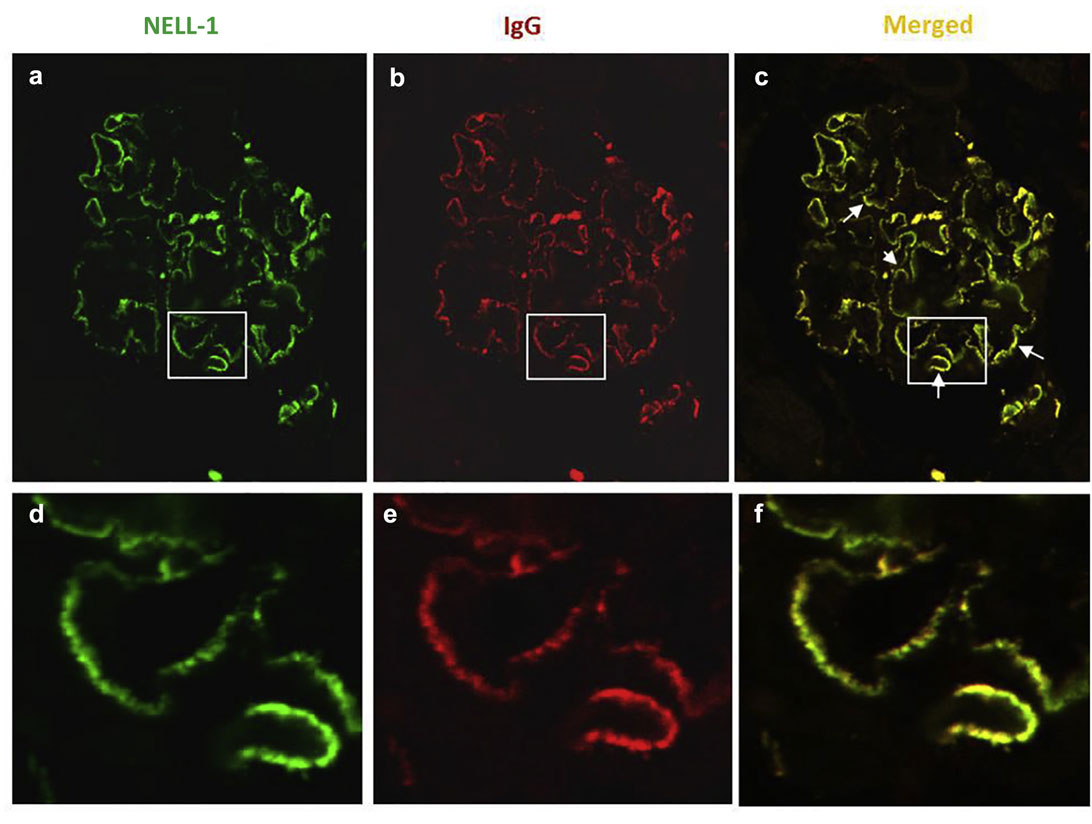
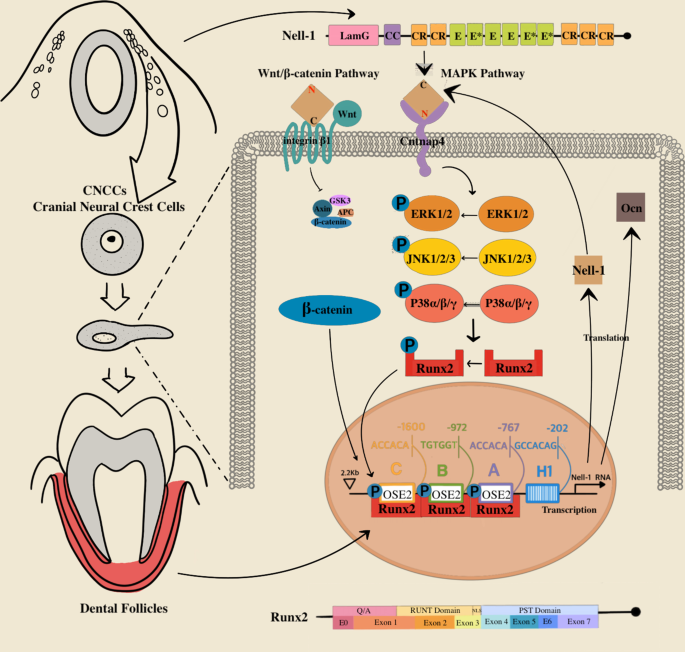
Signalling → It binds to integrin β1 on the cell surface and activates the Wnt/β-catenin pathway, which is one of the central pathways controlling whether a mesenchymal stem cell becomes a bone cell or something else. It also upregulates classic osteogenic transcription factors like Runx2 and Osterix.
✧ ─── ⋆⋅☆⋅⋆ ─── ✧
▸ II: Mechanism of Action
✧ ─── ⋆⋅☆⋅⋆ ─── ✧
This is the part most people completely misunderstand when they hear “bone growth compound.”
NELL-1 does not work like HGH, testosterone, or Halo. Those compounds mostly create a better hormonal environment and hope the body uses it for bone. NELL-1 acts much more directly on the cells that actually build and break down bone.
▸ 1. Binding and signalling
NELL-1 binds to integrin β1 on the surface of mesenchymal stem cells and osteoblast-lineage cells. This triggers activation of the canonical Wnt/β-catenin pathway. Once β-catenin moves into the nucleus, it ramps up the key osteogenic transcription factors, especially Runx2 and Osterix. These are the master switches that tell a progenitor cell to become a bone-forming osteoblast.
▸ 2. Dual action (important )
▸ 3. Anti-adipogenic effect
BMP-2 (the current medical gold standard) has a nasty habit of also pushing stem cells toward becoming fat cells. NELL-1 does the opposite. It actively prefers the osteogenic pathway over the adipogenic one. This is one of the reasons the bone it produces in animal models looks more like normal compact bone instead of the fatty, hollow bone you sometimes get with high-dose BMP-2.
▸ 4. Specificity
Unlike BMP-2, NELL-1 does not readily induce ectopic bone formation in soft tissue (muscle pouch models). It is much more restricted to the osteochondral lineage. That specificity is a big part of why researchers consider it potentially safer for systemic use.
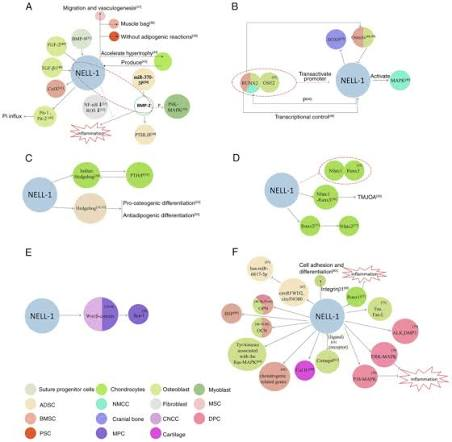
In practical terms: NELL-1 is telling the bone marrow stem cells to become better osteoblasts, making those osteoblasts work harder, and simultaneously telling the osteoclasts to calm the fuck down. That is a fundamentally different approach from just spamming growth hormone or androgens and hoping for the best.
✧ ─── ⋆⋅☆⋅⋆ ─── ✧
▸ III: Key Research & Evidence
✧ ─── ⋆⋅☆⋅⋆ ─── ✧
This is not “some guy on org said it works.” This is 25+ years of published academic research from UCLA and collaborators, with data in rodents, large animals, and non-human primates. Here’s the actual evidence, not the filtered version.
♥ Discovery and early work
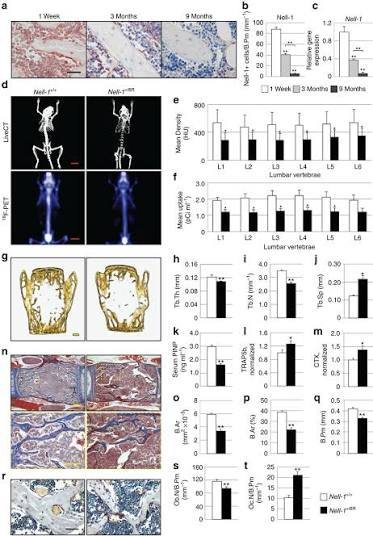
NELL-1 was first identified in the 1990s by Kang Ting’s group because it was heavily overexpressed in the fused cranial sutures of children with craniosynostosis. That was the first hard clue it was a potent driver of bone formation. Follow-up work showed that overexpression causes excess bone, and reduced expression causes undermineralized bone and age-related bone loss.
♥ Local bone regeneration studies
Multiple critical-sized defect models (places where the bone will not heal on its own):
This is where it gets interesting for density.
Bone Biologics is developing rhNELL-1 (combined with demineralized bone matrix) under the name NB1. It is in a pilot clinical study for spinal fusion in Australia. The company has also reported extended shelf-life stability data for the protein, which is a practical manufacturing milestone. Systemic osteoporosis applications are still preclinical but actively discussed in the literature.
✧ ─── ⋆⋅☆⋅⋆ ─── ✧
▸ IV: Dosing
✧ ─── ⋆⋅☆⋅⋆ ─── ✧
✧ ─── ⋆⋅☆⋅⋆ ─── ✧
▸V. Conclusion
✧ ─── ⋆⋅☆⋅⋆ ─── ✧
NELL-1 is one of the few bone-related compounds that actually has serious, repeated, multi-species data behind it. Dual mechanism, high specificity, cleaner profile than BMP-2 in multiple models, and measurable increases in bone density and volume with both local and systemic delivery. That is more than can be said for most of the shit people currently run.
its a legitimate osteogenic protein with a mechanism that makes sense, animal data that holds up across rodents, sheep and primates, and early human trials already underway. On a forum full of recycled HGH + test + Halo talk, this is one of the only things that is actually new and worth paying attention to.
It's not particularly hard to source, indiamart and wwb don't have it. But all it took a google search and I found a few places to buy it.
Do your own reading. The studies are public. Until a systemic version becomes available, this remains high-upside research rather than something you can pin next week. But if you care about actual bone instead of just soft tissue, NELL-1 is one of the most interesting things on the horizon.
@Stalker @foidslayer5000 @The Hatman @buccalfatremoval @Atra
thoughts on this?
this could be big
✦Groundbreaking New Bone Growth Compound NELL-1 Just Dropped✦
✧ ───────── ⋆⋅☆⋅⋆ ───────── ✧
⟐ the overlooked osteoanabolic with a dual mechanism ⟐ •──────────────────────────•
Anyone who has done 0 research on it will say this:
“Bone growth compounds don’t exist”
“This is just another cope”
“Just run HGH, ERDA, TEST, HALO ETC.”
JFL
If you are not a fucking retard while looking at the research you’ll realise NELL-1 is one of the most interesting osteoanabolic proteins currently in development. Dual mechanism. Builds bone and reduces breakdown at the same time.
I have looked into every bone-related compound people obsess on here. HGH, high dose vitamin D, Halotestin, Testosterone, Tren and more. None of them come close to what the NELL-1 data is showing in terms of specificity. Most of you have never even heard of it because
no one on this forum has ever made a thread about it.
Zero discussion. Nothing. That’s how overlooked this is.
✦ Why NELL-1 in general? ✦
1. Actual published research showing increased bone formation
2. Dual action (stimulates osteoblasts + inhibits osteoclasts)
3. More bone-specific than anything else with less of the usual problems
4. Currently in early clinical development, not some random research chemical with zero data
✧ ─── ❖ ─── ✧ ─── ❖ ─── ✧
[TABLE OF CONTENTS]
✧ ─── ❖ ─── ✧ ─── ❖ ─── ✧
❖ CHAPTER I: What is NELL-1?
❖ CHAPTER II: Mechanism of Action
❖ CHAPTER III: Key Research & Evidence
❖ CHAPTER IV: Dosing
❖ CHAPTER V: Conclusion
✧ ─── ⋆⋅☆⋅⋆ ─── ✧
▸ I: What is NELL-1?
✧ ─── ⋆⋅☆⋅⋆ ─── ✧
NELL-1 stands for Neural EGFL-like 1 (also called Nel-like molecule-1). It is a secreted osteogenic protein that was first identified in the mid-1990s. They found it heavily upregulated in the prematurely fused sutures of patients with craniosynostosis (a condition where the skull bones fuse too early and the head shape becomes deformed).
That was the first clue that this protein had a powerful and specific effect on bone formation.
The version being developed for medical use is recombinant human NELL-1 (rhNELL-1). Bone Biologics is the main company currently pushing it through clinical development, primarily for spinal fusion, with additional rights for trauma and osteoporosis applications.
What actually makes NELL-1 different from the usual compounds:
Specificity → Most things people use for “bone” ( HGH, testosterone, Halo, etc.) work indirectly. They raise systemic growth factors, improve the hormonal environment, or increase overall anabolism. NELL-1 works more directly on the osteochondral lineage. It has a much higher preference for turning progenitor cells into bone-forming cells rather than other cell types.
Comparison to BMP-2 → BMP-2 is the current gold-standard osteoinductive protein used in medicine. It works, but it is dirty. It can cause ectopic bone formation (bone growing where it shouldn’t), inflammation, and a tendency to push stem cells toward fat as well as bone. NELL-1 has repeatedly shown comparable or better bone-forming ability in multiple animal models while being cleaner on those fronts. It is anti-adipogenic (it prefers bone over fat) and does not readily form ectopic bone in muscle pouch models the way BMP-2 does.
Dual mechanism → This is the part most people miss. NELL-1 does not only stimulate osteoblasts (the cells that build bone). It also reduces the activity of osteoclasts (the cells that break bone down). Anabolic + anti-resorptive in the same molecule. That is rare.
Signalling → It binds to integrin β1 on the cell surface and activates the Wnt/β-catenin pathway, which is one of the central pathways controlling whether a mesenchymal stem cell becomes a bone cell or something else. It also upregulates classic osteogenic transcription factors like Runx2 and Osterix.
✧ ─── ⋆⋅☆⋅⋆ ─── ✧
▸ II: Mechanism of Action
✧ ─── ⋆⋅☆⋅⋆ ─── ✧
This is the part most people completely misunderstand when they hear “bone growth compound.”
NELL-1 does not work like HGH, testosterone, or Halo. Those compounds mostly create a better hormonal environment and hope the body uses it for bone. NELL-1 acts much more directly on the cells that actually build and break down bone.
▸ 1. Binding and signalling
NELL-1 binds to integrin β1 on the surface of mesenchymal stem cells and osteoblast-lineage cells. This triggers activation of the canonical Wnt/β-catenin pathway. Once β-catenin moves into the nucleus, it ramps up the key osteogenic transcription factors, especially Runx2 and Osterix. These are the master switches that tell a progenitor cell to become a bone-forming osteoblast.
▸ 2. Dual action (important )
- It increases the number and activity of osteoblasts (the cells that lay down new bone).
- it reduces the activity and/or number of osteoclasts (the cells that resorb bone).
▸ 3. Anti-adipogenic effect
BMP-2 (the current medical gold standard) has a nasty habit of also pushing stem cells toward becoming fat cells. NELL-1 does the opposite. It actively prefers the osteogenic pathway over the adipogenic one. This is one of the reasons the bone it produces in animal models looks more like normal compact bone instead of the fatty, hollow bone you sometimes get with high-dose BMP-2.
▸ 4. Specificity
Unlike BMP-2, NELL-1 does not readily induce ectopic bone formation in soft tissue (muscle pouch models). It is much more restricted to the osteochondral lineage. That specificity is a big part of why researchers consider it potentially safer for systemic use.
In practical terms: NELL-1 is telling the bone marrow stem cells to become better osteoblasts, making those osteoblasts work harder, and simultaneously telling the osteoclasts to calm the fuck down. That is a fundamentally different approach from just spamming growth hormone or androgens and hoping for the best.
✧ ─── ⋆⋅☆⋅⋆ ─── ✧
▸ III: Key Research & Evidence
✧ ─── ⋆⋅☆⋅⋆ ─── ✧
This is not “some guy on org said it works.” This is 25+ years of published academic research from UCLA and collaborators, with data in rodents, large animals, and non-human primates. Here’s the actual evidence, not the filtered version.
♥ Discovery and early work
NELL-1 was first identified in the 1990s by Kang Ting’s group because it was heavily overexpressed in the fused cranial sutures of children with craniosynostosis. That was the first hard clue it was a potent driver of bone formation. Follow-up work showed that overexpression causes excess bone, and reduced expression causes undermineralized bone and age-related bone loss.
♥ Local bone regeneration studies
Multiple critical-sized defect models (places where the bone will not heal on its own):
- Rat femoral segmental defects: NELL-1 in a demineralized bone matrix carrier produced significantly more new bone volume than controls in a dose-dependent manner. The higher dose groups showed better bridging and more mature bone.
- Calvarial (skull) defect models: NELL-1 regenerated bone at rates comparable to BMP-2, but with differences in bone quality and less of the cystic/fatty bone that BMP-2 can produce.
- These studies repeatedly showed NELL-1 is osteoinductive and osteospecific.
This is where it gets interesting for density.
- Ovariectomized (estrogen-deficient) rat and mouse models of osteoporosis: Local and systemic NELL-1 administration increased bone volume, bone mineral density, trabecular number, and cortical thickness. It helped maintain bone that was otherwise being lost.
- Systemic intravenous delivery in osteoporotic mice produced measurable increases in BMD and bone volume across the skeleton, not just at an injection site. That matters. It means the protein can have a whole-body effect when delivered into the bloodstream.
- Sheep spine model (larger animal, more clinically relevant): Local implantation of rhNELL-1 significantly increased bone mineral density, percent bone volume, and cortical width in osteoporotic vertebrae.
Bone Biologics is developing rhNELL-1 (combined with demineralized bone matrix) under the name NB1. It is in a pilot clinical study for spinal fusion in Australia. The company has also reported extended shelf-life stability data for the protein, which is a practical manufacturing milestone. Systemic osteoporosis applications are still preclinical but actively discussed in the literature.
✧ ─── ⋆⋅☆⋅⋆ ─── ✧
▸ IV: Dosing
✧ ─── ⋆⋅☆⋅⋆ ─── ✧
- Osteoporotic mice (IV): 1.25 mg/kg every 48 hours for 4 weeks produced clear increases in BMD, bone volume, and trabecular parameters.
- Some studies used similar mg/kg ranges with modified (longer half-life or bone-targeted) versions of NELL-1 to reduce injection frequency.
✧ ─── ⋆⋅☆⋅⋆ ─── ✧
▸V. Conclusion
✧ ─── ⋆⋅☆⋅⋆ ─── ✧
NELL-1 is one of the few bone-related compounds that actually has serious, repeated, multi-species data behind it. Dual mechanism, high specificity, cleaner profile than BMP-2 in multiple models, and measurable increases in bone density and volume with both local and systemic delivery. That is more than can be said for most of the shit people currently run.
its a legitimate osteogenic protein with a mechanism that makes sense, animal data that holds up across rodents, sheep and primates, and early human trials already underway. On a forum full of recycled HGH + test + Halo talk, this is one of the only things that is actually new and worth paying attention to.
It's not particularly hard to source, indiamart and wwb don't have it. But all it took a google search and I found a few places to buy it.
Do your own reading. The studies are public. Until a systemic version becomes available, this remains high-upside research rather than something you can pin next week. But if you care about actual bone instead of just soft tissue, NELL-1 is one of the most interesting things on the horizon.
@Stalker @foidslayer5000 @The Hatman @buccalfatremoval @Atra
thoughts on this?
this could be big
Last edited: