





LevSeven
Iron
- Joined
- Jun 26, 2025
- Posts
- 179
- Reputation
- 269
Insurance companies are gay asf. If you want orthognathic surgery or MARPE, it's damn near impossible to get it unless you're subhuman with insane recession. There is, of course, a caveat.
How do I know if this is worth my time?
The only reason you should be looking into orthognathic surgery or a skeletal expander is because of a real recession or a narrow palate. This guide will only worsen your symptoms, guaranteeing a positive diagnosis, and making coverage from your insurance provider much more likely. Here's how I tested myself for both of these scenarios.
Palate Width:
Maxillar/Mandibular Recession:
In my case, I have a wide palate but my jaws are recessed. After making my measurements, I met with an orthodontist, who told me that I am a viable candidate for bimax. He then told me to go get a sleep study, for if my recession was affecting my sleep, then insurance would cover it. Now, here we are.
You will most likely be given an at-home sleep study machine. This is great, since it means we can do whatever the fuck we want.
Alcohol
Easily the most effective means of worsening your sleep apnea. Alcohol acts as a muscle relaxant and can dehydrate you, ruining your quality of sleep as your airway gets compressed. Normally, this sucks, but for one night, we want this.
Marijuana
Weed messes with your brain functioning a good bit, which can worsen sleep. On an at-home sleep study, this doesn't matter. What we're after are primarily the dehydrating properties. If you hit the pen before going to bed, your nose, mouth, and throat will be DRY AS FUCK. You will absolutely be mouth breathing, and your sleep quality will suck.
Stimulant Addiction
I purposefully got myself heavily dependent on nicotine for this. Like, way more than is normal or chill. I'm winding back now, and it kinda sucks, but it was worth it. When you abuse stimulants throughout the day, then leave your body craving it at night, your quality of sleep absolutely declines. This is exactly what I did. I abstained from nicotine for 12 hours prior to going to sleep, and as a result, my sleep was fragmented and shitty.
I would recommend at least two of these methods. ESPECIALLY ALCOHOL, AS IT IS BY FAR THE MOST EFFECTIVE. I personally lost my cart the day before my sleep study, so I relied only on nicotine withdrawals and getting drunk before going to sleep. Ideally, you would do all three.
Remember that if you have no recession or narrow palate, there is no point in you doing this. Having braces, surgery, MARPE, it all sucks. Only get it if it will actually ascend you. Additionally, the methods I listed are the ones I believe most American males aged 16+ can achieve and are best suited to avoid detection by a physician.
I will be getting bimax by the end of 2027. Cheers.
Obstructive Sleep Apnea
Obstructive sleep apnea (OSA) is a common, serious disorder where the upper airway collapses or becomes blocked during sleep, stopping airflow and causing loud snoring, waking up gasping, and severe daytime fatigue. People with OSA also tend to snore. If you recognize any of these symptoms, chances are you may have a chance to get at least a Lefort 1, depending on your skeletal structure. More on that later.
There are a few reasons why people have OSA. The leading cause is excessive weight, or obesity. If you're fat and hope to use this to get any orthognathic procedure, it will not work. Fat deposits around the upper airway can obstruct your breathing, and if you are fat, that is all insurance companies will look at. What we care about is physical bone structure. A narrow or recessed palate can restrict the airway severely, restricting airflow to your lungs and thus oxygen to your brain, triggering apneas. This is our golden ticket. If you can demonstrate on a sleep study that you have OSA, you can get insurance to cover a free surgery or a skeletal expander.
The remaining causes of OSA are environmental, which we will use to our advantage to worsen our results.
There are a few reasons why people have OSA. The leading cause is excessive weight, or obesity. If you're fat and hope to use this to get any orthognathic procedure, it will not work. Fat deposits around the upper airway can obstruct your breathing, and if you are fat, that is all insurance companies will look at. What we care about is physical bone structure. A narrow or recessed palate can restrict the airway severely, restricting airflow to your lungs and thus oxygen to your brain, triggering apneas. This is our golden ticket. If you can demonstrate on a sleep study that you have OSA, you can get insurance to cover a free surgery or a skeletal expander.
The remaining causes of OSA are environmental, which we will use to our advantage to worsen our results.
How do I know if this is worth my time?
Palate Width:
There's a very simple way to find out if your palate is narrow or not: bite down on a piece of paper. Take the measurement, if you're bellow average, keep reading. Video guide on TikTok:

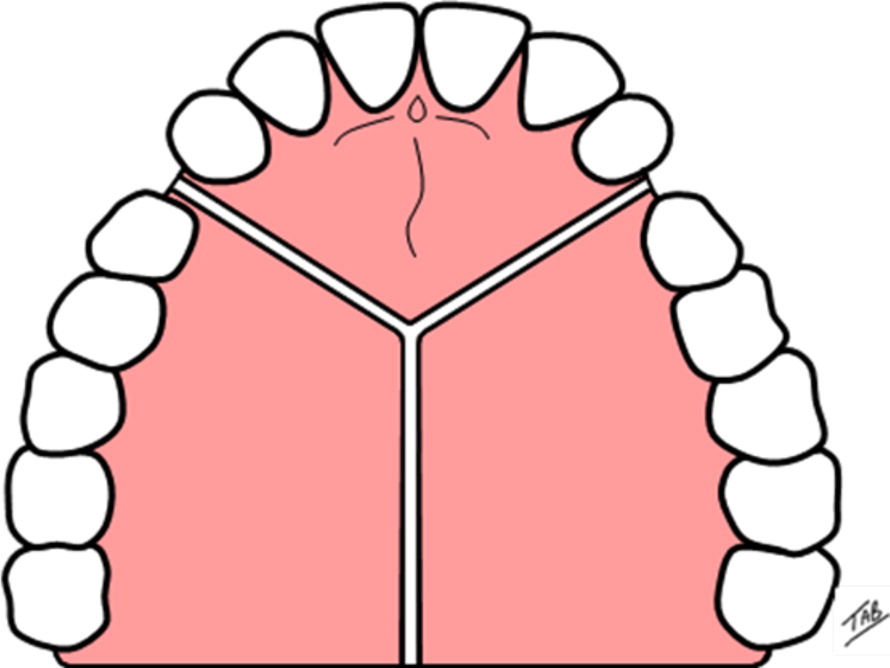
This is the visual difference between a wide and a narrow palate. Note the dental crowding, asymmetry, etc. This contributes to a narrow face, negative canthal tilt, and non-existant zygos. You're also probably a mouth breather if you have a narrow palate.
If you have a narrow palate, get a skeletal expander. You do not necessarily need orthognathic surgery. To determine if you do, see below.
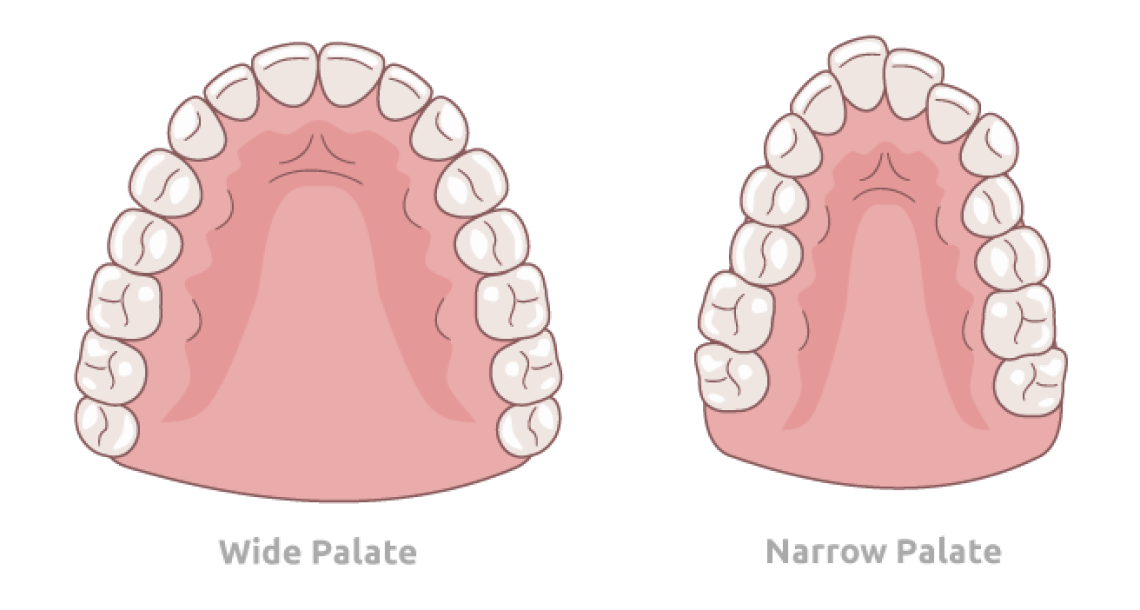
This is the visual difference between a wide and a narrow palate. Note the dental crowding, asymmetry, etc. This contributes to a narrow face, negative canthal tilt, and non-existant zygos. You're also probably a mouth breather if you have a narrow palate.
If you have a narrow palate, get a skeletal expander. You do not necessarily need orthognathic surgery. To determine if you do, see below.
Maxillar/Mandibular Recession:
Both maxillary and mandibular recession can contribute to obstructive sleep apnea. If your maxilla is recessed, your soft palate is compressed, cutting off the airway. If your mandible is recessed, it can press down into your throat/airway, restricting your airway. If you have a visually obvious recession, just keep reading jfl
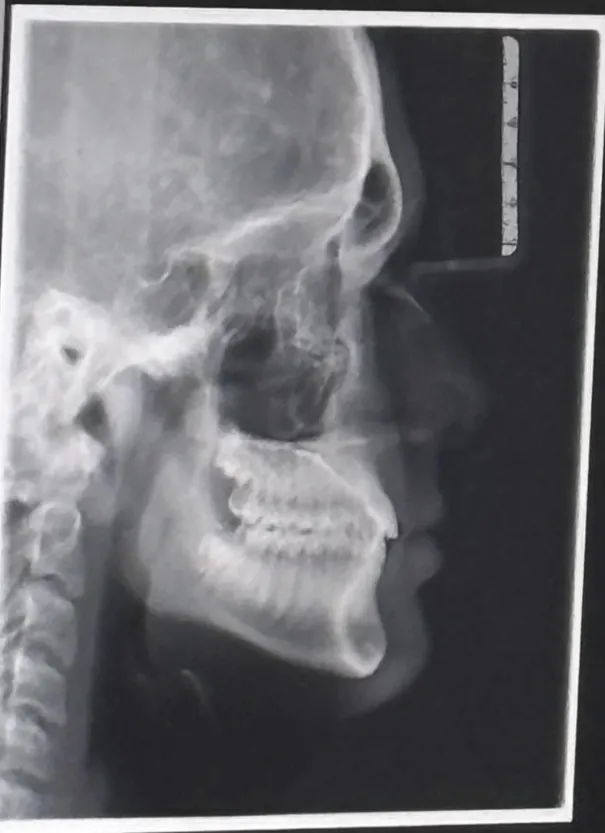
If your recession is somewhat less obvious, ask your dentist or orthodontist for a picture of your lateral ceph. If they do not provide you with the measurements, do them yourself. Here's how I did it:


Upload the photo of your lateral ceph to this website: https://www.rapidtables.com/web/tools/pixel-ruler.html
As you can see in the attached picture, almost all lateral cephs have a ruler in the photo. Use this as your baseline. Determine how many pixels are equal to 1 cm, and go from there. If you can't figure that out, then this guide isn't for you.
Next, to measure angles, upload your lateral ceph to this website: https://www.pixozone.com/angle-calculator. The instructions are on the website, it's not too hard to use. Match up your ceph to the points described in the second picture, and measure them. If you can't find a specific point you're looking for, there may be another ceph measurement point graph that has it.

I would recommend you make every measurement on this spreadsheet. These are all of my measurements. Use ChatGPT or Gemini to help you. Put everything in an excel file, and upload it to either ChatGPT or Gemini. These AI are really, really good at diagnosing what of malocclusion you have. In my case, both my maxilla and mandible are retruded, with my maxilla being severely recessed (+6mm, standard is -1mm).
If you are in fact recessed, get orthognathic surgery. You do not necessarily need a skeletal expander. To determine if you do, see above.
If your recession is somewhat less obvious, ask your dentist or orthodontist for a picture of your lateral ceph. If they do not provide you with the measurements, do them yourself. Here's how I did it:
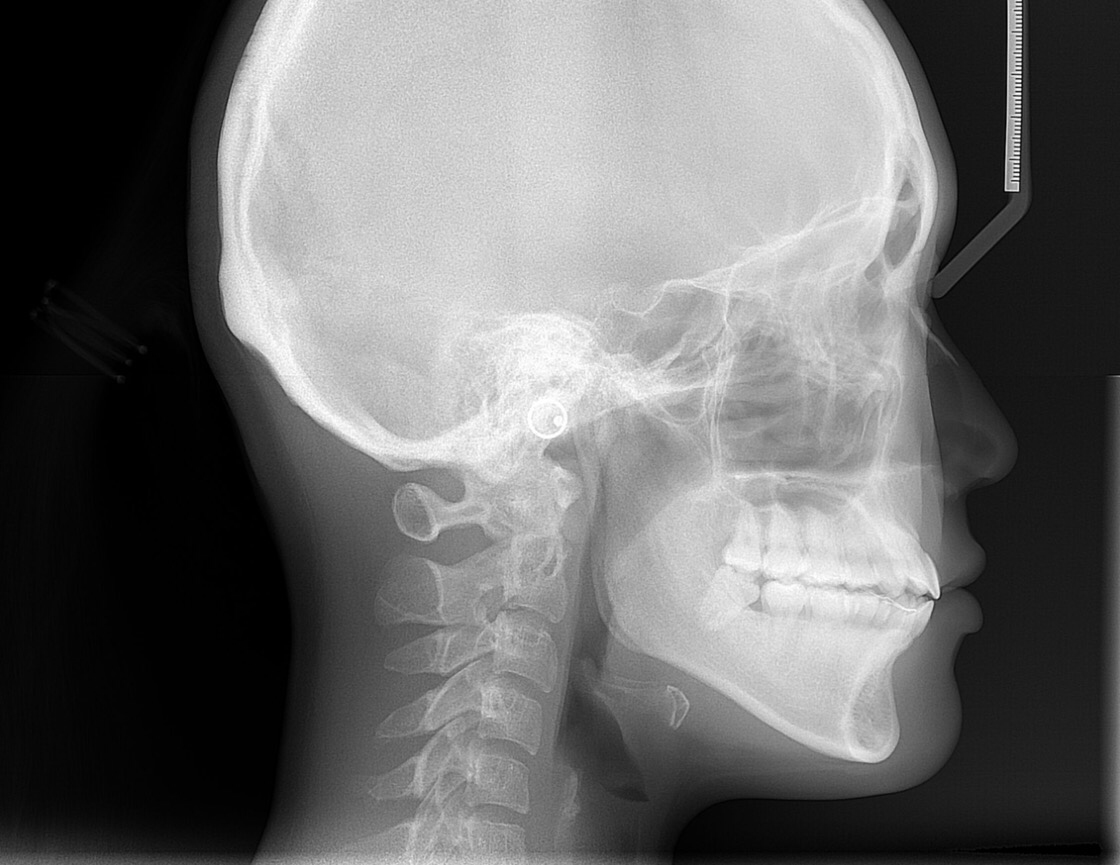
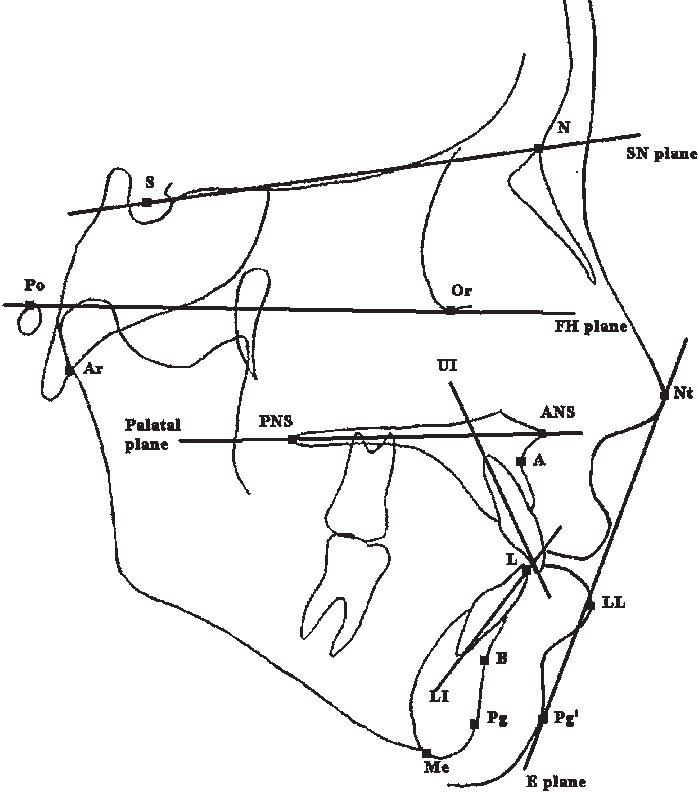
Upload the photo of your lateral ceph to this website: https://www.rapidtables.com/web/tools/pixel-ruler.html
As you can see in the attached picture, almost all lateral cephs have a ruler in the photo. Use this as your baseline. Determine how many pixels are equal to 1 cm, and go from there. If you can't figure that out, then this guide isn't for you.
Next, to measure angles, upload your lateral ceph to this website: https://www.pixozone.com/angle-calculator. The instructions are on the website, it's not too hard to use. Match up your ceph to the points described in the second picture, and measure them. If you can't find a specific point you're looking for, there may be another ceph measurement point graph that has it.
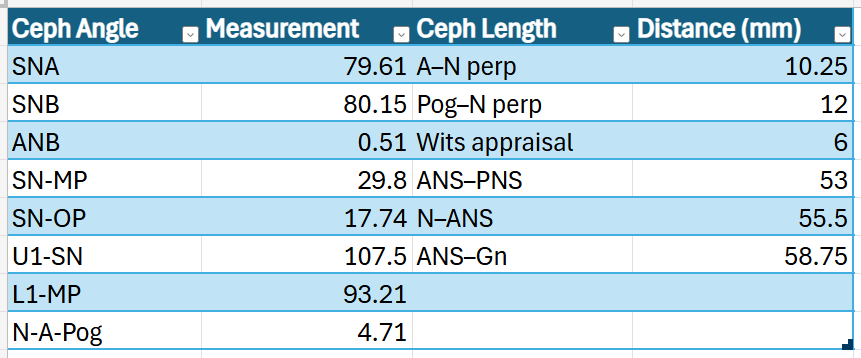
I would recommend you make every measurement on this spreadsheet. These are all of my measurements. Use ChatGPT or Gemini to help you. Put everything in an excel file, and upload it to either ChatGPT or Gemini. These AI are really, really good at diagnosing what of malocclusion you have. In my case, both my maxilla and mandible are retruded, with my maxilla being severely recessed (+6mm, standard is -1mm).
If you are in fact recessed, get orthognathic surgery. You do not necessarily need a skeletal expander. To determine if you do, see above.
In my case, I have a wide palate but my jaws are recessed. After making my measurements, I met with an orthodontist, who told me that I am a viable candidate for bimax. He then told me to go get a sleep study, for if my recession was affecting my sleep, then insurance would cover it. Now, here we are.
How I Made Sure I Tested Positive for OSA
First off, do not disclose that you're doing this to your doctor. And don't overdo any of the methods listed below, as it may become obvious that you had ingested some sort of substance prior to the study.
You will most likely be given an at-home sleep study machine. This is great, since it means we can do whatever the fuck we want.
Alcohol
Easily the most effective means of worsening your sleep apnea. Alcohol acts as a muscle relaxant and can dehydrate you, ruining your quality of sleep as your airway gets compressed. Normally, this sucks, but for one night, we want this.
Marijuana
Weed messes with your brain functioning a good bit, which can worsen sleep. On an at-home sleep study, this doesn't matter. What we're after are primarily the dehydrating properties. If you hit the pen before going to bed, your nose, mouth, and throat will be DRY AS FUCK. You will absolutely be mouth breathing, and your sleep quality will suck.
Stimulant Addiction
I purposefully got myself heavily dependent on nicotine for this. Like, way more than is normal or chill. I'm winding back now, and it kinda sucks, but it was worth it. When you abuse stimulants throughout the day, then leave your body craving it at night, your quality of sleep absolutely declines. This is exactly what I did. I abstained from nicotine for 12 hours prior to going to sleep, and as a result, my sleep was fragmented and shitty.
I would recommend at least two of these methods. ESPECIALLY ALCOHOL, AS IT IS BY FAR THE MOST EFFECTIVE. I personally lost my cart the day before my sleep study, so I relied only on nicotine withdrawals and getting drunk before going to sleep. Ideally, you would do all three.
Remember that if you have no recession or narrow palate, there is no point in you doing this. Having braces, surgery, MARPE, it all sucks. Only get it if it will actually ascend you. Additionally, the methods I listed are the ones I believe most American males aged 16+ can achieve and are best suited to avoid detection by a physician.
My Results
After determining my recession, talking with my doctor, talking with an orthodontist, then scheduling a sleep study, and using two of the three substances I listed, I was diagnosed with severe obstructive sleep apnea. I believe that, naturally, I have mild-to-moderate OSA, not nearly enough to get bimax covered by my insurance. To put it simply, I'm not insanely recessed. I get bitches, but anything to mog. Orthognathic procedures or skeletal expanders are a method, I believe, that many people ages 16+ can use to ascend from LTN/MTN to HTN/CL.
I will be getting bimax by the end of 2027. Cheers.








 . insane what you did just to get a surgery, but good luck and i hope it goes well


