


leF
I post only HQ.
- Joined
- Jan 16, 2025
- Posts
- 173
- Reputation
- 1,012
POST-NUT CLARITY
(rare guide)

(rare guide)
Post-Nut Clarity : The “opening of the mind” which occurs in a man after he has unleashed the fattest nut ever nutted in the chronicles of nut-kind. This “opening” is characterized by an incredibly intense feeling of “awakening” and “awareness”. The individual in question feels as if the secrets and inner-workings of the universe have suddenly been unraveled before his eyes.
Source : urbandictionary.com
Before you can really move forward in life you need to figure out what helps you think clearly. Lots of people are trying to get that post-nut clarity after masturbating every time they feel the urge. Then they wonder why they can't focus on whats important. Meanwhile there are guys making money building something real making smart decisions and they're not controlled by that cycle.I've seen guys, not super talented or anything who still manage to stay on top of things.. Then there's you reading all this self-help stuff trying to eat well sleep well and exercise but you still get held back by urges and can't think straight. You make things harder than they need to be, by overthinking, instead of just understanding what really works and doing it.
So let me explain how it really works. Once you understand this you'll stop trying to get that headed feeling and you'll just live with it.
What post-nut clarity actually is (this is the whole secret)
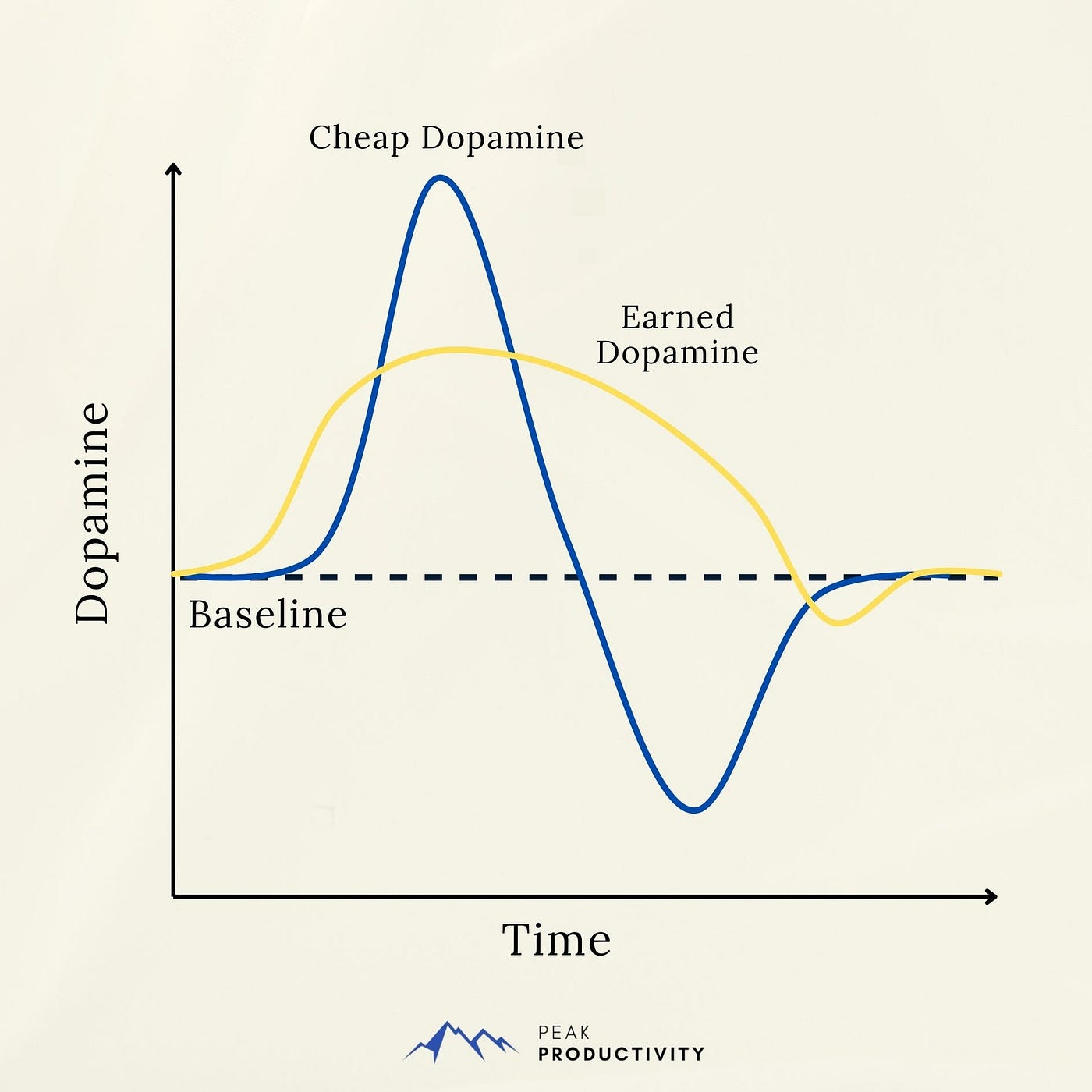
Dopamine is the "wanting" chemical. It's the chasing, the pull, the "i need this right now" It is NOT the feeling of enjoying something. That is a system entirely. This is why you can want something so bad it hurts and then the second you get it you feel… nothing. You feel empty. Sometimes you even feel disgusted. The wanting was huge the actual pleasure of fapping was small. That gap right there is the reason men feel stupid after they nut. The wanting was lying to you the whole time.
So what really happens in post-nut clarity? The wanting stops. Dopamine drops off. When that loud voice in your head goes quiet, the front of your brain (your decision making, your judgment, the adult in you) comes back and takes control again. It takes the wheel again. That's it. That is the clarity. It's not that you became smarter.. it's that the screaming retard in your head finally shut up for a minute and you can hear yourself think.
Post-nut clarity = the wanting goes quiet + your brain starts making sense again
Now here's where it gets good. You do not need to fap and ejaculate to make that happen.
Why the urge makes you a retard (the rationalization cascade)
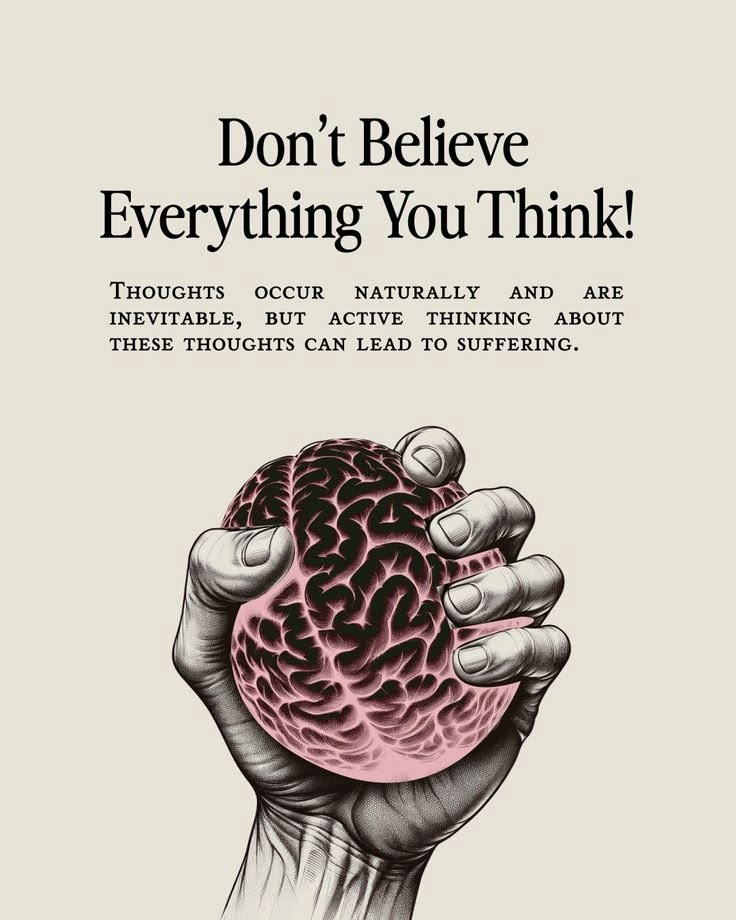
Here is what you need to know: these thoughts are not your thoughts. They are just your brain trying to get what it wants. They're not you reasoning. It's like your brain is making up excuses so it can have what it wants. You want proof? Try it. The second you nut, ALL of those thoughts vanish instantly. Where did they go? They were never true. They were just your brain trying to get what it wants.
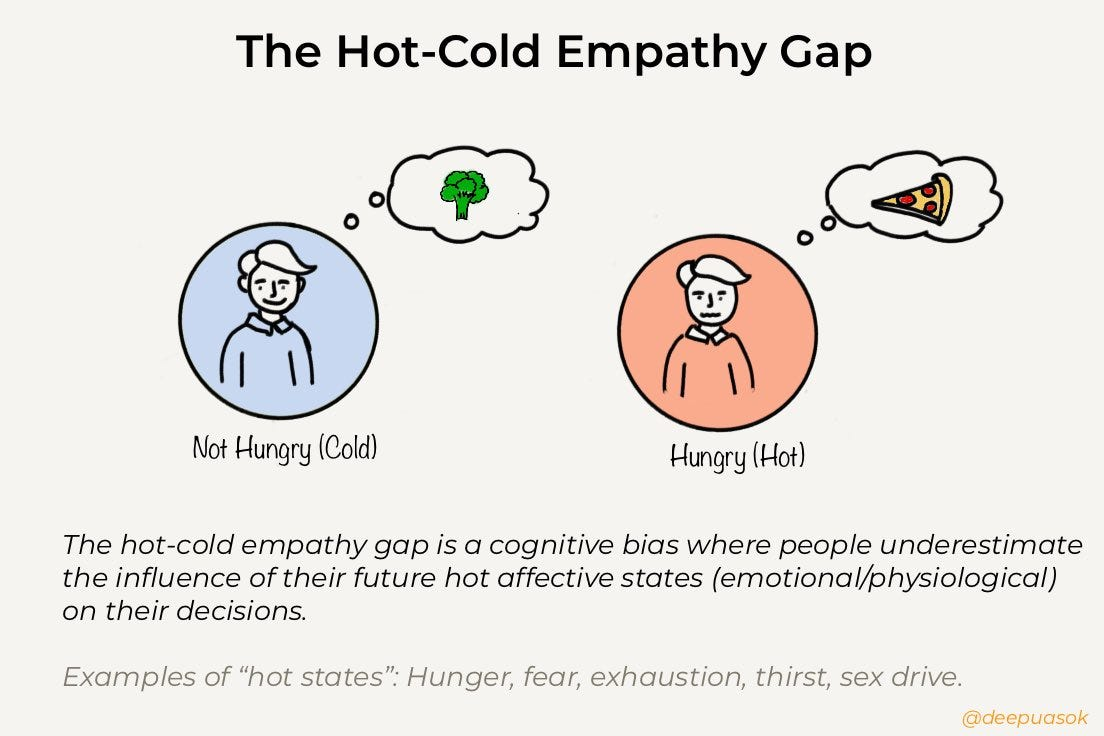
Scientists call this the hot–cold gap. When you are calm (cold) you can't even imagine how strong the urge will feel later. And when you're in the urge (hot) you can't remember why you cared about your goals. You become a different person; A dumber, weaker person who negotiates with himself and always loses.
This is the most important sentence in this entire post, so please engrave it into your mind :
Decisions you make while calm are good. Decisions you make while craving are garbage. So you decide ONCE, while calm, and you build your life so the craving version of you can't undo it.
That is the important thing to achieve Post-Nut Clarity. Everything below is how you can do it.
How to live in the clarity (the actual protocol)
You’re not going to "recreate the nut." You can’t fake that exact chemical rush in 30 seconds, I am not going to lie to you. What you CAN do is keep your wanting system under control from the start and keep your judgment clear ALL THE TIME. Do that and you’ll basically live in a permanent mild version of post-nut clarity. Like I promised you : infinite awareness and no nut required. Stop thinking too much now and just do these.
1. Win the first hour (your morning sets EVERYTHING)
When you wake up in the morning, the first thing you feed your brain sets the tone for your entire day. A lot of people wake up and immediately check their phone. They look at notifications, reels, dms… maybe worse. That is not how you should start your day. You are basically telling your brain : "I want stimulation. I want dopamine. I want to crave things" before you even get out of bed. Then later, you wonder why your mind feels restless all day. Why you keep chasing dopamine that make you feel good for two seconds.- No phone for the first 30 to 60 min. Charge it in another room. Don’t say "oh just check." Fuck you. The second you start scrolling, you’re training your brain to chase dopamine all day.
- Get outside in real light for 5 to 10 min. And not through a window, glass kills it. Sunlight in your eyes early sets your whole brain clock, lifts your mood chemically and tells your body when to sleep 14 hours later. It's free and it's fucking powerful.
- Delay your coffee 60 to 90 min. Let your body wake up on its own first, then caffeine actually hits clean instead of giving you a crash later.
- Move your body, even 5 min. Please don't be lazy, it's not going to kill you I promise you. Do pushups, a walk, anything. You want to EARN a little dopamine with effort first thing, not get it from a screen. Your ancestors had to hunt (action) after waking up just to get food (reward), and that’s probably why they were healthier than you’ll ever be in your entire life.

2. Fix the body or nothing else works
You cannot outdo meditation with a body that is not working properly. This is the not exciting stuff that actually helps you win.- Sleep is very important. You should get more than 7.5 hours of sleep and wake up at the same time every day. I am putting sleep first because it is that important. If you do not get a good night of sleep it can lower the amount of dopamine in your brain by around 10%, which is the exact same state you see in addicts. So if you do not get sleep you will have weak willpower and crazy urges the next day, guaranteed. Do not skip sleep before you skip anything.
- You should exercise. Zone 2 cardio 3x a week and lifting 2 to 3 times a week. Exercise is clean dopamine, it raises your baseline instead of spiking it and crashing it like porn or sugar does. I hate calling it that because it should be something normal but it’s THE cheat code nobody wants to hear about because it requires effort.
- Take cold showers 1 to 5 min, a few times a week. Get in the shower and make the water as cold as you can stand it. The cold water will help you feel more focused and alert. It is like a wake up call for your body. Bonus: doing something hard you don't want to do every morning builds the exact muscle you need to say no to urges. Don't jump in a hot shower after, let your body warm itself.
- Eat food that has protein in it and try to avoid sugar.Protein gives your brain the raw material to even MAKE dopamine. Sugar crashes feel exactly like cravings and make everything worse. Eat like an adult.
3. Beat the urge BEFORE it shows up (decide while cold)
This is where you actually win or lose. You do NOT fight urges with willpower in the moment, that's a loser's strategy and you'll lose every time eventually. Remember? You beat them before they happen, while you are calm.- Kill the cue, not the urge. This is very important. Your brain gets addicted to the CUE, not the act; The dark room, the phone in bed, the specific time of night, the boredom. Remove the trigger and the urge mostly never even happens. Delete the apps. Use a blocker, and have someone else set the password so calm-you locks out hot-you. Phone out of the bedroom. This beats willpower 100 times out of 100.
- Write "if-then" rules now. Pre-decide what you will do exactly so theres no arguing with yourself when it counts. For example: "IF I am in bed at night with my phone, THEN I get up, put it in the kitchen, and do 5 deep breaths." When the moment comes you just run the program. You don't think and you don't debate with the idiot. The arguing IS the trap. Your plan always wins.
- Picture your future self for 60 sec a day. Vividly. The body you want, the money, the version of you that's free. When the future starts to feel real, your long-term self stops feeling like a stranger you keep betraying for a cheap dopamine hit tonight. Some people call this visualization or the law of attraction. I already made a post about it if you want to understand it better: post.

4. When the urge hits anyway (real-time rescue)
Sometimes it gets through. That's fine. Here's what to do. Just do it, don't overthink it.- Breathe first. Double inhale, long exhale. Take two sniffs in through your nose then breathe out slowly through your mouth. Do this for a minute. This simple trick called "deep breathing" can calm you down fast. It works in under a minute. Do this BEFORE trying to think your way out of the urge.
- Say it loud. "I'm feeling the urge to masturbate now." Speaking it out loud helps calm down your emotions and think clearly again. You're taking control of the situation. You are basically forcing the clarity manually.
- Change your thought. Don't think "one time." Instead think "'Im noticing I'm having this thought." That little switch helps you see the urge, from the outside not be trapped by it.
- Then just wait 10 min. Urges come in waves. They peak in a few minutes and fall, they don't last forever even though it feels like it. Tell yourself "10 minutes then i'll decide." 9 times out of 10 the wave is gone by then. Don't try to fight it, don't feed it, just watch it rise and crash like a wave at the beach. It always crashes. This is called urge surfing.
- Move your body. Do 20 pushups splash cold water on your face or step outside. This helps use up the energy and break the cycle.

5. Don't burn out (the weekly stuff)
Now the warning. A lot of guys read something like this and go full monk mode… they stop listening to music, they stop having fun, they stop seeing people, and they sit in a dark room trying to stop themselves from feeling good by "fasting dopamine." That is not what this is about. It does not work. You will feel empty and dead. You will overdo things in two weeks. That is not the thing to do. That's not the move.You're not cutting out LIFE. You're cutting out the cheap, instant, screen-fed garbage dopamine. That is different. Stick to your plan not your mood, and remember that done is better than perfect.
- Keep the good things in your life. Keep your friends, your hobbies, your goals, hard challenges, good food, and sex with a real person. Those things are not your enemies. The real enemy is mindlessly scrolling for hours and frying your brain with artificial stimulation like porn.
- Do something hard and new every week. A new skill, a heavy workout, a scary conversation. This will keep you sharp and motivated without training your brain to chase cheap hits.
- Once a week, sit down for 15 min and plan. Look at where you made mistakes, fix your if-then rules, set up next week so it's harder to fail. This is calm-you being in control. Use it.
- Track hours you sleep, how many minutes you move around, how many times you slip up. That's it. The pattern will show up in a few weeks. The numbers will tell you what to fix. If you do not get sleep you will have more urges. It happens every time.

Real talk before you go
Do not try to do all of this tomorrow, you will quit by Wednesday. That is the overthinking trap again.Start with 3 things for 2 weeks : your phone out of the bedroom, 7.5 hours of sleep, and write your if-then rules. That is it. Those 3 alone will change you more than any fancy biohack. Add the rest once those are automatic.
Remember the one law that runs all of this:
calm-you is smart, craving-you is an idiot, so let calm-you make the rules and build your world so craving-you cannot break them.
You don't need to nut to think clearly. You don't need that to achieve post-nut clarity. You need to stop letting the wanting run your life. Do that and the clarity stops being a 5-minute thing you chase after fapping… and starts being who you are all day.
Write those down somewhere:
If something is free you are the product.
If something is easy it not worth doing.
Nothing in the world is worth having or worth doing unless it means effort, pain, difficult.
If everyone can get it, it is cheap because cheap items have many buyers.
TLDR:
Post-nut clarity is when your brain stops craving things for a moment, so you can think clearly again. You don't need to nut to get it. Keep the craving low during the day, and your mind stays clear.
- Get 7.5 hours of sleep and wake up at the time every day.
- Don't check your phone for the hour and get some morning sunlight.
- Exercise, take showers, and eat protein instead of sugary foods.
- Get rid of things that make you want to check your phone (like keeping it out of your bedroom and blocking apps).
- When you feel the urge to nut, take a few breaths, acknowledge the feeling, wait 10 minutes, and then move on.
- Don't be too extreme. Cut out things that give you cheap happiness, not the things that bring you joy.

Section 1:
 pmc.ncbi.nlm.nih.gov

 link.springer.com
pmc.ncbi.nlm.nih.gov
link.springer.com
pmc.ncbi.nlm.nih.gov

 pubmed.ncbi.nlm.nih.gov

 www.scientificamerican.com
pmc.ncbi.nlm.nih.gov
pubmed.ncbi.nlm.nih.gov
www.scientificamerican.com
pmc.ncbi.nlm.nih.gov
pubmed.ncbi.nlm.nih.gov

 www.sciencedirect.com
pubmed.ncbi.nlm.nih.gov
pubmed.ncbi.nlm.nih.gov
pmc.ncbi.nlm.nih.gov
www.sciencedirect.com
pubmed.ncbi.nlm.nih.gov
pubmed.ncbi.nlm.nih.gov
pmc.ncbi.nlm.nih.gov
Section 2:

 www.nature.com
pmc.ncbi.nlm.nih.gov
www.nature.com
pmc.ncbi.nlm.nih.gov

 neuroinjurycare.com
 link.springer.com
 www.sciencedirect.com
 www.jneurosci.org
 onlinelibrary.wiley.com
pubmed.ncbi.nlm.nih.gov
onlinelibrary.wiley.com
pubmed.ncbi.nlm.nih.gov

 ouraring.com
 honehealth.com
pubmed.ncbi.nlm.nih.gov
---
honehealth.com
pubmed.ncbi.nlm.nih.gov
---
Rewards are both ‘liked’ and ‘wanted’, and those two words seem almost interchangeable. However, the brain circuitry that mediates the psychological process of ‘wanting’ a particular reward is dissociable from circuitry that mediates the degree to which it is ‘liked’. Incentive salience or ‘wanting’, a form of motivation, is generated by large and robust neural systems that include mesolimbic dopamine. By comparison, ‘liking’, or the actual pleasurable impact of reward consumption, is mediated by smaller and fragile neural systems, and is not dependent on dopamine. The incentive-sensitization theory posits the essence of drug addiction to be excessive amplification specifically of psychological ‘wanting’, especially triggered by cues, without necessarily an amplification of ‘liking’. This is due to long-lasting changes in dopamine-related motivation systems of susceptible individuals, called neural sensitization. A quarter-century after its proposal, evidence has continued to grow in support the incentive-sensitization theory. Further, its scope is now expanding to include diverse behavioral addictions and other psychopathologies.
From https://pmc.ncbi.nlm.nih.gov/articles/PMC5171207/
Scientifically, the urge state is driven by a dopamine "wanting" surge that makes cravings feel more important than long-term thinking. In that state, the brain becomes worse at judging consequences clearly. After satisfaction, the opposite happens: the craving signal drops, calming chemicals linked to reward and satisfaction increase, and the thinking part of the brain regains control. The excuses and rationalizations people make during cravings are a normal brain response in that “hot” state, not simply a moral weakness.
From https://www.cmu.edu/dietrich/sds/docs/loewenstein/hotColdEmpathyGaps.pdf Rephrased
You can realistically create a similar low-craving, high-clarity state without sexual stimulation or artificial dopamine spikes by using five evidence-based pillars. First, morning circadian anchoring: getting early light exposure, delaying caffeine, and moving your body soon after waking. Second, neurochemical baseline regulation through zone-2 cardio, brief cold exposure, protein-first nutrition, and 7–9 hours of sleep. Third, making pre-decided behavioral rules while in a “cold” rational state, using tools like implementation intentions and environment design. Fourth, using real-time urge-management tools such as urge surfing, the physiological sigh, affect labeling, and the 10-minute delay method. Fifth, building a weekly structure that prevents tolerance creep through Sepah-style behavioral fasting, rather than extreme "dopamine starvation."
From https://pmc.ncbi.nlm.nih.gov/articles/PMC6449639/ ; https://pmc.ncbi.nlm.nih.gov/articles/PMC6751071/
Liking, Wanting and the Incentive-Sensitization Theory of Addiction - PMC
Rewards are both ‘liked’ and ‘wanted’, and those two words seem almost interchangeable. However, the brain circuitry that mediates the psychological process of ‘wanting’ a particular reward is dissociable from circuitry that mediates the degree to ...
pmc.ncbi.nlm.nih.gov
The debate over dopamine’s role in reward: the case for incentive salience - Psychopharmacology
Introduction Debate continues over the precise causal contribution made by mesolimbic dopamine systems to reward. There are three competing explanatory categories: ‘liking’, learning, and ‘wanting’. Does dopamine mostly mediate the hedonic impact of reward (‘liking’)? Does it instead mediate...
link.springer.com
Can Pornography be Addictive? An fMRI Study of Men Seeking Treatment for Problematic Pornography Use - PMC
Pornography consumption is highly prevalent, particularly among young adult males. For some individuals, problematic pornography use (PPU) is a reason for seeking treatment. Despite the pervasiveness of pornography, PPU appears under-investigated, ...
pmc.ncbi.nlm.nih.gov
Hot-cold empathy gaps and medical decision making - PubMed
Prior research has shown that people mispredict their own behavior and preferences across affective states. When people are in an affectively "cold" state, they fail to fully appreciate how "hot" states will affect their own preferences and behavior. When in hot states, they underestimate the...
pubmed.ncbi.nlm.nih.gov
A Key to Orgasm: Some Brain Areas Have to Go Quiet
Achieving sexual climax requires a complex conspiracy of sensory and psychological signals—and the eventual silencing of critical brain areas
No evidence for prolactin’s involvement in the post-ejaculatory refractory period - PMC
In many species, ejaculation is followed by a state of decreased sexual activity, the post-ejaculatory refractory period. Several lines of evidence have suggested prolactin, a pituitary hormone released around the time of ejaculation in humans and ...
pmc.ncbi.nlm.nih.gov
Effects of acute prolactin manipulation on sexual drive and function in males - PubMed
The neuroendocrine response to sexual activity in humans is characterized by a pronounced orgasm-dependent increase of plasma levels of prolactin. In contrast to the well-known inhibitory effects of chronic hyperprolactinemia on sexual drive and function, the impact of acute prolactin...
pubmed.ncbi.nlm.nih.gov
The post-orgasmic prolactin increase following intercourse is greater than following masturbation and suggests greater satiety
Research indicates that prolactin increases following orgasm are involved in a feedback loop that serves to decrease arousal through inhibitory centra…
The Incentive-Sensitization Theory of Addiction 30 Years On - PubMed
The incentive-sensitization theory (IST) of addiction was first published in 1993, proposing that (<i>a</i>) brain mesolimbic dopamine systems mediate incentive motivation ("wanting") for addictive drugs and other rewards, but not their hedonic impact (liking) when consumed; and (<i>b</i>) some...
pubmed.ncbi.nlm.nih.gov
Dopamine reward prediction error coding - PubMed
Reward prediction errors consist of the differences between received and predicted rewards. They are crucial for basic forms of learning about rewards and make us strive for more rewards-an evolutionary beneficial trait. Most dopamine neurons in the midbrain of humans, monkeys, and rodents...
pubmed.ncbi.nlm.nih.gov
Ventral Striatal Reactivity in Compulsive Sexual Behaviors - PMC
Compulsive Sexual Behaviors (CSB) are a reason to seek treatment. Given this reality, the number of studies on CSB has increased substantially in the last decade and the World Health Organization (WHO) included CSB in its proposal for the upcoming ...
pmc.ncbi.nlm.nih.gov
Section 2:
Photoperiodic regulation of dopamine signaling regulates seasonal changes in retinal photosensitivity in mice - Scientific Reports
At high latitudes, approximately 10% of people suffer from depression during the winter season, a phenomenon known as seasonal affective disorder (SAD). Shortened photoperiod and/or light intensity during winter season are risk factors for SAD, and bright light therapy is an effective treatment...
www.nature.com
Caffeine Delays Ethanol-Induced Sedation in Drosophila - PMC
Caffeine and ethanol are among the most commonly consumed legal psychoactive substances worldwide. They are primarily administered in beverages for arguably opposite physiological effects—caffeine is consumed as a stimulant, and ethanol is consumed ...
pmc.ncbi.nlm.nih.gov
How Caffeine Works on the Brain—and the Best Time to Drink Your Morning Coffee
Discover how caffeine affects your brain, boosts focus and alertness, and learn the best time to drink coffee for maximum energy without crashes.
neuroinjurycare.com
Food for thought: association between dietary tyrosine and cognitive performance in younger and older adults - Psychological Research
The fact that tyrosine increases dopamine availability that, in turn, may enhance cognitive performance has led to numerous studies on healthy young participants taking tyrosine as a food supplement. As a result of this dietary intervention, participants show performance increases in working...
link.springer.com
Effect of tyrosine supplementation on clinical and healthy populations under stress or cognitive demands—A review
Consuming the amino-acid tyrosine (TYR), the precursor of dopamine (DA) and norepinephrine (NE), may counteract decrements in neurotransmitter functio…
Voluntary Exercise Boosts Striatal Dopamine Release: Evidence for the Necessary and Sufficient Role of BDNF
Physical exercise improves motor performance in individuals with Parkinson's disease and elevates mood in those with depression. Although underlying factors have not been identified, clues arise from previous studies showing a link between cognitive benefits of exercise and increases in...
Error - Cookies Turned Off
Mindfulness and smoking frequency: An investigation with Australian students - PubMed
Mindfulness training has been shown to be effective in reducing smoking frequency. However, mindfulness training instructions that are free of mentions about smoking are rare, which makes it difficult to ascertain if it is the temporary state of being mindful or demand effects that reduce...
pubmed.ncbi.nlm.nih.gov

The Physiological Sigh: A 30-Second Breathing Exercise to Lower Stress
The physiological sigh is a simple and quick strategy to add to your stress-relief toolkit—here's how to do it.
ouraring.com
Physiological Sighs Are Scientifically Proven to Reduce Anxiety
In a new study out of Stanford University, five minutes of controlled breathing is found to reduce anxiety and stress better than meditation.
honehealth.com
Mindfulness-based relapse prevention for substance use disorders: a pilot efficacy trial - PubMed
The current study is the first randomized-controlled trial evaluating the feasibility and initial efficacy of an 8-week outpatient Mindfulness-Based Relapse Prevention (MBRP) program as compared to treatment as usual (TAU). Participants were 168 adults with substance use disorders who had...
pubmed.ncbi.nlm.nih.gov
Rewards are both ‘liked’ and ‘wanted’, and those two words seem almost interchangeable. However, the brain circuitry that mediates the psychological process of ‘wanting’ a particular reward is dissociable from circuitry that mediates the degree to which it is ‘liked’. Incentive salience or ‘wanting’, a form of motivation, is generated by large and robust neural systems that include mesolimbic dopamine. By comparison, ‘liking’, or the actual pleasurable impact of reward consumption, is mediated by smaller and fragile neural systems, and is not dependent on dopamine. The incentive-sensitization theory posits the essence of drug addiction to be excessive amplification specifically of psychological ‘wanting’, especially triggered by cues, without necessarily an amplification of ‘liking’. This is due to long-lasting changes in dopamine-related motivation systems of susceptible individuals, called neural sensitization. A quarter-century after its proposal, evidence has continued to grow in support the incentive-sensitization theory. Further, its scope is now expanding to include diverse behavioral addictions and other psychopathologies.
From https://pmc.ncbi.nlm.nih.gov/articles/PMC5171207/
Scientifically, the urge state is driven by a dopamine "wanting" surge that makes cravings feel more important than long-term thinking. In that state, the brain becomes worse at judging consequences clearly. After satisfaction, the opposite happens: the craving signal drops, calming chemicals linked to reward and satisfaction increase, and the thinking part of the brain regains control. The excuses and rationalizations people make during cravings are a normal brain response in that “hot” state, not simply a moral weakness.
From https://www.cmu.edu/dietrich/sds/docs/loewenstein/hotColdEmpathyGaps.pdf Rephrased
You can realistically create a similar low-craving, high-clarity state without sexual stimulation or artificial dopamine spikes by using five evidence-based pillars. First, morning circadian anchoring: getting early light exposure, delaying caffeine, and moving your body soon after waking. Second, neurochemical baseline regulation through zone-2 cardio, brief cold exposure, protein-first nutrition, and 7–9 hours of sleep. Third, making pre-decided behavioral rules while in a “cold” rational state, using tools like implementation intentions and environment design. Fourth, using real-time urge-management tools such as urge surfing, the physiological sigh, affect labeling, and the 10-minute delay method. Fifth, building a weekly structure that prevents tolerance creep through Sepah-style behavioral fasting, rather than extreme "dopamine starvation."
From https://pmc.ncbi.nlm.nih.gov/articles/PMC6449639/ ; https://pmc.ncbi.nlm.nih.gov/articles/PMC6751071/
I use my free time to write posts like this because I know some people here might genuinely need it. Honestly, I gain nothing from doing this, it’s just something I want to do to help bring out the potential in some of you here. That’s why I put so much effort into these posts. Thank you all!
Attachments

Last edited:


