How to Actually Improve Social Skills

vazOkay

vazOkay

JFL @ ME
Joined
Apr 29, 2026
Posts
276
Reputation
215
HOW TO IMPROVE SOCIAL SKILLS
━━━━━━━━━━━━━━━━━━━━━━━━━━━━━

✦Introduction✦
Most “social skills advice” is useless because it tells you what to say, not how humans actually work.
Real social intelligence is built on 3 things: perception (reading people), inference (understanding intent), and calibration (responding correctly).
This guide breaks all three down with examples.​


CONCEPT​
WHAT IT MEANS​
Nonverbal > Verbal​
Most meaning = tone, body, facial cues. not words.​
Signal Clusters​
Don’t trust 1 cue, look for multiple signals together​
Baseline​
Learn their “normal” first → spot changes​
Social Hierarchy​
Watch who leads, interrupts, gets attention​
Vocal Cues​
Tone, speed, pauses reveal emotions instantly​
Calibration​
Match energy → then slightly lead​

⬥━━━━━━━━━━━━━━━━━━━━━━━━━━━━━━━━━━━━━━━━━━⬥​

Social skills = decoding nonverbal information. (not just talking)​

People can accurately infer emotions from facial, vocal, and body cues combined with context
Someone says: “yeah that’s fine”
Flat tone + no eye contact = they’re not fine
Fast speech + forced smile = they’re masking discomfort

Train yourself to always ask: “Do their words match their body?”
⬥━━━━━━━━━━━━━━━━━━━━━━━━━━━━━━━━━━━━━━━━━━⬥

Read clusters, not single signals.
People constantly show multiple simultaneous cues (face + voice + posture) that together form meaning.
Bad reading (low IQ social):
“He looked away = he’s lying

Good reading (low IQ social):

Looks away
Voice tightens
Stops gesturing


Example:
In class:

Someone leans back, crosses arms, gives short replies
Not just “cold,” likely not engaged or defensive.
⬥━━━━━━━━━━━━━━━━━━━━━━━━━━━━━━━━━━━━━━━━━━⬥
Establish baseline before judging.
You can’t detect change without knowing normal.
This is consistent with behavioral research: people differ widely in expression, so interpretation requires context and comparison
Example:
Person A always fidgets = normal
Person B suddenly starts fidgeting = signal

Real-world application:
First 5–10 minutes of any interaction:

Don’t try to impress
Just observe:
How fast do they talk?
Do they use eye contact?
Are they quiet or loud?

Then watch for deviations.

⬥━━━━━━━━━━━━━━━━━━━━━━━━━━━━━━━━━━━━━━━━━━⬥
Understand social power and hierarchy.

Behavior changes based on perceived status.
People associate specific nonverbal behaviors with power
This means:
More eye contact
Interrupting more
Expansive posture

Even children can detect who has higher social power just from body language.

Example:

Group conversation:

One person interrupts → no pushback
Others wait their turn
→ That person has higher perceived status

Watch:
Who gets ignored
Who people look at before speaking
Who controls topic shifts

That’s the real structure of the group.
⬥━━━━━━━━━━━━━━━━━━━━━━━━━━━━━━━━━━━━━━━━━━⬥
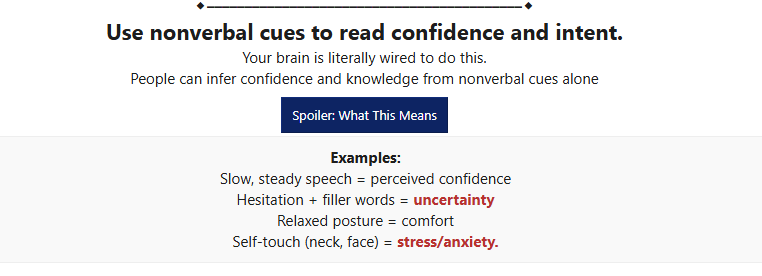
Use nonverbal cues to read confidence and intent.
Your brain is literally wired to do this.
People can infer confidence and knowledge from nonverbal cues alone
Examples:
Slow, steady speech = perceived confidence
Hesitation + filler words = uncertainty
Relaxed posture = comfort
Self-touch (neck, face) = stress/anxiety.

⬥━━━━━━━━━━━━━━━━━━━━━━━━━━━━━━━━━━━━━━━━━━⬥

Learn vocal cues.

It’s not just what people say, it’s how they say it.
People can infer relationship quality just from voice patterns
Example:
Same sentence:
“That’s funny” (flat tone) = disinterest
“That’s funny” (rising tone, faster pace) = genuine engagement

What to watch:

Pitch changes
Speed
Pauses
Emphasis
⬥━━━━━━━━━━━━━━━━━━━━━━━━━━━━━━━━━━━━━━━━━━⬥
Mirror to build a bond.
Mirroring = subconsciously copying someone’s behavior
Happens naturally when people like each other
Signals “we’re similar → safe”
Example:
If they lean forward → you lean forward
If they speak slowly → you match pace

Then test:
Change posture suddenly
If they follow → bond established
This aligns with research showing people adapt behavior dynamically in interactions
⬥━━━━━━━━━━━━━━━━━━━━━━━━━━━━━━━━━━━━━━━━━━⬥
Silence is a tool.
Most people fear silence, they talk too much, and lose control
High Social IQ move:
Ask a question
Stay silent
Silence creates pressure → people reveal more

Example:
You: “Why did you choose that?”
Them: answers
You: silent, eye contact
Them: continues deeper
You get more data with less effort.
⬥━━━━━━━━━━━━━━━━━━━━━━━━━━━━━━━━━━━━━━━━━━⬥


Thanks for reading. If you actually apply even a few of these ideas instead of just scrolling past, you’ll start noticing patterns most people miss.
Use this, test it in real interactions, and refine.
 
  • Woah
Reactions: Rabbi
Least obvious ai slop
 
  • +1
  • Woah
  • JFL
Reactions: r1ght, lnceIs, ecstazy and 1 other person
Impossible high inhib is permanent
 
 
HOW TO IMPROVE SOCIAL SKILLS
━━━━━━━━━━━━━━━━━━━━━━━━━━━━━

✦Introduction✦


CONCEPT​
WHAT IT MEANS​
Nonverbal > Verbal​
Most meaning = tone, body, facial cues. not words.​
Signal Clusters​
Don’t trust 1 cue, look for multiple signals together​
Baseline​
Learn their “normal” first → spot changes​
Social Hierarchy​
Watch who leads, interrupts, gets attention​
Vocal Cues​
Tone, speed, pauses reveal emotions instantly​
Calibration​
Match energy → then slightly lead​


⬥━━━━━━━━━━━━━━━━━━━━━━━━━━━━━━━━━━━━━━━━━━⬥​

Social skills = decoding nonverbal information. (not just talking)​

People can accurately infer emotions from facial, vocal, and body cues combined with context
Someone says: “yeah that’s fine”
Flat tone + no eye contact = they’re not fine
Fast speech + forced smile = they’re masking discomfort

Train yourself to always ask: “Do their words match their body?”
⬥━━━━━━━━━━━━━━━━━━━━━━━━━━━━━━━━━━━━━━━━━━⬥


Read clusters, not single signals.
People constantly show multiple simultaneous cues (face + voice + posture) that together form meaning.
Bad reading (low IQ social):
“He looked away = he’s lying

Good reading (low IQ social):
Looks away
Voice tightens
Stops gesturing


Example:
In class:

Someone leans back, crosses arms, gives short replies
Not just “cold,” likely not engaged or defensive.
⬥━━━━━━━━━━━━━━━━━━━━━━━━━━━━━━━━━━━━━━━━━━⬥
Establish baseline before judging.
You can’t detect change without knowing normal.
This is consistent with behavioral research: people differ widely in expression, so interpretation requires context and comparison
Example:
Person A always fidgets = normal
Person B suddenly starts fidgeting = signal

Real-world application:
First 5–10 minutes of any interaction:

Don’t try to impress
Just observe:
How fast do they talk?
Do they use eye contact?
Are they quiet or loud?

Then watch for deviations.
⬥━━━━━━━━━━━━━━━━━━━━━━━━━━━━━━━━━━━━━━━━━━⬥
Understand social power and hierarchy.

Behavior changes based on perceived status.
People associate specific nonverbal behaviors with power
This means:
More eye contact
Interrupting more
Expansive posture

Even children can detect who has higher social power just from body language.

Example:

Group conversation:

One person interrupts → no pushback
Others wait their turn
→ That person has higher perceived status

Watch:
Who gets ignored
Who people look at before speaking
Who controls topic shifts

That’s the real structure of the group.
⬥━━━━━━━━━━━━━━━━━━━━━━━━━━━━━━━━━━━━━━━━━━⬥
Use nonverbal cues to read confidence and intent.
Your brain is literally wired to do this.
People can infer confidence and knowledge from nonverbal cues alone
Examples:
Slow, steady speech = perceived confidence
Hesitation + filler words = uncertainty
Relaxed posture = comfort
Self-touch (neck, face) = stress/anxiety.
⬥━━━━━━━━━━━━━━━━━━━━━━━━━━━━━━━━━━━━━━━━━━⬥

Learn vocal cues.

It’s not just what people say, it’s how they say it.
People can infer relationship quality just from voice patterns
Example:
Same sentence:
“That’s funny” (flat tone) = disinterest
“That’s funny” (rising tone, faster pace) = genuine engagement

What to watch:

Pitch changes
Speed
Pauses
Emphasis
⬥━━━━━━━━━━━━━━━━━━━━━━━━━━━━━━━━━━━━━━━━━━⬥
Mirror to build a bond.
Mirroring = subconsciously copying someone’s behavior
Happens naturally when people like each other
Signals “we’re similar → safe”
Example:
If they lean forward → you lean forward
If they speak slowly → you match pace

Then test:
Change posture suddenly
If they follow → bond established
This aligns with research showing people adapt behavior dynamically in interactions
⬥━━━━━━━━━━━━━━━━━━━━━━━━━━━━━━━━━━━━━━━━━━⬥
Silence is a tool.
Most people fear silence, they talk too much, and lose control
High Social IQ move:
Ask a question
Stay silent
Silence creates pressure → people reveal more

Example:
You: “Why did you choose that?”
Them: answers
You: silent, eye contact
Them: continues deeper
You get more data with less effort.
⬥━━━━━━━━━━━━━━━━━━━━━━━━━━━━━━━━━━━━━━━━━━⬥


Thanks for reading. If you actually apply even a few of these ideas instead of just scrolling past, you’ll start noticing patterns most people miss.
Use this, test it in real interactions, and refine.
1777727756601

whats the point of all this bullshit if your brain is wired to know it? Obviously you'd need a guide if you AREN'T neurotypical and your brain cant understand these signals, otherwise this is fucking retarded :forcedsmile::forcedsmile::forcedsmile:
 
View attachment 4996492
whats the point of all this bullshit if your brain is wired to know it? Obviously you'd need a guide if you AREN'T neurotypical and your brain cant understand these signals, otherwise this is fucking retarded :forcedsmile::forcedsmile::forcedsmile:
Yeah, humans are wired to read social signals—but being wired for something ≠ being good at it. Your brain is also wired for language, but people still suck at communication without practice.
 
Yeah, humans are wired to read social signals—but being wired for something ≠ being good at it. Your brain is also wired for language, but people still suck at communication without practice.
Not even close to the same, your brain can by default read all these signals and unless you're retarded you will FEEL what is being conveyed and how to reply.
 
  • JFL
Reactions: Peubert
Not even close to the same, your brain can by default read all these signals and unless you're retarded you will FEEL what is being conveyed and how to reply.
That’s overstating how accurate “default” it actually is.
Yeah, you feel something, but feeling ≠ correct interpretation. Your brain runs shortcuts (biases), and those get it wrong a lot:
 
Yeah, you feel something, but feeling ≠ correct interpretation. Your brain runs shortcuts (biases), and those get it wrong a lot:
There is no absolute correct or wrong way to interpret body language/gestures or signals, it will vary from situation to situation and person to person. This guide is even MORE useless for both NT and ND niggas now that I think about it:forcedsmile:
 
very nice thread, i recommend tagging a few people u know under high effort threads like these so it doesnt get flooded by greys
 
There is no absolute correct or wrong way to interpret body language/gestures or signals, it will vary from situation to situation and person to person. This guide is even MORE useless for both NT and ND niggas now that I think about it:forcedsmile:
your low iq is showing
 
  • Woah
Reactions: Throw_Away
very nice thread, i recommend tagging a few people u know under high effort threads like these so it doesnt get flooded by greys
i dont know anybody on .org, let alone to tag
 
your low iq is showing
no reply=low iq showing
can you tell me how you have a better universal guide for body language and gestures than what your brain can interpret on its own? The same thing can have different meanings in different situations this is water :forcedsmile:
 
no reply=low iq showing
can you tell me how you have a better universal guide for body language and gestures than what your brain can interpret on its own? The same thing can have different meanings in different situations this is water :forcedsmile:
You don’t replace intuition, you refine it tard. The brain is context-sensitive, biased, and inconsistent. My “guide” gives you patterns to compare against reality, reducing misreads. Same gesture can vary, so you read clusters + context, not single signals. jfl:lul::lul:
 
HOW TO IMPROVE SOCIAL SKILLS
━━━━━━━━━━━━━━━━━━━━━━━━━━━━━

✦Introduction✦


CONCEPT​
WHAT IT MEANS​
Nonverbal > Verbal​
Most meaning = tone, body, facial cues. not words.​
Signal Clusters​
Don’t trust 1 cue, look for multiple signals together​
Baseline​
Learn their “normal” first → spot changes​
Social Hierarchy​
Watch who leads, interrupts, gets attention​
Vocal Cues​
Tone, speed, pauses reveal emotions instantly​
Calibration​
Match energy → then slightly lead​


⬥━━━━━━━━━━━━━━━━━━━━━━━━━━━━━━━━━━━━━━━━━━⬥​

Social skills = decoding nonverbal information. (not just talking)​

People can accurately infer emotions from facial, vocal, and body cues combined with context
Someone says: “yeah that’s fine”
Flat tone + no eye contact = they’re not fine
Fast speech + forced smile = they’re masking discomfort

Train yourself to always ask: “Do their words match their body?”
⬥━━━━━━━━━━━━━━━━━━━━━━━━━━━━━━━━━━━━━━━━━━⬥


Read clusters, not single signals.
People constantly show multiple simultaneous cues (face + voice + posture) that together form meaning.
Bad reading (low IQ social):
“He looked away = he’s lying

Good reading (low IQ social):
Looks away
Voice tightens
Stops gesturing


Example:
In class:

Someone leans back, crosses arms, gives short replies
Not just “cold,” likely not engaged or defensive.
⬥━━━━━━━━━━━━━━━━━━━━━━━━━━━━━━━━━━━━━━━━━━⬥
Establish baseline before judging.
You can’t detect change without knowing normal.
This is consistent with behavioral research: people differ widely in expression, so interpretation requires context and comparison
Example:
Person A always fidgets = normal
Person B suddenly starts fidgeting = signal

Real-world application:
First 5–10 minutes of any interaction:

Don’t try to impress
Just observe:
How fast do they talk?
Do they use eye contact?
Are they quiet or loud?

Then watch for deviations.
⬥━━━━━━━━━━━━━━━━━━━━━━━━━━━━━━━━━━━━━━━━━━⬥
Understand social power and hierarchy.

Behavior changes based on perceived status.
People associate specific nonverbal behaviors with power
This means:
More eye contact
Interrupting more
Expansive posture

Even children can detect who has higher social power just from body language.

Example:

Group conversation:

One person interrupts → no pushback
Others wait their turn
→ That person has higher perceived status

Watch:
Who gets ignored
Who people look at before speaking
Who controls topic shifts

That’s the real structure of the group.
⬥━━━━━━━━━━━━━━━━━━━━━━━━━━━━━━━━━━━━━━━━━━⬥
Use nonverbal cues to read confidence and intent.
Your brain is literally wired to do this.
People can infer confidence and knowledge from nonverbal cues alone
Examples:
Slow, steady speech = perceived confidence
Hesitation + filler words = uncertainty
Relaxed posture = comfort
Self-touch (neck, face) = stress/anxiety.
⬥━━━━━━━━━━━━━━━━━━━━━━━━━━━━━━━━━━━━━━━━━━⬥

Learn vocal cues.

It’s not just what people say, it’s how they say it.
People can infer relationship quality just from voice patterns
Example:
Same sentence:
“That’s funny” (flat tone) = disinterest
“That’s funny” (rising tone, faster pace) = genuine engagement

What to watch:

Pitch changes
Speed
Pauses
Emphasis
⬥━━━━━━━━━━━━━━━━━━━━━━━━━━━━━━━━━━━━━━━━━━⬥
Mirror to build a bond.
Mirroring = subconsciously copying someone’s behavior
Happens naturally when people like each other
Signals “we’re similar → safe”
Example:
If they lean forward → you lean forward
If they speak slowly → you match pace

Then test:
Change posture suddenly
If they follow → bond established
This aligns with research showing people adapt behavior dynamically in interactions
⬥━━━━━━━━━━━━━━━━━━━━━━━━━━━━━━━━━━━━━━━━━━⬥
Silence is a tool.
Most people fear silence, they talk too much, and lose control
High Social IQ move:
Ask a question
Stay silent
Silence creates pressure → people reveal more

Example:
You: “Why did you choose that?”
Them: answers
You: silent, eye contact
Them: continues deeper
You get more data with less effort.
⬥━━━━━━━━━━━━━━━━━━━━━━━━━━━━━━━━━━━━━━━━━━⬥


Thanks for reading. If you actually apply even a few of these ideas instead of just scrolling past, you’ll start noticing patterns most people miss.
Use this, test it in real interactions, and refine.
if you need this its over

Good effort if you didnt use gpt
 
  • +1
Reactions: vazOkay
You don’t replace intuition, you refine it tard. The brain is context-sensitive, biased, and inconsistent. My “guide” gives you patterns to compare against reality, reducing misreads. Same gesture can vary, so you read clusters + context, not single signals. jfl:lul::lul:
1777728459024

type of guide :forcedsmile::forcedsmile::forcedsmile::forcedsmile:
 

Similar threads

colonel_nasion
Replies
1
Views
29
wild salmon
wild salmon
jacxb
Replies
1
Views
23
amin666bidelt
amin666bidelt
NoExit
Replies
21
Views
115
NoExit
NoExit
acm
Replies
21
Views
107
forzp
forzp
R
Replies
2
Views
29
Repentsinner
R

Users who are viewing this thread

Back
Top