How to Lock Pick (Satire, GTFIH)

averagetotaluser

averagetotaluser

𝔒𝔫 𝔱𝔥𝔢 ℭ𝔢𝔫𝔱𝔯𝔞𝔩 𝔉𝔦𝔫𝔦𝔱𝔢 ℭ𝔲𝔯𝔳𝔢
Joined
Jun 27, 2026
Posts
1,243
Reputation
1,595
The Underground Guide to Lock Picking
Disclaimer: This guide is for educational and informational purposes only. Only use your skills for good, respect property laws, and never attempt to pick any lock that does not belong to you or without explicit authorization :lul::lul::lul:.


Step 1: Understand How Most Locks Work
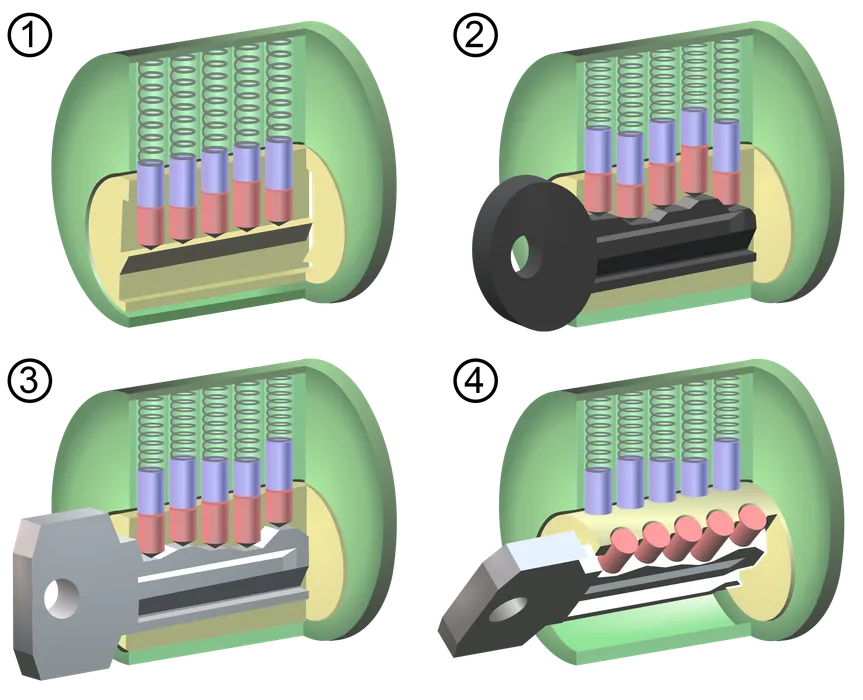
To be able to pick a lock, you first have to understand how it works so that you can then manipulate it to your advantage. The majority of locks out there are called pin tumbler locks. Pin tumbler locks have two sets of pins within the lock: the upper driver pins and the lower key pins. The shell is the part of the lock that rotates and contains the key pins.
The two pins in each column aren't the same length, but they are set so that if each key pin is pushed up a certain height, the point where the two pins meet aligns with the shear line, allowing the shell to rotate. If the wrong key is inserted or there is no key, the shell cannot rotate because misaligned pins block the way.
1784798886309
1784798894826
1784798900158


Step 2: Acquire Some Lock Picks
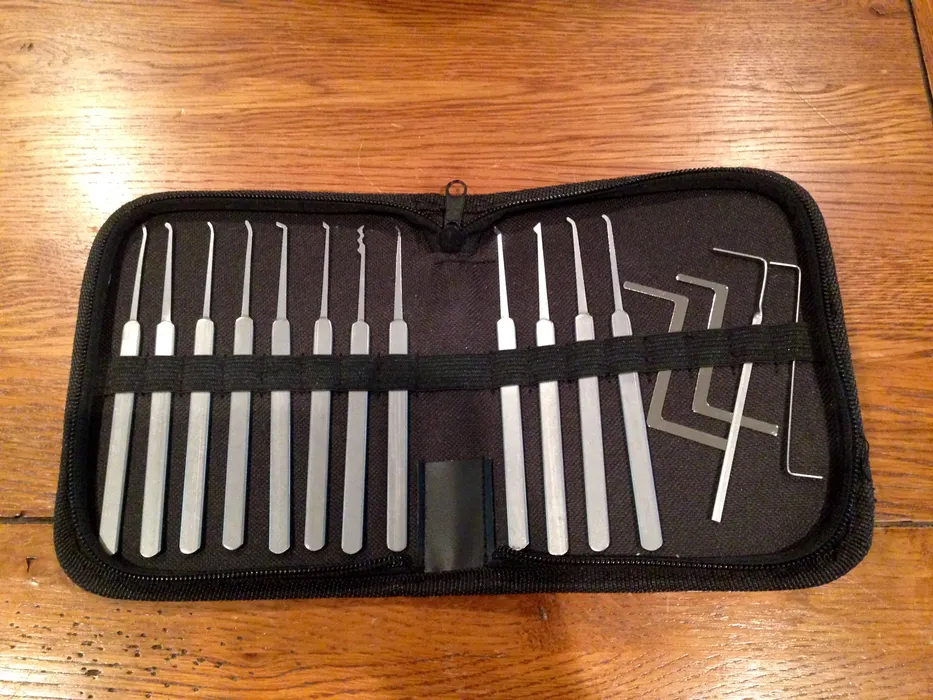
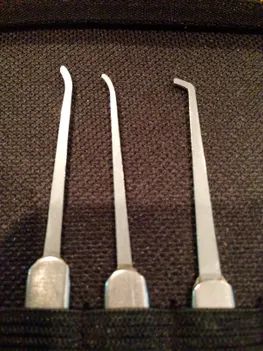
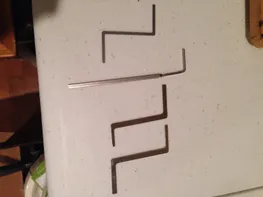
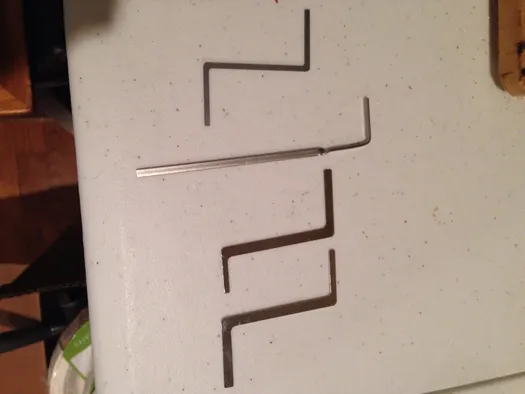
While people try using bobby pins or paper clips, it is extremely hard to pick a lock using them. The most effective method is single pin picking, which involves a tension wrench and a hook pick.
The Tension Wrench: A small piece of metal used to apply rotational force to the shell.
The Hook Pick: Used to precisely manipulate individual pins.
The Practice Lock: Highly recommended to purchase a clear acrylic practice lock so you can visibly see the pins, springs, and shear line moving in real time.
1784798964757
1784798972621
1784798976874


Step 3: Using the Tension Wrench
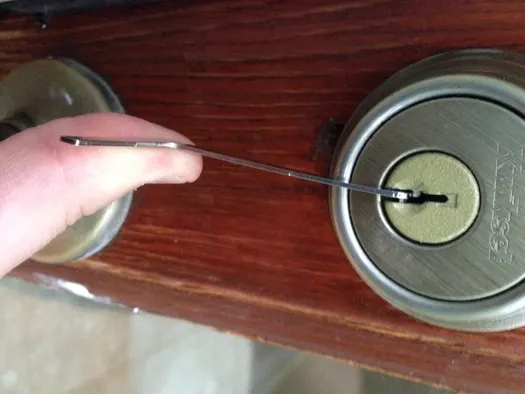
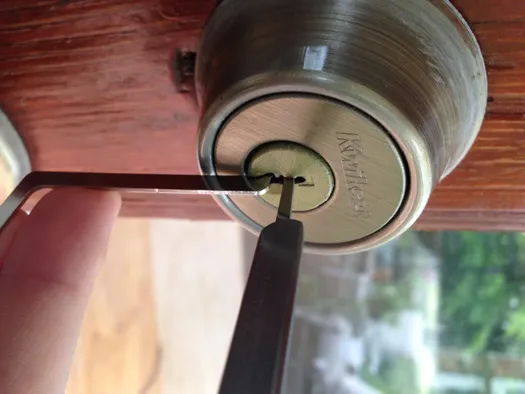
Insert your tension wrench into the bottom of the keyhole and push it gently to one side. You must keep maintaining light pressure on the tension wrench the entire time you are trying to pick the lock. It should be pushed hard enough to give it a slight bend and cause the shell to micro-rotate, but not so hard that the pins bind completely solid. Pressure should match the natural clockwise direction a key would turn.
1784798994340
1784798998093


Step 4: Picking the Lock
With tension applied, slide your hook pick into the space above the wrench all the way to the back of the shell.
Find the Rogue Pin: Push up on each pin column. Most will move freely up and down, but one will feel significantly stiffer and harder to push this is your binding pin.
Set the Pin: Push the rogue pin up gently until you hear and feel a distinct click. The pin will stay locked in place at the shear line rather than falling back down.
Repeat: Search the remaining active pins for the next rogue pin, repeating the process until all pins are set and the core rotates open.
Reset: If you over pick a pin and nothing turns, release tension completely to drop all pins back down and start over.
1784799006122


Sources: https://www.instructables.com/How-to-Pick-Locks-1/

Tags: @Scarlet @iblamexyz @GandysOrbitals @Askinov @browgi27
 
  • +1
  • Love it
Reactions: resonance., iblamexyz, browgi27 and 6 others
Good thread OP
 
  • +1
  • Woah
Reactions: GandysOrbitals, Askinov and averagetotaluser

The Underground Guide to Lock Picking


Disclaimer: This guide is for educational and informational purposes only. Only use your skills for good, respect property laws, and never attempt to pick any lock that does not belong to you or without explicit authorization :lul::lul::lul:.


Step 1: Understand How Most Locks Work

To be able to pick a lock, you first have to understand how it works so that you can then manipulate it to your advantage. The majority of locks out there are called pin tumbler locks. Pin tumbler locks have two sets of pins within the lock: the upper driver pins and the lower key pins. The shell is the part of the lock that rotates and contains the key pins.
The two pins in each column aren't the same length, but they are set so that if each key pin is pushed up a certain height, the point where the two pins meet aligns with the shear line, allowing the shell to rotate. If the wrong key is inserted or there is no key, the shell cannot rotate because misaligned pins block the way.
View attachment 5403920View attachment 5403924View attachment 5403925

Step 2: Acquire Some Lock Picks

While people try using bobby pins or paper clips, it is extremely hard to pick a lock using them. The most effective method is single pin picking, which involves a tension wrench and a hook pick.
The Tension Wrench: A small piece of metal used to apply rotational force to the shell.
The Hook Pick: Used to precisely manipulate individual pins.
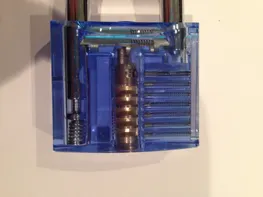
The Practice Lock: Highly recommended to purchase a clear acrylic practice lock so you can visibly see the pins, springs, and shear line moving in real time.
View attachment 5403928View attachment 5403929View attachment 5403930

Step 3: Using the Tension Wrench

Insert your tension wrench into the bottom of the keyhole and push it gently to one side. You must keep maintaining light pressure on the tension wrench the entire time you are trying to pick the lock. It should be pushed hard enough to give it a slight bend and cause the shell to micro-rotate, but not so hard that the pins bind completely solid. Pressure should match the natural clockwise direction a key would turn.
View attachment 5403931View attachment 5403932

Step 4: Picking the Lock

With tension applied, slide your hook pick into the space above the wrench all the way to the back of the shell.
Find the Rogue Pin: Push up on each pin column. Most will move freely up and down, but one will feel significantly stiffer and harder to push this is your binding pin.
Set the Pin: Push the rogue pin up gently until you hear and feel a distinct click. The pin will stay locked in place at the shear line rather than falling back down.
Repeat: Search the remaining active pins for the next rogue pin, repeating the process until all pins are set and the core rotates open.
Reset: If you over pick a pin and nothing turns, release tension completely to drop all pins back down and start over.
View attachment 5403933

Sources: https://www.instructables.com/How-to-Pick-Locks-1/

Tags: @Scarlet @iblamexyz @GandysOrbitals @Askinov @browgi27
@Kind soul @arkzy7 @sharkboa @Raimaxxing @jeremyy
 
  • +1
Reactions: Kind soul, blinkers, GandysOrbitals and 1 other person
Keep it up bro
 
  • +1
  • Love it
Reactions: Kind soul, blinkers and averagetotaluser
:pepeLaughing::pepeLaughing::pepeLaughing::pepeLaughing: my baby when i used to be a naughty boy
 
  • +1
Reactions: Kind soul, blinkers and averagetotaluser

The Underground Guide to Lock Picking


Disclaimer: This guide is for educational and informational purposes only. Only use your skills for good, respect property laws, and never attempt to pick any lock that does not belong to you or without explicit authorization :lul::lul::lul:.


Step 1: Understand How Most Locks Work

To be able to pick a lock, you first have to understand how it works so that you can then manipulate it to your advantage. The majority of locks out there are called pin tumbler locks. Pin tumbler locks have two sets of pins within the lock: the upper driver pins and the lower key pins. The shell is the part of the lock that rotates and contains the key pins.
The two pins in each column aren't the same length, but they are set so that if each key pin is pushed up a certain height, the point where the two pins meet aligns with the shear line, allowing the shell to rotate. If the wrong key is inserted or there is no key, the shell cannot rotate because misaligned pins block the way.
View attachment 5403920View attachment 5403924View attachment 5403925

Step 2: Acquire Some Lock Picks

While people try using bobby pins or paper clips, it is extremely hard to pick a lock using them. The most effective method is single pin picking, which involves a tension wrench and a hook pick.
The Tension Wrench: A small piece of metal used to apply rotational force to the shell.
The Hook Pick: Used to precisely manipulate individual pins.
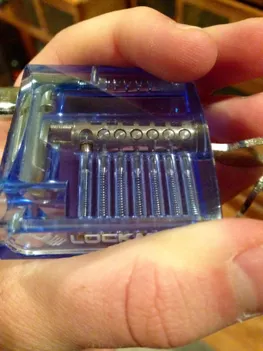
The Practice Lock: Highly recommended to purchase a clear acrylic practice lock so you can visibly see the pins, springs, and shear line moving in real time.
View attachment 5403928View attachment 5403929View attachment 5403930

Step 3: Using the Tension Wrench

Insert your tension wrench into the bottom of the keyhole and push it gently to one side. You must keep maintaining light pressure on the tension wrench the entire time you are trying to pick the lock. It should be pushed hard enough to give it a slight bend and cause the shell to micro-rotate, but not so hard that the pins bind completely solid. Pressure should match the natural clockwise direction a key would turn.
View attachment 5403931View attachment 5403932

Step 4: Picking the Lock

With tension applied, slide your hook pick into the space above the wrench all the way to the back of the shell.
Find the Rogue Pin: Push up on each pin column. Most will move freely up and down, but one will feel significantly stiffer and harder to push this is your binding pin.
Set the Pin: Push the rogue pin up gently until you hear and feel a distinct click. The pin will stay locked in place at the shear line rather than falling back down.
Repeat: Search the remaining active pins for the next rogue pin, repeating the process until all pins are set and the core rotates open.
Reset: If you over pick a pin and nothing turns, release tension completely to drop all pins back down and start over.
View attachment 5403933

Sources: https://www.instructables.com/How-to-Pick-Locks-1/

Tags: @Scarlet @iblamexyz @GandysOrbitals @Askinov @browgi27
high iq high t activity :BASED:
 
  • +1
  • Love it
Reactions: Kind soul, GandysOrbitals and averagetotaluser
Now this is actual looksmaxxing
 
  • Love it
  • JFL
Reactions: blinkers, Askinov and averagetotaluser
  • +1
Reactions: Kind soul, Askinov and averagetotaluser
Now this is actual looksmaxxing
we all ascending to chad :Comfy: with this le thread
I remember in my blue days I got accused of being a foid often
with that pfp and activity its rly hard to tell you a foid or guy i do have seen your pics tho ik yo guy
 
  • JFL
  • Hmm...
  • +1
Reactions: Kind soul, blinkers, averagetotaluser and 1 other person
we all ascending to chad :Comfy: with this le thread

with that pfp and activity its rly hard to tell you a foid or guy
Wdym by activity
 
  • +1
Reactions: Askinov
  • Woah
  • +1
Reactions: Kind soul and Askinov
  • +1
  • Woah
Reactions: Kind soul and averagetotaluser
make a guide on how to design jet thruster and automate it with sensors and embedded system
I probably will, I really hate this summer
 
  • +1
Reactions: Kind soul and iblameloweffort
@IronMike

The Underground Guide to Lock Picking


Disclaimer: This guide is for educational and informational purposes only. Only use your skills for good, respect property laws, and never attempt to pick any lock that does not belong to you or without explicit authorization :lul::lul::lul:.


Step 1: Understand How Most Locks Work

To be able to pick a lock, you first have to understand how it works so that you can then manipulate it to your advantage. The majority of locks out there are called pin tumbler locks. Pin tumbler locks have two sets of pins within the lock: the upper driver pins and the lower key pins. The shell is the part of the lock that rotates and contains the key pins.
The two pins in each column aren't the same length, but they are set so that if each key pin is pushed up a certain height, the point where the two pins meet aligns with the shear line, allowing the shell to rotate. If the wrong key is inserted or there is no key, the shell cannot rotate because misaligned pins block the way.
View attachment 5403920View attachment 5403924View attachment 5403925

Step 2: Acquire Some Lock Picks

While people try using bobby pins or paper clips, it is extremely hard to pick a lock using them. The most effective method is single pin picking, which involves a tension wrench and a hook pick.
The Tension Wrench: A small piece of metal used to apply rotational force to the shell.
The Hook Pick: Used to precisely manipulate individual pins.
The Practice Lock: Highly recommended to purchase a clear acrylic practice lock so you can visibly see the pins, springs, and shear line moving in real time.
View attachment 5403928View attachment 5403929View attachment 5403930

Step 3: Using the Tension Wrench

Insert your tension wrench into the bottom of the keyhole and push it gently to one side. You must keep maintaining light pressure on the tension wrench the entire time you are trying to pick the lock. It should be pushed hard enough to give it a slight bend and cause the shell to micro-rotate, but not so hard that the pins bind completely solid. Pressure should match the natural clockwise direction a key would turn.
View attachment 5403931View attachment 5403932

Step 4: Picking the Lock

With tension applied, slide your hook pick into the space above the wrench all the way to the back of the shell.
Find the Rogue Pin: Push up on each pin column. Most will move freely up and down, but one will feel significantly stiffer and harder to push this is your binding pin.
Set the Pin: Push the rogue pin up gently until you hear and feel a distinct click. The pin will stay locked in place at the shear line rather than falling back down.
Repeat: Search the remaining active pins for the next rogue pin, repeating the process until all pins are set and the core rotates open.
Reset: If you over pick a pin and nothing turns, release tension completely to drop all pins back down and start over.
View attachment 5403933

Sources: https://www.instructables.com/How-to-Pick-Locks-1/

Tags: @Scarlet @iblamexyz @GandysOrbitals @Askinov @browgi27
 
Mirin this post yo :soy:
 
  • +1
Reactions: averagetotaluser

The Underground Guide to Lock Picking


Disclaimer: This guide is for educational and informational purposes only. Only use your skills for good, respect property laws, and never attempt to pick any lock that does not belong to you or without explicit authorization :lul::lul::lul:.


Step 1: Understand How Most Locks Work

To be able to pick a lock, you first have to understand how it works so that you can then manipulate it to your advantage. The majority of locks out there are called pin tumbler locks. Pin tumbler locks have two sets of pins within the lock: the upper driver pins and the lower key pins. The shell is the part of the lock that rotates and contains the key pins.
The two pins in each column aren't the same length, but they are set so that if each key pin is pushed up a certain height, the point where the two pins meet aligns with the shear line, allowing the shell to rotate. If the wrong key is inserted or there is no key, the shell cannot rotate because misaligned pins block the way.
View attachment 5403920View attachment 5403924View attachment 5403925

Step 2: Acquire Some Lock Picks

While people try using bobby pins or paper clips, it is extremely hard to pick a lock using them. The most effective method is single pin picking, which involves a tension wrench and a hook pick.
The Tension Wrench: A small piece of metal used to apply rotational force to the shell.
The Hook Pick: Used to precisely manipulate individual pins.
The Practice Lock: Highly recommended to purchase a clear acrylic practice lock so you can visibly see the pins, springs, and shear line moving in real time.
View attachment 5403928View attachment 5403929View attachment 5403930

Step 3: Using the Tension Wrench

Insert your tension wrench into the bottom of the keyhole and push it gently to one side. You must keep maintaining light pressure on the tension wrench the entire time you are trying to pick the lock. It should be pushed hard enough to give it a slight bend and cause the shell to micro-rotate, but not so hard that the pins bind completely solid. Pressure should match the natural clockwise direction a key would turn.
View attachment 5403931View attachment 5403932

Step 4: Picking the Lock

With tension applied, slide your hook pick into the space above the wrench all the way to the back of the shell.
Find the Rogue Pin: Push up on each pin column. Most will move freely up and down, but one will feel significantly stiffer and harder to push this is your binding pin.
Set the Pin: Push the rogue pin up gently until you hear and feel a distinct click. The pin will stay locked in place at the shear line rather than falling back down.
Repeat: Search the remaining active pins for the next rogue pin, repeating the process until all pins are set and the core rotates open.
Reset: If you over pick a pin and nothing turns, release tension completely to drop all pins back down and start over.
View attachment 5403933

Sources: https://www.instructables.com/How-to-Pick-Locks-1/

Tags: @Scarlet @iblamexyz @GandysOrbitals @Askinov @browgi27

Yo tranks my neighbor is wealthy asf l might try
 
  • Woah
Reactions: averagetotaluser
  • +1
Reactions: Kind soul
DNR (not a thief) but mirin the effort
 
  • +1
Reactions: averagetotaluser

The Underground Guide to Lock Picking


Disclaimer: This guide is for educational and informational purposes only. Only use your skills for good, respect property laws, and never attempt to pick any lock that does not belong to you or without explicit authorization :lul::lul::lul:.


Step 1: Understand How Most Locks Work

To be able to pick a lock, you first have to understand how it works so that you can then manipulate it to your advantage. The majority of locks out there are called pin tumbler locks. Pin tumbler locks have two sets of pins within the lock: the upper driver pins and the lower key pins. The shell is the part of the lock that rotates and contains the key pins.
The two pins in each column aren't the same length, but they are set so that if each key pin is pushed up a certain height, the point where the two pins meet aligns with the shear line, allowing the shell to rotate. If the wrong key is inserted or there is no key, the shell cannot rotate because misaligned pins block the way.
View attachment 5403920View attachment 5403924View attachment 5403925

Step 2: Acquire Some Lock Picks

While people try using bobby pins or paper clips, it is extremely hard to pick a lock using them. The most effective method is single pin picking, which involves a tension wrench and a hook pick.
The Tension Wrench: A small piece of metal used to apply rotational force to the shell.
The Hook Pick: Used to precisely manipulate individual pins.
The Practice Lock: Highly recommended to purchase a clear acrylic practice lock so you can visibly see the pins, springs, and shear line moving in real time.
View attachment 5403928View attachment 5403929View attachment 5403930

Step 3: Using the Tension Wrench

Insert your tension wrench into the bottom of the keyhole and push it gently to one side. You must keep maintaining light pressure on the tension wrench the entire time you are trying to pick the lock. It should be pushed hard enough to give it a slight bend and cause the shell to micro-rotate, but not so hard that the pins bind completely solid. Pressure should match the natural clockwise direction a key would turn.
View attachment 5403931View attachment 5403932

Step 4: Picking the Lock

With tension applied, slide your hook pick into the space above the wrench all the way to the back of the shell.
Find the Rogue Pin: Push up on each pin column. Most will move freely up and down, but one will feel significantly stiffer and harder to push this is your binding pin.
Set the Pin: Push the rogue pin up gently until you hear and feel a distinct click. The pin will stay locked in place at the shear line rather than falling back down.
Repeat: Search the remaining active pins for the next rogue pin, repeating the process until all pins are set and the core rotates open.
Reset: If you over pick a pin and nothing turns, release tension completely to drop all pins back down and start over.
View attachment 5403933

Sources: https://www.instructables.com/How-to-Pick-Locks-1/

Tags: @Scarlet @iblamexyz @GandysOrbitals @Askinov @browgi27

Bookedmarked
 
  • Love it
Reactions: averagetotaluser

The Underground Guide to Lock Picking


Disclaimer: This guide is for educational and informational purposes only. Only use your skills for good, respect property laws, and never attempt to pick any lock that does not belong to you or without explicit authorization :lul::lul::lul:.


Step 1: Understand How Most Locks Work

To be able to pick a lock, you first have to understand how it works so that you can then manipulate it to your advantage. The majority of locks out there are called pin tumbler locks. Pin tumbler locks have two sets of pins within the lock: the upper driver pins and the lower key pins. The shell is the part of the lock that rotates and contains the key pins.
The two pins in each column aren't the same length, but they are set so that if each key pin is pushed up a certain height, the point where the two pins meet aligns with the shear line, allowing the shell to rotate. If the wrong key is inserted or there is no key, the shell cannot rotate because misaligned pins block the way.
View attachment 5403920View attachment 5403924View attachment 5403925

Step 2: Acquire Some Lock Picks

While people try using bobby pins or paper clips, it is extremely hard to pick a lock using them. The most effective method is single pin picking, which involves a tension wrench and a hook pick.
The Tension Wrench: A small piece of metal used to apply rotational force to the shell.
The Hook Pick: Used to precisely manipulate individual pins.
The Practice Lock: Highly recommended to purchase a clear acrylic practice lock so you can visibly see the pins, springs, and shear line moving in real time.
View attachment 5403928View attachment 5403929View attachment 5403930

Step 3: Using the Tension Wrench

Insert your tension wrench into the bottom of the keyhole and push it gently to one side. You must keep maintaining light pressure on the tension wrench the entire time you are trying to pick the lock. It should be pushed hard enough to give it a slight bend and cause the shell to micro-rotate, but not so hard that the pins bind completely solid. Pressure should match the natural clockwise direction a key would turn.
View attachment 5403931View attachment 5403932

Step 4: Picking the Lock

With tension applied, slide your hook pick into the space above the wrench all the way to the back of the shell.
Find the Rogue Pin: Push up on each pin column. Most will move freely up and down, but one will feel significantly stiffer and harder to push this is your binding pin.
Set the Pin: Push the rogue pin up gently until you hear and feel a distinct click. The pin will stay locked in place at the shear line rather than falling back down.
Repeat: Search the remaining active pins for the next rogue pin, repeating the process until all pins are set and the core rotates open.
Reset: If you over pick a pin and nothing turns, release tension completely to drop all pins back down and start over.
View attachment 5403933

Sources: https://www.instructables.com/How-to-Pick-Locks-1/

Tags: @Scarlet @iblamexyz @GandysOrbitals @Askinov @browgi27
wow actually good thread op

@DietBeast08
 
Just a copy paste guide and also pretty old ibformation, you can still use these technuiqes but most locks now have spool pins and other things that make it much harder now.
In reality most modern lock are much more complex than these cheap practice locks.

Great for understanding the basics, but far from a complete guide.
 
Last edited:

Similar threads

iblamexyz
Replies
52
Views
266
iblamexyz
iblamexyz
witedudzz
Replies
3
Views
26
witedudzz
witedudzz
iblamemyhabits
Discussion Foid pick
2 3
Replies
106
Views
570
Azrael
Azrael
iwannasleeponurlap
Replies
4
Views
45
iwannasleeponurlap
iwannasleeponurlap
foxhead131
Replies
1
Views
36
Fragments
F

Users who are viewing this thread

  • Back
    Top
    Sponsored
    Stake.us
    America's #1 Social Casino
    Slots, Poker & More
    Join Now →