Eyesfullofascend
G-elasty
- Joined
- May 20, 2026
- Posts
- 3,088
- Reputation
- 6,811
This took a TON OF TIME pls bump this really high effort
Introduction
Why are some faces perceived as harmonious from almost every angle, while others are not even when their individual features are attractive on their own? The answer lies not only in the concept of beauty, but also in anatomy, facial proportions, and the spatial relationships of the craniofacial skeleton.
This is precisely what craniofacial analysis is designed to study. It is a scientific approach to evaluating facial structure based on objective measurements rather than subjective perception. By integrating principles from orthodontics, oral and maxillofacial surgery, anthropometry, and radiographic analysis, it allows clinicians to assess the relationships between the jaws, chin, nose, teeth, and facial soft tissues as a unified anatomical system.
Today, craniofacial analysis is one of the most important tools for diagnosing dentofacial deformities, planning orthodontic treatment, and preparing for orthognathic surgery. However, its significance extends well beyond clinical medicine. These measurements help explain which anatomical characteristics contribute to a balanced facial profile, why certain aesthetic disproportions occur, and how different facial structures interact to create overall facial harmony.
This article provides a comprehensive overview of the principal anatomical landmarks, reference lines, cephalometric angles, and measurements used in craniofacial analysis, explaining their clinical significance, their influence on facial aesthetics, and their practical applications in modern diagnosis and treatment planning.
What Is Craniofacial Analysis (Cephalometry)?
Craniofacial analysis is a branch of orthodontics, oral and maxillofacial surgery, and craniofacial anthropometry that examines the spatial relationships between the bones of the skull, jaws, teeth, and facial soft tissues using anatomical landmarks, reference lines, and angular measurements.
The primary tool used in this analysis is cephalometry. It is a method of measuring craniofacial structures, most commonly performed on a lateral cephalometric radiograph (lateral cephalogram), and less frequently using cone beam computed tomography (CBCT) or standardized facial photographs with specialized analytical techniques.
Why Is It Important?
Craniofacial analysis is used for much more than diagnosing skeletal abnormalities.
It allows clinicians to:
determine facial growth patterns;
evaluate the position of the maxilla and mandible;
diagnose malocclusions;
plan orthodontic treatment;
plan orthognathic surgery;
analyze facial proportions;
predict facial changes following treatment;
assess soft tissue harmony.
In aesthetic medicine, craniofacial analysis helps explain why a face appears harmonious—or not—rather than simply evaluating individual facial features in isolation.
It is important to understand that there is no universally “perfect” face. Most reference values represent statistical norms rather than absolute standards of beauty. Facial attractiveness is influenced not only by skeletal angles but also by facial symmetry, soft tissue characteristics, skin quality, age, sex, and ethnic background.
Major Anatomical Landmarks
Nasion (N)
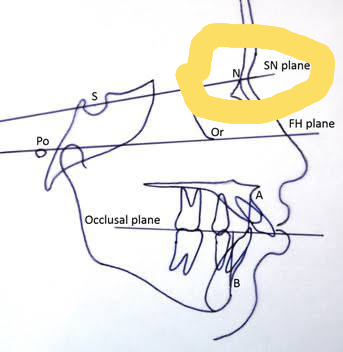
The most anterior point of the frontonasal suture.
Used in nearly all cephalometric analyses.
Serves as a fundamental reference point for numerous angular measurements.
|||||||||||||||||||||||||||||||||||||||||||||||||||||||||||||||||||||||||||||||||||
Sella (S)
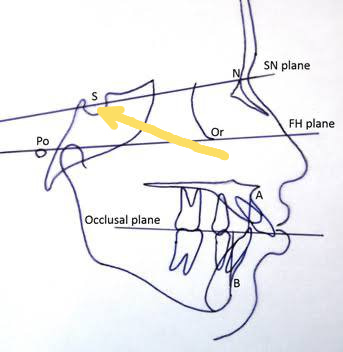
The geometric center of the sella turcica.
A relatively stable cranial landmark.
Forms one endpoint of the SN reference line.
|||||||||||||||||||||||||||||||||||||||||||||||||||||||||||||||||||||||||||||||||||
Point A (Subspinale)
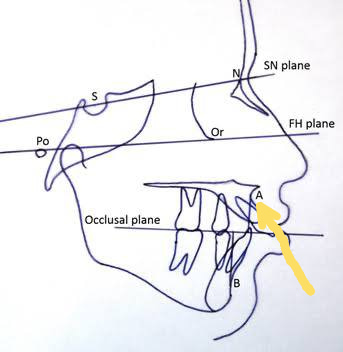
The deepest point on the anterior contour of the maxillary alveolar process.
Represents the anteroposterior position of the maxilla relative to the cranial base.
|||||||||||||||||||||||||||||||||||||||||||||||||||||||||||||||||||||||||||||||||||
Point B (Supramentale)
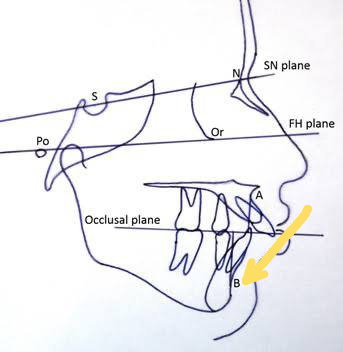
The deepest point on the anterior contour of the mandibular alveolar process.
Used to evaluate the sagittal position of the mandible.
|||||||||||||||||||||||||||||||||||||||||||||||||||||||||||||||||||||||||||||||||||
Pogonion (Pg)
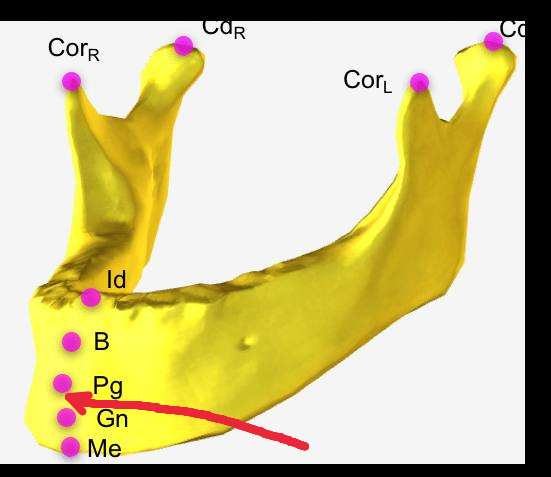
The most anterior point of the bony chin.
One of the most important landmarks in profile aesthetics.
Its position largely determines:
chin projection;
prominence of the lower third of the face;
overall facial profile.
A retruded Pogonion often results in a weaker facial profile, even when nasal proportions are favorable.
|||||||||||||||||||||||||||||||||||||||||||||||||||||||||||||||||||||||||||||||||||
Gnathion (Gn)
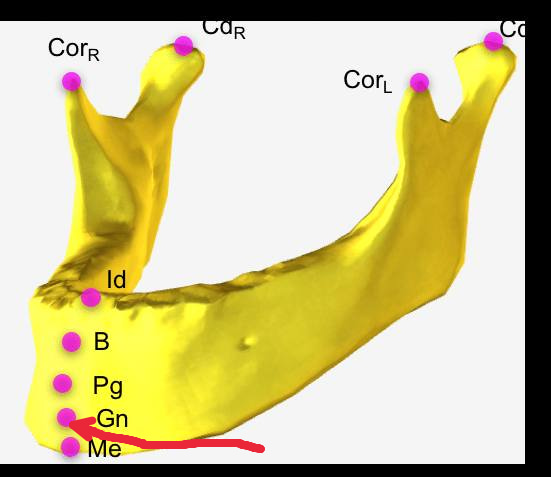
The most anterior-inferior point of the chin.
Used primarily to assess vertical facial dimensions.
|||||||||||||||||||||||||||||||||||||||||||||||||||||||||||||||||||||||||||||||||||
Menton (Me)
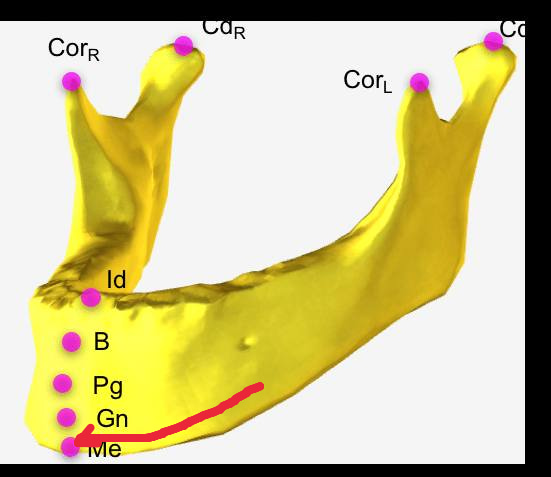
The lowest point on the mandibular symphysis.
Represents the inferior limit of the lower facial height.
|||||||||||||||||||||||||||||||||||||||||||||||||||||||||||||||||||||||||||||||||||
Gonion (Go)
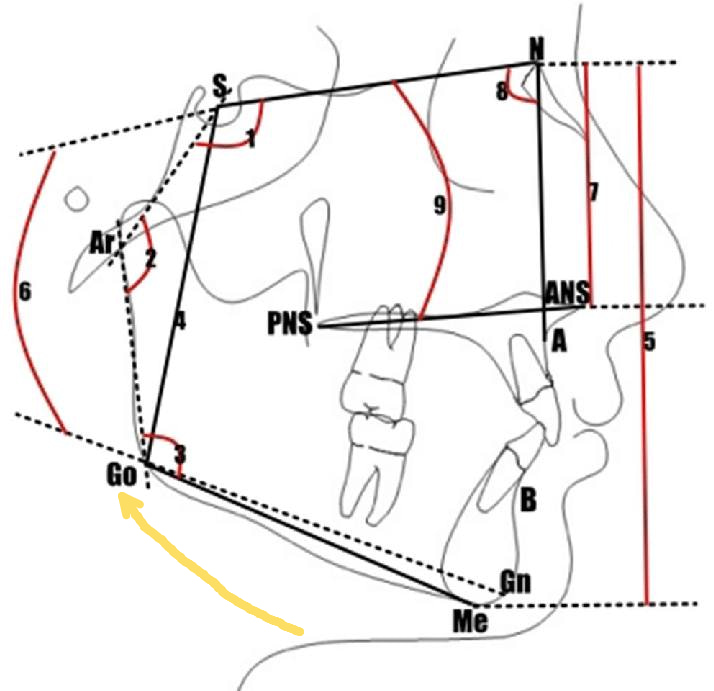
The most posterior-inferior point at the angle of the mandible.
Defines the mandibular angle and contributes significantly to jawline contour.
|||||||||||||||||||||||||||||||||||||||||||||||||||||||||||||||||||||||||||||||||||
Orbitale (Or)
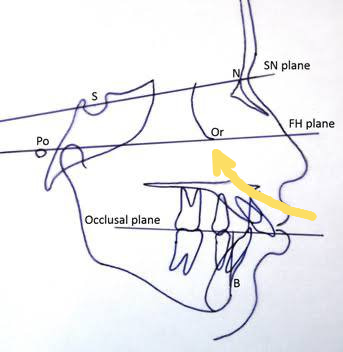
The lowest point on the inferior orbital rim.
Required for constructing the Frankfort Horizontal Plane.
|||||||||||||||||||||||||||||||||||||||||||||||||||||||||||||||||||||||||||||||||||
Porion (Po)
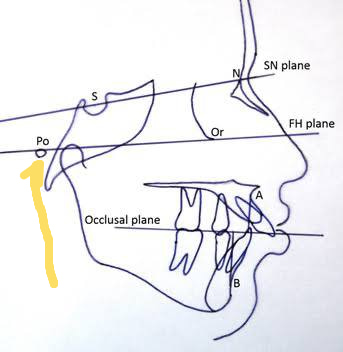
The uppermost point of the external auditory meatus.
Also used to establish the Frankfort Horizontal Plane.
|||||||||||||||||||||||||||||||||||||||||||||||||||||||||||||||||||||||||||||||||||
Principal Reference Lines
SN Line
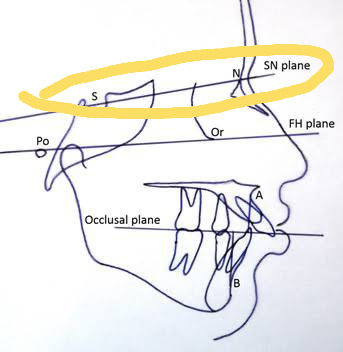
Connects Sella (S) and Nasion (N).
Serves as one of the primary cranial reference lines in cephalometric analysis.
|||||||||||||||||||||||||||||||||||||||||||||||||||||||||||||||||||||||||||||||||||
Frankfort Horizontal (FH)
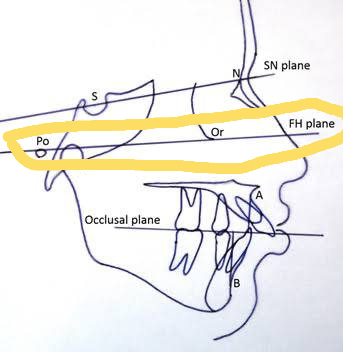
Connects Orbitale (Or) and Porion (Po).
Considered the most physiologically representative horizontal plane of the head.
|||||||||||||||||||||||||||||||||||||||||||||||||||||||||||||||||||||||||||||||||||
Mandibular Plane (MP)
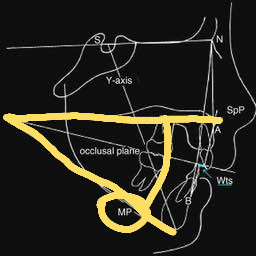
Represents the inferior border of the mandible.
Used to evaluate vertical facial growth patterns.
|||||||||||||||||||||||||||||||||||||||||||||||||||||||||||||||||||||||||||||||||||
Occlusal Plane
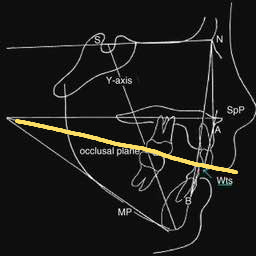
Represents the functional plane of dental occlusion.
Used to assess tooth position and occlusal relationships.
|||||||||||||||||||||||||||||||||||||||||||||||||||||||||||||||||||||||||||||||||||
Key Cephalometric Angles
SNA
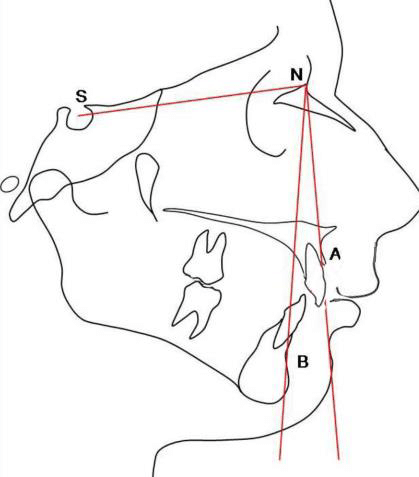
Normal value:
≈ 82° (80–84°)
Represents the sagittal position of the maxilla relative to the cranial base.
Higher values indicate:
maxillary prognathism.
Lower values indicate:
maxillary retrusion.
|||||||||||||||||||||||||||||||||||||||||||||||||||||||||||||||||||||||||||||||||||
SNB
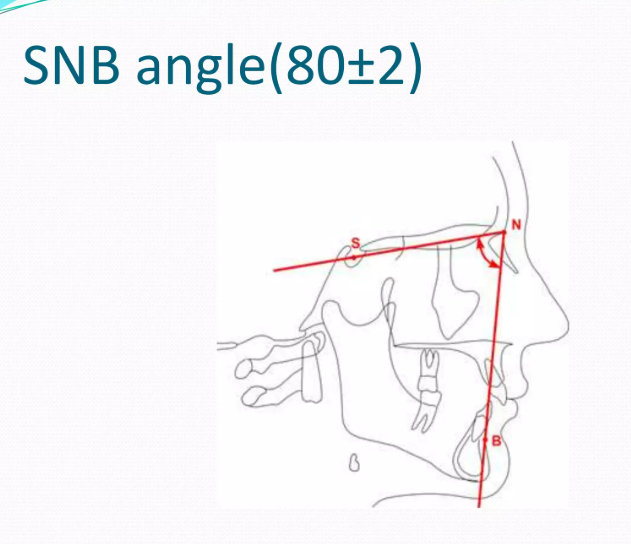
Normal value:
≈ 80° (78–82°)
Represents the sagittal position of the mandible.
Higher values indicate:
mandibular prognathism.
Lower values indicate:
mandibular retrognathism;
reduced chin projection;
a less defined facial profile.
|||||||||||||||||||||||||||||||||||||||||||||||||||||||||||||||||||||||||||||||||||
ANB
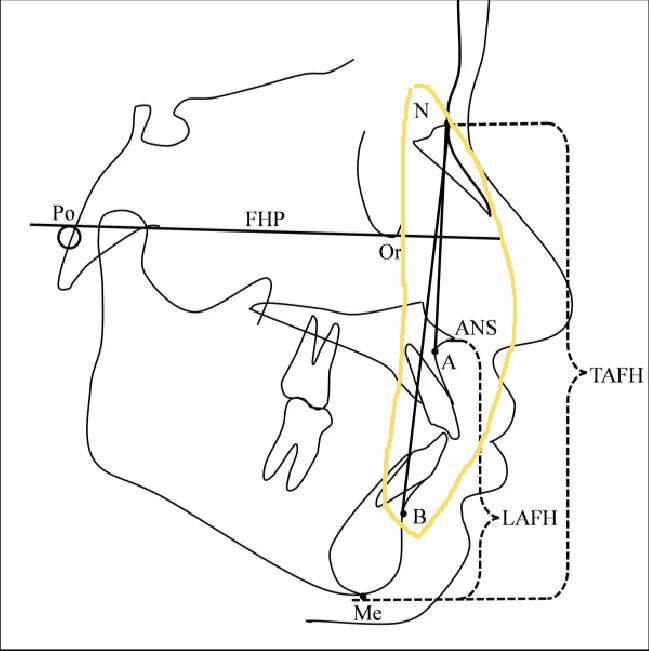
One of the most widely used cephalometric angles.
Formula:
SNA − SNB
Normal value:
≈ 2°
A range of 0–4° is generally considered physiologically normal.
Values above 4° commonly indicate:
Skeletal Class II.
Values below 0° commonly indicate:
Skeletal Class III.
This angle reflects the sagittal relationship between the maxilla and mandible.
|||||||||||||||||||||||||||||||||||||||||||||||||||||||||||||||||||||||||||||||||||
Gonial Angle
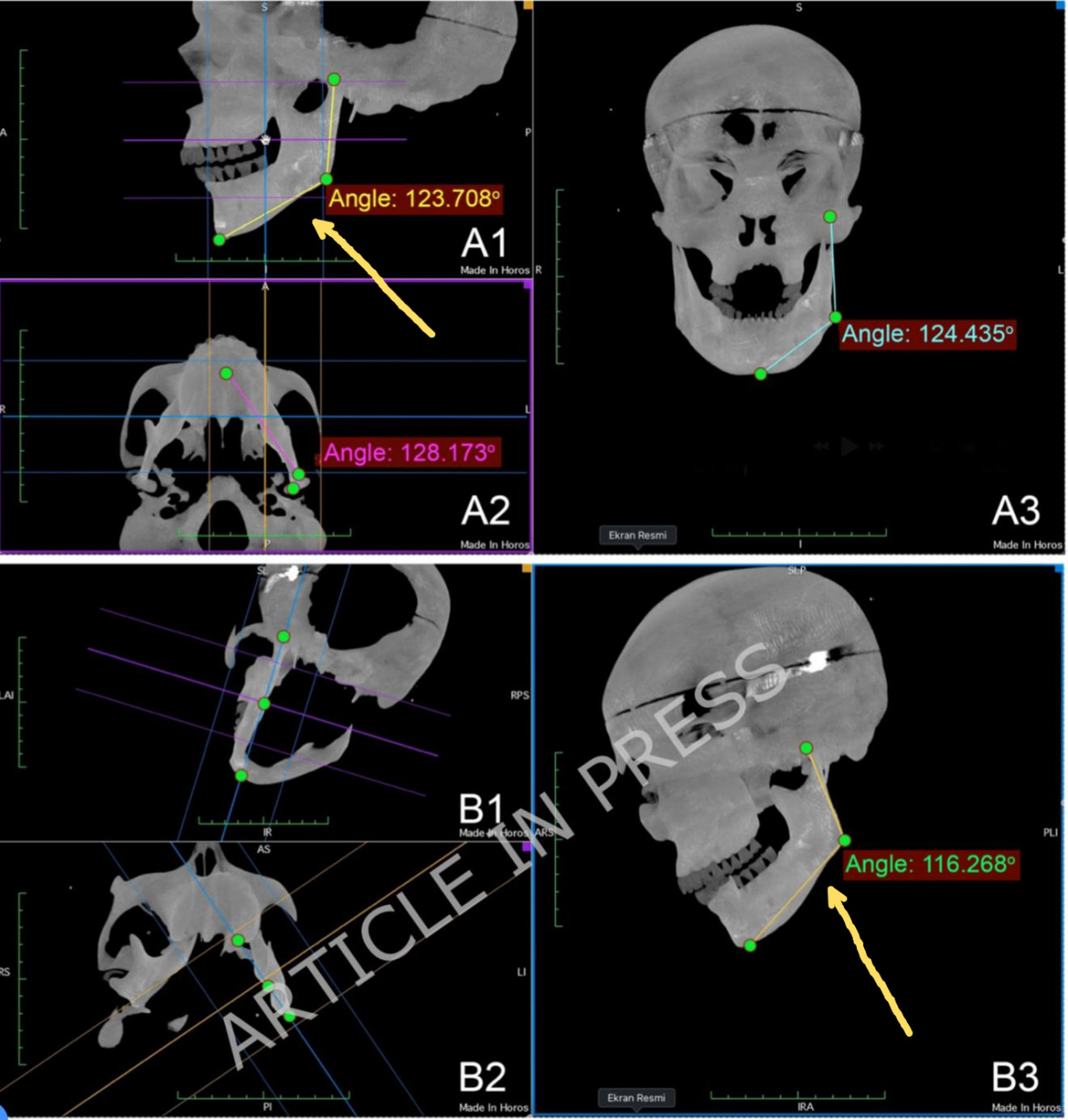
The angle formed by the mandibular ramus and body.
Normal range:
118–125°
Larger angles are associated with:
longer facial proportions;
vertical growth pattern;
less pronounced jawline.
Smaller angles are associated with:
shorter facial proportions;
stronger mandibular definition.
|||||||||||||||||||||||||||||||||||||||||||||||||||||||||||||||||||||||||||||||||||
Nasolabial Angle
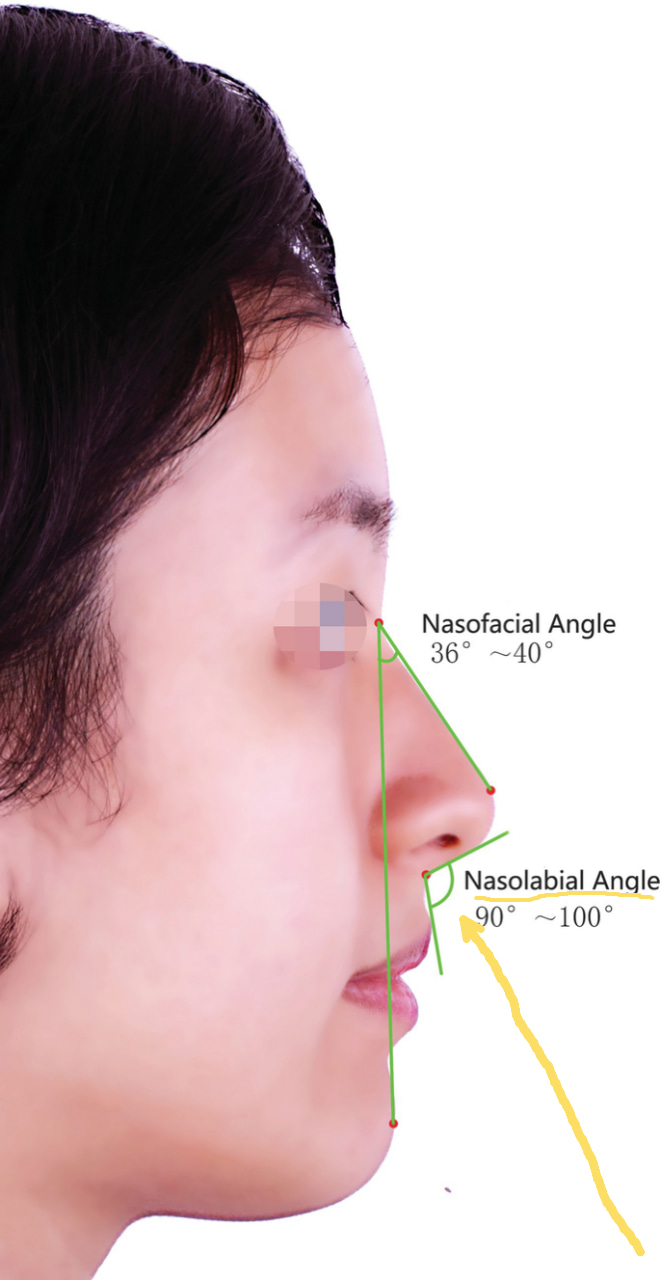
The angle between the nose and the upper lip.
Average range:
95–110° (varies by sex).
A decreased angle generally indicates:
upper lip protrusion.
An increased angle may indicate:
a relatively flat upper lip.
|||||||||||||||||||||||||||||||||||||||||||||||||||||||||||||||||||||||||||||||||||
Facial Convexity
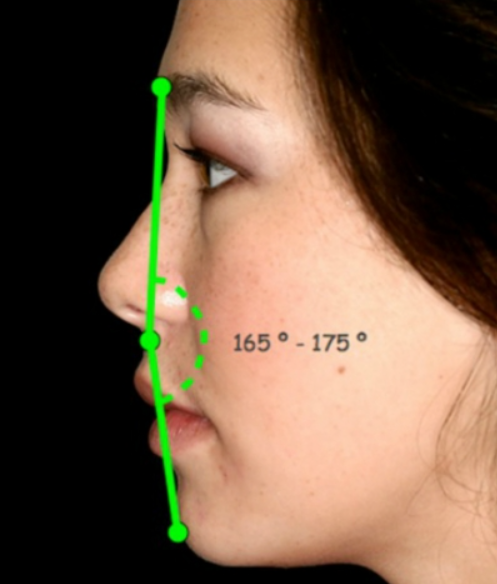
Measures the convexity of the facial profile.
Greater convexity generally corresponds to a less prominent mandible.
|||||||||||||||||||||||||||||||||||||||||||||||||||||||||||||||||||||||||||||||||||
Mandibular Plane Angle
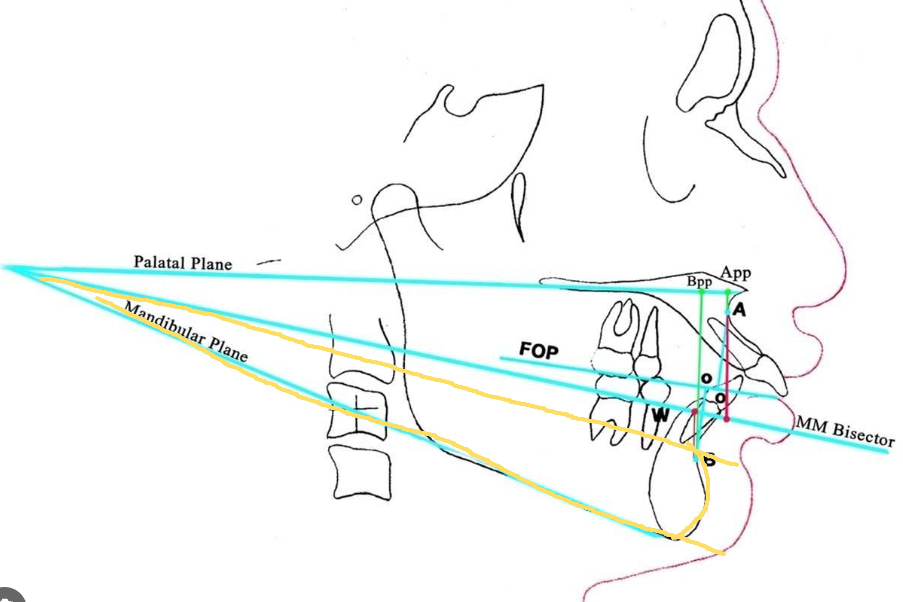
Evaluates the direction of mandibular growth.
Higher values indicate:
vertical growth pattern.
Lower values indicate:
horizontal growth pattern.
|||||||||||||||||||||||||||||||||||||||||||||||||||||||||||||||||||||||||||||||||||
FMA (Frankfort–Mandibular Plane Angle)
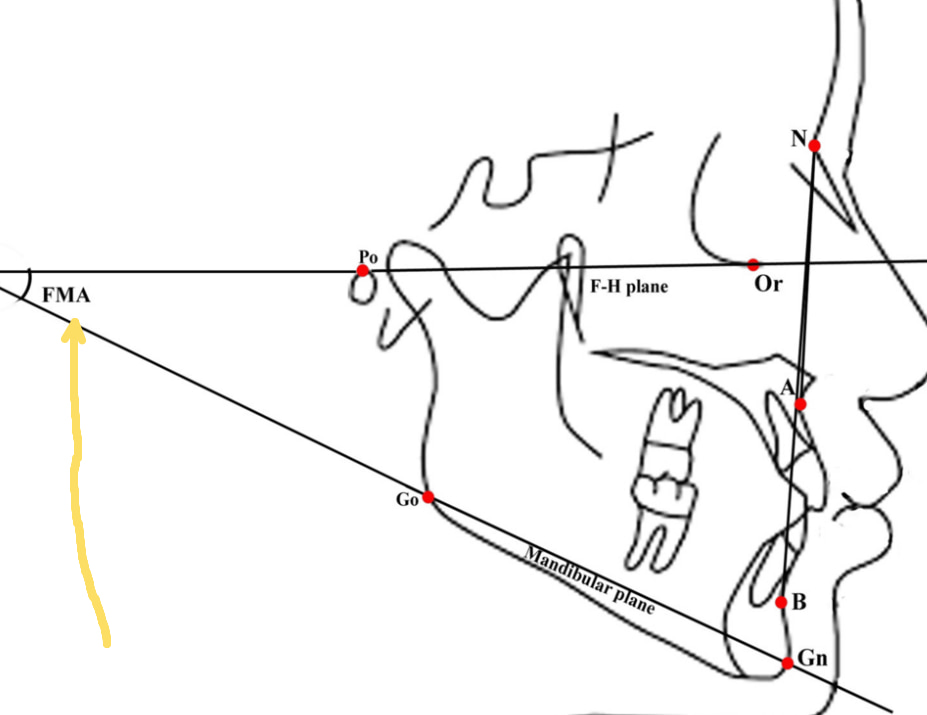
Average value:
≈ 25°
Widely used to classify facial growth patterns.
|||||||||||||||||||||||||||||||||||||||||||||||||||||||||||||||||||||||||||||||||||
Ricketts E-Line
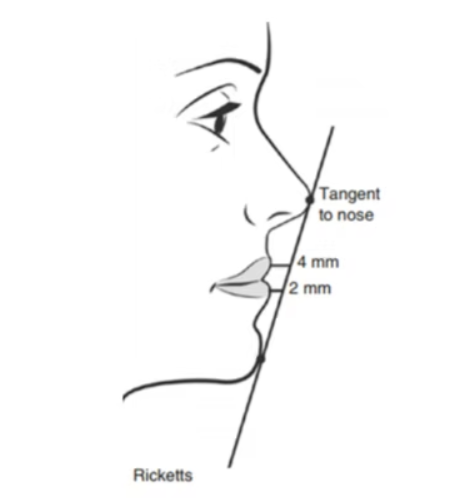
Developed by American orthodontist Robert M. Ricketts.
The line extends from the nasal tip to the Pogonion.
The positions of the lips are then evaluated relative to this line.
Average values:
Upper lip:
≈ −4 mm
Lower lip:
≈ −2 mm
If the lips project significantly beyond the E-line:
bimaxillary protrusion or dental protrusion may be present.
If the lips lie substantially behind the line:
they may appear relatively thin or retrusive.
|||||||||||||||||||||||||||||||||||||||||||||||||||||||||||||||||||||||||||||||||||
Facial Growth Patterns
Horizontal Growth Pattern
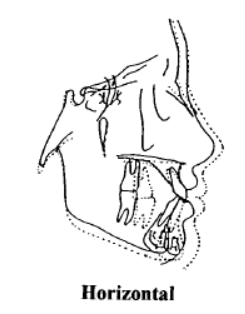
strong mandible;
compact facial proportions;
prominent chin.
|||||||||||||||||||||||||||||||||||||||||||||||||||||||||||||||||||||||||||||||||||
Vertical Growth Pattern
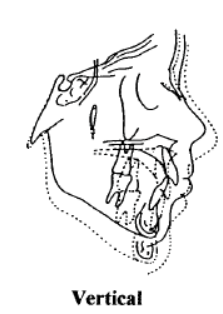
elongated face;
increased lower facial height;
less defined mandibular angle.
|||||||||||||||||||||||||||||||||||||||||||||||||||||||||||||||||||||||||||||||||||
Balanced (Average) Growth Pattern
Represents the most proportionate facial growth pattern.
|||||||||||||||||||||||||||||||||||||||||||||||||||||||||||||||||||||||||||||||||||
Why Does It Matter in Facial Aesthetics?
The human brain evaluates facial appearance as an integrated whole.
Even a well-shaped nose cannot create a balanced profile if the mandible is significantly retruded.
Likewise, chin augmentation alone will not necessarily improve facial harmony when the underlying issue is an improperly positioned maxilla.
For this reason, modern orthodontists, oral and maxillofacial surgeons, and facial aesthetic specialists evaluate the entire craniofacial complex rather than isolated facial features.
Clinical Applications
Orthodontics
Orthognathic surgery
Oral and maxillofacial surgery
Plastic and reconstructive surgery
Dental implantology
Forensic anthropology
Craniofacial anthropometry
Scientific research
Facial aesthetic assessment
|||||||||||||||||||||||||||||||||||||||||||||||||||||||||||||||||||||||||||||||||||
Conclusion
Craniofacial analysis is a scientific method of evaluating facial anatomy through objective measurements rather than subjective opinion. It enables clinicians to assess jaw relationships, facial growth patterns, occlusion, and soft tissue proportions, providing valuable information for orthodontic treatment planning, orthognathic surgery, and facial aesthetic evaluation OR side profile rate
thanks for watching
Introduction
Why are some faces perceived as harmonious from almost every angle, while others are not even when their individual features are attractive on their own? The answer lies not only in the concept of beauty, but also in anatomy, facial proportions, and the spatial relationships of the craniofacial skeleton.
This is precisely what craniofacial analysis is designed to study. It is a scientific approach to evaluating facial structure based on objective measurements rather than subjective perception. By integrating principles from orthodontics, oral and maxillofacial surgery, anthropometry, and radiographic analysis, it allows clinicians to assess the relationships between the jaws, chin, nose, teeth, and facial soft tissues as a unified anatomical system.
Today, craniofacial analysis is one of the most important tools for diagnosing dentofacial deformities, planning orthodontic treatment, and preparing for orthognathic surgery. However, its significance extends well beyond clinical medicine. These measurements help explain which anatomical characteristics contribute to a balanced facial profile, why certain aesthetic disproportions occur, and how different facial structures interact to create overall facial harmony.
This article provides a comprehensive overview of the principal anatomical landmarks, reference lines, cephalometric angles, and measurements used in craniofacial analysis, explaining their clinical significance, their influence on facial aesthetics, and their practical applications in modern diagnosis and treatment planning.
What Is Craniofacial Analysis (Cephalometry)?
Craniofacial analysis is a branch of orthodontics, oral and maxillofacial surgery, and craniofacial anthropometry that examines the spatial relationships between the bones of the skull, jaws, teeth, and facial soft tissues using anatomical landmarks, reference lines, and angular measurements.
The primary tool used in this analysis is cephalometry. It is a method of measuring craniofacial structures, most commonly performed on a lateral cephalometric radiograph (lateral cephalogram), and less frequently using cone beam computed tomography (CBCT) or standardized facial photographs with specialized analytical techniques.
Why Is It Important?
Craniofacial analysis is used for much more than diagnosing skeletal abnormalities.
It allows clinicians to:
determine facial growth patterns;
evaluate the position of the maxilla and mandible;
diagnose malocclusions;
plan orthodontic treatment;
plan orthognathic surgery;
analyze facial proportions;
predict facial changes following treatment;
assess soft tissue harmony.
In aesthetic medicine, craniofacial analysis helps explain why a face appears harmonious—or not—rather than simply evaluating individual facial features in isolation.
It is important to understand that there is no universally “perfect” face. Most reference values represent statistical norms rather than absolute standards of beauty. Facial attractiveness is influenced not only by skeletal angles but also by facial symmetry, soft tissue characteristics, skin quality, age, sex, and ethnic background.
Major Anatomical Landmarks
Nasion (N)
The most anterior point of the frontonasal suture.
Used in nearly all cephalometric analyses.
Serves as a fundamental reference point for numerous angular measurements.
|||||||||||||||||||||||||||||||||||||||||||||||||||||||||||||||||||||||||||||||||||
Sella (S)
The geometric center of the sella turcica.
A relatively stable cranial landmark.
Forms one endpoint of the SN reference line.
|||||||||||||||||||||||||||||||||||||||||||||||||||||||||||||||||||||||||||||||||||
Point A (Subspinale)
The deepest point on the anterior contour of the maxillary alveolar process.
Represents the anteroposterior position of the maxilla relative to the cranial base.
|||||||||||||||||||||||||||||||||||||||||||||||||||||||||||||||||||||||||||||||||||
Point B (Supramentale)
The deepest point on the anterior contour of the mandibular alveolar process.
Used to evaluate the sagittal position of the mandible.
|||||||||||||||||||||||||||||||||||||||||||||||||||||||||||||||||||||||||||||||||||
Pogonion (Pg)
The most anterior point of the bony chin.
One of the most important landmarks in profile aesthetics.
Its position largely determines:
chin projection;
prominence of the lower third of the face;
overall facial profile.
A retruded Pogonion often results in a weaker facial profile, even when nasal proportions are favorable.
|||||||||||||||||||||||||||||||||||||||||||||||||||||||||||||||||||||||||||||||||||
Gnathion (Gn)
The most anterior-inferior point of the chin.
Used primarily to assess vertical facial dimensions.
|||||||||||||||||||||||||||||||||||||||||||||||||||||||||||||||||||||||||||||||||||
Menton (Me)
The lowest point on the mandibular symphysis.
Represents the inferior limit of the lower facial height.
|||||||||||||||||||||||||||||||||||||||||||||||||||||||||||||||||||||||||||||||||||
Gonion (Go)
The most posterior-inferior point at the angle of the mandible.
Defines the mandibular angle and contributes significantly to jawline contour.
|||||||||||||||||||||||||||||||||||||||||||||||||||||||||||||||||||||||||||||||||||
Orbitale (Or)
The lowest point on the inferior orbital rim.
Required for constructing the Frankfort Horizontal Plane.
|||||||||||||||||||||||||||||||||||||||||||||||||||||||||||||||||||||||||||||||||||
Porion (Po)
The uppermost point of the external auditory meatus.
Also used to establish the Frankfort Horizontal Plane.
|||||||||||||||||||||||||||||||||||||||||||||||||||||||||||||||||||||||||||||||||||
Principal Reference Lines
SN Line
Connects Sella (S) and Nasion (N).
Serves as one of the primary cranial reference lines in cephalometric analysis.
|||||||||||||||||||||||||||||||||||||||||||||||||||||||||||||||||||||||||||||||||||
Frankfort Horizontal (FH)
Connects Orbitale (Or) and Porion (Po).
Considered the most physiologically representative horizontal plane of the head.
|||||||||||||||||||||||||||||||||||||||||||||||||||||||||||||||||||||||||||||||||||
Mandibular Plane (MP)
Represents the inferior border of the mandible.
Used to evaluate vertical facial growth patterns.
|||||||||||||||||||||||||||||||||||||||||||||||||||||||||||||||||||||||||||||||||||
Occlusal Plane
Represents the functional plane of dental occlusion.
Used to assess tooth position and occlusal relationships.
|||||||||||||||||||||||||||||||||||||||||||||||||||||||||||||||||||||||||||||||||||
Key Cephalometric Angles
SNA
Normal value:
≈ 82° (80–84°)
Represents the sagittal position of the maxilla relative to the cranial base.
Higher values indicate:
maxillary prognathism.
Lower values indicate:
maxillary retrusion.
|||||||||||||||||||||||||||||||||||||||||||||||||||||||||||||||||||||||||||||||||||
SNB
Normal value:
≈ 80° (78–82°)
Represents the sagittal position of the mandible.
Higher values indicate:
mandibular prognathism.
Lower values indicate:
mandibular retrognathism;
reduced chin projection;
a less defined facial profile.
|||||||||||||||||||||||||||||||||||||||||||||||||||||||||||||||||||||||||||||||||||
ANB
One of the most widely used cephalometric angles.
Formula:
SNA − SNB
Normal value:
≈ 2°
A range of 0–4° is generally considered physiologically normal.
Values above 4° commonly indicate:
Skeletal Class II.
Values below 0° commonly indicate:
Skeletal Class III.
This angle reflects the sagittal relationship between the maxilla and mandible.
|||||||||||||||||||||||||||||||||||||||||||||||||||||||||||||||||||||||||||||||||||
Gonial Angle
The angle formed by the mandibular ramus and body.
Normal range:
118–125°
Larger angles are associated with:
longer facial proportions;
vertical growth pattern;
less pronounced jawline.
Smaller angles are associated with:
shorter facial proportions;
stronger mandibular definition.
|||||||||||||||||||||||||||||||||||||||||||||||||||||||||||||||||||||||||||||||||||
Nasolabial Angle
The angle between the nose and the upper lip.
Average range:
95–110° (varies by sex).
A decreased angle generally indicates:
upper lip protrusion.
An increased angle may indicate:
a relatively flat upper lip.
|||||||||||||||||||||||||||||||||||||||||||||||||||||||||||||||||||||||||||||||||||
Facial Convexity
Measures the convexity of the facial profile.
Greater convexity generally corresponds to a less prominent mandible.
|||||||||||||||||||||||||||||||||||||||||||||||||||||||||||||||||||||||||||||||||||
Mandibular Plane Angle
Evaluates the direction of mandibular growth.
Higher values indicate:
vertical growth pattern.
Lower values indicate:
horizontal growth pattern.
|||||||||||||||||||||||||||||||||||||||||||||||||||||||||||||||||||||||||||||||||||
FMA (Frankfort–Mandibular Plane Angle)
Average value:
≈ 25°
Widely used to classify facial growth patterns.
|||||||||||||||||||||||||||||||||||||||||||||||||||||||||||||||||||||||||||||||||||
Ricketts E-Line
Developed by American orthodontist Robert M. Ricketts.
The line extends from the nasal tip to the Pogonion.
The positions of the lips are then evaluated relative to this line.
Average values:
Upper lip:
≈ −4 mm
Lower lip:
≈ −2 mm
If the lips project significantly beyond the E-line:
bimaxillary protrusion or dental protrusion may be present.
If the lips lie substantially behind the line:
they may appear relatively thin or retrusive.
|||||||||||||||||||||||||||||||||||||||||||||||||||||||||||||||||||||||||||||||||||
Facial Growth Patterns
Horizontal Growth Pattern
strong mandible;
compact facial proportions;
prominent chin.
|||||||||||||||||||||||||||||||||||||||||||||||||||||||||||||||||||||||||||||||||||
Vertical Growth Pattern
elongated face;
increased lower facial height;
less defined mandibular angle.
|||||||||||||||||||||||||||||||||||||||||||||||||||||||||||||||||||||||||||||||||||
Balanced (Average) Growth Pattern
Represents the most proportionate facial growth pattern.
|||||||||||||||||||||||||||||||||||||||||||||||||||||||||||||||||||||||||||||||||||
Why Does It Matter in Facial Aesthetics?
The human brain evaluates facial appearance as an integrated whole.
Even a well-shaped nose cannot create a balanced profile if the mandible is significantly retruded.
Likewise, chin augmentation alone will not necessarily improve facial harmony when the underlying issue is an improperly positioned maxilla.
For this reason, modern orthodontists, oral and maxillofacial surgeons, and facial aesthetic specialists evaluate the entire craniofacial complex rather than isolated facial features.
Clinical Applications
Orthodontics
Orthognathic surgery
Oral and maxillofacial surgery
Plastic and reconstructive surgery
Dental implantology
Forensic anthropology
Craniofacial anthropometry
Scientific research
Facial aesthetic assessment
|||||||||||||||||||||||||||||||||||||||||||||||||||||||||||||||||||||||||||||||||||
Conclusion
Craniofacial analysis is a scientific method of evaluating facial anatomy through objective measurements rather than subjective opinion. It enables clinicians to assess jaw relationships, facial growth patterns, occlusion, and soft tissue proportions, providing valuable information for orthodontic treatment planning, orthognathic surgery, and facial aesthetic evaluation OR side profile rate
thanks for watching
Last edited: