Legit iqmaxxing strategy for greys

argenfft

argenfft

Iron
Joined
Jan 6, 2026
Posts
45
Reputation
14

1. Sleep & Dopamine Regulation (~20–30% efficiency)


  • Sleep: 7–8 hours consistently. Avoid staying up late.
  • Morning: Avoid doomscrolling, social media, porn. Use morning sunlight to help wake your brain naturally.
  • Optional: Melatonin (1–3 mg) if sleep onset is difficult — works gradually over weeks.
  • Goal: Balanced dopamine system for effective training and focus.


2. Physical Exercise (~2–5 IQ points)


  • Daily: 20–45 min
    • Cardio: 15–25 min (running, cycling, swimming)
    • Resistance training: 10–20 min (push-ups, weights, bodyweight)
  • Tips: Focus on consistency, not intensity.
  • Benefits: Blood flow, hippocampal growth, neurogenesis, memory boost.


3. Meditation & Focus Training (~1–3 IQ points indirect)


  • Daily: 10–20 min
  • Method: Mindfulness, body scan, or attention meditation
  • Optional: Binaural beats (if using, ensure two slightly different frequencies per ear)
  • Tips: Track consistency, not intensity. Improvements usually appear after months.
  • Benefits: Gray matter increase, focus, emotional regulation.


4. Cognitive Stretching (Main Training) (~10 IQ points max mostly cope)


  • Daily: 30–60 min
  • Tasks (choose 1–2 per session):
    • Chess puzzles
    • Math & logic problems
    • Explain topics in your own words
    • Active recall of what you read
    • Coding / problem solving
    • Language exercises
  • Tips:
    • Slightly above your current level
    • Optional: Add time pressure for adaptation


5. Dual N-Back Training (~1-3 IQ points, working memory boost)


  • Daily: 15–25 min
  • Guidelines:
    • Increase difficulty gradually
    • Consistency matters
    • Take breaks (1–2 days/week) for recovery
  • Benefits: Working memory, attention, fluid intelligence.


6. Science-Based Memory Training


  • Daily / During Study: 10–30 min
  • Methods:
    • Spaced repetition (Anki or similar)
    • Memory palaces
    • Acronyms & mnemonics
    • Active recall
  • Benefits: Strong memory formation, better learning efficiency.


7. Flow State Training


  • Daily: During study or cognitive sessions
  • Steps to enter flow:
    1. Work in the morning if possible
    2. Be genuinely motivated
    3. Plan sessions ahead
    4. Write down distracting thoughts
    5. Start with easier tasks, then harder ones
    6. Focus on tasks slightly above skill level
  • Benefits: Max memory formation, working memory boost, temporary performance spike.


8. Disabled Brain Part Training (Cognitive Flexibility)


  • Frequency: 10–20 min/day or 3–4 times/week
  • Methods:
    • Non-dominant hand for writing, eating, or small tasks
    • Close eyes while reading, solving puzzles, or Rubik’s cube
    • Solve problems without calculators or notes
    • Rotate chess openings, programming approaches, or learning methods
    • Visualize & rotate 3D objects mentally
  • Tips: Start small, focus on adaptation, not speed
  • Benefits: Neuroplasticity, problem-solving, creativity, working memory


Weekly Optional / Advanced


9. Cognitive-Enhancing Substances (Caution)


  • Optional, high-risk: Adderall, Phenylpiracetam, Semax, other nootropics
  • Guidelines: Only under medical supervision; monitor tolerance and legality
  • Benefit: Temporary focus, alertness, or memory improvement; long-term IQ gains not guaranteed

Notes


  • Consistency > Intensity: These methods work best when repeated daily/weekly.
  • Track progress: Use journaling for flow, working memory, and difficulty levels.
  • Balance: Don’t overdo cognitive tasks; recovery is essential.
  • Adapt: Modify difficulty and timing to match your current abilities.
If someone even reads this post i can make more spesific deeper exercises for "rough IQ", even thos it mostly cope, because nobody became a genius, training works purly on logic. So if you have under average iq or struggle with daily life, this guide is for you. There are spesfic exercises that some poeple claim to significantly increase iq, but its only theoretical. Enjoy what you have or ope
 
  • Ugh..
  • JFL
Reactions: gorgias and GoblinMaxxer
Ai slop dnr
 
  • +1
Reactions: mcmentalonthemic, ragingmanlet, dsheppa and 5 others

argenfft​

Iron​

Joined Jan 6, 2026
Posts 4
Reputation 1
 
  • +1
  • JFL
Reactions: mcmentalonthemic, ragingmanlet and DaveXD
Reported cheers 👍
 
  • +1
  • JFL
Reactions: Ch1gga and dsheppa
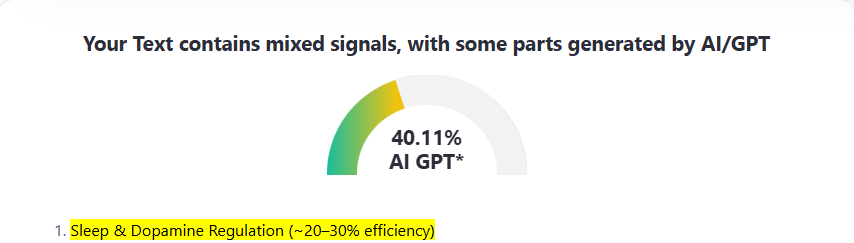
"grey"
 

Attachments

  • Screenshot 2026-01-28 073313.png
    Screenshot 2026-01-28 073313.png
    23 KB · Views: 0
  • +1
Reactions: dsheppa

1. Sleep & Dopamine Regulation (~20–30% efficiency)


  • Sleep: 7–8 hours consistently. Avoid staying up late.
  • Morning: Avoid doomscrolling, social media, porn. Use morning sunlight to help wake your brain naturally.
  • Optional: Melatonin (1–3 mg) if sleep onset is difficult — works gradually over weeks.
  • Goal: Balanced dopamine system for effective training and focus.


2. Physical Exercise (~2–5 IQ points)


  • Daily:20–45 min
    • Cardio: 15–25 min (running, cycling, swimming)
    • Resistance training: 10–20 min (push-ups, weights, bodyweight)
  • Tips: Focus on consistency, not intensity.
  • Benefits: Blood flow, hippocampal growth, neurogenesis, memory boost.


3. Meditation & Focus Training (~1–3 IQ points indirect)


  • Daily: 10–20 min
  • Method: Mindfulness, body scan, or attention meditation
  • Optional: Binaural beats (if using, ensure two slightly different frequencies per ear)
  • Tips: Track consistency, not intensity. Improvements usually appear after months.
  • Benefits: Gray matter increase, focus, emotional regulation.


4. Cognitive Stretching (Main Training) (~10 IQ points max mostly cope)


  • Daily: 30–60 min
  • Tasks (choose 1–2 per session):
    • Chess puzzles
    • Math & logic problems
    • Explain topics in your own words
    • Active recall of what you read
    • Coding / problem solving
    • Language exercises
  • Tips:
    • Slightly above your current level
    • Optional: Add time pressure for adaptation


5. Dual N-Back Training (~1-3 IQ points, working memory boost)


  • Daily: 15–25 min
  • Guidelines:
    • Increase difficulty gradually
    • Consistency matters
    • Take breaks (1–2 days/week) for recovery
  • Benefits: Working memory, attention, fluid intelligence.


6. Science-Based Memory Training


  • Daily / During Study: 10–30 min
  • Methods:
    • Spaced repetition (Anki or similar)
    • Memory palaces
    • Acronyms & mnemonics
    • Active recall
  • Benefits: Strong memory formation, better learning efficiency.


7. Flow State Training


  • Daily: During study or cognitive sessions
  • Steps to enter flow:
    1. Work in the morning if possible
    2. Be genuinely motivated
    3. Plan sessions ahead
    4. Write down distracting thoughts
    5. Start with easier tasks, then harder ones
    6. Focus on tasks slightly above skill level
  • Benefits: Max memory formation, working memory boost, temporary performance spike.


8. Disabled Brain Part Training (Cognitive Flexibility)


  • Frequency: 10–20 min/day or 3–4 times/week
  • Methods:
    • Non-dominant hand for writing, eating, or small tasks
    • Close eyes while reading, solving puzzles, or Rubik’s cube
    • Solve problems without calculators or notes
    • Rotate chess openings, programming approaches, or learning methods
    • Visualize & rotate 3D objects mentally
  • Tips: Start small, focus on adaptation, not speed
  • Benefits: Neuroplasticity, problem-solving, creativity, working memory


Weekly Optional / Advanced


9. Cognitive-Enhancing Substances (Caution)


  • Optional, high-risk: Adderall, Phenylpiracetam, Semax, other nootropics
  • Guidelines: Only under medical supervision; monitor tolerance and legality
  • Benefit: Temporary focus, alertness, or memory improvement; long-term IQ gains not guaranteed

Notes


  • Consistency > Intensity: These methods work best when repeated daily/weekly.
  • Track progress: Use journaling for flow, working memory, and difficulty levels.
  • Balance: Don’t overdo cognitive tasks; recovery is essential.
  • Adapt: Modify difficulty and timing to match your current abilities.
If someone even reads this post i can make more spesific deeper exercises for "rough IQ", even thos it mostly cope, because nobody became a genius, training works purly on logic. So if you have under average iq or struggle with daily life, this guide is for you. There are spesfic exercises that some poeple claim to significantly increase iq, but its only theoretical. Enjoy what you have or ope
Nigga pulled these out of his booty hole. :feelskek:
 
  • +1
Reactions: Dzad
thx dr. gpt
 

Similar threads

soucy77
Replies
7
Views
484
detox700
detox700
D
Replies
8
Views
372
PSL Journey
P
M
Replies
14
Views
680
kikoperex
kikoperex

Users who are viewing this thread

Back
Top