
argenfft
Iron
- Joined
- Jan 6, 2026
- Posts
- 48
- Reputation
- 14
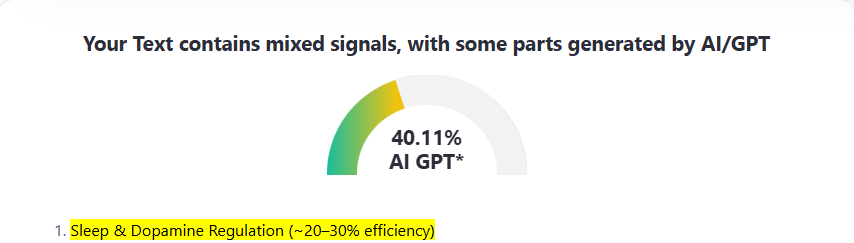
1. Sleep & Dopamine Regulation (~20–30% efficiency)
- Sleep: 7–8 hours consistently. Avoid staying up late.
- Morning: Avoid doomscrolling, social media, porn. Use morning sunlight to help wake your brain naturally.
- Optional: Melatonin (1–3 mg) if sleep onset is difficult — works gradually over weeks.
- Goal: Balanced dopamine system for effective training and focus.
2. Physical Exercise (~2–5 IQ points)
- Daily: 20–45 min
- Cardio: 15–25 min (running, cycling, swimming)
- Resistance training: 10–20 min (push-ups, weights, bodyweight)
- Tips: Focus on consistency, not intensity.
- Benefits: Blood flow, hippocampal growth, neurogenesis, memory boost.
3. Meditation & Focus Training (~1–3 IQ points indirect)
- Daily: 10–20 min
- Method: Mindfulness, body scan, or attention meditation
- Optional: Binaural beats (if using, ensure two slightly different frequencies per ear)
- Tips: Track consistency, not intensity. Improvements usually appear after months.
- Benefits: Gray matter increase, focus, emotional regulation.
4. Cognitive Stretching (Main Training) (~10 IQ points max mostly cope)
- Daily: 30–60 min
- Tasks (choose 1–2 per session):
- Chess puzzles
- Math & logic problems
- Explain topics in your own words
- Active recall of what you read
- Coding / problem solving
- Language exercises
- Tips:
- Slightly above your current level
- Optional: Add time pressure for adaptation
5. Dual N-Back Training (~1-3 IQ points, working memory boost)
- Daily: 15–25 min
- Guidelines:
- Increase difficulty gradually
- Consistency matters
- Take breaks (1–2 days/week) for recovery
- Benefits: Working memory, attention, fluid intelligence.
6. Science-Based Memory Training
- Daily / During Study: 10–30 min
- Methods:
- Spaced repetition (Anki or similar)
- Memory palaces
- Acronyms & mnemonics
- Active recall
- Benefits: Strong memory formation, better learning efficiency.
7. Flow State Training
- Daily: During study or cognitive sessions
- Steps to enter flow:
- Work in the morning if possible
- Be genuinely motivated
- Plan sessions ahead
- Write down distracting thoughts
- Start with easier tasks, then harder ones
- Focus on tasks slightly above skill level
- Benefits: Max memory formation, working memory boost, temporary performance spike.
8. Disabled Brain Part Training (Cognitive Flexibility)
- Frequency: 10–20 min/day or 3–4 times/week
- Methods:
- Non-dominant hand for writing, eating, or small tasks
- Close eyes while reading, solving puzzles, or Rubik’s cube
- Solve problems without calculators or notes
- Rotate chess openings, programming approaches, or learning methods
- Visualize & rotate 3D objects mentally
- Tips: Start small, focus on adaptation, not speed
- Benefits: Neuroplasticity, problem-solving, creativity, working memory
Weekly Optional / Advanced
9. Cognitive-Enhancing Substances (Caution)
- Optional, high-risk: Adderall, Phenylpiracetam, Semax, other nootropics
- Guidelines: Only under medical supervision; monitor tolerance and legality
- Benefit: Temporary focus, alertness, or memory improvement; long-term IQ gains not guaranteed
Notes
- Consistency > Intensity: These methods work best when repeated daily/weekly.
- Track progress: Use journaling for flow, working memory, and difficulty levels.
- Balance: Don’t overdo cognitive tasks; recovery is essential.
- Adapt: Modify difficulty and timing to match your current abilities.