Hubris-
Clandestine
- Joined
- Mar 28, 2026
- Posts
- 28
- Reputation
- 34
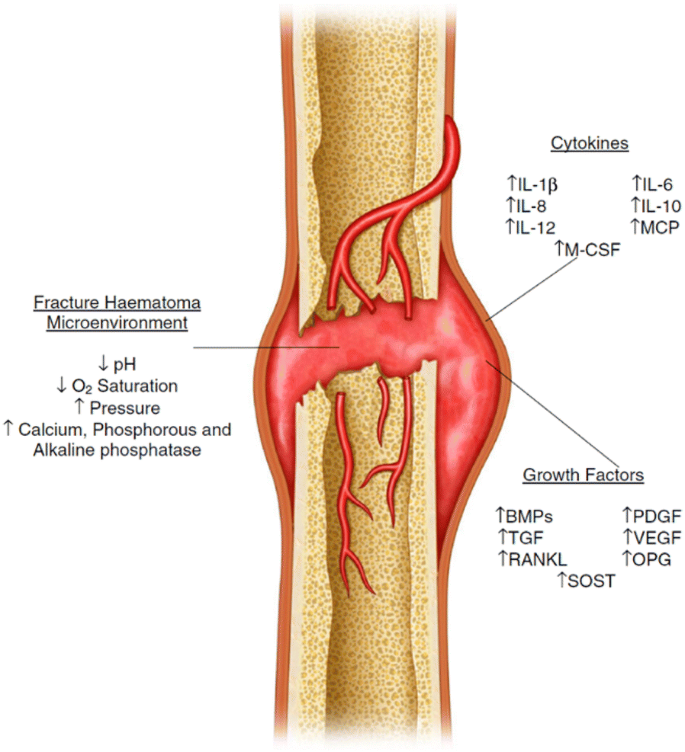
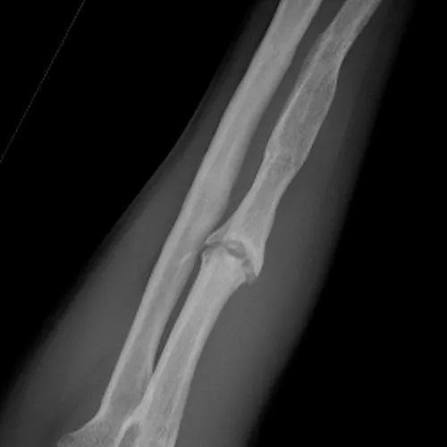
Bone healing after surgery can be complex, and one of the most serious complications is non-union, where the bone fails to properly heal. This is especially a concern in procedures like limb lengthening, where the body is required to generate significant new bone. When healing does not occur correctly, it can lead to poor outcomes and may require additional surgeries. 
 ex.)
ex.)
————————————————————
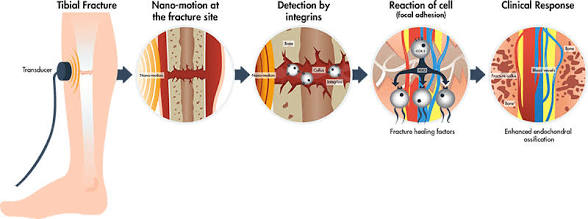
One area of interest in improving bone healing is Low-Intensity Pulsed Ultrasound (LIPUS). Research has shown that LIPUS can stimulate periosteal apposition, which is the formation of new bone along the outer surface of existing bone. This process is important not only for healing but also for changing the thickness and shape of bones.
ex.)
———————————————————-
Periosteal apposition plays a key role in how bones grow outward. Unlike lengthwise growth, which mainly happens during development, this type of growth affects the external structure of the bone. Because of this, it is relevant when considering changes in bone appearance or structure.
————————————————————
However, LIPUS alone may not be as effective by itself. some research suggests that LIPUS could be more effective when combined with other methods, such as drugs that increase bone-forming activity or support bone growth at a cellular level.
( examples would be Anabolic agents such as; Romosozumab , Teriparitide, and Abaloparitide, directly stimulate bone formation by increasing osteoblast activity or enhancing bone-building signaling pathways. When used alongside LIPUS, these agents may amplify localized bone growth by supplying more active bone-forming cells to the stimulated area. Similarly, systemic hormones such as GH and igf-1 further support this process by creating a more anabolic internal environment, potentially intensifying the response to mechanical stimulation.
————————————————————
In conclusion, LIPUS is a useful tool for supporting bone healing, particularly by promoting new bone formation on the outer surface. However, on its own, it is unlikely to cause significant changes in bone structure. Future advancements will likely depend on combining different treatments to better stimulate bone growt.
This is not medical advice I am not a doctor.
This took a longtime rep/bumps would be appreciated
also any tips on how to improve thread formatting would also be appreciated.
————————————————————
One area of interest in improving bone healing is Low-Intensity Pulsed Ultrasound (LIPUS). Research has shown that LIPUS can stimulate periosteal apposition, which is the formation of new bone along the outer surface of existing bone. This process is important not only for healing but also for changing the thickness and shape of bones.
ex.)
———————————————————-
Periosteal apposition plays a key role in how bones grow outward. Unlike lengthwise growth, which mainly happens during development, this type of growth affects the external structure of the bone. Because of this, it is relevant when considering changes in bone appearance or structure.
————————————————————
However, LIPUS alone may not be as effective by itself. some research suggests that LIPUS could be more effective when combined with other methods, such as drugs that increase bone-forming activity or support bone growth at a cellular level.
( examples would be Anabolic agents such as; Romosozumab , Teriparitide, and Abaloparitide, directly stimulate bone formation by increasing osteoblast activity or enhancing bone-building signaling pathways. When used alongside LIPUS, these agents may amplify localized bone growth by supplying more active bone-forming cells to the stimulated area. Similarly, systemic hormones such as GH and igf-1 further support this process by creating a more anabolic internal environment, potentially intensifying the response to mechanical stimulation.
————————————————————
In conclusion, LIPUS is a useful tool for supporting bone healing, particularly by promoting new bone formation on the outer surface. However, on its own, it is unlikely to cause significant changes in bone structure. Future advancements will likely depend on combining different treatments to better stimulate bone growt.
This is not medical advice I am not a doctor.
This took a longtime rep/bumps would be appreciated
also any tips on how to improve thread formatting would also be appreciated.