Morality, religion, and power

Arzenic

Arzenic

Joined
Jan 22, 2025
Posts
3,473
Reputation
10,399
Lately, I’ve been thinking quite a bit about morality, especially in the context of religion, and I’d be interested in hearing other people’s thoughts on this.

Jesus teaches that people should do what is right and live according to the moral principles he set forth. That raises a broader philosophical question for me;
Are morals objective truths that exist independently of us, or are they systems that societies create and reshape over time?

I’ve increasingly struggled with the idea that laws and social norms alone can represent ultimate truth. If they did, they would presumably be immutable. Yet history shows that what societies consider right or wrong changes dramatically across generations. Practices once widely accepted are now condemned, while others once condemned have become accepted. That suggests that at least some moral systems are heavily influenced by culture, politics, and historical circumstances, rather than existing as timeless absolutes.

One historical pattern I find interesting is the relationship between power and religion.

For much of history, rulers maintained authority primarily through force. Kings and emperors relied on military strength, intimidation, and punishment to discourage rebellion. This could secure obedience, but it often produced unstable governments because people obeyed out of fear rather than genuine loyalty.

Religion introduced a different mechanism.

Instead of relying solely on external coercion, it could provide an internal form of social regulation. If people sincerely believed that honesty, humility, loyalty, and self-restraint were morally good, while betrayal, greed, and the pursuit of power for its own sake were sinful, then many would regulate their own behaviour without requiring constant force.

From a political perspective, that has obvious advantages. A population that shares a moral framework and largely governs itself through internalized beliefs is often easier to govern than one that must be controlled entirely through fear.

Historically, many rulers seem to have recognized this. Some may have been genuinely religious, while others may have promoted a particular faith because it strengthened social cohesion and reinforced political legitimacy. Grounding authority in something perceived as divine can make that authority appear stronger than military power alone.

That doesn’t necessarily mean religion is only a political tool. I think humans naturally want to believe in something greater than themselves: something that gives meaning, purpose, or comfort beyond ordinary life.

What I find interesting is that many religions follow similar patterns:

  • they provide moral guidance,
  • they create a shared identity,
  • they offer explanations for suffering and existence,
  • and they often become closely connected with political authority.
For example, the spread of Christianity throughout the Nordic countries was not simply a matter of isolated individual conversions. Political decisions by rulers played a major role in shaping the religious identity of entire regions.

So the question I’m left with is this Do religions primarily reveal objective moral truth, or did they become dominant because they were the most convincing, comforting, or politically useful systems available at the time?

I’m not presenting this as a conclusion so much as an idea I’ve been trying to think through. I’d be interested to hear how others approach the relationship between morality, religion, culture, and political power.

 
  • +1
  • Love it
  • Woah
Reactions: Urielwillascend, code80, Azi.org and 11 others
Morality is whatever ruleset is needed for the group to survive. Old Testament constantly mentions killings and wiping out villages. Is that morality or using God to justify actions of ancient tribes ?
 
  • +1
Reactions: SharkBlitzz, Shrek2OnDvD, lowdimotrucel and 3 others
mirin iq. over for us geneteically inferieor
 
  • JFL
  • +1
Reactions: Urielwillascend, Azi.org, LXR and 1 other person
Religion is bs
And u can’t prove the opposite :bigbrain:
 
  • +1
Reactions: 1966Ford, Shrek2OnDvD and Arzenic
Morality is whatever ruleset is needed for the group to survive. Old Testament constantly mentions killings and wiping out villages. Is that morality or using God to justify actions of ancient tribes ?
Which is exactly why morals can't be relied upon as an objective compass for right and wrong. If there were a universally predefined standard of right and wrong, it would be fixed and immutable. Yet what societies consider moral has changed repeatedly throughout history.
 
  • +1
Reactions: LXR, putumayo and Shrek2OnDvD
Morality is whatever ruleset is needed for the group to survive. Old Testament constantly mentions killings and wiping out villages. Is that morality or using God to justify actions of ancient tribes ?
idk why some people struggle with this so much. do they not understand how religion (still is today) was used by ancient tribal groups to justify conquering and destroying their neighbours?
 
  • +1
Reactions: LXR and Arzenic
Which is exactly why morals can't be relied upon as an objective compass for right and wrong. If there were a universally predefined standard of right and wrong, it would be fixed and immutable. Yet what societies consider moral has changed repeatedly throughout history.

i personally believe morals are subjective, but you can see the quality of a man based on his rulebook

you've stated twice now that morals change throughout history, and that just reads as society realizing its faults and adjusting

there is not a universal standard, morals are set by individuals and influenced by their religions/leaders
 
  • +1
Reactions: Urielwillascend, 1966Ford, Azi.org and 1 other person
Which is exactly why morals can't be relied upon as an objective compass for right and wrong. If there were a universally predefined standard of right and wrong, it would be fixed and immutable. Yet what societies consider moral has changed repeatedly throughout history.
There is no objective compass. If you choose to live in a society, you'd have to confine yourself to the morality of that particular society. Usually whatever the majority deems to be true.

And like you said, that changes overtime anyways.
 
  • +1
Reactions: Arzenic and putumayo
Religion is bs
And u can’t prove the opposite :bigbrain:
I’m less interested in proving religion true or false, and more interested in why it became so powerful.

Religion is arguably one of the most effective systems humans have created for establishing a shared moral framework and maintaining social cohesion.

Personally, I think something caused the universe to exist, perhaps what we’d call God, but it's not anythingthat humanity has figured out yet, that's for sure.
 
  • +1
Reactions: ESR and putumayo
I think theres an important distinction between morality itself and the way societies interpret and institutionalize morality. The fact that moral norms change across cultures doesn’t necessarily prove that objective morality doesn’t exist, it could simply mean that humans have imperfectly understood it.

If objective morality exists, then it also raises the question of what grounds it. If morality is ultimately determined by society, then good and evil become largely matters of consensus. But if morality is grounded in something beyond humanity, then religion becomes a possible explanation for why certain moral truths are genuinely binding.
At the same time, religion being politically useful doesn’t demonstrate that it was invented for political purposes. A belief can be useful to rulers and still be true.

Christianity itself is also not free from serious philosophical and theological problems, so I wouldn’t consider Christianity automatically validated simply because it provides a moral framework.

Ultimately, the real question isn't whether religion is politically peaceful but Is the moral and metaphysical claim it makes actually true? Those are two very different questions.
 
  • +1
Reactions: Azi.org, duzxk1, Arzenic and 1 other person
I think theres an important distinction between morality itself and the way societies interpret and institutionalize morality. The fact that moral norms change across cultures doesn’t necessarily prove that objective morality doesn’t exist, it could simply mean that humans have imperfectly understood it.

If objective morality exists, then it also raises the question of what grounds it. If morality is ultimately determined by society, then good and evil become largely matters of consensus. But if morality is grounded in something beyond humanity, then religion becomes a possible explanation for why certain moral truths are genuinely binding.
At the same time, religion being politically useful doesn’t demonstrate that it was invented for political purposes. A belief can be useful to rulers and still be true.

Christianity itself is also not free from serious philosophical and theological problems, so I wouldn’t consider Christianity automatically validated simply because it provides a moral framework.

Ultimately, the real question isn't whether religion is politically peaceful but Is the moral and metaphysical claim it makes actually true? Those are two very different questions.
this is the correct take
 
  • Love it
Reactions: Mansur
I think theres an important distinction between morality itself and the way societies interpret and institutionalize morality. The fact that moral norms change across cultures doesn’t necessarily prove that objective morality doesn’t exist, it could simply mean that humans have imperfectly understood it.

If objective morality exists, then it also raises the question of what grounds it. If morality is ultimately determined by society, then good and evil become largely matters of consensus. But if morality is grounded in something beyond humanity, then religion becomes a possible explanation for why certain moral truths are genuinely binding.
At the same time, religion being politically useful doesn’t demonstrate that it was invented for political purposes. A belief can be useful to rulers and still be true.

Christianity itself is also not free from serious philosophical and theological problems, so I wouldn’t consider Christianity automatically validated simply because it provides a moral framework.

Ultimately, the real question isn't whether religion is politically peaceful but Is the moral and metaphysical claim it makes actually true? Those are two very different questions.
"Mansur"
*Criticizes Christianity for no reason

Willing to bet money you're eventually gonna shill for Islam in this thread
 
I believe s
I’m less interested in proving religion true or false, and more interested in why it became so powerful.

Religion is arguably one of the most effective systems humans have created for establishing a shared moral framework and maintaining social cohesion.

Personally, I think something caused the universe to exist, perhaps what we’d call God, but it's not anythingthat humanity has figured out yet, that's for sure.
Yeah, I believe that something started the universe, but I don’t believe that the God everyone worships necessarily exists.


I look at the concept of God as kind of stupid and psychotic. Like, how does it make sense to create a world like this and create people without their permission, only to then send them to Hell for eternity because they committed certain sins? It doesn’t seem logical to me. There are so many things that make me see the concept of God as unfair and contradictory.


But yes, religion is powerful, and people like Muhammad, Jesus, and Moses were geniuses in the way they understood and used that power in their own ways.


The most sacred concept for humans is probably God and religion. Even when something seems to go against their own morals, they can simply say, “God said it, so we don’t know better than Him.”

(Pls don’t dnr me ):AquaFukireta:
 
  • +1
Reactions: Arzenic
I’m less interested in proving religion true or false, and more interested in why it became so powerful.

Religion is arguably one of the most effective systems humans have created for establishing a shared moral framework and maintaining social cohesion.
Existential crises are quite strong, religion does numb it.
 
  • +1
Reactions: Arzenic
"Mansur"
*Criticizes Christianity for no reason

Willing to bet money you're eventually gonna shill for Islam in this thread
I simply said that Christianity isnt validated for teaching simple morals

It was relevant

And no not really, Im tired of arguing about religion since everyone is stubborn in their own beliefs and 99% of this forum doesnt posess enough knowledge on either take
 
Last edited:
  • +1
Reactions: Azi.org and Arzenic
Lately, I’ve been thinking quite a bit about morality, especially in the context of religion, and I’d be interested in hearing other people’s thoughts on this.

Jesus teaches that people should do what is right and live according to the moral principles he set forth. That raises a broader philosophical question for me;
Are morals objective truths that exist independently of us, or are they systems that societies create and reshape over time?

I’ve increasingly struggled with the idea that laws and social norms alone can represent ultimate truth. If they did, they would presumably be immutable. Yet history shows that what societies consider right or wrong changes dramatically across generations. Practices once widely accepted are now condemned, while others once condemned have become accepted. That suggests that at least some moral systems are heavily influenced by culture, politics, and historical circumstances, rather than existing as timeless absolutes.

One historical pattern I find interesting is the relationship between power and religion.

For much of history, rulers maintained authority primarily through force. Kings and emperors relied on military strength, intimidation, and punishment to discourage rebellion. This could secure obedience, but it often produced unstable governments because people obeyed out of fear rather than genuine loyalty.

Religion introduced a different mechanism.

Instead of relying solely on external coercion, it could provide an internal form of social regulation. If people sincerely believed that honesty, humility, loyalty, and self-restraint were morally good, while betrayal, greed, and the pursuit of power for its own sake were sinful, then many would regulate their own behaviour without requiring constant force.

From a political perspective, that has obvious advantages. A population that shares a moral framework and largely governs itself through internalized beliefs is often easier to govern than one that must be controlled entirely through fear.

Historically, many rulers seem to have recognized this. Some may have been genuinely religious, while others may have promoted a particular faith because it strengthened social cohesion and reinforced political legitimacy. Grounding authority in something perceived as divine can make that authority appear stronger than military power alone.

That doesn’t necessarily mean religion is only a political tool. I think humans naturally want to believe in something greater than themselves: something that gives meaning, purpose, or comfort beyond ordinary life.

What I find interesting is that many religions follow similar patterns:

  • they provide moral guidance,
  • they create a shared identity,
  • they offer explanations for suffering and existence,
  • and they often become closely connected with political authority.
For example, the spread of Christianity throughout the Nordic countries was not simply a matter of isolated individual conversions. Political decisions by rulers played a major role in shaping the religious identity of entire regions.

So the question I’m left with is this Do religions primarily reveal objective moral truth, or did they become dominant because they were the most convincing, comforting, or politically useful systems available at the time?

I’m not presenting this as a conclusion so much as an idea I’ve been trying to think through. I’d be interested to hear how others approach the relationship between morality, religion, culture, and political power.

You have to be a little more specific here with time frames and what areas of the world your considering because it depends

For example back then religion was a passed down trait depending on culture

So it wasn’t much of a choice as it is now to have faith in a religion

In our generation it’s a bit more complicated

Here im going to use christianity as the example although this goes true for almost all religions

Im convinced that society has started actually pushing away religion frankly for a long time so they have more control and moneyflow. Now days a lot of the different parts of our daily life are idols that some people look at as their religion sex money power partying drugs and celebrity’s which I believe will bring them much more money then any religion will.

To answer your second question “objective moral truth, or did they become dominant because they were the most convincing, comforting”

The sense of comfort in a religion let’s say christianity is obviously one of the main reason people join. It may seem like they’re coping with life with a religion but there are many sacrifices you must have if you want to be a faithful christian.

So basically yes and no because in the short term yes but if you take God on more seriousIy then it’s a lot bigger commitment. I think that jesus is cool and you should give him a try but other people and our society will tell you otherwise

let me me know if you have any questions bhai

this took me a while to write a rep would be appreciated


:HYPERSL:
 
  • +1
Reactions: Arzenic and iblamechico
I believe s

Yeah, I believe that something started the universe, but I don’t believe that the God everyone worships necessarily exists.
I used to be an Orthodox Christian so I'm fairly knowledgable in this particular topic.
I look at the concept of God as kind of stupid and psychotic. Like, how does it make sense to create a world like this and create people without their permission, only to then send them to Hell for eternity because they committed certain sins? It doesn’t seem logical to me. There are so many things that make me see the concept of God as unfair and contradictory.
I understand where you’re coming from, but that isn’t really how it is presented biblically.

In many Christian interpretations, Heaven and Hell are not simply portrayed as God arbitrarily deciding who to reward or punish. Rather, they describe the consequence of a person’s relationship with God.

Think of it this way: according to the Bible, God is the creator and source of all goodness, life, and existence. If a person chooses to reject God, He does not force that person into communion with Him. In that sense, Hell is the result of separation from God, while Heaven is the fullness of life and peace found in His presence.

So the idea is less “God throws people into Hell” and more “people are free to accept or reject God, and that choice has consequences.”
Existential crises are quite strong, religion does numb it.
“In times of uncertainty, people often seek certainty in religion and comfort in faith.”
 
  • +1
Reactions: Sabarath
Which is exactly why morals can't be relied upon as an objective compass for right and wrong. If there were a universally predefined standard of right and wrong, it would be fixed and immutable. Yet what societies consider moral has changed repeatedly throughout history.
I like to think of human morality as a consequence of evolution. Vast majority of species on this planet do not have kin sizes as large as humans. Humans by virtue of living very close to each other and being so dependent on each other, obviously there were some unspoken rules about how to behave within the tribe/village. If there were no rules, people would act however they please and we would still be living like hunter gatherers. Eventually with the advent of written language and increased group size, there are more rules and those are written down. The interesting question is whether 1 group chose to live like this and outcompeted others or humans became like this due to necessity of their physical evolution towards larger brains, bipedalism, concealed ovulation etc
 
  • +1
Reactions: Arzenic
Lately, I’ve been thinking quite a bit about morality, especially in the context of religion, and I’d be interested in hearing other people’s thoughts on this.

Jesus teaches that people should do what is right and live according to the moral principles he set forth. That raises a broader philosophical question for me;
Are morals objective truths that exist independently of us, or are they systems that societies create and reshape over time?

I’ve increasingly struggled with the idea that laws and social norms alone can represent ultimate truth. If they did, they would presumably be immutable. Yet history shows that what societies consider right or wrong changes dramatically across generations. Practices once widely accepted are now condemned, while others once condemned have become accepted. That suggests that at least some moral systems are heavily influenced by culture, politics, and historical circumstances, rather than existing as timeless absolutes.

One historical pattern I find interesting is the relationship between power and religion.

For much of history, rulers maintained authority primarily through force. Kings and emperors relied on military strength, intimidation, and punishment to discourage rebellion. This could secure obedience, but it often produced unstable governments because people obeyed out of fear rather than genuine loyalty.

Religion introduced a different mechanism.

Instead of relying solely on external coercion, it could provide an internal form of social regulation. If people sincerely believed that honesty, humility, loyalty, and self-restraint were morally good, while betrayal, greed, and the pursuit of power for its own sake were sinful, then many would regulate their own behaviour without requiring constant force.

From a political perspective, that has obvious advantages. A population that shares a moral framework and largely governs itself through internalized beliefs is often easier to govern than one that must be controlled entirely through fear.

Historically, many rulers seem to have recognized this. Some may have been genuinely religious, while others may have promoted a particular faith because it strengthened social cohesion and reinforced political legitimacy. Grounding authority in something perceived as divine can make that authority appear stronger than military power alone.

That doesn’t necessarily mean religion is only a political tool. I think humans naturally want to believe in something greater than themselves: something that gives meaning, purpose, or comfort beyond ordinary life.

What I find interesting is that many religions follow similar patterns:

  • they provide moral guidance,
  • they create a shared identity,
  • they offer explanations for suffering and existence,
  • and they often become closely connected with political authority.
For example, the spread of Christianity throughout the Nordic countries was not simply a matter of isolated individual conversions. Political decisions by rulers played a major role in shaping the religious identity of entire regions.

So the question I’m left with is this Do religions primarily reveal objective moral truth, or did they become dominant because they were the most convincing, comforting, or politically useful systems available at the time?

I’m not presenting this as a conclusion so much as an idea I’ve been trying to think through. I’d be interested to hear how others approach the relationship between morality, religion, culture, and political power.
1786196618670


who is bro feeling like
 
  • JFL
  • +1
Reactions: La Vita, Arzenic and Azi.org
You have to be a little more specific here with time frames and what areas of the world your considering because it depends
Good point.

For examples:
  • c .500 BCE-300 CE (Mediterranean world): religion was deeply tied to family, ethnicity, and civic identity. A Greek, Roman, or Judean was generally expected to participate in the religious practices of their community.
  • c. 300-1500 CE (Christian Europe): religion became closely connected with political authority, law, and social order. In many kingdoms, being Christian was less a personal decision and more the default expectation of society.
  • c. 1500-1800 CE (Reformation & Early Modern Europe): rulers often determined the official religion of their territory, so faith was still heavily influenced by political power and birth rather than purely individual conviction.
  • c. 1900-present (modern secular societies): religion has increasingly become a matter of personal identity and individual choice, which makes the question of why people believe much more psychologically and philosophically complex.
Im convinced that society has started actually pushing away religion frankly for a long time so they have more control and moneyflow. Now days a lot of the different parts of our daily life are idols that some people look at as their religion sex money power partying drugs and celebrity’s which I believe will bring them much more money then any religion will.
That’s true, but I’d argue the impact has already been made. Religions have shaped the foundations of laws, morals, social norms, and cultural values for centuries, so even if society becomes less religious, much of that framework still remains embedded in our institutions and way of thinking.
The sense of comfort in a religion let’s say christianity is obviously one of the main reason people join. It may seem like they’re coping with life with a religion but there are many sacrifices you must have if you want to be a faithful christian.

So basically yes and no because in the short term yes but if you take God on more seriousIy then it’s a lot bigger commitment. I think that jesus is cool and you should give him a try but other people and our society will tell you otherwise
Indeed, I agree. Religion can't be simply explained via comfort, if a person takes Chritianity seriously, it often requires self-restraint, and commitment that goes far beyond simply feeling better.
 
  • +1
Reactions: Johnmogs2145
Do religions primarily reveal objective moral truth

No, they just present what generally works or could work for a specific culture, population, and civilization at a certain point in time (doesn't mean it always worked, or if you didn't follow the ''steps'' you wouldn't succeed in life or whatever)

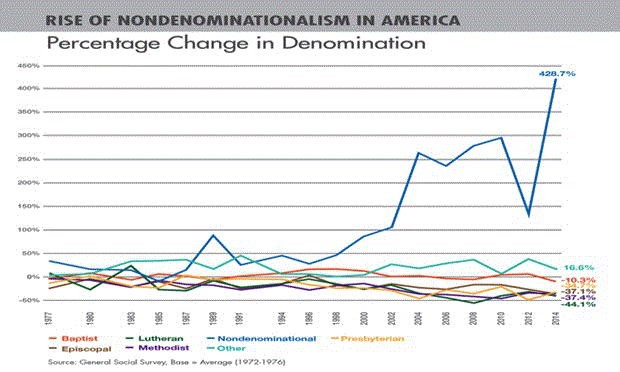
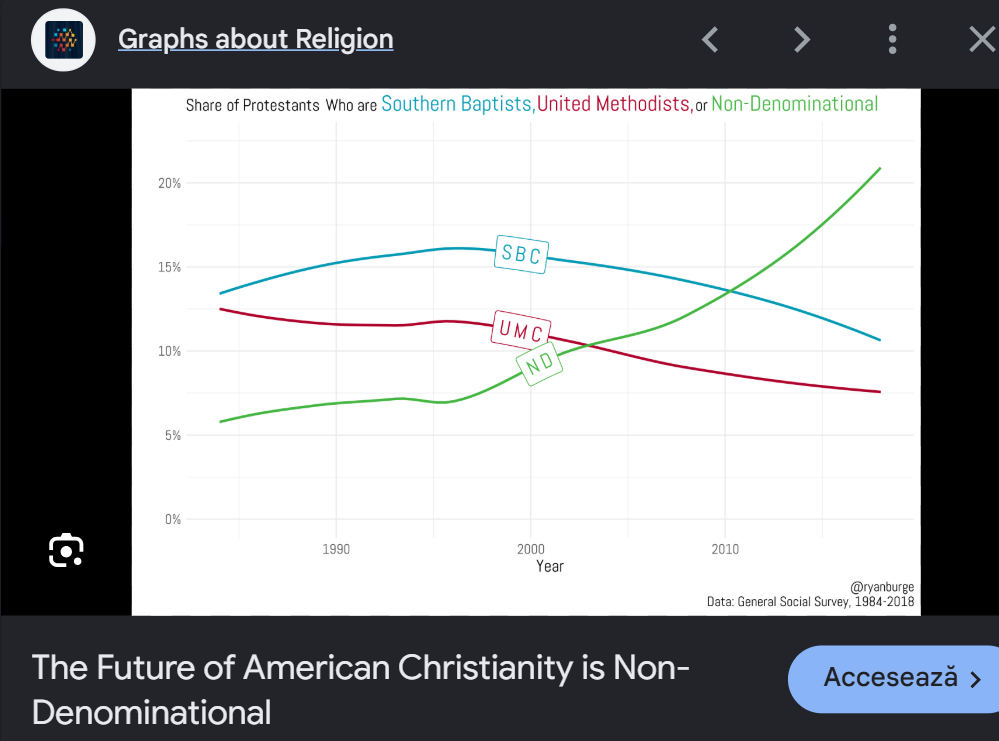
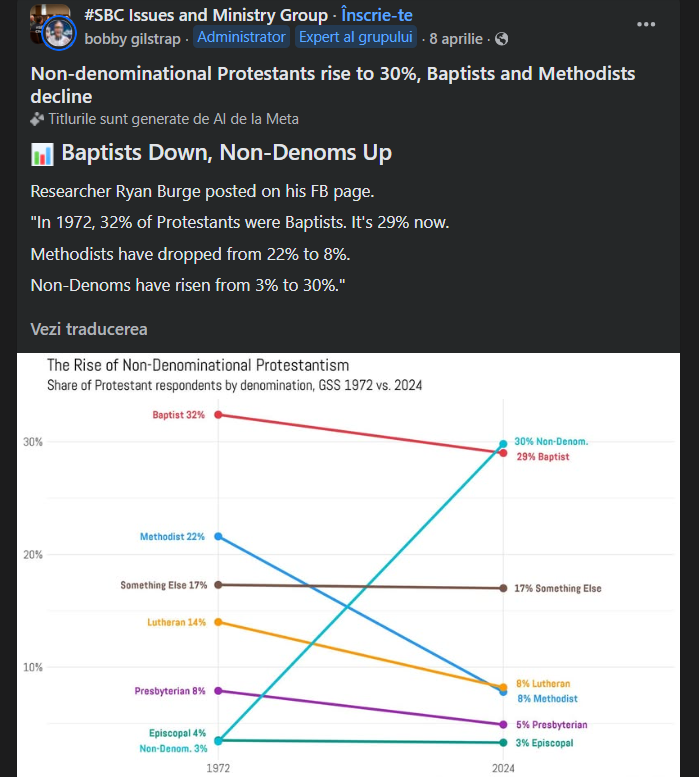
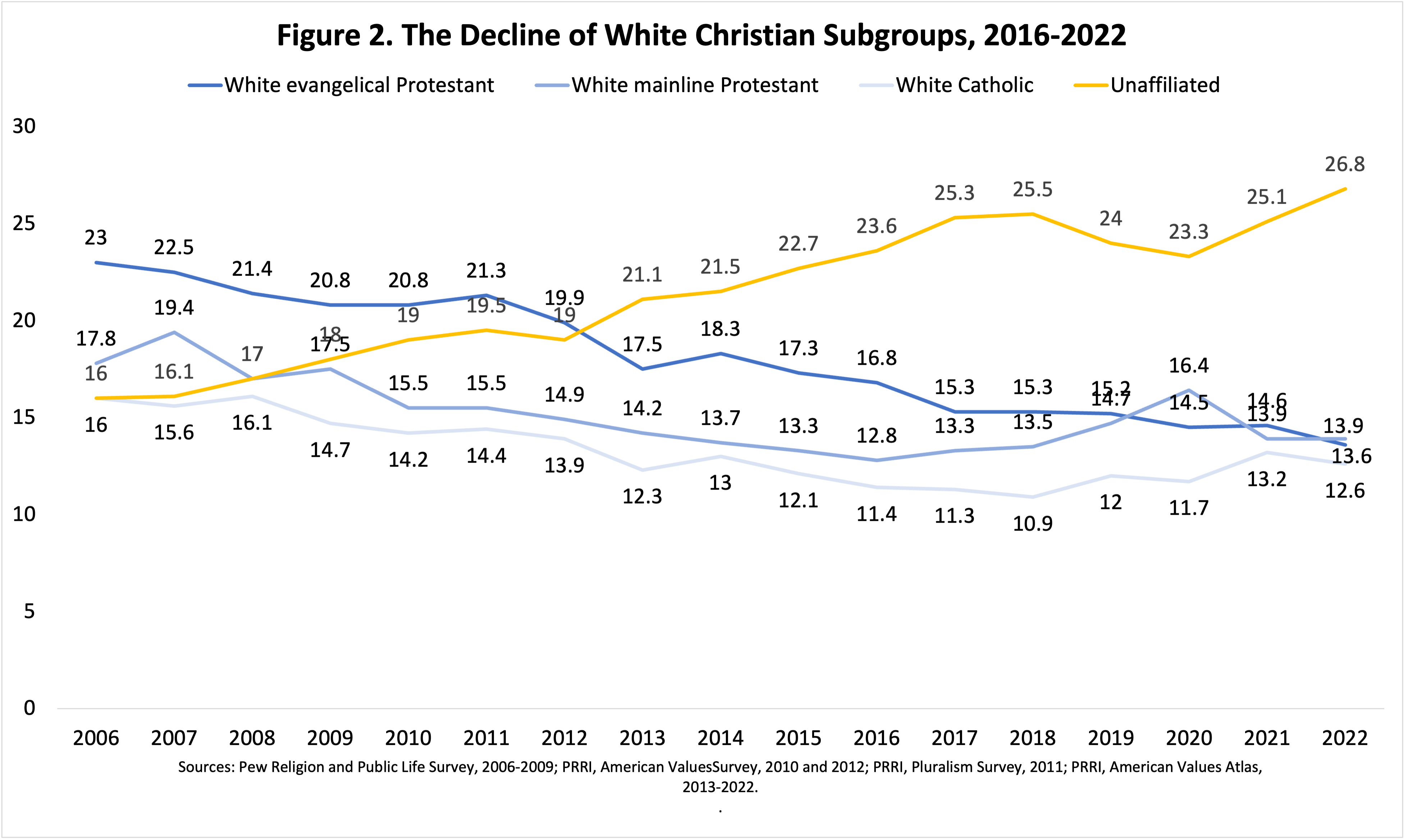
Even now in America, as we speak, there is a major shift in which Christians are associating themselves with certain Christian denominations that are different and have different visions of how and what to interpret the Biblical word in relation to the new modern reality, so many prefer to become ''individuals / go their own way'' and become non-denominational :veryCat:

1786197010441
1786196997777
1786196978118
1786196943707


(basically they do and take what they want from the Bible and what they consider useful for them individually / their particular family / their community, etc. and the rest of what it says they ignore and do what they want with their lives according to what offers more security and comfort, compared to blindly following traditions and customs that limited people who are present in other denominations)

But leaving that aside, religions in general offer a wealth of information, and people will take or ignore what they want from it, depending on the point in time and geographical location they belong to :veryCat:


or did they become dominant because they were the most convincing, comforting, or politically useful systems available at the time?

No, the fact that they ended up being the things you listed is just a conclusion/result, it has no particular correlation. People could believe absolutely anything instead of their religion, but as long as they were the majority in society, because the fact that small children were born and raised in those beliefs, whatever they were, they will eventually grew up and eventually their beliefs ended up influencing the things you listed as well

(so it has nothing to do with the lack of alternatives or the specific information in religion. People adapt to beliefs, some ignore them, others preferentially select them, others impose some that other people do not want and refuse, etc.)

Conclusion: Reality is very gray, it's not black and white, and people in general have a very high neuroplastic capacity for adaptation that continues even today, all to ensure their safety and comfort, and respectively their survival and that of future generations :BASEDCIGAR:
 
  • +1
Reactions: Johnmogs2145 and Arzenic
Good point.

For examples:
  • c .500 BCE-300 CE (Mediterranean world): religion was deeply tied to family, ethnicity, and civic identity. A Greek, Roman, or Judean was generally expected to participate in the religious practices of their community.
  • c. 300-1500 CE (Christian Europe): religion became closely connected with political authority, law, and social order. In many kingdoms, being Christian was less a personal decision and more the default expectation of society.
  • c. 1500-1800 CE (Reformation & Early Modern Europe): rulers often determined the official religion of their territory, so faith was still heavily influenced by political power and birth rather than purely individual conviction.
  • c. 1900-present (modern secular societies): religion has increasingly become a matter of personal identity and individual choice, which makes the question of why people believe much more psychologically and philosophically complex.

That’s true, but I’d argue the impact has already been made. Religions have shaped the foundations of laws, morals, social norms, and cultural values for centuries, so even if society becomes less religious, much of that framework still remains embedded in our institutions and way of thinking.

Indeed, I agree. Religion can't be simply explained via comfort, if a person takes Chritianity seriously, it often requires self-restraint, and commitment that goes far beyond simply feeling better.
Thanks for pulling up the time periods I was too lazy too

You have a fair point when It comes to how society was shaped based on religion since it dates so far back and we would need to multiple decades of non-religious culture in order to see any change in society norms and culture

A lot of these questions can be answered by a priest he would give much better in dept answers then I am lmao

You can always just go to your local parish or call and just ask if one of the fathers has some time for you they are very flexible in this regard
 
  • +1
Reactions: Arzenic
No, they just present what generally works or could work for a specific culture, population, and civilization at a certain point in time (doesn't mean it always worked, or if you didn't follow the ''steps'' you wouldn't succeed in life or whatever)

Even now in America, as we speak, there is a major shift in which Christians are associating themselves with certain Christian denominations that are different and have different visions of how and what to interpret the Biblical word in relation to the new modern reality, so many prefer to become ''individuals / go their own way'' and become non-denominational :veryCat:

View attachment 5484082View attachment 5484081View attachment 5484079View attachment 5484076

(basically they do and take what they want from the Bible and what they consider useful for them individually / their particular family / their community, etc. and the rest of what it says they ignore and do what they want with their lives according to what offers more security and comfort, compared to blindly following traditions and customs that limited people who are present in other denominations)

But leaving that aside, religions in general offer a wealth of information, and people will take or ignore what they want from it, depending on the point in time and geographical location they belong to :veryCat:


No, the fact that they ended up being the things you listed is just a conclusion/result, it has no particular correlation. People could believe absolutely anything instead of their religion, but as long as they were the majority in society, because the fact that small children were born and raised in those beliefs, whatever they were, they will eventually grew up and eventually their beliefs ended up influencing the things you listed as well

(so it has nothing to do with the lack of alternatives or the specific information in religion. People adapt to beliefs, some ignore them, others preferentially select them, others impose some that other people do not want and refuse, etc.)

Conclusion: Reality is very gray, it's not black and white, and people in general have a very high neuroplastic capacity for adaptation that continues even today, all to ensure their safety and comfort, and respectively their survival and that of future generations :BASEDCIGAR:
Damn that a good answer

me personally I do t agree with all the denominations of the church because It was started on martin luther who he himself had some terrible beliefs if you look further then “the catholic church was making people pay for parts of their religion”

You have a good point in how denominations take what they like and leave the rest behind

A good example of this is how most non-catholic denominations will leave at least 5 books of the bible out of their religion because they have different beliefs on how they’re religion is centered which really isn’t their decision to make

the problem with this is that regular people aren’t really doing all the good they think they are doing by getting a catholic bible, ripping out a couple chapters, and eliminating communion and confession


I myself just believe that catholicism, the only religion actually started by jesus reveals far more facts and is the only religion to offer confession, apostolic communion, and a pope along with the full 73 book bible

If you look at religion logically catholicism is the one that makes the most sense:HYPERSL:
 
  • +1
Reactions: Daddy's Home
I myself just believe that catholicism, the only religion actually started by jesus reveals far more facts and is the only religion to offer confession, apostolic communion, and a pope along with the full 73 book bible

If you look at religion logically catholicism is the one that makes the most sense

idk, at least at the end of the day and after all, the social trend in the US is clear, namely to approach religion / the Bible (if you approach it and care about things like this) only from a practical point of view (so without debates, and with free and own interpretation of the verses, and so ignoring which verses you don't like / don't bring you benefits, and focusing more on the verses that have a stronger message and that help you more / offer more comfort or whatever a religious person is taught from a young age to need + through this, denominations come together at a common point, meaning non-denominational), not as a social constraint / a set of strict rules by which to operate your life and reality :veryCat:

The girls below are part of this new trend, and they promote it on social media / in everyday life:


Their message may seem pure, innocent and infatuated, lacking context and complexity of the world and global reality, but in the grand scheme of things they are right, if all the people on the planet, all religions or whatever would just believe and approach the problem exactly as the girls in the video believe, everything would be fine

(which is what all religions say about them personally anyway, as even you said about your own Catholicism lol, but this trend of these girls is catching on a lot with the new generation precisely because of the lack of restrictions, and more so religion used as an ''extension / keychain'' of personality / life, rather than conditioning you to focus your whole life on your specific religion / religious affiliation) :BASEDCIGAR:
 
  • +1
Reactions: Johnmogs2145
I’m less interested in proving religion true or false, and more interested in why it became so powerful.

Religion is arguably one of the most effective systems humans have created for establishing a shared moral framework and maintaining social cohesion.

Personally, I think something caused the universe to exist, perhaps what we’d call God, but it's not anythingthat humanity has figured out yet, that's for sure.
Religion became powerful because it brought people together creating a sort of social unity. In times where it got rough, people could rely on their religion to help them get through.

But those are all things you’ve said so we’ve covered all those bases
 
idk, at least at the end of the day and after all, the social trend in the US is clear, namely to approach religion / the Bible (if you approach it and care about things like this) only from a practical point of view (so without debates, and with free and own interpretation of the verses, and so ignoring which verses you don't like / don't bring you benefits, and focusing more on the verses that have a stronger message and that help you more / offer more comfort or whatever a religious person is taught from a young age to need + through this, denominations come together at a common point, meaning non-denominational), not as a social constraint / a set of strict rules by which to operate your life and reality :veryCat:

The girls below are part of this new trend, and they promote it on social media / in everyday life:


View attachment 5484204

Their message may seem pure, innocent and infatuated, lacking context and complexity of the world and global reality, but in the grand scheme of things they are right, if all the people on the planet, all religions or whatever would just believe and approach the problem exactly as the girls in the video believe, everything would be fine

(which is what all religions say about them personally anyway, as even you said about your own Catholicism lol, but this trend of these girls is catching on a lot with the new generation precisely because of the lack of restrictions, and more so religion used as an ''extension / keychain'' of personality / life, rather than conditioning you to focus your whole life on your specific religion / religious affiliation) :BASEDCIGAR:
Well said bhai:BASEDCIGAR:
 
  • +1
Reactions: Daddy's Home

Similar threads

itsover_0123
Replies
20
Views
130
murad.89
murad.89
Tneedtoimprove
Replies
11
Views
86
anemo
anemo
GonorrhoeaGobbler
Replies
5
Views
47
jeremyy
jeremyy
hasty
Discussion Religion
Replies
25
Views
112
Alton
Alton
ØUROBOROS
Replies
38
Views
221
Mooglesan
Mooglesan

Users who are viewing this thread

  • 🐶🐶🐶🐶🐶🐶🐶
  • Johnmogs2145
  • ESR
  • domi1357
  • SharkBlitzz
Back
Top
Sponsored
Stake.us
America's #1 Social Casino
Slots, Poker & More
Join Now →