(MSC) overview and implications on bone size determination.

Informationcapitali

Informationcapitali

Goonmaster 4000.How to LDAR like a KING? darktriad
Joined
Feb 14, 2022
Posts
3,489
Reputation
4,035
Quite some time I've been suspicious were missing a very important pathway activation for bone mass upregulation and these articles I've just read through contain a lot of the missing puzzles to bone development and final size of bones.

First off though let me compile my findings.

Irregular bones such as the ones comprising the zygomatic bone, maxilla, jaw, etc.. all have outgrowth that is dependent intramembraneous ossification. Meaning that myschemial stem cells (MSC); the progenitors to bone laying osteoblasts undergo a direct conversion to osteoblastic lineages with correct osteoblastic factors being expressed. (Runx2, bmp,osteox, etc..)
This is important cause it let's us know that the factors that induce outgrowth of irregular bones do not overlap with and are antagonistic to Limb lengthening factors that look for MSC commitments to (chondrogenic) lineages.

So if we want to look for way to increase the size of (maxilla, zygomatic process, zygomatic bone,)we should increase MSC commitments to osteoblastic lineages.

Well I turned to research paper (Effects of Dlx2 overexpression on the genes associated with the maxillary process in the early mouse embryo) to get a better understanding on how a gene (DLX2) known for playing a role in growth guidance of the maxillary primordia and the skeletal elements that derive from this through being a potent signaller to (MSC) to differentiate into osteoblasts.

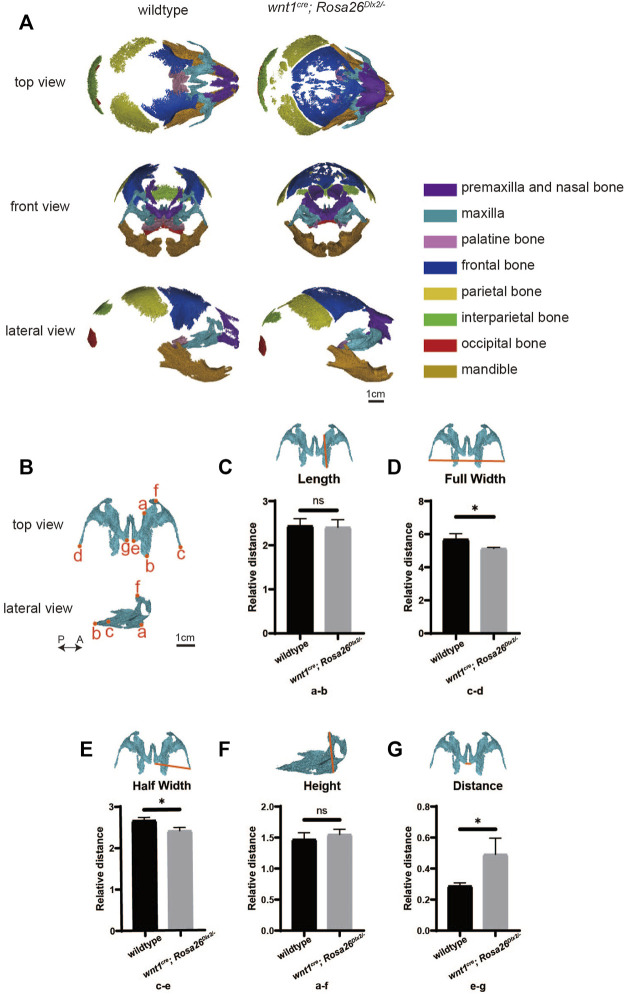
Well the findings of the upregulation of DLX2 on the lab rats ends up being unexpectedly suppressive to the full width and half-width of the maxilla of the mice.

Illustration below.

1706846208242


The study determind that the reason for the reduction in maxilla width was due to DLX2 being an extremely potent osteoblastic lineages promoter.

Leading to
1.premature differentation of (MSC)
2. A smaller pooled of undifferentiated msc

So what we can infer is that in order to create the necessary environment to promote bigger bones, we need to activate (MSC) proliferation pathways.

Another study backing my view on this is researchers hinting at the cluster of (MSC) of small faced dogs (brachycephalic dogs) that are destined to become zygoma being much greater in proportion to the maxilla when compared to a non-brachycephalic breed.

" Thus among brachycephalic dogs, the zygoma is relatively larger and the maxilla relatively smaller than one might expect from sampling non‐brachycephalic breed dogs. It is tempting to speculate that this observation is hinting at an imbalance of progenitor cells destined to contribute to formation of the maxilla and the zygoma."


One last study solidifying the view that MSC proliferation is more important the pi3k pathway activation is the study below.


Six2 expression has been associated with increased mesenchymal cell proliferation in the developing head and renal system [48, 49, 74]. Recent results indicate that Six2 mRNA and protein levels are highest in palatal tissues during the period of initial palatal shelf outgrowth and suggest that later spatiotemporal expression patterns are responsible for local increases in mesenchymal cell proliferation [48]. It is possible that genetic variation under our candidate region leads to a change in the timing, location, or level of mesenchymal precursor cell populations.
A change in proliferation within either the maxillary or zygomatic mesenchymal condensations may result in size variation of that condensation and the resulting bones.

What we can infer by the findings of the presented studies is that if we want larger bones (zygomatic arch, wrists, etc..) we need to increase MSC condensation sizes prior to them converting to preosteoblasts.

Problem is since minimal research has been done for identification of substances that increase MSC proliferation. We don't know of any natural substances ( like alpha gpc for somostatin inhibition), peptides, or agonists that can get us the results we want.

Your welcome to try finding a substance that can allow us to upregulate MSC proliferation using this extensive chemical database of all known substances affecting MSC that I linked below.

Identifying the correct substance

1.easily accessible for purchase
2.has research articles that validate its function in increasing (MSC) proliferation.
3. Able to be be injected or orally consumed


Last edited:
  • +1
Reactions: Use1ess, Rigged, UrGirlsMcm and 15 others
  • +1
  • Hmm...
Reactions: Use1ess, mvp2v1, Av0nr and 3 others
hmmmmm, these implications are anti peat


  • Hmm...
Reactions: Chintuck22 and coispet
im not familiar with this jargon , but i do know Wnt promotes self renewal of multiple stem cell types and increases bone formation

found this on Wnt


lithium activates Wnt btw ( i take 5 mg)
If you finish reading the article, they conducted overactivation of wntpathway for upregulation of Msx1 and it led to the same maxillary truncation and stereotypical cleft palate phenotype.

Further evidence that MSC proliferation needs to be induced prior to its conversion to osteoblastic lineages.
 
  • +1
  • Woah
Reactions: Use1ess, Chintuck22 and Deleted member 48352
Interesting study, glad to see another person exploring new methods of growing bone on this forum. MSCs have immunomodulatory effects.

To answer one of your questions, CHIR99021 is another substance on top of lithium that can enhance MSC proliferation and biasing it towards chondrogenic lineages. It is a WNT agonist and is commericialyl available. I am not sure about the safety in human use.

IGF1,one of the most abundant growth factors deposited in the bone matrix, can enhance osteogenic differentiation of bone marrow MSCs via the mTOR pathway. Moreover, estrogens can bind their α and/or β receptors and induce bone marrow MSCs osteogenic differentiation through the activation of p38 MAPKs/NF-κB and BMPs/WNT/β-catenin signaling pathways [22].
I found this in this study: https://stemcellres.biomedcentral.com/articles/10.1186/s13287-022-02985-y
it focuses much more on the immunomodulatory effects of MSCs however, there is only a small section on its relation to bone growth specifically. The study also states that hypoxic environments have been shown to enhance MSC regeneration and differentitation into chordrogenic lineages. However, the key takeaway here is that estrogen seems to be beneficial here. This goes completely against established knowledge in heightmaxxing discussion, and everywhere on this forum, with an aromatase inhibitor being reccomended for everyone trying to heightmaxx. It seems more research is required to investigate the actual impact of estrogen on heightmaxxing, as it is clear that lowering it is beneficial as it delays growth plate closure, however this suggests that it also slows down bone growth.


The synergistic effect of Wnt5a and TGF-β3 stimulated the activation of p38/MAPK pathway, a positive regulator of chondrogenic differentiation [68].
This exerpt is from a different study.

Overall, it appears the microenvironment around it heavily influcences how it will go onto specalise, these include cytokines such as TNF-alpha, TGF and IL-10. These cannot be injected or taken orally as systemic effects of these substances can be very harmfull, and at lower doses will not reach target areas, an alternative would be direct injection into target areas, but this may also not be effective. However, this evidence still supports the fact that higher IGF1 = more growth, which is good news for us.


Off the top of my head, IGF2 is more potent and specifically inducing differentiation of MSCs but this may be wrong, going from memory for this point.

For further reading: https://arthritis-research.biomedcentral.com/articles/10.1186/ar2153 see this, it discusses how the prescence of cytokines and collagen impacts differentiation. Unfortunatly, i dont have time to evaluate these studies fully due to me having exams rn.
 
Last edited:
  • +1
Reactions: Use1ess, belisa14, shabby890 and 5 others
Studies utilized


@coispet @Maalik
@Chintuck22
@oldcel2002 @Osie @LVZZO
 
Last edited:
  • +1
Reactions: LVZZO and Chintuck22
Mirin the high IQ replies under the thread alongside the high IQ thread itself

I’ll read when I’m done studying

Also sticked for you seems quite interesting
 
  • +1
  • Love it
Reactions: pentamogged9000, Informationcapitali and Chintuck22
@acceptitsover

"IGF1,one of the most abundant growth factors deposited in the bone matrix, can enhance osteogenic differentiation of bone marrow MSCs via the mTOR pathway. Moreover, estrogens can bind their α and/or β receptors and induce bone marrow MSCs osteogenic differentiation through the activation of p38 MAPKs/NF-κB and BMPs/WNT/β-catenin signaling pathways [22]."

Hmhm the problem here is I don't think you understand the vitality of limiting osteogenic lineage promotion of mesenchymal stem cells and the condensation size of (MSC) ultimately being the be all end all of Bone size determination.

Here we have another study that I was just made aware that solidifies my statement that osteogenic differentiation needs to be put on hold until we get above average MSC condensations. In this study embryos were given a wnt ligand to upregulate activation of wnt pathway to see the effects msx-1 has craniofacial development.

Msx-1 knockout mice exhibited truncated maxilla and stereotypical cleft palate symptoms.

On the other side MSX-1 upregulated mice through increased activation of wnt pathway resulted in the same stereotypical truncated maxilla of MSX-1 ko mice.

the Importance of this study is that while osteogenic promoters of msc are necessary too much osteogenic promotion to (MSC) will result in premature differentiation into the osteoblast lineage. Effectively reducing the MSC condensation sizes.

So all this ends up leading back to the point that MSC proliferation must be increased as it is a choke point for the overall size of the MAXILLA, ZYGOMATIC BONE, MANDIBLE, etc...


Study excerpt below

We returned to evaluated the RCAS-Wnt2b treated embryos and evaluated their facial phenotypes. Based on their analogous expression domains in mouse (Figure 6B) and chick embryos (Figure 6C), we were surprised to find that ectopic expression of Msx1 in chicks produced a clefting phenotype, very similar to the phenotype resulting from loss of Msx1 in mice. For example, loss of Msx1 leads to a foreshortened maxilla in early mouse embryos (Figures 6D,E) and in chick embryos, ectopic Msx1 expression led to a similar foreshortened rostrum/upper beak (Figures 6F,G). In mouse embryos, the foreshortened rostrum leads to a clefting phenotype (compare Figure 6H with 6I
 
Last edited:
  • +1
  • Hmm...
Reactions: YoYqkim, Chintuck22 and Deleted member 49130
@acceptitsover

"IGF1,one of the most abundant growth factors deposited in the bone matrix, can enhance osteogenic differentiation of bone marrow MSCs via the mTOR pathway. Moreover, estrogens can bind their α and/or β receptors and induce bone marrow MSCs osteogenic differentiation through the activation of p38 MAPKs/NF-κB and BMPs/WNT/β-catenin signaling pathways [22]."

Hmhm the problem here is I don't think you understand the vitality of limiting osteogenic lineage promotion of mesenchymal stem cells and the condensation size of (MSC) ultimately being the be all end all of Bone size determination.

Here we have another study that I was just made aware that solidifies my statement that osteogenic differentiation needs to be put on hold until we get above average MSC condensations. In this study embryos were given a wnt ligand to upregulate activation of wnt pathway to see the effects msx-1 has craniofacial development.

Msx-1 knockout mice exhibited truncated maxilla and stereotypical cleft palate symptoms.

On the other side MSX-1 upregulated mice through increased activation of wnt pathway resulted in the same stereotypical truncated maxilla of MSX-1 ko mice.

the Importance of this study is that while osteogenic promoters of msc are necessary too much osteogenic promotion to (MSC) will result in premature differentiation into the osteoblast lineage. Effectively reducing the MSC condensation sizes.

So all this ends up leading back to the point that MSC proliferation must be increased as it is a choke point for the overall size of the MAXILLA, ZYGOMATIC BONE, MANDIBLE, etc...


Study excerpt below

We returned to evaluated the RCAS-Wnt2b treated embryos and evaluated their facial phenotypes. Based on their analogous expression domains in mouse (Figure 6B) and chick embryos (Figure 6C), we were surprised to find that ectopic expression of Msx1 in chicks produced a clefting phenotype, very similar to the phenotype resulting from loss of Msx1 in mice. For example, loss of Msx1 leads to a foreshortened maxilla in early mouse embryos (Figures 6D,E) and in chick embryos, ectopic Msx1 expression led to a similar foreshortened rostrum/upper beak (Figures 6F,G). In mouse embryos, the foreshortened rostrum leads to a clefting phenotype (compare Figure 6H with 6I
ill take a proper look next week after my exams done, seems interesting though. dont have time rn unfortunatly
 
  • +1
Reactions: Av0nr, Chintuck22 and Informationcapitali
So which substance is the most promising?
 
not high iq so idk but

1707044662396


you probably knew this already, just gonna send it anyways
 
Bro thinks he's an anime villain

It's cool that you read a bunch of webpages but no one here is going to inject any random chemical based on a basement theory and even if they did, it wouldn't grow their bones. It's always mouse baby studies 😭

Cool, but useless (or cope, you could say)
I would inject , it don"t matter if the studies are done on mouses
 
  • +1
Reactions: NCKAxBNSMH
mirin but your body will eventually produce osteoclasts to counter-regulate the osteoblast excess. This is why its only feasible intermittently. Bump tho.
could you explain the consequences of osteoclast production and why is it only intermittently?
 
Quite some time I've been suspicious were missing a very important pathway activation for bone mass upregulation and these articles I've just read through contain a lot of the missing puzzles to bone development and final size of bones.

First off though let me compile my findings.

Irregular bones such as the ones comprising the zygomatic bone, maxilla, jaw, etc.. all have outgrowth that is dependent intramembraneous ossification. Meaning that myschemial stem cells (MSC); the progenitors to bone laying osteoblasts undergo a direct conversion to osteoblastic lineages with correct osteoblastic factors being expressed. (Runx2, bmp,osteox, etc..)
This is important cause it let's us know that the factors that induce outgrowth of irregular bones do not overlap with and are antagonistic to Limb lengthening factors that look for MSC commitments to (chondrogenic) lineages.

So if we want to look for way to increase the size of (maxilla, zygomatic process, zygomatic bone,)we should increase MSC commitments to osteoblastic lineages.

Well I turned to research paper (Effects of Dlx2 overexpression on the genes associated with the maxillary process in the early mouse embryo) to get a better understanding on how a gene (DLX2) known for playing a role in growth guidance of the maxillary primordia and the skeletal elements that derive from this through being a potent signaller to (MSC) to differentiate into osteoblasts.

Well the findings of the upregulation of DLX2 on the lab rats ends up being unexpectedly suppressive to the full width and half-width of the maxilla of the mice.

Illustration below.


View attachment 2717621

The study determind that the reason for the reduction in maxilla width was due to DLX2 being an extremely potent osteoblastic lineages promoter.
The data might link DLX2 overexpression to premature MSC differentiation but all that does is underemphasizes a VERY possible systems level disruption thats caused by DLX mediated transcriptional cascades, DLX2 has been shown to interact with chromatin remodeling complexes (SWI/SNF subunits) which means changing accessibility for MSC proliferation associated transcription factors (Sox9 and Nanog) this gives us an idea that the seen reduction in maxillary width couldve resulted NOT ONLY from MSC depletion but also from epigenetic desynchronization between differentiation and proliferation loci, addinng to this DLX2s modulation of BMP signaling could amplify osteogenic cues in a spatially nonuniform way causing asymmetric differentiation patterns that stop maxillary expansion
Leading to
1.premature differentation of (MSC)
2. A smaller pooled of undifferentiated msc

So what we can infer is that in order to create the necessary environment to promote bigger bones, we need to activate (MSC) proliferation pathways.

Another study backing my view on this is researchers hinting at the cluster of (MSC) of small faced dogs (brachycephalic dogs) that are destined to become zygoma being much greater in proportion to the maxilla when compared to a non-brachycephalic breed.

" Thus among brachycephalic dogs, the zygoma is relatively larger and the maxilla relatively smaller than one might expect from sampling non‐brachycephalic breed dogs. It is tempting to speculate that this observation is hinting at an imbalance of progenitor cells destined to contribute to formation of the maxilla and the zygoma."
The uneven MSC condensation sizes in brachycephalic models just tells us about the interaction between local mechanical forces and morphogen gradients (Shh, Wnt, and FGF) the local decrease of MSCs in maxillary condensations could be caused by anisotropic tension in the craniofacial mesenchyme which influenced progenitor cell migration toward zygomatic condensations actually a better mechanobiological model integrating MSC cytoskeletal feedback, matrix elasticity and growth factor diffusion would and could explain the boundary conditions needed for symmetric condensation expansion
One last study solidifying the view that MSC proliferation is more important the pi3k pathway activation is the study below.


Six2 expression has been associated with increased mesenchymal cell proliferation in the developing head and renal system [48, 49, 74]. Recent results indicate that Six2 mRNA and protein levels are highest in palatal tissues during the period of initial palatal shelf outgrowth and suggest that later spatiotemporal expression patterns are responsible for local increases in mesenchymal cell proliferation [48]. It is possible that genetic variation under our candidate region leads to a change in the timing, location, or level of mesenchymal precursor cell populations.
A change in proliferation within either the maxillary or zygomatic mesenchymal condensations may result in size variation of that condensation and the resulting bones.
The issue is expression dynamics might be managed by upstream factors like Yap/Taz in the Hippo pathway, which change over mechanical signals into MSC fate decisions that shows that its efficacy as a proliferative driver might depend on biomechanical cues like extracellular matrix stiffness or intercellular adhesion forces which are overlooked in vivo, Six2 repression of Tgfbr2 could decouple TGF-B mediated differentiation signals giving a dual mechanism to keep MSC pools without boosting unwanted ossification
What we can infer by the findings of the presented studies is that if we want larger bones (zygomatic arch, wrists, etc..) we need to increase MSC condensation sizes prior to them converting to preosteoblasts.
Problem is since minimal research has been done for identification of substances that increase MSC proliferation. We don't know of any natural substances ( like alpha gpc for somostatin inhibition), peptides, or agonists that can get us the results we want.

Your welcome to try finding a substance that can allow us to upregulate MSC proliferation using this extensive chemical database of all known substances affecting MSC that I linked below.
Thr shortage of validated MSC proliferative agents makes sense with what we see with limited translational focus of current stem cell research the thing is there are natural compounds like baicalin and resveratrol derivatives that we know indirect MSC proliferation enhancement thru AMPK activation and mitochondrial biogenesis what we need is a high throughput system pharma leveraging silico docking simulations against PI3K and Wnt pathway agonists which could speed up discovery, also hypoxia mimetics mainly prolyl hydroxylase inhibitors (Roxadustat) could synergize with PI3K/Akt activation to stabilize MSC niches under proliferative conditions
Identifying the correct substance

1.easily accessible for purchase
2.has research articles that validate its function in increasing (MSC) proliferation.
3. Able to be be injected or orally consumed
Organoid models of craniofacial development with single cell RNA sequencing and CRISPRi/a screens would be the best for mapping lineage trajectories across distinct condensation zones, u could explain noncanonical pathway interactions like Hedgehog crosstalk with canonical Wnt, a focus on noncoding RNA regulators (lncRNAs like H19) that mediate MSC fate decisions would give a new axis for therapeutic targeting also overcoming the softcaps in growth factor driven expansion
U assume MSC proliferation leads to condensation expansion? biomechanical evidence os suggesting condensations themselves generate endogenous cues (Piezo1-dependent Ca2+ influx) that retroactively amplify MSC recruitment, this feedback loop disagrees with unidirectional proliferative drive and instead suggests a dual stage intervention, initial promotion of MSC self renewal, then mechanically modulated condensation growth, experimental validation thru optogenetic control of Piezo1 in engineered craniofacial scaffolds could tell us more about this mechanism
 
im not familiar with this jargon , but i do know Wnt promotes self renewal of multiple stem cell types and increases bone formation

found this on Wnt
WNT on MSC is context dependent canonical Wnt/B-cantenin signaling does boost stem cell renewal but too much or misregulated activationl in a craniofacial context can cause early osteogenic differentiation pretty much just depleting the MSC pool before it has undergone expansion

lithium activates Wnt btw ( i take 5 mg)
Lithium activating Wnt is way more broad, it doesnt have the precision to selectively boost MSC proliferation without pushing them toward premature differentiation also GSK3B inhibition affects other pathways mainly thr mTOR and TGF-B which complicate MSC fate decisions, in the context of maxillofacial development, lithium wouod skew MSCs towards osteoblast lineages too early
hmmmmm, these implications are anti peat
Peats views are valid but from the fact it can drive fibrosis or even malignancy, he cares more about stability

 
  • +1
Reactions: Deleted member 48352

Similar threads

Hubris-
Replies
2
Views
110
Hubris-
Hubris-
JOTAROSON
Replies
10
Views
122
vi24v_
vi24v_
teddy101
Replies
26
Views
235
bluem30
bluem30
1
Replies
5
Views
152
12thdisciple
1
oribulator
Replies
2
Views
118
lahari
lahari

Users who are viewing this thread

Back
Top