


resting
6ft khhv
- Joined
- Mar 24, 2026
- Posts
- 1,130
- Reputation
- 1,380
✧ ───────── ⋆⋅☆⋅⋆ ───────── ✧
★ Full Romosozumab Breakdown ★
✧ ───────── ⋆⋅☆⋅⋆ ───────── ✧
⟐ The Sclerostin Inhibitor ⟐
⟢───────────────────⟣
just a warning, this thread sucks and isn't up to my usual standard sorry. For anyone that's been following my threads, this isn't as good as something I'd usually produce so u can DNR it. For people who are new to seeing me, my other threads are ALOT better so check em out
I feel sorta ashamed by putting out slop like this on a topic as uninteresting as this.
»——————————《 ⚔ 》——————————«
Table of Contents
»——————————《 ⚔ 》——————————«
❖ 1.0 Introduction ❖
❖ 2.0 What Romosozumab Actually Is ❖
❖ 3.0 Mechanism of Action ❖
❖ 4.0 Clinical Evidence ❖
❖ 5.0 Practicality ❖
❖ 6.0 Risks & Limitations ❖
╭────────────╮
❖ 1.0 Introduction ❖
╰────────────╯
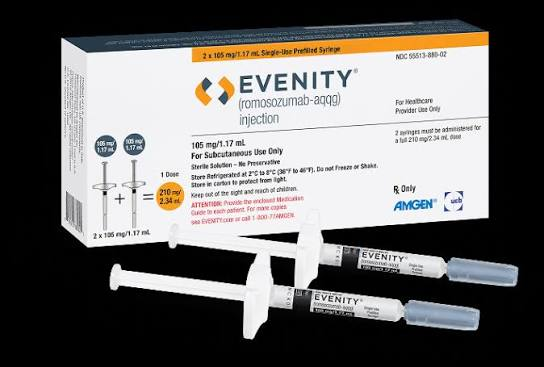
Romosozumab is a monoclonal antibody that inhibits sclerostin.
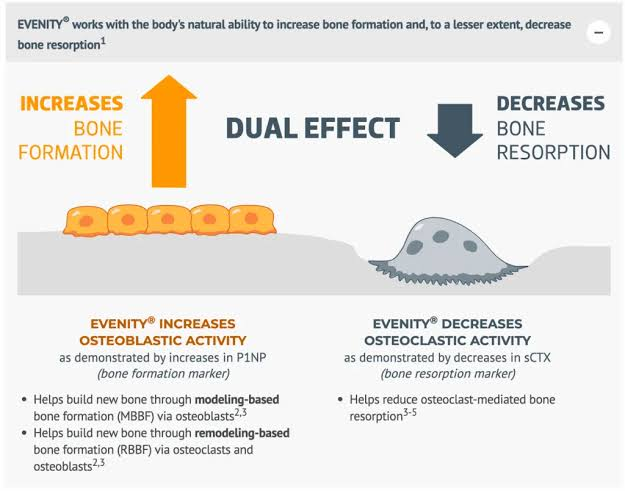
the result is a dual effect that is rare among bone drugs: it increases bone formation while simultaneously decreasing bone resorption. this is not another anti-resorptive like denosumab or bisphosphonates, and it is not a PTH analog. it sits in its own category.
the clinical data in osteoporotic patients shows relatively rapid and substantial gains in bone mineral density, particularly at the spine. yet in looksmaxxing spaces it is almost completely ignored. people will write essay-length threads about research peptides with weak human data while an approved sclerostin inhibitor with large trials gets zero serious coverage.
this post breaks it down properly. mechanism, key clinical evidence, how it compares to the compounds everyone already talks about, the practical reality of using it, the risks, and an honest assessment of whether it has any relevance for structural goals.
╭────────────────────╮
❖ 2.0 What Romosozumab Actually Is ❖
╰────────────────────╯
romosozumab is a humanized monoclonal antibody that targets sclerostin. it is marketed under the brand name Evenity and was developed by Amgen and UCB.
sclerostin is a protein produced primarily by osteocytes. its normal job is to inhibit the Wnt signaling pathway, which acts as a brake on bone formation. by binding to sclerostin and neutralizing it, romosozumab removes that brake. the result is increased bone formation. at the same time, it also reduces bone resorption, giving it a dual anabolic and anti-resorptive effect.
it was approved by the FDA in 2019 for the treatment of osteoporosis in postmenopausal women at high risk of fracture. it is administered as two subcutaneous injections (105 mg each, total 210 mg) once a month, for a maximum of 12 months. after the 12-month course, patients are typically transitioned to an anti-resorptive agent to maintain the gains.
unlike research peptides or grey-market compounds, romosozumab is a fully approved pharmaceutical with large-scale human trial data.
╭────────────────────╮
❖ 3.0 Mechanism of Action ❖
╰────────────────────╯
romosozumab works by binding to and inhibiting sclerostin, a glycoprotein secreted mainly by osteocytes.
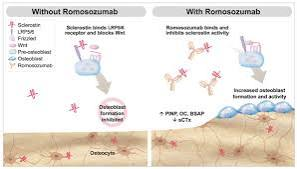
sclerostin’s normal function is to suppress the Wnt/β-catenin signaling pathway in osteoblasts. when Wnt signaling is active, osteoblasts increase bone formation. sclerostin acts as a natural brake on that process. by neutralizing sclerostin, romosozumab lifts the brake and allows greater Wnt signaling, which leads to increased osteoblast activity and new bone formation.
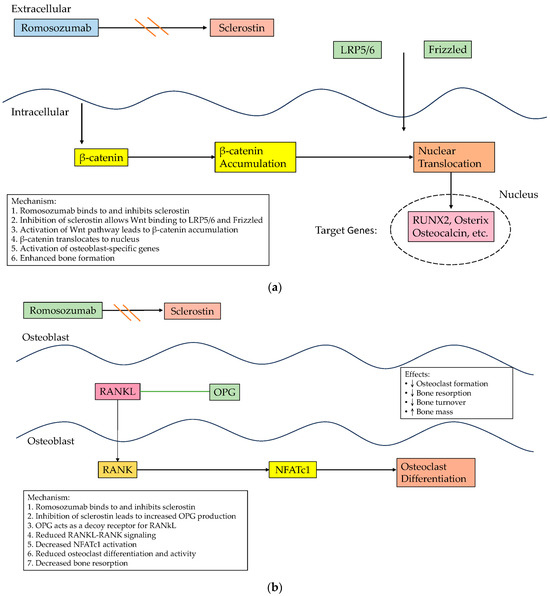
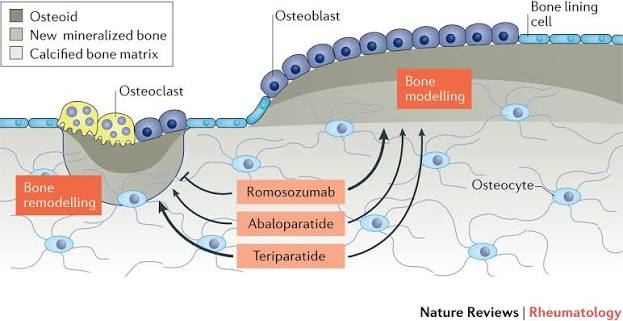
at the same time, sclerostin inhibition also reduces bone resorption. this is thought to occur through secondary effects on RANKL and osteoprotegerin expression, resulting in lower osteoclast activity. the combination produces a dual effect that is uncommon among osteoporosis drugs:
PTH analogs ➔ (teriparatide, abaloparatide) are primarily anabolic but also increase resorption to some degree.
Bisphosphonates and denosumab ➔ are pure anti-resorptives; they reduce breakdown but do not actively stimulate new bone formation.
GH/IGF-1 axis compounds ➔ work through systemic growth factor signaling and have broader effects beyond bone.
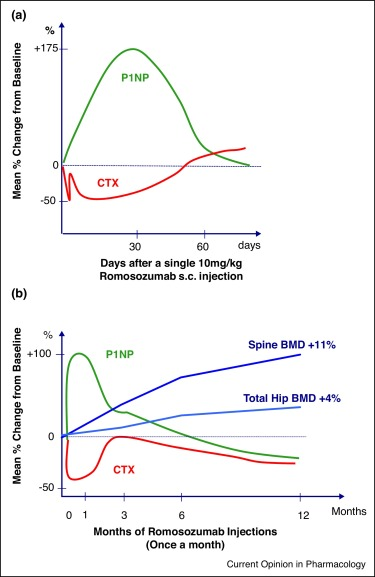
romosozumab’s dual action produces relatively rapid gains in bone mineral density, particularly in the first 6–12 months of treatment. after the recommended 12-month course, the anabolic effect diminishes and patients are usually moved to an anti-resorptive to lock in the gains.
╭─────────────╮
❖ 4.0 Clinical Evidence ❖
╰─────────────╯
romosozumab has large, high-quality human trial data. the two most important studies are FRAME and ARCH.
◈ Frame Trial ◈
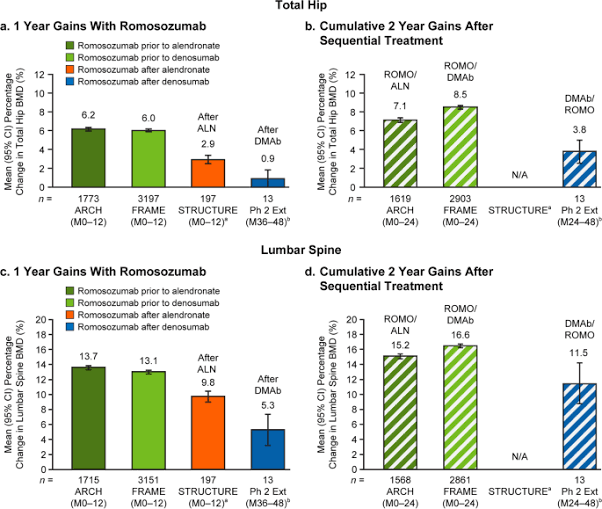
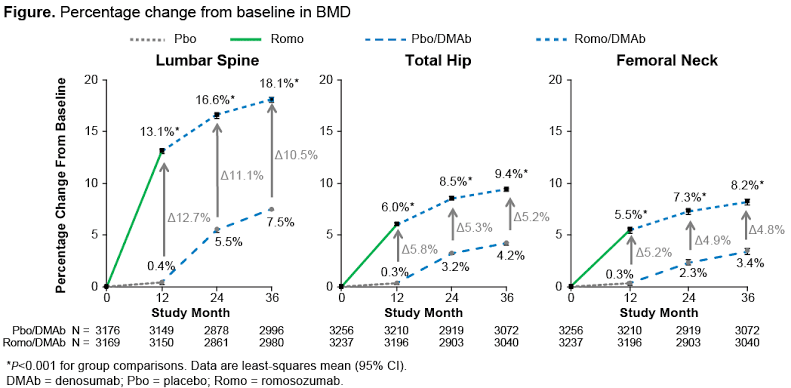
This was a phase 3 trial in over 7,000 postmenopausal women with osteoporosis. Patients received romosozumab for 12 months followed by denosumab. At 12 months, romosozumab increased lumbar spine BMD by approximately 13% and total hip BMD by about 6–7% compared to baseline. It also significantly reduced new vertebral fractures versus placebo.
◈ Arch Trial ◈
This trial compared romosozumab (12 months) followed by alendronate against alendronate alone in women at high fracture risk. Romosozumab produced greater BMD gains and a larger reduction in new vertebral fractures and clinical fractures than alendronate alone. The difference in fracture reduction was statistically and clinically meaningful.
◈ Other supporting data ◈
↻ BMD increases are most rapid in the first 6 months and continue through the 12-month treatment period.
↻ Spine BMD gains are consistently larger than hip BMD gains
↻ After stopping romosozumab, BMD begins to decline unless an anti-resorptive agent is started.
↻ The anabolic window is limited; extending treatment beyond 12 months does not produce proportional additional benefits and is not recommended.
╭──────────╮
❖ 5.0 Practicality ❖
╰──────────╯
Dosing and administration
↳ 210 mg once monthly (given as two separate 105 mg subcutaneous injections)
↳ Maximum recommended treatment duration is 12 months
↳ After the 12-month course, patients are normally switched to an anti-resorptive (denosumab or a bisphosphonate) to maintain the bone density gains
Cost and access
↳ Very expensive
Monitoring requirements
↳ Baseline and follow-up assessment of calcium levels
↳ Dental evaluation is often recommended before starting (due to rare reports of osteonecrosis of the jaw with anti-resorptive agents, though the risk profile is different)
↳ Cardiovascular risk assessment is relevant because of the boxed warning
╭───────────────╮
❖ 6.0 Risks & Limitations ❖
╰───────────────╯
Cardiovascular risk
The most serious issue is the boxed warning for potential increased risk of myocardial infarction, stroke, and cardiovascular death. In the ARCH trial, more serious cardiovascular events occurred in the romosozumab group than in the alendronate group during the first 12 months. Because of this, it is contraindicated in patients who have had a heart attack or stroke in the previous year, and caution is required in anyone with significant cardiovascular risk factors.
Limited treatment window
It is only approved for 12 months of use. The anabolic effect is front-loaded and diminishes with longer exposure. Extending treatment beyond one year is not recommended and has not been shown to provide proportional additional benefit.
Lack of relevant populations
All major trials were conducted in older postmenopausal women with osteoporosis. There is no meaningful data in young healthy men, and zero data on facial bones, jaw growth, orbital changes, or any craniofacial outcomes. Translating spine and hip BMD gains into facial structural improvement is speculative.
Post-treatment decline
When romosozumab is stopped, bone mineral density begins to fall unless an anti-resorptive agent is started. The gains are not permanent on their own.
@Anatole @Stalker @foidslayer5000 @buccalfatremoval @tansel
★ Full Romosozumab Breakdown ★
✧ ───────── ⋆⋅☆⋅⋆ ───────── ✧
⟐ The Sclerostin Inhibitor ⟐
⟢───────────────────⟣
just a warning, this thread sucks and isn't up to my usual standard sorry. For anyone that's been following my threads, this isn't as good as something I'd usually produce so u can DNR it. For people who are new to seeing me, my other threads are ALOT better so check em out
I feel sorta ashamed by putting out slop like this on a topic as uninteresting as this.
»——————————《 ⚔ 》——————————«
Table of Contents
»——————————《 ⚔ 》——————————«
❖ 1.0 Introduction ❖
❖ 2.0 What Romosozumab Actually Is ❖
❖ 3.0 Mechanism of Action ❖
❖ 4.0 Clinical Evidence ❖
❖ 5.0 Practicality ❖
❖ 6.0 Risks & Limitations ❖
╭────────────╮
❖ 1.0 Introduction ❖
╰────────────╯
Romosozumab is a monoclonal antibody that inhibits sclerostin.
the result is a dual effect that is rare among bone drugs: it increases bone formation while simultaneously decreasing bone resorption. this is not another anti-resorptive like denosumab or bisphosphonates, and it is not a PTH analog. it sits in its own category.
the clinical data in osteoporotic patients shows relatively rapid and substantial gains in bone mineral density, particularly at the spine. yet in looksmaxxing spaces it is almost completely ignored. people will write essay-length threads about research peptides with weak human data while an approved sclerostin inhibitor with large trials gets zero serious coverage.
this post breaks it down properly. mechanism, key clinical evidence, how it compares to the compounds everyone already talks about, the practical reality of using it, the risks, and an honest assessment of whether it has any relevance for structural goals.
╭────────────────────╮
❖ 2.0 What Romosozumab Actually Is ❖
╰────────────────────╯
romosozumab is a humanized monoclonal antibody that targets sclerostin. it is marketed under the brand name Evenity and was developed by Amgen and UCB.
sclerostin is a protein produced primarily by osteocytes. its normal job is to inhibit the Wnt signaling pathway, which acts as a brake on bone formation. by binding to sclerostin and neutralizing it, romosozumab removes that brake. the result is increased bone formation. at the same time, it also reduces bone resorption, giving it a dual anabolic and anti-resorptive effect.
it was approved by the FDA in 2019 for the treatment of osteoporosis in postmenopausal women at high risk of fracture. it is administered as two subcutaneous injections (105 mg each, total 210 mg) once a month, for a maximum of 12 months. after the 12-month course, patients are typically transitioned to an anti-resorptive agent to maintain the gains.
unlike research peptides or grey-market compounds, romosozumab is a fully approved pharmaceutical with large-scale human trial data.
╭────────────────────╮
❖ 3.0 Mechanism of Action ❖
╰────────────────────╯
romosozumab works by binding to and inhibiting sclerostin, a glycoprotein secreted mainly by osteocytes.
sclerostin’s normal function is to suppress the Wnt/β-catenin signaling pathway in osteoblasts. when Wnt signaling is active, osteoblasts increase bone formation. sclerostin acts as a natural brake on that process. by neutralizing sclerostin, romosozumab lifts the brake and allows greater Wnt signaling, which leads to increased osteoblast activity and new bone formation.
at the same time, sclerostin inhibition also reduces bone resorption. this is thought to occur through secondary effects on RANKL and osteoprotegerin expression, resulting in lower osteoclast activity. the combination produces a dual effect that is uncommon among osteoporosis drugs:
- increased bone formation (anabolic)
- decreased bone resorption (anti-resorptive)
PTH analogs ➔ (teriparatide, abaloparatide) are primarily anabolic but also increase resorption to some degree.
Bisphosphonates and denosumab ➔ are pure anti-resorptives; they reduce breakdown but do not actively stimulate new bone formation.
GH/IGF-1 axis compounds ➔ work through systemic growth factor signaling and have broader effects beyond bone.
romosozumab’s dual action produces relatively rapid gains in bone mineral density, particularly in the first 6–12 months of treatment. after the recommended 12-month course, the anabolic effect diminishes and patients are usually moved to an anti-resorptive to lock in the gains.
╭─────────────╮
❖ 4.0 Clinical Evidence ❖
╰─────────────╯
romosozumab has large, high-quality human trial data. the two most important studies are FRAME and ARCH.
◈ Frame Trial ◈
This was a phase 3 trial in over 7,000 postmenopausal women with osteoporosis. Patients received romosozumab for 12 months followed by denosumab. At 12 months, romosozumab increased lumbar spine BMD by approximately 13% and total hip BMD by about 6–7% compared to baseline. It also significantly reduced new vertebral fractures versus placebo.
◈ Arch Trial ◈
This trial compared romosozumab (12 months) followed by alendronate against alendronate alone in women at high fracture risk. Romosozumab produced greater BMD gains and a larger reduction in new vertebral fractures and clinical fractures than alendronate alone. The difference in fracture reduction was statistically and clinically meaningful.
◈ Other supporting data ◈
↻ BMD increases are most rapid in the first 6 months and continue through the 12-month treatment period.
↻ Spine BMD gains are consistently larger than hip BMD gains
↻ After stopping romosozumab, BMD begins to decline unless an anti-resorptive agent is started.
↻ The anabolic window is limited; extending treatment beyond 12 months does not produce proportional additional benefits and is not recommended.
╭──────────╮
❖ 5.0 Practicality ❖
╰──────────╯
Dosing and administration
↳ 210 mg once monthly (given as two separate 105 mg subcutaneous injections)
↳ Maximum recommended treatment duration is 12 months
↳ After the 12-month course, patients are normally switched to an anti-resorptive (denosumab or a bisphosphonate) to maintain the bone density gains
Cost and access
↳ Very expensive
Monitoring requirements
↳ Baseline and follow-up assessment of calcium levels
↳ Dental evaluation is often recommended before starting (due to rare reports of osteonecrosis of the jaw with anti-resorptive agents, though the risk profile is different)
↳ Cardiovascular risk assessment is relevant because of the boxed warning
╭───────────────╮
❖ 6.0 Risks & Limitations ❖
╰───────────────╯
Cardiovascular risk
The most serious issue is the boxed warning for potential increased risk of myocardial infarction, stroke, and cardiovascular death. In the ARCH trial, more serious cardiovascular events occurred in the romosozumab group than in the alendronate group during the first 12 months. Because of this, it is contraindicated in patients who have had a heart attack or stroke in the previous year, and caution is required in anyone with significant cardiovascular risk factors.
Limited treatment window
It is only approved for 12 months of use. The anabolic effect is front-loaded and diminishes with longer exposure. Extending treatment beyond one year is not recommended and has not been shown to provide proportional additional benefit.
Lack of relevant populations
All major trials were conducted in older postmenopausal women with osteoporosis. There is no meaningful data in young healthy men, and zero data on facial bones, jaw growth, orbital changes, or any craniofacial outcomes. Translating spine and hip BMD gains into facial structural improvement is speculative.
Post-treatment decline
When romosozumab is stopped, bone mineral density begins to fall unless an anti-resorptive agent is started. The gains are not permanent on their own.
@Anatole @Stalker @foidslayer5000 @buccalfatremoval @tansel
Last edited:


